


Croatia's Dalmatian Coast runs roughly from Zadar in the north to Dubrovnik in the south, a strip of limestone mountains, pine-backed coves and a scatter of islands that once belonged, in turn, to Rome, Byzantium, Venice and Habsburg Austria. Every one of those empires left buildings behind, and most of them are still in daily use.
That is the real reason to come. You can swim almost anywhere on this coast, but very few places let you buy bread inside a Roman emperor's retirement home. This Dalmatian Coast itinerary follows the road and the ferries south from Zadar to Dubrovnik, with the architecture and history stops that make the drive worth it, plus practical advice on ferries, driving, crowds and timing, and two sample plans of 7 and 10 days.
Zadar: Roman Stones and the Sea Organ
Zadar is the easy, underrated starting point. Its old town sits on a narrow peninsula, and in the middle lies the Roman forum, laid out under Augustus and still the largest on the eastern Adriatic. Locals cut across it on their way to work. Next to it rises the round, stocky church of St Donatus, built around the 9th century partly from recycled Roman masonry; look closely at its base and you'll spot column fragments wedged into the foundations.
Walk to the tip of the peninsula at sunset. The Sea Organ, designed by architect Nikola Bašić and opened in 2005, hides pipes under marble steps so that waves push air through them and the sea plays a low, shifting chord. Beside it, his Greeting to the Sun is a glass disc of solar panels that lights up after dark.
Šibenik, Krka National Park and Trogir
Šibenik and the Cathedral of St James
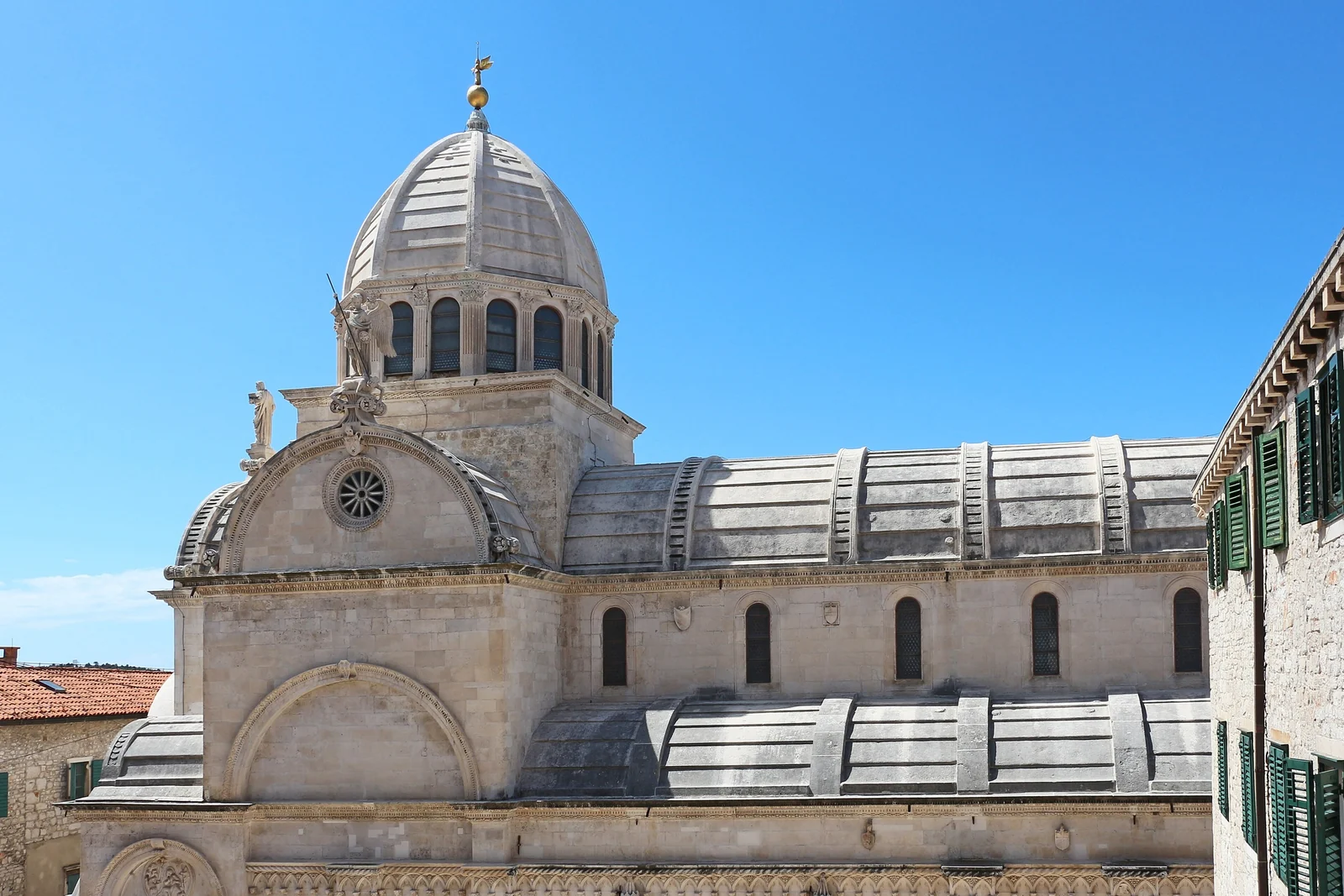
Šibenik is a steep, stone-stepped town that most people drive past. Don't. Its Cathedral of St James, built between 1431 and 1535 and listed by UNESCO in 2000, is a structural oddity: the vaults, dome and roof were assembled from interlocking stone slabs without timber or brick supports. Juraj Dalmatinac began it in Gothic style and Nikola Firentinac finished it in the Renaissance one, and you can read the handover in the walls.
Walk around the outside before you go in. A frieze of 71 carved heads runs along the apse, said to be portraits of ordinary townspeople of the time, some grumpy, some amused. The nearby St Nicholas Fortress, guarding the channel into the bay, is part of a separate UNESCO listing for Venetian defense works.
Krka National Park
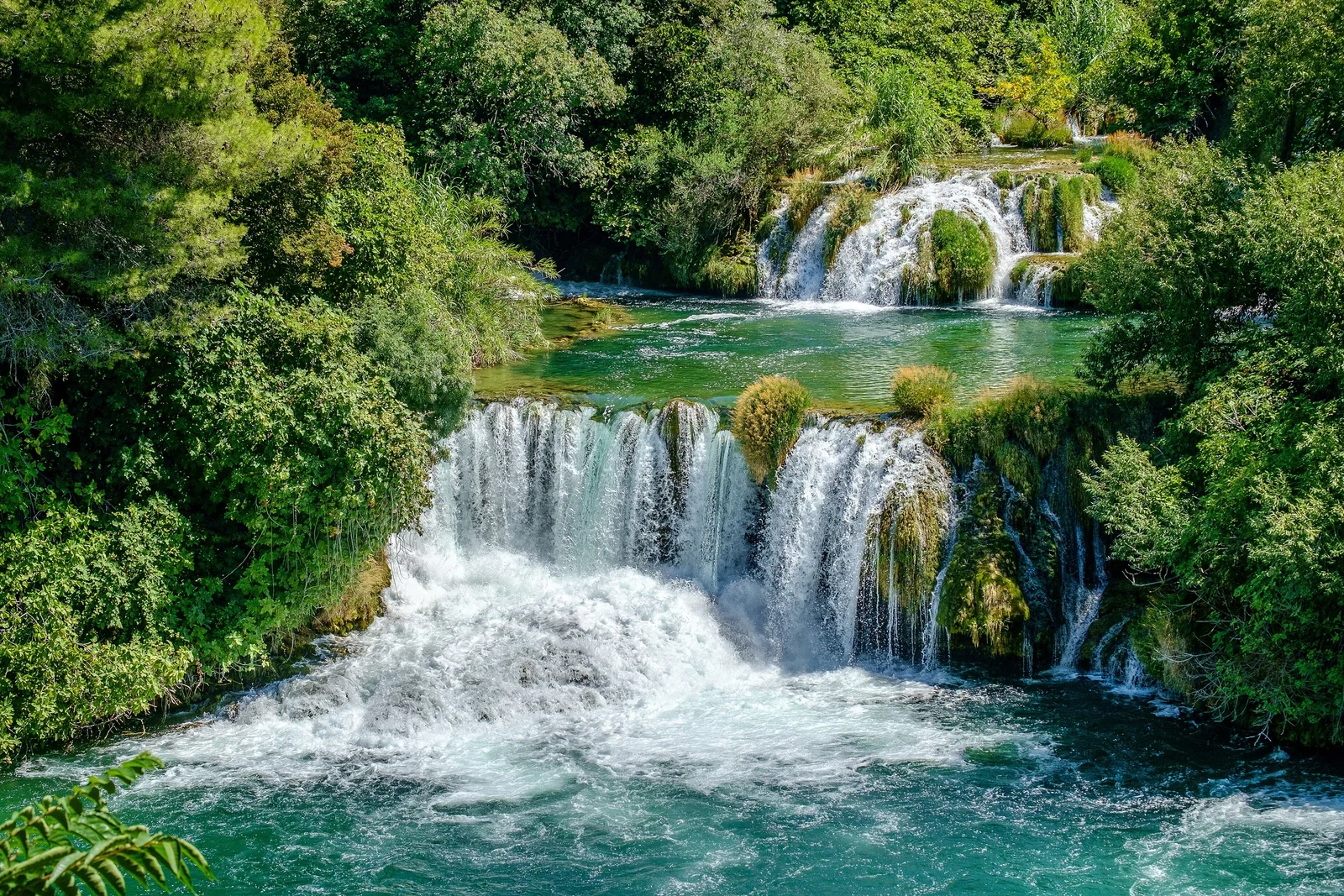
Inland from Šibenik, the Krka River tumbles over a chain of travertine barriers, and Skradinski buk is the showpiece: a wide staircase of cascades crossed by wooden boardwalks. Swimming there has been banned since 2021 to protect the travertine. You can reach it by car via Lozovac or, more pleasantly, by the park boat from the riverside town of Skradin.
Arrive at opening time in summer; by late morning the boardwalks move at shuffle pace. Ticket prices change by season, so check the official Krka National Park site before you go.
Trogir
Trogir sits on a tiny island linked by bridges to the mainland and to Čiovo, and UNESCO listed the whole historic core in 1997. It is compact enough to see in two hours. The highlight is the Romanesque portal of the Cathedral of St Lawrence, carved by Master Radovan in 1240, with Adam and Eve standing on lions and scenes of farm life tucked around the arch.
Split and Diocletian's Palace
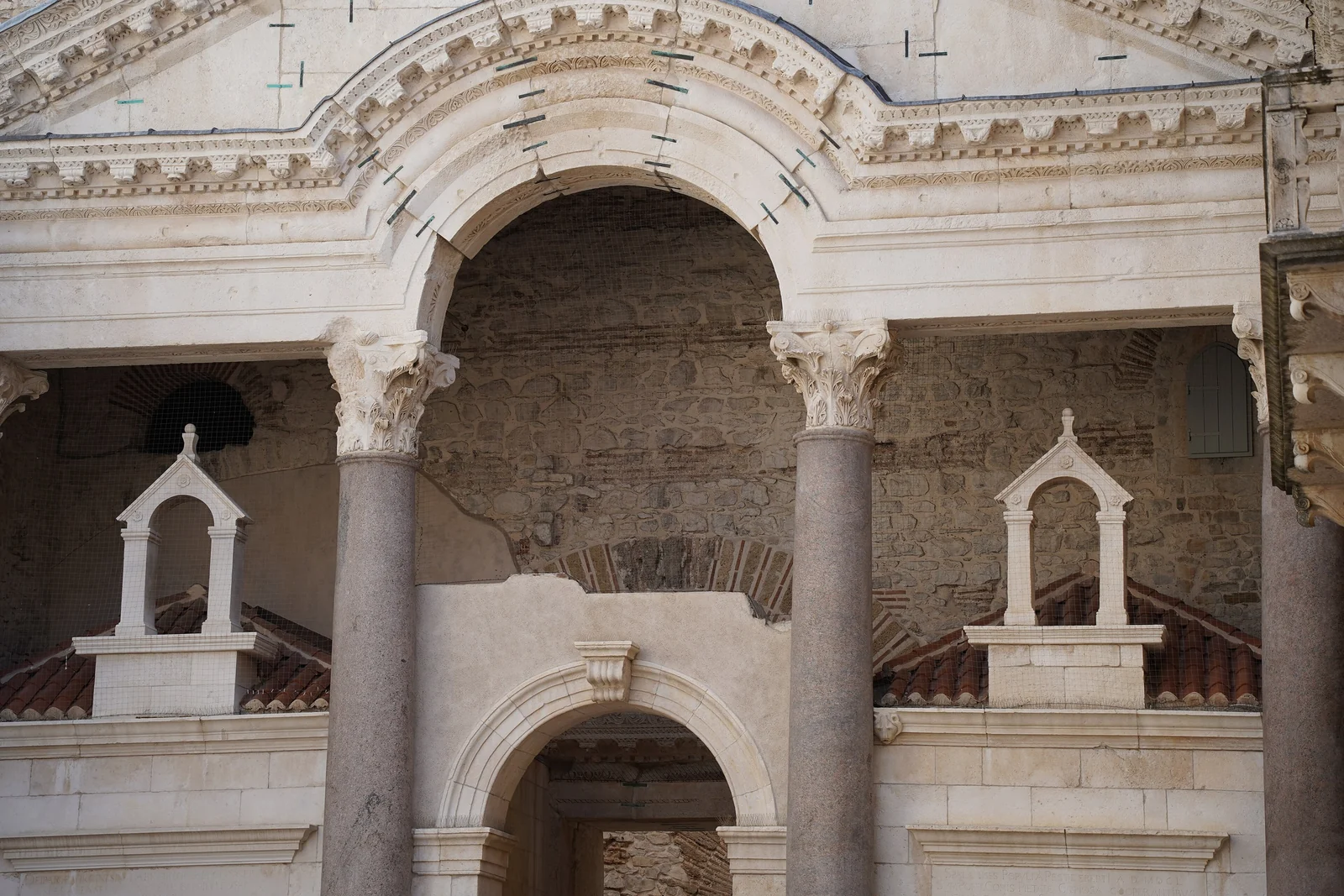
Split is Dalmatia's hub and its most remarkable city. Around the year 300, the Roman emperor Diocletian built a fortified palace on the shore to retire to. When the nearby Roman city of Salona was abandoned in the 7th century, its refugees moved inside the palace walls, and they never left. Today Diocletian's Palace is a living neighborhood of apartments, bars and shops, and part of a UNESCO site listed in 1979.
- The Peristyle: the colonnaded ceremonial courtyard at the palace's heart, still the place everyone meets.
- Cathedral of St Domnius: Diocletian's own mausoleum, turned into a church dedicated to a martyr he persecuted. Climb the bell tower for the view.
- The substructures: vaulted cellars that mirror the layout of the lost imperial rooms above.
- Temple of Jupiter: later a baptistery, with a coffered stone ceiling in fine condition.
Give Split at least two nights. It is the main ferry port for the central islands, and staying near the harbor makes early departures painless.
The Central Dalmatian Islands: Hvar, Brač and Vis
Hvar
Hvar town has a party reputation in July and August, and it is earned. But the island has deep roots. Its main square is among the largest in Dalmatia, the Venetian-era arsenal holds a theater dating to 1612, one of the oldest public theaters in Europe, and the Fortica fortress above town is worth the sweaty climb. On the north coast, Stari Grad was founded by Greek colonists in the 4th century BC, and the farmland behind it, still divided along the ancient Greek grid, is a UNESCO site.
Brač and Zlatni Rat
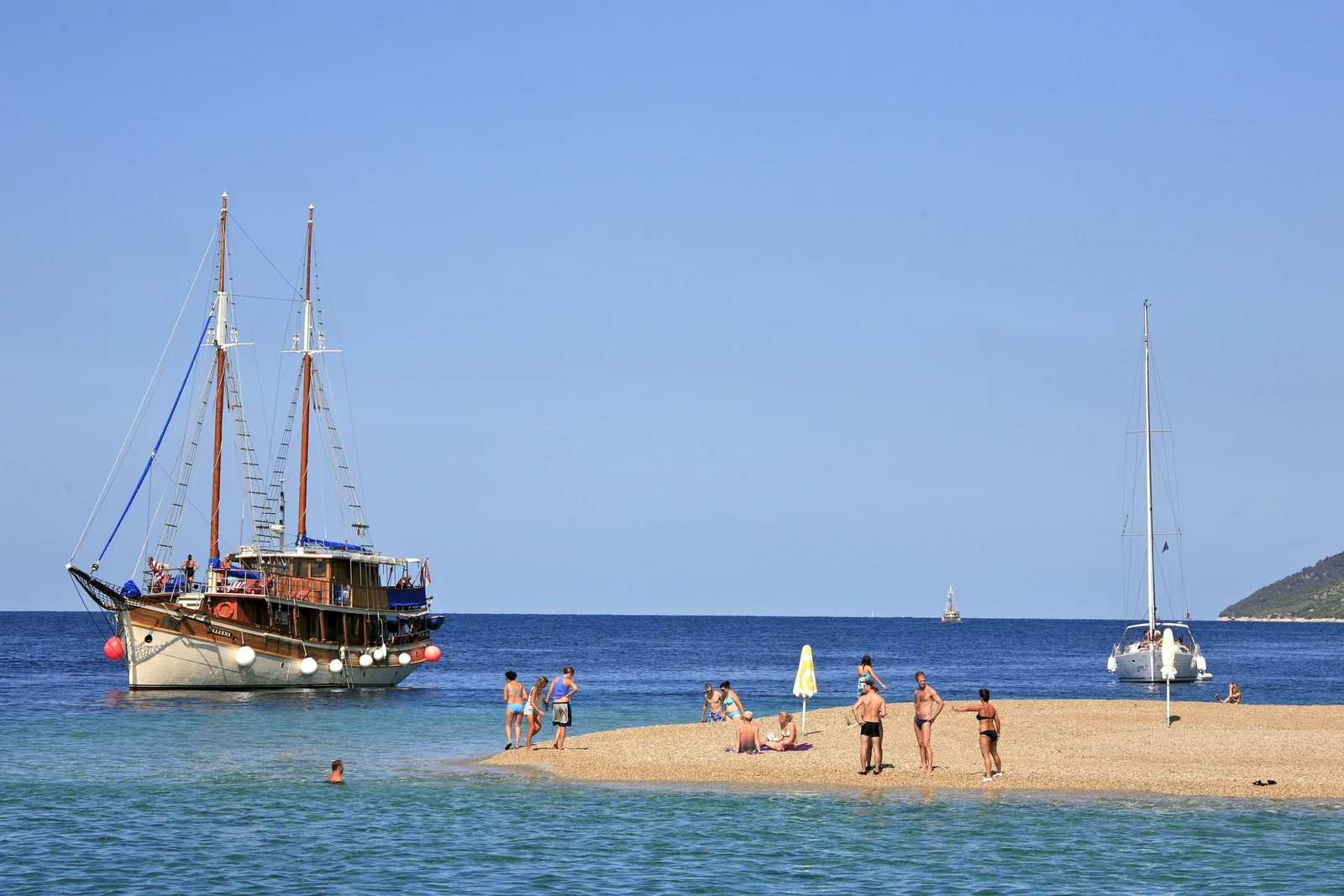
Brač is the closest big island to Split and the source of the pale limestone used across Dalmatia for centuries, including in Diocletian's Palace. The stonemasonry school in Pučišća still trains carvers. Most visitors come for Zlatni Rat near Bol, a pebble spit that pokes into the channel and changes shape with wind and current. It is beautiful and very busy in summer. For a wider view, drive up to Vidova Gora, the highest point on any Adriatic island.
Vis
Vis was a Yugoslav military base closed to foreign visitors until 1989, which is why it feels a generation behind its neighbors, in the best way. You'll find Greek and Roman remains in Vis town, the fishing village of Komiža and abandoned military tunnels in the hills. Boats run from Komiža to the Blue Cave on Biševo when the sea allows. Vis is farther out than Hvar or Brač, so give it at least two nights or skip it.
Korčula, Pelješac and the Walls of Ston
Korčula town is Dubrovnik in miniature: a walled peninsula of honey-colored stone, laid out in a fishbone pattern so that the streets on one side catch the breeze and those on the other block the cold wind. The town claims Marco Polo as a native son, a story historians treat with caution. In summer, look out for performances of the Moreška, a traditional sword dance.
From Korčula, a short car ferry crosses to Orebić on the Pelješac peninsula, a long finger of vineyards known for red Plavac Mali wine. At its base are Ston and Mali Ston, joined by the Walls of Ston, built by the Republic of Ragusa from the 14th century to protect its valuable saltworks. Around 5.5 km survive, often called the longest defensive walls in Europe. Walk a stretch in the cooler hours, then eat oysters in Mali Ston.
Dubrovnik: City Walls, Crowds and King's Landing
Dubrovnik, the old Republic of Ragusa, is the reason many people come to Croatia at all. Its Old Town has been a UNESCO site since 1979, and the city walls, close to 2 km around with towers and bastions, are the essential walk. Go at opening time or late afternoon, carry water and expect almost no shade. The Lovrijenac fortress, just outside the walls on its own rock, is often covered by the same ticket.
Crowds are the catch. The city's Respect the City program limits cruise calls to two ships a day and uses cameras to monitor visitor numbers at the gates. Practical tips:
- Sleep inside or near the Old Town and explore before 9 a.m. and after 6 p.m., when day-trippers have gone.
- Check cruise schedules for your dates and do the walls on quieter days.
- Ride the cable car up Mount Srđ at sunset for the classic overview.
- Use the Pile and Ploče gates rather than following the stream down the Stradun.
Game of Thrones fans will recognize a lot. Dubrovnik played King's Landing, with the Jesuit Staircase used for Cersei's walk of shame and Lovrijenac for the Red Keep's exterior. Around Split, scenes were filmed in the palace cellars and at Klis Fortress.
Getting Around: Ferries, Catamarans and the Coast Road
A rental car makes the mainland easy, and the islands are reached by state ferry operator Jadrolinija plus several catamaran companies. Car ferries are slow but take vehicles; catamarans are faster, foot-passenger only and often sell out in summer. Book catamarans ahead in peak season, arrive early for car ferries and check timetables on the Jadrolinija website, since schedules change between summer and winter. Seasonal international ferries also cross the Adriatic, including Dubrovnik to Bari, which makes it easy to continue into southern Italy with our Puglia travel guide.
| Leg | Main option | Rough travel time | Notes |
|---|---|---|---|
| Zadar to Šibenik | Car, A1 motorway or coast road | About 1 hour | Coast road is slower but prettier |
| Šibenik to Trogir and Split | Car | About 1 to 1.5 hours | Stop in Trogir on the way |
| Split to Brač (Supetar) | Jadrolinija car ferry | About 50 minutes | Frequent sailings in summer |
| Split to Hvar | Car ferry to Stari Grad, or catamaran to Hvar town | About 1 to 2 hours | Catamaran for foot passengers |
| Split to Vis | Car ferry or catamaran | About 1.5 to 2.5 hours | Fewer daily sailings |
| Korčula to Orebić | Short car ferry | Under 30 minutes | Links Korčula to Pelješac |
| Split to Dubrovnik | Car via A1 and the Pelješac Bridge | About 3 to 3.5 hours | No border crossing since 2022 |
The Adriatic Highway (Jadranska magistrala, the D8) hugs the coast for the whole route and is one of the great drives in Europe, though summer traffic can be slow and the curves demand attention. The A1 motorway runs parallel inland and is much quicker. Since the Pelješac Bridge opened in 2022, you can reach Dubrovnik without crossing the short Bosnian coastal strip at Neum. For more scenic drives, see our list of great road and rail routes for travel enthusiasts.
Best Time to Visit the Dalmatian Coast
Shoulder season is the clear winner. Late May, June and September give you warm sea, full ferry timetables and fewer people. Early October can still be lovely, though island services start thinning out.
- July and August: hottest weather, highest prices, packed old towns and long ferry queues.
- May, June and September: the sweet spot for sightseeing and swimming.
- April and October: quieter and cheaper, with cooler sea and reduced ferry schedules.
- November to March: towns feel local, but many island restaurants and hotels close.
Money and Entry
Croatia adopted the euro and joined the Schengen Area on January 1, 2023, so there are no passport checks arriving from neighboring Slovenia or Hungary, and the kuna is gone. Card payments are common, but carry some cash for small island cafés and parking machines. Entry rules for non-EU visitors are changing, so check the Croatian National Tourist Board and your government's travel advice before you go. If you are driving down from the north, our Slovenia travel guide covers Ljubljana, Lake Bled and the Julian Alps.
Sample 7-Day and 10-Day Dalmatian Coast Itineraries
7-Day Itinerary: The Highlights
- Day 1: Zadar, the forum, St Donatus and the Sea Organ at sunset.
- Day 2: Drive to Šibenik for the cathedral, then Krka in the afternoon. Sleep in Split.
- Day 3: Morning in Trogir, afternoon and evening in Diocletian's Palace.
- Day 4: Ferry to Hvar; Stari Grad, then Hvar town and the Fortica.
- Day 5: Catamaran to Korčula; old town walk and sunset on the walls.
- Day 6: Ferry to Orebić, Pelješac wineries and Ston walls. Drive on to Dubrovnik.
- Day 7: Dubrovnik city walls early, Lovrijenac, cable car at sunset.
10-Day Itinerary: Slower, With Brač and Vis
- Days 1 and 2: Zadar, with a day trip or a slow drive to Šibenik.
- Day 3: Krka at opening time, then Trogir. Sleep in Split.
- Day 4: Split in full, plus Salona or Klis.
- Day 5: Ferry to Brač; Pučišća, Vidova Gora and Zlatni Rat.
- Days 6 and 7: Vis via Split, or Hvar via the Bol to Jelsa catamaran when it runs.
- Day 8: Korčula.
- Day 9: Pelješac and Ston, then Dubrovnik.
- Day 10: Dubrovnik's walls and Old Town.
If you'd like to compare this coast with other Mediterranean island-hopping trips, read our guides to the islands of Italy and Rhodes in Greece, or browse all European destinations.
Dalmatian Coast FAQ
How many days do you need for the Dalmatian Coast?
Seven days covers Zadar, Šibenik, Krka, Trogir, Split, one or two islands and Dubrovnik at a brisk pace. Ten days lets you add Brač or Vis, slow down on the islands and avoid rushing through Split and Dubrovnik, which both deserve two nights.
Is it better to drive or take ferries along the Dalmatian Coast?
Combine both. A car is best for the mainland from Zadar to Split and for Pelješac. For the islands, Jadrolinija car ferries carry vehicles, while catamarans are faster for foot passengers. Many travelers leave the car in Split and island-hop by catamaran.
Does Croatia use the euro?
Yes. Croatia replaced the kuna with the euro on January 1, 2023, the same day it joined the Schengen Area. Cards are widely accepted, but keep some cash for small cafés, markets and parking on the islands.
Can you swim at Krka National Park?
Not at Skradinski buk, the main waterfall, where swimming has been banned since 2021 to protect the travertine barriers. Check the official park site for any designated bathing spots upstream, which are seasonal and limited.
Do you need to cross into Bosnia to drive to Dubrovnik?
No longer. Since the Pelješac Bridge opened in 2022, the route from Split to Dubrovnik stays in Croatia and skips the border checks at Neum.
How can you avoid crowds in Dubrovnik?
Stay overnight, walk the city walls at opening time or late afternoon, and check cruise ship schedules for your dates. The city caps cruise calls at two ships a day, but peak-summer middays are still busy.
When is the best time to visit the Dalmatian Coast?
Late May, June and September are ideal, with warm sea, full ferry timetables and fewer crowds than July and August. April and October are quieter and cheaper, but ferries run less often and some island businesses are closed.