


Rhodes is the largest island of the Dodecanese, in the southeastern Aegean close to the coast of Türkiye. It is best known for the walled medieval city built by the Knights of St John, but the island also has the clifftop acropolis of Lindos, pine-covered valleys, long beaches and quiet villages in the south.
This Rhodes travel guide covers the top sights, from the Old Town and the Palace of the Grand Master to Lindos, the Valley of the Butterflies and the best beaches, plus when to go, where to stay and how to get there. For a wider overview of the country, see our Greece travel guide.
Rhodes at a Glance
Covering about 1,400 square kilometers, Rhodes is big enough for a full week. The capital, Rhodes Town, sits at the northern tip. The east coast is sheltered, with sandy bays and resorts such as Faliraki and Lindos, while the west coast is windier and greener, with ancient Kamiros and hill villages inland. The far south is the most rural part of the island.
The island has a long history. The ancient city of Rhodes was founded in 408 BC and became a major maritime power, famous for the Colossus, a giant bronze statue of the sun god Helios that stood for only about half a century before an earthquake toppled it in 226 BC. Later came the Byzantines, the Knights Hospitaller from 1309, the Ottomans from 1522, and Italian rule from 1912 before Rhodes joined Greece in 1948.
The Medieval City of Rhodes
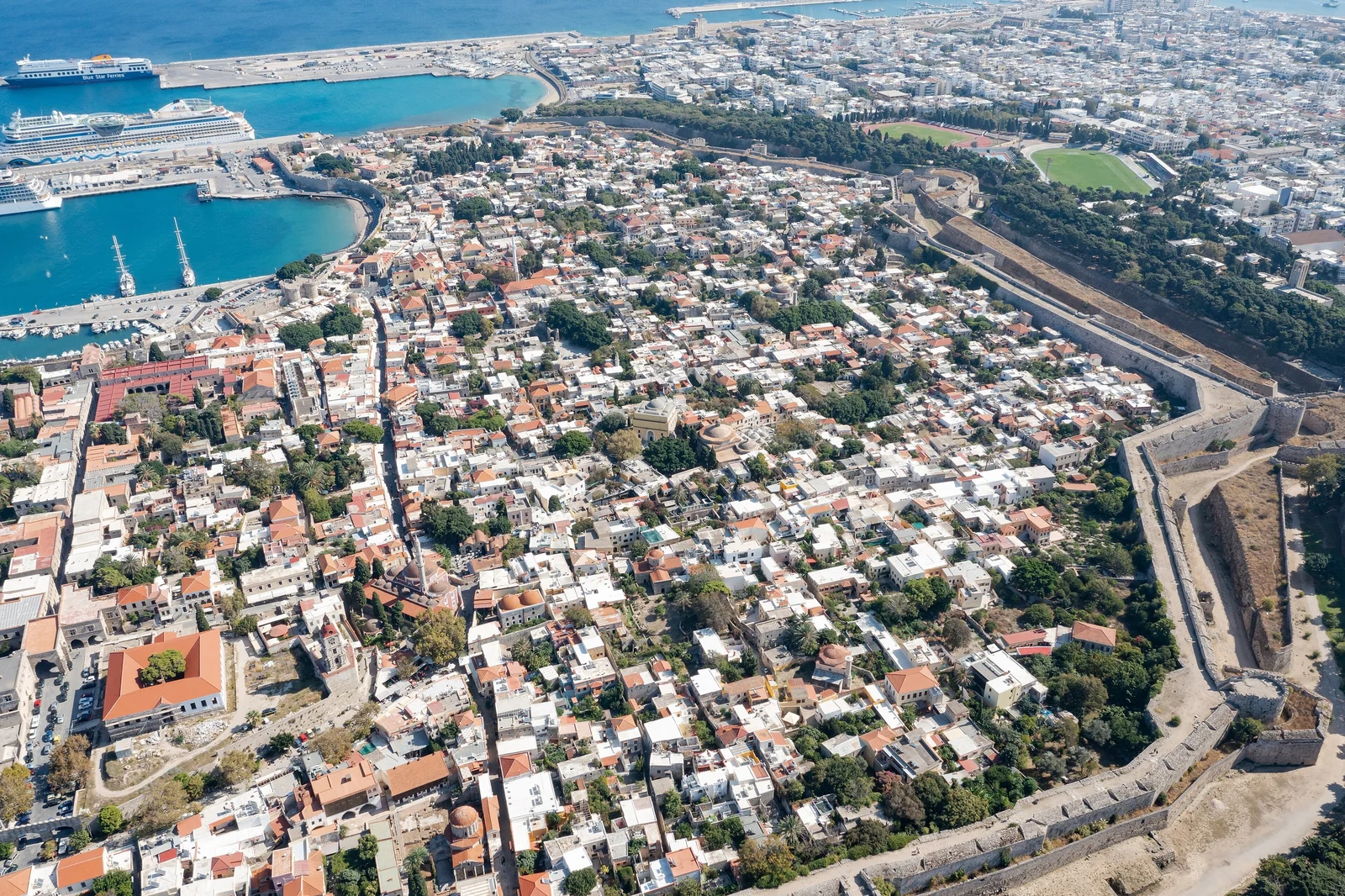
The Rhodes Old Town is one of the best-preserved medieval towns in Europe and has been a UNESCO World Heritage Site since 1988. Massive walls, gates and moats surround a maze of stone lanes, Gothic buildings, Byzantine churches, Ottoman mosques and a lively web of shops and tavernas. People still live and work inside the walls, which gives it a very different feel from an open-air museum.
Palace of the Grand Master
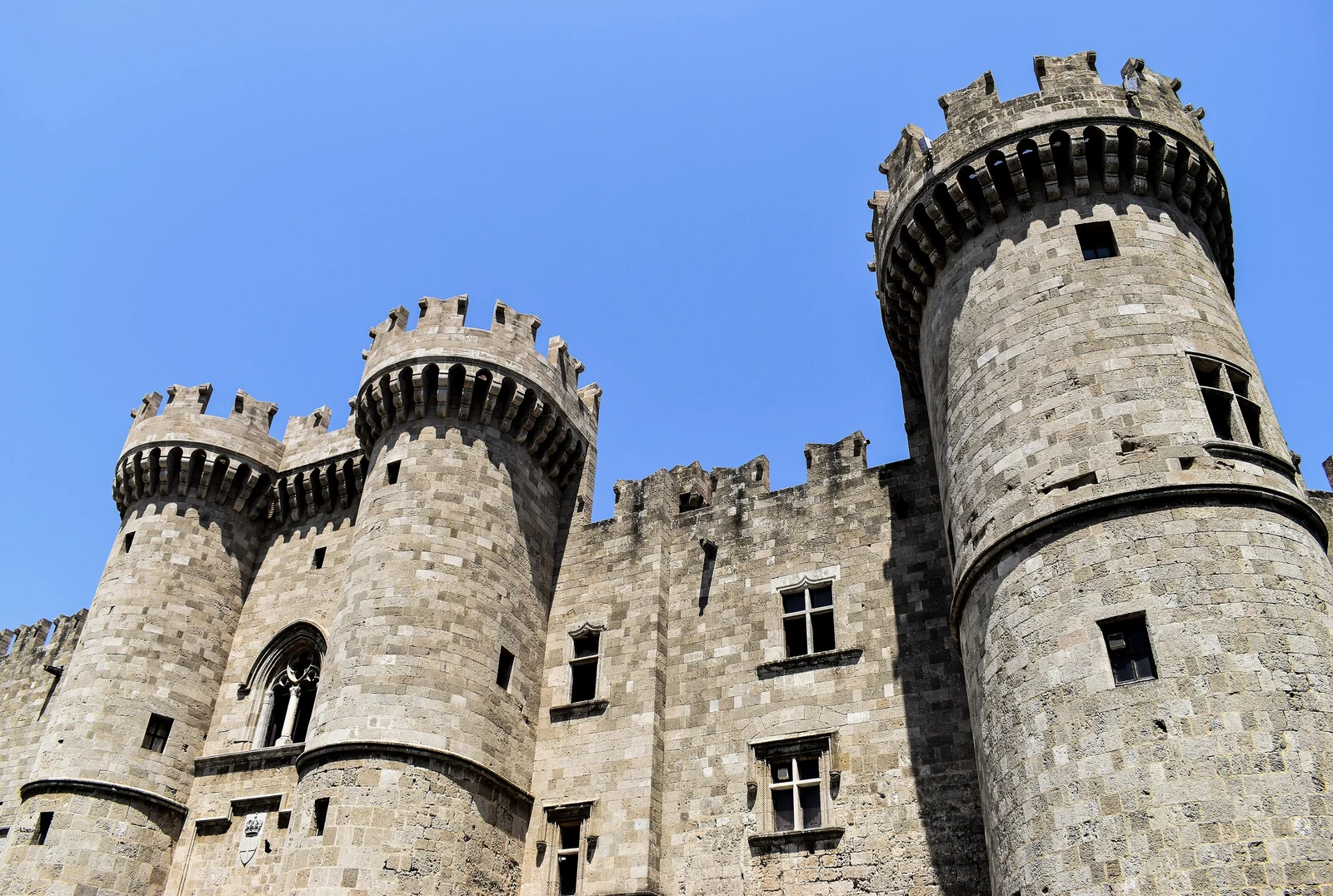
At the top of the Old Town stands the Palace of the Grand Master, the seat of the Knights’ leader. Built in the 14th century on the site of a 7th-century Byzantine citadel, it was wrecked in 1856 when lightning set off a gunpowder store nearby. What you see today is largely an Italian reconstruction from 1937 to 1940, which explains its polished look. Inside are grand halls with Hellenistic and Roman floor mosaics brought from the island of Kos, and exhibitions on the history of Rhodes. For more medieval strongholds, our guide to castles in France ranges from the walls of Carcassonne to the châteaux of the Loire Valley.
Street of the Knights and the Archaeological Museum
The cobbled Street of the Knights runs downhill from the palace, lined with the “inns” where knights from different European regions lodged. At its foot, the former Hospital of the Knights now houses the Archaeological Museum of Rhodes, with finds from ancient Kamiros, Ialysos and Rhodes itself.
Walls, gates and the harbor
Walk around the outside of the walls through the dry moat, then head to Mandraki harbor, where bronze deer statues stand on columns at the entrance. Popular belief places the Colossus here, straddling the harbor, but historians consider this a later myth; its real location is unknown.
Lindos and Its Acropolis
About 40 kilometers south of Rhodes Town, the village of Lindos is a cluster of white houses beneath a rocky headland crowned by an acropolis. On top are the remains of the Temple of Athena Lindia from about 300 BC, a Hellenistic stoa with a grand staircase, and walls built by the Knights. The views over the village and the turquoise bays on either side are superb.
The climb takes around 20 to 30 minutes on a stepped, sometimes slippery path with little shade. Go at opening time or late in the day, and bring water. Below the village, the small, almost enclosed St Paul’s Bay is where tradition says the apostle landed during a storm.
Nature on Rhodes: Valleys, Springs and Wild Coasts
Valley of the Butterflies (Petaloudes)
Despite its name, the famous Valley of the Butterflies is home to moths, not butterflies. From around June to September, huge numbers of Jersey tiger moths of a subspecies found on Rhodes gather on the trunks of oriental sweetgum trees along a shady stream. A path with wooden bridges climbs through the valley. Walk quietly and never clap or shake branches: each flight uses up energy the moths cannot replace.
Seven Springs and Filerimos
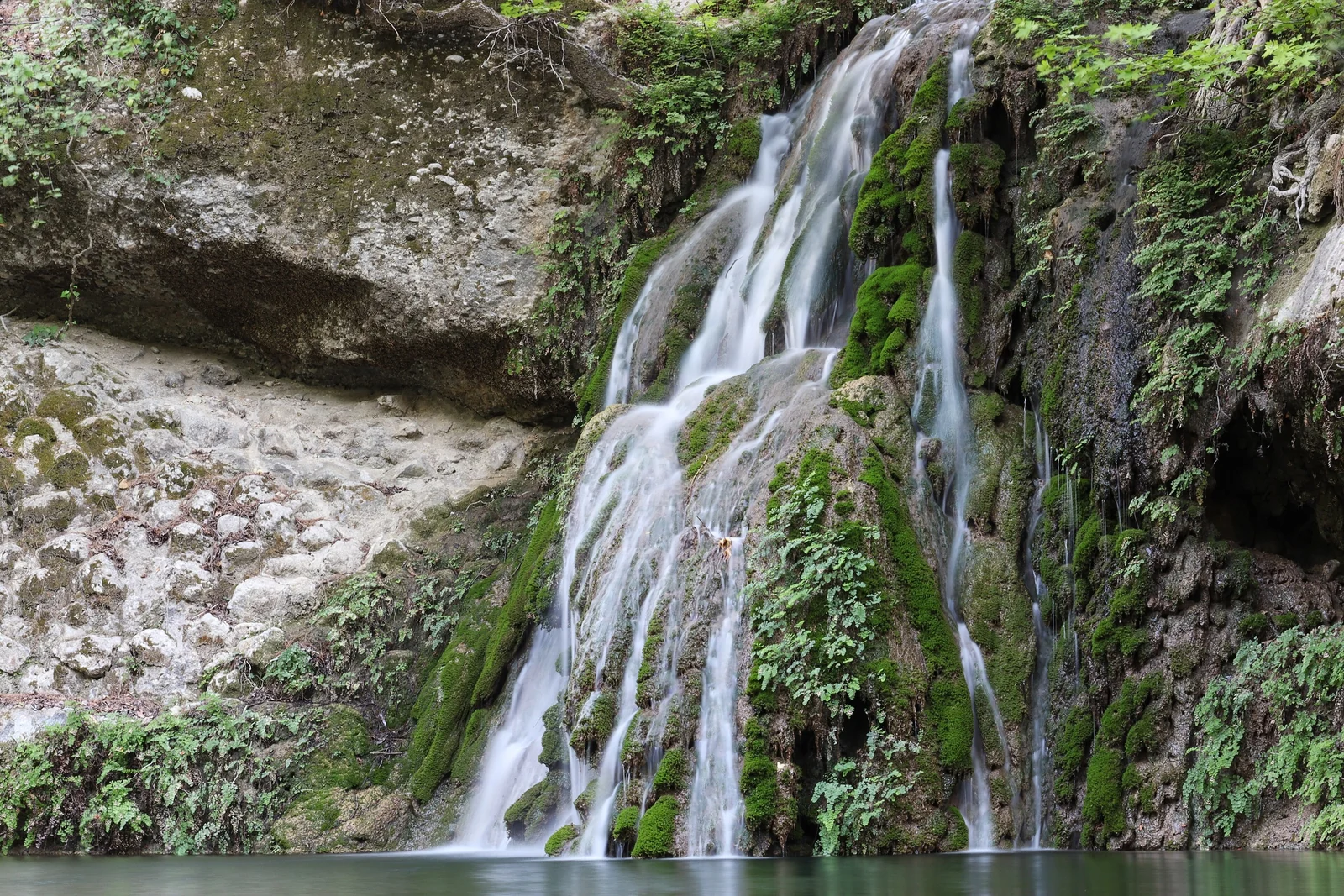
Epta Piges, the Seven Springs, is a wooded spot where a dark water tunnel and a small lake make a cool break from the beach. Near Ialysos, the hill of Filerimos has a monastery, the remains of an ancient acropolis and a long cypress-lined path with views over the west coast.
Prasonisi and the wild south
At the island’s southern tip, Prasonisi is joined to Rhodes by a sandbar that separates two seas, one calm and one wind-whipped. It is a well-known spot for windsurfing and kitesurfing. The villages of the south, such as Lachania and Monolithos with its castle on a rock, show a quieter side of Rhodes.
Best Beaches in Rhodes
- Tsambika: a long sandy beach on the east coast below a hilltop monastery reached by a steep flight of steps.
- Anthony Quinn Bay: a small, rocky cove with clear water, good for snorkeling, near Faliraki.
- Faliraki: a long, organized beach with water sports and plenty of facilities.
- Lindos beaches: the main bay below the acropolis and nearby St Paul’s Bay for calm water.
- Prasonisi: for wind and water sports rather than lounging.
As a rule, east-coast beaches are calmer and better for swimming, while west-coast beaches often have wind and waves.
Best Time to Visit Rhodes
Rhodes has a long season. May, June, September and October bring warm weather, swimmable seas from June and fewer crowds at the Old Town and Lindos. July and August are hot and busy. Rhodes has had serious wildfires, most notably in July 2023, so in summer follow any fire warnings and never light fires outdoors. In winter, Rhodes Town stays lively, but many resort hotels close.
| Month | Good for | Keep in mind |
|---|---|---|
| April–May | Sightseeing, walking, spring flowers | Sea still cool |
| June and September | Beaches plus sightseeing | Book ahead for Lindos |
| July–August | Beach holidays, nightlife | Heat, crowds, fire risk |
| October | Warm sea, calmer Old Town | Shorter days, some closures |
Where to Stay and How to Get Around
Rhodes Town is the best base if you do not want to drive: you can stay inside the Old Town walls for atmosphere or in the new town for beaches and easier access. Lindos is beautiful but crowded by day. Faliraki and the east-coast resorts suit beach holidays, while the far south is best for peace and quiet.
Rhodes has an international airport with flights from Athens and, in season, across Europe. Ferries link Rhodes with Piraeus, other Dodecanese islands and nearby Turkish ports such as Marmaris, making it easy to combine with a trip to Türkiye. Buses serve both coasts from Rhodes Town, but a rental car is the easiest way to reach the valleys, villages and southern beaches.
For a day trip, the small island of Symi is a short boat ride away; we describe it in our guide to lesser-known places in Greece. If you prefer a volcanic landscape and caldera views, read our Santorini guide. Opening hours and tickets for the palace and Lindos are listed on the Greek Ministry of Culture sites, and the official Visit Greece page for Rhodes has general information.
Rhodes Travel FAQ
Is Rhodes worth visiting?
Yes, especially if you like history as much as beaches. The walled Old Town is a UNESCO World Heritage Site and one of Europe’s best-preserved medieval towns, and Lindos, Petaloudes and the southern coast add plenty of variety for a week-long stay.
How many days do you need in Rhodes?
Plan at least four to five days: one or two for Rhodes Town, one for Lindos, and the rest for beaches, Petaloudes and the south. A week lets you add a day trip to Symi and a relaxed drive around the island.
Are there really butterflies in the Valley of the Butterflies?
No. The insects are Jersey tiger moths, a subspecies found on Rhodes, which gather in the valley in summer, usually from about June to September. They are easily disturbed, so visitors are asked to keep quiet and not make noise to set them flying.
Which side of Rhodes is best for beaches?
The east coast has calmer water and sandy beaches such as Tsambika, Faliraki and the bays around Lindos. The west coast is windier, which is great for windsurfing and cooler evenings but less ideal for swimming with small children.
Can you visit Türkiye from Rhodes?
Yes. Ferries run from Rhodes to Turkish ports such as Marmaris and Fethiye, mostly in the summer season. You need a valid passport and must meet Türkiye’s entry requirements for your nationality, so check them before booking a day trip.
Where did the Colossus of Rhodes stand?
Nobody knows exactly. The popular image of the statue straddling Mandraki harbor is considered a myth, because a statue of that size could not have spanned the entrance. Many historians think it stood elsewhere in the ancient city. It fell in an earthquake in 226 BC.