The abandoned villages in Croatia most worth a trip are in Istria, and the one to see first is Dvigrad, a walled medieval town near Kanfanar that has stood empty since the 1600s. Around it you can visit the half-empty hilltop village of Završje, walk to the ruined hamlet of Kotli, and take a boat to the former prison island of Goli Otok.
This guide separates what you can really visit from what only looks good in photos. Croatia also has a famous ghost resort near Dubrovnik, Kupari, but it is now closed off for redevelopment, so it gets an honest section instead of a recommendation. You will find why these places emptied, how to get in, where the safety lines are, and how to fit them into a wider Croatia trip.
Abandoned Places in Croatia at a Glance
| Place | Where | Why it emptied | Visiting |
|---|---|---|---|
| Dvigrad (Duecastelli) | Near Kanfanar, inland Istria | Plague and malaria; most residents left around 1630 | Open-air ruins reached on foot; no fee reported |
| Završje (Piemonte d'Istria) | Between Grožnjan and Oprtalj, Istria | Decline after the Parenzana railway closed in the 1930s | A few residents remain; reachable by road and on the Parenzana trail |
| Kotli | Mirna valley, central Istria | Rural depopulation | Mostly empty hamlet with watermills and pools; check local access |
| Goli Otok | Northern Adriatic, near Rab and Krk | Political prison from 1949 until the late 1980s | Boat tours only; stay out of the buildings |
| Kupari | South of Dubrovnik | Military resort wrecked in the 1991 war | Fenced for redevelopment; do not plan on exploring |
Why Villages in Istria Were Left Empty
Istria's ghost towns do not share one story. Disease is the oldest cause. The low, damp valleys suited mosquitoes, and malaria combined with plague to drain towns like Dvigrad in the seventeenth century. Wars between Venice and its rivals, including Genoa, hit the peninsula repeatedly, and Dvigrad itself was damaged in that conflict.
The twentieth century added more reasons. Borders moved after the Second World War, railways like the Parenzana closed in the 1930s, and young people drifted to the coast and to cities for work. A 2011 census count, reported by Total Croatia News, put the number of uninhabited settlements in Istria at 15, which is small next to Gorski Kotar and Karlovac County. Many other villages are simply thin: a dozen houses, a handful of residents, a locked church.
That distinction matters when you plan. A truly empty site gives you silence and no services. A half-empty one, like Završje, gives you a café problem and a privacy problem, because the people still living there did not move in for your photos.
Dvigrad: Istria's Great Ghost Town
Dvigrad, Italian Duecastelli, sits in the Draga valley near Kanfanar. The name means two towns. The ruins you walk through belong to the northern one, Moncastello, while the second, Castel Parentino, was abandoned as early as the tenth century, according to the Istria tourist board. Written records begin in 879, when the church came under the Patriarchate of Aquileia, though people lived here long before that.
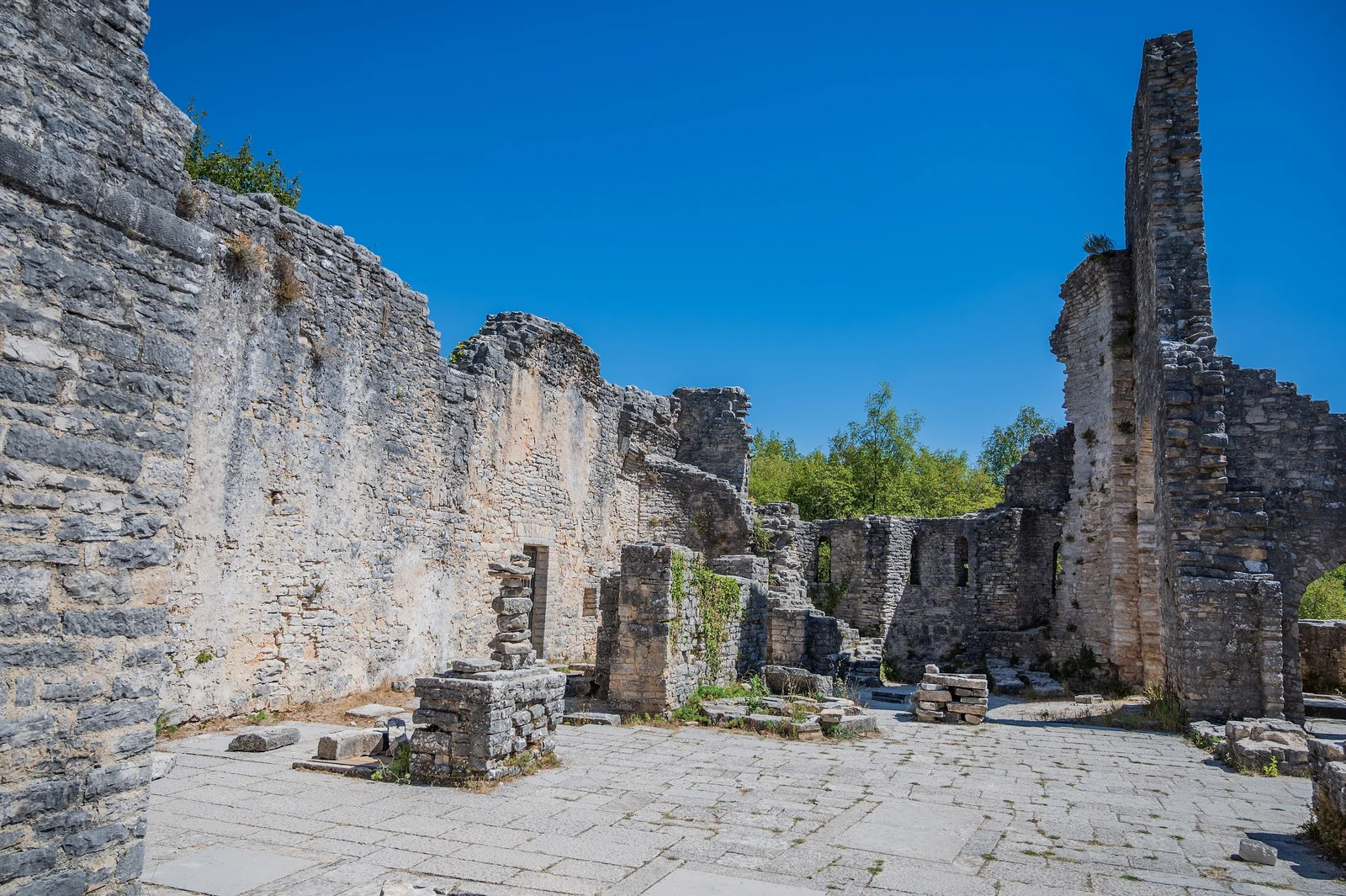
What makes it special is how complete it feels. Two rings of walls, three gates and three defensive towers survive, and the lanes are still readable between roofless houses. Trees grow through some rooms. Unlike many Istrian towns, Dvigrad was not erased by fire or siege. It was emptied by sickness and then simply never reoccupied, which is why it ranks among the best-preserved ghost towns in this part of Europe.
What Happened to Dvigrad
Plague and malaria are the standard answer, and sources agree on the outline even when they differ on the exact year. By about 1630 most inhabitants had moved to higher, healthier Kanfanar. By 1650 only three families remained, and the church of St. Sophia was abandoned some decades later. Skip the colorful legends you will read on blogs, such as buried pirate treasure. No record backs them up.
What You See on Site
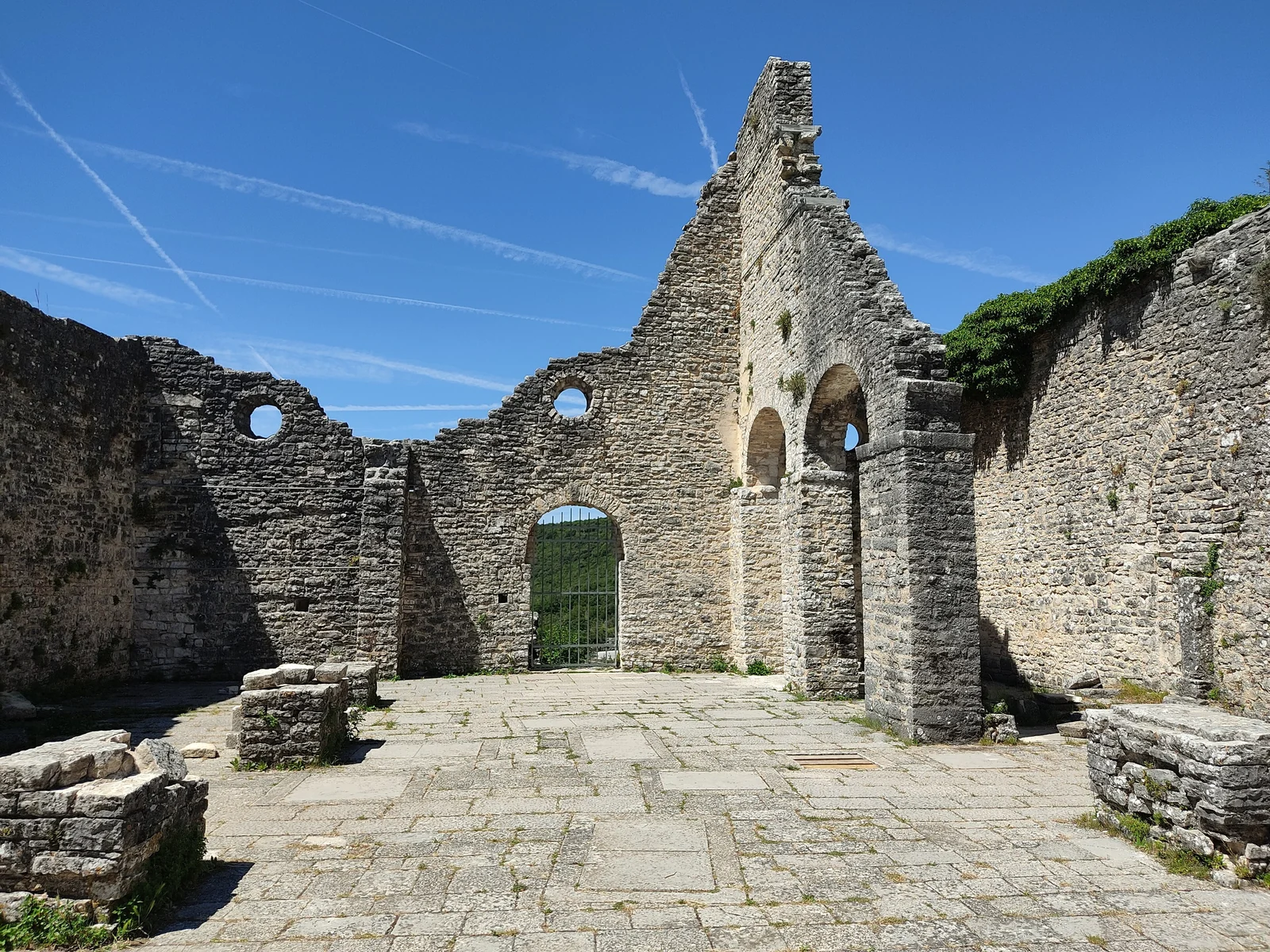
Start with St. Sophia at the top, then work back down through the main square and the gate towers. Plan one to two hours, because the ground is uneven rubble and worn stone. Wear shoes with grip and keep children close near open drops and loose walls.
There is a small parking area by the entrance, and visitors report that it fills up in busy periods, so earlier is better. There are no permanent toilets or cafés inside, and food is a short drive away in Kanfanar. Entry has been reported as free, but confirm with the tourist board before you rely on it. Morning light also suits the stone better than the flat glare of midday, and you will have the lanes to yourself.
Završje and the Parenzana Trail
Završje, known in Italian as Piemonte d'Istria, is a hilltop village between Grožnjan and Oprtalj. It is not fully abandoned, which is what makes it interesting. A few dozen people live here among derelict stone houses, and visitor guides describe it as partly in disrepair with only some buildings occupied. The Venetian Contarini family held it from 1530 for three centuries.
The Parenzana, the narrow-gauge railway that once linked Trieste with Poreč, gave the village a market role until it stopped running in the 1930s. Today its route is a walking and cycling trail, with tunnels and a viaduct near Završje. You can reach the village by road, so it is the gentlest ghost-town stop in this guide. Treat the occupied houses as private and stay on the lanes.
Kotli: A Ruined Hamlet by Waterfalls
Kotli is a small settlement in the Mirna valley, known for old watermills and terraced pools fed by the river. Visitors will find a mostly empty hamlet with older ruined buildings rather than a walled town. It is more of a nature stop with a ghost-village mood than a heritage site, so keep expectations modest.
Because the status of individual buildings and the path to the water can change, check with the local tourist office before you go and do not enter any structure. Swimming conditions depend on rainfall, and the stones are slippery. A cautious approach beats a dramatic photo. If you are hoping for the famous hill town of Hum nearby, remember that it is small but inhabited, not abandoned.
Goli Otok: The Island Prison
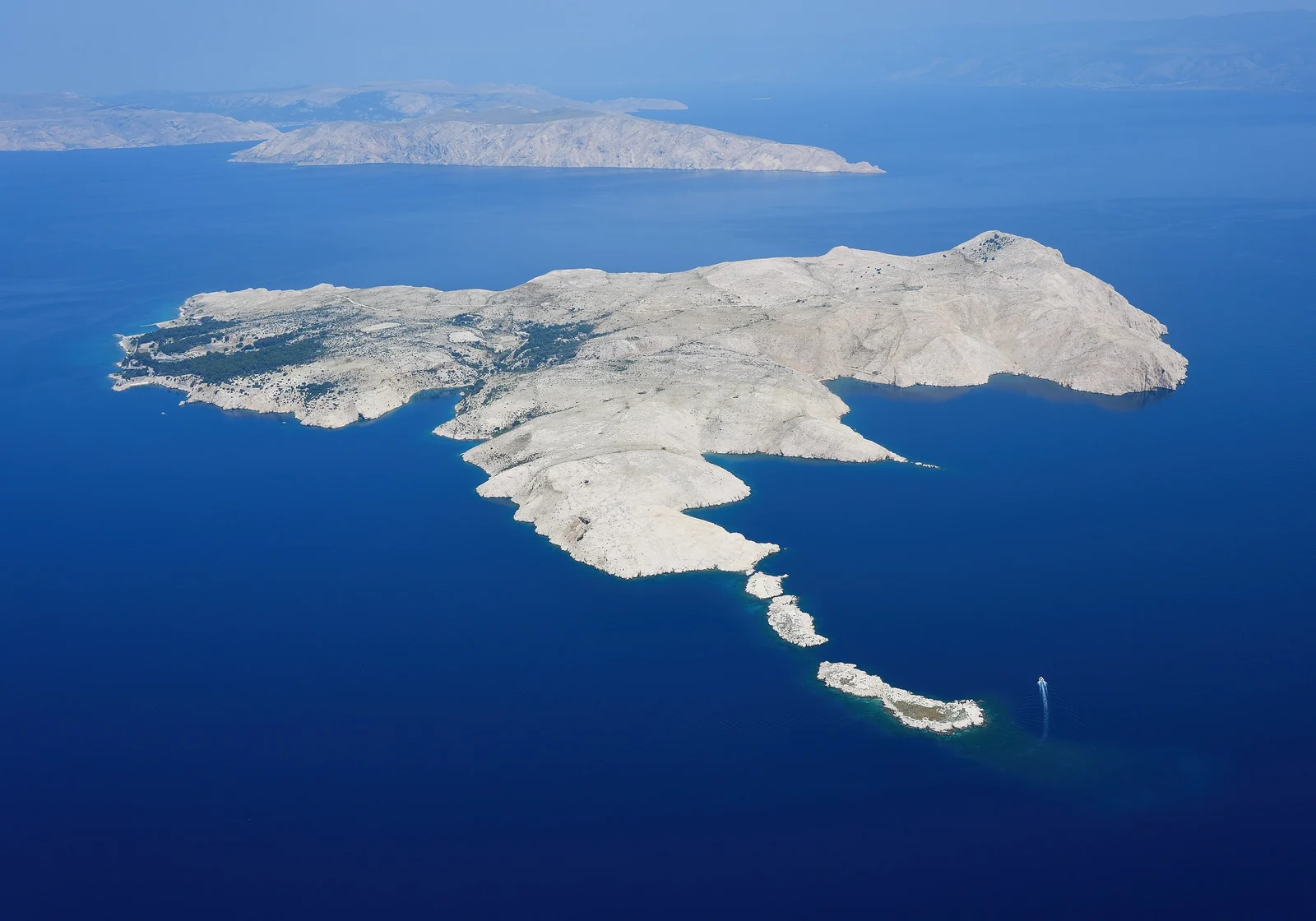
Goli Otok, the Naked Island, is a different kind of abandoned place. The Yugoslav authorities opened a political prison here in 1949, after the split with Stalin, and later sent other prisoners too. Sources give the closure as the late 1980s, with 1988 and 1989 both cited. It is a heavy, important site, not a playground.
You reach it by boat only. Excursions run in the summer season from Rab and from Baška on Krk, often combined with a swim stop or a visit to nearby Sveti Grgur. Time ashore on standard tours is short, and there are no services, so bring water. The buildings are unstable and you should not go inside. Check current operator schedules and any site rules before booking.
Kupari: The Ghost Resort Near Dubrovnik
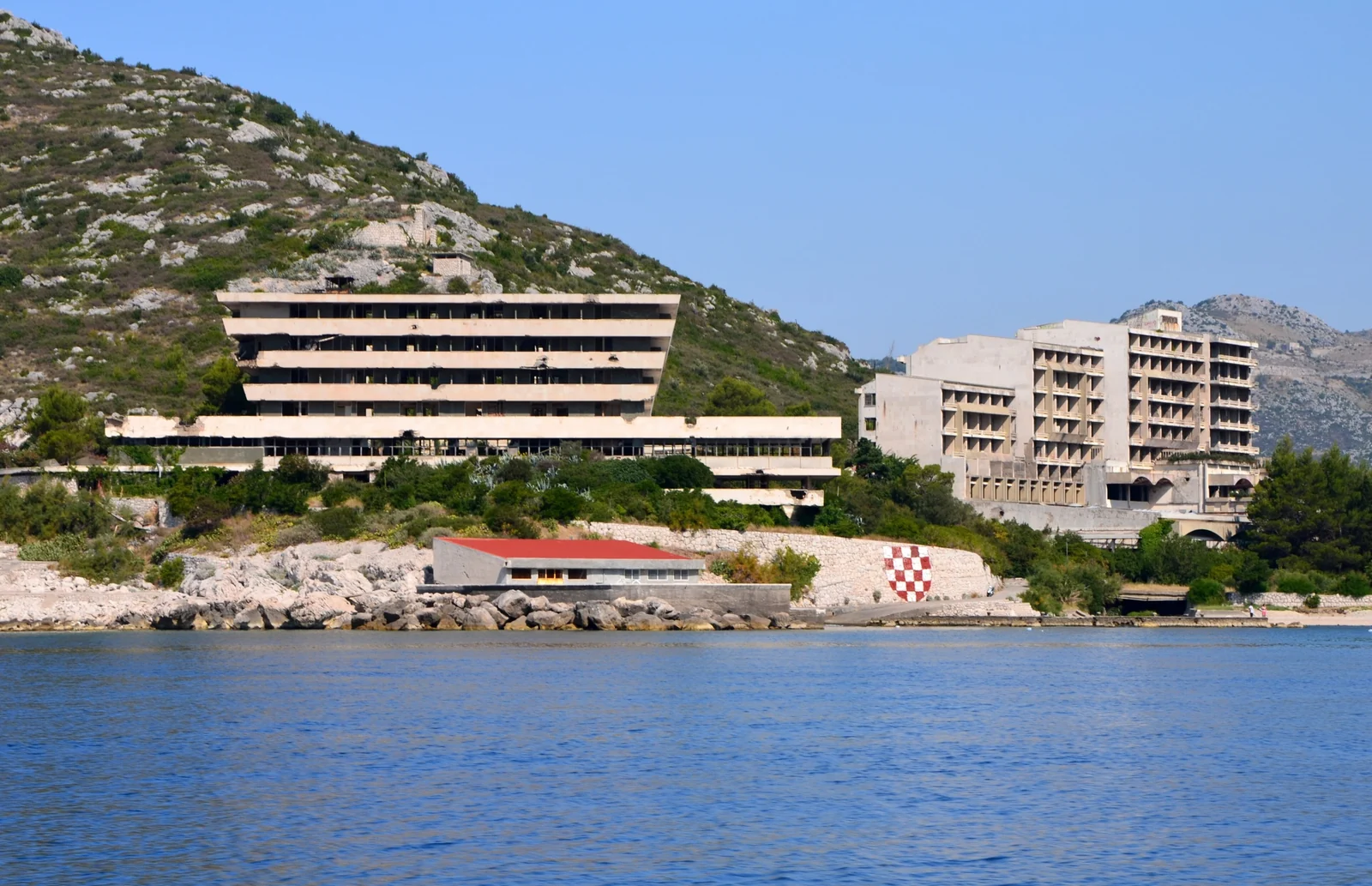
Kupari earned its fame online as the bay of abandoned hotels. The resort was built in the 1960s for the Yugoslav army, and the hotels were stripped and burned during the 1991 war. For years it was an easy walk-in ruin.
That has changed. Croatia Week reports the area is being fenced and cleared for redevelopment, with a pedestrian corridor planned and most of the old hotels slated for demolition. I could not confirm current public access, so I do not recommend Kupari as a stop. Ask locally in Dubrovnik, respect any fencing and never climb into construction zones.
A realistic plan is one anchor and one or two extras. Dvigrad deserves a full morning. Završje and the Parenzana trail can fill an afternoon, especially if you walk a short stretch between the tunnels instead of only driving up. Goli Otok is its own day trip, because the boat schedule drives everything. Trying to stack all of them in one day means rushing the places that reward slowness.
Bring a paper or offline map as well, because village lanes confuse navigation apps and signs in the countryside are sparse. A small daypack with water, a light jacket for shaded valleys and a phone charger covers most needs. Hearing only wind and birds in a town that once held hundreds of people is the real reason to come, so resist the urge to rush.
Trespass, Safety and Respect
- Stay out of roofless buildings with leaning walls. Collapses happen without warning.
- Do not remove stones, tiles or objects, and do not carve or paint on walls.
- Respect fences, signs and private land. Inhabited houses in places like Završje are homes.
- Wear sturdy shoes, carry water and expect weak signal in valley sites.
- Mind the heat and ticks in overgrown summer vegetation. Early morning is best.
- Mines left from the 1990s war remain an issue in parts of Croatia, mostly far from Istria. If you stray beyond the places in this guide, stay on marked paths and tracks.
Combining Dvigrad with Rovinj and Motovun
Dvigrad sits in inland Istria, within an easy drive of the coast, so it fits neatly into a Rovinj base. Go early, spend a couple of hours among the ruins, and be back on the waterfront for lunch. Rovinj makes a good evening after so much stone and silence.
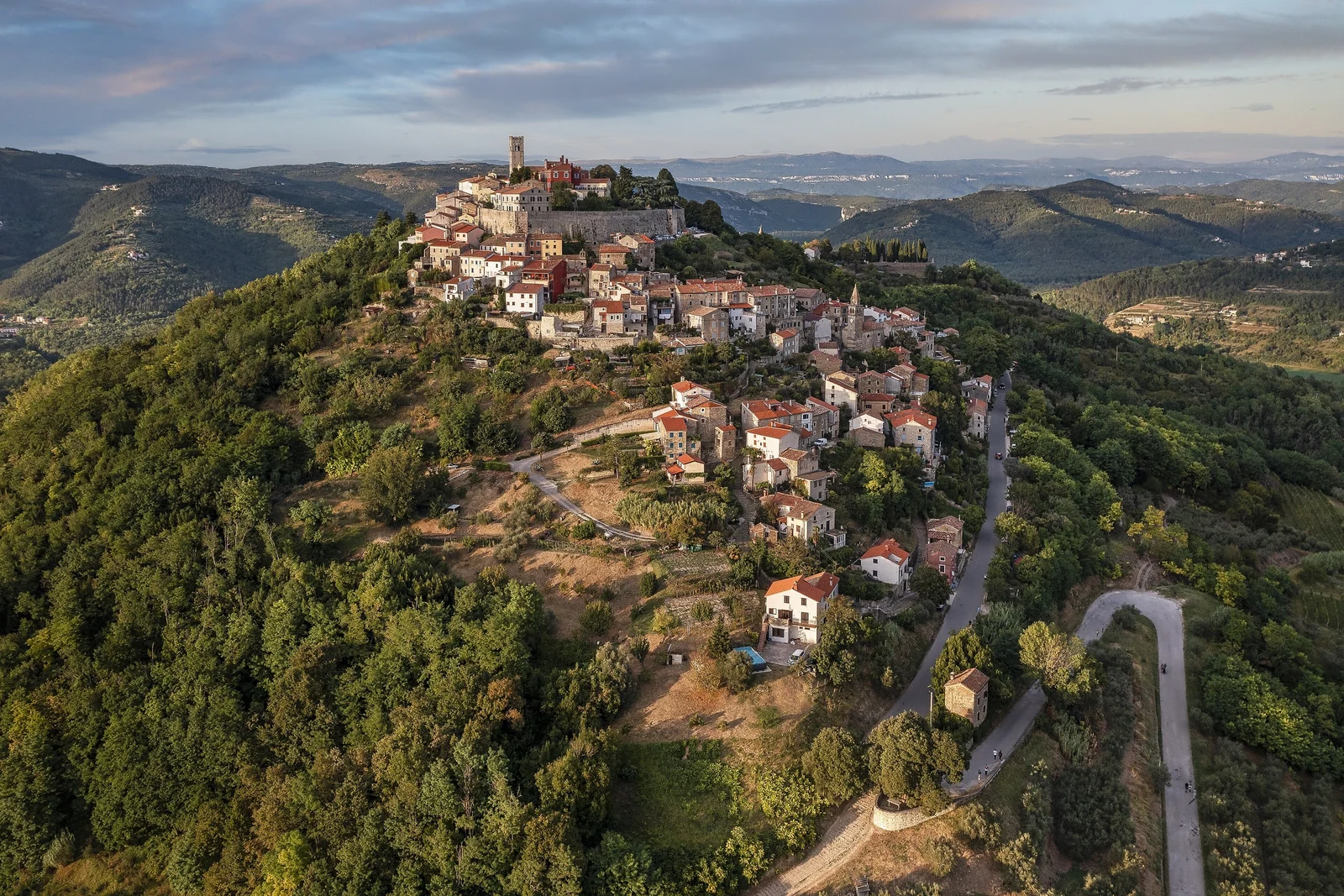
For a longer loop, pair Dvigrad with Motovun, a hilltop town that is very much alive, and add Završje for a half-day on the Parenzana side. A car makes this easy, because buses to these places are sparse. If you want more of this theme abroad, compare our guides to abandoned villages in Spain, Portugal and Greece, or head inland from the coast to Plitvice Lakes.
Best Time to Visit and How to Get There
- Spring and autumn are the most comfortable, with mild walking weather and softer light among the ruins.
- Summer is hot and busy. Visit Dvigrad first thing, and book Goli Otok boats ahead since they run in season.
- Winter is quiet, but stone paths turn slippery and boat trips to Goli Otok generally do not operate.
- Getting around: a rental car is the practical choice for Dvigrad, Završje and Kotli. Pula and Trieste airports are the usual gateways, and Rab or Baška are the starting points for Goli Otok.
Official regional information, events and contacts are on the Istria tourist board site.
Abandoned Places in Croatia FAQ
What is the most famous abandoned village in Croatia?
Dvigrad near Kanfanar in Istria is the best known. It is a walled medieval town with towers, three gates and a ruined thirteenth-century church. Plague and malaria emptied it, and most people had left by about 1630.
Can you visit Dvigrad, and does it cost anything?
Yes, it is an open-air site you explore on foot. Visitor reports describe free entry and a small parking area, but there are no facilities inside. Confirm current conditions with the Istria tourist board before you go.
Why was Dvigrad abandoned?
Disease. Plague and malaria, helped along by the damp valley, drove residents to higher ground at Kanfanar. By about 1630 most had gone, and by 1650 only three families remained. Earlier wars between Venice and Genoa had also damaged the town.
Is it safe to explore abandoned places in Croatia?
Stay on open paths and out of unstable buildings. Ruins can collapse, and some sites are private or fenced. Avoid construction zones such as Kupari, carry water, and keep to marked tracks in countryside that saw fighting in the 1990s.
Can you still visit the abandoned hotels at Kupari?
Not reliably. The old hotels are being fenced and cleared for redevelopment, and current public access is unclear. Ask locally in Dubrovnik, respect any barriers and do not enter the buildings.
How do you get to Goli Otok?
By boat only. Excursions run in summer from Rab and from Baška on Krk, often with a swim stop. Time ashore is short, there are no services, and you should not enter the old prison buildings.
How can I combine Dvigrad with Rovinj and Motovun?
Use a car. Visit Dvigrad in the morning, return to Rovinj for lunch and the old town, then spend another day on Motovun and Završje. Public transport between these places is limited.