


Slovenia packs Alpine lakes, limestone peaks, emerald rivers, giant caves and a slice of Venetian coastline into a country you can cross by car in a few hours. That compact size is the whole point: in one week you can wake up by Lake Bled, drive over a mountain pass, raft the Soča and end the day eating seafood in Piran.
This Slovenia travel guide covers the places most first-timers want to see, starting with Ljubljana, the capital, and moving through the Julian Alps, the karst caves and the coast. You'll also find a realistic 7 to 10 day route, advice on car versus public transport, when to go and what to eat. For more ideas, browse all our Slovenia guides.
Ljubljana: Plečnik's City on the River
Ljubljana is a small capital that feels like a big university town, with a largely car-free center and cafés on both banks of the Ljubljanica River. Two full days is enough to see it without hurrying, and it makes a sensible first and last base.
Plečnik's Bridges and Buildings
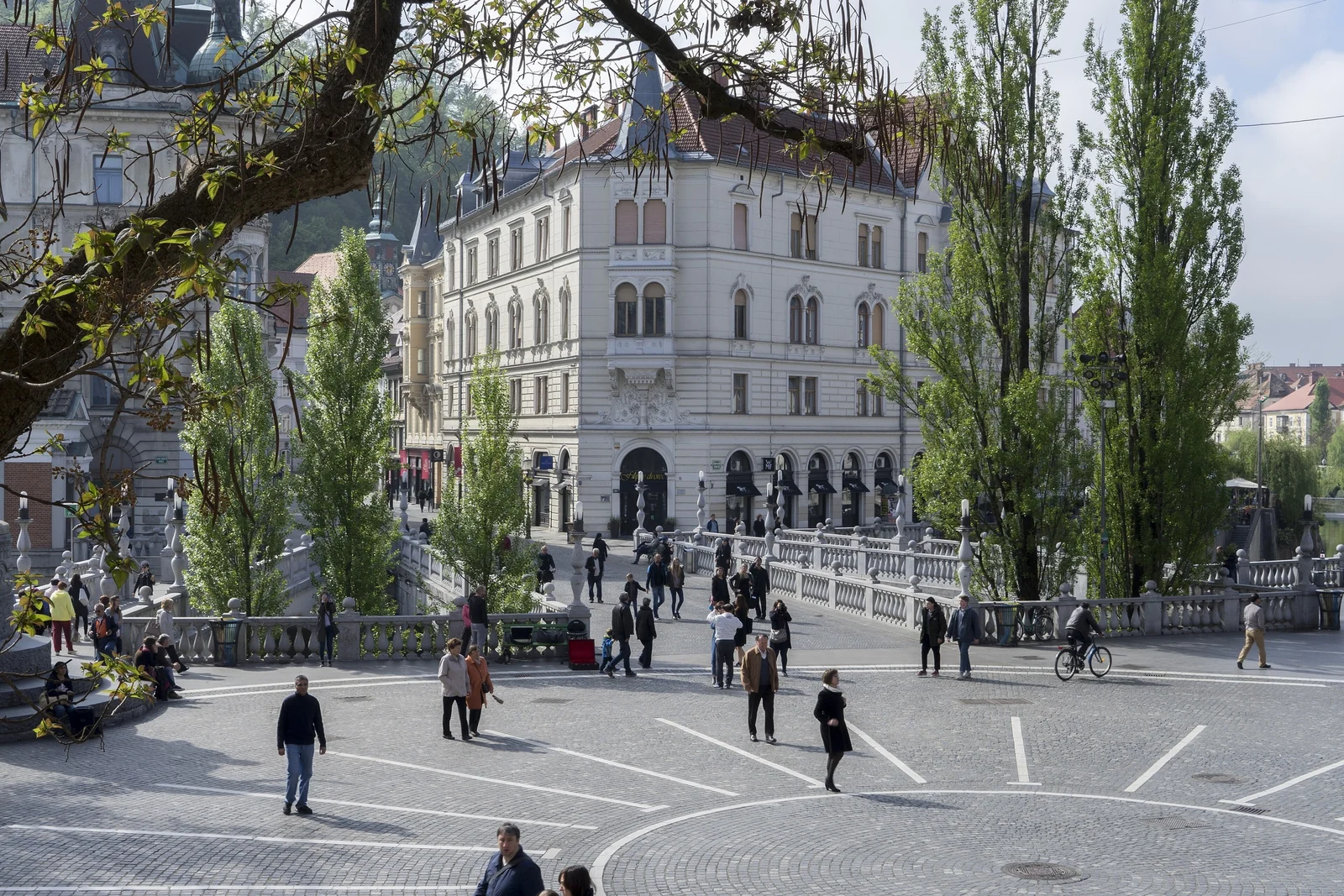
Much of what makes the center so pleasant comes from one man. Architect Jože Plečnik reshaped Ljubljana between the two world wars, treating the river, its embankments and its bridges as one long public space. In 2021 his works in the city were added to the UNESCO World Heritage List as an example of human-centered urban design.
- Triple Bridge (Tromostovje): Plečnik added two footbridges on either side of an older stone bridge, creating the city's best-known landmark by Prešeren Square.
- Cobblers' Bridge (Šuštarski most): a wide, column-lined bridge that works more like a small square over the water.
- The Central Market colonnade: a long riverside arcade that links the market stalls to the water.
- National and University Library (NUK): a brick-and-stone facade with a dramatic dark staircase leading up to the reading room.
The Castle, the Market and the River
Ljubljana Castle crowns the hill above the old town. You can walk up in 15 to 20 minutes or take the funicular from Krekov Square. The courtyard is free to enter; the viewing tower, with its view over red roofs toward the Kamnik Alps, needs a ticket.
Come down for the Central Market, open Monday to Saturday, where farmers sell cheese, honey, mushrooms and seasonal fruit. Nearby, the Dragon Bridge with its four bronze dragons nods to the city's symbol. In the evening, walk the embankments or take a short boat ride on the river, then pick a terrace along the water. The official Visit Ljubljana site lists current tours and opening hours.
Lake Bled: The Island, the Castle and Vintgar Gorge
Bled is about an hour north of Ljubljana, and yes, it is as photogenic as every postcard suggests. It is also busy, especially in summer, so stay overnight if you can. Early morning and the hour before sunset are when the lake is at its calmest.
Bled Island and the Pletna Boats
Slovenia's only natural island holds the Church of the Assumption of Mary. Traditional flat-bottomed pletna boats, rowed standing up, carry visitors across; you can also rent a rowing boat or paddleboard. From the landing, 99 stone steps lead up to the church, where visitors ring the wishing bell by pulling a rope. The walk around the whole lake is about 6 km and flat.
Bled Castle
Perched on a cliff above the north shore, Bled Castle is one of the oldest castles in Slovenia, with written records going back to the early 11th century. You're really paying for the terrace view.
Vintgar Gorge, Ojstrica and Mala Osojnica
Vintgar Gorge, a few kilometers north of Bled, follows the Radovna River for about 1.6 km on wooden walkways bolted to the rock, ending at the Šum waterfall. The route is now one-way and the gorge closes in winter, so check the season and ticketing on its official site before you go.
For the classic view of the island framed by the castle, climb one of the hills on the lake's southwest side. Ojstrica is the shorter, easier option, roughly 20 to 30 minutes uphill on a rooty path. Mala Osojnica is higher and steeper, with a couple of ladders near the top. Wear proper shoes and avoid both after rain.
Lake Bohinj, Savica Waterfall and Triglav National Park
Half an hour's drive southwest of Bled, Lake Bohinj is larger, wilder and much quieter. It is the largest permanent lake in Slovenia and sits inside Triglav National Park, with steep forested slopes on three sides. Swimming is cold but glorious in midsummer.
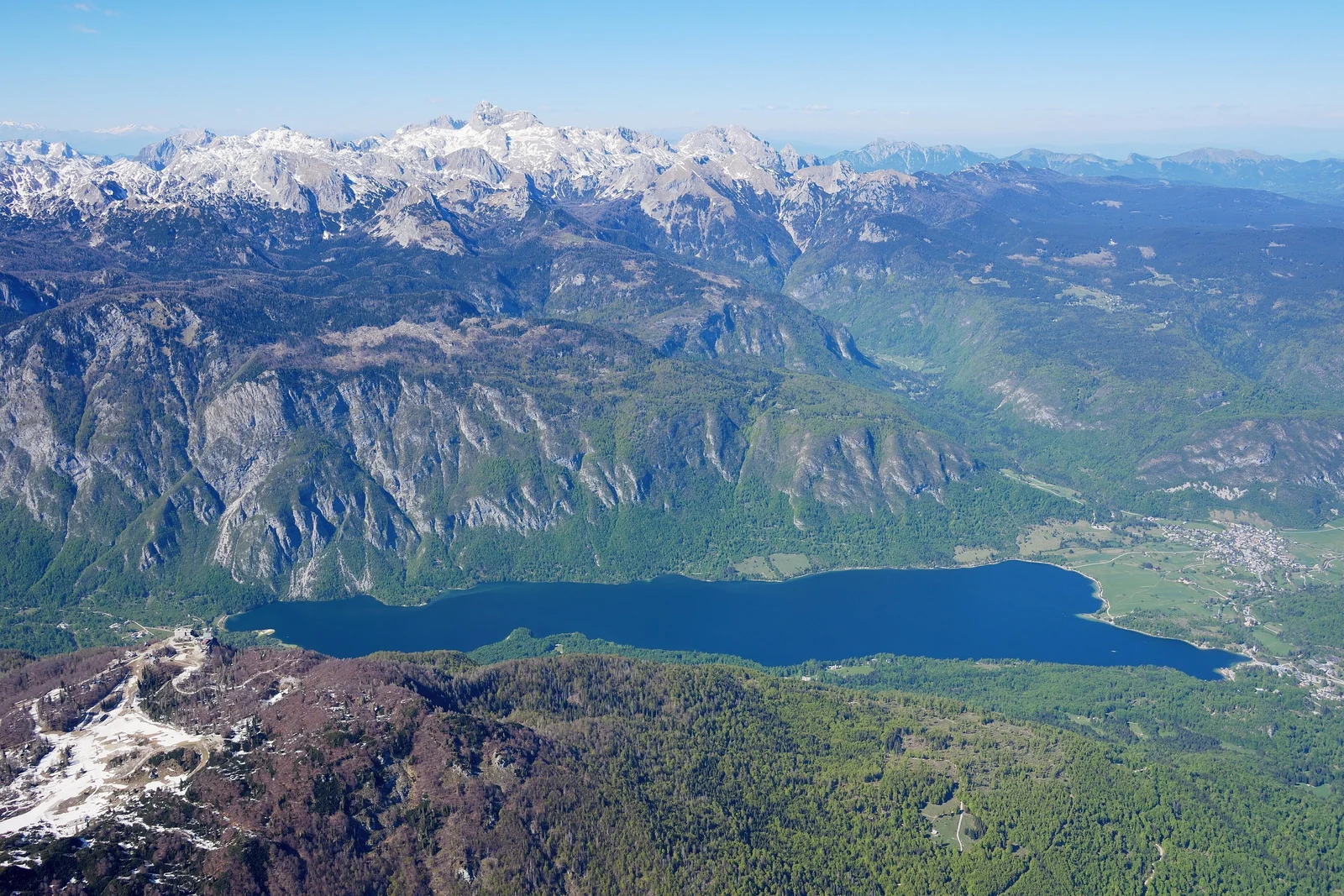
Start at Ribčev Laz on the eastern shore, where a stone bridge and the small Church of St. John the Baptist make the classic Bohinj scene. From the western end at Ukanc, a trail of several hundred steps climbs through the woods to Savica waterfall, which drops in a slender, forked stream from a cliff into a green pool. Above the lake, the Vogel cable car lifts you to a ridge with wide views over the Julian Alps.
Triglav National Park is Slovenia's only national park, and it covers most of the Slovenian Julian Alps. Mount Triglav, at 2,864 meters the country's highest peak, appears on the national flag, and many Slovenians aim to climb it at least once. That is a serious two-day hut-to-hut ascent with exposed sections, best done with a guide unless you have Alpine experience. The Triglav National Park visitor pages cover trails, huts and park rules.
The Vršič Pass and the Soča Valley
The most dramatic way to cross the Julian Alps is the Vršič Pass, Slovenia's highest mountain road at 1,611 meters. It climbs from Kranjska Gora in a series of numbered cobbled hairpins, 50 in total across both sides, and drops into the Trenta Valley. Russian prisoners of war built much of the road during World War I; the small wooden Russian Chapel on the north side remembers those killed in an avalanche during construction.
Vršič is usually open from late spring to autumn and often closes after heavy snow, so check road conditions before you set off. Expect cyclists and motorbikes on summer weekends.
Bovec and Adventure Sports
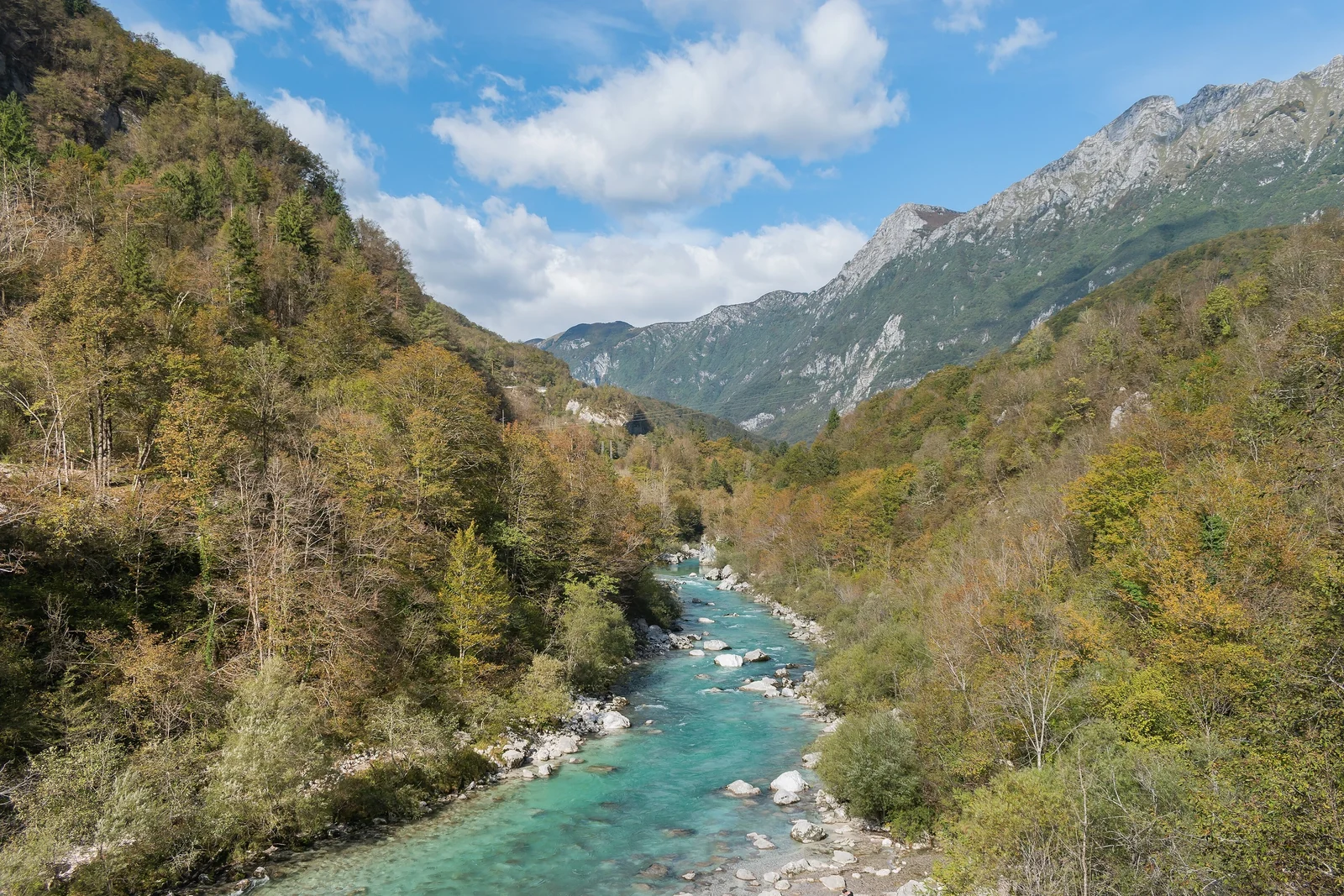
On the far side, the Soča River runs an almost unreal turquoise-green through white limestone. Bovec is the adventure hub, with outfitters running rafting, kayaking, canyoning and ziplines from spring to early autumn. The water is cold even in August, so operators supply wetsuits. To stay dry, walk part of the Soča Trail or see the Great Soča Gorge.
Kobarid and the Isonzo Front
Downriver, the small town of Kobarid was at the center of the Isonzo Front, where Italian and Austro-Hungarian armies fought twelve battles in World War I. The Kobarid Museum tells that story soberly and well, and Ernest Hemingway drew on the 1917 retreat for A Farewell to Arms. Afterward, a short walk leads to the Kozjak waterfall, hidden in a rock chamber.
Caves and Castles: Postojna, Predjama and Škocjan
Southwest of Ljubljana, the Karst region is honeycombed with caves. The two famous ones are very different, so if you only have time for one, pick based on what you want.
Postojna Cave and Predjama Castle
Postojna Cave is the crowd-pleaser: an electric train carries you deep inside before a guided walk past dense stalactite formations. It is also home to the olm, a pale, blind cave salamander nicknamed the "baby dragon." Visits are guided at set times, and the cave stays cool year-round, so bring a jacket.
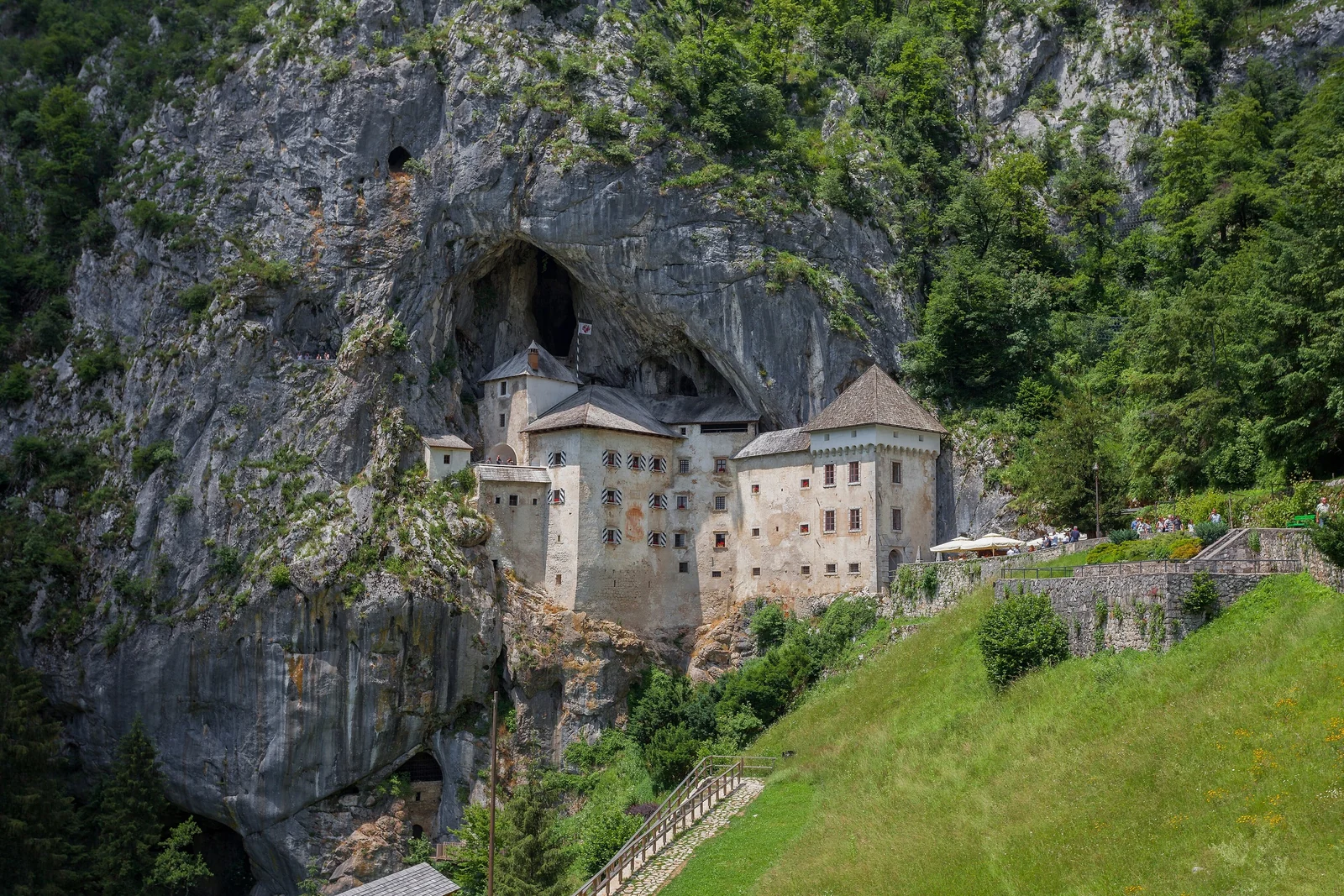
A short drive away, Predjama Castle is built straight into the mouth of a cave halfway up a cliff. Its best-known legend concerns the 15th-century knight Erazem, who reportedly held out here during a long siege. Combined tickets with Postojna are sold on the Postojna Cave official site.
Škocjan Caves
Škocjan Caves, a UNESCO World Heritage Site since 1986, are less about decoration and more about scale. The Reka River has carved one of the largest underground canyons in the world, and the guided route crosses it on a bridge high above the roaring water. In our view, Škocjan is the more powerful experience; Postojna is better with young children.
Piran and the Slovenian Coast
Slovenia's coastline is short, but Piran makes up for it. The old town fills a narrow peninsula of Venetian-style houses, with oval Tartini Square, named after the violinist and composer Giuseppe Tartini who was born here, at its center. Climb up to St. George's Church for views across the Gulf of Piran toward Italy and Croatia, then walk the town walls.
Cars must park in the garages outside town and continue by shuttle or on foot. Swimming is mostly from concrete platforms and rocks rather than sandy beaches. If you're heading south afterward, our Dalmatian coast itinerary picks up where Slovenia's coast ends.
A 7 to 10 Day Slovenia Itinerary
This loop assumes a car for the mountain section. Distances are short, so the limiting factor is time on the ground, not driving.
| Days | Base | Highlights |
|---|---|---|
| 1–2 | Ljubljana | Plečnik's bridges, the castle, the Central Market, the river |
| 3–4 | Bled | Bled Island, the castle, Vintgar Gorge, Ojstrica or Mala Osojnica, a day at Bohinj and Savica |
| 5 | Kranjska Gora to Bovec | Vršič Pass, Russian Chapel, Trenta Valley |
| 6 | Bovec or Kobarid | Rafting or kayaking, Kobarid Museum, Kozjak waterfall |
| 7 | Karst or Piran | Škocjan Caves or Postojna and Predjama on the way to the coast |
| 8–10 (optional) | Piran, then Ljubljana | A slow day in Piran, a second cave, a final night in the capital |
With only seven days, cut the coast and drive from the Soča Valley to the caves, returning to Ljubljana for the last night. With ten, add a second night at Bohinj; it is the place most travelers wish they had stayed longer.
Getting Around Slovenia: Car, Train or Bus
Most visitors fly into Ljubljana Jože Pučnik Airport or arrive overland from Italy, Croatia or Austria.
- Car: the easiest way to see the Julian Alps, the Vršič Pass and the Soča Valley, where public transport is thin. Parking at Bled and Bohinj fills early in summer.
- Motorway vignette: cars need an electronic vignette to use Slovenian motorways and expressways. It is linked to your license plate and sold online in several durations; buy it before you join the motorway. Rental cars from Slovenia normally include one, but check.
- Train: handy for Ljubljana to Postojna and for the scenic Bohinj line. For Bled, the main-line station is Lesce-Bled, a short bus or taxi ride from the lake.
- Bus: frequent from Ljubljana to Bled, Bohinj and Piran, and often more direct than the train. In summer, seasonal lines reach parts of the Soča Valley and Vršič.
Without a car, a sensible plan is Ljubljana, Bled and Bohinj by bus, a day tour to the caves, and Piran by bus. The national tourism board, Slovenia.info, has transport and regional information.
Best Time to Visit Slovenia
- Late May to June: green valleys, full waterfalls, fewer crowds than midsummer. High trails and Vršič may still have snow early in the season.
- July and August: warm lakes, every rafting trip running and mountain huts open, but Bled and Bohinj are crowded and prices peak.
- September to early October: our favorite window. Settled weather, autumn color in the Alps, calmer roads.
- November to March: Ljubljana's festive lights in December and skiing at Kranjska Gora or Vogel, but many gorges close and high passes shut.
What to Eat in Slovenia
Slovenian food borrows from Austria, Italy, Hungary and the Balkans, and it is generous rather than fussy.
- Kremna rezina: Bled's cream cake, a square of vanilla custard and whipped cream between layers of puff pastry. Eat it by the lake; it is the town's signature dessert.
- Štruklji: rolled dumplings, boiled or baked, filled with cottage cheese, tarragon, walnuts or apple. They turn up as a side or a main.
- Potica and jota: a rolled walnut cake traditional at holidays, and a hearty bean and sauerkraut stew from the Karst.
- Soča trout and Piran seafood: grilled river trout in the mountains, fish and squid on the coast.
Look for gostilna (traditional inns) for home cooking at fair prices, and on Fridays from spring to autumn, Ljubljana's Open Kitchen food market fills Pogačar Square with stalls. Local wine is excellent and underrated. Planning more of Central Europe? Our Kraków travel guide pairs well with a regional trip, or browse all European destinations.
Slovenia Travel FAQ
How many days do you need in Slovenia?
Seven days covers Ljubljana, Bled and Bohinj, the Vršič Pass, the Soča Valley and one of the cave systems. Ten days lets you add Piran and slow down at the lakes. Fewer than five days usually means choosing between the mountains and the coast.
Do you need a car to travel in Slovenia?
Not for Ljubljana, Bled, Bohinj, Postojna or Piran, which are linked by buses and some trains. A car makes a big difference for the Vršič Pass and the Soča Valley, where public transport is limited outside summer.
Do you need a vignette to drive in Slovenia?
Yes, if you use motorways or expressways. Slovenia uses an electronic vignette linked to your license plate, available online for different durations. Buy it before entering the motorway; rental cars registered in Slovenia usually already have one.
Is Lake Bled or Lake Bohinj better?
Bled has the island church, the castle and more restaurants, but heavy crowds in summer. Bohinj is larger, quieter and more natural, with better swimming and hiking. Most travelers enjoy seeing both, and they are only about half an hour apart by car.
Which is better, Postojna Cave or Škocjan Caves?
Postojna is easier and more family-friendly, with a train ride and rich formations, plus Predjama Castle nearby. Škocjan, a UNESCO World Heritage Site, is wilder and more dramatic, with a huge underground canyon. If you can only do one and love scenery, choose Škocjan.
When is the Vršič Pass open?
The pass is generally open from late spring to autumn and may close in winter or after heavy snowfall. Opening dates vary with the weather, so check current road conditions before you drive it, especially in spring and late autumn.
What food is Slovenia known for?
Try kremna rezina, the cream cake of Bled, and štruklji, rolled dumplings with sweet or savory fillings. Potica walnut roll, jota stew and Soča trout are also worth ordering, along with local wines.