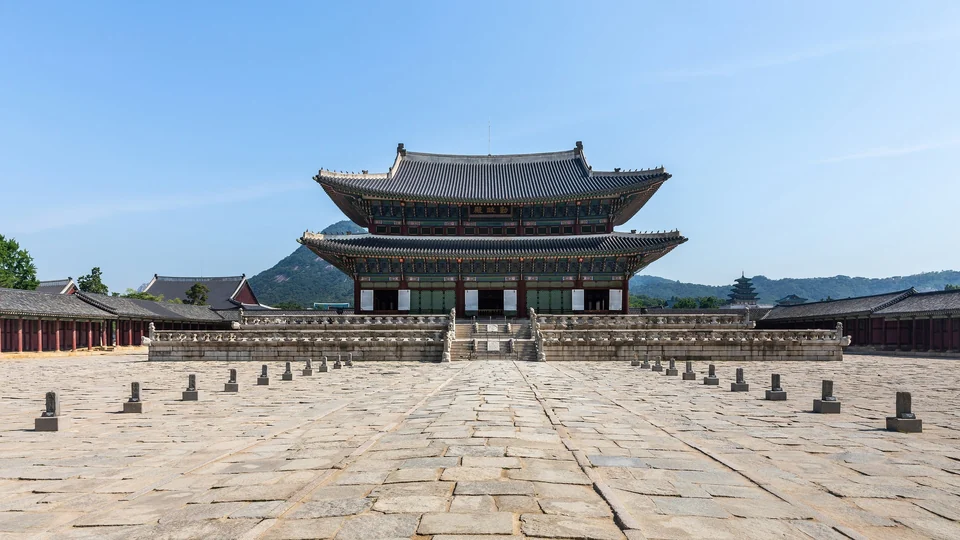



South Korea’s night markets are where the country’s street food comes alive after dark: steaming fish-cake broth, sizzling mung bean pancakes, spicy rice cakes and sweet syrup-filled pancakes cooked in front of you. The best-known are Gwangjang Market in Seoul, Bupyeong Kkangtong Night Market in Busan and Seomun Night Market in Daegu.
They are cheap, sociable and easy to enjoy even if you speak no Korean. This guide covers the markets worth planning an evening around, the dishes to order and practical tips on hours, payment and etiquette. If you are combining Korea with other stops in the region, browse our Asia destination guides as well.
What Makes Korean Night Markets Special
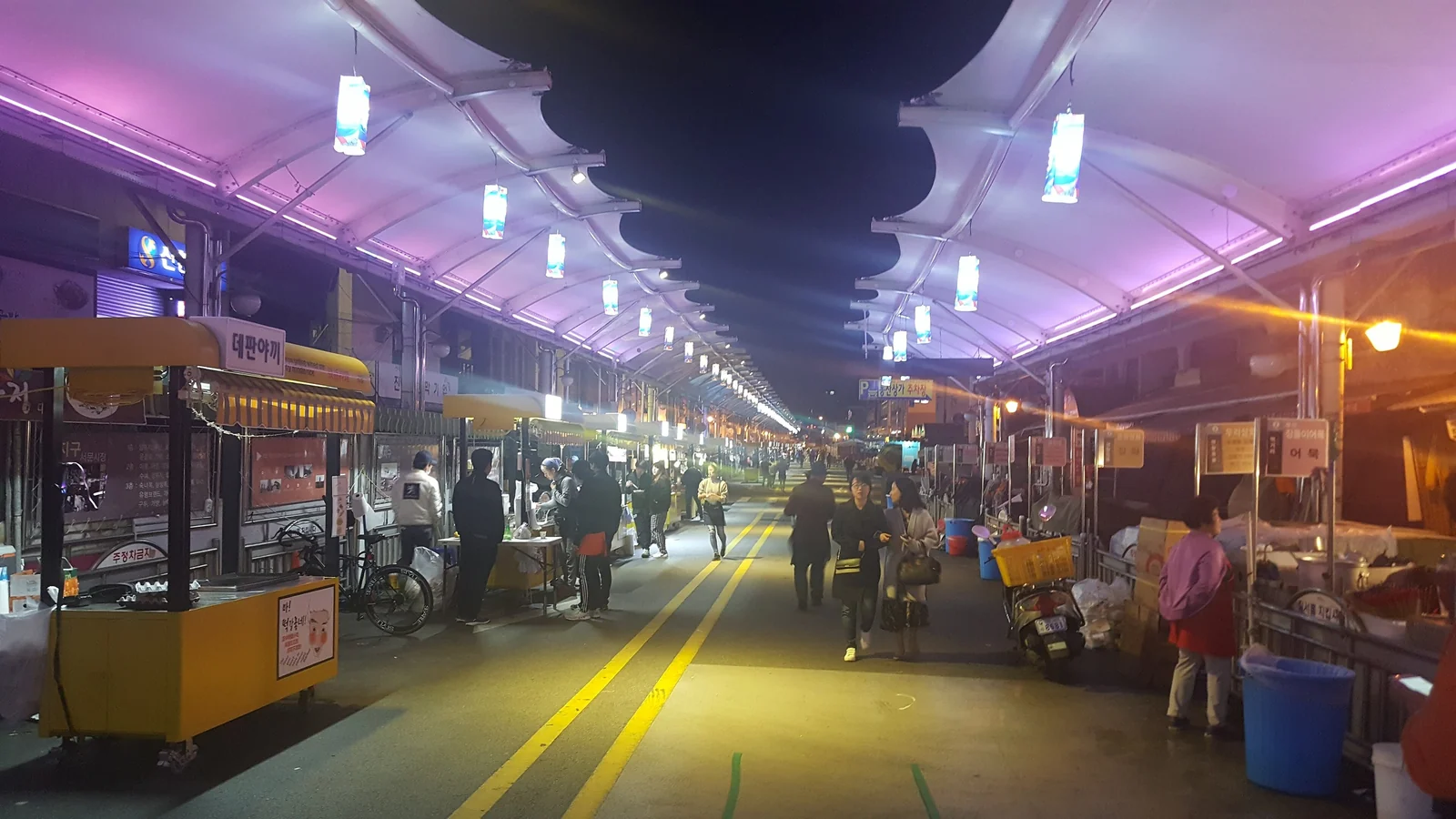
Korea has two kinds of evening food markets. Traditional markets such as Gwangjang in Seoul trade during the day but keep their food alleys busy into the evening. Dedicated night markets, a newer idea, set up rows of mobile carts in a market street or plaza once the day traders close.
Busan led the way: Bupyeong Kkangtong Market opened what is described as Korea’s first permanent night market in 2013. Other cities followed, and today many regions run evening markets that mix classic bunsik (snack food) with fusion dishes and flavors from across Asia. Portions are small, so the fun is in grazing from stall to stall.
The Best Night Markets in South Korea
Gwangjang Market, Seoul
Founded in 1905, Gwangjang Market is often called Korea’s first permanent daily market. Its covered food alley is lined with counters where cooks fry bindaetteok (mung bean pancakes), roll bite-size mayak gimbap and serve yukhoe, a seasoned raw beef dish. It gets busiest from late afternoon, when office workers and visitors squeeze onto the benches. It is a short walk from Jongno 5-ga Station on Seoul Subway Line 1.
Seoul Bamdokkaebi Night Market
Named after the dokkaebi, a goblin of Korean folklore, this seasonal market was launched by the Seoul Metropolitan Government in 2016. It has traditionally run on Friday and Saturday evenings in the warmer months, with food trucks, craft stalls and live performances at venues such as Yeouido Hangang Park and Dongdaemun Design Plaza. Venues, dates and hours change from year to year, so check the city’s official announcements before you go.
Bupyeong Kkangtong Night Market, Busan
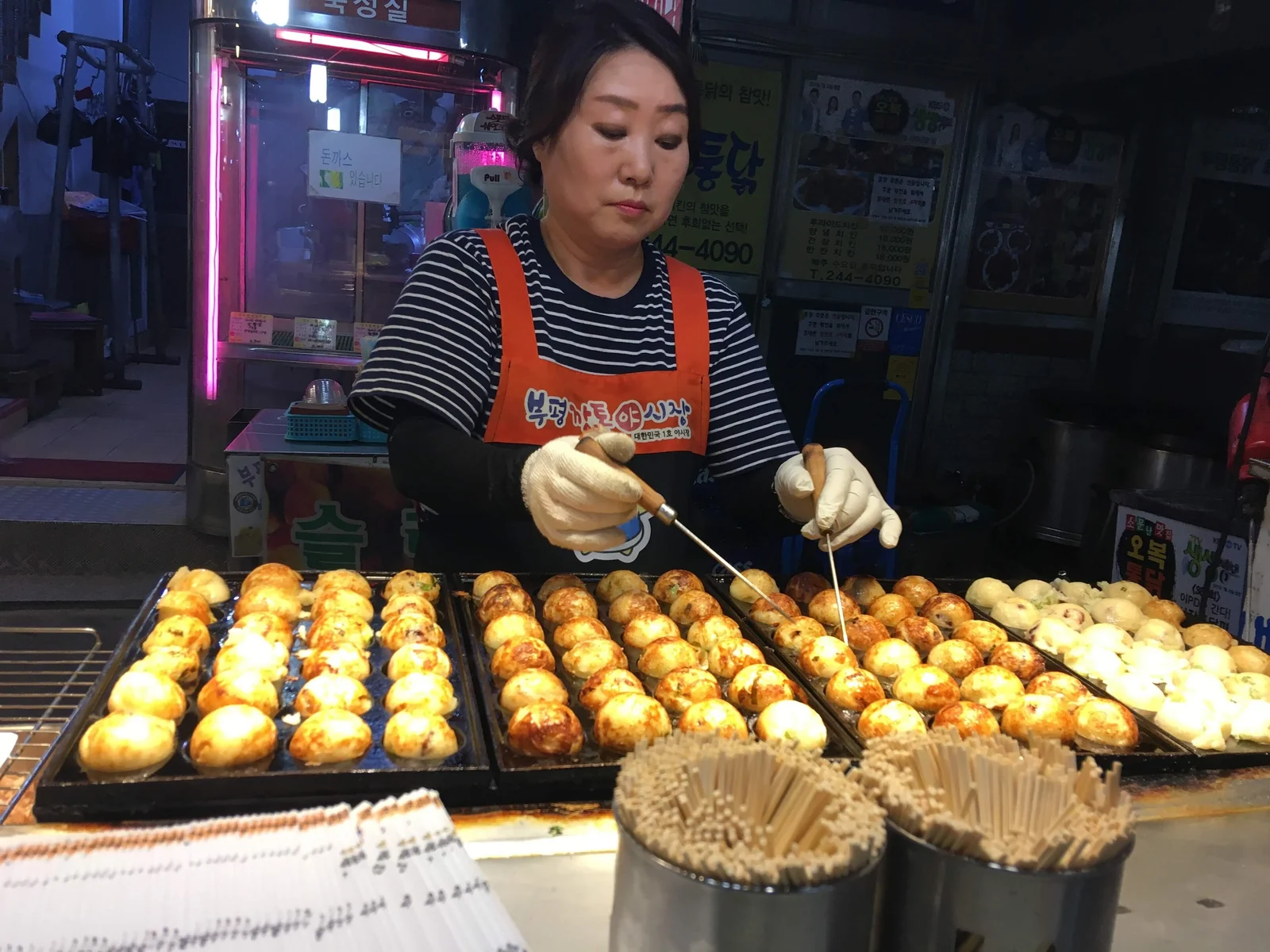
Kkangtong means “tin can,” a nod to the canned goods that were traded here after the Korean War. According to Visit Busan, the night market opens daily from 7:30 p.m. to midnight, except on traditional holidays, when carts roll into the alley and serve Korean, Japanese, Chinese and Vietnamese dishes. It is about a 10-minute walk from Jagalchi Station on Busan Metro Line 1.
Seomun Night Market, Daegu
Daegu’s Seomun Market is one of the country’s oldest large traditional markets. Its night market first opened in June 2016 along a street of roughly 350 meters, with dozens of carts selling grilled skewers, fusion snacks and desserts. It has been promoted as the largest night market in Korea.
More night markets to try
- Myeongdong, Seoul: in the evening the shopping streets fill with snack carts, a convenient if pricier introduction for first-time visitors.
- Dongmun Market, Jeju City: Jeju’s largest traditional market runs a nightly food section, with local specialties such as black pork and citrus-flavored treats.
- Nambu Market, Jeonju: a weekend night market on Friday and Saturday evenings next to the city’s famous Hanok Village.
10 Korean Street Foods to Try at Night Markets
You will not find every dish at every market, but these are the classics. Most cost only a few thousand won, so you can try several in one evening.
- Tteokbokki: chewy rice cakes simmered in a sweet and spicy gochujang sauce, often with fish cake and boiled egg.
- Eomuk (odeng): fish cake threaded on skewers and kept warm in broth. Busan is particularly famous for it, and many stalls let you sip the broth.
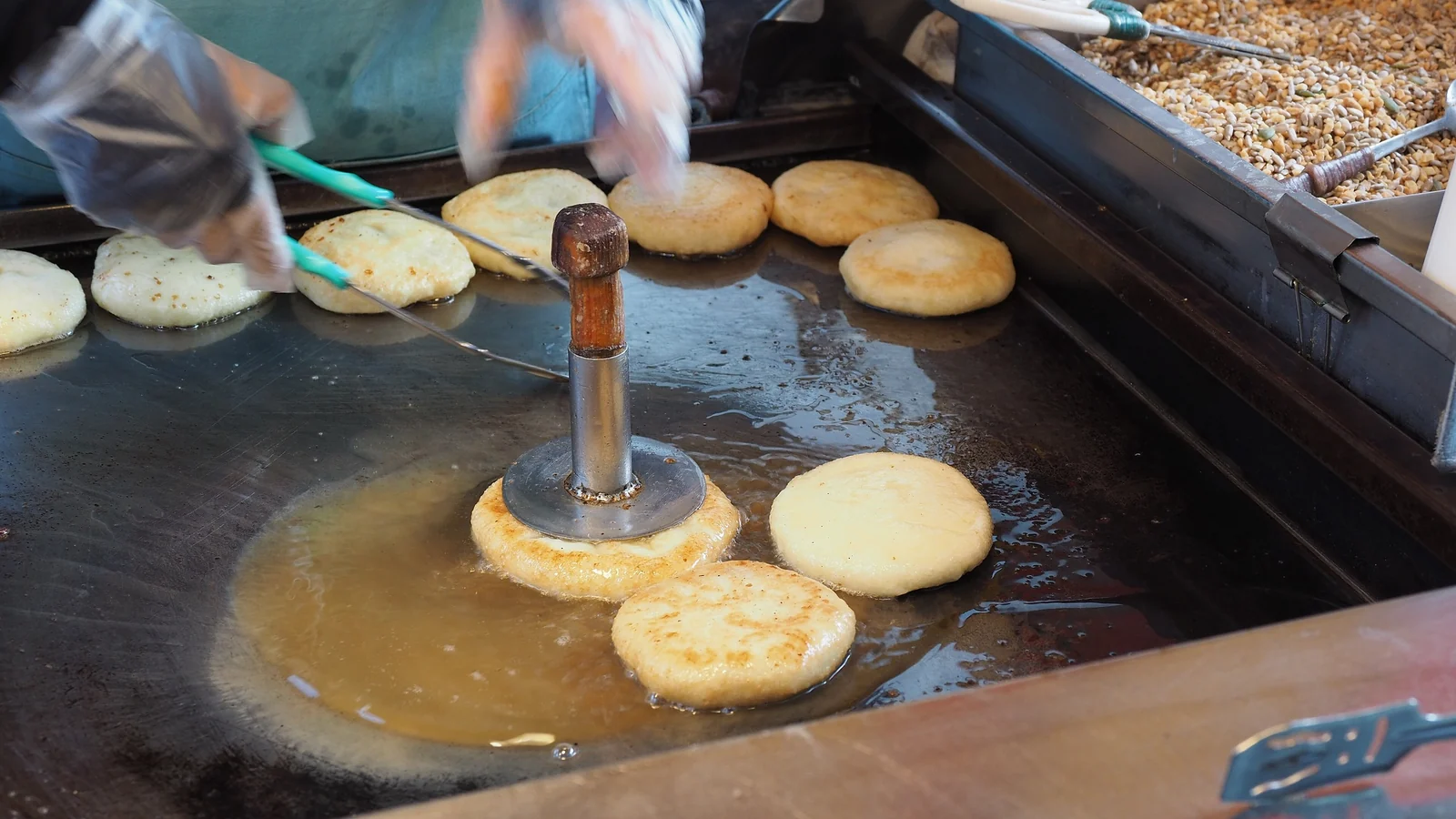
- Hotteok: a griddle-fried pancake filled with brown sugar, cinnamon and nuts. Busan’s ssiat hotteok is stuffed with seeds after frying.
- Bindaetteok: a thick, crisp mung bean pancake with vegetables and sometimes pork, often paired with makgeolli rice wine.
- Mayak gimbap: small rice and seaweed rolls dipped in a mustard and soy sauce. The name means “addictive gimbap.”
- Twigim: Korean-style tempura of vegetables, squid, sweet potato or boiled egg, great dipped in tteokbokki sauce.
- Sundae: Korean blood sausage stuffed with glass noodles, usually served sliced with salt and pepper.
- Dakkochi: grilled chicken skewers brushed with a sweet or spicy glaze.
- Bungeoppang: a fish-shaped pastry filled with red bean paste or custard, especially popular in winter.
- Gyeran-ppang: a small, fluffy loaf baked with a whole egg on top, a favorite winter snack.
Night Market Hours at a Glance
Hours below are the typical published opening times. They shift with the season, weather and holidays, so treat them as a guide and confirm locally.
| Market | City | When it runs | Known for |
|---|---|---|---|
| Gwangjang Market | Seoul | Daily; food alley busy into the evening | Bindaetteok, mayak gimbap, yukhoe |
| Bamdokkaebi Night Market | Seoul | Seasonal, usually Friday and Saturday evenings | Food trucks, crafts, performances |
| Bupyeong Kkangtong | Busan | Daily, 7:30 p.m. to midnight (except traditional holidays) | International street food |
| Seomun Night Market | Daegu | Evenings; check current days | Grilled skewers, fusion snacks |
| Dongmun Market | Jeju City | Nightly, roughly 6 to 11 p.m. in summer | Black pork, citrus treats |
| Nambu Market | Jeonju | Friday and Saturday evenings | Local snacks next to Hanok Village |
Tips for Visiting Korean Night Markets
- Carry some cash. Cards are widely accepted in Korea, but small stalls may prefer cash, and small notes speed things up.
- Arrive early. Popular stalls build queues soon after opening, and some sell out before closing time.
- Eat where you buy. Many vendors expect you to eat standing at the stall and hand back skewers and cups. Walking while eating in crowded alleys is frowned upon.
- Take your trash with you. Public bins can be scarce, so carry a small bag.
- Point and ask. Many stalls display pictures or plastic samples. A simple “igeo juseyo” (this one, please) works well.
- Check dietary needs. Broths are usually fish-based and many sauces contain seafood or meat, so vegetarian options can be limited.
Best Time to Visit South Korea’s Night Markets
Spring (April to June) and autumn (September to November) are the most comfortable seasons for eating outdoors, and they coincide with Seoul’s seasonal night markets. Summer evenings are warm and humid, with the monsoon season usually in July, while winter nights are cold but bring out seasonal snacks such as bungeoppang, hotteok and gyeran-ppang. If you are traveling in winter, the milder night markets of southern Taiwan are covered in our Kaohsiung travel guide.
Weekends are liveliest but most crowded. For a calmer visit, go on a weekday evening soon after opening. If you are building a wider trip around food, our Tokyo travel guide and Mexico City guide cover two more great street-food cities, and you can explore more of the region through our wild Great Wall of China guide.
South Korea Night Markets FAQ
What is the most famous night market in Seoul?
Gwangjang Market is the best-known place for street food in Seoul, famous for bindaetteok, mayak gimbap and yukhoe. For a dedicated night market, the seasonal Seoul Bamdokkaebi Night Market runs on weekend evenings in the warmer months at venues such as Yeouido Hangang Park.
What time do night markets open in South Korea?
Most open in the early evening, between about 5 and 7:30 p.m., and close between 10 p.m. and midnight. Busan’s Bupyeong Kkangtong Night Market, for example, runs daily from 7:30 p.m. to midnight except on traditional holidays. Hours change with the season, so check locally.
Which is Korea’s first night market?
Bupyeong Kkangtong Market in Busan opened what is described as Korea’s first permanent night market in 2013. Seoul’s Gwangjang Market, founded in 1905, is much older, but it is a traditional daily market rather than a dedicated night market.
Can you pay by card at Korean night markets?
Often yes, as card payment is very common in South Korea. However, some small stalls and carts prefer cash or may not accept foreign cards, so it is wise to carry a modest amount of Korean won in small notes when you visit a market.
Are there vegetarian options at Korean night markets?
Some, but choose carefully. Hotteok, gyeran-ppang, bungeoppang and some twigim are usually meat-free. Tteokbokki sauce and fish-cake broth are often made with seafood stock, and many pancakes contain pork, so ask the vendor if you avoid meat or fish.
What should I eat first at a Korean night market?
Start with the classics: a skewer of eomuk in broth, a portion of tteokbokki and a freshly fried hotteok for dessert. At Gwangjang Market, add bindaetteok and mayak gimbap. Sharing small portions lets you taste more dishes in one evening.