
Seoul is the capital of South Korea, a city of roughly nine to ten million people that has been the seat of power since the Joseon dynasty founded it as its capital in 1394. It is one of the few big Asian capitals where a 14th-century palace, a mountain trail and a late-night food market all sit on the same subway map, and where you can move between them in minutes.
Four days is a comfortable first visit: two for palaces, old lanes and food, one for Namsan and the Han River, and one for a day trip. This Seoul travel guide covers the royal palaces, Bukchon and Insadong, how the main neighborhoods differ, what and how to eat, subway and T-money basics, the best seasons, three day trips and where to base yourself.
Seoul also pairs well with the rest of the country. For more ideas, browse our South Korea travel guides.
Palaces: Gyeongbokgung and Changdeokgung
Seoul has five grand royal palaces from the Joseon era, and you do not need all of them. Two are essential, and they feel quite different: one is formal and monumental, the other is a hillside retreat with gardens.
Gyeongbokgung, the Grand Main Palace
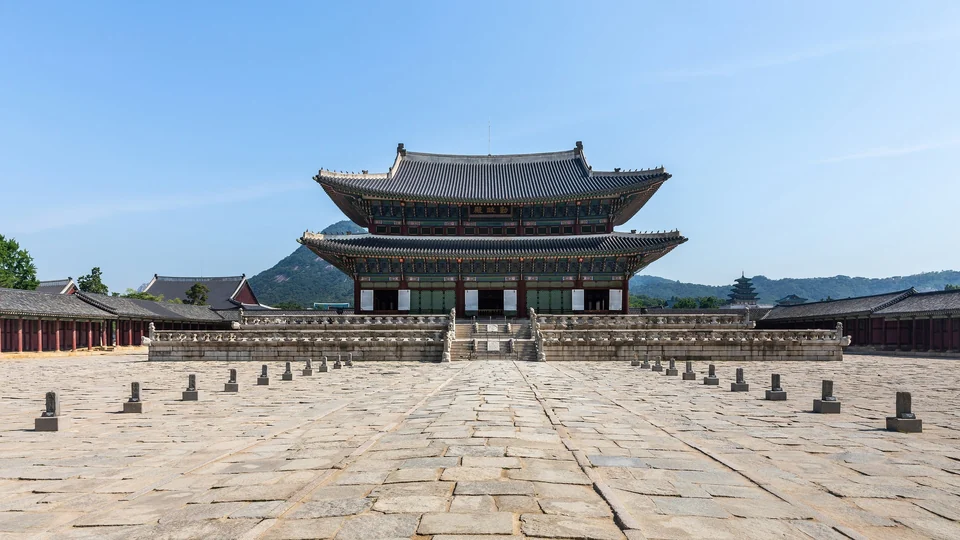
Gyeongbokgung was built in 1395 and is the largest of the five. Most of it burned during the Japanese invasions of the 1590s and lay in ruins for generations before a major rebuilding in the 1860s, and restoration work has continued in modern times. Enter through Gwanghwamun gate, cross the huge courtyards and aim for Geunjeongjeon, the throne hall, where the royal court held its most formal ceremonies.
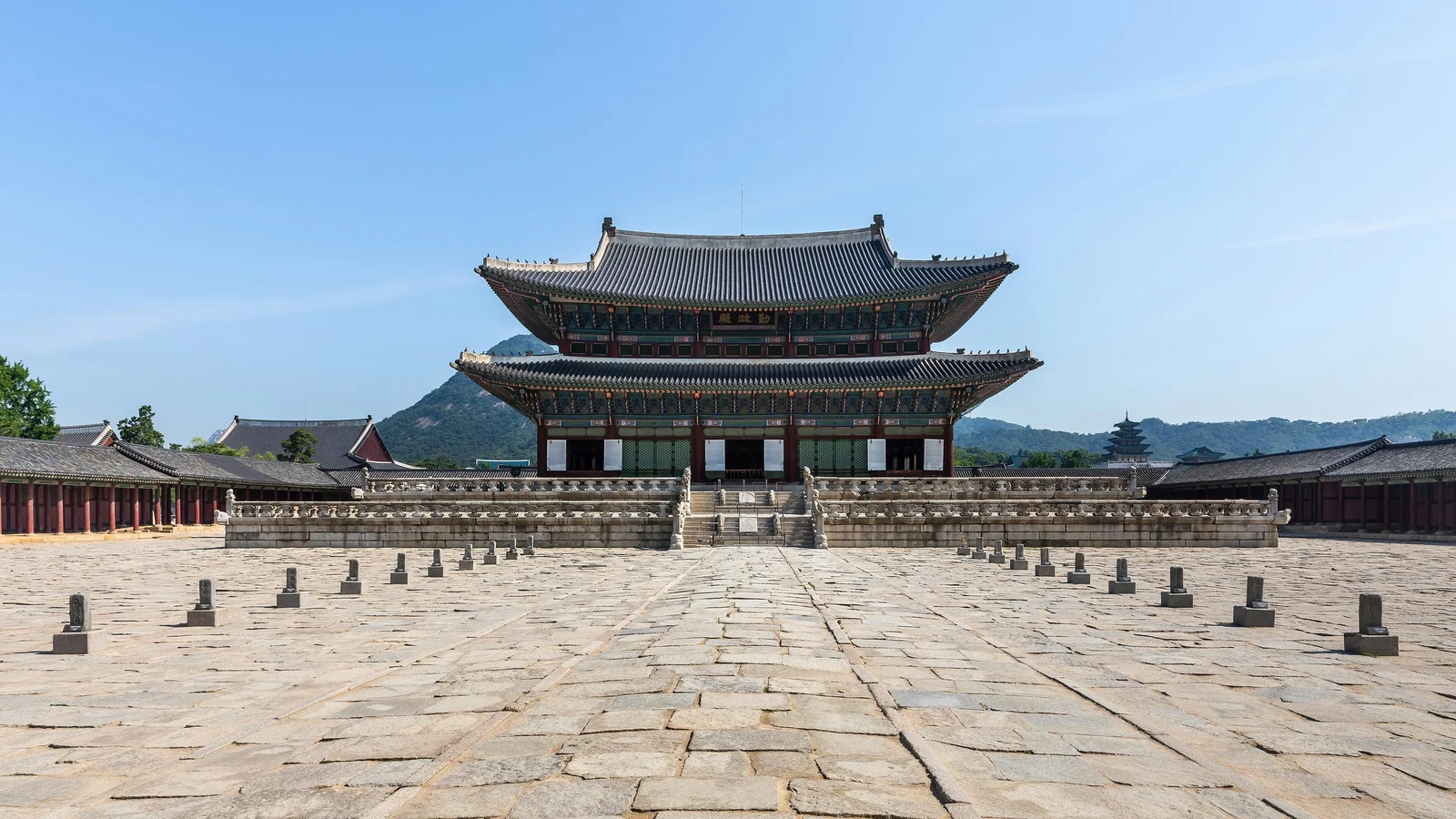
Two details are worth planning around. The guard-changing ceremony at the gate is a daily fixture, so check the times on the official palace pages. And visitors wearing hanbok, the traditional Korean dress, have been admitted free, which explains the rental shops around the palace. The palace closes one weekday each week, normally Tuesday, so confirm before you go.
Changdeokgung and the Secret Garden
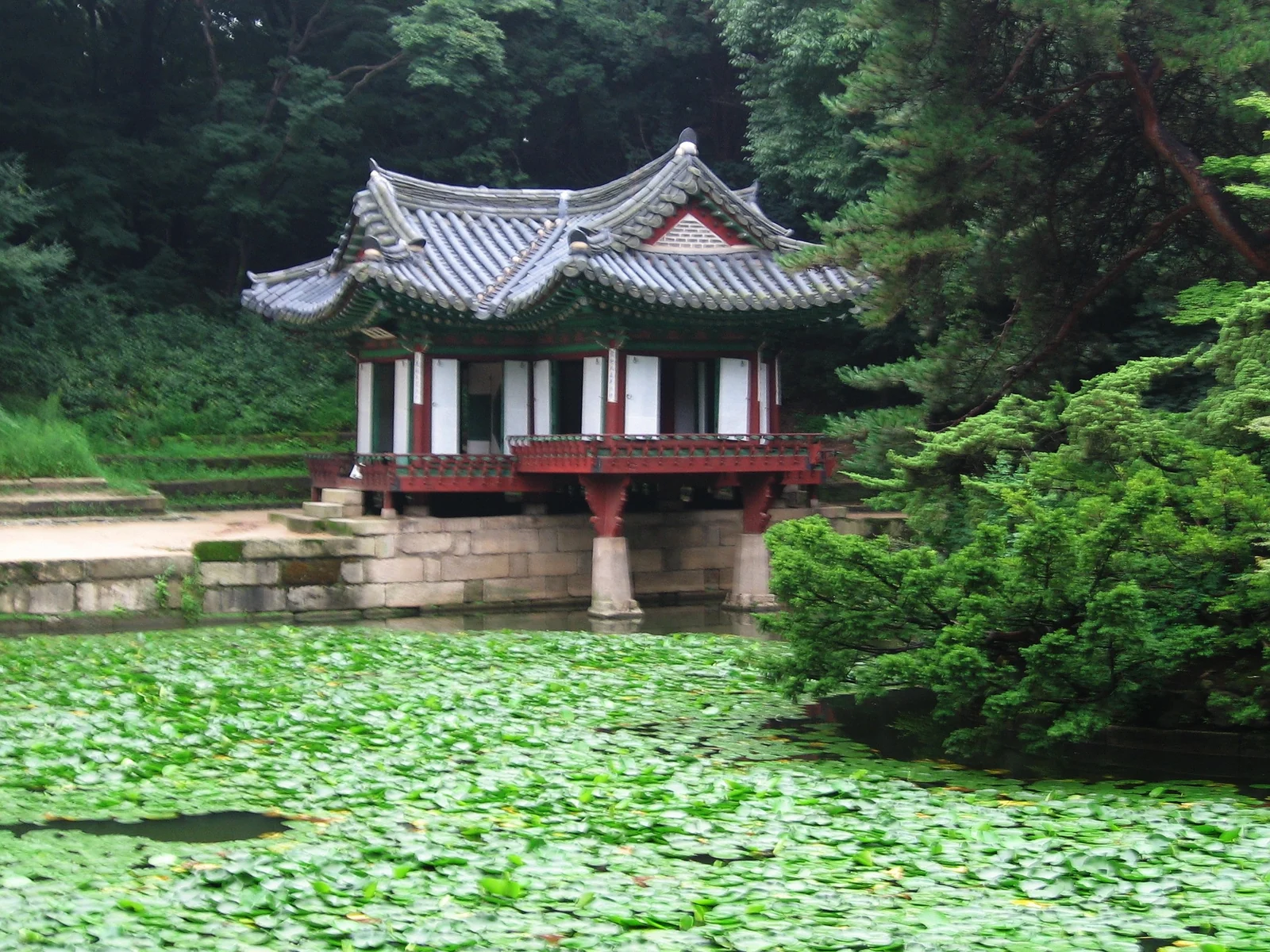
Changdeokgung dates from 1405 and was a favored residence of Joseon kings. UNESCO inscribed it in 1997 because its buildings follow the contours of the land instead of imposing a rigid axis. That is the quick way to tell it apart from Gyeongbokgung: here the pavilions seem to have grown out of the hillside.
The prize is Huwon, the rear garden often called the Secret Garden, with its lotus pond, pavilions and old trees. Entry to Huwon is on a guided walk with limited places, so reserve through the official ticketing page rather than counting on turning up. Autumn is the most popular season, and the best slots fill early. The UNESCO listing for Changdeokgung gives the heritage background.
Make the Most of Both
- Start early. The courtyards of Gyeongbokgung have almost no shade, and morning light is better for photos.
- Ask about a combined ticket. A multi-palace pass exists, and it can save money if you plan to see more than one royal site.
- Add Jongmyo. The royal ancestral shrine, UNESCO-listed in 1995, is a short walk from Changdeokgung and far quieter than either palace.
- Check weekly closing days. Palaces close on different weekdays, so do not stack two on the same day without checking.
Bukchon and Insadong: Hanok Lanes and Tea Houses
Between the two main palaces, the hillside lanes of Bukchon hold hundreds of hanok, the traditional Korean houses with tiled roofs and wooden gates. The streets are steep and still residential, so visitors are asked to keep quiet and respect posted visiting hours. Go in the early morning, take in the view toward the skyline from the upper lanes, and then walk down toward Insadong.
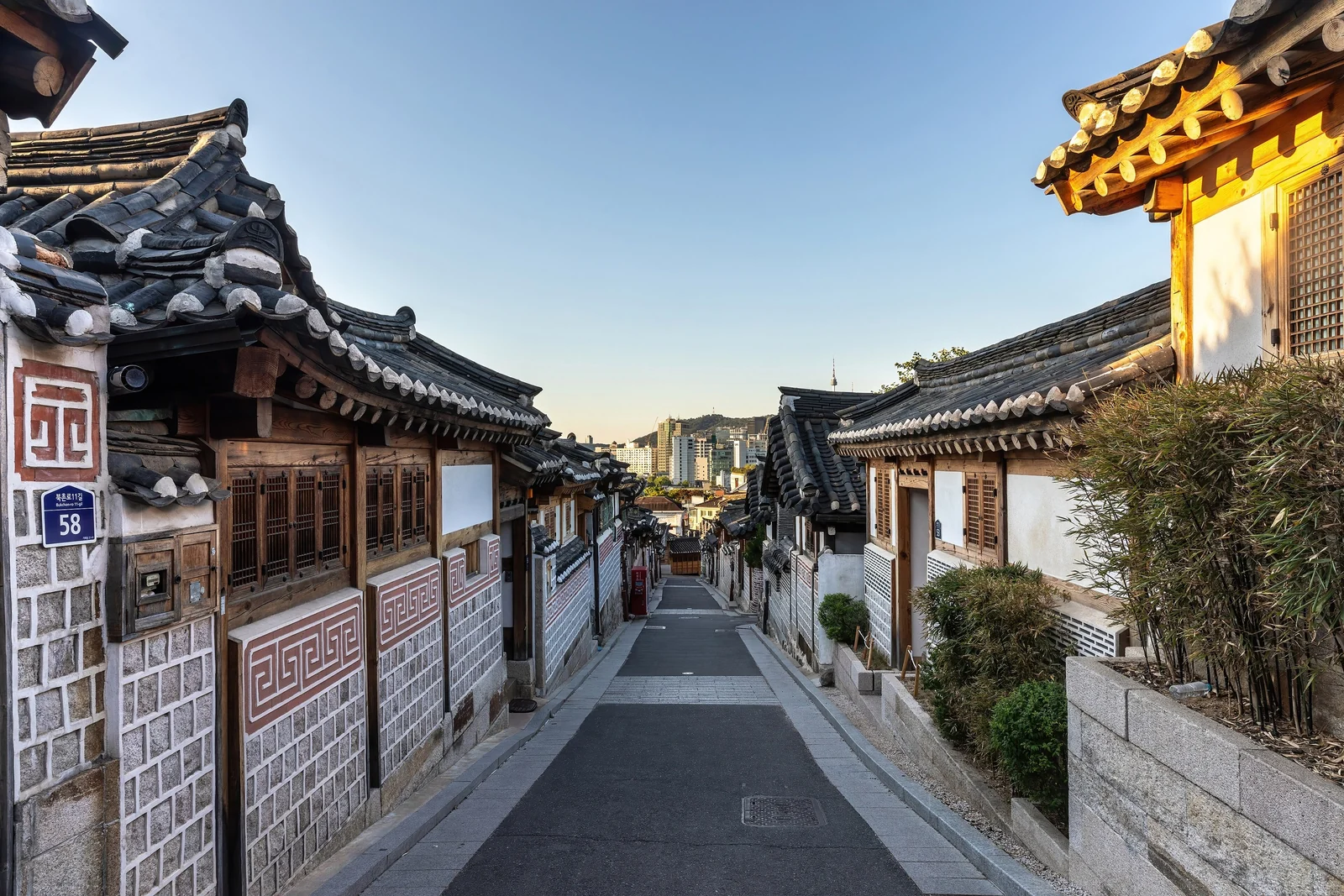
Insadong is where the old city feels most like a market: craft shops, calligraphy supplies, ceramics, traditional tea houses and galleries on the main street and in the alleys that run off it. Skip anything that looks mass-produced and look for ceramics, paper goods and stationery. Tea is the better reason to linger, with courtyard houses serving teas and sweet rice-based snacks.
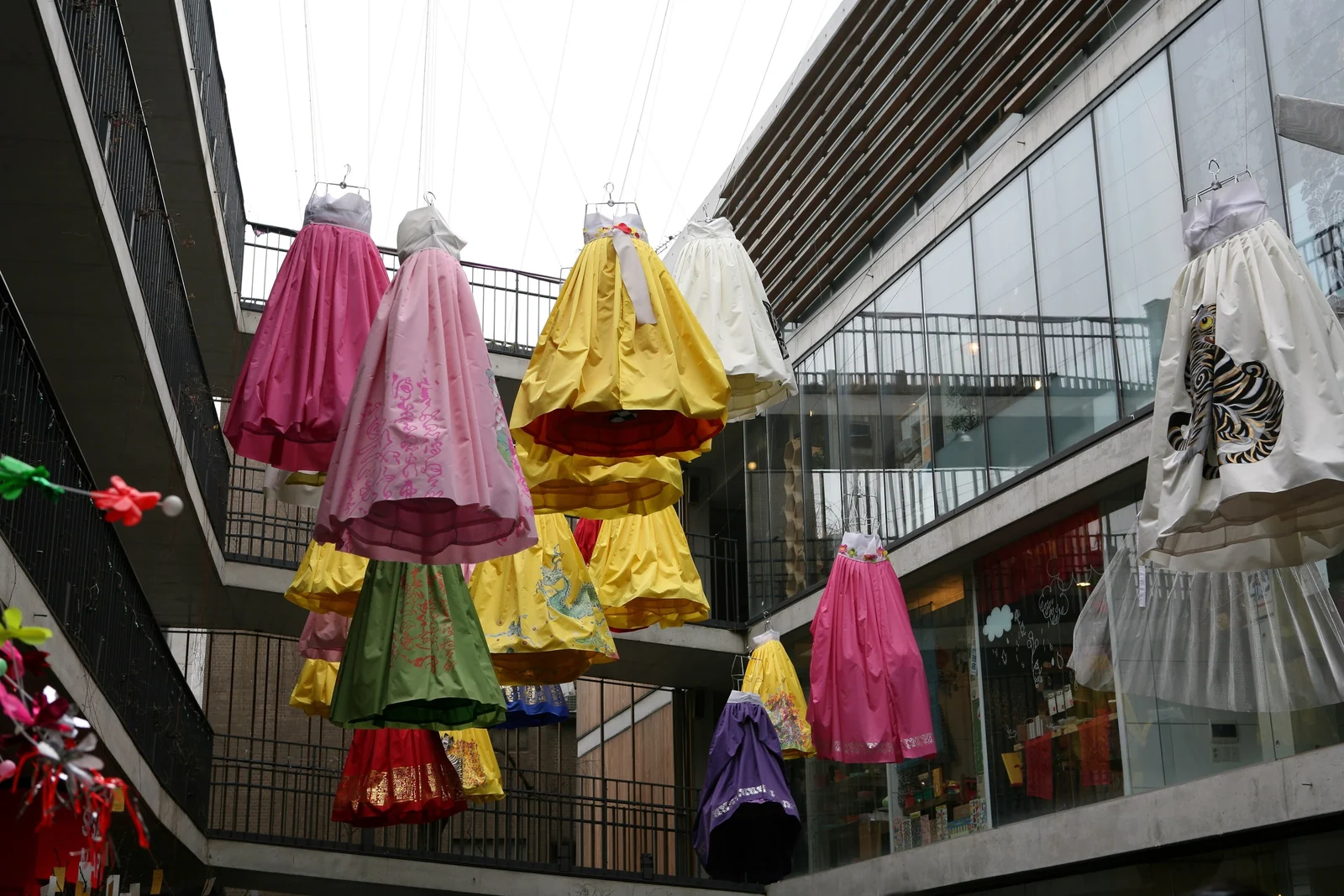
Nearby Ikseon-dong is a tight cluster of small hanok converted into cafes and restaurants. It gets crowded on weekend afternoons, so aim for a weekday. Add a short walk along the Cheonggyecheon, the stream that runs through downtown, and you have a full day of central Seoul on foot.
Seoul Neighborhoods at a Glance
Seoul has no single center, which can make planning confusing. Think of it as a set of districts, each with its own mood and its own subway stations.
| Neighborhood | Best for | What to know |
|---|---|---|
| Myeongdong | Shopping, skincare, street food | Busiest and most tourist-oriented, central for first-timers |
| Hongdae | Nightlife, live music, student cafes | Liveliest after dark, near Hongik University |
| Itaewon | International restaurants, bars, mixed crowds | Hilly streets with a cosmopolitan feel |
| Jongno and Bukchon | Palaces, hanok, tea, galleries | Quieter at night, walkable from the palaces |
| Seongsu | Converted factories, cafes, design shops | Popular with younger locals, best on foot |
| Gangnam | Business towers, department stores, K-pop industry | Modern and polished, less historic |
Myeongdong is the one that divides opinion. It is loud, packed and aimed squarely at shoppers, but the street-food stalls and the late-evening energy are hard to match, and it works well for a first night. Hongdae is the better choice if you want live music, buskers and cheap late-night bars. Itaewon offers the widest range of international cooking, while Seongsu suits anyone who prefers a slower pace of cafes, design stores and former workshops.
What to Eat in Seoul: BBQ, Markets and Street Food
Eating is the real organizing principle of a Seoul day. You rarely need a reservation or a plan: most neighborhoods have a street or an alley of restaurants that specialize in one thing, and you choose by smell and by the line outside.
Korean BBQ
The classic is samgyeopsal (pork belly) or galbi (marinated ribs) grilled at your table. You wrap pieces in lettuce or perilla leaves with garlic, a dab of ssamjang paste and a side dish or two. Many restaurants set a minimum of two portions, so it is easier as a pair or group. Staff will often cut and turn the meat for you at the start, so watch and copy.
Markets
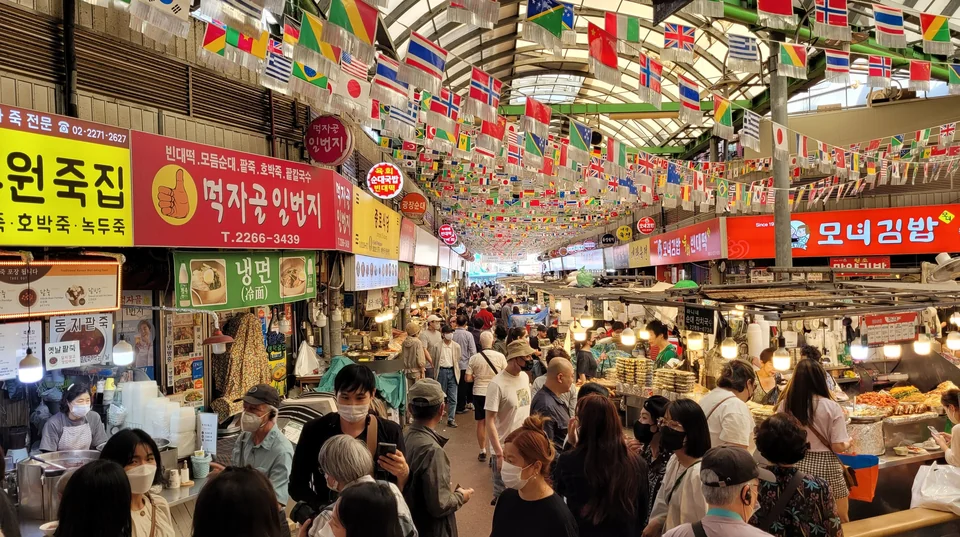
Gwangjang Market, open since 1905, is the one most visitors head for. Its food lanes serve bindaetteok (mung bean pancakes), mayak gimbap, hand-cut noodles and raw beef dishes, all eaten on stools beside the cook. Namdaemun is the older, larger and more chaotic market, strong on kitchenware, clothes and snacks. For night-market culture across the country, read our guide to night markets in South Korea.
Street Food and Everyday Meals
- Tteokbokki: chewy rice cakes in a sweet and spicy red sauce, a staple of street stalls.
- Hotteok: a griddled pancake with a sweet filling, a cold-weather favorite.
- Gimbap: rice and fillings rolled in seaweed, a cheap and portable meal.
- Soups and stews: kimchi-jjigae, sundubu-jjigae and gukbap are filling single-dish meals, and many places serve them solo.
Dining alone is easiest at gimbap shops, noodle counters and soup restaurants, and hardest at BBQ places. Banchan, the small side dishes, arrive with the meal and are often refilled on request. If you like Asian street food generally, our guides to Tokyo and Kaohsiung make good comparisons.
Namsan and the Han River
Namsan: Seoul From Above
Namsan is the green hill in the middle of the city, rising to roughly 260 meters, with N Seoul Tower on its summit. You can ride a cable car up from the Myeongdong side, or walk the wooded paths, which takes under an hour for most people. The view of the city spread out toward the mountains on every side is the main reward, and sunset is both the busiest and the best time to go.
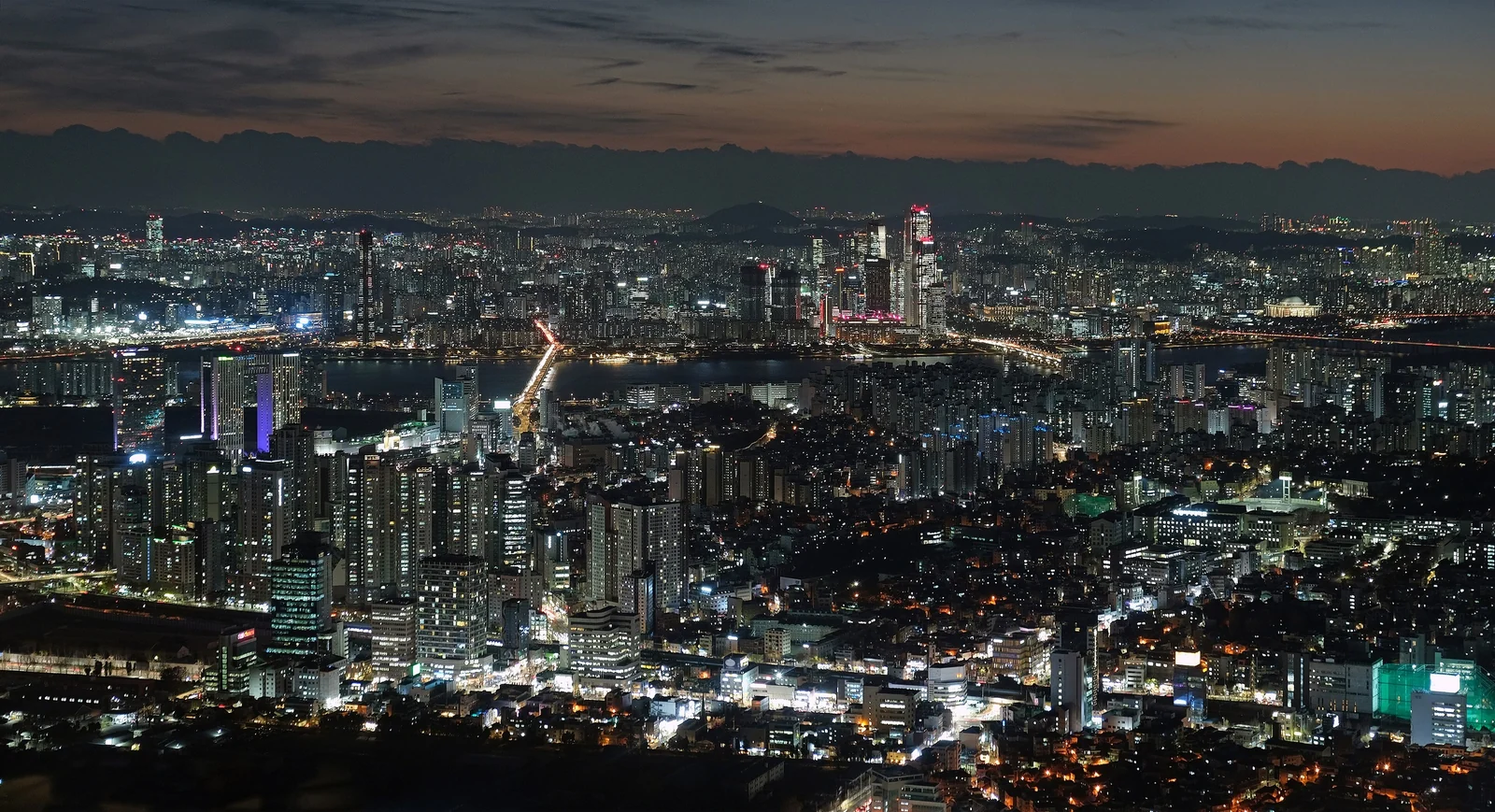
Going up the tower itself costs extra, and the open ground at its foot offers nearly the same view. If you are short on time, walk up and skip the observation deck.
The Han River
The Han River splits Seoul into north and south, and its riverside parks are where locals go on warm evenings. People picnic on the grass, rent bikes and have food delivered to their spot. A Han River evening needs only a convenience-store instant noodle, a blanket and a patch of lawn. Parks such as Yeouido and Banpo are easy to reach by subway, and Banpo is known for its bridge fountain show, which runs in the warmer months.
Subway, T-money and Getting Around
The Seoul subway is clean, air-conditioned, signed in English and cheap, and it reaches almost everywhere you will want to go. Lines are numbered and color-coded, and station numbers on the maps help when you cannot read the names.
- Get a T-money card. Buy one at convenience stores or station machines and top it up with cash. It works on the subway, buses and most taxis, and transfers between them are discounted.
- Use a local map app. Naver Map and Kakao Map give far better walking and transit directions in Korea than Google Maps.
- Mind the rush. Weekday commuting hours are packed, and carriages on the busiest lines can be dense.
- From Incheon Airport. The AREX train to Seoul Station is the easy option, with express and all-stop services. Allow roughly an hour door to door.
- Check tourist passes. Several visitor passes and cards exist, and offers change, so see the official Visit Seoul site before buying.
Taxis are plentiful and cheaper than in most Western capitals, which is useful late at night when trains stop. Have the destination written in Korean or saved in a map app.
Best Time to Visit Seoul
Seoul has four distinct seasons, and each is good for something different. Most visitors say spring and autumn, and for good reason, but winter and summer are workable if you plan around them.
| Season | Typical conditions | Why go |
|---|---|---|
| Spring (March to May) | Mild, with blossoms in early April | Cherry blossoms around the palaces and the Han River |
| Summer (June to August) | Hot and humid, with a rainy spell in late June and July | Long evenings by the river and indoor markets |
| Autumn (September to November) | Dry and cool, with crisp light | Foliage in the palaces and on the hills, the most comfortable walking |
| Winter (December to February) | Cold and dry, with frequent freezing days | Fewer crowds, hot food, snow on the palace roofs |
Autumn is the sweet spot, especially for the palaces and Huwon. Spring runs a close second, though blossom dates move from year to year. For current guidance, the Korea Tourism Organization publishes seasonal advice and event listings.
Day Trips: DMZ, Suwon Hwaseong and Nami Island
The DMZ
The Demilitarized Zone is a buffer strip about 4 kilometers wide that cuts across the peninsula, created by the 1953 armistice. You cannot visit independently; you go on an organized tour, usually a half-day or full-day outing from Seoul. Most include the Third Tunnel, an observation point and the Imjingak area. Bring your passport, dress modestly and book ahead, since itineraries and access rules can change at short notice.
Suwon Hwaseong
Suwon's fortress was built in the 1790s under King Jeongjo and has been UNESCO-listed since 1997, with a wall that runs for several kilometers around the old town. You can reach Suwon by subway or train in a bit over an hour. Walking the wall takes a few hours, and the gates and watchtowers look best late in the afternoon.
Nami Island
Nami Island sits in the Han River near Chuncheon, in the countryside east of Seoul, and is known for its tree-lined paths, which are best in autumn and winter. You get there by train toward Gapyeong, a short transfer and a brief ferry crossing. Plan a full day, and go on a weekday if possible, because it fills quickly on weekends. For other regional escapes, see our Okinawa guide.
Where to Stay in Seoul by Area
The subway makes almost any area workable, so choose by what you want near the door.
- Myeongdong and the city center: the easiest base for a first trip, with direct subway links, shops and street food.
- Jongno and Insadong: close to the palaces and quiet at night. Some guesthouses are in converted hanok, which is a memorable if simple choice.
- Hongdae: younger and livelier, good for nightlife and for the airport railway.
- Itaewon: international food and a more relaxed feel, with a hilly layout.
- Seongsu and Gangnam: good for repeat visitors who want cafes, design and modern towers.
Rooms in the center tend to be compact, so check photos and floor plans before booking.
Seoul Travel FAQ
How many days do you need in Seoul?
Three days cover the main palaces, Bukchon, Insadong, a market and Namsan. Four or five let you add a day trip such as the DMZ or Suwon, plus an unhurried evening along the Han River.
Is Seoul expensive for travelers?
Transit, markets and noodle shops keep daily costs moderate, and many palace entry fees are low. Accommodation in central districts is usually the biggest expense, so compare areas before you book.
Do you need a T-money card in Seoul?
It is not required, but it is the simplest way to pay for the subway, buses and many taxis, and it gives transfer discounts. Buy one at a convenience store or station and top it up with cash.
Can you visit the DMZ on your own?
No. Access is only through approved guided tours, which require advance booking and a passport. Tours vary in length and in which sites they include, so compare itineraries before choosing.
What is the best month to visit Seoul?
October is a favorite for dry weather and autumn color, with April close behind for blossoms. July and August are hot and humid, and January is cold, though quieter.
Is Seoul good for solo travelers?
Yes. It is safe, easy to navigate and well connected. Most dishes can be eaten alone, though Korean BBQ restaurants often ask for two portions, so choose noodle, soup or gimbap places on solo nights.
Do you need to book the Changdeokgung Secret Garden?
Huwon is visited on guided walks with limited places, so reserving through the official ticketing system is strongly advised, especially in autumn. Check current schedules and closing days before you plan the day.