Angel Falls is about 979 meters (3,212 feet) tall, roughly 19 times the height of Niagara Falls. Niagara's Horseshoe Falls drops only about 51 meters (167 feet). Yet Niagara sends enormous volumes of water over a wide crest, while Angel Falls is a thin ribbon that can fade to mist before it reaches the ground. One is the tallest waterfall on Earth, the other is among the most powerful and most visited.
The two sit in different worlds. Angel Falls pours off a sandstone tabletop mountain in the Venezuelan jungle, and you reach it by air and river. Niagara sits on the Canada-US border, with hotels, boat docks and a casino strip a short walk from the edge. Below you will find the numbers, why they are measured differently, the story behind the name, and how to plan a visit to each.
Angel Falls vs Niagara Falls at a Glance
| Angel Falls | Niagara Falls (Horseshoe) | |
|---|---|---|
| Location | Canaima National Park, Bolívar State, Venezuela | Border of Ontario, Canada and New York, USA |
| Total height | About 979 m (3,212 ft) | About 51 m (167 ft); sources range to 57 m |
| Longest single drop | About 807 m (2,648 ft) | One drop of the full height |
| Width | A narrow ribbon of water | Crest of roughly 670 m (2,200 ft) for the Horseshoe |
| Flow | Highly seasonal, modest at the base | Average around 2,400 m³/s over the Horseshoe; regulated |
| Best season | Rainy season, roughly June to November | Late spring to early autumn for boats; winter for ice |
| How to reach | Flight to Canaima, then a river trip | Drive, bus or train to Niagara Falls, Ontario or New York |
| Access | Remote, guided only; check travel advice | Free walk-up viewing from both sides |
How Tall Is Angel Falls Compared to Niagara Falls?
Put plainly, Angel Falls is nearly twenty times taller. Stack Niagara on top of itself and you would still be nowhere near the point where Angel's water first leaves the cliff. The commonly quoted total of 979 meters includes a main plunge of about 807 meters, followed by a sloping cascade and a smaller drop below it. The 807-meter figure is the one that counts as the longest uninterrupted drop, and it is the number to use if someone asks about a single sheer fall.
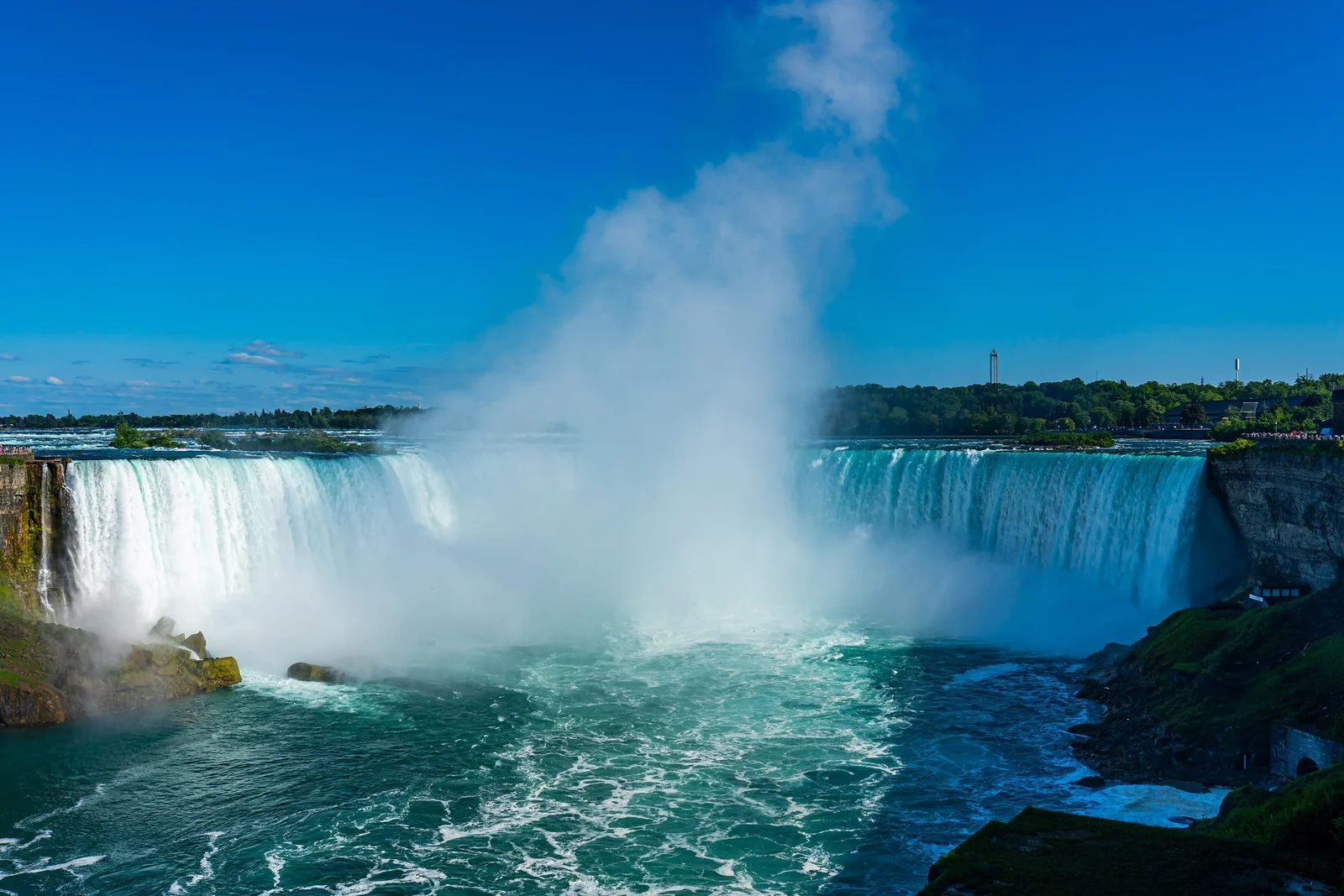
Niagara is a different shape altogether. The Horseshoe Falls, on the Canadian side, drops about 51 meters, though sources give anything up to 57 meters depending on whether they measure to the water surface or the riverbed. The American Falls is roughly 21 to 30 meters high, because a pile of fallen boulders sits at its base. The small Bridal Veil Falls sits beside it, separated by Luna Island.
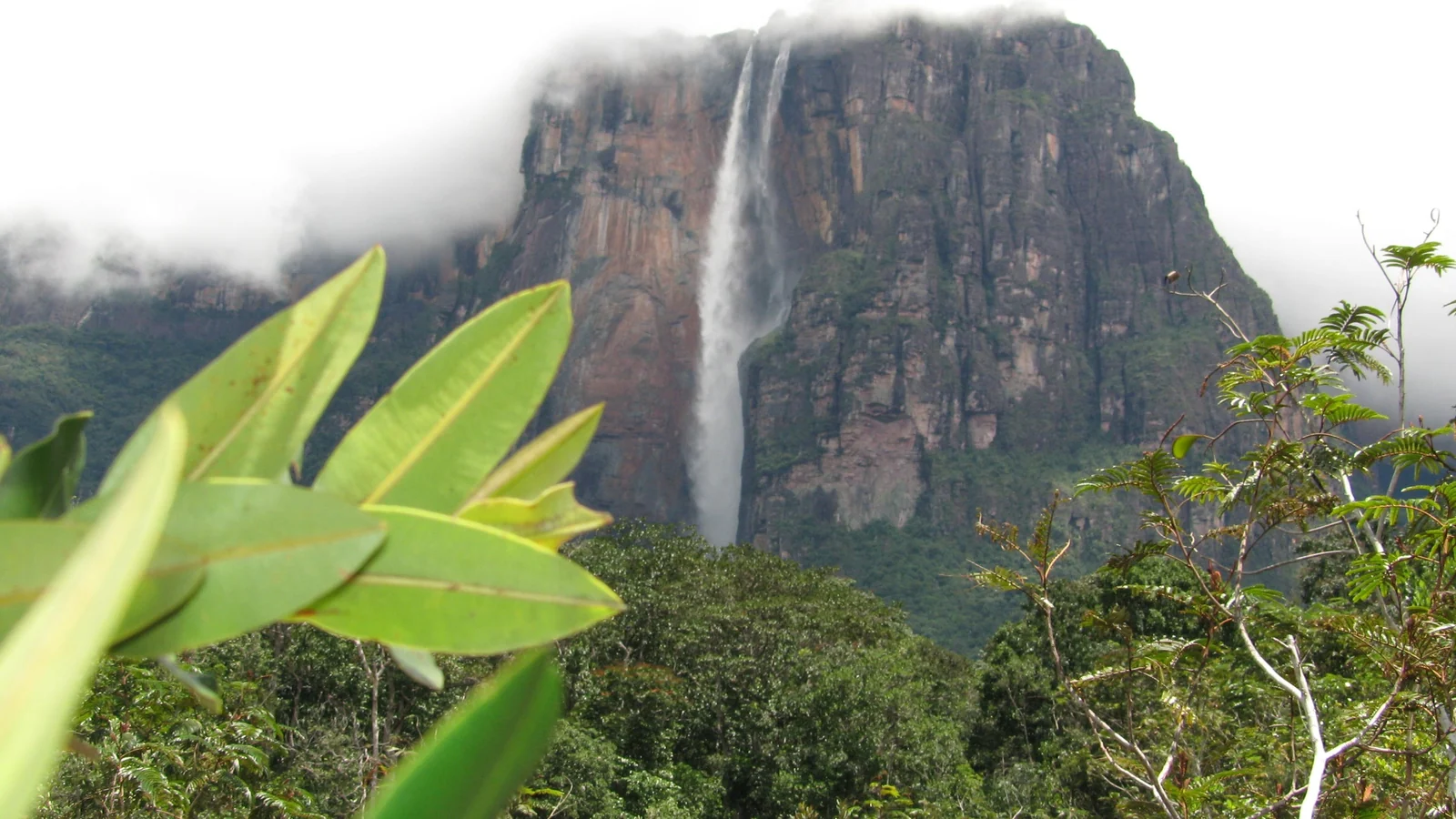
Think of it this way. Standing at the foot of Niagara you look across a wide stage of falling water. Standing at the viewpoint for Angel Falls you tilt your head back and follow a single white thread up a cliff that disappears into cloud. Both are impressive, but they impress for opposite reasons.
Why Tallest and Most Powerful Are Different Records
Height measures distance. Power and volume depend on how much water moves, how wide the crest is, and how far it falls. A waterfall can win one contest and lose the other.
- Tallest means the greatest vertical drop, either as a single plunge or as a total including cascades. Angel Falls holds the single-drop record.
- Widest or biggest by volume means the most water over the crest. Niagara moves far more water than Angel Falls, and Victoria Falls and Iguazu are wider still.
- Most powerful is a looser claim. It blends height, flow and the energy the water carries, and different lists rank it differently.
There is also a measurement problem. Angel Falls has little water for much of the year, and in drier weather the plunge can break into spray before it lands. Niagara's flow is managed: a long-standing treaty between Canada and the United States sets minimum amounts that must pass over the falls during daytime tourist hours, and much of the rest feeds hydroelectric plants. So the average Niagara flow is a regulated figure, not a wild river's, and quoted numbers vary from source to source.
Angel Falls: Kerepakupai Merú and the Story of Its Name
The falls drop from Auyán-tepui, one of the flat-topped sandstone mountains of southeastern Venezuela, in Canaima National Park. UNESCO inscribed the park as a World Heritage site in 1994, in part for these tepuis, which rise out of the savanna like islands. The local Pemon people have their own name for the falls, Kerepakupai Merú, usually translated as the waterfall of the deepest place.
The Western name comes from Jimmie Angel, an American pilot who flew over the cliff in 1933 while looking for ore. His reports brought the falls to outside attention, and Venezuelans call them Salto Ángel. The Pemon name is used more widely today, so you will see both on maps and in guidebooks. Whichever you prefer, you are describing the same waterfall.
How to Visit Angel Falls
This is an expedition, not a day trip from a city. Plan it through a licensed operator in Venezuela and give yourself flexibility, because weather and flight schedules can change the plan.
Reaching Canaima
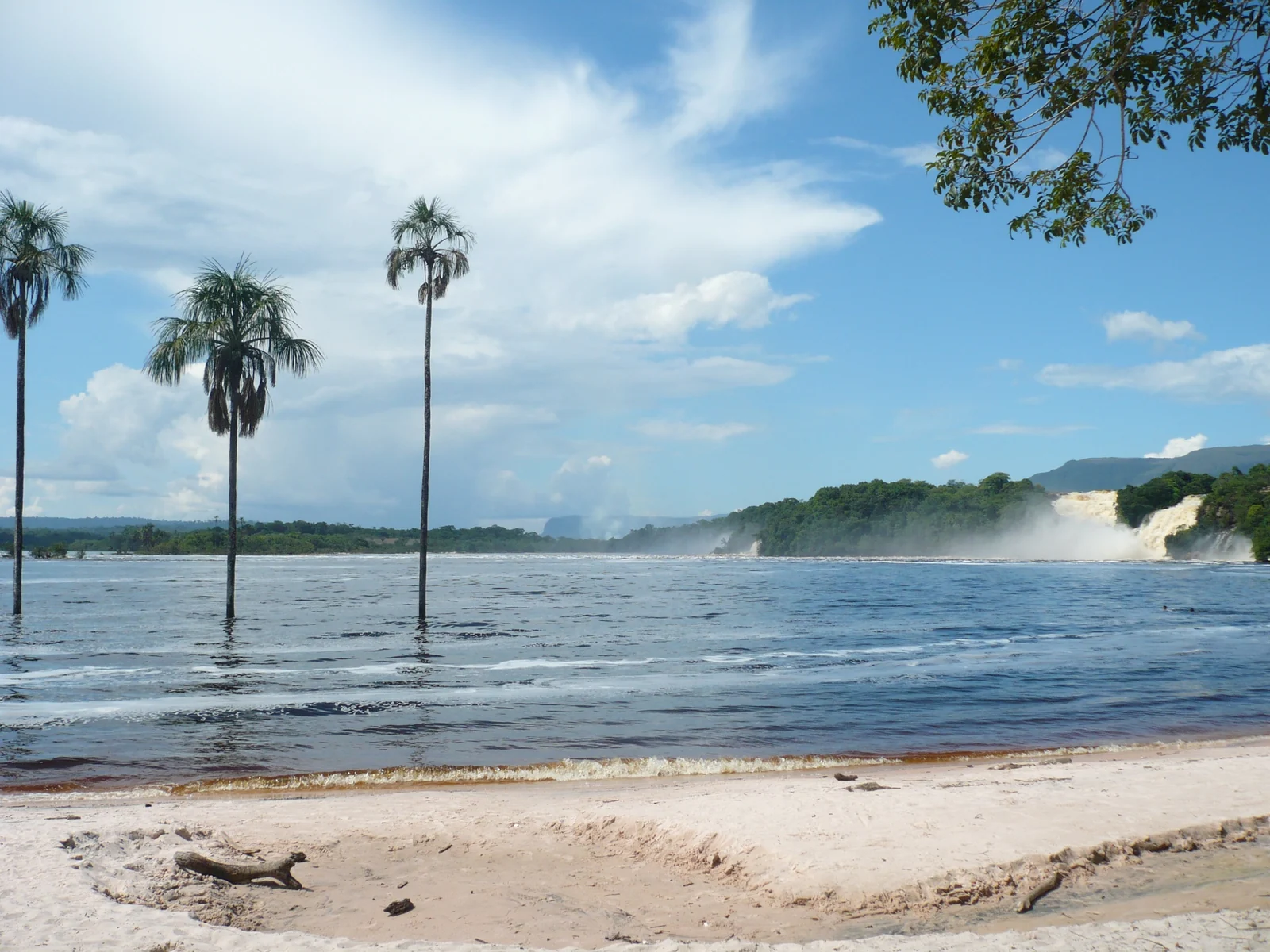
The usual gateway is the village of Canaima, which has an airstrip, a lagoon and a few lodges. Small planes serve it from Venezuelan cities. The lagoon, with its pale sand and tea-colored water, is a pleasant place to spend a day before the falls trip, and its own waterfalls are worth a look.
The river trip and the viewpoint
From Canaima, the standard route is a long trip in a motorized dugout canoe up the Carrao and Churún rivers, followed by a walk through forest to a viewpoint opposite the falls. Many itineraries include a night in a hammock camp. Operators also run scenic flights over the falls, which show the full height of the cliff but do not get you close to the base.
When to go
The rainy season, roughly June to November, is when the rivers are high enough for boats and the waterfall has its fullest flow. Mist and cloud can still hide the top, so allow more than one day if you can. In the dry season the falls thin out and the boat trip may not run at all.
Safety and travel advice
Access and conditions in Venezuela can change, and many governments publish warnings. Check your own government's current travel advice before you plan, and confirm flights, operators and insurance directly. US travelers can consult the State Department travel advisories. Do not rely on a blog, including this one, for current safety information. We give no prices because they depend heavily on the operator and the season.
How to Visit Niagara Falls
Niagara is the easy one. Two cities share the falls: Niagara Falls, Ontario, and Niagara Falls, New York. You can see the water from both, but the views differ, and many visitors cross the border to do both. Bring your passport if you plan to cross, and check current entry rules for your nationality.
Canada vs the US side
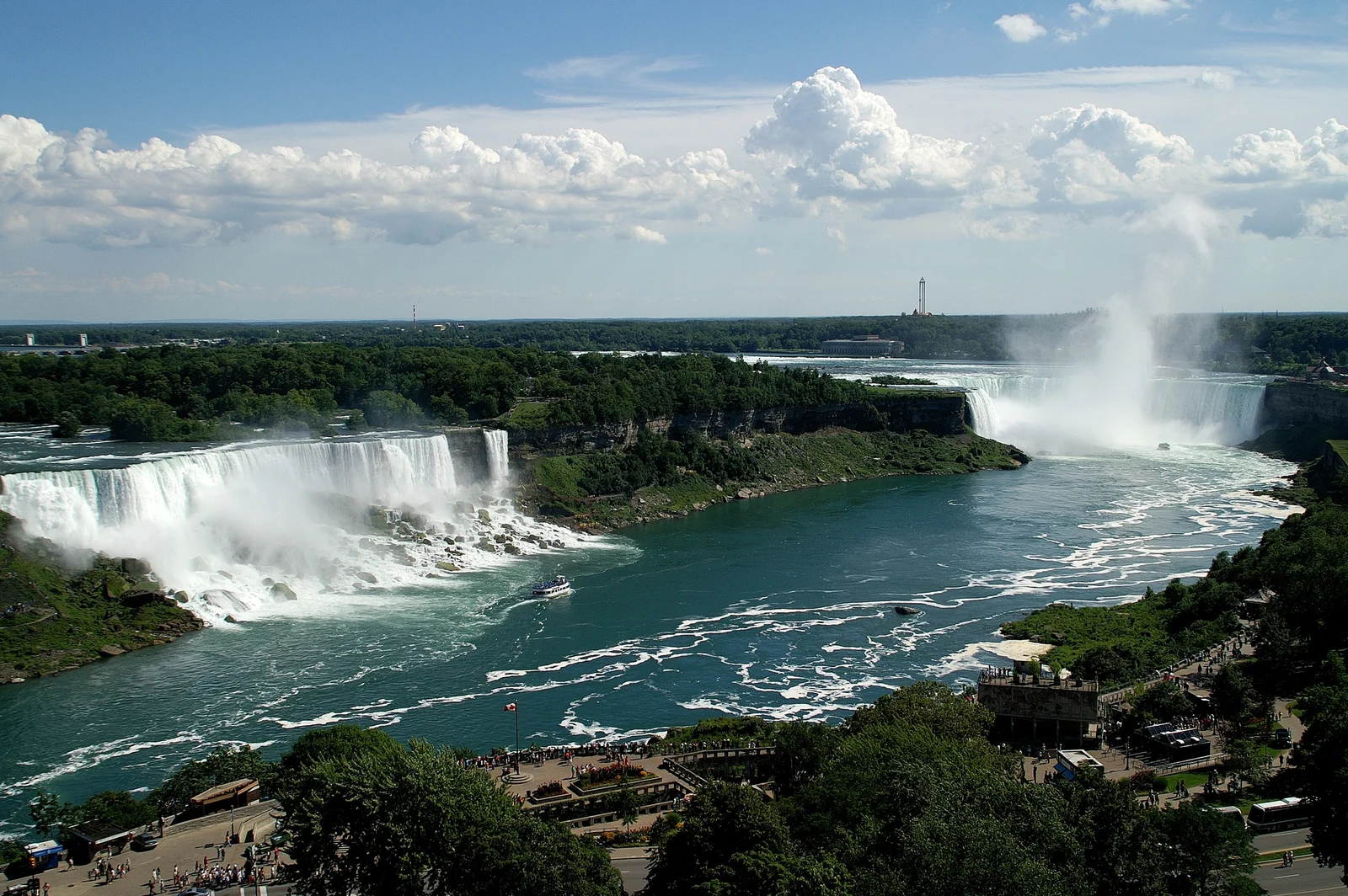
The Canadian side faces the falls head-on. You see the full curve of the Horseshoe Falls and all three falls together, which is why most postcard photos are taken from Table Rock and the walkway along the Niagara Parkway. The American side, in Niagara Falls State Park, takes you right to the brink of the American Falls and Bridal Veil Falls, with viewing platforms and trails across Goat Island.
Boats and tunnels
Two boat tours carry visitors to the base of the Horseshoe Falls in rain ponchos. Maid of the Mist departs from the US side, and Niagara City Cruises, formerly Hornblower, runs from the Canadian side. Both operate in the warmer months and depend on weather. On the Canadian side, Journey Behind the Falls takes you through tunnels to observation decks beside the water. Check current seasons and details on the official Niagara Parks site. We do not list prices because they change.
Evenings are worth planning for. The falls are lit after dark, and a short walk after dinner often beats the midday crowds. Our Canada travel guide shows how Niagara fits into a wider trip, and the USA section covers the New York side and beyond.
Other Tall and Powerful Waterfalls for Context
If you are comparing waterfalls, these four sit between the extremes. Figures vary slightly by source because of how each is measured.
| Waterfall | Country | Height | Known for |
|---|---|---|---|
| Kaieteur Falls | Guyana | About 226 m | Huge single drop on the Potaro River |
| Victoria Falls | Zambia and Zimbabwe | About 108 m | Mile-wide curtain, average flow around 1,088 m³/s |
| Iguazu Falls | Argentina and Brazil | Largest drop about 82 m | Around 275 cascades across roughly 2.7 km |
| Tugela Falls | South Africa | Close to 950 m in five drops | Africa's tallest, a seasonal ribbon |
Kaieteur is the one to know. It is about four times taller than Niagara and far wider than Angel Falls, which makes it the best all-round comparison on this list. Victoria Falls is the better answer if you want a curtain of water you can see end to end, and Iguazu is more a landscape than a single fall. We cover Tugela and its neighbors in our guide to Africa's tallest waterfalls, and our South America section covers the continent that holds both Angel and Kaieteur.
Best Season for Each Waterfall
- Angel Falls: go in the rainy season, roughly June to November, for the best flow and for river access. Expect rain and cloud.
- Niagara Falls: boats and open attractions are strongest from late spring through early autumn. Winter is quieter, and mist can freeze on trees and railings. Check which attractions are open.
- Both: early morning is usually clearer for photos. At Angel Falls cloud often burns off by mid-morning.
One more tip for Niagara: the mist is real. On the boats and near the brink you will be wet, so pack a light waterproof layer and keep your camera in a dry bag. At Angel Falls the issue is the opposite, with humidity and sudden rain, so protect electronics there too.
Which One Should You See First?
If you want the world record and an adventure, Angel Falls is the one, as long as current conditions and your government's advice allow it. If you want a falls you can see on a weekend city break, with a hot coffee in hand, Niagara wins easily. They do not really compete. One is about scale and remoteness, the other about volume and convenience.
My own advice is to treat them as different kinds of trips. Niagara is a good place to introduce children to waterfalls and works as part of a longer Canada or northeastern US route. Angel Falls is a trip you plan around for months and build a week of Venezuelan travel around.
Angel Falls vs Niagara Falls FAQ
How tall is Angel Falls compared to Niagara Falls?
Angel Falls is about 979 meters tall in total, with a longest uninterrupted drop of about 807 meters. Niagara's Horseshoe Falls drops about 51 meters. That makes Angel Falls roughly 19 times taller than Niagara.
Which has more water, Angel Falls or Niagara?
Niagara carries far more water. Its flow averages in the thousands of cubic meters per second and is regulated for tourism and power. Angel Falls is a narrow, seasonal plunge, and in dry weather much of it turns to mist.
Why is Angel Falls called the tallest waterfall?
It has the longest uninterrupted vertical drop, about 807 meters, plus a total height near 979 meters. Other falls, such as Tugela in South Africa, are measured as several drops, so Angel Falls holds the single-drop record.
Who was Angel Falls named after?
It is named after Jimmie Angel, an American pilot who flew over the falls in 1933 and made them widely known. The local Pemon name is Kerepakupai Merú, usually translated as the waterfall of the deepest place.
Can you visit Angel Falls?
Yes, but it is remote. Most visitors fly to Canaima and take a river trip with a guide during the rainy season. Access and safety conditions change, so check your government's current travel advice and confirm details with an operator.
Which side of Niagara Falls is better, Canada or the US?
The Canadian side has the best panoramic view of all three falls and the Horseshoe. The US side puts you close to the brink of the American Falls. Many visitors see both, so carry your passport.
Is Niagara the biggest waterfall in the world?
No. Niagara is among the most powerful in North America, but Victoria Falls and Iguazu are wider, and Angel Falls and Kaieteur are far taller. Niagara's strength is its volume and how easily you can reach it.