


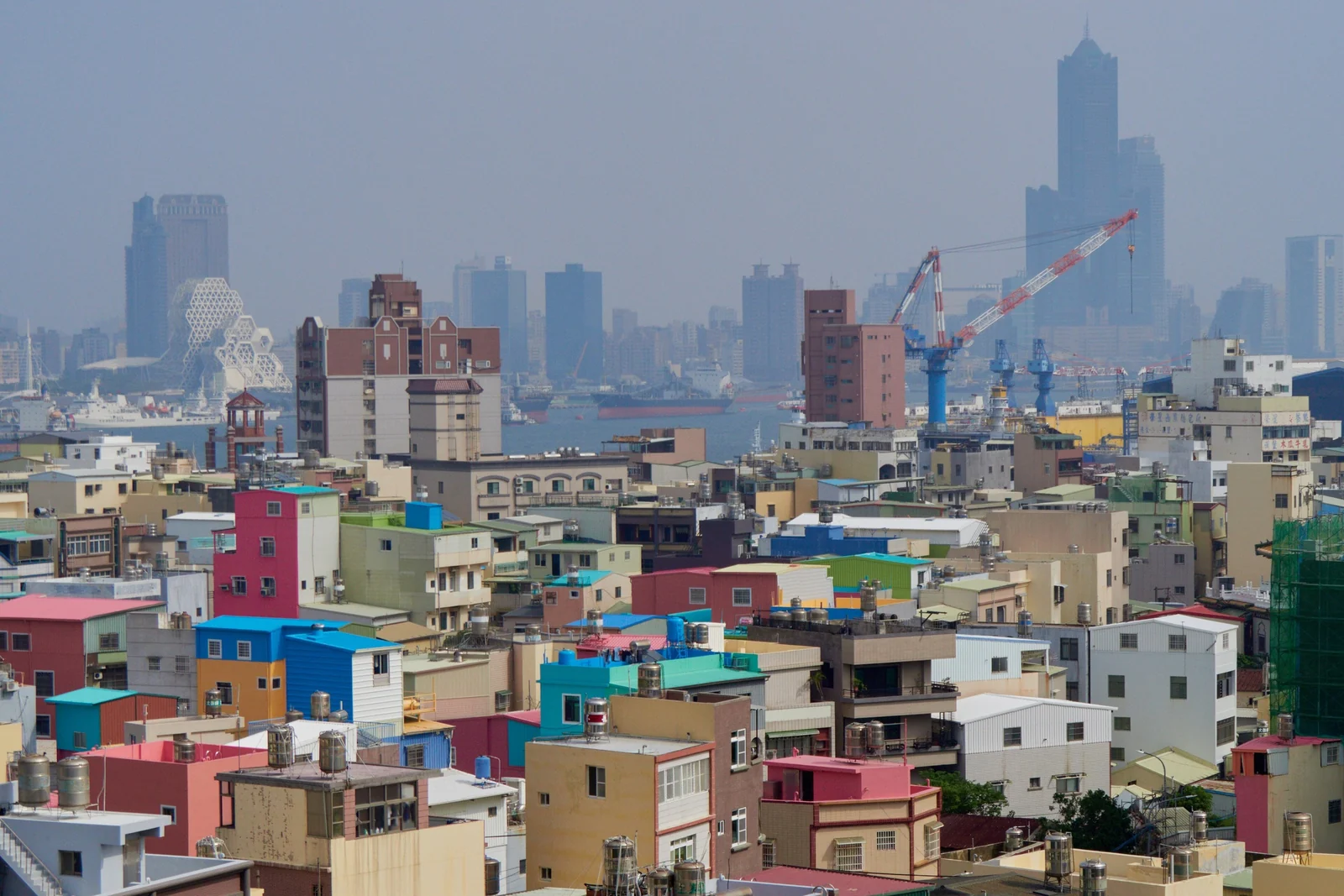
Kaohsiung is Taiwan's big southern port, a warm, spread-out city on the harbor that most visitors skip in favor of Taipei. That is their loss. In three or four days you can walk an arts district built from old dock warehouses, step through a dragon's mouth at Lotus Pond, ride a ferry to Cijin Island for seafood and eat your way through local night markets.
It is also easier than it looks on a map. Two MRT lines and a light rail loop link nearly everything worth seeing, and the high-speed rail puts Taipei within a couple of hours. This Kaohsiung travel guide covers the main sights, which night markets are worth your evening, day trips to Tainan and Kenting, and when to go so a typhoon does not rewrite your plans.
Compared with Taipei, the pace is slower, the sky is bluer and the winters are genuinely pleasant. For more trips in the region, browse our Asia travel guides.
Pier-2 Art Center and the Old Harbor
If you only have one afternoon, spend it here. Pier-2 Art Center occupies a long row of former harbor warehouses in Yancheng district, now filled with galleries, design shops, cafés and big outdoor sculptures. It feels less curated than similar projects in Europe, which is part of the charm.
The Dayi and Penglai Warehouses
The district splits into clusters. The Dayi warehouses hold most of the independent shops and rotating exhibitions, and they are the easiest place to start. Farther west, the Penglai warehouses sit next to the old Hamasen rail yards, where the Hamasen Museum of Taiwan Railway and a stretch of lawn with the old tracks still running through it make a good stop for families.
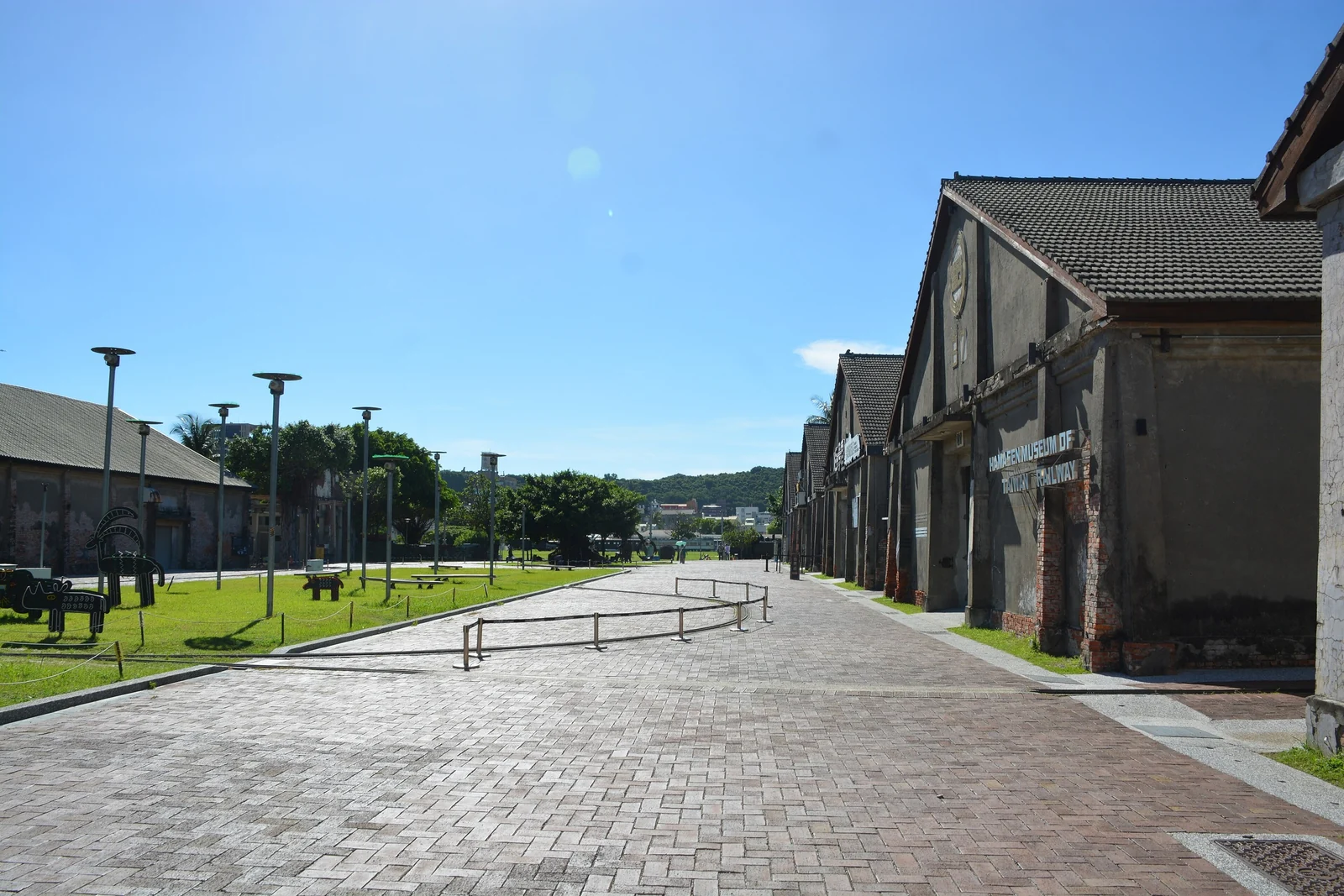
Pier-2 is free to walk around; some exhibitions charge separately. Rent a YouBike and ride the harborside path, which links Pier-2 with the newer waterfront buildings to the east. The Circular Light Rail also stops right outside, so you never have to backtrack on foot in the heat.
Kaohsiung Music Center and the New Waterfront
Across the Love River mouth, the Kaohsiung Music Center is a cluster of white hexagonal towers and halls built for pop concerts, with a promenade along the water. Come at sunset, when the light hits the cranes and the buildings start to glow.
Lotus Pond and the Dragon and Tiger Pagodas
Up in Zuoying district, Lotus Pond is a large man-made lake lined with temples. The star is the pair of seven-story Dragon and Tiger Pagodas, built in 1976 and reached by a zigzag bridge. Tradition says you walk in through the dragon's mouth and out through the tiger's, which turns bad luck into good. Inside, the walls are painted with Taoist and Confucian scenes, and you can climb for a view across the water.
The pagodas spent about a year and a half wrapped in scaffolding. The restored exterior was revealed in January 2025, the interiors reopened in March 2025, and the towers are now lit at night, so an evening visit works well too.
Walking Around the Pond
A recently upgraded waterfront path lets you circle the whole lake. Along the way you pass the Spring and Autumn Pavilions, guarded by a dragon ridden by the goddess Guanyin, and the large Confucius Temple on the north shore. Allow two hours, bring water and walk early or late; there is little shade at midday. The nearest stop is Ecological District station on the Red Line, or take a short taxi from Zuoying.
Cijin Island by Ferry
Cijin is the long, thin island that shelters Kaohsiung's harbor, and getting there is half the fun. Ferries leave the Gushan Ferry Pier, a short walk from Hamasen and the light rail, and the crossing takes roughly ten minutes. You can pay with an iPASS or EasyCard, and bikes can come along. Weekends get crowded, so go on a weekday morning if you can.
- Cihou Lighthouse and Cihou Fort: a short, steep climb from the ferry for views over the harbor entrance and the city skyline.
- Cijin Old Street: seafood restaurants where you pick your fish and shellfish from the display and choose how it is cooked.
- The beach and coastal park: a long stretch of dark sand, better for sunset walks than swimming.
- Cycling the island: rent a bike near the pier and ride south along the shore path toward the wind turbines and quieter fishing villages.
Gushan, Shoushan and the Former British Consulate
The Former British Consulate at Takao (Takao was the old name for Kaohsiung) sits on a hill above Sizihwan Bay and the harbor mouth. The red-brick residence was completed in 1879 and is considered the oldest surviving modern Western building in Taiwan. Small exhibits cover the treaty-port era, but most people come for the terrace and the sunset over the Taiwan Strait.
Right behind it rises Shoushan, a limestone ridge protected as Shoushan National Nature Park. Trails climb through forest from several trailheads in Gushan, and you will almost certainly meet Formosan macaques along the way. Do not carry food in your hands or open plastic bags near them; they know exactly what those sounds mean. A morning hike, then lunch and the consulate in the afternoon, makes a satisfying day.
The City Center: Dome of Light, Love River and Weiwuying
Formosa Boulevard Station
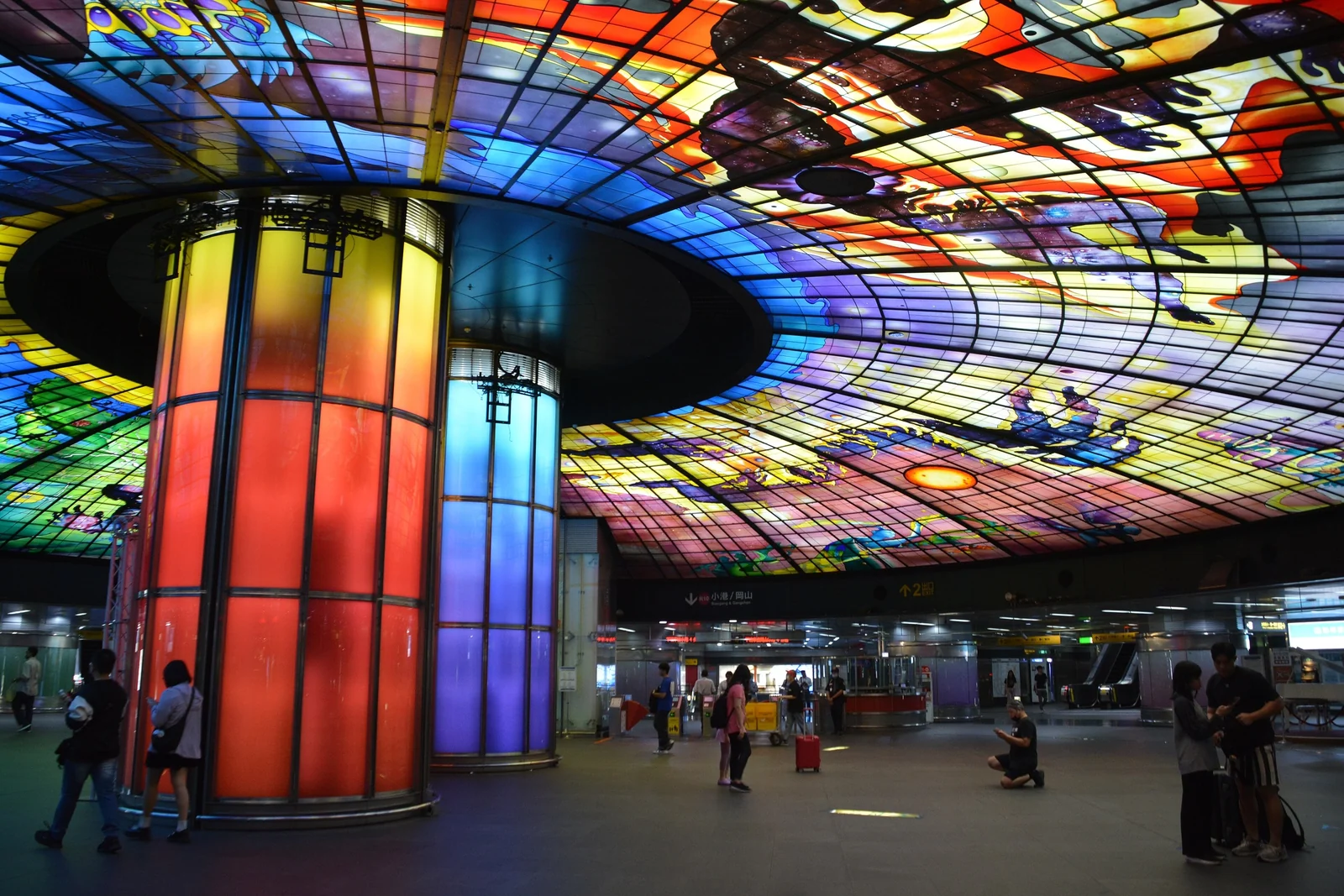
Formosa Boulevard, where the Red and Orange lines cross, may be the most beautiful metro station you will ever change trains in. Its concourse is covered by the Dome of Light, a vast stained-glass ceiling by Italian artist Narcissus Quagliata that tells a story of birth, growth, destruction and rebirth in swirling color. It is inside the station, so you can see it for the price of a ride. Stand in the middle of the concourse and look straight up.
Love River
The Love River runs through the center to the harbor, with landscaped paths, cafés and benches along both banks. It is at its best after dark, when the bridges are lit and short river boat rides set off from the piers. It is the city's favorite evening stroll, and you will likely pass it anyway.
Weiwuying National Kaohsiung Center for the Arts
Opened in 2018 on a former military training ground, Weiwuying was designed by the Dutch firm Mecanoo with a vast, wave-like roof inspired by the banyan trees in the surrounding park. Even without a ticket you can wander the covered public plaza underneath. Check the official Weiwuying program for concerts, opera and dance; it is right next to Weiwuying station on the Orange Line.
Kaohsiung Night Markets Worth Your Evening
Night markets are the heart of Taiwanese food culture, and Kaohsiung has some of the best on the island. Expect grilled squid, oyster omelets, papaya milk, stinky tofu, fried chicken cutlets and endless bubble tea. Bring cash and small notes, eat as you walk, and share dishes so you can try more. If you loved our guide to night markets in South Korea, this is the Taiwanese version, louder and more varied.
Ruifeng Night Market
This is where locals go, and it is my pick for a first night. Ruifeng packs a tight grid of stalls into a lot a few minutes' walk from Kaohsiung Arena station on the Red Line. The aisles are narrow, the crowd is young and the games stalls are loud. It usually opens in the late afternoon and closes on Mondays and Wednesdays, so plan around that.
Liuhe Night Market
Liuhe is the famous one, laid out along a single street near Formosa Boulevard station and open every night. It is still running, but it is smaller than its reputation, with roughly a hundred stalls after many closed during the pandemic years, and it leans heavily toward tourists. Seafood prices can be higher than elsewhere, so check them before you order. It is convenient if you are staying downtown, but do not make it your only night market.
Day Trips from Kaohsiung: Tainan, Kenting and Fo Guang Shan
| Destination | How to get there | Approx. travel time | Best for |
|---|---|---|---|
| Tainan | TRA train from Kaohsiung Main Station | About 30 to 60 minutes, depending on the train | Temples, old streets, snack food |
| Fo Guang Shan | Bus from Zuoying HSR station or the city | About 1 hour | The Big Buddha, the monastery |
| Cijin Island | Ferry from Gushan Ferry Pier | About 10 minutes | Seafood, beach, lighthouse |
| Kenting National Park | Kenting Express bus from Zuoying HSR station | About 2 to 3 hours | Beaches, coral coast, tropical scenery |
Tainan
Taiwan's oldest city is an easy hop north and, frankly, deserves its own overnight. The regular TRA trains are better than the high-speed rail here, because the Tainan HSR station is well outside the city and the TRA station sits right in the center. Spend the day on its temples, old streets and the Anping waterfront, snacking as you go.
Kenting
At the very southern tip of Taiwan, Kenting National Park has the island's best beaches, coral reefs and a laid-back surf town strip. It is possible as a long day trip, but the bus ride eats into your time, so two nights is more realistic.
Fo Guang Shan Buddha Museum
About an hour east of the center in Dashu district, the Fo Guang Shan Buddha Museum (also called the Buddha Memorial Center) opened in 2011 beside one of Taiwan's largest Buddhist monasteries. The approach is the main event: a long avenue lined with eight Chinese-style pagodas leads to the main hall, behind which sits an enormous seated bronze Buddha that you can see from far across the hills.
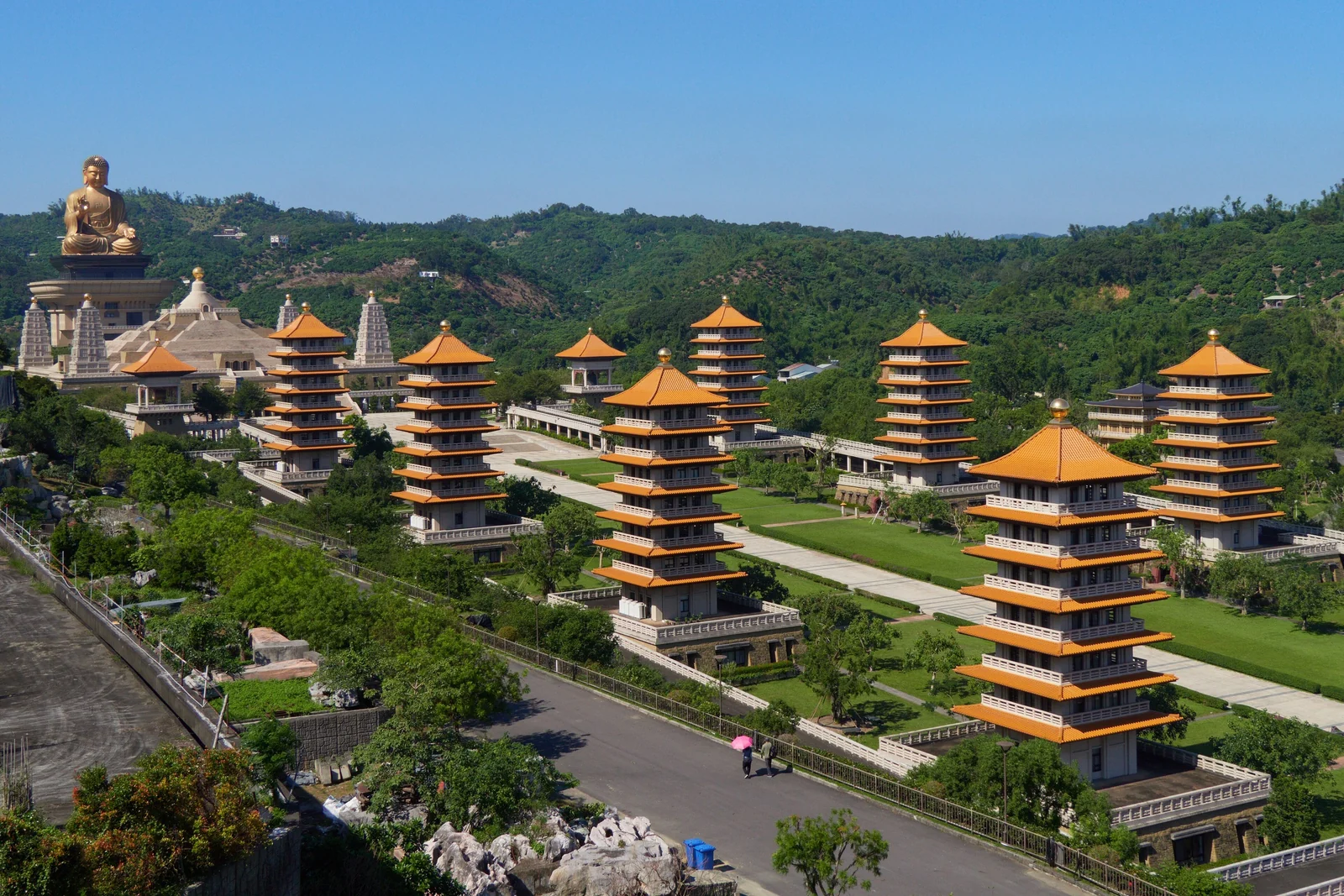
Entry to the grounds is free, and the vegetarian restaurants on site are good value. The museum is generally closed on Tuesdays, with longer hours on weekends. Buses run from Zuoying HSR station and the city; take the first one you can, because the plaza is fully exposed to the sun. Dress modestly and keep your voice down in the halls.
Getting to and Around Kaohsiung
Getting There
Kaohsiung International Airport (KHH) handles flights from across Asia and connects directly to the city on the MRT Red Line; the ride to the center is short and cheap. From Taipei, the Taiwan High Speed Rail reaches Zuoying station in about an hour and a half on the fastest trains, and closer to two hours on services with more stops. Zuoying connects to the Red Line and regular trains, so you can be downtown quickly.
Getting Around
- MRT: the Red Line runs north–south from Zuoying through the center to the airport; the Orange Line runs east–west from Sizihwan past Formosa Boulevard to Weiwuying and beyond.
- Circular Light Rail: the full loop opened in January 2024 and links Pier-2, the Music Center, Hamasen and the Love River with a ring of neighborhoods. It is slow but scenic.
- YouBike: the city's public bikes are everywhere, and the harbor and Love River paths are flat and well marked.
- Cards: an iPASS or EasyCard works on the MRT, light rail, buses, ferries and YouBike, and in convenience stores.
For a first trip, stay near the center, around Formosa Boulevard, Central Park or Yancheng. That puts you within walking distance of Liuhe, the Love River and Pier-2, with both MRT lines close by. The official Kaohsiung travel site lists current transport passes, events and seasonal festivals.
Best Time to Visit Kaohsiung and Typhoon Season
Kaohsiung sits just south of the Tropic of Cancer: hot, humid summers and mild, mostly dry winters, when it is far sunnier than Taipei.
- October to April: the best season, with warm, sunny days, low rainfall and comfortable evenings for night markets.
- May and early June: the plum rains arrive, with heavier showers and rising humidity.
- June to September: very hot, with afternoon thunderstorms and the highest typhoon risk.
Typhoons usually affect Taiwan between June and October, peaking in July to September. If one approaches, the government may call a typhoon day, closing offices and some attractions, and ferries to Cijin and flights can be suspended. Build a buffer day into your plans, watch the Central Weather Administration forecasts, and keep indoor options like Weiwuying and the museums in reserve. If you are combining Taiwan with other stops, our Tokyo guide and Vietnam itinerary are good next chapters.
Kaohsiung Travel FAQ
How many days do you need in Kaohsiung?
Three days cover the main sights: Pier-2 and the harbor, Lotus Pond, Cijin Island, the consulate and two or three night markets. Add a fourth for Fo Guang Shan or Tainan, and a couple of extra nights if you want to reach Kenting.
How long is the high-speed train from Taipei to Kaohsiung?
The fastest Taiwan High Speed Rail trains reach Zuoying station in about an hour and a half, while trains with more stops take closer to two hours. Zuoying links to the MRT Red Line and regular trains into central Kaohsiung.
Which is the best night market in Kaohsiung?
Ruifeng is the local favorite, with a dense mix of food stalls and games near Kaohsiung Arena station; it usually closes on Mondays and Wednesdays. Liuhe is more central and open nightly but smaller and more touristy than its reputation suggests.
Are the Dragon and Tiger Pagodas open?
Yes. After about a year and a half of restoration, the pagodas' renewed exterior was revealed in January 2025 and the interiors reopened in March 2025. The towers are now lit in the evening, so you can visit by day or after dark.
How do you get to Cijin Island?
Take the ferry from Gushan Ferry Pier, close to Hamasen and the Circular Light Rail. The crossing takes roughly ten minutes, you can pay with an iPASS or EasyCard, and bicycles are allowed. Weekday mornings are the least crowded.
When is typhoon season in Kaohsiung?
Typhoons generally affect Taiwan from June to October, most often between July and September. Storms can close attractions and suspend ferries and flights, so keep a spare day in your schedule and follow official weather warnings during summer trips.
Is Kaohsiung worth visiting compared with Taipei?
Yes, especially in winter, when the south is warmer and sunnier. Kaohsiung is more relaxed and compact for visitors, with a harbor setting, beaches nearby, excellent night markets and easy day trips to Tainan, Fo Guang Shan and Kenting.