The best abandoned villages in Portugal you can visit are Drave in the Serra da Freita, Vilarinho da Furna in Peneda-Gerês, Aldeia Velha do Juriz near Pitões das Júnias, the drowned village of Luz in the Alentejo and the old mining settlement of Mina de São Domingos. Most are reached on foot or by a short drive from a bigger town, and none of them charges an entrance fee to the landscape itself.
Portugal has thousands of tiny settlements, and the interior has been emptying for decades. A handful of them were left completely, either because a dam flooded the valley, because a mine closed or because the last families simply moved to the coast or abroad. This guide sticks to places that are documented and visitable, explains why each was abandoned, and covers the practical side: access, the right season, what to carry and how to behave. If you are comparing countries, our guide to abandoned villages in Greece covers a very different set of ghost towns.
Abandoned Villages in Portugal at a Glance
| Place | Region | Why it was abandoned | Access |
|---|---|---|---|
| Drave | Serra da Freita, Arouca (North/Centro) | No road, rural exodus; last resident left around 2009 | On foot only, usually from Regoufe along trail PR14 |
| Vilarinho da Furna | Peneda-Gerês, Terras de Bouro (North) | Flooded by a hydroelectric reservoir in 1972 | Drive to the reservoir and to the Ethnographic Museum near Campo do Gerês |
| Aldeia Velha do Juriz | Peneda-Gerês, Montalegre (Trás-os-Montes) | Reason unclear; only ruins remain | Short signposted walk from the cemetery at Pitões das Júnias |
| Luz (old village) | Alentejo, Mourão | Submerged by the Alqueva reservoir in 2002; residents moved to a new village | Drive to new Luz and its museum; the old village is underwater |
| Mina de São Domingos | Baixo Alentejo, Mértola | Pyrite mine closed in 1966 | Drive from Mértola; open-air site with a small museum |
Why So Many Villages in Portugal Were Abandoned
Three forces explain almost every ghost village in the country. The first is emigration. For much of the twentieth century, people from the poor mountain north left for France, Switzerland, Brazil and the cities, and the villages they left behind aged and shrank. News reports on the northern interior still describe parishes that lost most of their population, with schools and clinics closing as the numbers fell.
The second is dams. Portugal built hydroelectric and irrigation reservoirs through the 1960s and again around the turn of the millennium, and several valley villages vanished underwater. The third is industry that ended, such as mines whose workers left when the ore ran out. The result is a mix of stone ruins, flooded streets and half-empty company towns, and each one asks for a slightly different kind of visit.
Drave: The Magical Village of the Serra da Freita
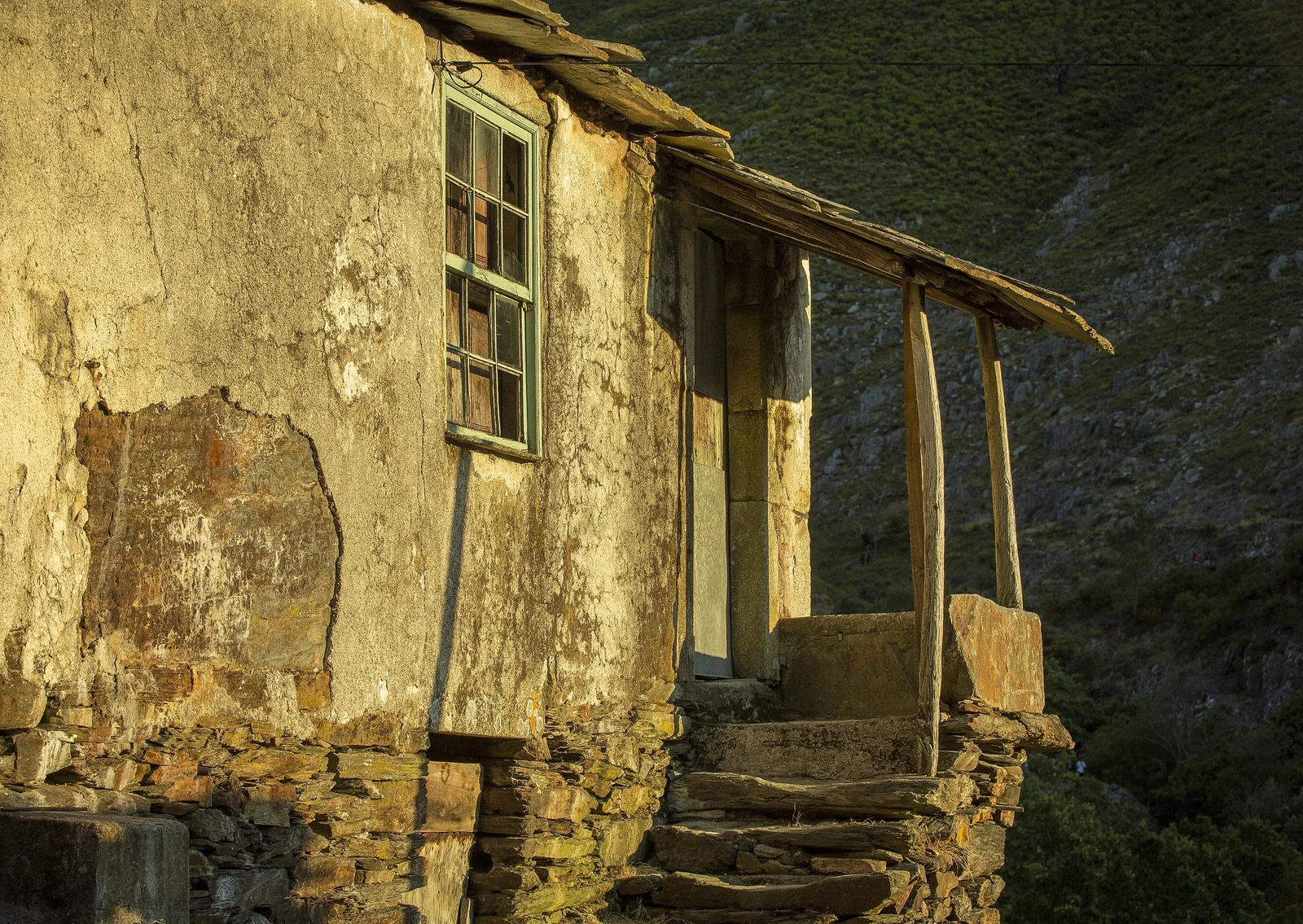
Drave is the one most people picture when they search for abandoned villages in Portugal. It sits at the bottom of a steep valley in the Serra da Freita, inside the Arouca Geopark, with no road to its door. For centuries a few families lived here farming terraces and herding animals. Sources agree that the last permanent resident left around 2009, and the village is often nicknamed the magical village.
What you find is a cluster of dark schist houses, some with slate roofs still intact, around a small white chapel dedicated to Nossa Senhora da Saúde. A stream runs below, and the surrounding slopes are open and bare. It is quiet in a way that few European places are.
How to Reach Drave
The usual route starts in the hamlet of Regoufe, by the chapel, and follows the marked trail PR14. Guides describe a few kilometers each way on mountain paths, and trip reports put the walk at roughly half a day with the return. Published distances differ from one source to the next, so check the current trail description on the Arouca Geopark site before you go. Guided walks and jeep tours also run from Arouca if you prefer not to navigate.
There are no shops, cafés or accommodation in Drave. Carry all your water and food, and plan the return climb, which is the harder half. Some visitors camp, but check the current rules with the geopark before you pitch a tent.
Vilarinho da Furna: The Village Under the Reservoir
Vilarinho da Furna is the most moving story on this list. Almost 300 people in about 80 houses lived in this mountain village in the Peneda-Gerês National Park, in the municipality of Terras de Bouro, running their own affairs through a village council with customary rules. A hydroelectric dam on the Homem River changed that. Notices about the reservoir were posted in 1970, the last inhabitant left in 1971 and the village was submerged in 1972.
The residents salvaged almost everything, even the roof tiles, so what lies under the water is mostly bare walls. In very dry spells, when the reservoir drops, parts of the old village surface, and people travel to the shore to see them. You cannot plan around that, so treat it as a bonus rather than the reason for the trip.
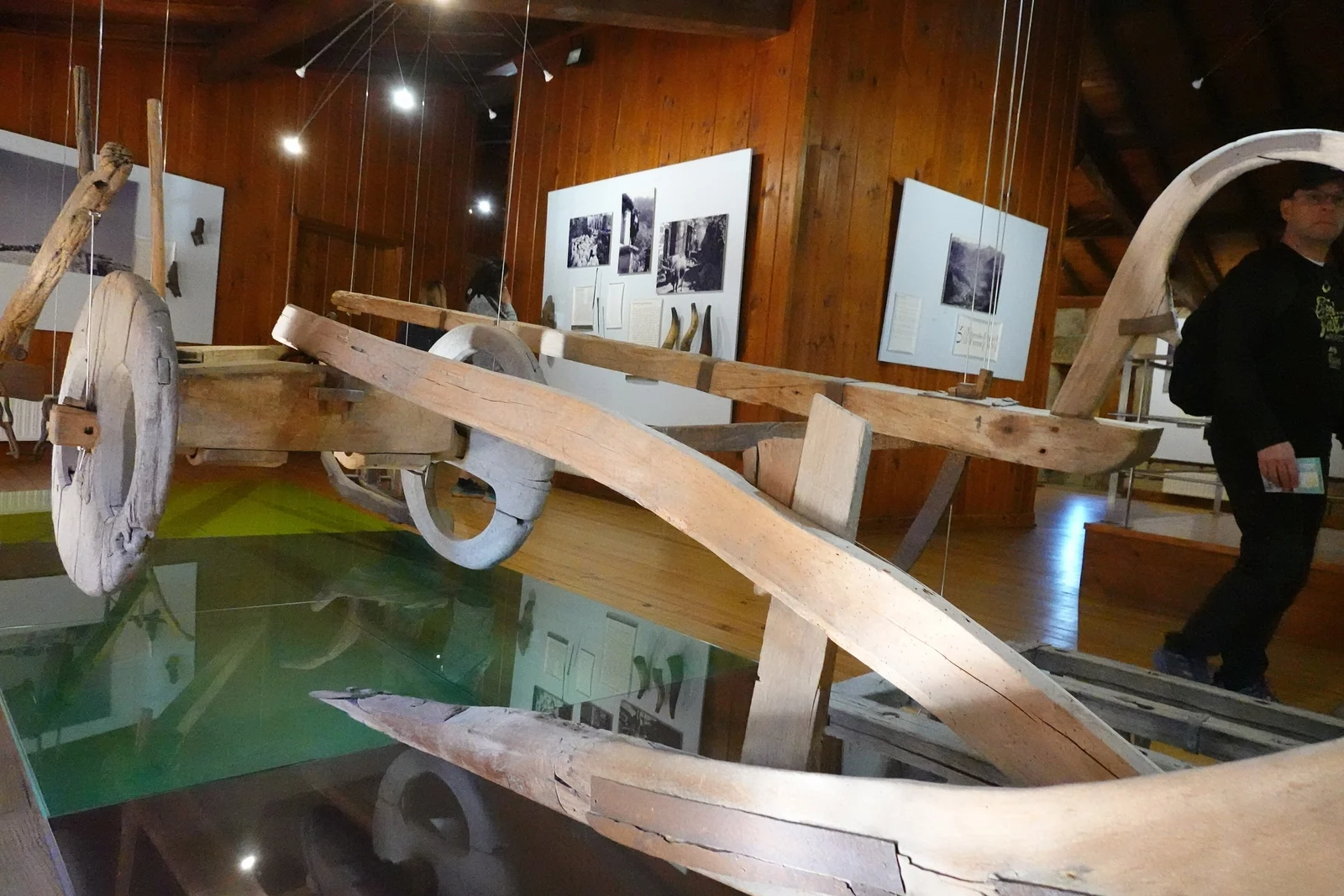
The reliable part of the visit is the Museu Etnográfico de Vilarinho da Furna, built with stone from two old houses and opened in 1989 near Campo do Gerês. It was set up on the initiative of the displaced villagers and shows tools, carts, photographs and the rules by which the community lived. Combine it with a walk or drive along the reservoir. Opening days change, so check with the Terras de Bouro municipality or Visit Portugal before you set out.
Aldeia Velha do Juriz: Ruins Near Pitões das Júnias
Also inside the Peneda-Gerês National Park, in the municipality of Montalegre, Aldeia Velha do Juriz is a scatter of stone ruins in the hills above Pitões das Júnias. Unlike Drave, there is no clear story about why it was abandoned, and local writing treats its origins and end as a mystery. That uncertainty is part of its appeal, and you should be wary of any guide that states a confident history.
The walk is the easiest on this list. A signposted route of roughly 6 km round trip starts near the cemetery of Pitões das Júnias, and travel sites rate it easy at about two hours. Pitões itself is inhabited and worth an hour, and the ruins of the Santa Maria das Júnias monastery and the village waterfall are nearby. Expect ruins that are overgrown, so look carefully for walls and boundaries.
Luz: The Village Moved to Make Way for Alqueva
Luz, in the Alentejo municipality of Mourão, was a different kind of loss. When the Alqueva dam created Europe's largest artificial lake, the old village was submerged in 2002. Residents did not scatter. They moved together into a new village built from scratch nearby, which was inaugurated the same year.
That means you cannot visit old Luz, but you can understand it. The Museu da Luz, opened in 2003 in the new village and built partly in schist, keeps objects, photographs and records from the lost settlement, and it was made at the community's request. Come for the museum and the story, not for ruins, and pair it with a wider look at the Alqueva area. Plan the Alentejo leg with the help of our Lisbon travel guide, since most visitors fly or take the train in through the capital.
Mina de São Domingos: A Mining Town After the Ore
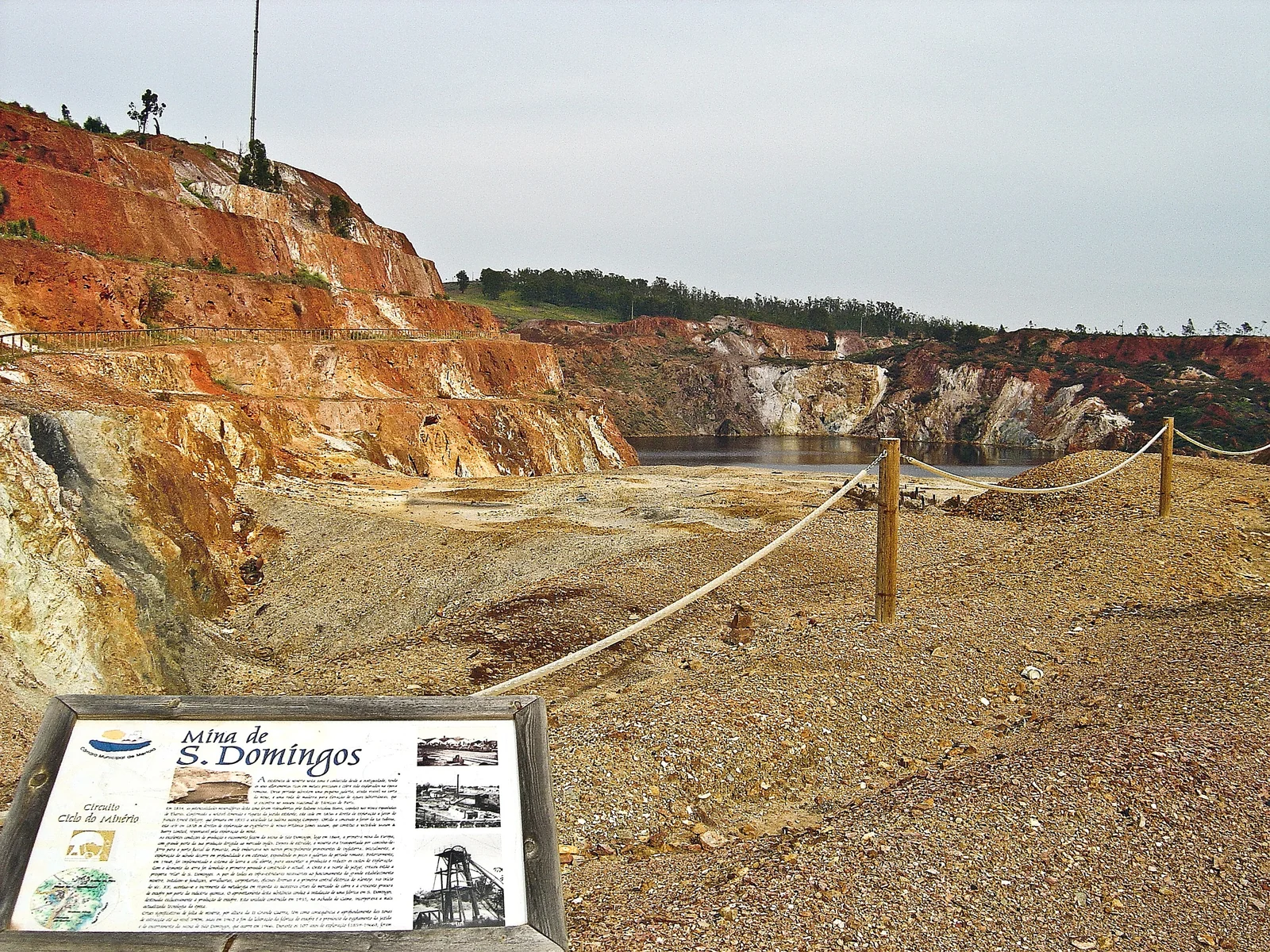
About 17 km from Mértola, on the Guadiana, the São Domingos mine worked from 1854 until 1966. A British company, Mason and Barry, took over in 1859 and moved to open-pit mining in 1867. Pyrite, copper and other metals came out of the ground, and a whole company town grew around the pit, complete with a cinema, miners' houses and an English cemetery where managers and their families, many from Cornwall, are buried.
The mine closed in 1966 and most of the workforce left. It is not a fully empty village, because some people still live there, but it reads as a ghost town: a huge pit, a lake with strange mineral colors, ruined industrial buildings and quiet streets. The municipality of Mértola runs a small museum and guided visits, and the area is classified as a heritage site. Check current visiting rules on the Mértola municipality site, and keep clear of fenced edges and flooded pits.
Schist Villages and Historic Villages: The Inhabited Contrast
Not every empty-looking village is abandoned, and it helps to know the difference. The Aldeias do Xisto (Schist Villages) program began in 2001 to revive inland villages in central Portugal by restoring houses and linking them into a network of walking routes and places to stay. Villages such as Talasnal and Piódão show what rescue can look like. The Aldeias Históricas are a separate program, and Piódão, for instance, belongs to that one rather than the schist network.
Treat these as the happy ending to the story above. They are inhabited, serve visitors and are far easier to reach than Drave. If you want to stack several visits in one trip, they are a good base.
Best Time to Visit Abandoned Villages in Portugal
- Spring and early autumn are the best windows for hiking to Drave or Juriz: mild days, flowing streams and green slopes.
- Summer brings strong sun on exposed schist ridges with little shade. Start early and carry extra water, and check fire warnings, because rural fires are a real risk in dry months.
- Winter can mean rain, fog and slippery stone, and mountain weather turns quickly in Gerês and the Serra da Freita.
- Late summer and autumn droughts are when reservoirs fall and old foundations can show at Vilarinho da Furna, but this is never guaranteed.
- Alentejo sites such as Luz and São Domingos are pleasant in spring and autumn, and very hot in midsummer.
How to Get There and Plan a Route
Public transport barely reaches these places, so a rental car makes sense for most of them. Drave and the Serra da Freita are within reach of the Porto area, and our Porto travel guide is a good starting point for the north. Peneda-Gerês and Montalegre sit further up, so Vilarinho da Furna and Juriz fit naturally into one multi-day loop. The Alentejo sites are a separate trip toward the Spanish border.
Mobile coverage fades in the mountains. Download an offline map and the trail description first, and tell someone your route. If you like linear walks with a destination, the logic is similar to the levada walks of Madeira, though the terrain here is rougher and far less waymarked.
Hiking, Safety and Respect for Abandoned Villages
- Wear proper boots. Schist paths are loose and slick when wet.
- Carry more water than you think you need, plus food, a charged phone and a small first-aid kit.
- Leave everything where you found it. Do not take stones, tiles, doors or objects, and do not scratch walls.
- Do not enter unstable buildings. Roofs and walls may collapse, and floors can hide drops.
- Many ruins are private property, and some still have living owners or descendants. Stay on paths and respect signs.
- Take your rubbish with you, and never light fires or smoke on dry slopes.
- In national parks and geoparks, follow the current rules on camping, drones and dogs.
If your wider trip includes the islands, our Azores guide pairs well with a mainland hiking week. For the same theme further north, read about the ghost towns of Scotland.
Abandoned Villages in Portugal FAQ
What is the most famous abandoned village in Portugal?
Drave, in the Serra da Freita near Arouca, is the best known. It has no road, a small chapel and stone houses, and it is reached on foot, usually from Regoufe. Vilarinho da Furna, flooded by a reservoir in 1972, is the other big name.
Can you visit Vilarinho da Furna?
You can visit the reservoir and the Ethnographic Museum near Campo do Gerês, which tells the village's story. The old village is underwater, and its ruins only appear when the water level drops in dry spells, so you cannot count on seeing them.
Is it safe to hike to Drave?
It is a manageable hike for a reasonably fit walker, but it is remote. There is no water, shelter or services, mobile coverage is patchy and the return is uphill. Go with boots, water and a downloaded map, and avoid wet or very hot days.
Can you stay overnight in an abandoned village?
Drave has no lodging, and some visitors camp, but rules can change, so check with the Arouca Geopark first. Nearby towns offer rooms and guesthouses. Never sleep inside ruined buildings, which can be unstable and may be private property.
Why are so many Portuguese villages abandoned?
Emigration and the move to cities emptied the interior over decades, leaving few young people, closed schools and aging populations. Dams flooded some valleys, and mine closures emptied company towns such as São Domingos.
What is the difference between abandoned villages and the Aldeias do Xisto?
The Aldeias do Xisto are inhabited schist villages restored under a program that began in 2001, with places to stay and walking routes. Abandoned villages such as Drave have been left empty, with no services and only ruins to see.
When is the best time to visit?
Spring and early autumn are best for hiking, with mild weather and good light. Summer is hot and carries fire risk, and winter brings rain and slippery trails. Check the forecast and local fire warnings before every walk.