


The ghost towns of Scotland are not Wild West streets but roofless cottages, grassy house platforms and stone walls scattered across glens, forests and remote islands. Most were emptied in the 18th and 19th centuries, when landowners cleared tenants to make room for sheep, or when island life simply became too hard to sustain.
Many of these abandoned villages are easy to reach on foot and free to visit. This guide covers the best-documented sites in Scotland, from the woodland ruins of Arichonan to the evacuated island of St Kilda, with the history behind each place and practical tips for visiting respectfully.
Why Scotland Has So Many Abandoned Villages
Before the 1800s, much of the Highlands was farmed by small communities living in clustered townships. Families rented land from the estate, grew oats and potatoes on shared ground and grazed cattle on the hills. Their houses were low stone buildings with thatched roofs, often shared with animals in winter.
During the Highland Clearances, roughly from the late 18th to the mid-19th century, many landlords found that large sheep farms paid better than rents from tenants. Whole townships were evicted. Some people were moved to crowded coastal crofts, others emigrated to Canada, the United States and Australia. The roofs were often removed so nobody could return, which is why so many ruins stand open to the sky today.
Not every ghost village was cleared by force. On remote islands such as St Kilda and Mingulay, isolation, poor harvests and emigration of young people eventually made staying impossible, and the last residents chose to leave.
Arichonan: A Clearance Village in the Forest
If you are looking for abandoned cottages among the trees, Arichonan in Knapdale, Argyll, is the place. The township’s name dates back to at least the 1600s. In 1848, the landowner Neil Malcolm of Poltalloch evicted its tenants to create a sheep farm, and the people fought back. When police came to enforce the evictions there was a riot, and four residents were arrested and jailed in Inveraray.
Today the ruins sit on a wooded hillside above Caol Scotnish, surrounded by forest managed by Forestry and Land Scotland. A waymarked trail of about 2 kilometers climbs from the Gleann a’ Ghealbhain car park through the trees to the village, where several buildings still stand to near roof height. Allow about an hour, and expect a steep, muddy section.
Rosal and the Strathnaver Clearances
In the far north, Rosal in Strathnaver, Sutherland, is one of the most important clearance sites in Scotland. More than 70 ruined buildings lie on a hillside that was cleared for sheep between 1814 and 1818 under Patrick Sellar, factor of the Sutherland estate. The displaced families were moved to small crofts on the coast.
Rosal is well documented because a former resident, Donald MacLeod, wrote about the evictions in letters to the Edinburgh Chronicle, later published as Gloomy Memories. The site is a scheduled monument, and a forest trail of about 3 kilometers loops through the ruins, with interpretation boards along the way. In 2024 a local community trust took over the site from Forestry and Land Scotland to protect and interpret it.
Badbea: The Clifftop Village of Caithness
Badbea, about 8 kilometers north of Helmsdale, tells the other side of the Clearances. It was settled from the late 18th century by families evicted from the nearby straths of Langwell, Ousdale and Berriedale, who were forced to scratch a living on a windswept slope above the sea cliffs. Local tradition says children and animals were tethered to stop them being blown over the edge.
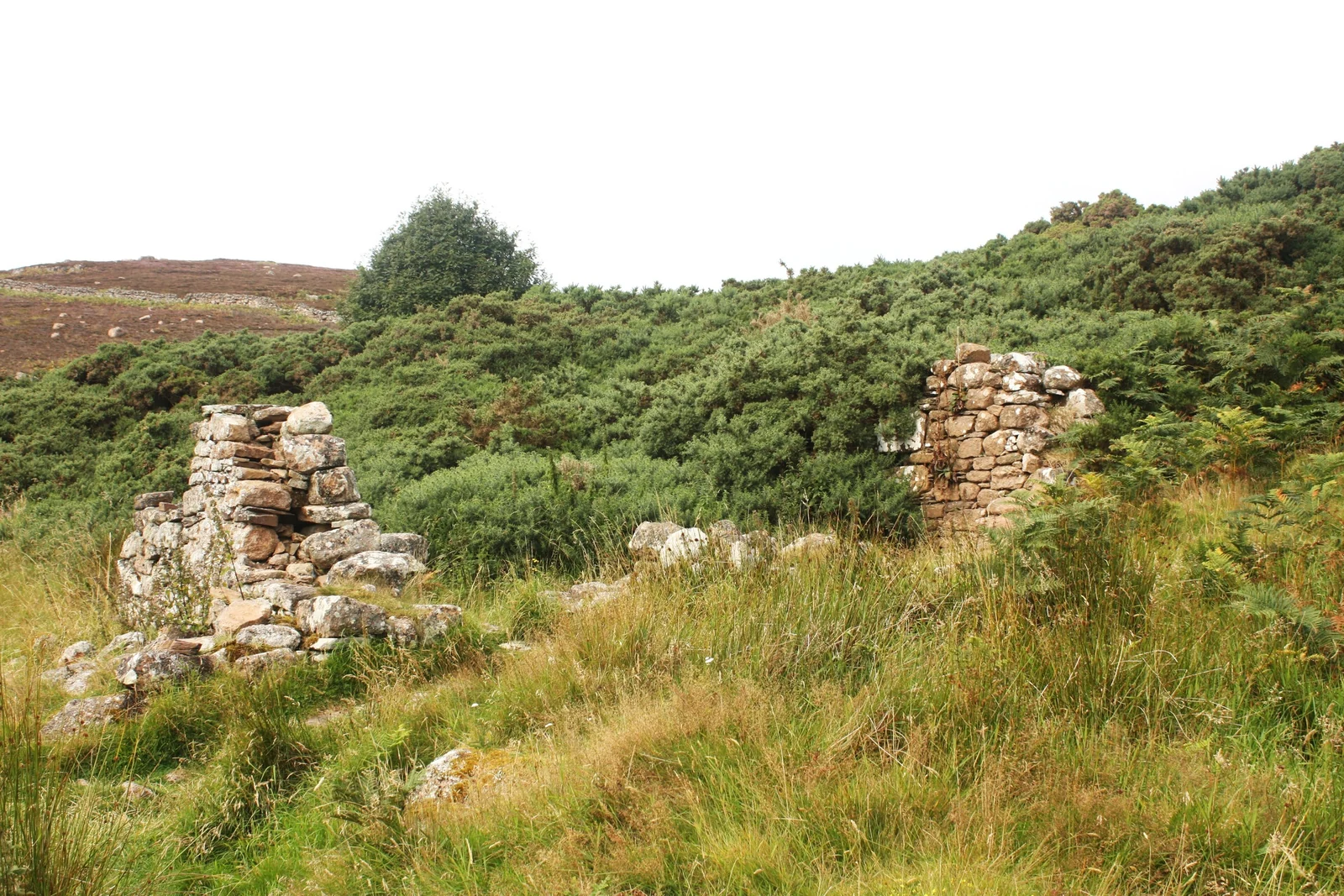
A stone monument at the site was built in 1911 by David Sutherland, the son of a Badbea emigrant, using stones from his family’s old house. A short path from a signed car park on the A9 leads to the monument and the scattered ruins. The ground near the cliffs is unfenced, so keep children and dogs close.
Skye and Raasay: Boreraig, Suisnish and Hallaig
Boreraig and Suisnish, Isle of Skye
On the south coast of Skye, the townships of Boreraig and Suisnish were cleared in 1853 by Lord MacDonald to make way for sheep. They were among the last settlements on Skye to be emptied, and the geologist Archibald Geikie, who was working in the area, later described witnessing the evictions. A long walk from the ruined church of Cill Chriosd near Broadford passes both sites along a beautiful stretch of coast. It is a full-day route on rough paths, so go prepared.
Hallaig, Isle of Raasay
Across the water on Raasay, the township of Hallaig was depopulated between 1852 and 1854 by the landowner George Rainy. It became famous through “Hallaig,” a Gaelic poem by Sorley MacLean, whose family came from Raasay. The poem imagines the woods and hillsides filled with the ghosts of the people who were forced to leave. The ruins lie on the island’s southeast coast and are reached on foot from the north end of the road at Fearns.
Island Ghost Villages: St Kilda and Mingulay
St Kilda
St Kilda is the most famous abandoned settlement in Scotland. The archipelago lies about 65 kilometers west-northwest of North Uist in the Atlantic. People lived here for thousands of years, but on August 29, 1930, the last 36 islanders asked to be evacuated and left on HMS Harebell.
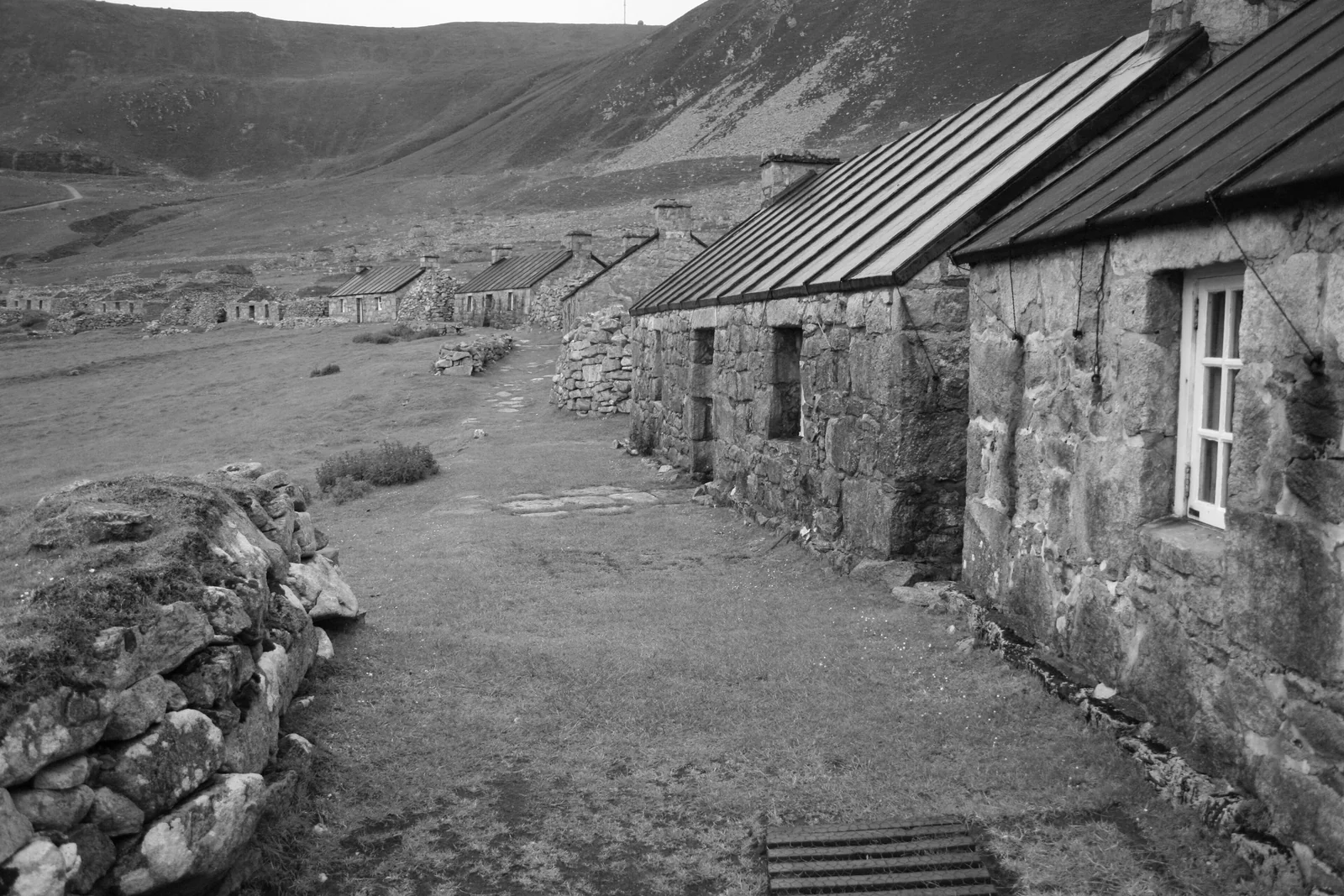
Today the islands belong to the National Trust for Scotland and are a UNESCO World Heritage Site recognized for both their natural and cultural value. On the main island of Hirta you can walk along the Street of Village Bay and see some of the more than 1,400 cleits, small stone-and-turf storage huts found across the archipelago. Boat trips run in summer from the Outer Hebrides and Skye, but landing depends on the sea, so treat any trip as weather-permitting.
Mingulay
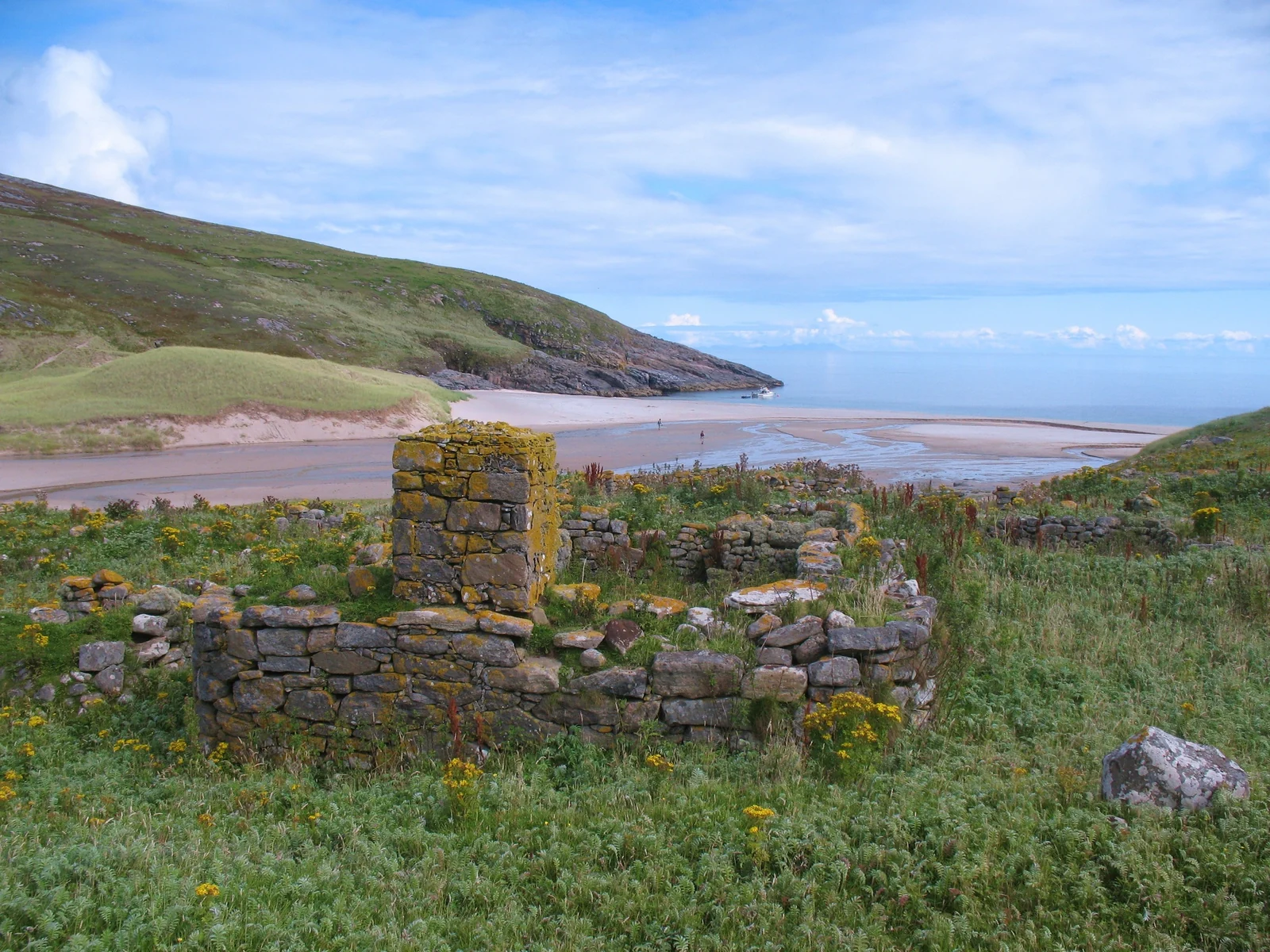
South of Barra, Mingulay was inhabited for around 2,000 years until its last residents left in 1912. The ruined village sits above a sandy bay, and the island has been owned by the National Trust for Scotland since 2000. It can be visited on summer boat trips from Barra and Eriskay, weather allowing.
Auchindrain: See a Township Before It Emptied
To understand what the ruins once looked like, visit Auchindrain near Inveraray in Argyll. It was the last of thousands of communal farming townships in the Highlands, and its final tenant left in 1963. The restored houses and barns now form an open-air museum. Check current opening days on the official Auchindrain website before you go.
Planning Your Visit to Scotland’s Ghost Villages
| Site | Region | Access | Abandoned |
|---|---|---|---|
| Arichonan | Knapdale, Argyll | Forest trail, about 1 hour | 1848 |
| Rosal | Strathnaver, Sutherland | Forest trail, about 1.5 hours | 1814–1818 |
| Badbea | Caithness | Short path from the A9 | 19th century |
| Boreraig and Suisnish | Isle of Skye | Long coastal walk | 1853 |
| Hallaig | Isle of Raasay | Walk from Fearns | 1852–1854 |
| St Kilda | Outer Atlantic | Summer boat trip | 1930 |
| Mingulay | South of Barra | Summer boat trip | 1912 |
- Best time: May to September gives long days and the best chance of boat landings; the midges can be fierce in summer, so bring repellent.
- Getting there: most mainland sites need a car. Ferries serve Skye, Raasay and Barra.
- Footwear: paths are often boggy and uneven; wear waterproof boots.
- Respect the ruins: many sites are scheduled monuments. Do not climb on walls or move stones.
- Access: follow the Scottish Outdoor Access Code, close gates and keep dogs under control around livestock.
If abandoned places fascinate you, read our guides to Gunkanjima, Japan’s abandoned island and the abandoned sections of the Great Wall of China, or browse more United Kingdom travel guides.
Scotland Ghost Towns FAQ
Are there real ghost towns in Scotland?
Yes, although most are small villages rather than towns. Hundreds of townships were abandoned during the Highland Clearances, and islands such as St Kilda and Mingulay were evacuated in the 20th century. Sites like Arichonan, Rosal and Badbea have marked paths and information boards.
What were the Highland Clearances?
The Highland Clearances were the eviction of tenants from Highland and island estates, mainly between the late 18th and mid-19th centuries. Landowners replaced small farming townships with large sheep farms. Many families were moved to the coast or emigrated overseas, leaving behind the ruins you see today.
Can you visit St Kilda?
Yes. Day trips run by boat in the summer months from the Outer Hebrides and Skye. The crossing is long and exposed, and landing at Village Bay depends on the weather and sea state. The islands are cared for by the National Trust for Scotland, whose rangers ask visitors to follow site rules.
Which abandoned village in Scotland is in a forest?
Arichonan in Knapdale, Argyll, is the best example. Its ruins stand on a wooded slope reached by a waymarked forest trail from the Gleann a’ Ghealbhain car park. Rosal in Strathnaver is also set within forestry, with a looped trail through the ruins.
When was St Kilda abandoned?
The last 36 residents of St Kilda left on August 29, 1930, at their own request, after years of population decline, illness and failed harvests. They were taken to the mainland by HMS Harebell. The islands have had no permanent civilian population since.
Is it safe to explore ruined cottages in Scotland?
Walking among the ruins is generally safe if you stay on paths and do not climb on walls, which can be unstable. Many sites are protected monuments. Check the weather, wear sturdy boots and take care near cliffs at coastal sites like Badbea.