The best abandoned villages in Greece you can actually visit are Vatheia in the Mani, Old Perithia on Corfu, Anavatos on Chios, Mikro Chorio on Tilos, Chorio on Chalki, the 1953 earthquake ruins on Kefalonia and the leper island of Spinalonga off Crete. All of them are real, documented places with public access, and none needs a permit or a guide. Sturdy shoes and plenty of water are the only gear that matters.
Greece has hundreds of emptied settlements, and most are hard to find or unsafe to enter. This guide sticks to the ones where you can walk in, understand what happened and get back to a road or a boat before dark. You will find out why each place emptied, how to reach it, when to go and how to behave once you are there. If you are still choosing a base, start with our Greece destination guides.
Abandoned Villages in Greece at a Glance
| Place | Region | Why it emptied | Access |
|---|---|---|---|
| Vatheia | Mani, Peloponnese | Clan feuds, then emigration after World War II | Drive; short walks on steep stone lanes |
| Old Perithia | Corfu | Coastal malaria, then a move to tourism jobs in the 1960s | Drive up from the northeast coast; gravel paths |
| Anavatos | Chios | 1822 massacre, then the 1881 earthquake | Drive; steep climb on stone steps |
| Mikro Chorio | Tilos, Dodecanese | Gradual emigration and a move to the harbor | Beside the main road; ruins on foot |
| Chorio | Chalki, Dodecanese | Piracy ended, then emigration to Florida | About 40 minutes on foot from Emborio |
| Old Vlachata and Old Farsa | Kefalonia, Ionian | 1953 earthquake | Drive and walk; uneven ground |
| Spinalonga | Crete | Leper colony closed in 1957 | Boat from Plaka, Elounda or Agios Nikolaos |
Why Greek Villages Were Abandoned
There is no single story. Several forces repeat across the islands and the mainland, and often more than one hit the same place.
- Defense and its end. Villages were built inland and uphill to hide from pirates. When piracy faded in the 19th century, people drifted down to the coast.
- Malaria. Coastal plains were dangerous in summer, so some families lived high and only moved to the shore in winter. Once the disease was eliminated and tourism created work by the sea, the hill houses lost their purpose.
- Violence and feuds. The 1822 massacre on Chios and the long clan conflicts of the Mani both left settlements damaged or divided.
- Earthquakes. The 1881 quake on Chios and the 1953 Ionian earthquakes broke old stone villages that were never fully rebuilt on the same site.
- Emigration. After World War II, people left for Athens, Australia, the United States and elsewhere. Islanders from Chalki went to Tarpon Springs, Florida.
Keep that in mind as you walk. These are not film sets. Many ruins still belong to families, and some have a chapel that is looked after to this day.
Vatheia: The Tower Village of the Mani
Vatheia sits on a ridge near the southern end of the Mani peninsula, about 180 m above the sea, and its tall stone tower houses are the most photographed abandoned architecture on the Greek mainland. A Venetian diplomatic mission mentioned the village in 1571. From 1764 a clan war split the community for roughly four decades, a conflict that shaped the Mani's culture of fortified towers.
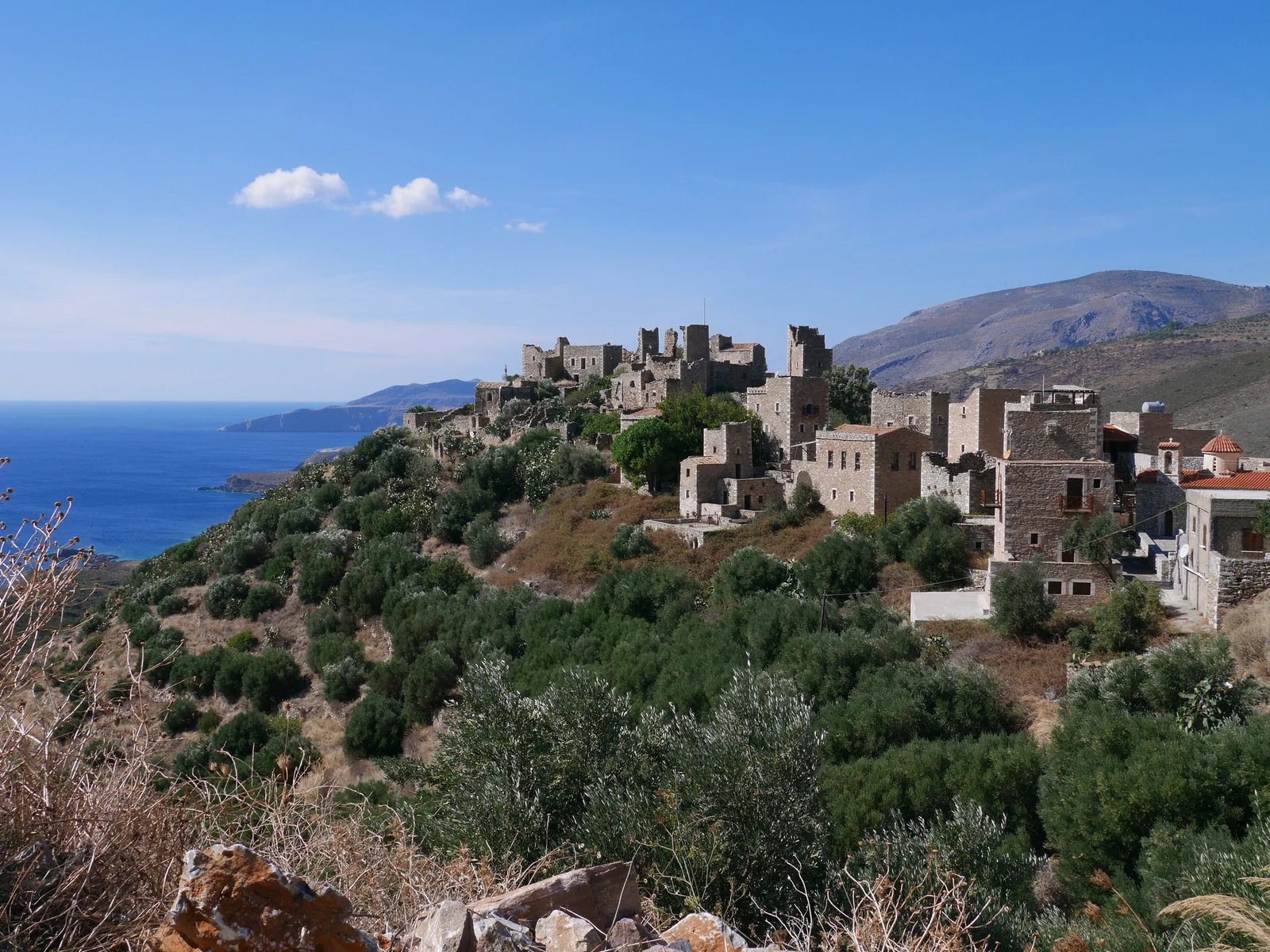
Most of the village emptied after World War II. It is not entirely deserted: a few dozen people live here now, and some towers have been restored as places to stay. That mix makes it feel safer and less eerie than a pure ruin. Look for the lanes between the towers and the small chapels. Visit Greece describes the village and its architecture in more detail.
How to reach it: by car from Areopoli, the usual base. You will want your own vehicle, because public transport in the Mani is thin. Best season: spring, when wildflowers cover the slopes, or early autumn.
Old Perithia, Corfu: The Village That Came Back
Old Perithia lies about 450 m up the slopes of Mount Pantokrator in northeast Corfu. The height protected residents from pirate raids and from coastal malaria. Written records go back to the 14th century, and at its peak the village held around 130 houses and eight churches. Livestock was the main business.
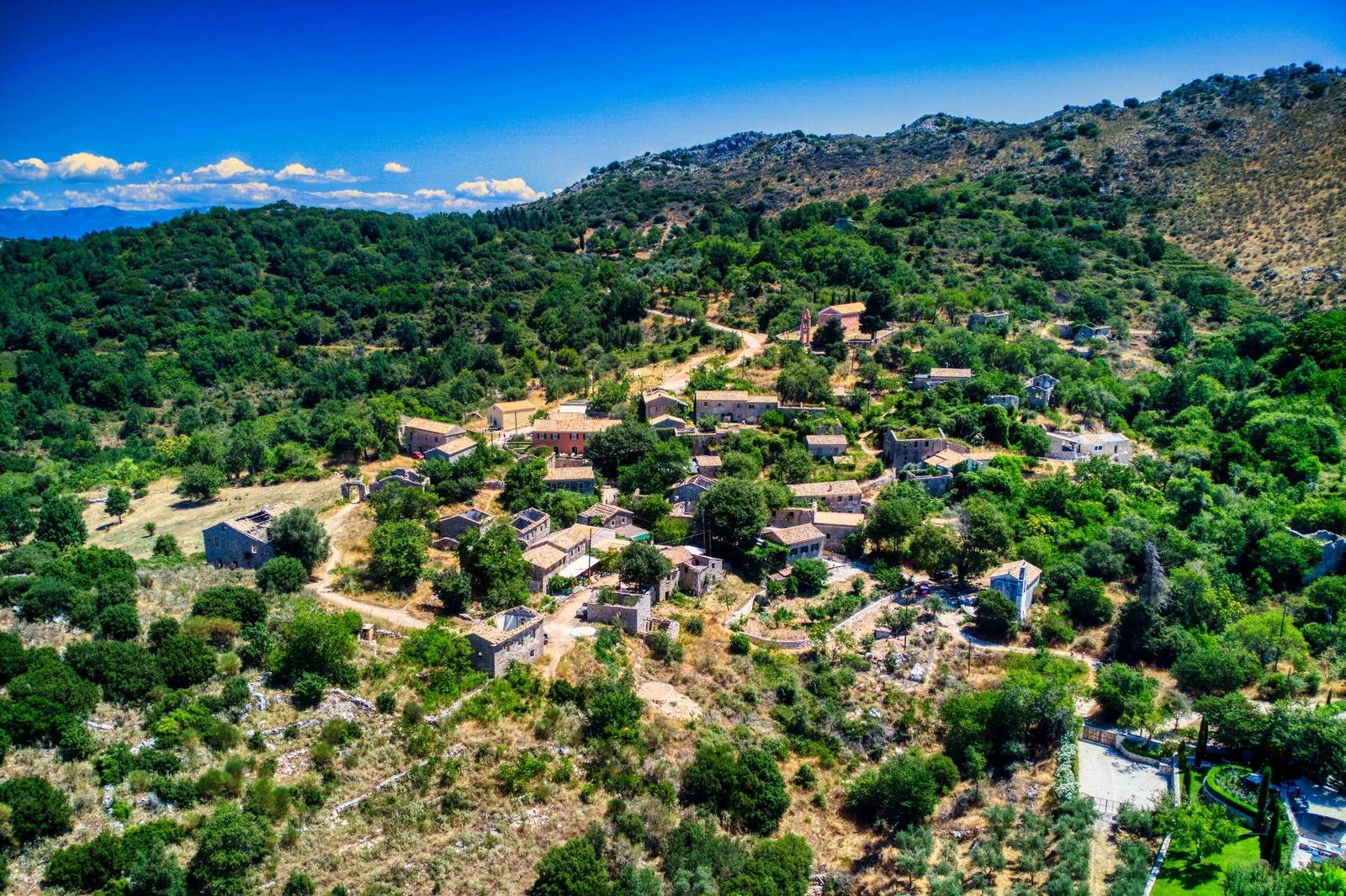
Over time, families began spending winters on the coast, and the village was gradually abandoned in the 1960s. It was declared a monument in 1996. Restorations began around 2010, and today there are several tavernas and a restored 14th-century church of Agios Iakovos o Persis at the entrance. Many houses are still roofless.
This is the easiest ghost village on the list for a first-timer, because you can eat lunch in the middle of it. Go for a meal and an afternoon wander, and respect any gate or sign that marks a private house. The Old Perithia community website has a village map and history. How to reach it: drive up from the northeast coast. Best season: spring and autumn, because summer afternoons on the stone paths are hot.
Anavatos, Chios: A Fortress Village on a Rock
Anavatos clings to a rocky crag about 16 km from Chios town, and from the road it looks almost like part of the cliff. It dates from the Byzantine era and was probably founded by workers connected with the nearby Nea Moni monastery. In 1822, Ottoman troops massacred much of the population during the Massacre of Chios. Survivors built a new village nearby, and an earthquake in 1881 finished off what remained of the old one.
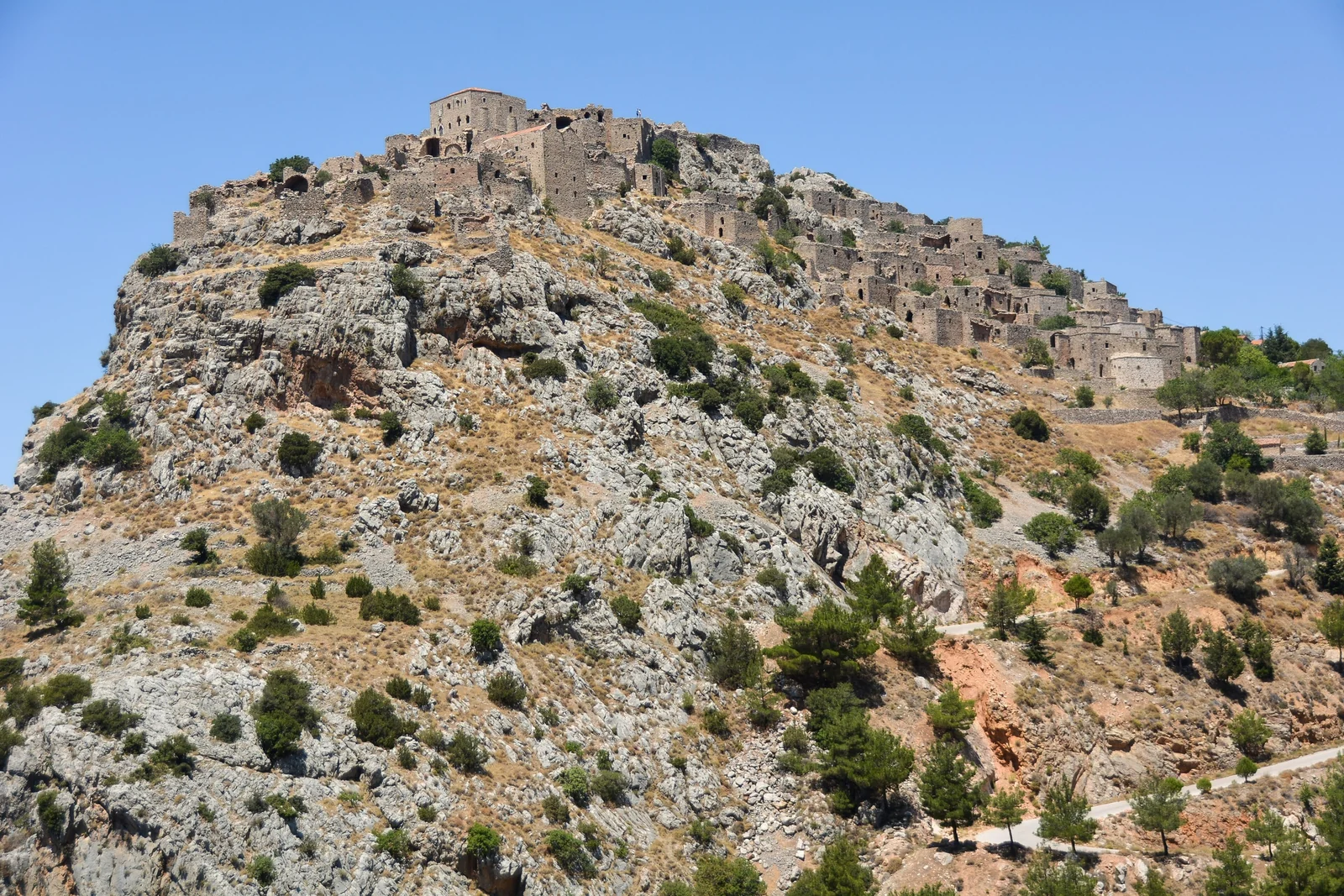
Today only a handful of people live here, and the old houses can be explored on foot. The climb up uneven stone steps is steep, and some buildings are unsafe, so stay on the main paths. Bring water and wear shoes with grip. How to reach it: by car from Chios town, easy to combine with Nea Moni. Best season: spring or autumn.
Mikro Chorio on Tilos and Chorio on Chalki
Mikro Chorio, Tilos
On the small Dodecanese island of Tilos, Mikro Chorio sits at about 220 m beside the main road between Megalo Chorio and Livadia. Before the war it held more than 750 permanent residents and some 220 houses. People left gradually for Rhodes, Athens, Australia and America, and those who stayed moved down to Livadia. Departing families also took the roofs and window frames, so you see walls rather than finished houses.
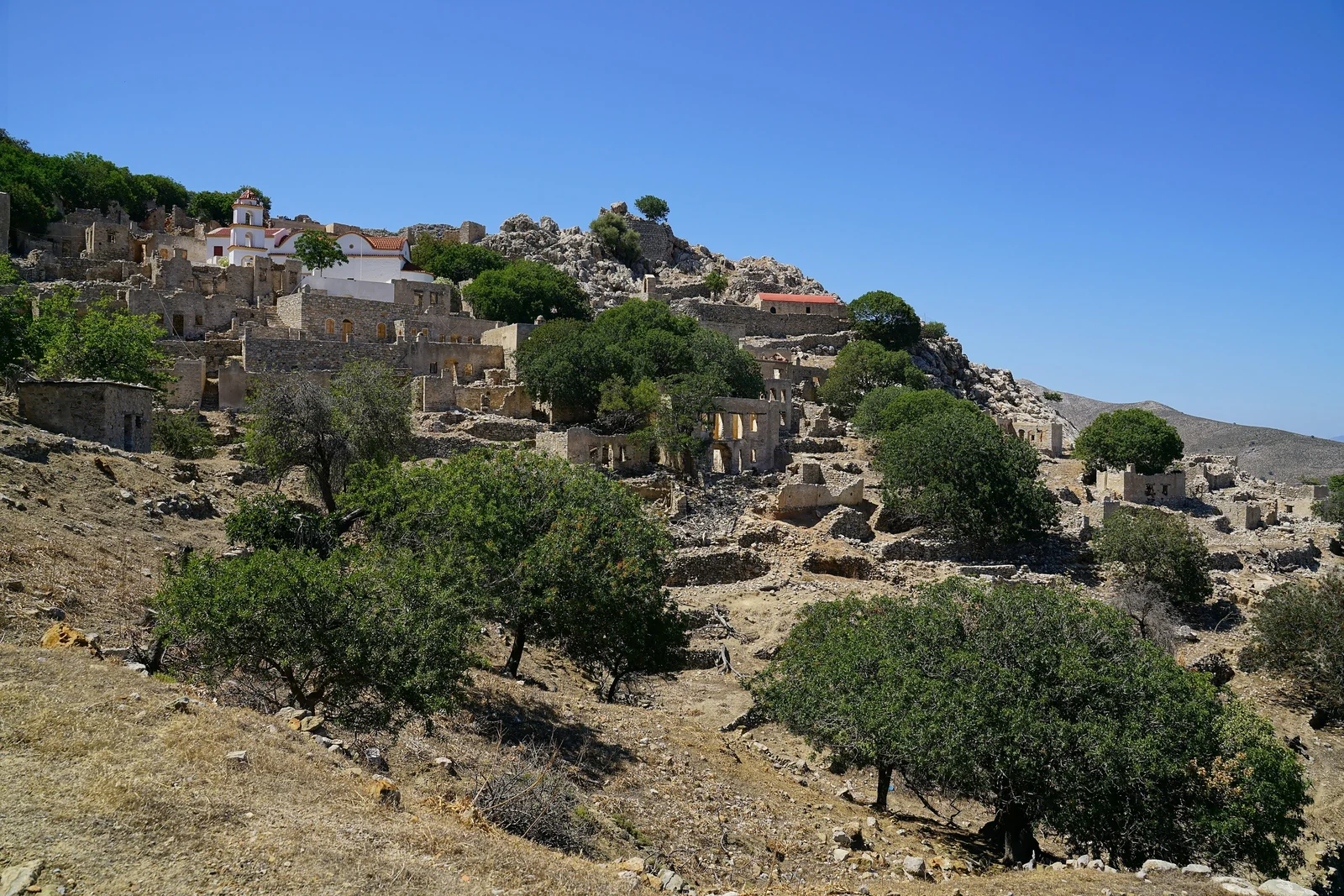
Look for the church of Agia Zoni, built in 1861, and the cemetery church with frescoes painted in 1787. A bar operates among the ruins, so check whether it is open before you plan an evening there. The village is easy to reach by car or bicycle from Livadia.
Chorio, Chalki
Chalki's old capital had around 3,000 residents at its height. Many islanders moved down to Emborio when piracy eased, and later emigration, especially to Tarpon Springs in Florida, emptied the rest. The paved road between Emborio and Chorio carries a name that recalls that link. Walk it in about 40 minutes, then climb 10 to 15 minutes more to the Knights of St John castle above the village. There is almost no shade, so carry water and sun protection. Most buildings are ruined, with only a few houses and one church renovated.
Best season for both: spring or autumn. Ferries to the Dodecanese vary by season, so check current sailings with the operators. For the big neighbor, see our Rhodes guide.
Kefalonia: Ruins Left by the 1953 Earthquake
In 1953, earthquakes devastated the Ionian islands, and almost every town on Kefalonia was destroyed. Fiskardo in the north was largely spared. In several places residents rebuilt on safer ground, leaving the old village as a ruin. Two of the easiest to visit are Old Vlachata near Sami and Old Farsa above the modern village.
At Old Vlachata, half-broken walls stand among trees, and since summer 2012 the Saristra festival has used the ruins for performances and art projects. At Old Farsa, the quake forced a rapid evacuation, and everyday objects were left behind. These sites are less developed than Perithia, so expect rough ground, no shops and no facilities, and check local conditions before you go. Never remove anything you find. Best season: spring or autumn.
Spinalonga, Crete: The Island Leper Colony
Spinalonga is different. It is not a village that people drifted away from, but an island emptied by decision. Venetians began fortifying it in 1579, and it was the last Venetian fortress on Crete, holding out until 1715. An Ottoman settlement followed. In 1904 the first patients arrived when the Greek state turned the island into a leper colony. It closed in 1957.
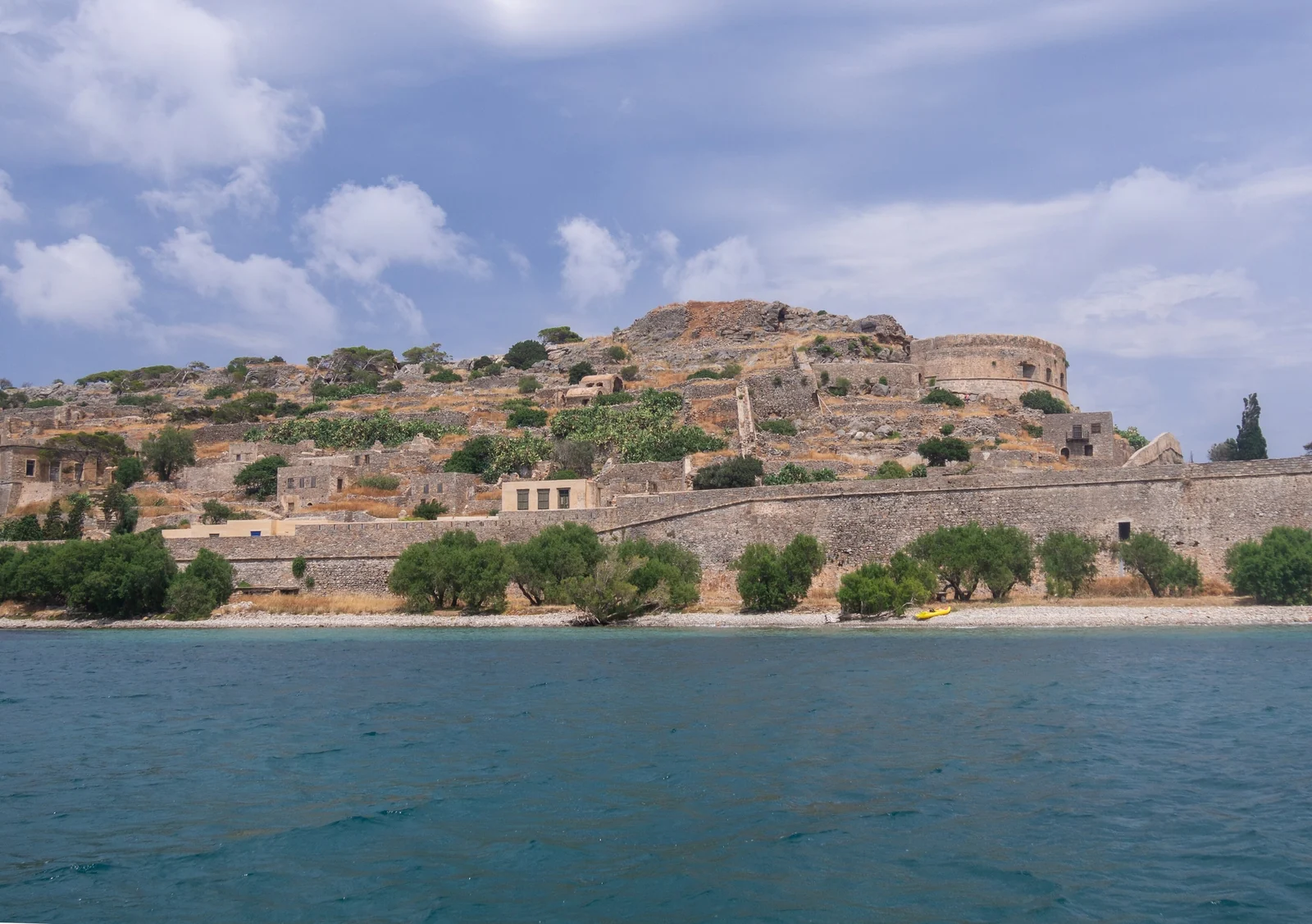
The colony was a place of enforced isolation, and the stories attached to it are painful. Patients' names were removed from their hometown registries, and families often hid the connection. Treat it as a memorial. Visitors come by boat from Plaka, the shortest crossing, from Elounda, or from Agios Nikolaos. Boats run mainly in the warmer months, so check current schedules and ticket rules locally. See the Visit Greece page on Spinalonga for background, and our Crete travel guide for the wider trip.
How to Visit Greece's Ghost Villages Safely and Respectfully
- Stay out of unstable buildings. Roofs, floors and stone stairs in abandoned houses can fail without warning. Look from the doorway.
- Watch for snakes and sharp ground. Wear closed shoes, not sandals, and be careful where you put your hands.
- Carry water and sun protection. Several sites have no shade or shops. Heat is the most common problem.
- Respect private property. Many ruins belong to families. Close gates and ignore anything marked private.
- Take nothing. Stones, tiles, household objects and church items stay where they are.
- Treat chapels and cemeteries as active. Dress modestly, keep your voice down and do not photograph worshippers.
- Plan daylight. Visit in the morning or late afternoon and be back at your car or boat before dark.
- Fly drones only where allowed. Check the current Greek rules before you launch.
If you like this kind of travel, our feature on the abandoned island of Gunkanjima in Japan shows how another country handles an emptied settlement. For the rest of a trip, see our general Greece guide.
Best Time to Go and How to Combine the Stops
Spring and early autumn suit nearly every site here. Summer is hot, and stone ruins hold the heat. Winter brings short days, closed tavernas, fewer boats and slippery paths, so it works only for Vatheia and Old Perithia if you drive and keep expectations low.
Geography makes a few easy pairings. Old Perithia fits into any Corfu stay. Tilos and Chalki can be linked on an island-hopping trip in the Dodecanese. Vatheia works as a day out from Areopoli, and Spinalonga as a half-day from Elounda or Agios Nikolaos. The old town of Monemvasia is a useful contrast: it is a medieval fortress settlement that is still inhabited, with guesthouses and cafés, so it suits anyone who wants old stone without the silence.
Abandoned Villages in Greece FAQ
What is the most famous abandoned village in Greece?
Vatheia in the Mani is the best-known mainland example because of its tower houses, while Spinalonga in Crete is the most visited abandoned place overall. Old Perithia on Corfu is the easiest for a relaxed day with a meal.
Can you visit abandoned villages in Greece?
Yes. The places in this guide are open to walkers, and some have tavernas or boat services. Treat every ruin as private or protected, stay out of damaged buildings and follow any signs.
Why were so many villages in Greece abandoned?
The main reasons were piracy ending, malaria, clan feuds, massacres, earthquakes and emigration. Many villages also emptied when tourism and trade made life on the coast more attractive than farming on a hillside.
Which abandoned village in Greece has restaurants?
Old Perithia on Corfu has several tavernas, and Mikro Chorio on Tilos has a bar among the ruins. Opening days vary by season, so check locally before you plan a meal there.
Is Spinalonga an abandoned village?
Spinalonga is an abandoned island settlement. It was a Venetian fortress and then a leper colony from 1904 to 1957. It is a memorial as much as a ruin, so visitors should be respectful.
When is the best time to visit Greece's ghost villages?
Spring and early autumn are best. The weather is mild, the paths are drier and the stone ruins are less hot than in summer, when midday heat makes a walk tiring.
Do you need a car to visit these places?
For Vatheia, Old Perithia, Anavatos and Kefalonia's old villages, a car helps a lot. Spinalonga needs a boat from the coast, and Chorio on Chalki can be reached on foot from Emborio.