


The Azores are nine volcanic islands in the middle of the North Atlantic, an autonomous region of Portugal that sits roughly a third of the way from Lisbon to North America. People come for crater lakes, hot springs, whale watching, steep green hiking country and a pace of life that makes mainland Europe feel hurried.
For a first trip, the smart move is to pick two or three islands rather than chase all nine. This Azores travel guide focuses on São Miguel, Terceira and Pico, with Faial and Flores as add-ons, and covers when to go, how inter-island flights and ferries work, how many days you need and what driving is like.
If you are combining the islands with the mainland, our Lisbon guide is a natural companion, since many flights to the archipelago route through the capital. You can find more ideas in our Portugal travel guides.
The Azores at a Glance: Nine Islands, Three Groups
The islands fall into three clusters. The Eastern Group is São Miguel and Santa Maria. The Central Group holds Terceira, Graciosa, São Jorge, Pico and Faial, several of them within sight of each other on a clear day. The Western Group is just Flores and tiny Corvo, far out on their own.
That geography shapes every itinerary. Hopping inside the Central Group is easy, with short ferry rides between Pico, Faial and São Jorge. Getting from São Miguel to the Central Group, or out to Flores, means a flight. Plan around clusters and you will spend more time outside and less time in departure lounges.
São Miguel: Crater Lakes, Hot Springs and Tea
Almost every first trip starts on São Miguel, the largest island and home to the main airport. It packs a remarkable amount into a drive of a couple of hours end to end, and it deserves at least four days on its own.
Ponta Delgada
The island's capital is a handsome, low-rise port of black basalt and whitewashed churches. Walk the waterfront, pass through the three arches of the Portas da Cidade and visit a pineapple greenhouse on the edge of town. Ponta Delgada is the most practical base for your first nights.
Sete Cidades
The postcard view of the Azores is the twin lakes of Sete Cidades, one greener and one bluer, lying side by side in a huge collapsed crater on the island's west end. The Vista do Rei and Boca do Inferno viewpoints give the classic overviews. Come early: cloud often fills the crater as the day goes on, and on those days you will see nothing but white.
Furnas and Cozido
Furnas is a village in a still-active volcanic valley, full of steaming vents and bubbling mud. Its signature dish, cozido das Furnas, is a stew of meats and vegetables lowered in a pot into the hot ground beside Lagoa das Furnas and slow-cooked for hours by volcanic heat. Several restaurants in the village serve it at lunch, and it is smart to book ahead in summer.
Afterwards, soak in the warm, rust-colored thermal pool at Terra Nostra Park. Pack a dark swimsuit; the iron-rich water stains light fabric.
Lagoa do Fogo
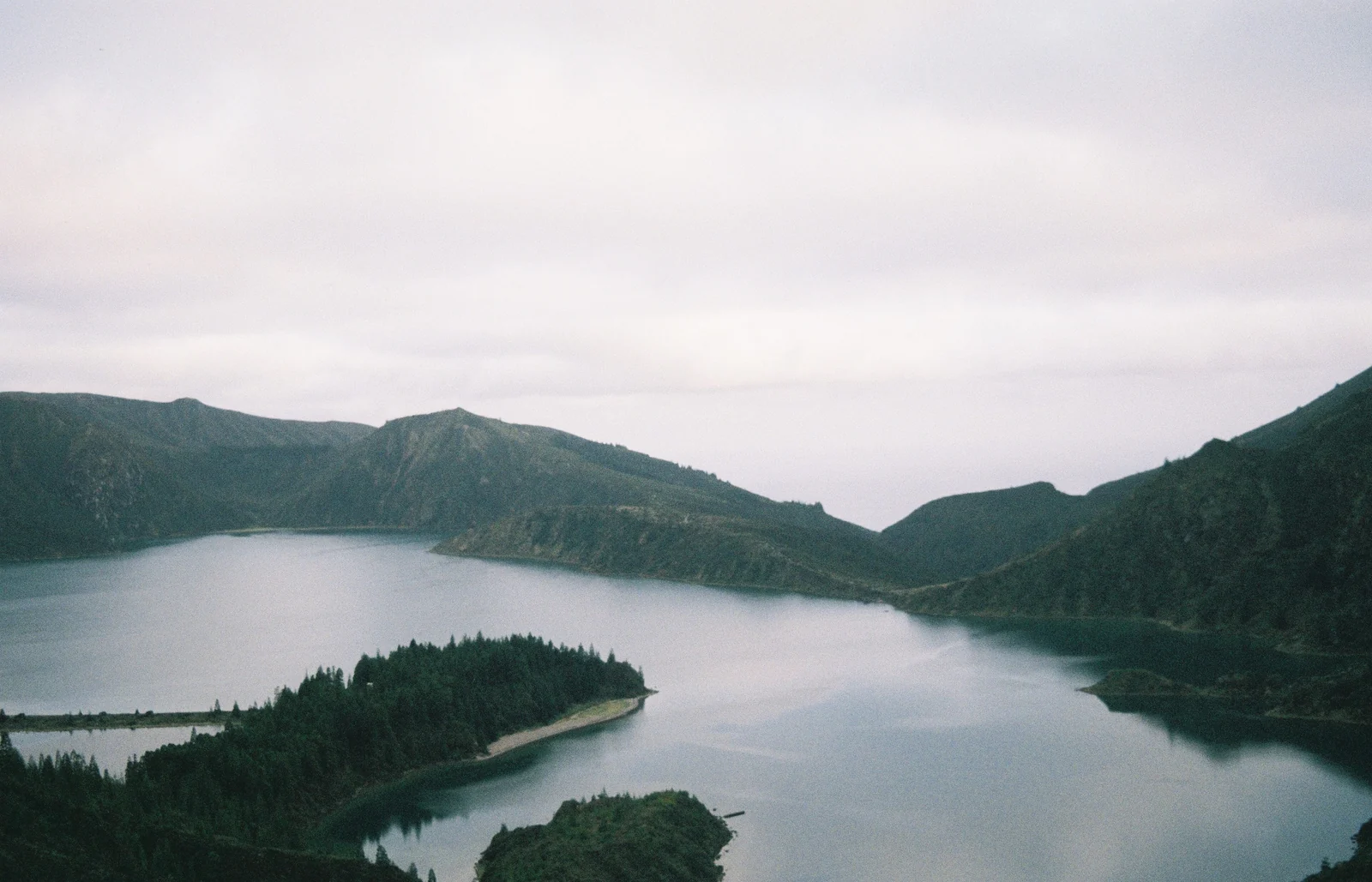
In the mountains at the center of the island, Lagoa do Fogo is a crater lake ringed by steep slopes with almost no buildings in sight. It feels wilder than Sete Cidades and, honestly, it is the better view.
Note the summer rules. From June to September the access road is closed to private cars during the day, and a paid shuttle runs from car parks at Caldeira Velha and on the southern approach, under a scheme run by the regional government. Outside those hours and in the off-season you can drive up yourself.
Tea Plantations
On the north coast, São Miguel grows tea, something you will not find anywhere else in Europe on a commercial scale. Chá Gorreana has been producing since 1883, and you can walk through the working factory, see the old machinery and wander the rows of bushes above the sea.
Terceira: Angra do Heroísmo and Algar do Carvão
Terceira gets fewer foreign visitors than São Miguel, which is a shame. Its main town, Angra do Heroísmo, was a key Atlantic port for ships returning from Africa, Asia and the Americas, and its center was added to the UNESCO World Heritage List in 1983. Carefully rebuilt after a 1980 earthquake, it is a grid of pastel facades, ornate churches and wrought-iron balconies that rewards a slow wander.
Walk out onto Monte Brasil, the crater peninsula that shelters the harbor, for trails and sea views. Terceira is also the island of summer festivals and rope bullfights in the streets, known as tourada à corda, so check local calendars if you want to see one or avoid one.
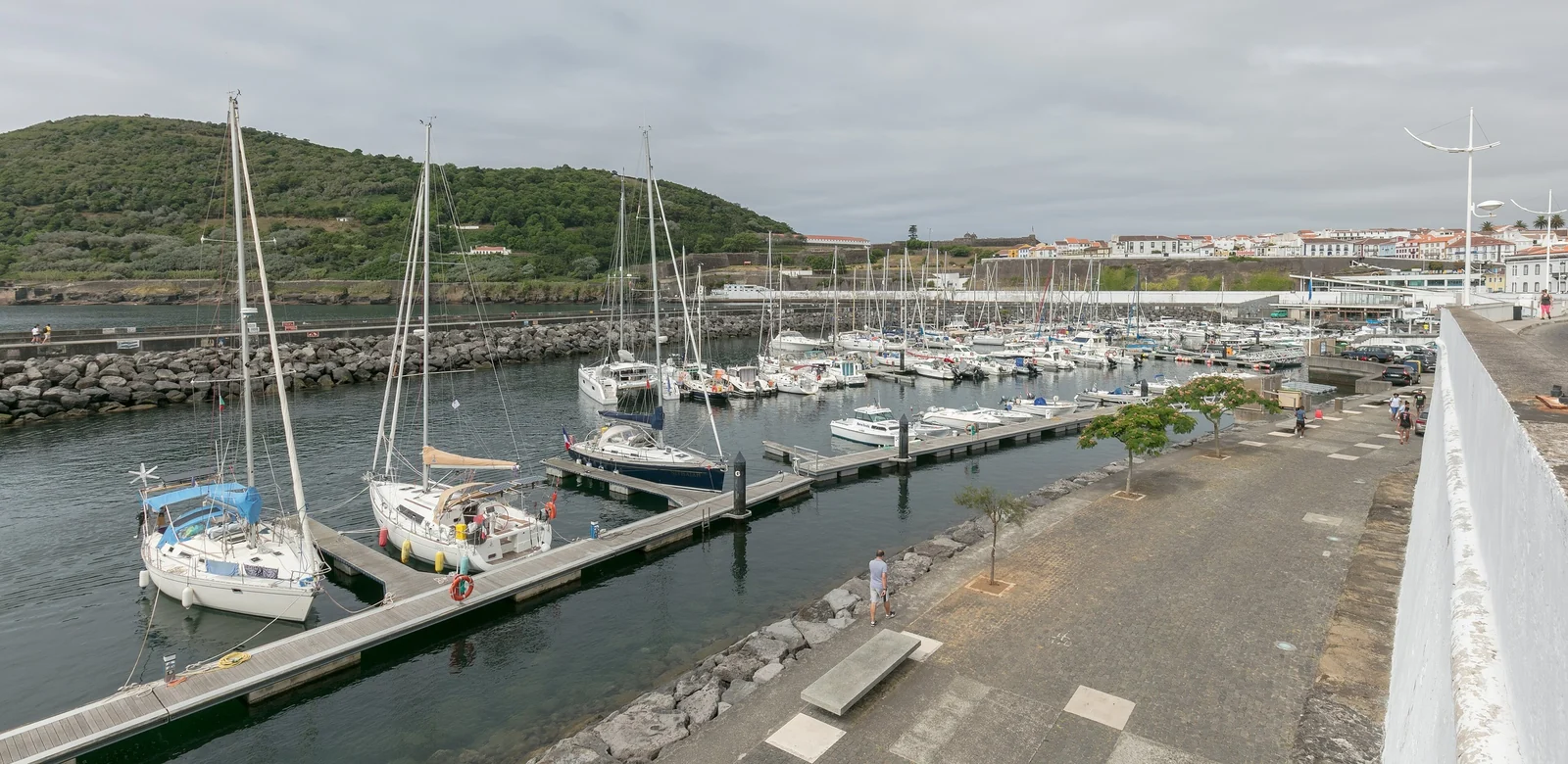
The island's standout natural site is Algar do Carvão, an old volcanic vent you can actually walk down into. Steps lead into a cathedral-like chamber with mineral-streaked walls and a small lake of rainwater at the bottom. It opens seasonally, roughly from spring to autumn, so check current days with the managing association before you plan around it.
Pico: Vineyards in Lava and Portugal's Highest Mountain
Pico is dominated by one thing: the volcano that gives it its name. At 2,351 meters, Mount Pico is the highest point in Portugal, and its near-perfect cone appears in almost every view across the Central Group, often wearing a cap of cloud.
The Pico Wine Landscape
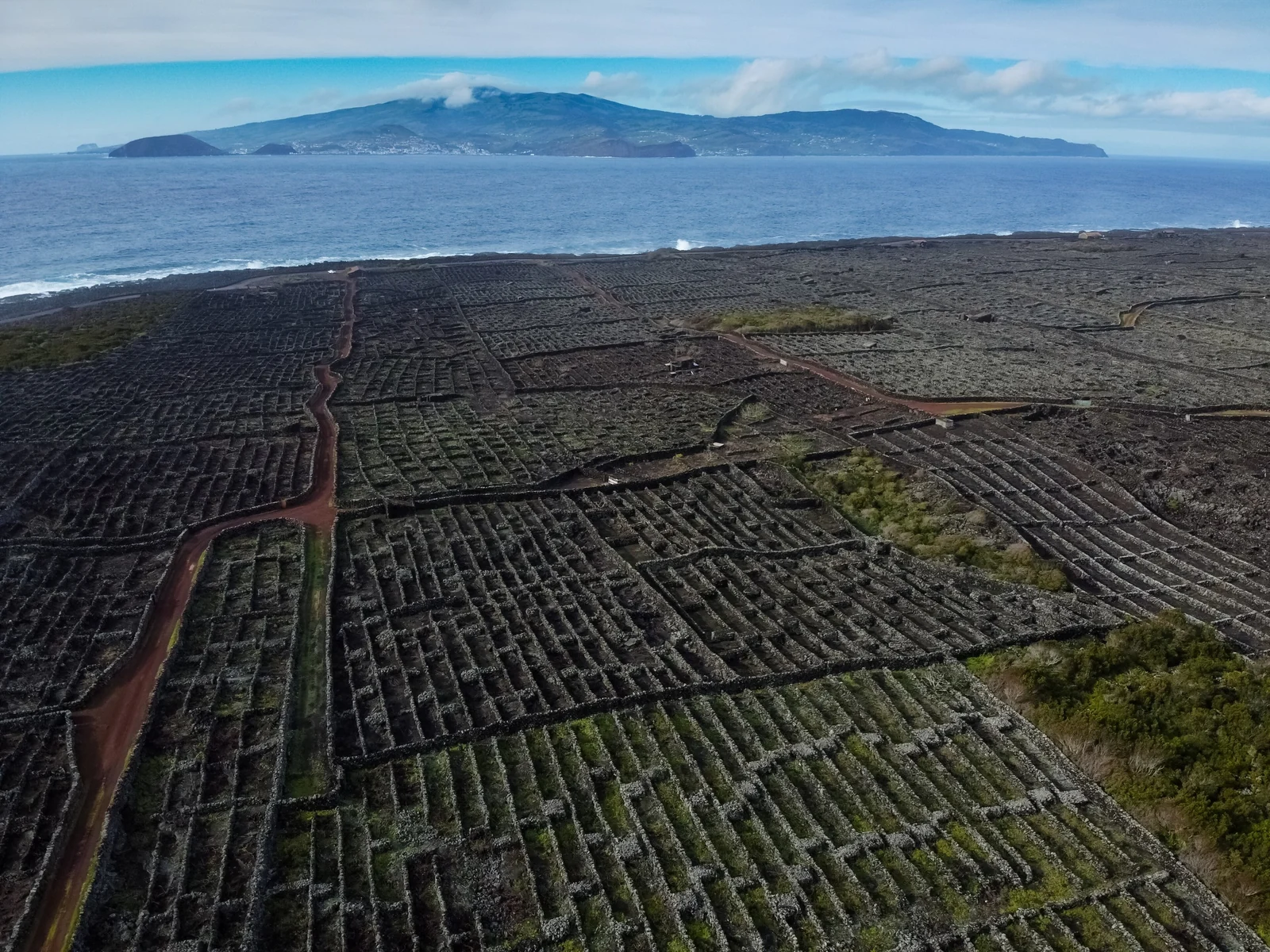
Down at sea level, generations of farmers built a maze of low black lava-stone walls, called currais, to protect vines from wind and salt spray. The result is one of the strangest vineyard landscapes anywhere, listed by UNESCO as the Landscape of the Pico Island Vineyard Culture in 2004. See it at Criação Velha near Madalena, then taste the salty, bright local whites at the island's wine cooperative.
Climbing Mount Pico
The climb is the hardest day hike in the Azores and the one many people remember most. It starts at Casa da Montanha, at about 1,200 meters, and climbs steeply over loose lava and rock, with marker posts guiding the way. Most fit hikers need six to eight hours round trip to reach the crater rim and scramble up Piquinho, the small summit cone.
Every climber must register, pay a fee and carry a GPS tracker issued on site. Daily numbers are capped and summer slots sell out, so book through the official Montanha do Pico site as soon as your dates are set. Wear proper boots, bring layers and plenty of water, and keep a backup day in case weather closes the mountain.
Faial and Flores
Faial
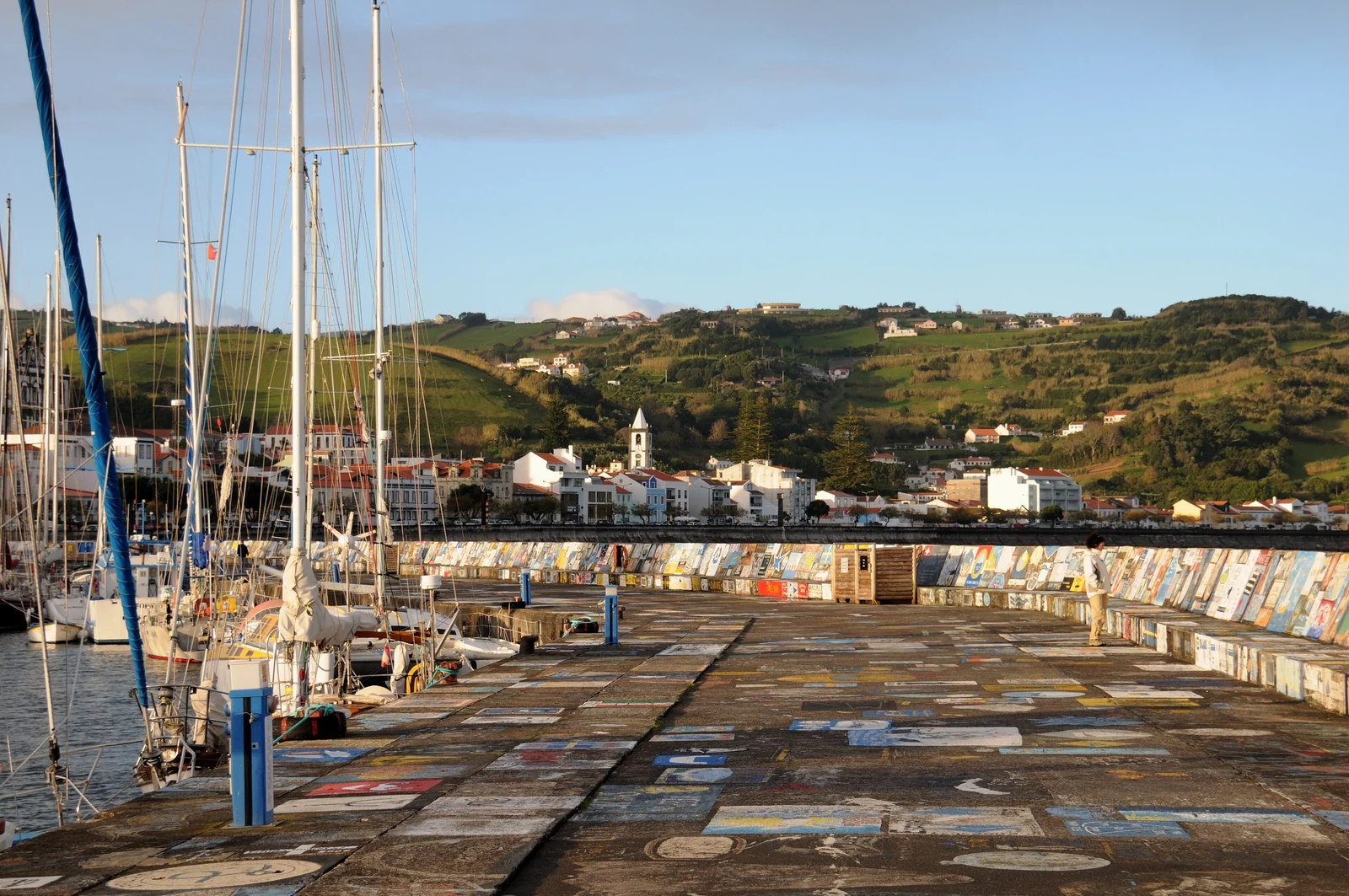
Faial lies about half an hour by ferry from Pico, and the two pair perfectly. Its town, Horta, has one of the most famous marinas in the Atlantic, where yacht crews crossing the ocean paint their boat names and logos on the harbor walls for luck.
Out west, the Capelinhos volcano erupted in 1957 and 1958 and added new land to the island; the interpretation center, built into the ash, explains it well. In the middle of the island, the great Caldeira crater makes a fine rim walk on a clear day.
Flores
Flores, in the Western Group, is the island for travelers who have seen the others or who want serious hiking. Waterfalls pour off green cliffs, lakes sit in old craters in the interior, and the coastal trail around Fajã Grande is one of the best in the archipelago. Flights are weather-dependent, so give it at least three nights.
Whale Watching in the Azores
The Azores are among the best places in Europe to see whales. Sperm whales live in these waters all year, and many other species pass through, including blue, fin and sei whales on their spring migration, roughly from March to June. Dolphins turn up on most trips throughout the season.
Pico, and Lajes do Pico in particular, is the traditional heart of it, a former whaling village where the old lookouts, or vigias, now spot whales for tour boats instead of harpoons. Choose one that uses land-based lookouts, follows the regional rules on approaching animals and is clear about what happens if the sea is too rough. Some offer a free repeat trip if you see no whales, so ask before you book.
Best Time to Visit the Azores and What the Weather Is Really Like
The climate is mild all year. Winters rarely get cold and summers rarely get hot, but rain, wind and fast-moving cloud are part of the deal in every month. Four seasons in a day is not much of an exaggeration. Check webcams before you drive up to a viewpoint.
- June to September: warmest, driest and most reliable for Mount Pico, swimming and ferries. Hydrangeas line the roads in early summer. Prices and demand peak in July and August.
- April, May and October: the sweet spot for many travelers, with green landscapes, fewer people and good whale watching in spring. Expect more showers.
- November to March: cheapest and quietest, with mild temperatures but frequent rain, rough seas, reduced ferry service and a higher chance of flight disruptions.
Getting There, Inter-Island Flights, Ferries and Driving
Flights to the Azores
Ponta Delgada on São Miguel has the most connections, with frequent flights from Lisbon and Porto and seasonal routes from other European cities. Terceira also has direct flights from Lisbon, and Pico and Faial have Lisbon links too, though with fewer departures. From North America, Azores Airlines flies to Ponta Delgada from Boston, and other seasonal routes come and go, so check current schedules before you plan your route.
Inter-Island Flights and Ferries
SATA Air Açores links all nine islands by plane. Fog or wind can cause delays, so avoid tight same-day connections to an international flight.
Atlânticoline runs the ferries. The Horta to Madalena crossing between Faial and Pico takes about half an hour and runs several times a day. Other routes link Pico and Faial with São Jorge, and summer services reach Terceira and Graciosa. There is no practical ferry between São Miguel and the Central Group for most visitors, so plan to fly that leg.
Driving in the Azores
Rent a car on São Miguel, Terceira and Pico; buses exist but are geared to locals and will not get you to trailheads and viewpoints on time. Book early for summer. Portugal drives on the right, main roads are good, and traffic is light outside Ponta Delgada.
- Expect narrow village streets, steep switchbacks and cows on the road in farm country.
- Fog can drop visibility to almost nothing on high roads, especially around Sete Cidades and Lagoa do Fogo.
- Drivers from outside the EU should bring an International Driving Permit alongside their home license, since some rental companies ask for one.
How Many Days and Which Islands to Combine
A week suits two islands; ten to fourteen days lets you add a third.
| Trip length | Islands | Best for | Logistics |
|---|---|---|---|
| 5–6 days | São Miguel only | First taste, hot springs, crater lakes | Fly in and out of Ponta Delgada, rent a car |
| 7–8 days | São Miguel + Terceira | Nature plus history and festivals | One short flight between islands |
| 9–10 days | São Miguel + Pico + Faial | Hiking, wine, whales, Mount Pico | Fly to Pico or Faial, ferry between them |
| 12–14 days | São Miguel + Terceira + Pico + Faial | A full first visit across two groups | Two flights plus the Faial–Pico ferry |
| Add 3–4 days | Flores | Waterfalls and serious hiking | Fly via Ponta Delgada, Terceira or Faial; allow a buffer |
Our pick for a first trip of about ten days: four nights on São Miguel, then four or five split between Pico and Faial, with the ferry linking them. Terceira is the easiest island to add if you have more time, and an open-jaw ticket, arriving on one island and leaving from another, saves you backtracking. If island trips are your thing, compare our guide to the islands of Italy or browse more European destinations.
For official information on trails, events and island services, the regional tourism board at Visit Azores is the best starting point.
Azores Travel FAQ
Which Azores island is best for a first visit?
São Miguel. It has the most flight connections, the widest range of sights and the most places to stay and eat, from Sete Cidades and Furnas to tea plantations and hot springs. If you have more than a week, pair it with Pico and Faial or with Terceira.
How many days do you need in the Azores?
Plan on at least five days for São Miguel alone and seven to ten days for two or three islands. Leave spare time on each island for bad-weather days.
Do you need a car in the Azores?
On São Miguel, Terceira and Pico, yes, if you want to reach trailheads, lakes and viewpoints on your own schedule. Book rental cars early for summer.
Can you take a ferry between the Azores islands?
Yes, within the Central Group. Atlânticoline ferries link Faial and Pico in about half an hour, with other routes to São Jorge and summer services to Terceira and Graciosa. To travel between São Miguel and the central islands, or to Flores, you will need to fly.
When is the best time to see whales in the Azores?
Sperm whales are present all year, so any season can work, but tours run most often from spring to autumn. For a chance at blue and fin whales, go in spring, roughly March to June, when they migrate past the islands.
Do you need a permit to climb Mount Pico?
Yes. All climbers register at Casa da Montanha, pay a fee and carry a GPS tracker. Daily numbers are limited, so book through the official Montanha do Pico website well ahead of a summer visit, and keep a spare day in case weather closes the trail.
Is the water warm enough to swim in the Azores?
The Atlantic is cool here and warmest in late summer. Many visitors prefer the natural lava rock pools along the coast, or the thermal pools on São Miguel, especially in Furnas, which are warm all year and perfect after a wet hike.