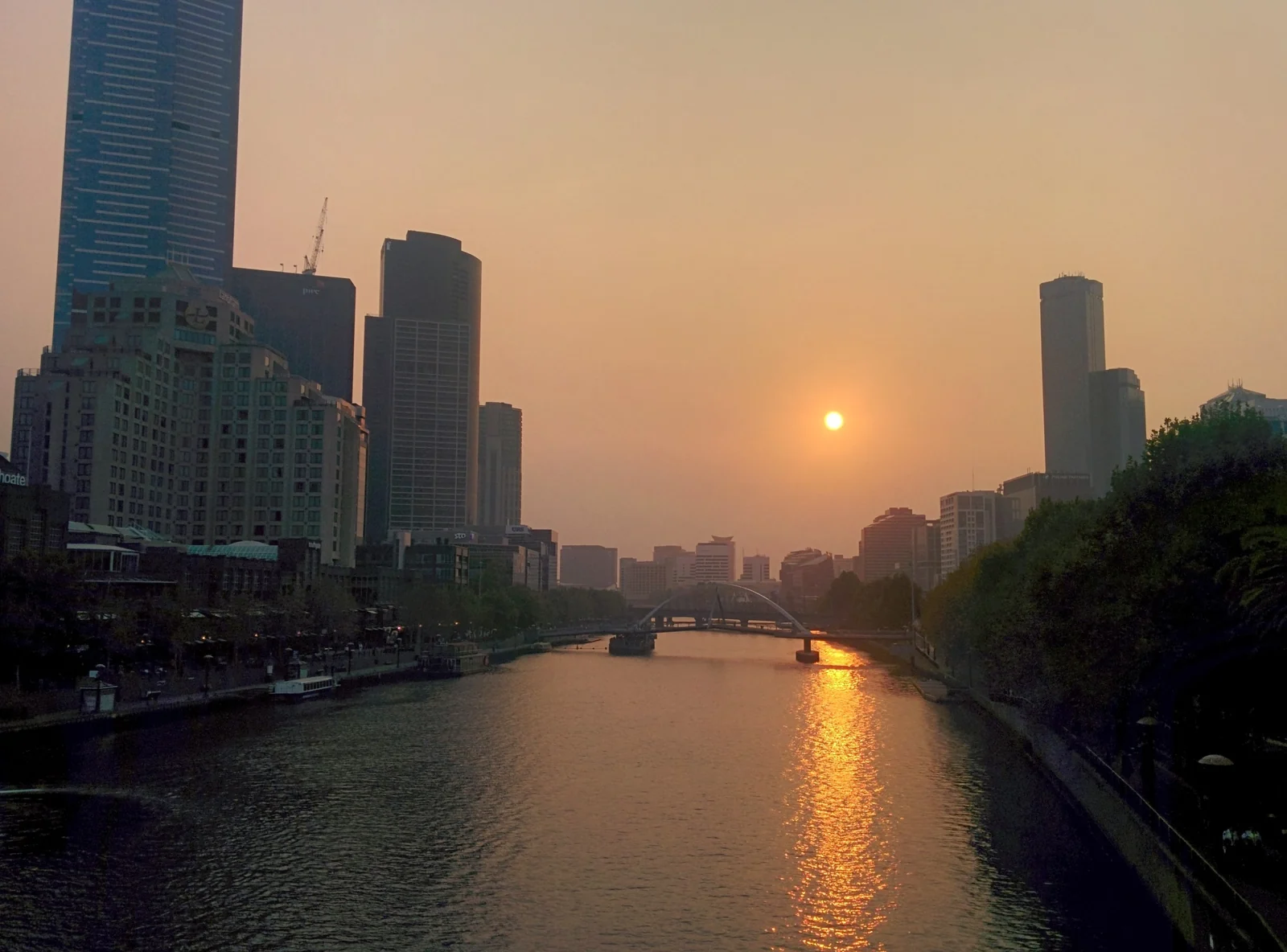
Melbourne is the capital of Victoria and, for many travelers, the Australian city with the most personality. It is built around laneways, coffee, sport and a serious appetite for art, laid out on a flat grid beside the Yarra River and stitched together by one of the biggest tram networks anywhere. If Sydney is the postcard, Melbourne is the city you fall for once you stop sightseeing and start wandering.
Three full days cover the city itself, and a fourth or fifth lets you add a day trip to the Great Ocean Road, the Yarra Valley or the penguins of Phillip Island. This Melbourne travel guide covers the laneways, the market, the museums, the neighborhoods, how the trams work, the day trips, the weather and how many days to give it. Comparing it with its rival to the north? Our Sydney vs Melbourne comparison sets the two side by side.
Laneways and Street Art: Hosier Lane and Beyond
Melbourne's center is a tight grid first laid out in the 1830s, and over the decades the narrow service lanes between the main streets filled up with cafes, bars, tiny restaurants and paint. Exploring them is the best free thing to do in the city, and it works in any weather.
Hosier Lane
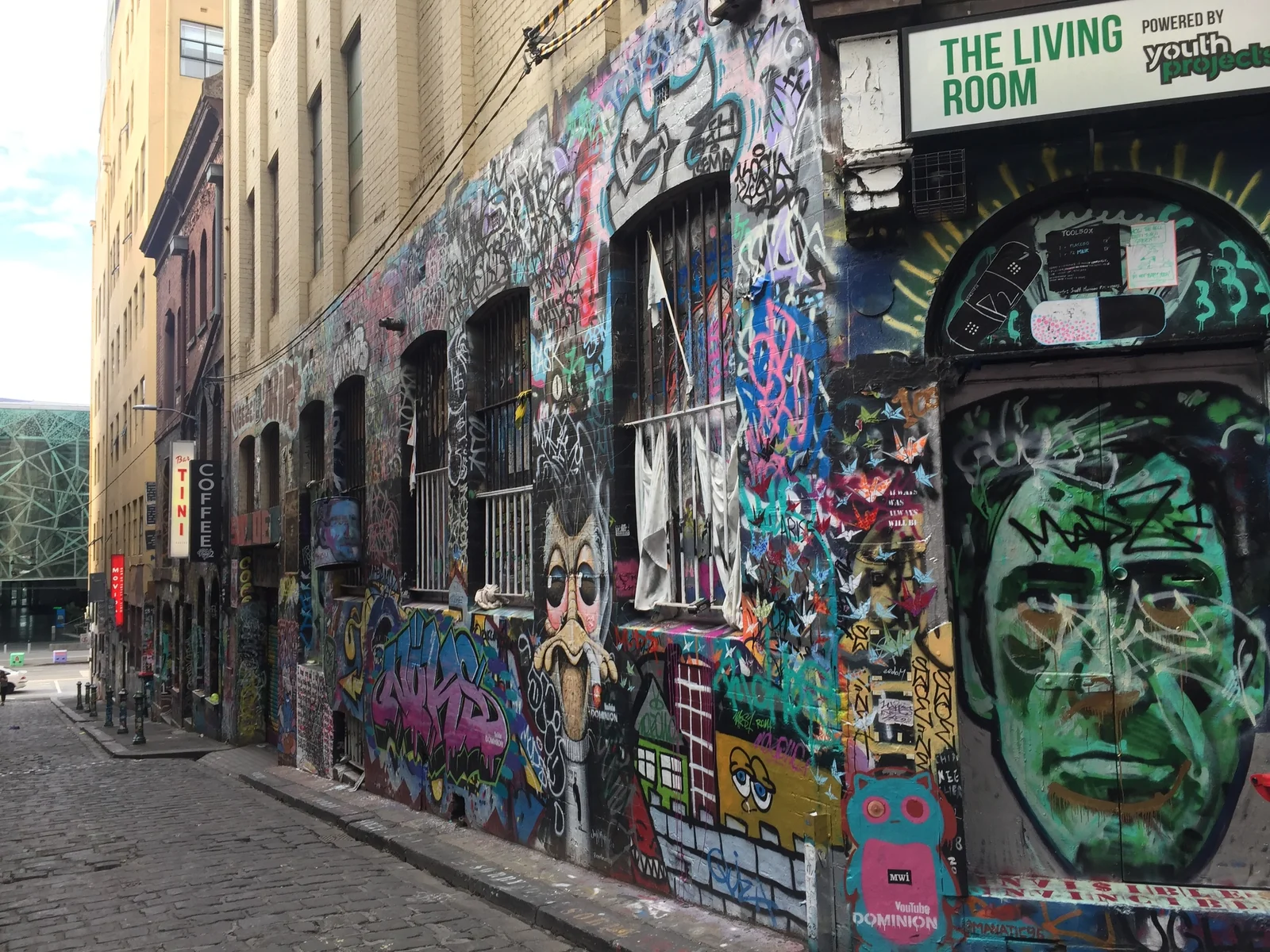
Hosier Lane is a cobbled bluestone laneway just off Flinders Street, opposite Federation Square, and it is the one everybody photographs. Every wall, door and bin is covered in stencils, murals and paste-ups that change constantly, so the lane you see will not be the one in last month's pictures. Go early on a weekday if you want the cobbles without the crowds, and look up as well as along; some of the best pieces sit on the upper walls.
Other Laneways Worth Your Time
Do not stop at Hosier. Nearby Rutledge Lane and AC/DC Lane carry on the street-art theme, Degraves Street and Centre Place are cramped cafe alleys that feel like a stage set for coffee, and Block Arcade is a Victorian-era shopping arcade with a mosaic floor that makes a good break from the paint. A loose plan works best: pick one street as your start and let the lanes pull you sideways.
Coffee Culture: How to Order Like a Local
Melbourne takes coffee seriously, and it has done so for generations, helped by waves of Italian and Greek immigrants who brought espresso machines with them. The result is a city where an independent cafe is the default and a chain is the exception. You will find good coffee in basements, small stalls and the narrowest lanes.
Ordering is its own small ritual. A flat white is the everyday order, a long black is a double espresso poured over hot water, and a magic is a small, strong, milky coffee you will mostly see in Melbourne. Drip coffee is not the norm, and a plain "coffee" will get you a follow-up question. Cafes that serve breakfast fill up fast on weekends, so arrive early or be ready to wait.
My advice is to skip the famous names for one morning and walk into whichever cafe has the most locals standing at the counter. In this city that rule rarely fails.
Federation Square, Flinders Street and the Heart of the City
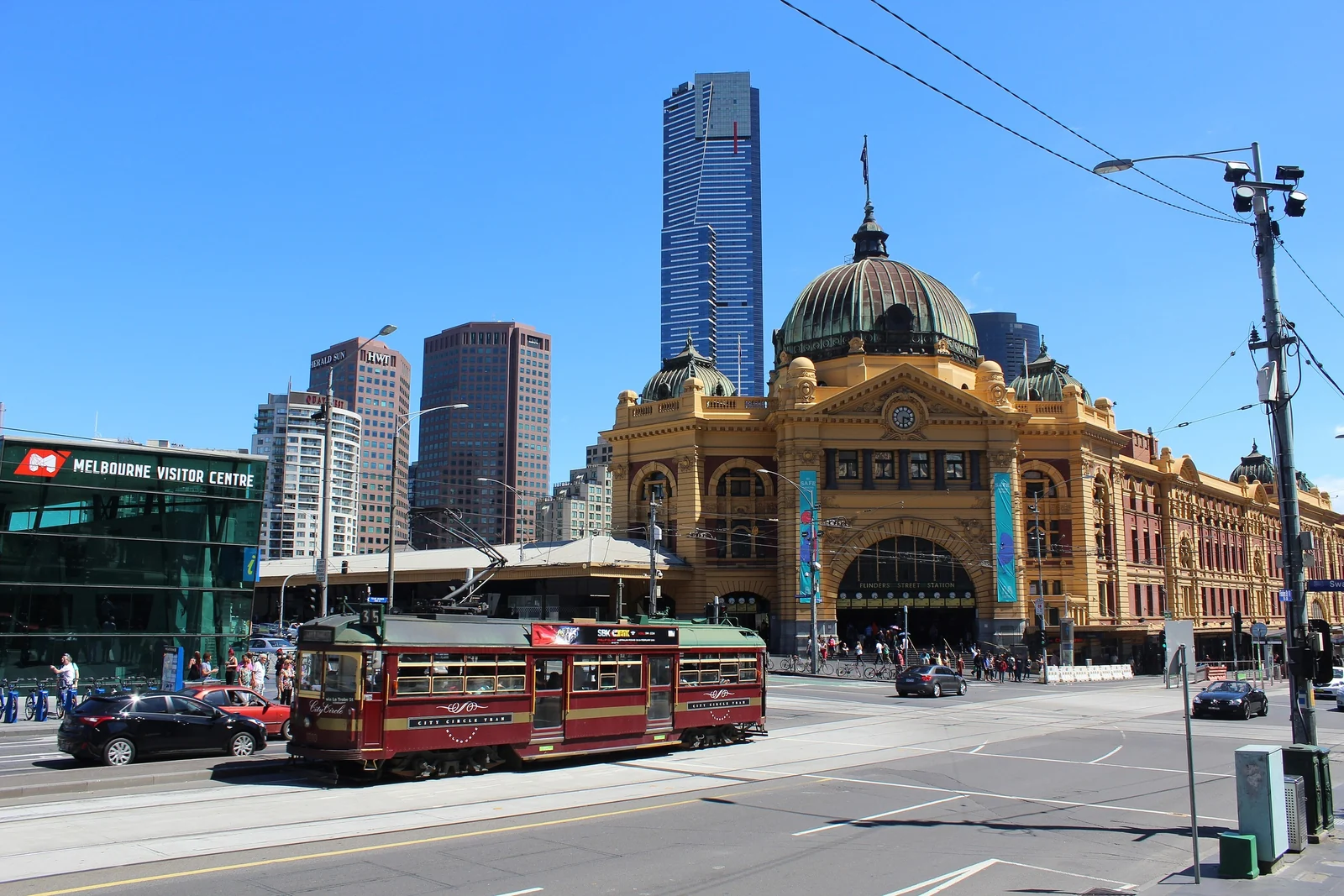
Federation Square opened in 2002 and divides opinion. Its angular, patchwork facades are either bold or baffling, but as a gathering place it works: there are big-screen events, a visitor center, galleries and plenty of seats from which to watch the city pass. Directly across the road is Flinders Street Station, the yellow Edwardian terminal with its domed entrance, opened in 1910 and the spot where Melburnians traditionally arrange to meet "under the clocks".
A short walk east leads to Parliament and the Spring Street precinct; a walk south over the river takes you to Southbank. Along Swanston Street you can pick up St Paul's Cathedral and the State Library Victoria, whose domed reading room is free to enter and worth a look even if you never open a book.
Trams and the Free Tram Zone
The tram is Melbourne's signature transport, and the network is among the largest of its kind in the world. Most visitors will use it far more than any other form of public transport. Routes radiate from the center to the beaches, the museums and the suburbs, so most of the neighborhoods in this guide are a single ride away.
The Free Tram Zone
Melbourne runs a Free Tram Zone covering the central city and the Docklands waterfront, and no ticket is needed for tram travel inside it. It reaches from around Queen Victoria Market across to Federation Square and Flinders Street Station. Look for the zone signs at tram stops, and remember that once you ride beyond the boundary you need a valid fare. Boundaries and rules can change, so check the map on the official Public Transport Victoria visitor page before you travel.
Myki and the City Circle
Outside the free zone you pay with a myki, the reloadable smartcard used on Melbourne's trams, trains and buses. The vintage-style City Circle tram loops around the edge of the center and is a pleasant way to get oriented; Public Transport Victoria describes it as free to ride. Ticket inspectors do check, so confirm the current rules on the official site rather than guessing.
Queen Victoria Market and Where to Eat
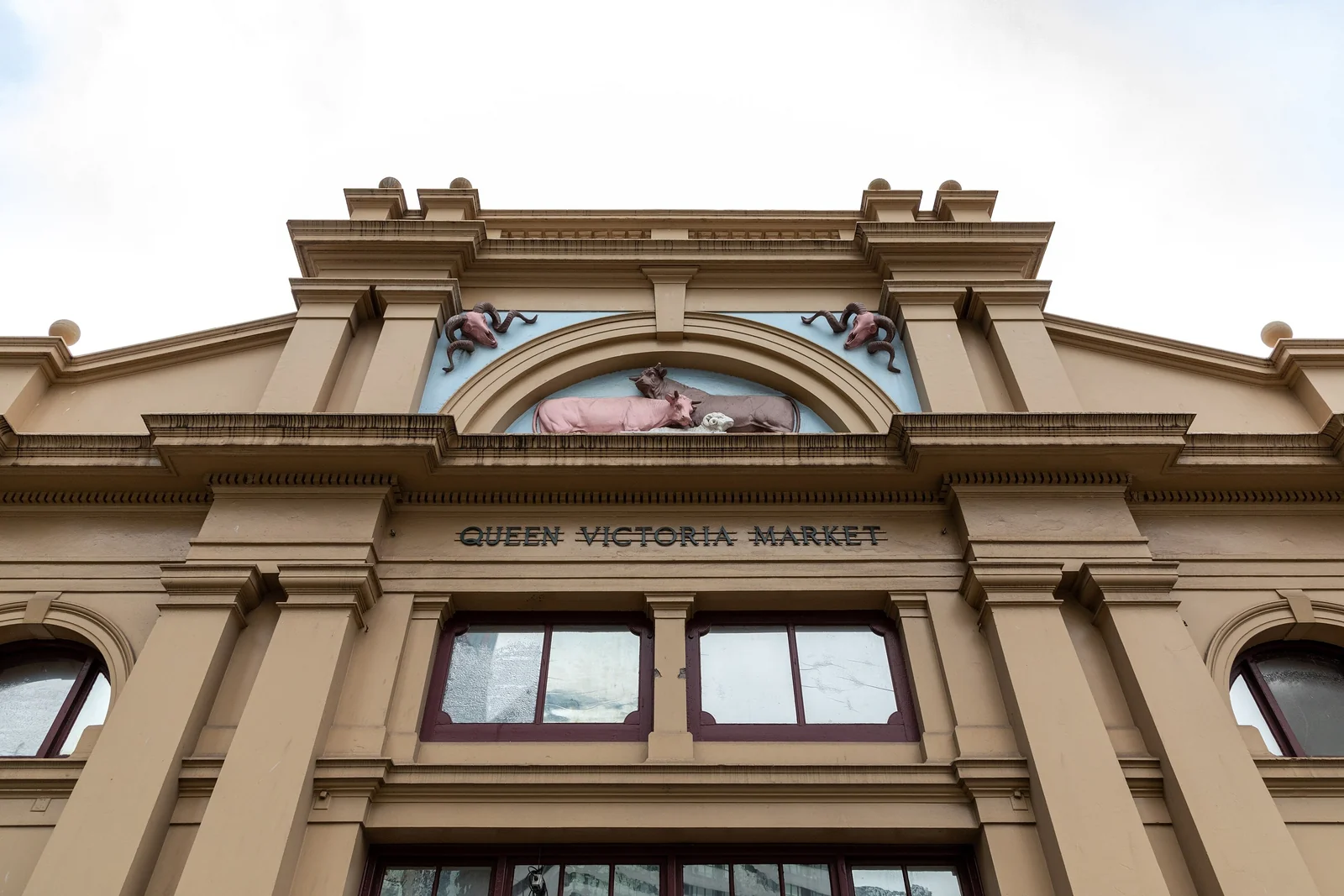
Queen Victoria Market has been selling food since the 1870s and remains the city's biggest open-air market. Under its long sheds you will find fruit and vegetables, deli counters, cheese and seafood. The deli and meat halls are the best bit, and the covered lanes are a good place to put together a picnic for the Botanic Gardens. It trades only on selected days, so confirm opening days on the official market site before you set out.
Beyond the market, Melbourne eats well in every direction. Lygon Street in Carlton is the old Italian strip, Victoria Street in Richmond is lined with Vietnamese restaurants, and the Chinatown streets near Bourke Street have been serving dumplings and late-night noodles since the gold rush. Greek food has a long history here too. Brunch is a local institution, and so are the laneway wine bars.
Museums, the Royal Botanic Gardens and the MCG
National Gallery of Victoria
The NGV, founded in 1861, is Australia's oldest public art museum. It runs from two buildings. NGV International on St Kilda Road covers European, Asian and contemporary art behind a famous water-wall entrance, while The Ian Potter Centre at Federation Square is devoted to Australian art, including Indigenous work. General entry to the permanent collections has long been free, with special exhibitions ticketed. Check the NGV website for what is on.
Royal Botanic Gardens
South of the river sits a big, calm stretch of lakes, lawns and old trees. The Royal Botanic Gardens Melbourne dates from 1846 and sits close to the center, with the Shrine of Remembrance and the Domain right next door. Walk around the lake, bring a picnic from the market, and give it an hour or two.
The MCG and Melbourne's Sport Obsession
Sport is the city's religion, and the Melbourne Cricket Ground is its cathedral. The MCG holds around 100,000 people, hosts Australian Rules football through winter and cricket through summer, and is home to the AFL Grand Final. The Australian Open tennis is played at Melbourne Park in January, and the Melbourne Cup horse race stops the nation on the first Tuesday in November. Outside event days you can tour the ground and its sports museum, but catching a live AFL match is the best way to understand the locals.
Melbourne Neighborhoods: Fitzroy, Carlton, St Kilda and Southbank
The center is small enough to cover in a day. To feel Melbourne, you need to leave it, and each of these areas is a tram ride away.
| Neighborhood | Known for | Good for |
|---|---|---|
| Fitzroy | Independent shops, bars, vintage stores, street art | Afternoons of browsing and night-time drinking |
| Carlton | Lygon Street Italian food, the Melbourne Museum, Royal Exhibition Building | Pasta, gelato and a half-day of culture |
| St Kilda | The beach, the pier, Luna Park, live music | A sunset walk and a seaside lunch |
| Southbank | Riverside promenade, arts precinct, restaurants | An easy evening on the water |
Fitzroy is the creative, slightly scruffy neighborhood, with Brunswick Street and Gertrude Street lined with record shops, bars and small galleries. Carlton sits beside it and has Lygon Street, plus the World Heritage-listed Royal Exhibition Building, built for the 1880 exhibition, in the Carlton Gardens. St Kilda is Melbourne's seaside suburb, known for its pier and its vintage Luna Park; the breakwater at the end of the pier is home to a colony of little penguins. Southbank runs along the river from the arts precinct toward the casino complex and is the easy place for a drink with a view.
Day Trips: Great Ocean Road, Yarra Valley, Phillip Island and Mornington Peninsula
Victoria rewards a car, or a guided tour if you would rather not drive on the left. Pick one or two trips; trying to do all four in a week is a bad idea.
| Trip | Approx. time from Melbourne | Best for |
|---|---|---|
| Great Ocean Road and Twelve Apostles | About 4 hours each way by the coast road | Coastal scenery; plan an overnight |
| Yarra Valley | Around 1 to 1.5 hours | Wineries, cheese, gardens |
| Phillip Island | About 1.5 hours | Little penguins at dusk, beaches, wildlife |
| Mornington Peninsula | About 1 to 1.5 hours | Beaches, wineries, hot springs |
The Great Ocean Road and the Twelve Apostles
Built by returned soldiers after the First World War and finished in 1932, the Great Ocean Road follows the southwest coast and is one of the best-known drives in Australia. Highlights include the surf town of Torquay, the forests of the Otway Ranges and the limestone Twelve Apostles near Port Campbell. The name is generous, as fewer than twelve stacks remain standing after years of erosion.
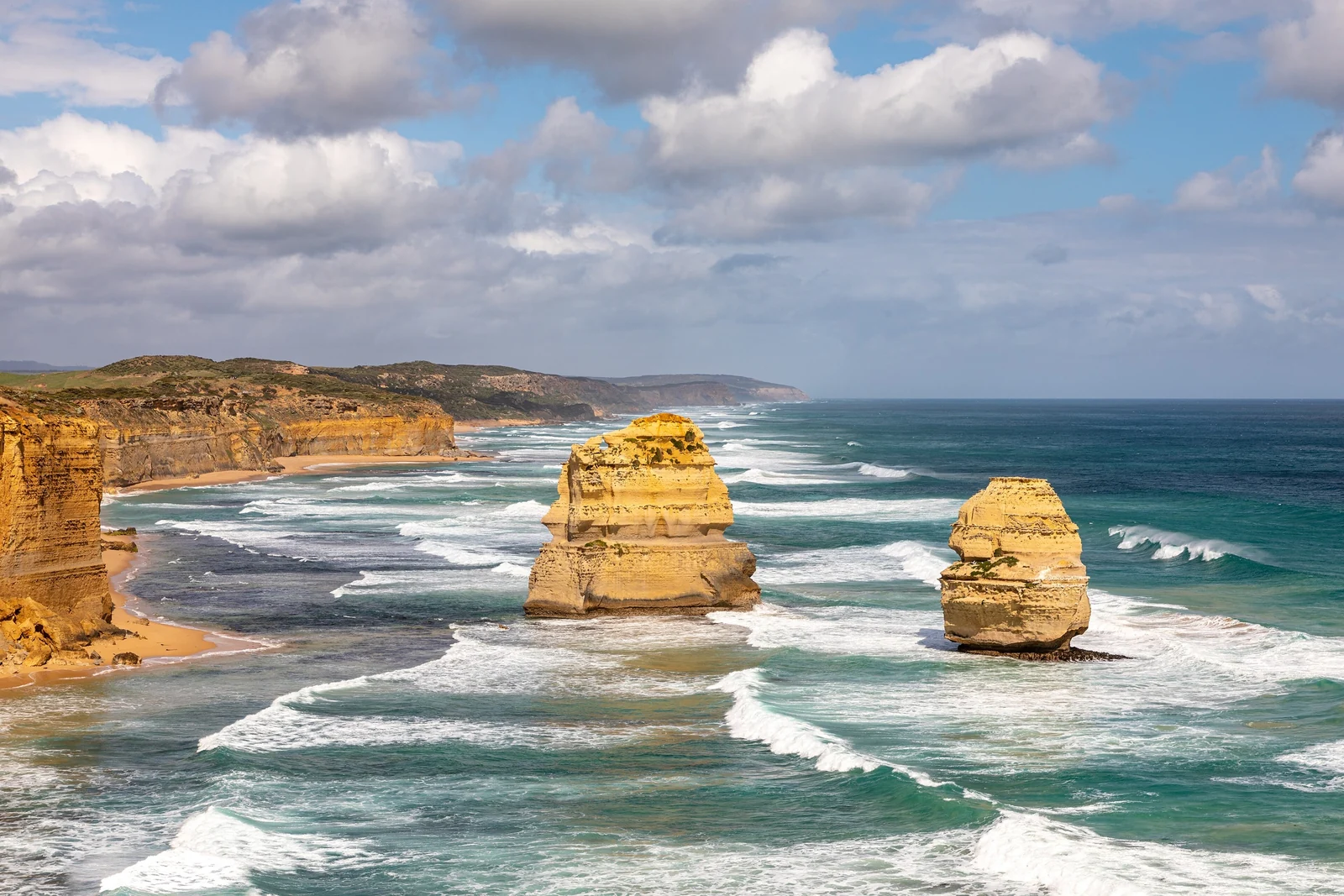
It is a long day from Melbourne, around four hours each way along the coast road according to the regional tourism site, so many travelers stay overnight in Apollo Bay or Port Campbell. If you only have a day, a guided coach tour saves you the driving.
Yarra Valley, Phillip Island and the Mornington Peninsula
The Yarra Valley is the closest wine region and a gentle half-day or full-day trip, good for pinot noir, chardonnay and sparkling wine, plus cheese and chocolate stops. Phillip Island is famous for the nightly Penguin Parade, when little penguins come ashore at dusk; it is run by Phillip Island Nature Parks, and booking ahead is wise. The Mornington Peninsula mixes bay beaches, small wineries and hot springs, and suits slow, sunny days.
How Many Days and the Best Time to Visit
Three days is the minimum to enjoy the city properly; four or five lets you add a day trip without rushing. A simple split: day one for the center, laneways, Federation Square and the market; day two for the NGV, the Botanic Gardens and Southbank; day three for Fitzroy and Carlton, or St Kilda if the sun is out. Spend any extra days on the coast.
Four Seasons in a Day
Melbourne is famous for weather that changes fast, and locals joke about four seasons in one day. A warm morning can turn into a cold, windy afternoon with a shower, then clear again by dinner. The practical answer is layers and a light rain jacket, in any month. Remember that the seasons are reversed from the northern hemisphere.
- Summer (December to February): warm to hot, long days, big events like the Australian Open, and the busiest time.
- Autumn (March to May): often the best balance of mild days, golden parks and fewer crowds.
- Winter (June to August): cold and grey but ideal for museums, cafes and AFL football.
- Spring (September to November): changeable, with blossom, the racing carnival and the Melbourne Cup.
Getting There, Getting Around and Where to Stay
Most international and domestic visitors arrive at Melbourne Airport at Tullamarine, which connects to the center by bus, taxi or rideshare. Trains and coaches link the city with the rest of Victoria. For distances, visas and seasons across the country, see our Australia travel guide.
- CBD: the most convenient base, inside the Free Tram Zone and close to the laneways.
- Southbank: good for river views and easy access to the arts precinct.
- Fitzroy and Carlton: a better choice if you prefer bars and neighborhood streets to towers.
- St Kilda: quieter, near the beach, with a tram ride into the center.
Planning a longer Australian trip? Compare Melbourne with our guides to Sydney, Adelaide, Brisbane and Perth.
Melbourne Travel FAQ
How many days do you need in Melbourne?
Three days cover the center, the laneways, the market, the NGV and a neighborhood or two. Add a fourth or fifth day for a day trip, most often the Great Ocean Road, the Yarra Valley or Phillip Island.
Is the tram free in Melbourne?
Trams are free inside the Free Tram Zone, which covers the central city and Docklands. Once you leave the zone you need a valid myki fare. Zone boundaries can change, so check the official Public Transport Victoria map.
Where is Hosier Lane?
Hosier Lane is a cobbled laneway off Flinders Street, directly across from Federation Square in the center of Melbourne. The street art changes often, so go early on a weekday for fewer crowds.
Can you visit the Great Ocean Road in one day from Melbourne?
Yes, but it is a long day, with roughly four hours each way along the coast road before stops. Many people stay a night in Apollo Bay or Port Campbell, or join a guided tour that handles the driving.
What is the best time to visit Melbourne?
Autumn, from March to May, is often the most comfortable, with mild days and fewer crowds. Summer is warm and busy with major events, and winter is cold but good for museums and cafes. Pack layers year-round.
Is Melbourne better than Sydney for visitors?
It depends on what you like. Melbourne is stronger for coffee, laneways, art and sport, while Sydney leads on harbor views and beaches. Our Sydney vs Melbourne guide compares them in detail.
What should I wear in Melbourne's changeable weather?
Dress in layers: a light jacket, a waterproof shell and comfortable walking shoes work in every season. Temperatures can swing a lot within a single day, so do not rely on the morning forecast alone.