Lake Baikal in Siberia, Russia, is about 1,642 meters (about 5,387 feet) deep at its deepest point, which makes it the deepest lake on Earth. It is also the oldest, at roughly 25 million years, and it holds about a fifth of the world's unfrozen surface fresh water. Its nearest rival, Lake Tanganyika in Africa, bottoms out at about 1,470 meters.
To put that in scale, Baikal is about four times as deep as Lake Superior and about seven times as deep as Loch Ness. This guide compares Baikal with the other big lakes, explains why a rift in the continent made it so deep, and covers the seals, the glass-clear ice and how people visit. For more far-flung places, browse our world destinations.
Lake Baikal's Depth and Key Numbers
Different sources measure the lake a little differently, so you will see maximum depths between about 1,637 and 1,642 meters. UNESCO and IUCN material tends to quote the lower figure, and many reference works use 1,642 meters. Either way, the lake plunges well over a mile.
| Measure | Lake Baikal (about) |
|---|---|
| Maximum depth | 1,642 m (5,387 ft) |
| Average depth | 744 m (2,442 ft) |
| Length | 636 km (395 mi) |
| Maximum width | 79 km (49 mi) |
| Surface area | 31,700 km² (12,250 sq mi) |
| Volume | 23,600 km³ |
| Age | 25 million years or more |
The average depth matters as much as the maximum. A lake can have one deep hole and be shallow elsewhere. Baikal's mean depth is about 744 meters, deeper than the deepest point of most big lakes on the planet. That is why its volume is so enormous even though its surface area is a little smaller than Tanganyika's.
How Baikal Compares With Other Major Lakes
Here is how the best-known deep and large lakes stack up. Depths and areas are rounded, and sources differ slightly on some of them.
| Lake | Location | Max depth (about) | Surface area (about) |
|---|---|---|---|
| Baikal | Russia | 1,642 m | 31,700 km² |
| Tanganyika | Tanzania, DR Congo, Burundi, Zambia | 1,470 m | 32,900 km² |
| Caspian Sea | Russia, Kazakhstan, Turkmenistan, Iran, Azerbaijan | 1,025 m | 371,000 km² |
| Vostok (under Antarctic ice) | Antarctica | estimates from 500 to 900 m | 12,500 km² |
| Great Slave Lake | Canada | 614 m | 27,200 km² |
| Crater Lake | Oregon, USA | 594 m | 53 km² |
| Lake Superior | USA and Canada | 406 m | 82,100 km² |
| Lake Geneva | Switzerland and France | 310 m | 580 km² |
| Lake Titicaca | Peru and Bolivia | 281 m | 8,370 km² |
| Loch Ness | Scotland | 230 m | 56 km² |
Three things stand out. First, only Baikal and Tanganyika pass the 1,400-meter mark. Second, the Caspian Sea is far larger than any other entry, but whether it counts as a lake or a sea is a long-running argument. It is an enclosed body of water with no outlet to the ocean, so many sources call it the world's largest lake. Third, deep does not mean large: tiny Crater Lake in Oregon is the deepest lake in the United States, yet its surface covers only about 53 square kilometers.
Baikal vs. Lake Tanganyika
Tanganyika is the real contender. It is longer, at about 670 kilometers, and slightly larger in area, but it holds less water, about 18,750 cubic kilometers against Baikal's roughly 23,600. It is also younger. Its basins formed between about 2 and 12 million years ago, compared with Baikal's 25 million or more. Both sit in rift valleys, and both are famous for species found nowhere else.
Baikal vs. the Great Lakes
Lake Superior is the biggest of North America's Great Lakes, at about 82,000 square kilometers, more than two and a half times the size of Baikal's surface. Yet its deepest point is only about 406 meters. The lesson is simple: Baikal is smaller on the map and far bigger in the water column.
Baikal vs. the lakes people visit most
Lake Geneva, the Alpine lake shared by Switzerland and France, reaches about 310 meters. Lake Titicaca, perched at about 3,812 meters above sea level on the Peru-Bolivia border, reaches about 281 meters. Loch Ness, the Scottish lake of monster fame, is about 230 meters at its deepest and holds about 7.5 cubic kilometers of water. Baikal contains the equivalent of more than 3,000 Loch Nesses.
Why Is Lake Baikal So Deep?
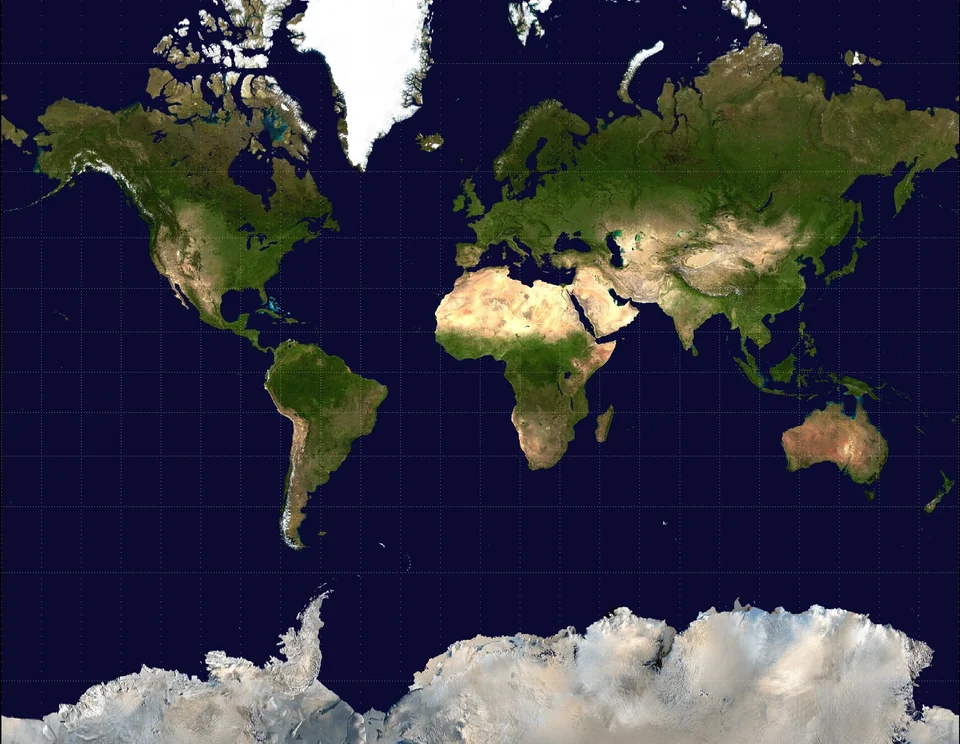
Most lakes are shallow bowls scraped out by glaciers or filled behind a dam. Baikal is different. It sits in a continental rift, a place where the Earth's crust is slowly pulling apart. As the crust stretches, blocks of rock drop along faults, and the basin keeps sinking while rivers fill it with sediment. The result is a long, narrow crescent with steep sides, about 636 kilometers from end to end but never wider than about 79.
That tectonic engine has been running for tens of millions of years, which also explains the lake's age. Most lakes fill with sediment and vanish within a few thousand to a few hundred thousand years. Baikal's floor keeps sinking, so it never fills up. Tanganyika and the other great African rift lakes work the same way, which is why the deepest lakes cluster along rifts.
Three basins
The lake is divided into southern, central and northern basins. The central basin is the deepest, with its floor at roughly 1,600 meters. Many rivers feed the lake, but a single river, the Angara, drains it near Listvyanka, flowing on toward Irkutsk.
Water Clarity and the Life Beneath the Surface
Baikal's water is cold, low in minerals and unusually clear. In open parts of the lake in winter, visibility can reach about 30 to 40 meters. In summer it is typically around 5 to 8 meters, when plankton clouds the water. Few lakes of this size can match those numbers.
The long isolation has produced an extraordinary amount of wildlife. The lake is home to more than 2,500 animal species, and more than half of its native fish, along with hundreds of kinds of small shrimp-like crustaceans called amphipods, are found nowhere else. For biologists, it is a natural laboratory for how species diverge.
The nerpa, the freshwater seal
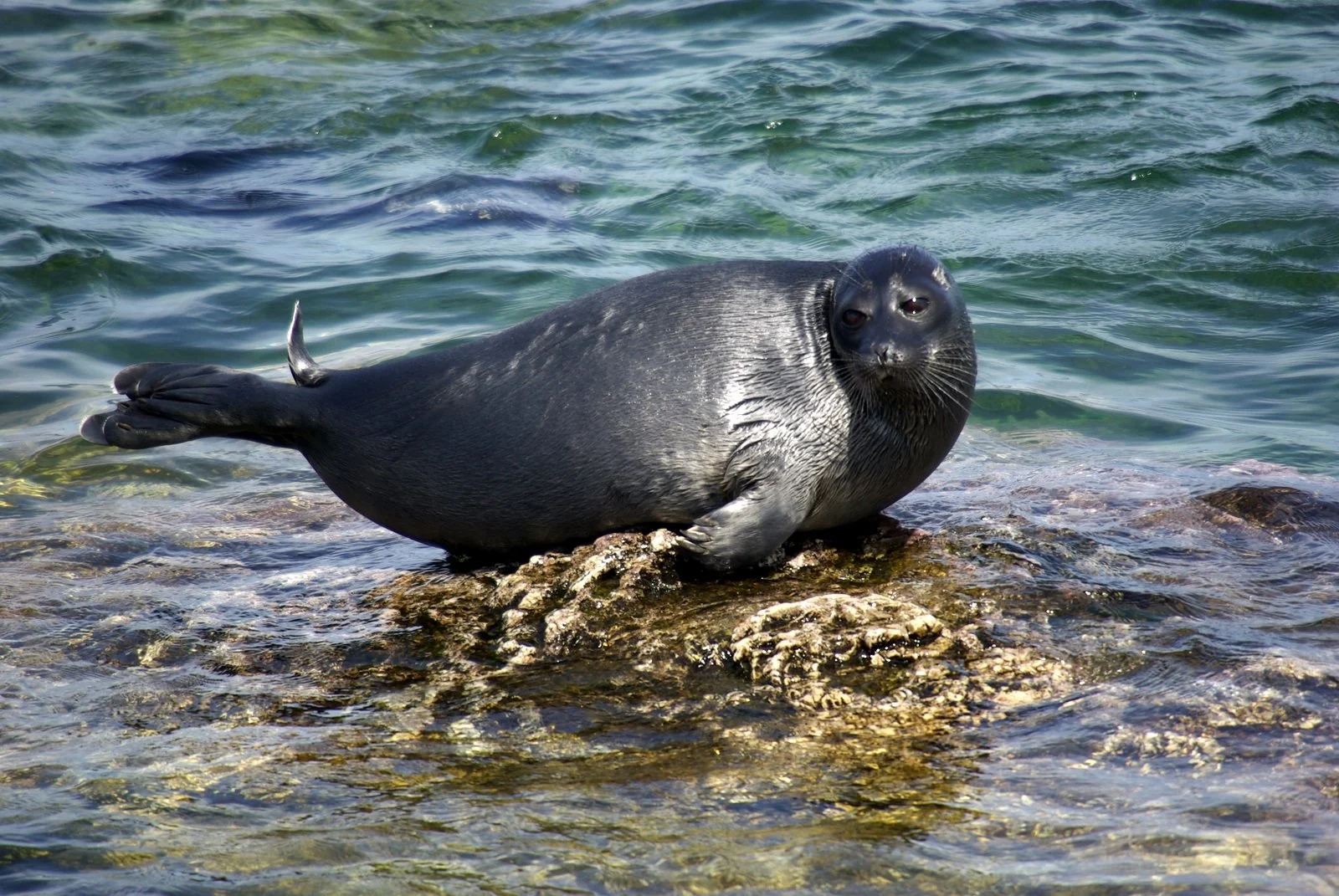
The best-known resident is the nerpa, or Baikal seal. It is one of the few seals in the world to live entirely in fresh water, and it is found only here. The seals rest on rocky shores and islets, and in winter they keep breathing holes open in the ice. Boat trips that look for them run in the warm months, and you will usually see them from a distance. Keep your distance, stay quiet and follow any guide's rules.
Winter Ice and Ice Trekking
From about January to May the lake freezes over, and the ice is typically half a meter to well over a meter thick. In cold, windless weeks the surface can be smooth and so clear that you see cracks running down into dark water. In other places, wind and shifting ice pile it into turquoise ridges and hummocks.
Winter is when many visitors come for walking, skating and ice trekking, usually with local guides. Safety is the point: ice thickness varies, currents and springs can thin it, and conditions change quickly. Never go out alone, and follow guides on where it is safe to walk. In spring the ice does not melt evenly, and weak areas appear well before it clears.
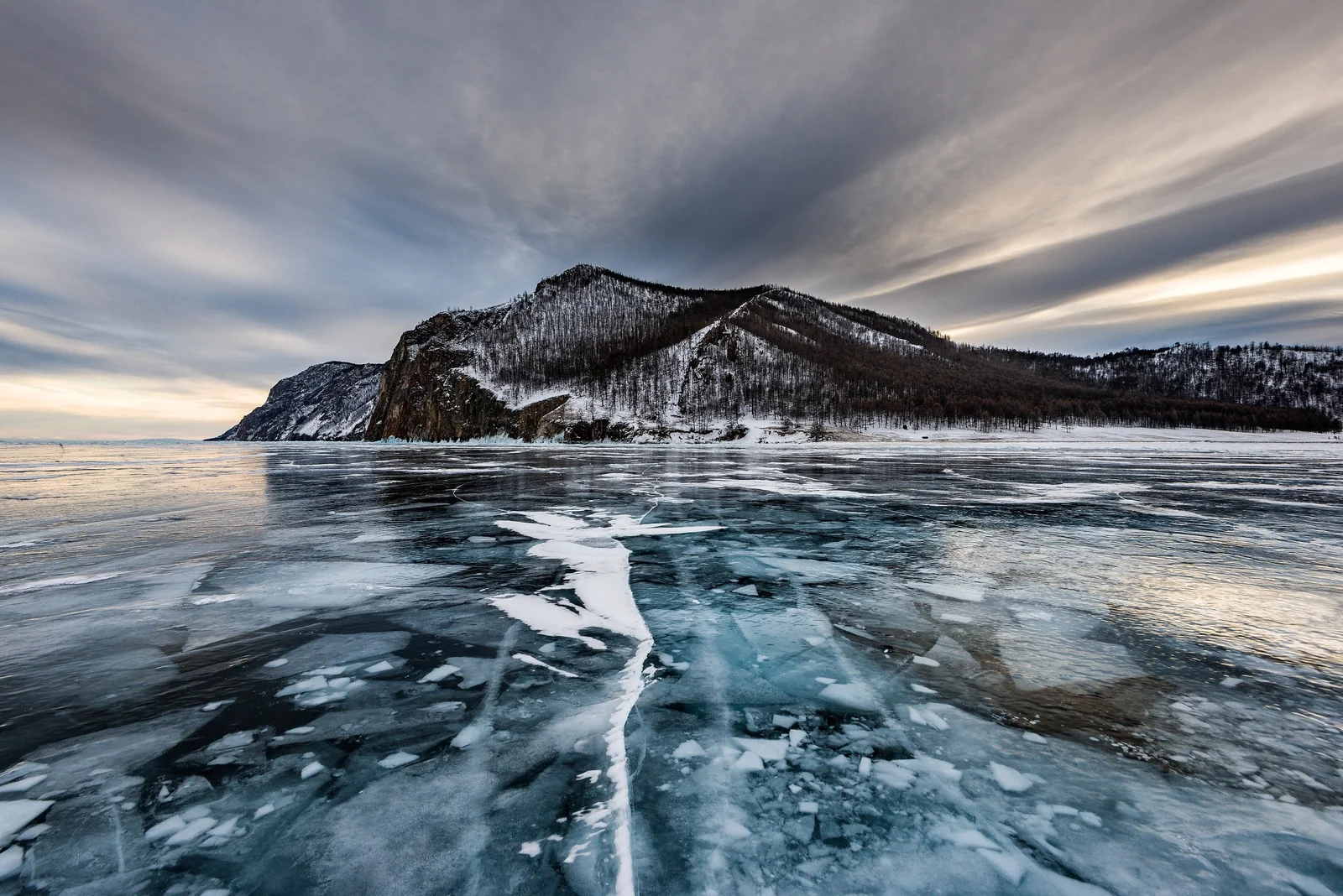
UNESCO World Heritage Status
Lake Baikal was inscribed on the UNESCO World Heritage List in 1996 as a natural site. The listing recognizes its age, its depth, the share of the world's unfrozen surface fresh water it holds, and the large number of species found only here. It covers the lake and surrounding protected areas.
How to Visit Lake Baikal
Check your own government's current travel advice for Russia before you plan anything. Entry rules, flight availability and access to the region change, and they affect whether and how a trip is possible. This section describes the geography and the usual ways in, not a recommendation to travel.
Irkutsk and Listvyanka
Irkutsk, a city on the Trans-Siberian route, is the usual gateway. The village of Listvyanka sits where the Angara River leaves the lake, and it is the easiest place to reach the shore from the city. It has lake views, a lakeside promenade and boat trips, and it can be busy in peak season. Check what transport and tours are running before you go.
Olkhon Island
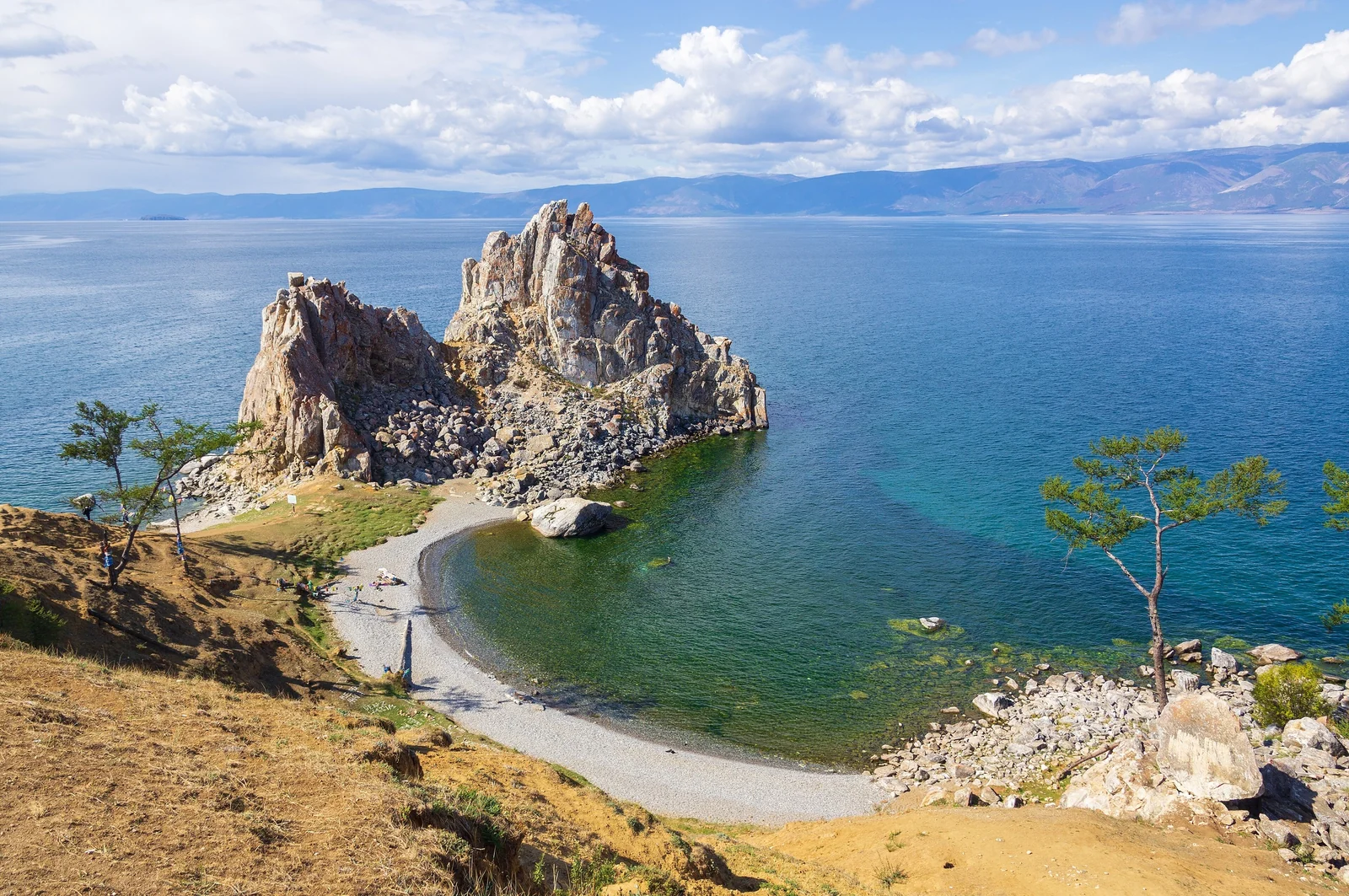
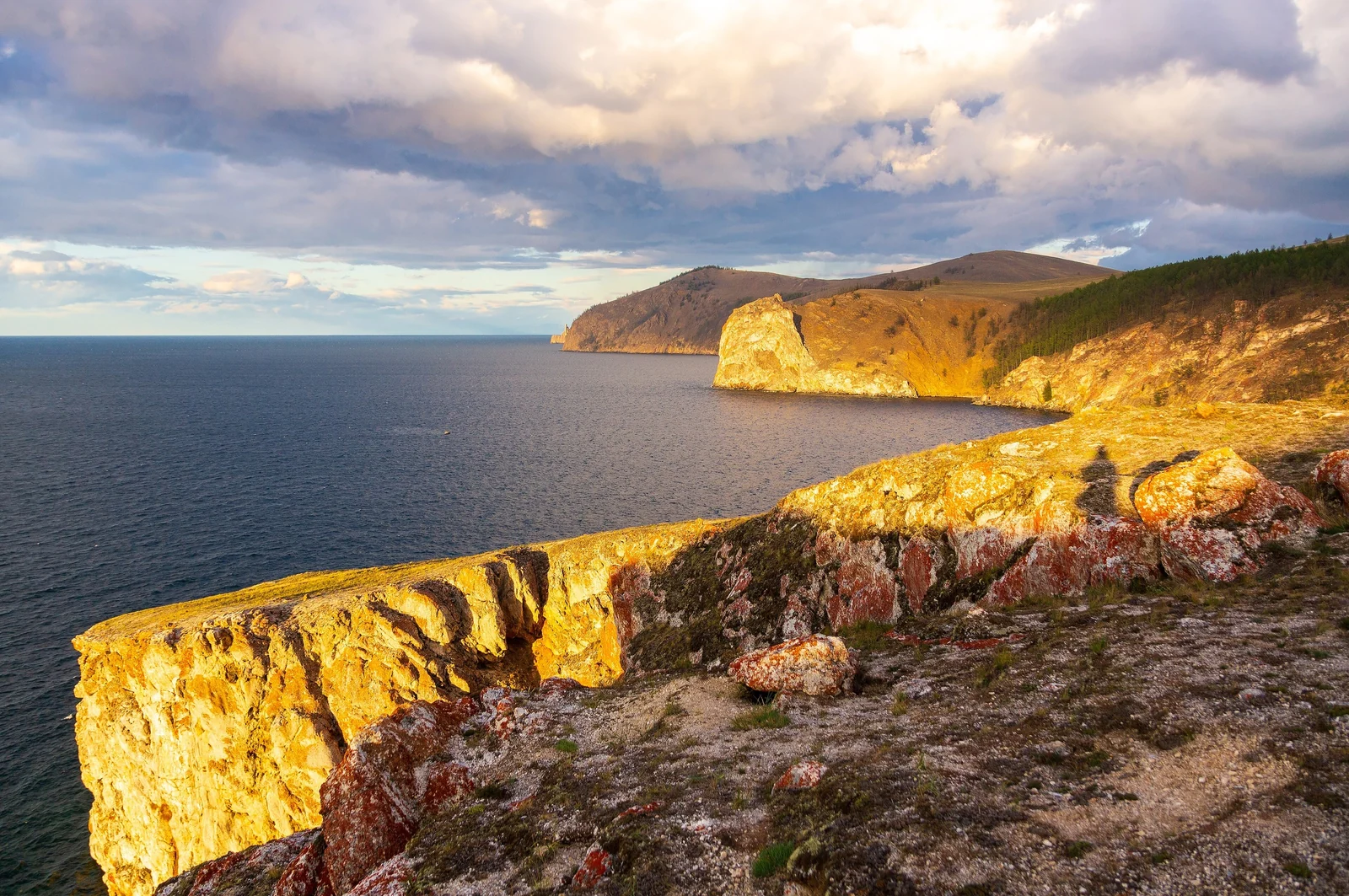
Olkhon, about 72 kilometers long, is the largest of the lake's islands and a quiet contrast to Listvyanka. Steppe, pine forest and cliffs line its coast, and Cape Burhan, with the marble outcrop known as Shaman Rock, is a sacred place for local Buryat people. Expect long, dusty rides, simple accommodation and big skies.
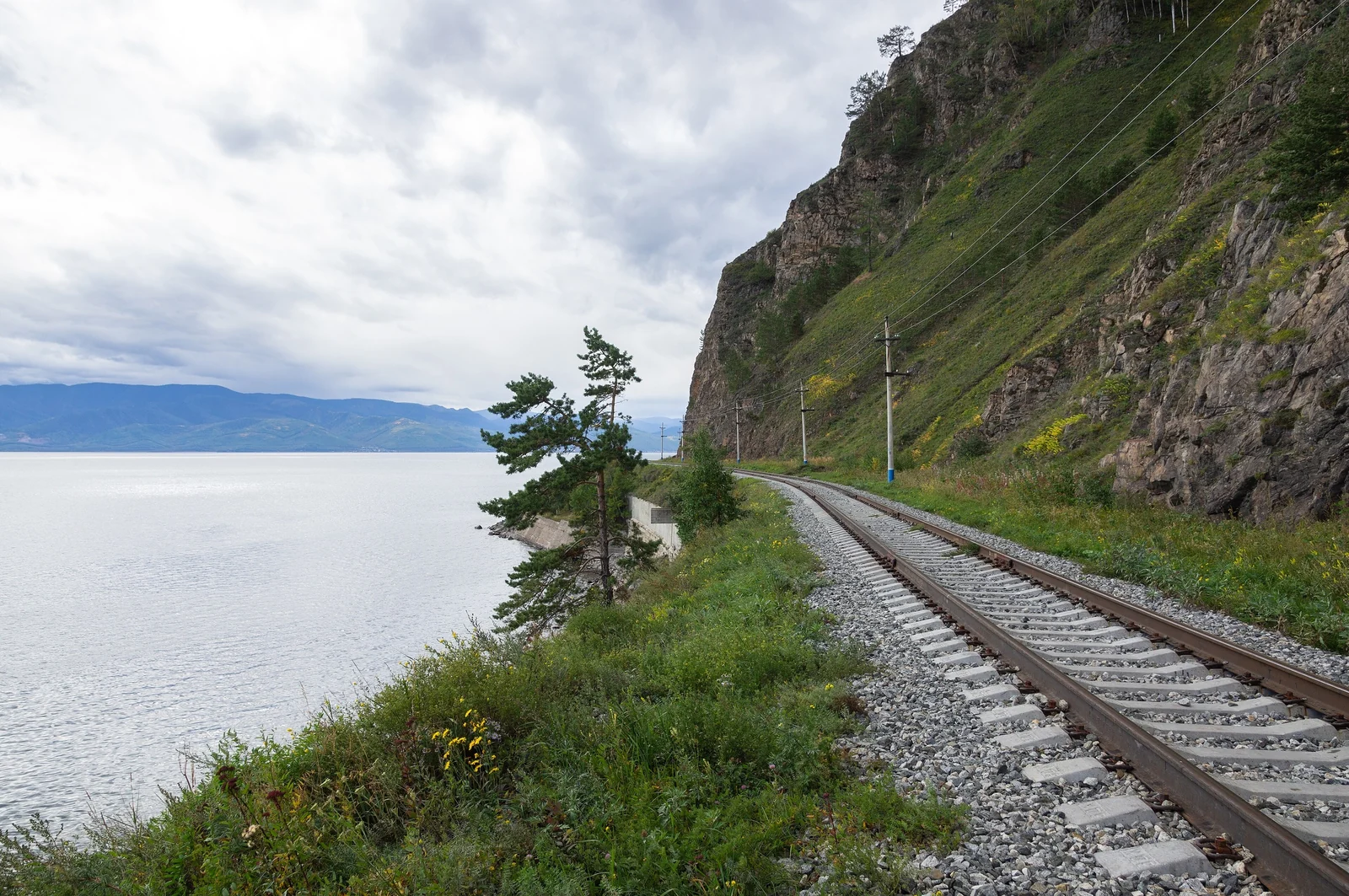
The Circum-Baikal Railway
This line was built between 1896 and 1902 as part of the Trans-Siberian Railway, and it hugs the southern shore through a long chain of tunnels, bridges and retaining walls. Today it is a scenic route and a heritage line. Check current timetables and tours with the operator, since services vary.
Best Season to Visit
| Season | What to expect |
|---|---|
| Late winter | Clear ice, trekking and skating, very cold weather |
| Spring | Melting and unstable ice, a poor time for ice activities |
| Summer | Warmest weather, boat trips and hiking, but the water stays cold |
| Early autumn | Fewer visitors, golden light, cooling days |
There is no single best season. Winter gives you the ice, summer gives you hiking and boats, and early autumn is calmer. Even in midsummer the water stays cold, so do not count on a beach holiday. Pack layers in any month and check the forecast shortly before you travel.
If Baikal has you thinking about other record-breaking places, our guide to the Sahara covers another giant, and our world map guide explains why size on a map can mislead. You can also read about the glaciers of Greenland, or see ten scenic routes for planning a longer journey.
Lake Baikal FAQ
How deep is Lake Baikal?
Lake Baikal is about 1,642 meters (about 5,387 feet) deep at its deepest point, and about 744 meters deep on average. Some official sources quote a slightly lower maximum, near 1,637 meters, but it is the deepest lake on Earth by either figure.
Is Lake Baikal deeper than Lake Tanganyika?
Yes. Baikal is about 1,642 meters deep and Tanganyika about 1,470 meters, so Baikal is deeper by roughly 170 meters. Tanganyika is slightly larger in surface area, but Baikal holds more water and is much older.
How much of the world's fresh water is in Lake Baikal?
Baikal holds about 20 percent of the world's unfrozen surface fresh water, according to UNESCO and IUCN material, with a volume of about 23,600 cubic kilometers. Most of the rest of the planet's fresh water is locked in ice caps and glaciers.
How old is Lake Baikal?
Baikal is about 25 million years old, making it the oldest lake on Earth. Most lakes are far younger because they fill with sediment. Baikal sits in an active rift, so its basin keeps sinking and the lake persists.
Is the Caspian Sea deeper than Lake Baikal?
No. The Caspian Sea reaches about 1,025 meters, well short of Baikal's 1,642. It is much larger in area, about 371,000 square kilometers, and many sources call it the world's largest lake, though others classify it as a sea.
Can you see seals in Lake Baikal?
Yes, the nerpa, or Baikal seal, lives only in the lake and is one of the few entirely freshwater seals. Boat trips in the warm months look for them on rocky shores and islets. Sightings are never guaranteed, and you should keep your distance.
When is the best time to visit Lake Baikal?
Late winter is best for clear ice and trekking, while summer suits hiking and boat trips and early autumn is quieter. Spring thaw makes ice unreliable. Always check current official travel advice for Russia from your own government first.