Base yourself in Cusco if Machu Picchu, the Sacred Valley and Inca history are the point of your trip. Base yourself in Arequipa if you want a lower, easier-breathing city with great food, a volcano on the skyline and the Colca Canyon within reach. Cusco sits at about 3,400 m (11,200 ft), Arequipa at about 2,300 m (7,500 ft), and that gap shapes everything else.
Most travelers end up wanting both, and that works well. The two cities are far apart in landscape and in mood, one built on Inca foundations and one in pale volcanic stone, and they link by a short flight or a long overnight bus. Below you will find a point-by-point comparison, a verdict by traveler type and a suggested order. For the headline ruin itself, see our Machu Picchu travel guide.
Altitude: 3,400 m versus 2,300 m
This is the biggest practical difference. At Cusco's elevation the air holds noticeably less oxygen, and many visitors feel it on arrival: a pounding head, shortness of breath on stairs, poor sleep the first night. It is common, it is usually mild, and it usually passes in a day or two. It can also be serious for some people, and fitness is no guarantee either way.
Arequipa is roughly 1,000 m lower. Plenty of people feel it mildly or not at all, which is why it works as a gentler first stop. General advice that holds for both: take the first day slowly, drink water, go easy on alcohol, and talk to a doctor before you travel if you have a heart, lung or blood condition or are pregnant. If symptoms get worse instead of better, descend.
The Sacred Valley floor sits lower than Cusco, so it is a popular place to sleep for people who struggle with the altitude. If you are weighing other high-altitude trips on the continent, our Uyuni or Atacama comparison covers a similar question in the desert.
Cusco: the Inca capital and the gateway to Machu Picchu
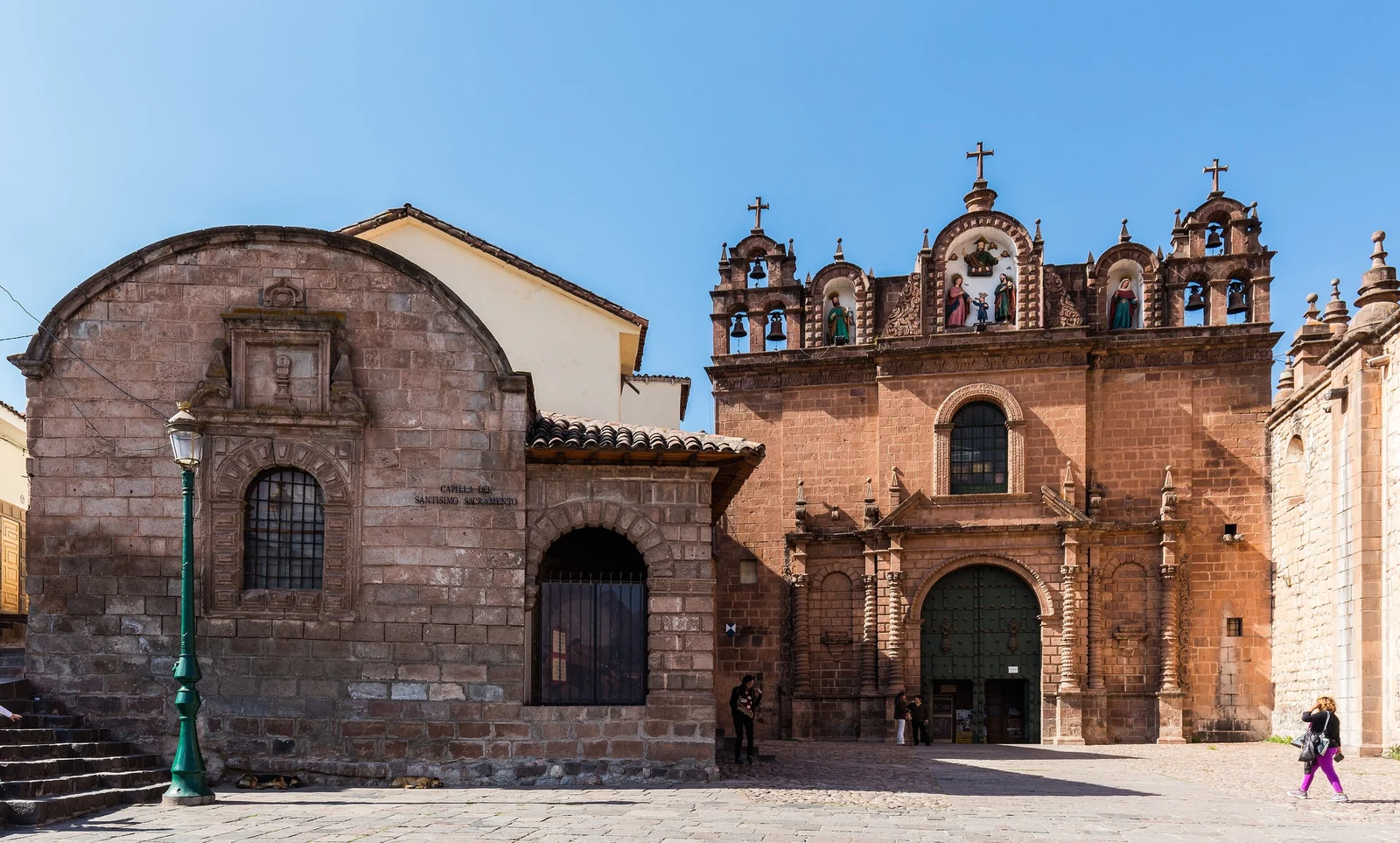
Cusco was the capital of the Inca Empire, and the city still sits on its foundations. Walk the lanes around the Plaza de Armas and you will see Spanish colonial churches and houses built directly on top of Inca stonework, fitted without mortar. The historic center was inscribed on the UNESCO World Heritage List in 1983.
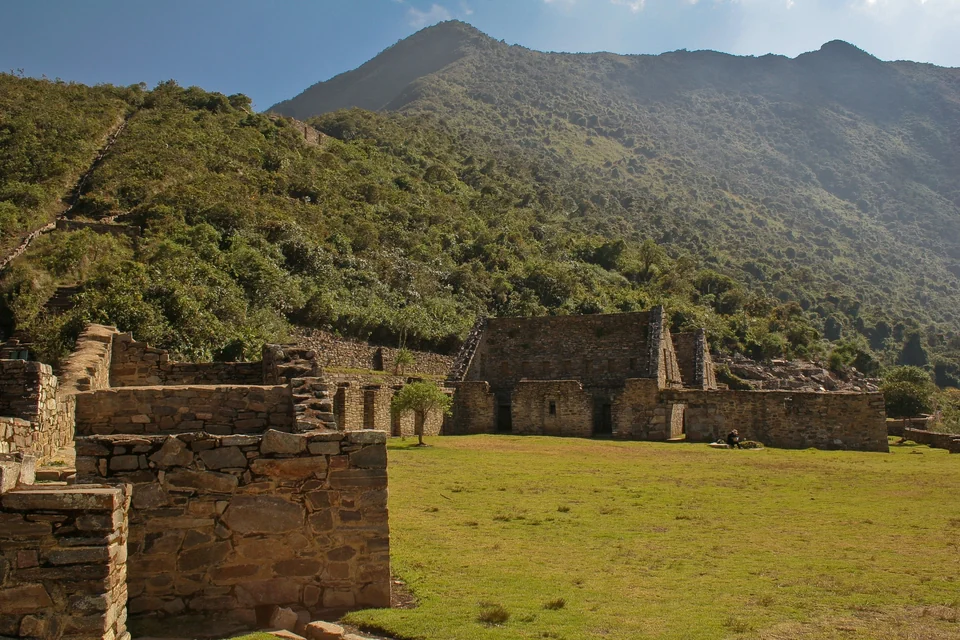
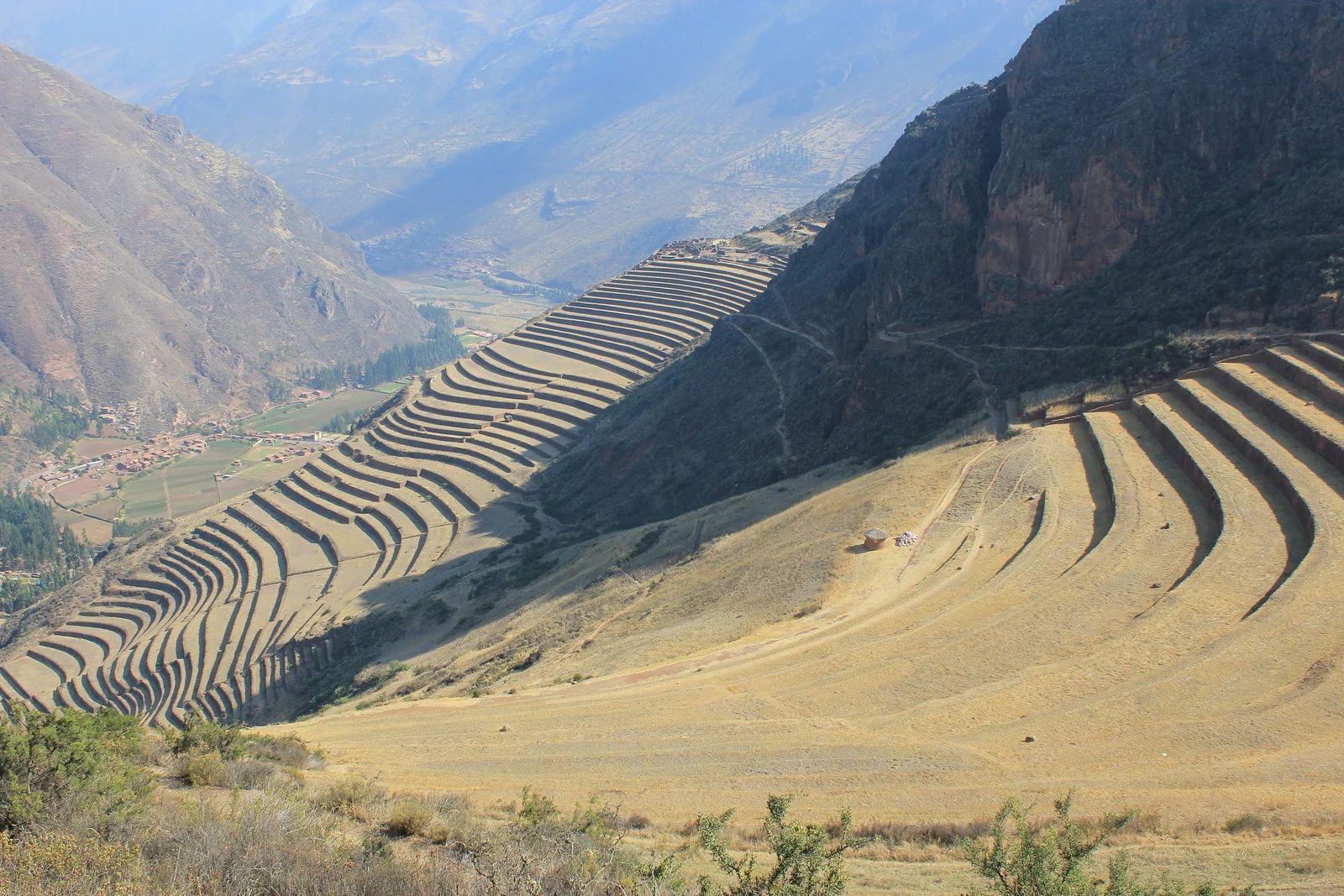
Its real strength is access. Machu Picchu is reached from Cusco by combining road and rail, and the Sacred Valley, with terraced ruins such as Pisac and Ollantaytambo, is a short ride away. Cusco also works as the start point for treks. If you want a harder, quieter Inca site, read our Choquequirao trek guide.
The trade-offs are real. Cusco is the most visited city in the country, and the center around the main square can feel built for visitors first. Streets are steep, the altitude makes every hill a negotiation, and the best moments tend to arrive early in the morning or in the neighborhoods above the square.
Arequipa: the white city, El Misti and Santa Catalina
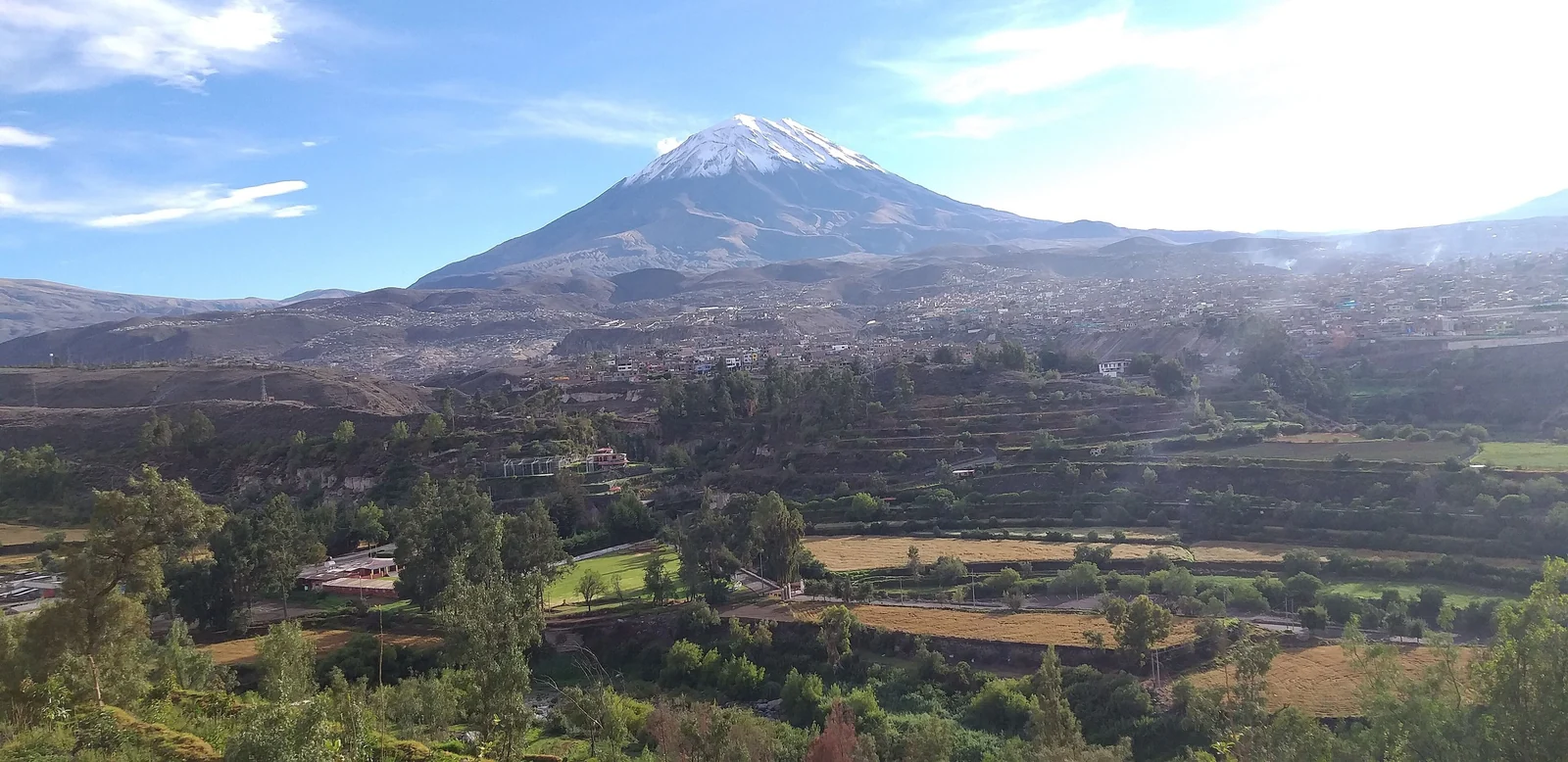
Arequipa is the opposite kind of city. Its historic center is built largely of sillar, a pale volcanic stone, which is why locals call it the White City, and it was inscribed by UNESCO in 2000. Three volcanoes frame it, with El Misti, at roughly 5,800 m, the one you will photograph from rooftop terraces and the main square.
The city has a confident, regional pride. Its arcaded Plaza de Armas is relaxed in the evening, the climate is generally sunnier and drier than Cusco's, and the pace is slower. It is also a much better place to simply linger for a few days: you can walk for hours without gasping.
It has fewer headline monuments than Cusco, though, and no single world-famous ruin. People come for the city itself and for what surrounds it.
Santa Catalina Monastery and the best sights
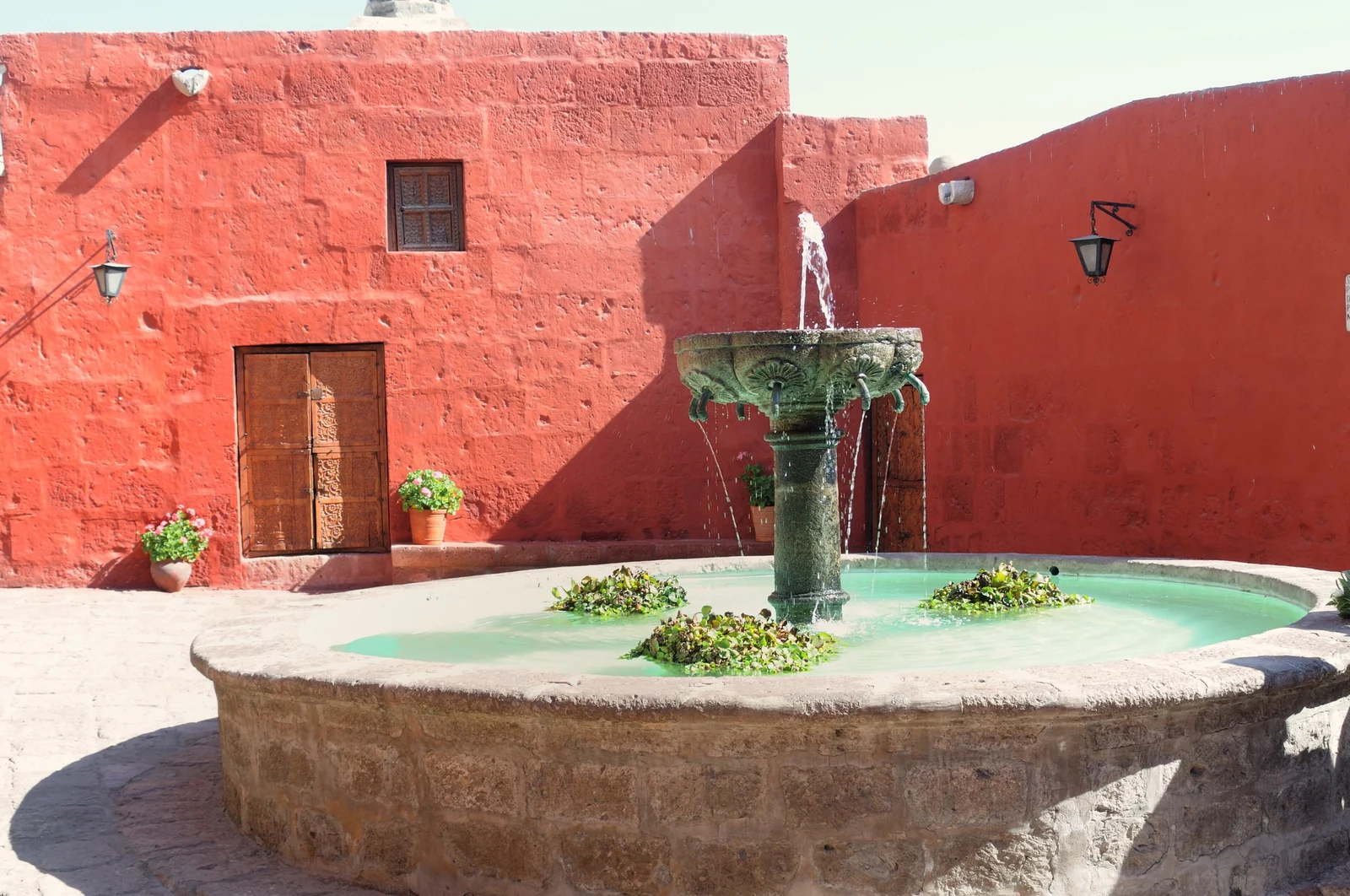
The Monastery of Santa Catalina is the one place in Arequipa you should not skip. Founded in 1579, it is a walled citadel of about 20,000 square meters inside the city, with narrow streets, courtyards, small cells and washing areas, painted in deep blues and terracotta against the pale stone. A large part opened to visitors in 1970, and nuns still live in one section. Give it a couple of unhurried hours.
Beyond it, spend time on the main square, the cathedral and the stone-fronted streets around them. Climb to a viewpoint at the edge of the old center for a view of Misti and the terraced fields of the valley. If you want the volcano up close, guided climbs of the surrounding peaks exist, but they involve serious altitude and should be booked with a reputable operator.
Day trips: Colca Canyon versus the Sacred Valley and Machu Picchu
Each city has an excursion that justifies the trip on its own.
From Arequipa: Colca Canyon
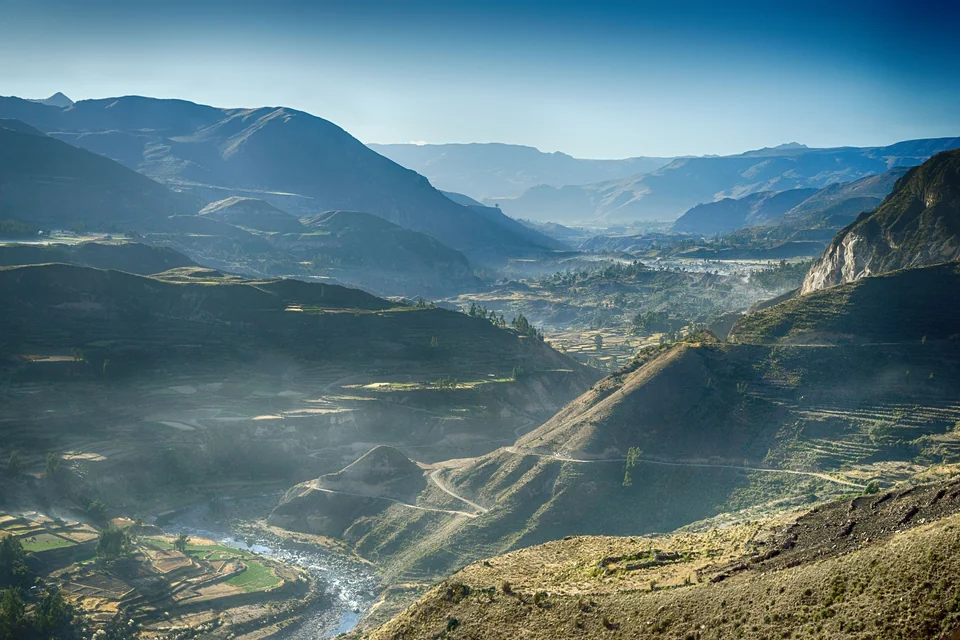
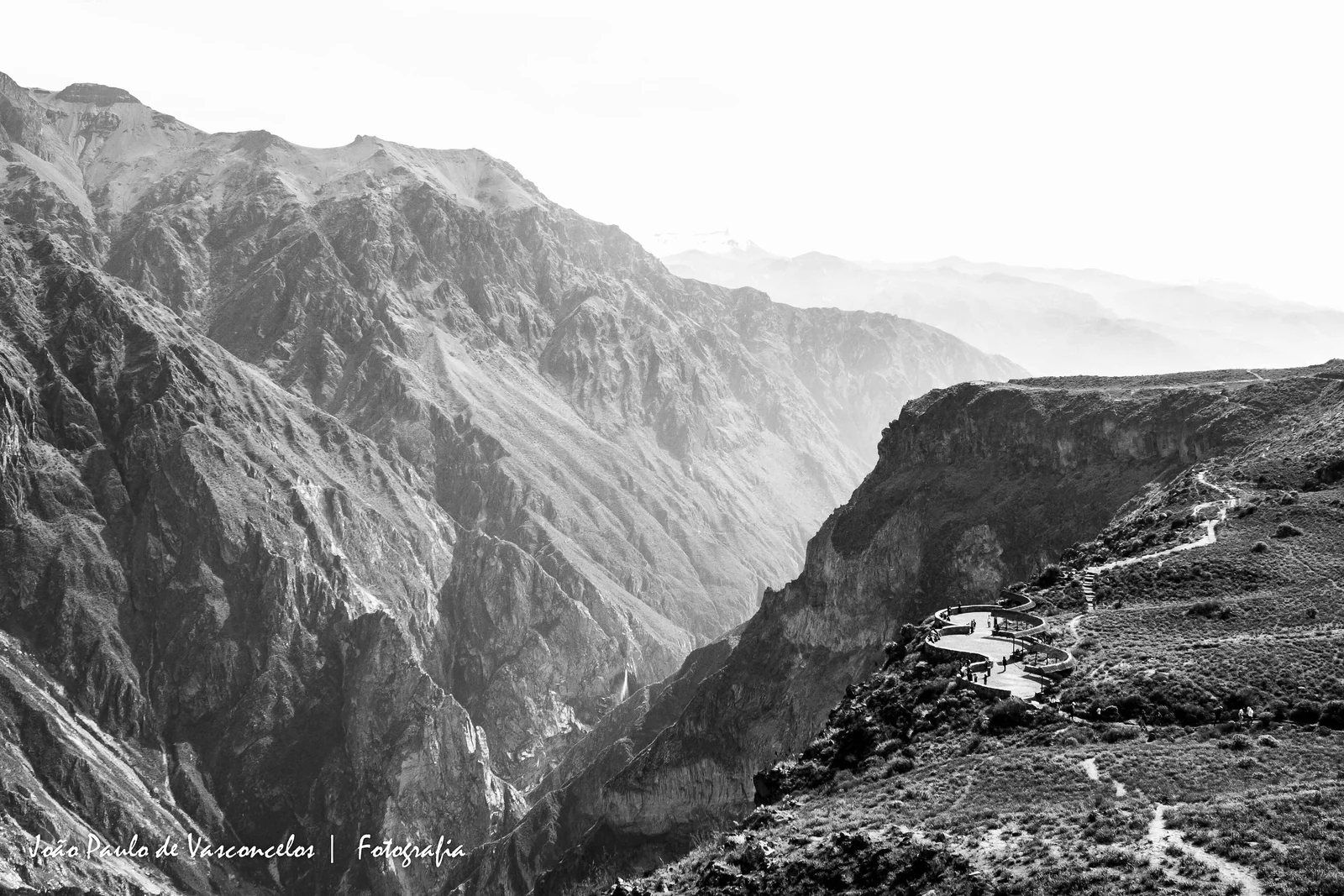
Colca Canyon lies about 160 km northwest of Arequipa and drops roughly 3,270 m from rim to river, making it one of the deepest canyons on Earth. The classic stop is the Cruz del Cóndor viewpoint, where Andean condors ride the rising air along the walls, usually best in the morning. It works as an overnight or a longer trek. Our Colca Canyon guide covers routes and timing.
From Cusco: the Sacred Valley and Machu Picchu
The Sacred Valley is a green, farmed stretch of the Urubamba River with Inca terraces, markets and fortress ruins. Machu Picchu is the draw for most visitors and is a logistics project: entry is controlled, tickets and timed circuits need booking ahead, and the rules change, so check the official channels rather than relying on old advice. Our story behind Machu Picchu gives the background.
Food: picanterías, cuy and rocoto relleno
Both cities eat well, and neither is a disappointment. Arequipa has a reputation as one of Peru's strongest food cities, built around picanterías, traditional lunchtime restaurants serving spicy regional dishes. The dish most travelers chase is rocoto relleno, a hot rocoto pepper stuffed with spiced meat and baked. Go at lunch, since many picanterías are a midday tradition.
Cusco leans on Andean produce: potatoes, corn, quinoa, alpaca and cuy (guinea pig), a traditional festive dish in the highlands. Cuy is an acquired taste and a cultural rather than an everyday meal, so try it once if you are curious. Cusco's restaurant scene is also broader and more international, partly thanks to the visitor traffic.
Our rule of thumb: Arequipa for the more distinctive regional cooking, Cusco for range. Prices vary widely by restaurant, so ask locally and look at where residents eat.
Crowds, costs and a side-by-side comparison
Cusco is busier. It is the funnel for Machu Picchu, so the main square, the best-known lanes and the Sacred Valley's headline sites all see heavy visitor numbers, and prices around the center reflect that. Arequipa gets far fewer visitors, and outside Santa Catalina and the main square you can have the streets mostly to yourself.
On cost, expect the pattern rather than a number: central Cusco and anything tied to Machu Picchu runs higher, while Arequipa tends to feel easier on the wallet for meals and everyday spending. Entry fees, train fares and tour prices change, so check current figures with the operators or official sites before you budget.
| Factor | Cusco | Arequipa |
|---|---|---|
| Altitude | About 3,400 m (11,200 ft) | About 2,300 m (7,500 ft) |
| Character | Inca capital with colonial layers | White volcanic-stone colonial city |
| Signature sights | Inca stonework, Sacred Valley, Machu Picchu access | Santa Catalina Monastery, El Misti views, historic center |
| Best excursion | Sacred Valley and Machu Picchu | Colca Canyon and condors |
| Food | Andean produce, cuy, wide international choice | Picanterías, rocoto relleno, regional cooking |
| Crowds | Heavy around the center | Moderate, quieter than Cusco |
| Acclimatization | Needs a slow first day or two | Easier for most people |
| UNESCO listing | Historic center, 1983 | Historic center, 2000 |
| Ideal stay | 3 to 4 nights, plus time for the valley and Machu Picchu | 2 to 3 nights, plus Colca if you want it |
Getting between them, and doing both
There are two broad options. Flying is the fast one, and the trip is short in the air, though routes and schedules shift, so check with airlines before planning around a direct flight; many itineraries connect through Lima. Overland, buses link the two cities as a long overnight journey over high roads, which saves a hotel night but costs sleep and comfort at altitude.
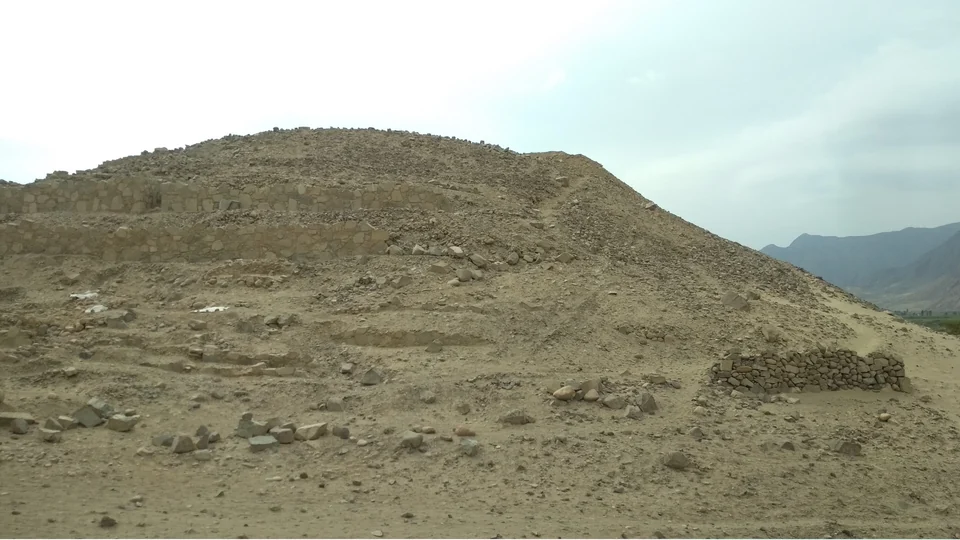
Most travelers who want to see more of the country continue to Lima, and our Caral day trip from Lima is a good coastal counterpoint to the Andes.
In which order, and for how many nights?
Yes, and the order matters. Start in Arequipa, then go to Cusco. Arequipa's lower altitude gives your body a head start, and ending at Cusco puts Machu Picchu at the climax of the trip. Going the other way is fine too, but you will be descending into a city that can feel anticlimactic after the Inca sites.
- Short trip (about 6 to 7 nights in the region): 2 nights in Arequipa, 4 to 5 in Cusco and the Sacred Valley.
- Comfortable trip (about 9 to 10 nights): 3 nights in Arequipa, with a Colca excursion; 3 nights in Cusco; 2 to 3 nights in the Sacred Valley and Machu Picchu.
- Only one city: choose Cusco for a first Peru trip built around Inca history; choose Arequipa for a shorter, lower, food-focused stop.
Verdict by traveler type
- First-time visitors who want Machu Picchu: Cusco, without question.
- Anyone worried about altitude, older travelers, families with small kids: Arequipa first, or sleep in the Sacred Valley when you reach the Cusco region.
- Food-focused travelers: Arequipa, with Cusco as a second course.
- Nature and hiking fans: Arequipa for Colca; Cusco for treks such as Choquequirao.
- Architecture and history lovers: both. Cusco for Inca and colonial layers, Arequipa for its volcanic-stone baroque.
- Tight schedules: pick one. Do not split five days across both and spend a day of it traveling.
Practical tips
- Plan the first 24 hours in Cusco as light. Walk, eat lightly, rest, and save steep climbs for day two.
- Book Machu Picchu entry and train options well ahead, using the official channels.
- Sun at altitude is strong in both cities. Pack sunscreen, a hat and warm layers for evenings.
- For Colca, leave early in the day for the condors, and wear layers.
- Carry some cash in small bills for markets and small restaurants, and keep a passport copy handy.
For official background on both city centers, see the UNESCO pages for Cusco and Arequipa.
Cusco or Arequipa FAQ
Is Arequipa or Cusco better for a first trip to Peru?
Cusco, if Machu Picchu and Inca sites are your priority, since it is the practical base for both. Arequipa suits a second stop or a shorter trip built around food, colonial architecture and Colca Canyon.
Is the altitude in Cusco dangerous?
For most healthy visitors it causes mild symptoms that fade in a day or two, but altitude illness can be serious. Go slowly, stay hydrated and see a doctor before you travel if you have heart or lung conditions. Descend if symptoms worsen.
Which city should I visit first, Cusco or Arequipa?
Arequipa first, if you can. At about 2,300 m it lets you adjust before reaching Cusco at about 3,400 m, and it saves Machu Picchu for the end of the trip.
How many days do you need in each city?
About 2 to 3 nights in Arequipa, longer with a Colca excursion, and 3 to 4 in Cusco plus extra time for the Sacred Valley and Machu Picchu. A single day in either is too little.
How do you get from Cusco to Arequipa?
By air, which is fastest though routes and schedules change, or by a long overnight bus over high roads. Check airlines and bus companies for current options, and allow for connections through Lima if needed.
Is Arequipa cheaper than Cusco?
Generally it feels easier on the wallet for everyday meals and spending, since Cusco is more tourist-oriented. Prices change, so check current rates for tours, entry fees and trains.
Can you see Machu Picchu from Arequipa?
Not as a comfortable day trip. Machu Picchu is reached through the Cusco region, so most travelers fly or bus to Cusco first and then continue by road and rail.