Choose the Salar de Uyuni if you want one jaw-dropping landscape, a rough multi-day road trip and the chance of a mirror-like sky. Choose San Pedro de Atacama if you want comfort, easy day trips, big night skies and a base with good food and real beds. Both are high-desert trips in the Andes, they are only a few hundred miles apart, and they overlap in a way that confuses almost everyone planning them.
That overlap is the classic 3-day Uyuni tour, which runs between the Bolivian town of Uyuni and San Pedro de Atacama in Chile. You can do it in either direction, so the real question is often not "Uyuni or Atacama" but "which end do I start from?" This guide compares the two places honestly, covers altitude, seasons, the lagoons and geysers on the road, and ends with a verdict by type of traveler. For a broader look at the Chilean side, see our Chile travel guide.
Uyuni vs Atacama at a Glance
| Salar de Uyuni (Bolivia) | San Pedro de Atacama (Chile) | |
|---|---|---|
| Main draw | The world's largest salt flat, plus lagoons, geysers and volcanoes on the southern route | Moon Valley, salt lagoons, geysers, hot springs and very dark skies |
| Base altitude | The salt flat sits at roughly 3,650 m (about 12,000 ft); tours climb well above 4,000 m | The town sits at roughly 2,400 m (about 7,900 ft); day trips reach higher |
| Trip style | Multi-day 4x4 loop, simple lodging, long drives | Comfortable base in town, short excursions by tour or bike |
| Best conditions | Thin water for mirror photos in the rainy season; dry season for access to the whole flat | Clear skies most of the year; very little rain |
| Difficulty | Altitude, cold nights, basic facilities | Mild altitude, sun and dryness, easy logistics |
| Cost feel | Generally cheaper per day, but tours and park fees add up | Generally pricier for food, rooms and tours |
| Best for | Adventurous travelers, photographers, backpackers | Stargazers, couples, families, first-timers who want comfort |
What Makes Each Desert Different
The Salar de Uyuni is one enormous, flat, blinding-white crust of salt in southwestern Bolivia, covering roughly 10,000 square kilometers. Our Salar de Uyuni guide covers the flat itself in more detail.
San Pedro de Atacama is a different animal. It is a low adobe oasis town in the Atacama Desert, widely described as one of the driest places on Earth, and it works like a hub. You sleep in the same bed for several nights and fan out each day to red canyons, salt lakes, geothermal fields and lookout points. Nothing is as flat or as vast as Uyuni, but the variety is greater.
Altitude and Staying Well
Altitude is the part of this trip people underestimate. San Pedro itself is high but manageable. The Uyuni loop is a different matter: the salt flat is already above 3,600 meters, and the southern route climbs well past 4,000 meters, with the geyser field close to 5,000 meters. Overnight stops on the route are typically high and cold.
In general terms, altitude can cause headaches, poor sleep, nausea, breathlessness and fatigue, and it does not care how fit you are. Some travelers feel nothing, others feel awful. This is not a place to guess. See a doctor or a travel clinic before you go, especially if you have heart, lung or blood-pressure conditions, are pregnant, or are traveling with young children. Ask about medication to prevent altitude sickness rather than relying on forum advice.
- Acclimatize first. Spend a couple of days in San Pedro, or another high town, before heading up. This is the strongest argument for starting the 3-day tour from the Chilean side if you are arriving from sea level.
- Go slowly. Walk at a gentle pace, skip alcohol the first night and drink plenty of water.
- Take symptoms seriously. A mild headache is common. Severe symptoms, confusion, or breathing trouble at rest mean you need to go down and get medical help.
Rainy Season Mirror vs Dry Season Access
The famous mirror effect needs a thin film of water over the salt, and that is a seasonal gift. In the rainy season, which falls roughly in the southern summer months, the salt flat can fill with a few centimeters of water and reflect the sky almost perfectly. It is spectacular. But it is also the season when some areas of the flat, and some routes, can be hard or impossible to reach, and tour plans can change at short notice.
In the dry season the surface hardens and turns into the white, hexagon-cracked plain you see in many photos. Vehicles can reach more of the flat, including the island with giant cacti, and skies are mostly clear and cold. You lose the mirror, but you gain reliability and the playful perspective photos the Salar is also known for.
So which is better? My opinion: if reflections are the whole point of your trip, go in the wetter months and accept some flexibility. If you want the most predictable trip, with full access and the best night skies, choose the dry months. Either way, treat the tour operator's weather advice as part of what you are paying for, and expect the itinerary to adapt.
The Classic 3-Day Uyuni Tour Through Lagoons and Geysers
Day 1: The Salt Flat
Most tours begin with a stop at a train cemetery near Uyuni town, then head onto the Salar itself. Expect the salt-processing village, salt hotels or monuments, a long lunch on the flat, the cactus-covered island and sunset over the white horizon. Night is spent in a simple lodge, sometimes built of salt blocks. In the rainy season the whole day is organized around where the water is shallow enough to drive through.
Day 2: Lagoons, Flamingos and Volcanoes
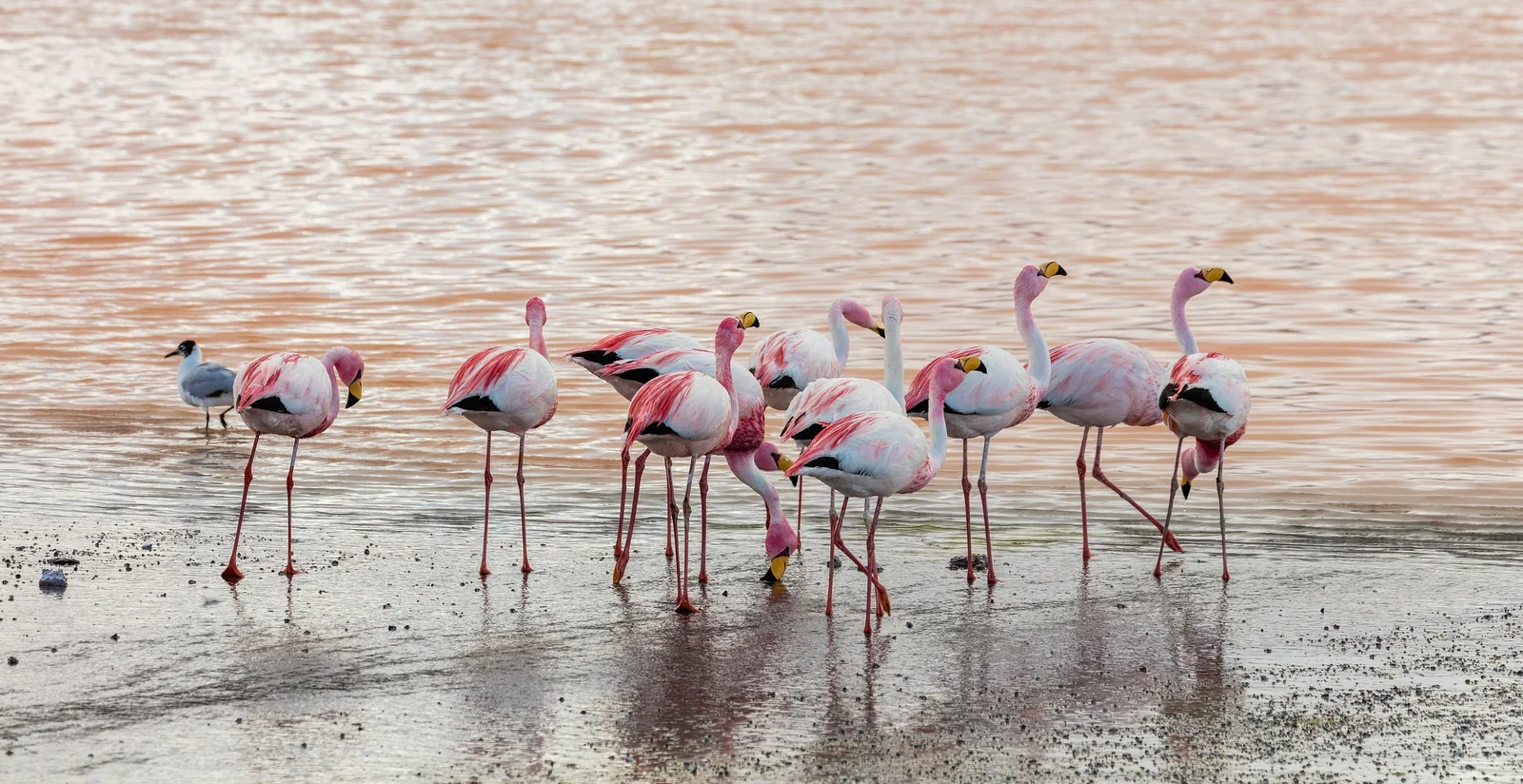
Day two heads south into the high plateau and the Eduardo Avaroa Andean Fauna National Reserve. You drive past a string of lagoons, volcanoes and odd rock formations, including the wind-carved Árbol de Piedra, and reach Laguna Colorada, a shallow red-tinted lake where flamingos feed. The color comes from algae and minerals, and the best light is in the late afternoon. Lodging near the lagoon is basic and cold, and electricity and hot water can be limited.
Day 3: Geysers, Hot Springs and the Border
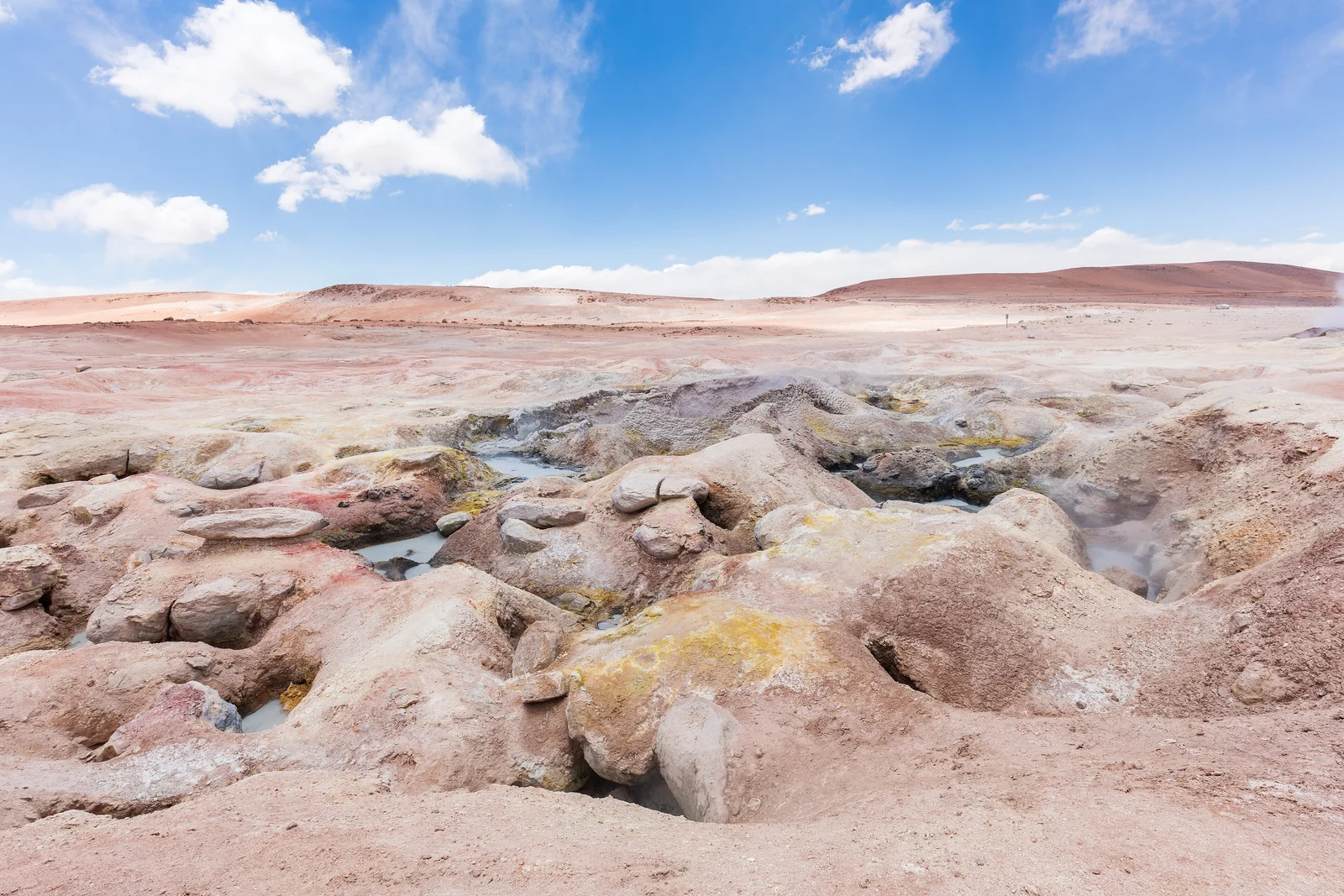
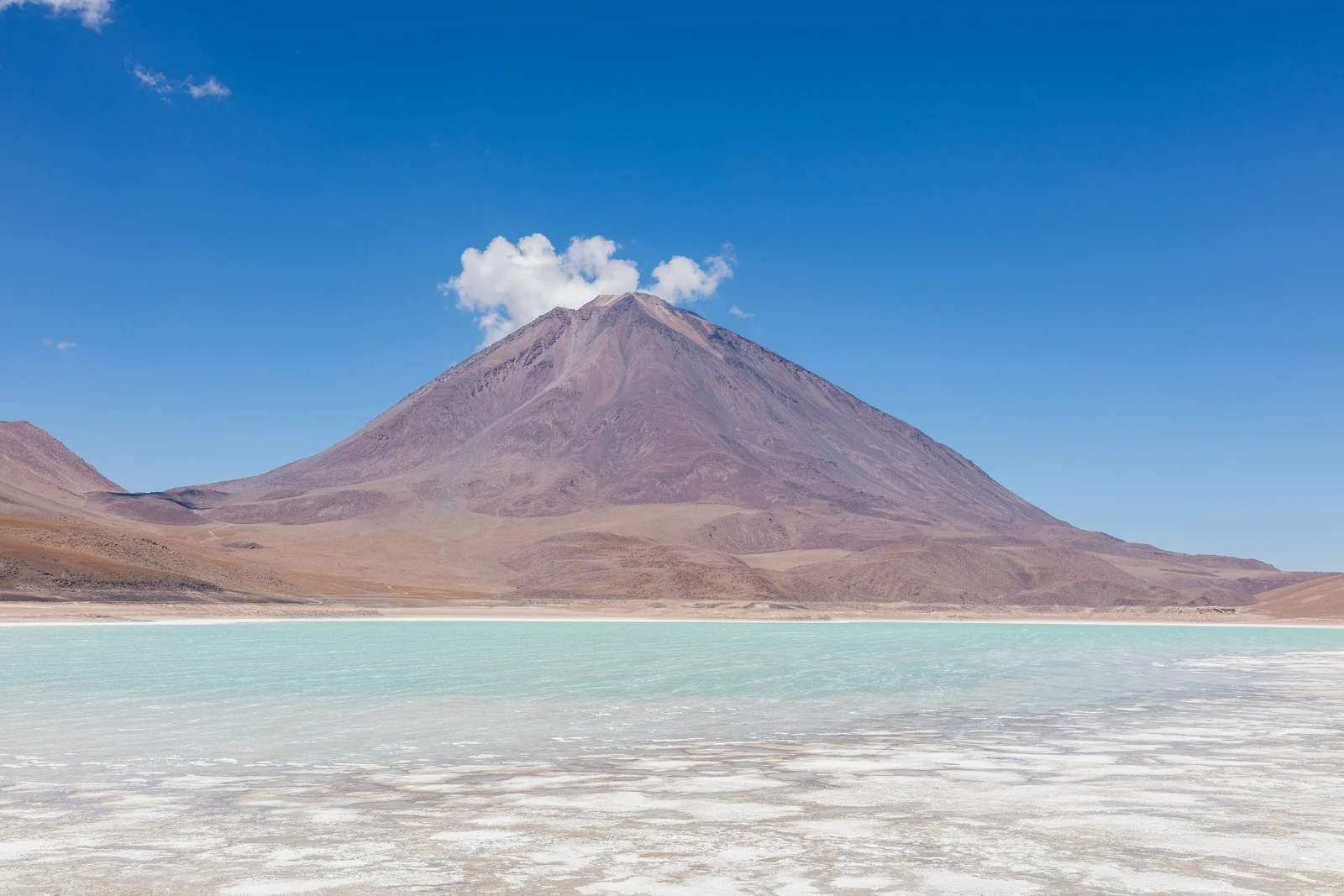
The third day starts brutally early so you reach the Sol de Mañana geyser field around sunrise, when the steam is thickest and the air is coldest. Operators describe it as sitting close to 5,000 meters, which is why headaches often peak here. After that, most tours stop at a hot-spring pool in the reserve for a soak, then continue to Laguna Verde, a mineral-rich lake that sits at the foot of the Licancabur volcano and can turn an intense green-turquoise when the wind stirs it. From there you drive to the border post and cross into Chile.
Border Crossing Logistics
The border is the most confusing part of the trip, so go in with realistic expectations. On the Bolivia-to-Chile route the Bolivian exit post is in a remote spot, at high altitude, with few facilities. After you clear it, transfer to San Pedro is normally by a separate shared minibus, and the Chilean immigration and customs check happens in San Pedro or near it. Tours usually finish around the early afternoon, but this varies.
- Carry your passport and any entry paperwork where you can reach it, not in a bag on the roof.
- Check visa rules for both Bolivia and Chile for your nationality with each government before you book. They differ by country and change.
- Expect a park fee for the Eduardo Avaroa reserve, usually paid in cash in Bolivian currency, and confirm with your operator whether it is included.
- Chile controls food imports. Fresh fruit, meat, dairy and similar items are typically not allowed through, so finish your snacks before the border.
What to Do Around San Pedro de Atacama
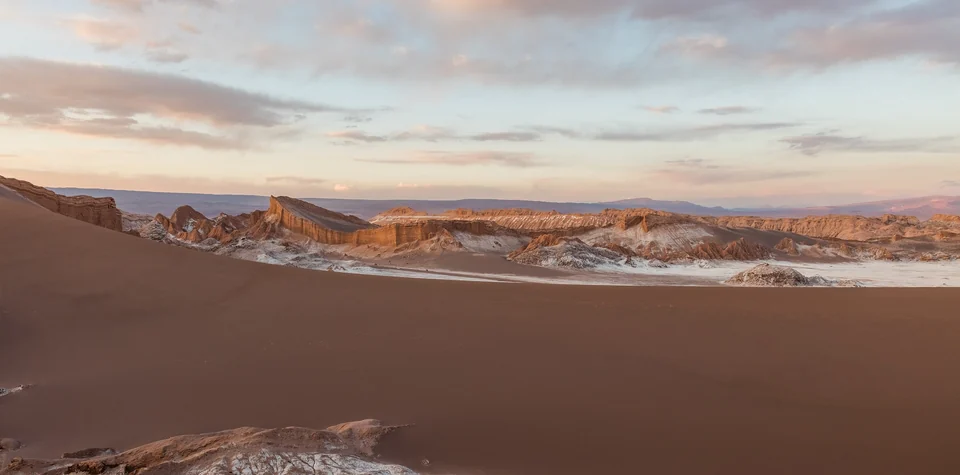
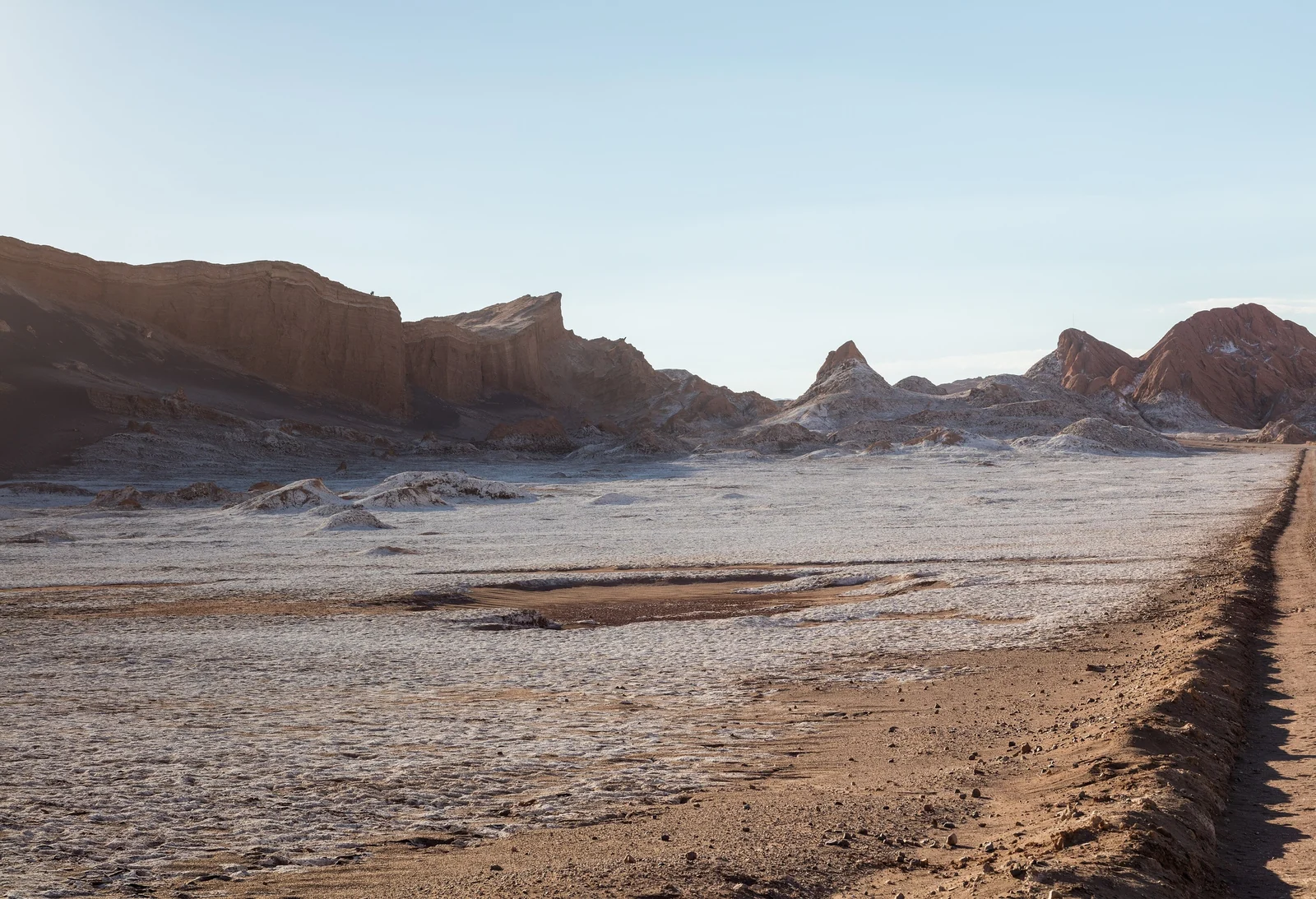
If you choose Chile as your base, the list is long and nearly all of it is a short drive. The Valle de la Luna (Moon Valley) lies in the Cordillera de la Sal, a few kilometers from town, and its crumbled salt ridges, dunes and amphitheater-like canyons glow orange and pink at sunset. It is popular for a reason, and it is crowded at golden hour, so go a little before or after the peak.
Other classics include the Atacama salt flat, where Andean, Chilean and James's flamingos feed in shallow lagoons; high-altitude lagoons in the Altiplano; and the geyser field at El Tatio, which is best at dawn and, like Sol de Mañana, sits at serious altitude. Thermal pools in the region give you a warm soak after cold mornings.
Then there are the stars. Atacama is world-famous for astronomy, and thanks to very dry air and little light pollution, the night sky around San Pedro is superb. Local operators run guided stargazing sessions with telescopes, and it is one of the easiest ways to feel you have really seen the desert.
Tour Types and How to Choose an Operator Safely
On the Uyuni route, tours come in a few basic flavors. Shared group tours are the standard and the cheapest, with several travelers per vehicle. Private tours cost more and let you set the pace. Longer tours add more lagoons and quieter corners. Day trips and a 1-day Uyuni tour exist for people who can only reach the flat itself. In San Pedro, most excursions are half-day or full-day group outings, and you can book on arrival.
Safety is the part to take seriously. Road accidents on this route have been reported over the years, and the usual causes are tired drivers, poorly maintained vehicles, speed and bad weather. Another recurring issue is cheap tours with little oversight. Price should not be your only filter.
- Read recent reviews from several independent sources, and look for specific comments on drivers and vehicles.
- Ask what is included: meals, lodging, park fees, sleeping bags, hot-spring entry, driver and guide, and the return transfer.
- Ask about emergency plans: first-aid kit, oxygen, a working radio or phone, and how evacuation works.
- Book in person or through an established agency rather than a street tout, and avoid paying everything upfront in cash.
Best Time and How to Plan the Route
Both places are high-desert destinations that are comfortable in the day and cold at night, with sharp swings in temperature. The dry months are generally better for stargazing and for reaching the whole of Uyuni, while the wetter months are the time for reflections.
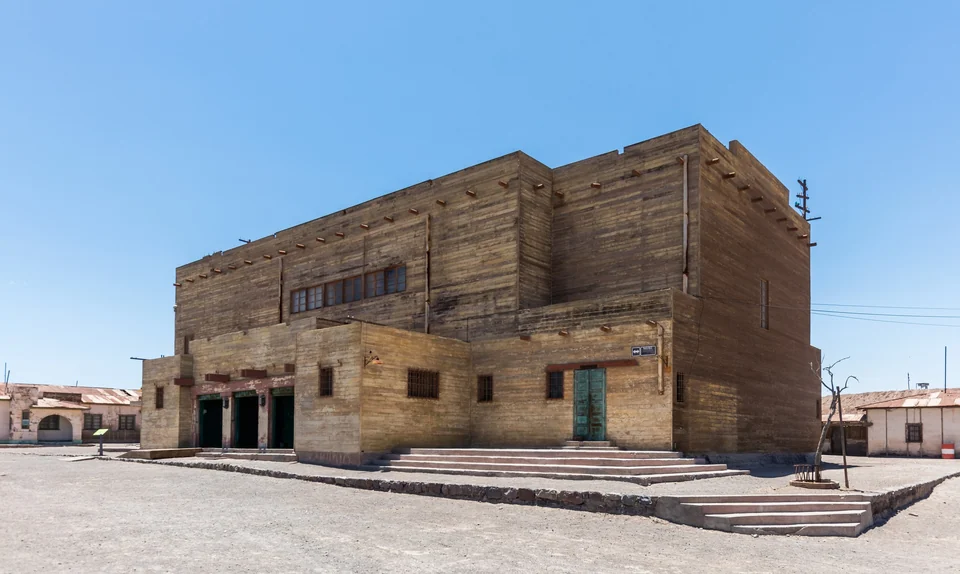
For planning, a sensible route goes like this. Fly to Calama in Chile, spend two or three nights in San Pedro to acclimatize and see Moon Valley and the stars, then take the 3-day tour to Uyuni, and finish with an onward bus or flight into Bolivia. If you are coming from the Peruvian side, you might pair it with Colca Canyon and Machu Picchu and travel south. And if you want the opposite of desert, see Patagonia's glaciers and mountains, or the abandoned nitrate town in our Humberstone guide.
Our Verdict by Traveler Type
- One trip only, maximum wow: do the Uyuni tour. Nothing in Chile quite matches the scale of the salt flat.
- Comfort, couples and families: base yourself in San Pedro and add a one-day Uyuni extension only if the kids are old enough for altitude.
- Stargazers: San Pedro, ideally around a new moon.
- Short on time: pick one. A rushed version of both is worse than a good version of one.
My own ranking, if I had to give one: do both if you have a week, and do the tour. The 3-day route is the best way to see both landscapes in one go, and it is the reason this comparison is a little unfair. You are not really choosing between two deserts. You are choosing how to link them. For current entry rules in Chile, check the official Chile tourism site.
Uyuni vs Atacama FAQ
Is Uyuni or San Pedro de Atacama better to visit?
Uyuni is better for one huge, memorable landscape and a rugged road trip. San Pedro de Atacama is better for comfort, variety, stargazing and short excursions. If you can, combine them with the 3-day tour that links the two.
Which direction is better for the 3-day tour, Uyuni to San Pedro or the reverse?
Starting from San Pedro lets you acclimatize first, then ends on the salt flat, a strong finale. Starting from Uyuni ends in a comfortable town with hot showers. Pick based on your altitude comfort and onward travel, and confirm the direction when you book.
When is the best time to see the mirror effect at Uyuni?
The mirror effect appears when a thin layer of water covers the salt, which happens in the rainy season in the southern summer. Conditions vary year to year, and access can be limited, so ask operators about current water levels.
Will I get altitude sickness on the Uyuni tour?
It is common, and it can affect anyone regardless of fitness. The route spends nights above 4,000 meters. Acclimatize for a few days beforehand, go slowly, and talk to a doctor or travel clinic before you go about prevention.
How does the border crossing between Bolivia and Chile work?
On the Uyuni tour you exit Bolivia at a remote border post, then transfer by minibus to San Pedro de Atacama for the Chilean side. Keep your passport handy, check visa rules in advance, and do not carry fresh food into Chile.
How do I choose a safe Uyuni tour operator?
Read recent independent reviews, ask what is included, check the vehicle, group size and emergency equipment, and get the itinerary in writing. Avoid choosing on price alone, and book through an established agency rather than a street tout.
Is San Pedro de Atacama good for stargazing?
Yes. Very dry air and little light pollution make it one of the best places in the world for a night sky. Guided sessions with telescopes are common. Try to go around a new moon for the darkest conditions.