If you want to walk to Machu Picchu, the real choice comes down to the Inca Trail vs Salkantay, with the Lares trek and the train as the other two options. The Inca Trail is the shortest and the most historic, but permits are limited and sell out early. Salkantay is longer, higher and wilder, and needs no permit. Lares is the gentlest walk, and the train asks nothing of your legs at all.
Here is the short version. Pick the Inca Trail if you want the classic arrival through the Sun Gate and can book months ahead. Pick Salkantay if you want big mountain scenery and flexible dates. Pick Lares if you want villages, a short trip and easier days. Take the train if time, knees or altitude are a problem. Details on each are below, along with a comparison table. For the site itself, see our Machu Picchu travel guide.
Four Ways to Reach Machu Picchu at a Glance
The citadel sits at about 2,430 meters above sea level on a ridge above the Urubamba River, and UNESCO has listed it as a mixed natural and cultural site since 1983. Every route ends at the same gate. What changes is what you walk through to get there.
| Route | Length and days | Highest point | Permit | Best for |
|---|---|---|---|---|
| Classic Inca Trail | About 42 km, 4 days | Warmi Wañusqa (Dead Woman's Pass), 4,215 m | Yes, limited daily quota, tied to your passport | History, stone paths, Sun Gate arrival |
| Salkantay trek | Roughly 60 to 75 km depending on route, 4 to 5 days | Salkantay Pass, around 4,600 m (sources vary) | No quota; small trek fee at the trailhead | Glaciers, big landscapes, flexible dates |
| Lares trek | About 33 km on the classic route, 3 days plus Machu Picchu | Around 4,400 to 4,500 m (sources vary) | No quota | Villages, hot springs, shortest and easiest hike |
| Train only | Hours, not days | None | No trek permit; train and site tickets needed | Limited time, mobility, or no wish to camp |
Figures for passes and trek lengths vary a little between operators and maps because routes and campsites differ. Treat them as a guide and ask your operator for the exact itinerary.
The Classic Inca Trail: Four Days on Original Stone Paths
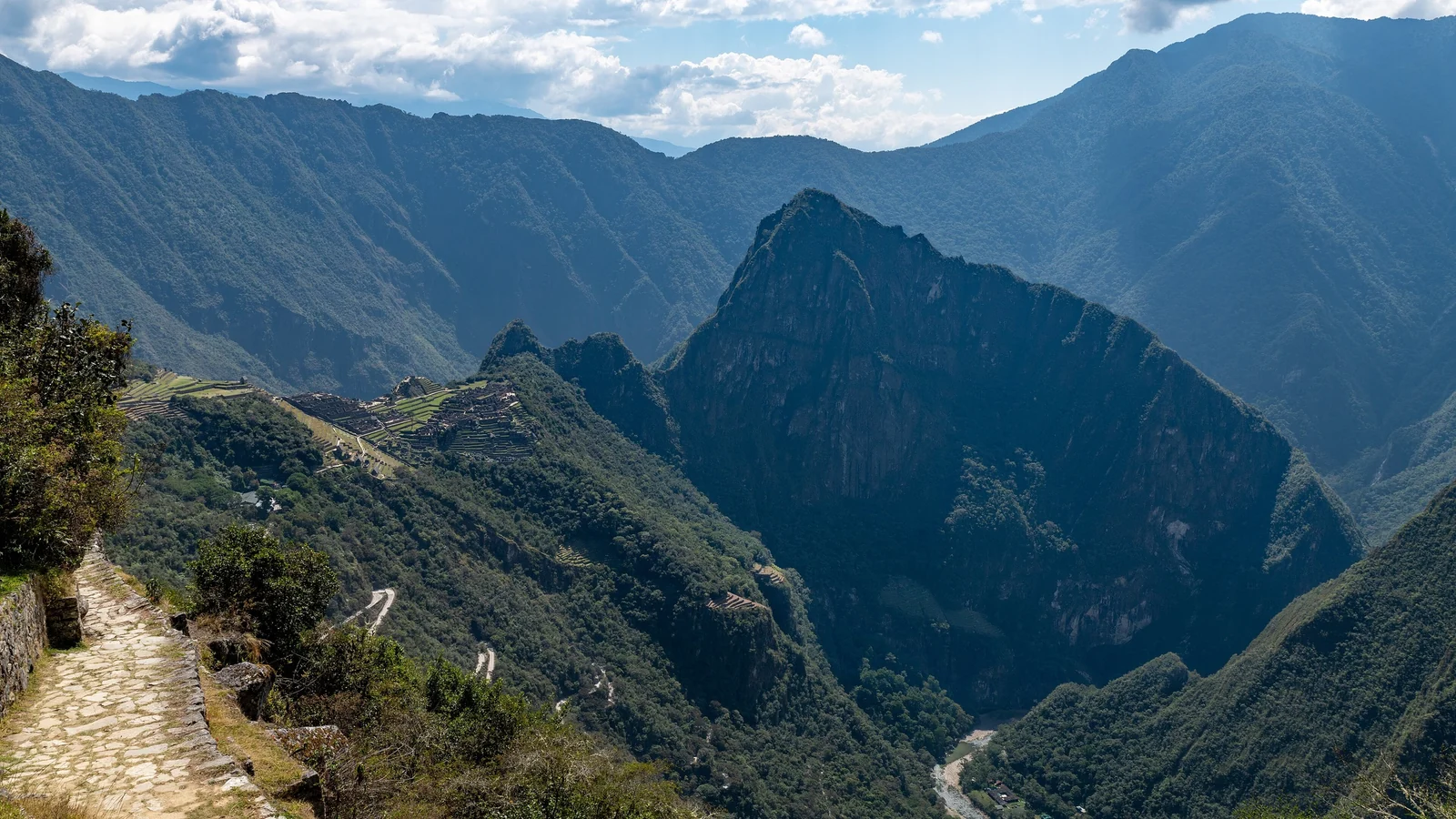
The Classic Inca Trail covers about 42 kilometers and usually takes four days, starting near the rail line below Machu Picchu. You walk on stone paths and stairways that the Incas built, through cloud forest and high puna, past ruins that most visitors to Machu Picchu never see. It is the only route that finishes at Intipunku, the Sun Gate, where the citadel appears below you at the end of the final day.
The days on the trail
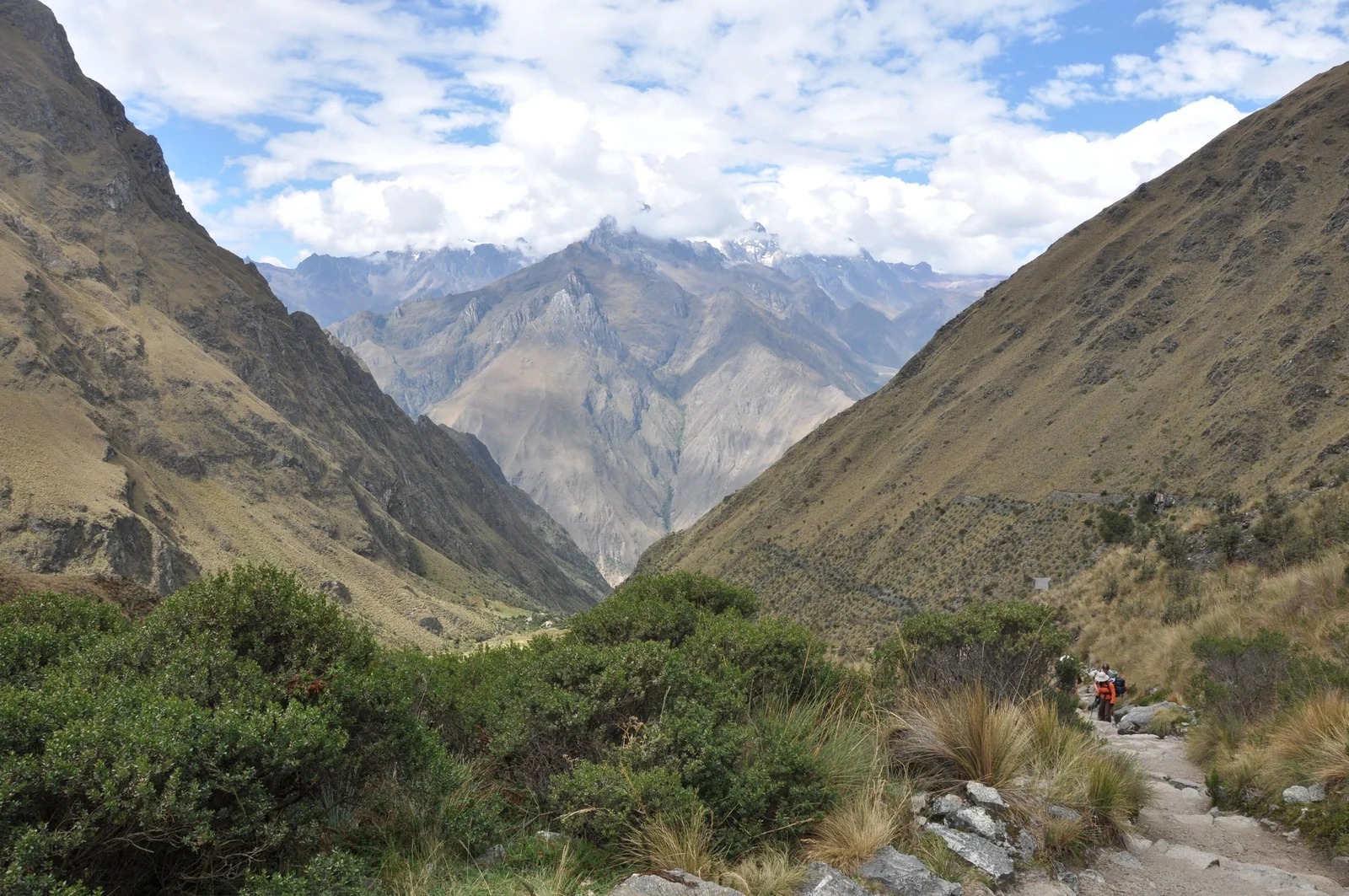
Day two is the hard one. You climb to Warmi Wañusqa, known as Dead Woman's Pass, at 4,215 meters, then drop steeply down the far side. It is the highest point on the trail and the day most people remember. The days after are lower in altitude but long on stone steps, with ruins strung along the way down.
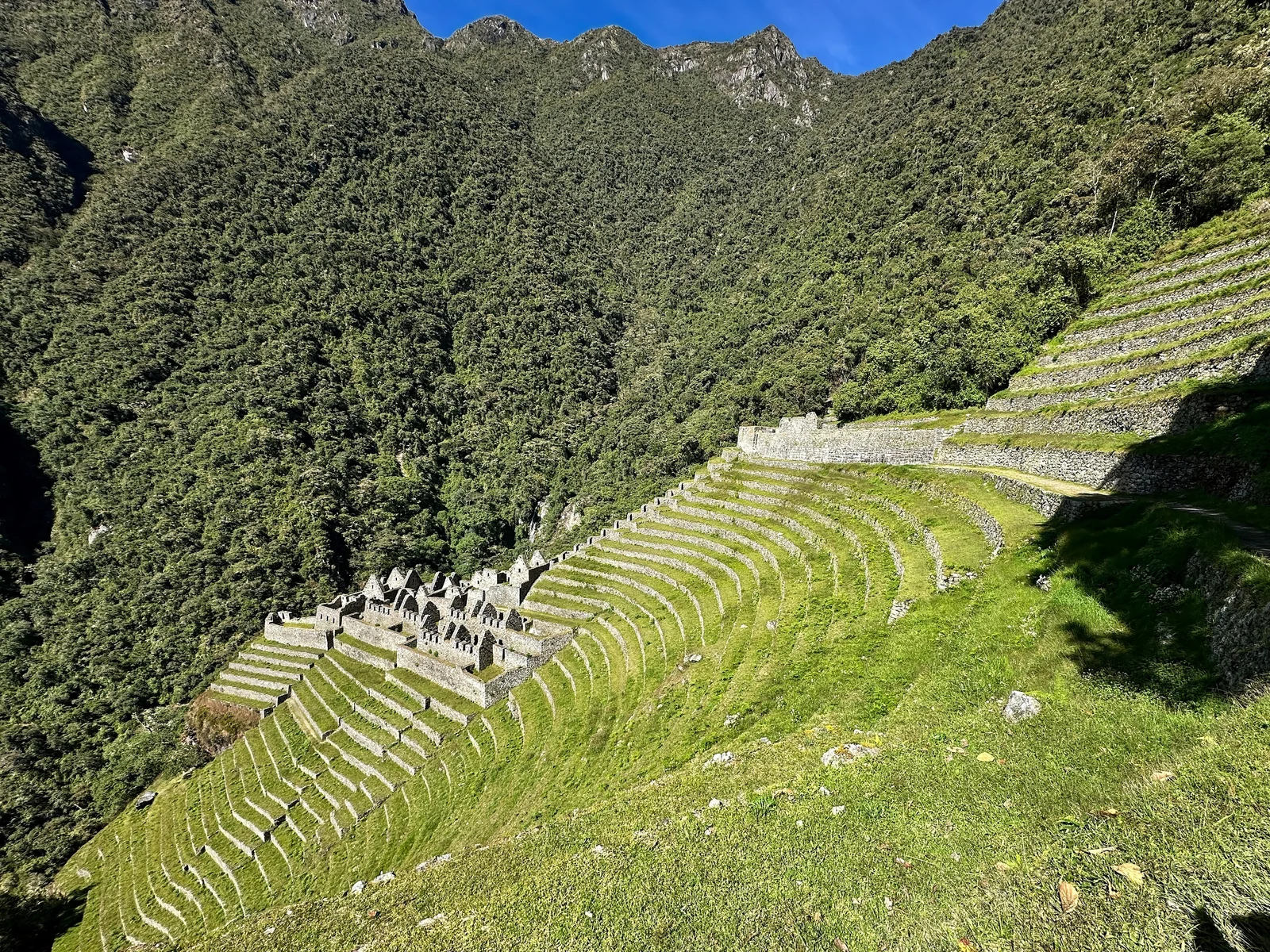
On the last evening most groups camp near Wiñay Wayna, a set of agricultural terraces and ritual baths built into a steep hillside. A small spur trail leads from the main path to the ruins. Many guides time the final morning so you reach the Sun Gate early, though crowds and weather decide how the view turns out.
Permits and rules
The Inca Trail is regulated. Only 500 people are allowed to start each day, and most of those places go to guides, cooks and porters, so only about 200 are for trekkers. You must go with a licensed operator, and permits are tied to your passport and cannot be transferred. Permits are released many months ahead and the popular dry-season dates sell out quickly. Check the release date with the operator you plan to use, and book as soon as you know your dates.
The trail also closes every February for maintenance, so you cannot plan an Inca Trail trip for that month. Pack animals and metal-tipped trekking poles are not allowed on the stone sections, so bring rubber tips for your poles.
The Salkantay Trek: Glaciers, Passes and a Long Descent
Salkantay is the most popular alternative, and for good reason. The route skirts the flank of Salkantay, a glaciated peak above 6,000 meters, and crosses a pass at roughly 4,600 meters. That is about 400 meters higher than the Inca Trail's high point, so it is a tougher day of altitude. Most operators run it in four or five days, and the total distance is commonly quoted somewhere between 60 and 75 kilometers.
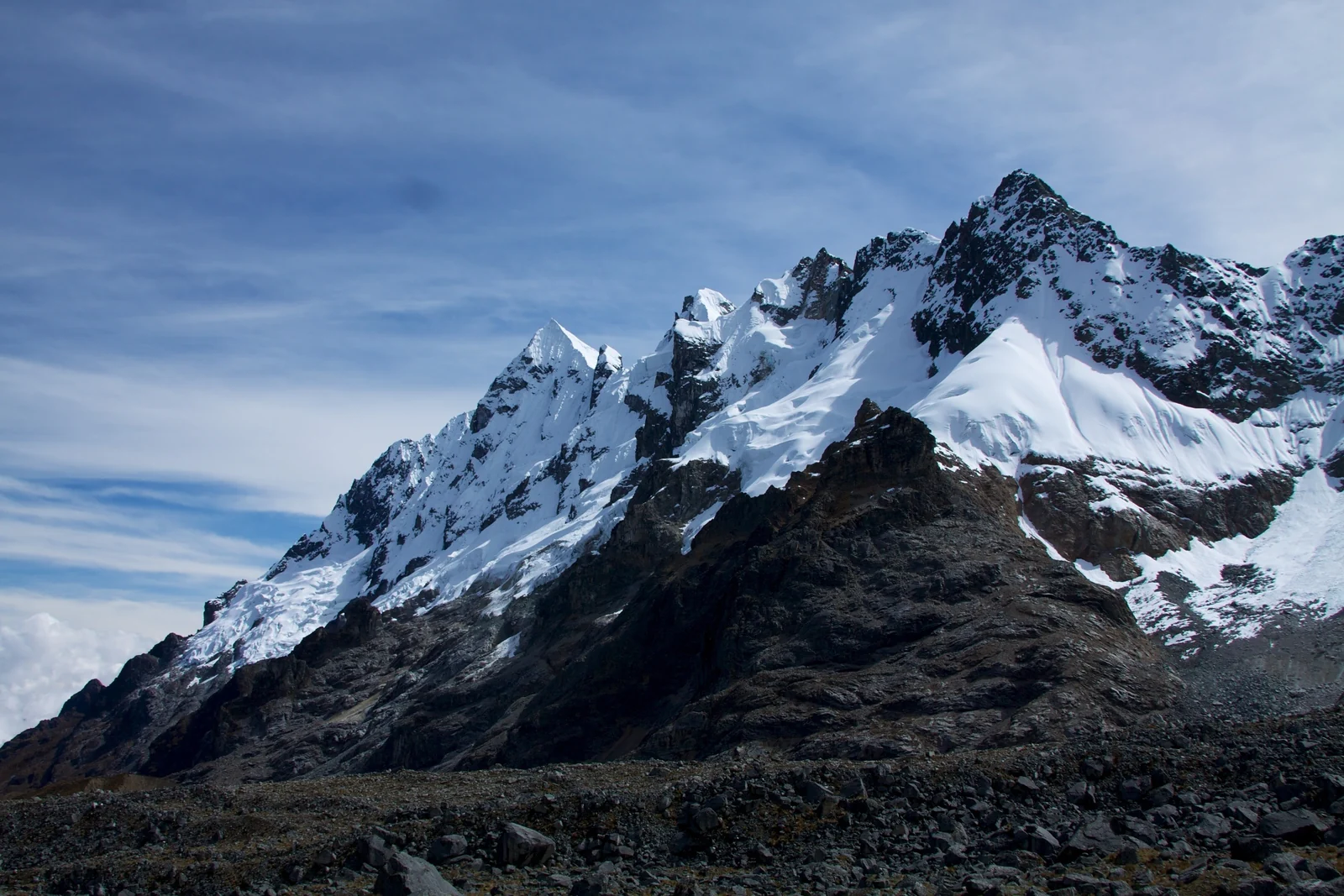
The scenery changes more than on any other route. You start on cold, treeless slopes under snow peaks, then descend into warm cloud forest with coffee farms, orchids and waterfalls. The final stretch usually follows the river to Hidroeléctrica and on to Aguas Calientes, the town below Machu Picchu, sometimes with a visit to the Llactapata ruins on the way.
Humantay Lake and the pass
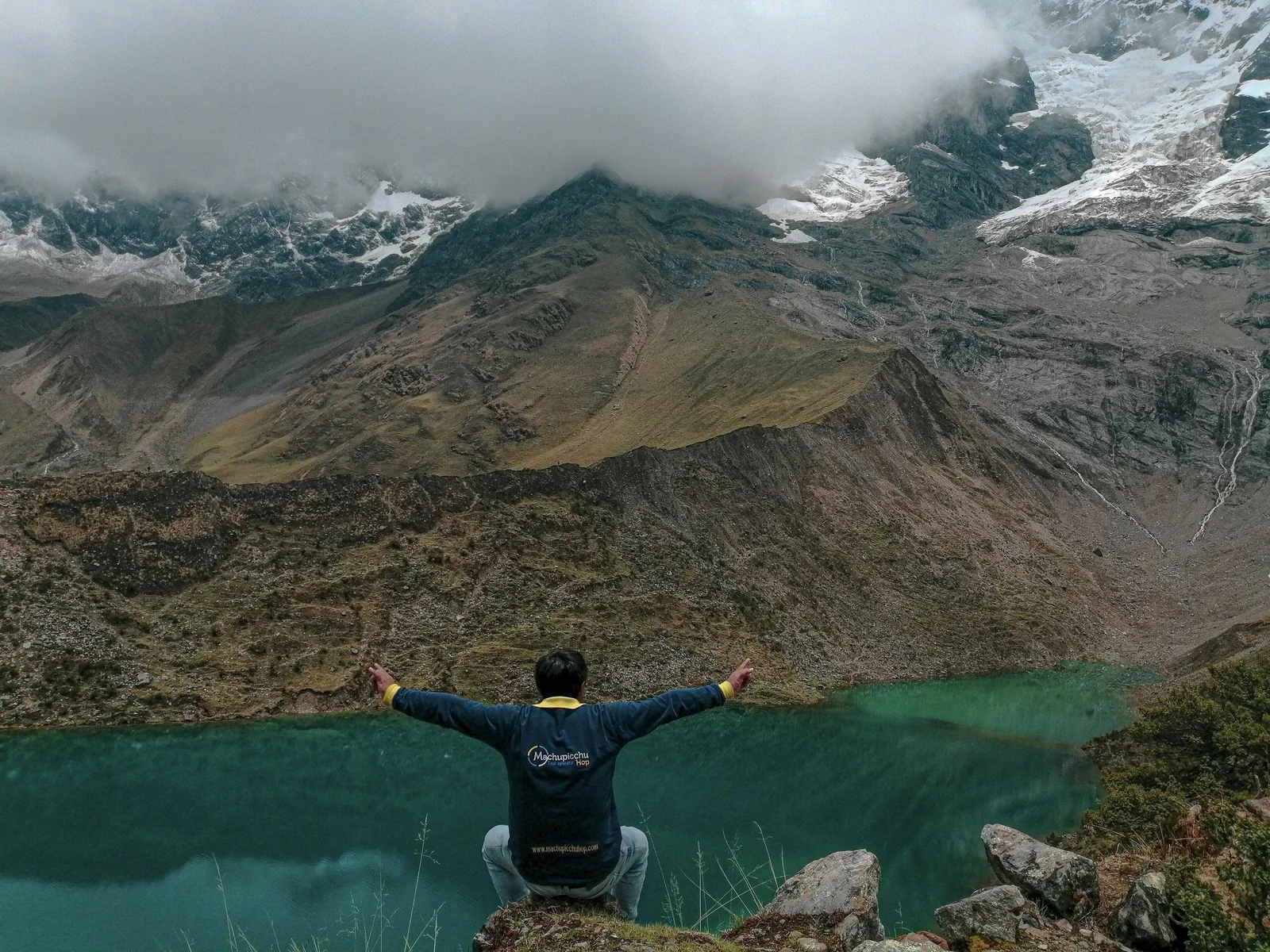
Many itineraries include a morning at Humantay Lake, a turquoise lake under a glacier, reached by a steep side trail of about 4 kilometers round trip from Soraypampa. It is harder than it looks because of the altitude, and it gets crowded later in the day, so go early. The pass day is long and cold, and the descent on the other side is hard on knees.
Permits, weather and cost
Salkantay has no daily quota like the Inca Trail, so you can often book on shorter notice, but a small trek fee is normally collected near the trailhead and some campsites charge small fees. Rain is the main risk. The wet season, roughly November to March, brings mud, swollen streams and poor visibility, and some sections can be closed. Dry-season nights are very cold at the high camps.
The Lares Trek: Villages, Hot Springs and Weaving
The Lares trek is the quiet option. The classic route is about 33 kilometers over three days, starting near the village of Lares, which has hot springs that many groups visit. It crosses one high pass, usually quoted at around 4,400 to 4,500 meters, and passes through Quechua farming villages where llamas and alpacas graze beside the path. It finishes at Ollantaytambo, where you take the train to Aguas Calientes.
Lares suits people who want culture more than a summit. You are more likely to meet weavers and herders than other trekkers, and some operators include a stop at a community weaving project. There is no permit quota, and the walking is easier than the other two. The altitude is still serious, so plan acclimatization days in Cusco first. Lares can also be combined with a shorter Inca Trail section if you want both.
Taking the Train: The Easy Route to Machu Picchu
You do not have to hike. From Cusco, Ollantaytambo or Poroy, trains run to Aguas Calientes, and a bus climbs from the town to the citadel. It is the right choice if you have only a few days, if you are traveling with young children or older relatives, or if you simply prefer a bed. Schedules and fares change, so check them directly with the rail operators.
You still need a Machu Picchu entrance ticket, bought on the Ministry of Culture's official ticket site, and the site uses timed entry and set circuits. Rules and ticket types change, so look at the official page when you plan. If you want to know what you are walking toward, read our history of Machu Picchu.
Difficulty, Altitude and Acclimatization
All three treks involve walking at altitude, and this matters more than distance. Cusco sits at about 3,400 meters. Spend at least two or three days there before you start, drink water, take it slowly on the first day and tell your guide early if you feel unwell. Headache, nausea and breathlessness are common, and serious symptoms mean going down. If you want a tougher alternative, our Choquequirao trek guide covers a longer route, and the Colca Canyon guide is a shorter test of your legs.
- Inca Trail: moderate to hard. Fewer total kilometers, but steep stone steps for hours.
- Salkantay: hard. Higher pass, longer days, more weather risk.
- Lares: easy to moderate. Shortest, with one pass.
- Train: none, apart from the altitude in Cusco and at the site.
Camping vs Lodges: What Kind of Trek Do You Want?
Most Inca Trail and Lares trips are camping trips, with porters carrying tents and cooking meals. Salkantay is the route with the most choice. You can camp, or pay more to sleep in lodges or domed camps with proper beds. Lodge treks cost noticeably more and are popular with people who want comfort at high camps, where nights are cold. Budget treks save money but can mean crowded camps and basic food, so read what is included before you pay.
Prices vary widely by operator, season and group size, so compare itineraries rather than headline prices. Ask what the price includes: trail fees, Machu Picchu entry, meals, porters, equipment, the train back and return transport. Make sure porters are paid fairly and carry loads within legal limits.
Best Time to Go
The dry season, roughly May to September, is the best window for all three treks, with clear days and cold nights. It is also the busiest, which is why Inca Trail permits for those months go first. The shoulder months of April and October can be good value with fewer people, but showers are possible. The wet season, roughly November to March, brings mud and cloud, and the Inca Trail is closed in February. Salkantay is the route most affected by rain.
Which Route Should You Choose?
- First-time trekker with fixed dates: Lares, or the train, because there are no permits to chase.
- History and ruins lover: the Inca Trail. Nothing else puts you on original stonework for days.
- Mountain scenery and a bigger challenge: Salkantay.
- Short on time: the train, or a short trek that ends on a train.
- Booking late: Salkantay or Lares. If the Inca Trail is sold out, go for another route rather than a reseller.
- Planning Cusco and the south: read our guide to Cusco or Arequipa.
The Inca Trail is the best walk, and Salkantay is the best landscape. If you can only get one, take the one you can actually book. A good guide and decent weather matter more than the route name.
Inca Trail vs Salkantay FAQ
Is the Inca Trail or Salkantay better?
The Inca Trail is better for history, with original Inca stonework and a Sun Gate arrival. Salkantay is better for mountain scenery and is easier to book. Salkantay is also higher and longer, so it is usually the harder walk. The best one is the one you can book on dates that suit you.
How far ahead should you book the Inca Trail?
As early as you can. The daily quota of 500 includes guides and porters, leaving about 200 places for trekkers, and the dry-season dates fill fast. Permits are released months ahead. Ask your operator for the release date and book as soon as it opens.
Can you do the Salkantay trek without a permit?
Yes. There is no daily quota like the Inca Trail, though a small trek fee is normally collected near the trailhead. Most people still go with an operator for logistics and safety, and Machu Picchu entry is a separate ticket.
How hard is the Lares trek?
It is the easiest of the three, at about 33 kilometers over three days with one high pass of roughly 4,400 to 4,500 meters. The terrain is gentler than the Inca Trail, but altitude can still be tiring, so allow time in Cusco to adjust first.
When is the Inca Trail closed?
The Inca Trail closes every February for maintenance. The dry season, roughly May to September, is the most popular time, and permits for those months are the first to sell out. Check current dates with a licensed operator.
Can you do the Inca Trail without a guide?
No. Every trekker needs a licensed guide from a registered operator, and permits are linked to your passport. You cannot walk the classic trail independently, so choose an operator carefully.
Is it worth hiking if you can take the train?
It depends on your priorities. The train is faster and easier, but the trek gives you days in the Andes and a slower approach to the site. If your time, health or budget is limited, the train is a perfectly good way to see Machu Picchu.