Caral, Peru is the oldest known city in the Americas, a cluster of stone-and-earth pyramids and sunken plazas that rose in the dry Supe Valley roughly 5,000 years ago. UNESCO lists it as the Sacred City of Caral-Supe and places its beginnings between about 3000 and 1800 BCE, which makes it older than any Inca, Maya or Aztec site by thousands of years.
The good news for travelers is that it is an easy day trip from Lima. The site lies about 180 kilometers north of the capital and a little inland from the coast, so you can leave after breakfast, spend a few hours walking the monuments and be back for dinner. This guide explains what Caral is, what you will see, how to get there by tour or on your own, and how to add the coast around Barranca.
What Is Caral and Why Is It So Old?
Caral is the best-known site of the Caral-Supe civilization, sometimes called Norte Chico, which grew along a handful of river valleys on Peru's north-central coast. Large-scale building here began in the Late Archaic period, long before pottery, metal tools or the Inca Empire. Radiocarbon dates from reed bags used to carry stone for construction put the main monuments at around 2600 BCE, and the wider tradition seems to reach back further still.
That puts Caral in the same era as the pyramids of Giza and the early cities of Mesopotamia. Nobody suggests the three were connected. The point is that the Andes produced a complex, monumental society independently and very early. Max Uhle noted the ruins in 1905, but it was the excavations led by Peruvian archaeologist Ruth Shady, starting in the 1990s, that turned a dusty desert mound into a world-famous city. UNESCO inscribed it in 2009, and its World Heritage page is a good short read before you go.
Key Facts at a Glance
| Question | Short answer |
|---|---|
| Where | Supe Valley, Barranca province, north of Lima, Peru |
| Distance from Lima | About 180 km by road |
| Distance from the coast | About 20 to 25 km inland |
| Dating | Roughly 3000 to 1800 BCE (UNESCO); main monuments around 2600 BCE |
| UNESCO listing | 2009, as the Sacred City of Caral-Supe |
| Main features | Platform pyramids, sunken circular plazas, residential areas |
| Not found | Pottery, and clear evidence of warfare |
| Best-known researcher | Ruth Shady |
What You Will See: Pyramids, Plazas and Stone Walls
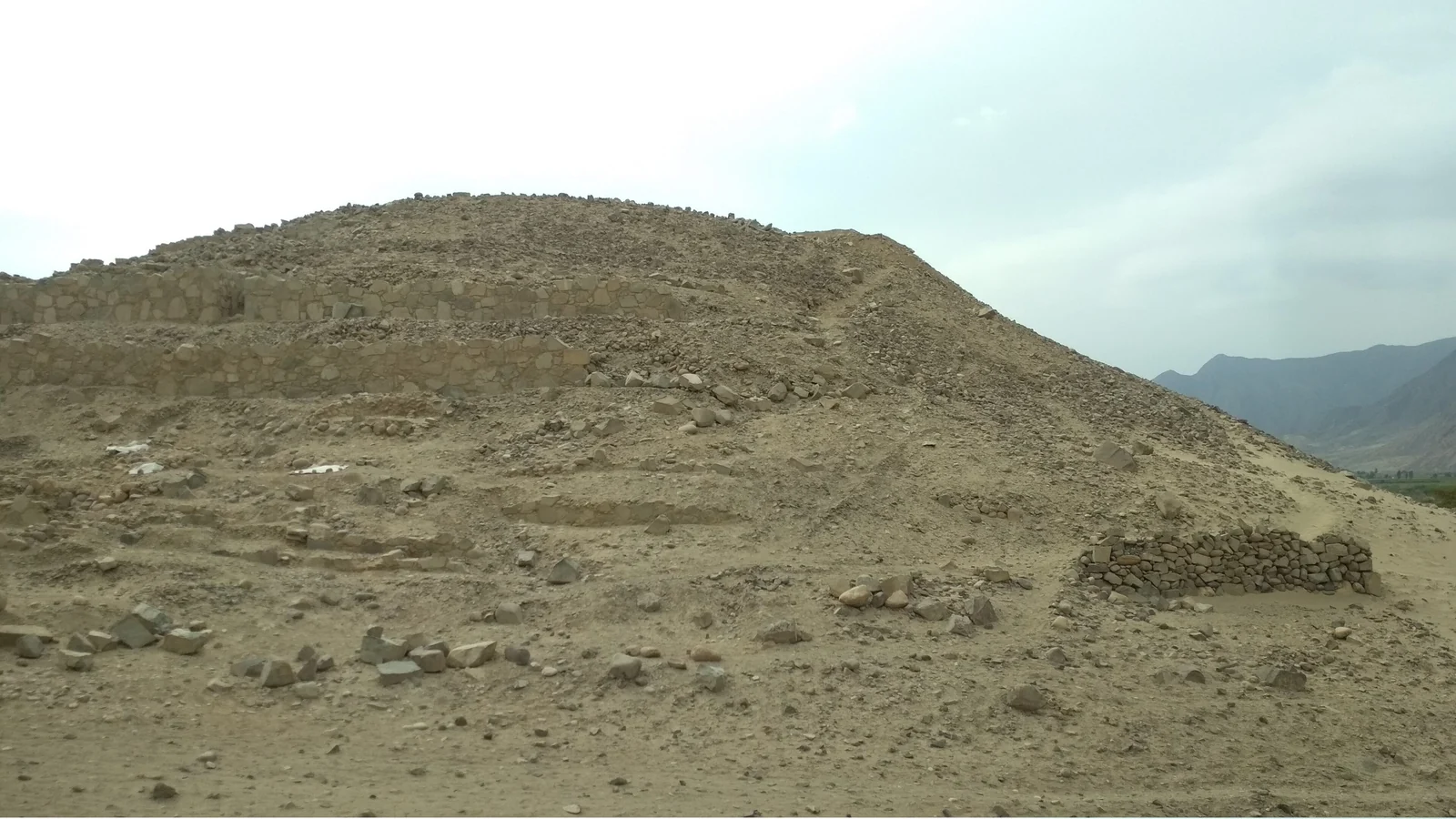
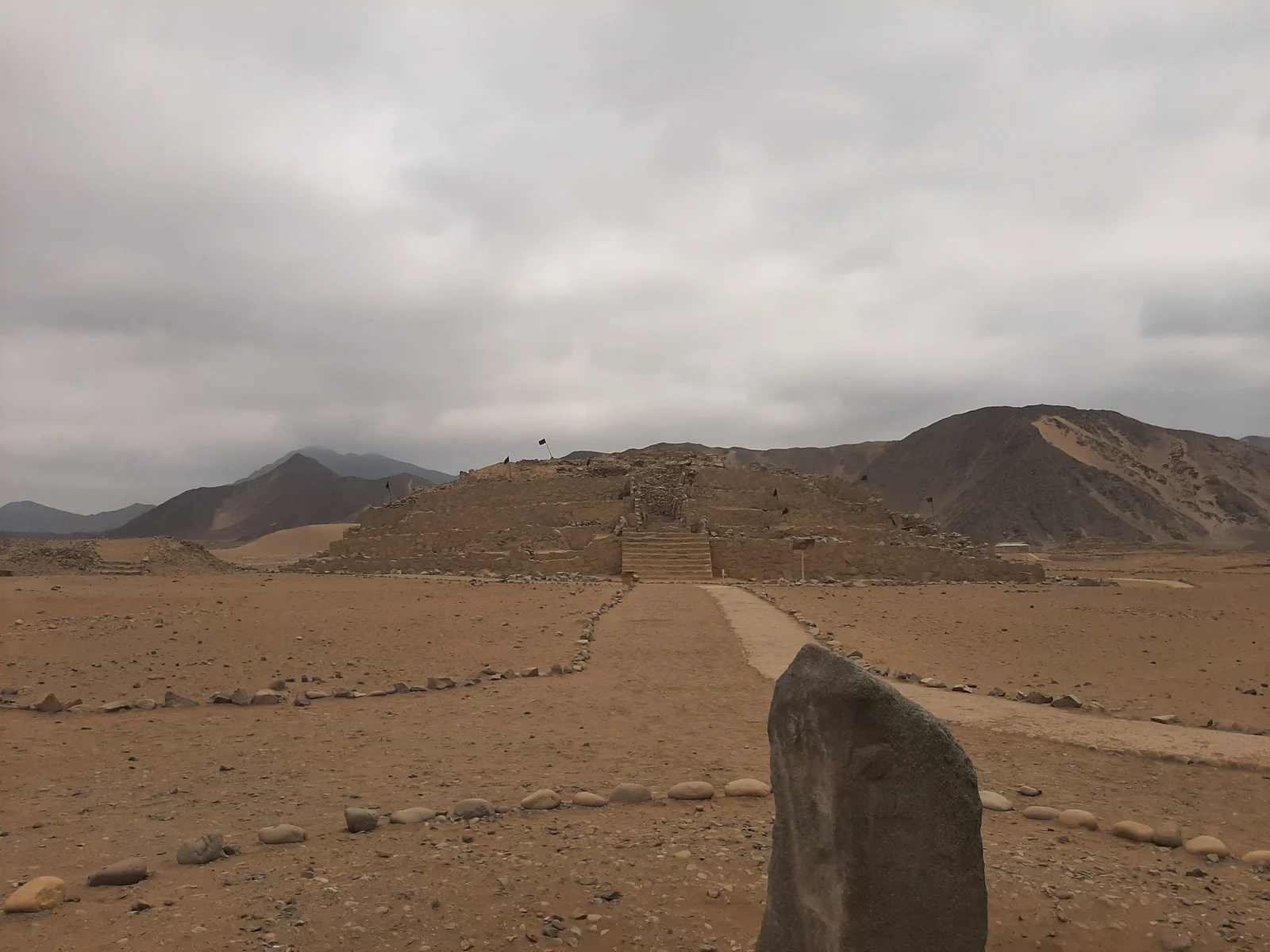
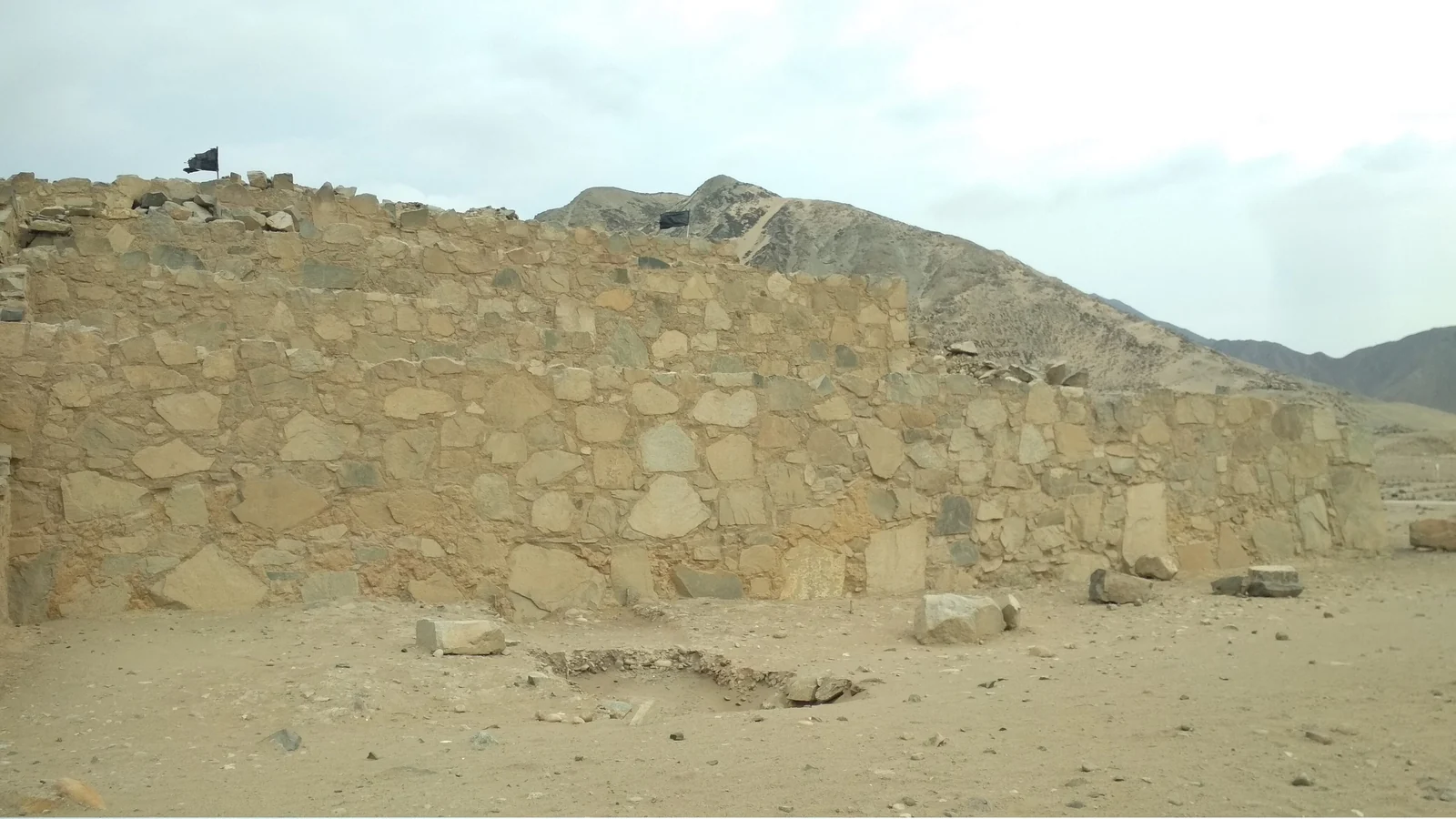
Do not expect the polished masonry of Machu Picchu. Caral is built of cut and rough stone set in mud mortar, packed fill and plaster, and large parts of it are still being consolidated. What it has instead is scale and clarity. The site is laid out in two halves divided by the line of the old river, with the monumental core in the upper part and homes in the lower.
The platform pyramids
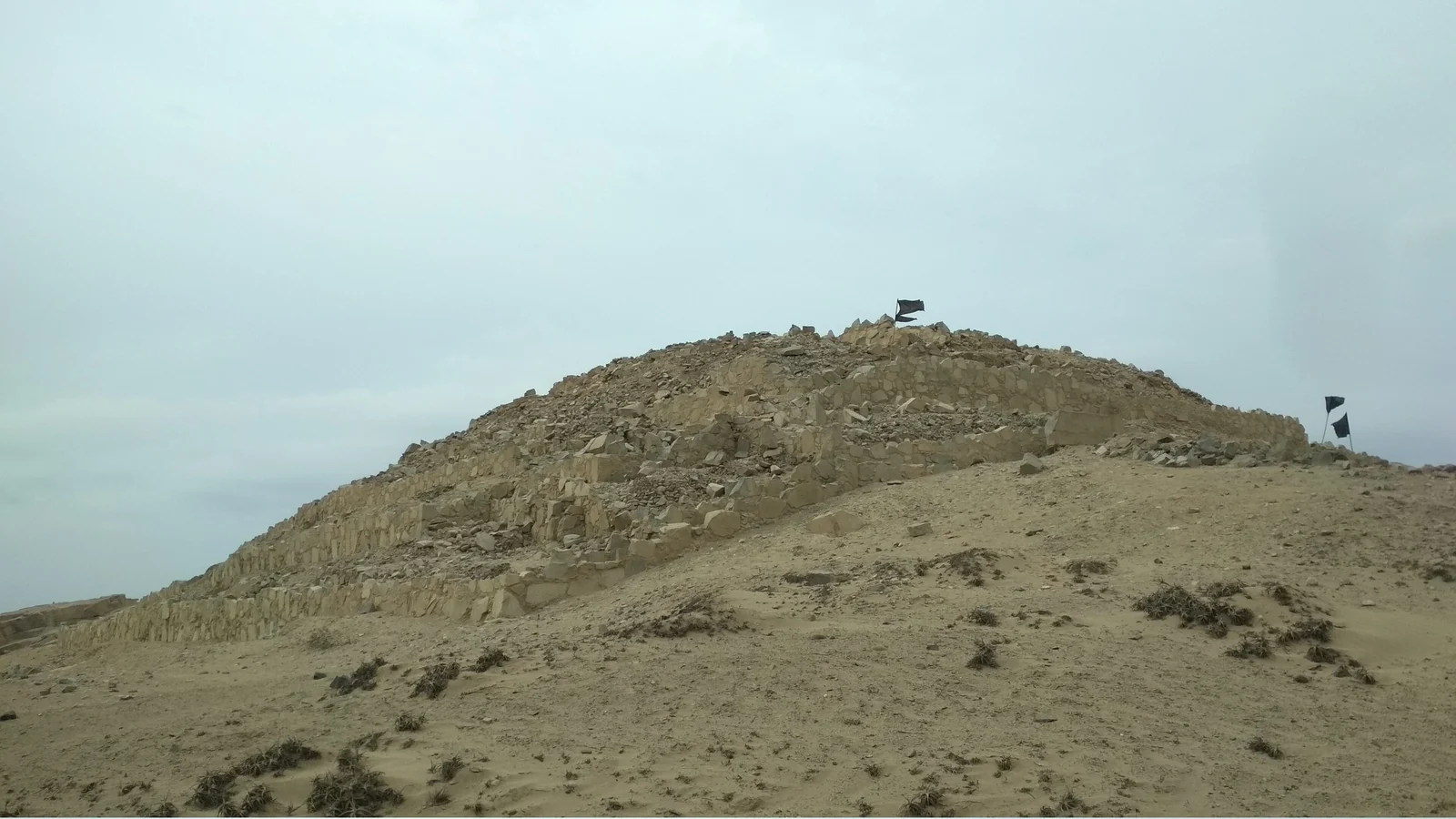
UNESCO describes six large pyramidal platform mounds in the upper half, and guides count them differently, so do not worry if the numbers you hear change. The largest, often called the Pirámide Mayor or main temple, is a stepped platform on the order of 150 meters long and about 28 meters high. Stairways climb the front, and in places you can see the original stone facing in good condition.
The sunken circular plazas
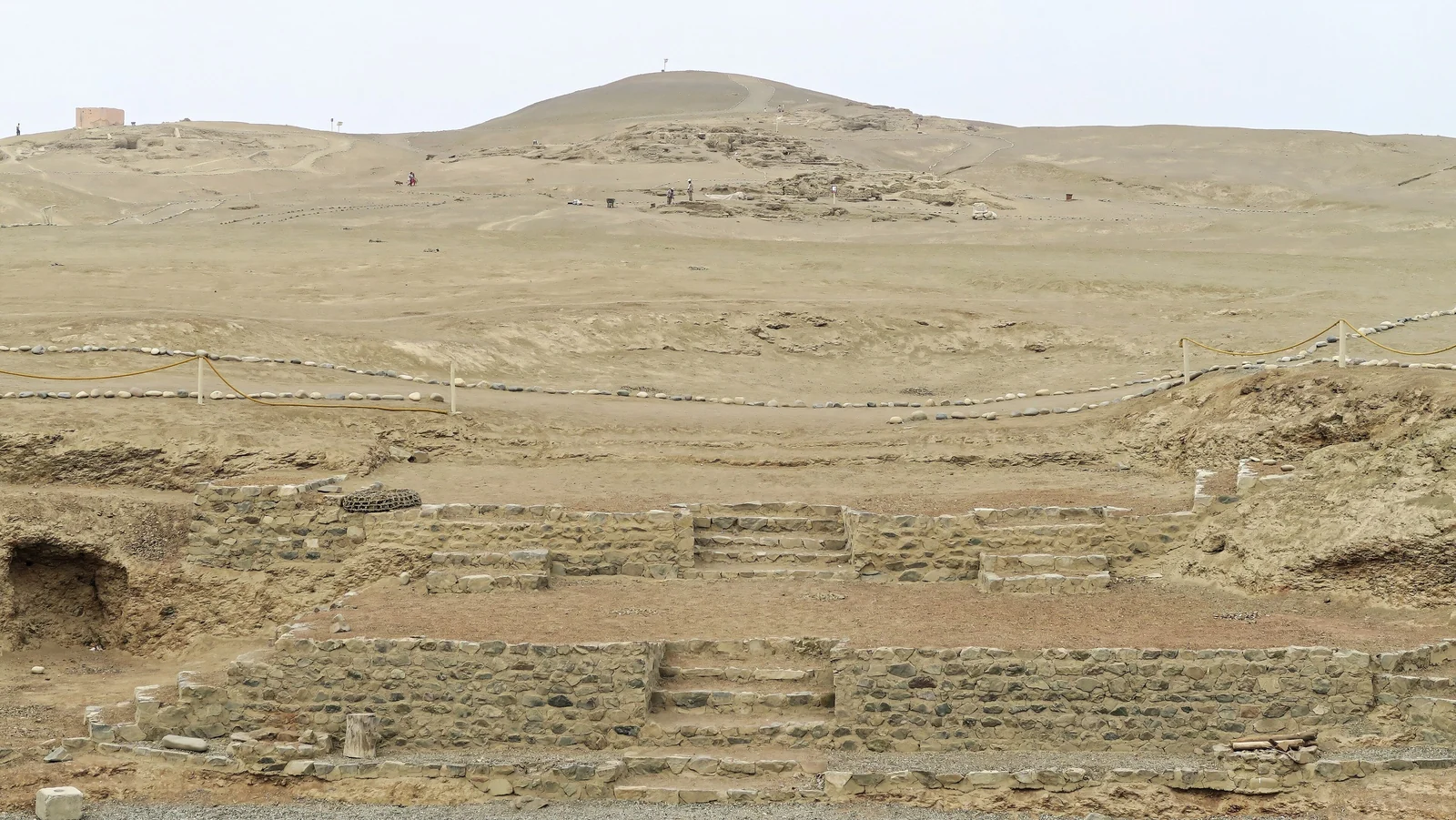
This is the feature that makes Caral recognizable. In front of the main platforms, circular courts were dug down into the ground and lined with steps. They look like small amphitheaters. Archaeologists read them as places for gatherings and ritual, and the sunken circular plaza stayed popular along the Peruvian coast for centuries after Caral. If you only photograph one thing, make it a plaza seen from the top of a pyramid.
Reed bags and earthquake design
The builders filled mesh bags woven from reeds with stones and set them inside walls. The bags are one reason scientists could date the site so precisely, because reed is an ideal radiocarbon sample. They are also often described as a flexible core that helped the walls cope with the region's earthquakes.
Houses, bone flutes and a desert geoglyph
In the lower half you can pick out the footprints of homes, which gives you a sense of how ordinary people lived. Excavators also found musical instruments, including flutes made from bird and animal bone, which suggests ceremony involved sound as well as architecture. Nearby, a large face is etched into the desert floor.
No Pottery, No Weapons: What Makes Caral Different
Two absences define the place. First, Caral belongs to the pre-ceramic age. Its people cooked, stored and traded without fired clay pots, which is surprising for a city this large. Second, excavators have reported no evidence of warfare: no fortifications, and no weapon caches of the kind you find at later sites.
Interpretations vary. The most common reading is that power here was built around religion, public works and exchange between the coast, the valley and the highlands rather than conquest. Treat any tidy theory with caution. There are no texts, and some conclusions rest on what has not yet been found.
The Quipu Find and the Debate Around It
In 2005 Shady's team announced that it had found a quipu at Caral, a bundle of knotted cords. If it is a quipu, the record-keeping system the Inca later used would be thousands of years older than previously thought. Press coverage at the time called it the oldest known example by a very wide margin.
The claim is debated. Scholars disagree about whether the object is a true quipu, and about whether early knotted cords recorded numbers, other information or both. There is no key to decode it. You will not see the original in the ruins, so treat this as part of the story rather than something to look for on site.
How to Get to Caral From Lima
Caral is in Supe district, Barranca province, reached by the Panamericana Norte and then a side road that runs inland up the Supe Valley. In general terms, expect about three to four hours each way by road from central Lima, depending on traffic leaving the city. Allow a full day, and start early so the drive does not eat into your time at the site.
| Option | Good for | Things to know |
|---|---|---|
| Guided day tour from Lima | Easy logistics, first-time visitors | Pickup and transport are usually included; confirm whether entry and guide are in the price |
| Private driver | Flexibility, small groups | You can add stops on the coast; agree the route and hours in advance |
| Bus to Supe or Barranca, then local transport | Independent travelers on a budget | Ask the driver for the Supe stop; shared vehicles and taxis run to the site, with fewer departures later in the day |
| Self-drive | Total control | Mostly a main highway; watch for trucks and coastal fog |
Packaged tours are the simplest route. They typically run as a long day with hotel pickup, and many bundle transport, the ticket and a guide. Prices vary a lot between operators, so compare what each one includes instead of choosing on price alone.
Going independently is entirely possible. Take a long-distance bus north from Lima toward Barranca or Supe, get off in Supe, and continue by shared car or taxi up the valley. Check times at the bus terminals, and have a plan for the return, since transport thins out in the afternoon. The official how to get here page from the Zona Arqueológica Caral is the best place to confirm details.
Tickets, Guides and Opening Hours
You buy your ticket at the site, and the visit is done on a signposted walking circuit. Guides are available there, and visiting with one makes a big difference, because the ruins look like low mounds and stone walls until someone explains the layout. Ticket prices, opening days and guide rules change, so check the official site before you go.
The walk is largely on open, exposed ground with limited shade, with some steps to climb if you go up onto the platforms. Plan on around two to three hours for the main circuit, plus time for photos. If you are on a tour, ask how long you will get on site, because some itineraries spend more time in the car than among the pyramids.
Combining Caral With Barranca, Vichama and Huaura
Many travelers treat Caral as a stand-alone excursion, but the area is worth stretching. Barranca is the main town on the coast and a useful stop for lunch and transport. This part of the Pacific coast is a long strip of beaches, fishing towns and farmland, with desert hills close behind.
Vichama
Vichama, in the Végueta district of Huaura province, is a coastal city of the wider Caral tradition, dating to around 3,800 years ago according to official material. It sits on a terrace close to the sea and includes pyramids, sunken circular plazas and clay reliefs, which are its highlight. Official guidance says the circuit is done with an authorized guide and that tickets are bought at the site. It is roughly an hour from Caral, so it fits into the same trip if you have a driver.
Huaura and the coast
The Huaura area, further up the coast, adds beaches and a working fishing economy. It also helps explain how Caral worked. Its people farmed inland but depended on seafood from the coast, and the trade between the two is one of the strongest threads in the research. One coastal archaeological stop plus a seafood lunch is enough for most visitors. Do not overpack the itinerary, since the drives are long.
Best Time to Visit, Heat and Sun
Caral sits in a desert valley with strong sun and very little shade. Rain is rare. The coast near Lima can be gray and cool for much of the year, so you may leave under cloud and arrive in clear, hot conditions inland. Check the forecast for Supe rather than for Lima.
| Factor | What to expect |
|---|---|
| Sun | Strong, with almost no shade on the walking circuit |
| Heat | Warm to hot during the day; mornings are more comfortable |
| Rain | Rare, so you can go in almost any month |
| Crowds | Usually quiet compared with Machu Picchu, busier on holiday weekends |
| Ground | Dust, loose stone and steps; wear closed shoes |
- A hat, sunscreen and sunglasses, as the exposure is serious
- More water than you think you need, since it is a dry site
- Closed shoes with grip for loose stone and steps
- Some cash for small purchases and local transport, because card payment is not universal outside Lima
Caral vs Machu Picchu: Why It Matters
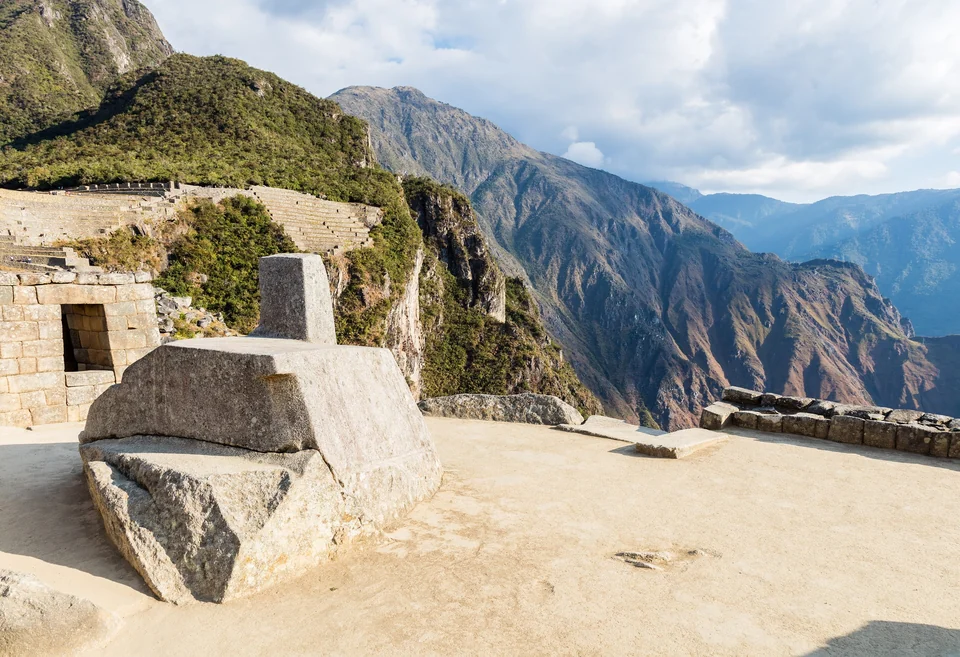
Comparing the two shows what each is for. Machu Picchu is a royal estate of the Inca, built in the 15th century, set on a dramatic ridge and designed as a spectacle. Caral is roughly 4,000 years older. It is plain, low and dry, and its drama comes from the idea, not the view.
What Caral changes is the timeline. It shows that cities, monumental architecture and organized labor appeared in the Andes without ceramics, without large-scale warfare and long before the empires we usually associate with the region. That is also why it sits comfortably beside our guide to ancient lost cities in the Amazon rainforest and the work in Ecuador's Upano Valley, where the story of early, complex societies in South America keeps being pushed back.
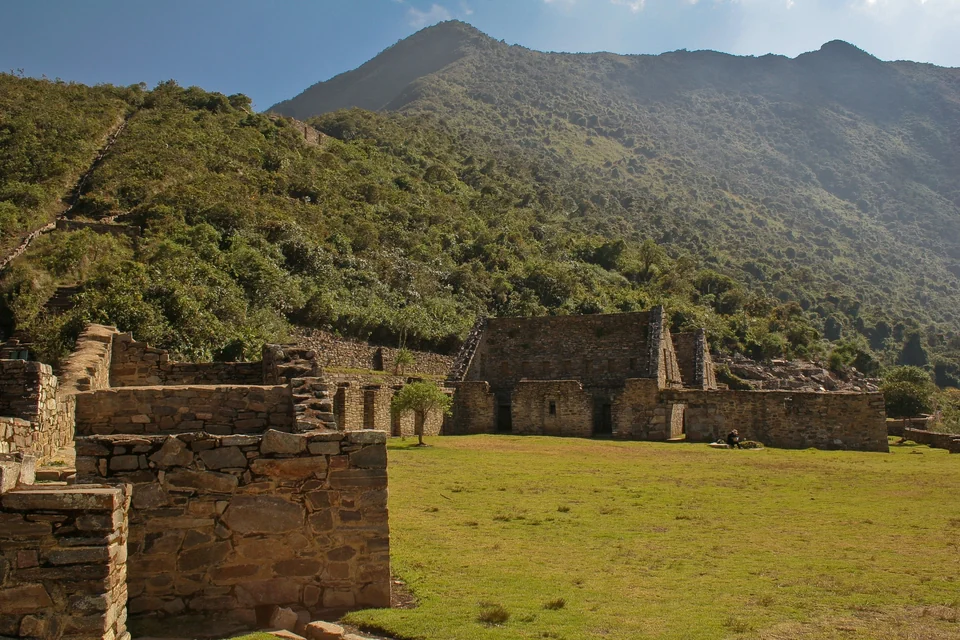
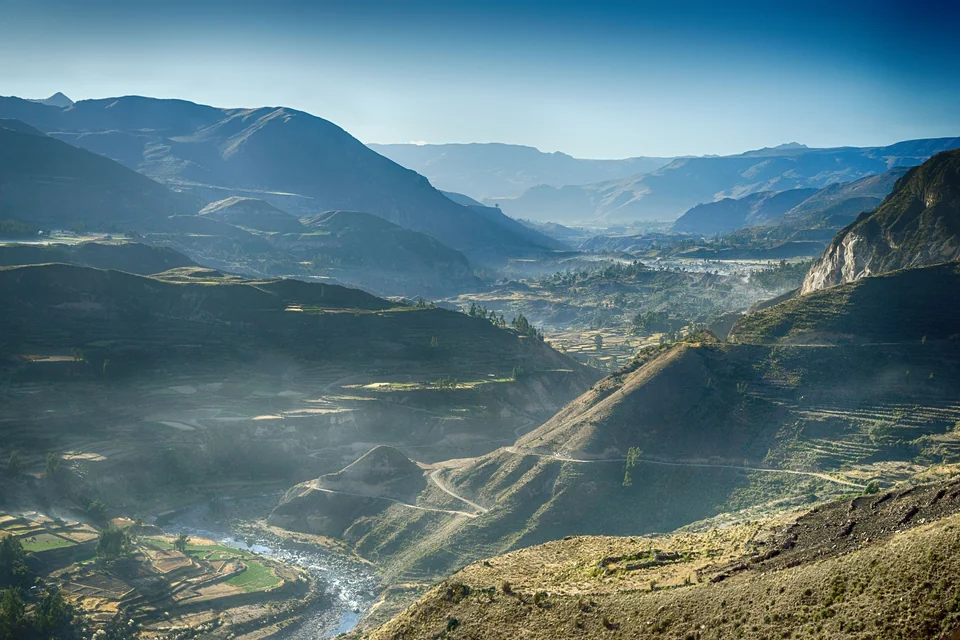
My view: go to Caral for the story, not for the photographs. If you want views, you will get them at Machu Picchu, on the Choquequirao trek, or in the condor country of Colca Canyon. If you want to understand where Andean civilization began, Caral is the place, and it is a far easier trip from Lima than either. For more routes, browse our Peru travel guides.
Caral FAQ
How old is Caral?
UNESCO places the beginnings of the Caral-Supe tradition between about 3000 and 1800 BCE. Radiocarbon dates from reed bags used in construction put the main monuments around 2600 BCE, which makes it the oldest known city in the Americas.
Can you visit Caral as a day trip from Lima?
Yes. The site is about 180 kilometers north of the capital. Expect a long day with several hours on the road. Guided tours with pickup are common, and you can also go by bus to Supe or Barranca and continue by local transport.
Do you need a guide at Caral?
Visits are done on a marked circuit and guides are available at the site. A guide is strongly recommended, because the ruins are easy to misread without explanation. Confirm current rules, ticket prices and hours on the official Caral website before you travel.
Is Caral really the oldest city in the Americas?
It is the label used by UNESCO and most sources, but researchers still discuss it, since other nearby sites in the same tradition are also very old. Caral is the best-studied and best-preserved of them, which is why it carries the title.
What is the quipu found at Caral?
In 2005 archaeologists reported a bundle of knotted cords they identified as a quipu, a record-keeping device later used by the Inca. Scholars debate whether it is a true quipu and what early knotted cords recorded, so it remains an open question.
Why were there no ceramics or weapons at Caral?
Caral dates to the pre-ceramic age, so pottery had not yet become part of daily life. Excavators have also reported no clear evidence of warfare. Many researchers see a society organized around ritual, farming and trade, though interpretations vary.
How hot is Caral and what should I bring?
It is a dry desert valley with strong sun and little shade. Bring a hat, sunscreen, plenty of water and closed shoes. Mornings are more comfortable, so start early. Check the forecast for Supe, not just Lima.