


Costa Rica packs volcanoes, cloud forest, two very different coastlines and an absurd amount of wildlife into a country smaller than West Virginia. For a first trip, the classic loop is the Arenal Volcano area around La Fortuna, the Monteverde cloud forest and a beach with a national park attached, usually Manuel Antonio on the Pacific.
That loop fits into ten days. With two weeks you can add the wild Osa Peninsula, the turtle beaches of Tortuguero, the dry northwest of Guanacaste or the reggae-and-rice-and-beans Caribbean side. This Costa Rica travel guide covers each region, when the rain actually falls, how to get around and a route you can copy. For more ideas, browse our Costa Rica travel guides.
Arenal Volcano and La Fortuna
Arenal is the near-perfect cone on every Costa Rica poster. It erupted violently in July 1968, burying small villages on its western flank, and stayed active for four decades. It has been quiet since around 2010, so expect a steaming, cloud-wrapped mountain rather than lava.
La Fortuna is that town, small and full of tour desks. Two or three nights is the sweet spot; look for the summit early in the morning, when it is most often clear of cloud.
Hot Springs
Volcanic heat warms the rivers below Arenal. Pay for a resort with landscaped pools and day passes, or join locals at free spots in the warm river near the main road.
Hanging Bridges and Trails
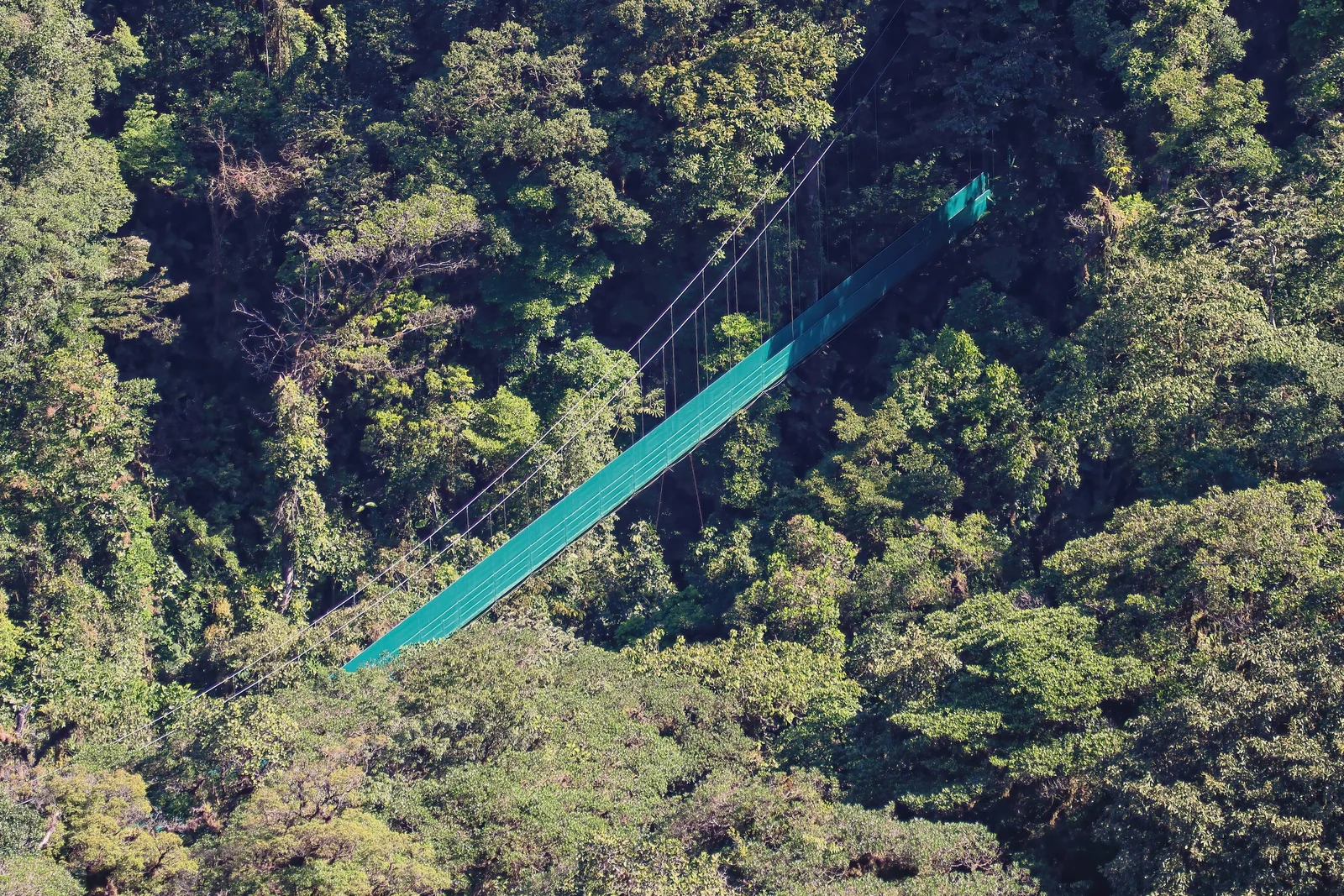
Private hanging bridge parks string steel suspension bridges through the rainforest canopy, which puts you eye level with birds, monkeys and, with luck, a sloth. Inside Arenal Volcano National Park, short trails cross the old lava fields with views of the cone and Lake Arenal. Hiking to the crater is not allowed.
La Fortuna Waterfall
Just outside town, the La Fortuna waterfall drops in a single white ribbon into a jungle pool. Reaching it means a long, steep staircase of several hundred steps down, and the same back up. Swimming is possible in calmer pools downstream, but respect the signs; the main plunge pool has strong currents. Go at opening time to beat the tour groups.
Monteverde Cloud Forest
Monteverde sits high in the Tilarán mountains, where moist Caribbean air condenses into near-constant mist. The result is a cloud forest of mossy trees, orchids and bromeliads, with cooler air and different wildlife from the lowlands. Pack a fleece.
The famous Monteverde Cloud Forest Reserve gets busy; the smaller Santa Elena reserve nearby is often quieter and just as misty. Book entry or a guided walk ahead in the dry season.
Monteverde is also where many people do their first zipline. Book a guided night walk too, for tarantulas, sleeping birds and tree frogs you would miss by day.
Manuel Antonio and the Pacific Coast
Manuel Antonio National Park is small, but it combines forest trails with white-sand coves, and sightings come easily: capuchin and squirrel monkeys, sloths, iguanas and coatis.
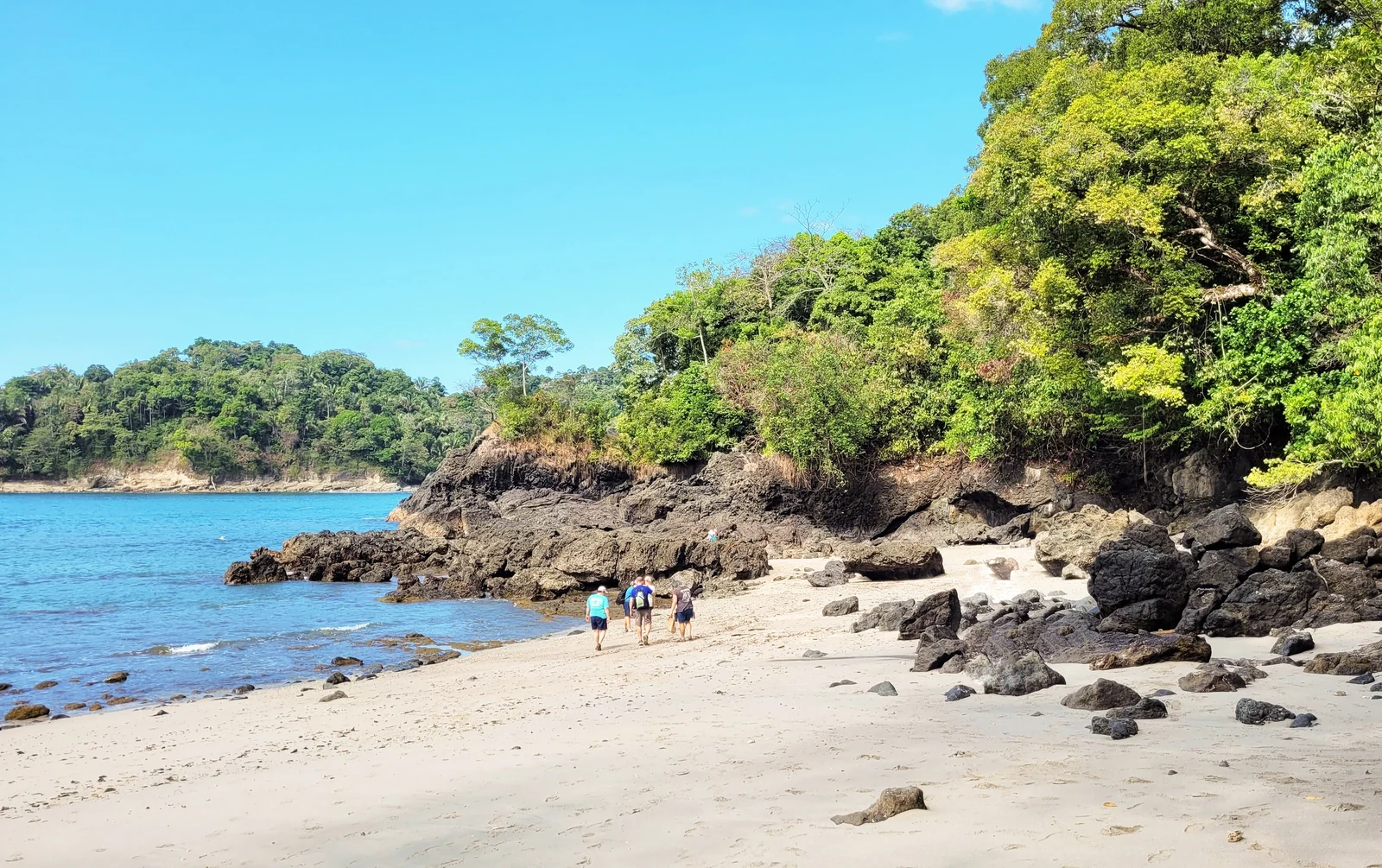
Entry is sold online only, with a daily cap, and tickets can sell out days ahead in the dry season. The park closes one weekday each week, and that day has changed over the years, so check first. Food rules are strict because of the monkeys. Arrive at opening with a guide and you will see far more.
Stay in Quepos for value or on the hillside road to the park for views. Farther south, Uvita and Marino Ballena National Park are quieter.
Wilder Costa Rica: Osa, Tortuguero, Guanacaste and the Caribbean
Osa Peninsula and Corcovado
The Osa Peninsula in the far southwest is Costa Rica at its rawest: lowland rainforest running down to empty beaches, with scarlet macaws, tapirs and all four of the country's monkey species. Corcovado National Park covers much of it. Visitors must enter with a certified guide, and trips are booked through authorized operators, usually from Drake Bay or Puerto Jiménez. Overnight stays at the ranger station are limited, so plan well ahead. Getting there takes time, by rough road, boat or small plane, so give Osa at least three nights.
Tortuguero Turtle Nesting
Tortuguero, on the northern Caribbean coast, has no road access. You arrive by boat through jungle canals or by small plane, which is half the appeal. It is one of the most important nesting beaches for green turtles in the Western Hemisphere, and the main green turtle season runs from about July to October. Leatherbacks nest in smaller numbers from roughly March to May. Night visits to the beach are by guided tour only, without flash or phone lights. By day, paddle the canals for caimans, herons and howler monkeys.
Guanacaste Beaches and Rincón de la Vieja
The northwest is dry, sunny cattle country with the most developed beach strip. Tamarindo is the surf-and-nightlife town; Playa Conchal, Sámara and Nosara are calmer. Inland, Rincón de la Vieja National Park shows volcanic plumbing up close, with bubbling mud pots, steaming fumaroles and dry forest trails. It makes a good finale if you fly out of Liberia.
The Caribbean Side: Puerto Viejo and Cahuita
The southern Caribbean coast feels like a different country, with Afro-Caribbean culture, reggae and food cooked in coconut milk in Puerto Viejo de Talamanca and sleepy Cahuita. Cahuita National Park has a flat coastal trail where sloths and howler monkeys are common, and a coral reef offshore.
Costa Rica Wildlife and Why a Guide Helps
Wildlife is the reason most people come, and the country delivers. A few animals top most wish lists:
- Sloths: both two-toed and three-toed sloths live here. They are common in Manuel Antonio, Cahuita, the Arenal lowlands and even roadside trees, but they look like a clump of leaves.
- Resplendent quetzal: the jewel of the cloud forest, with green tail streamers longer than its body. Monteverde and the highlands of San Gerardo de Dota are the best bets, especially in the nesting season in spring.
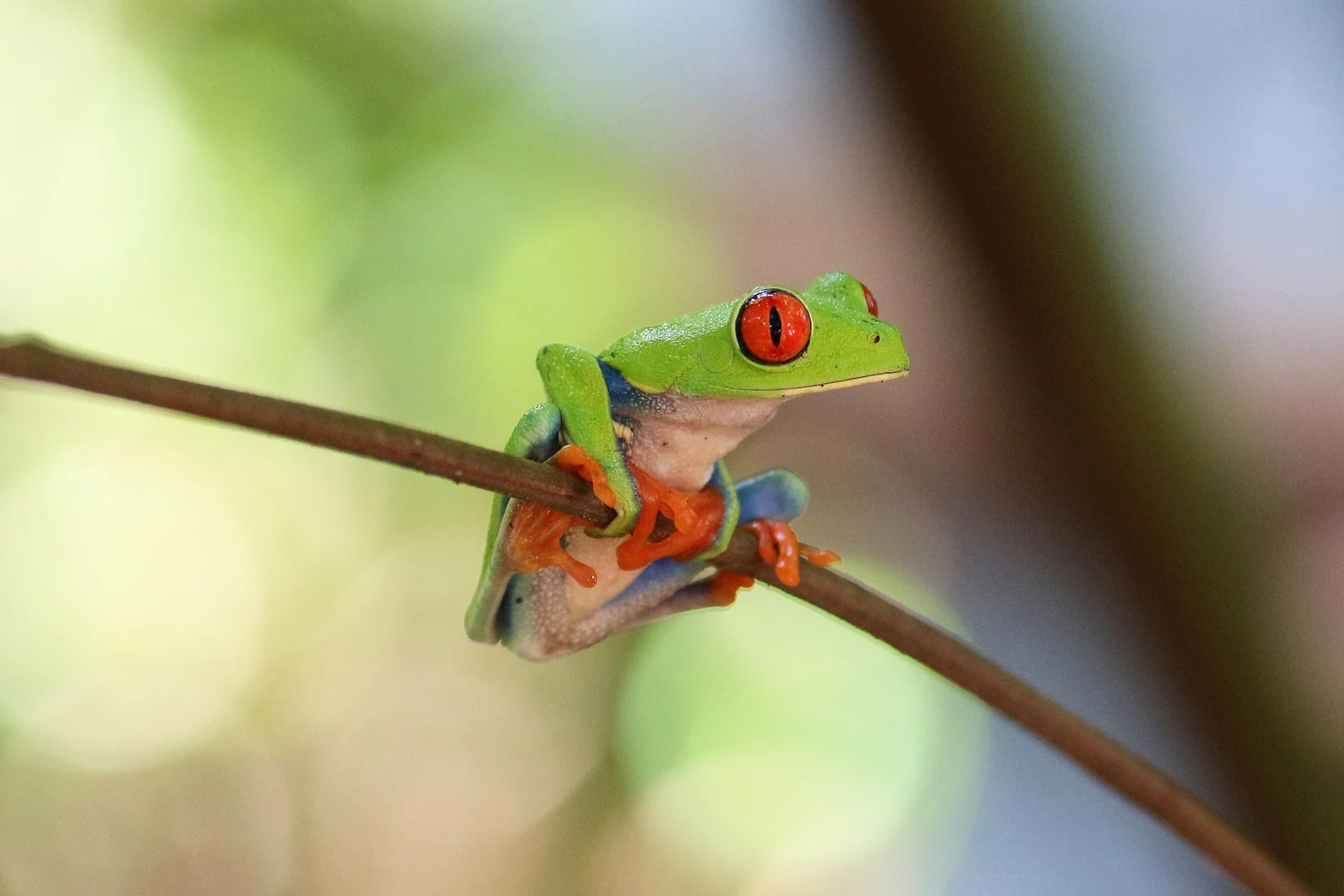
- Frogs: red-eyed tree frogs come out at night; tiny, bright poison dart frogs are easier to spot by day in lowland rainforest, especially on the Caribbean slope.
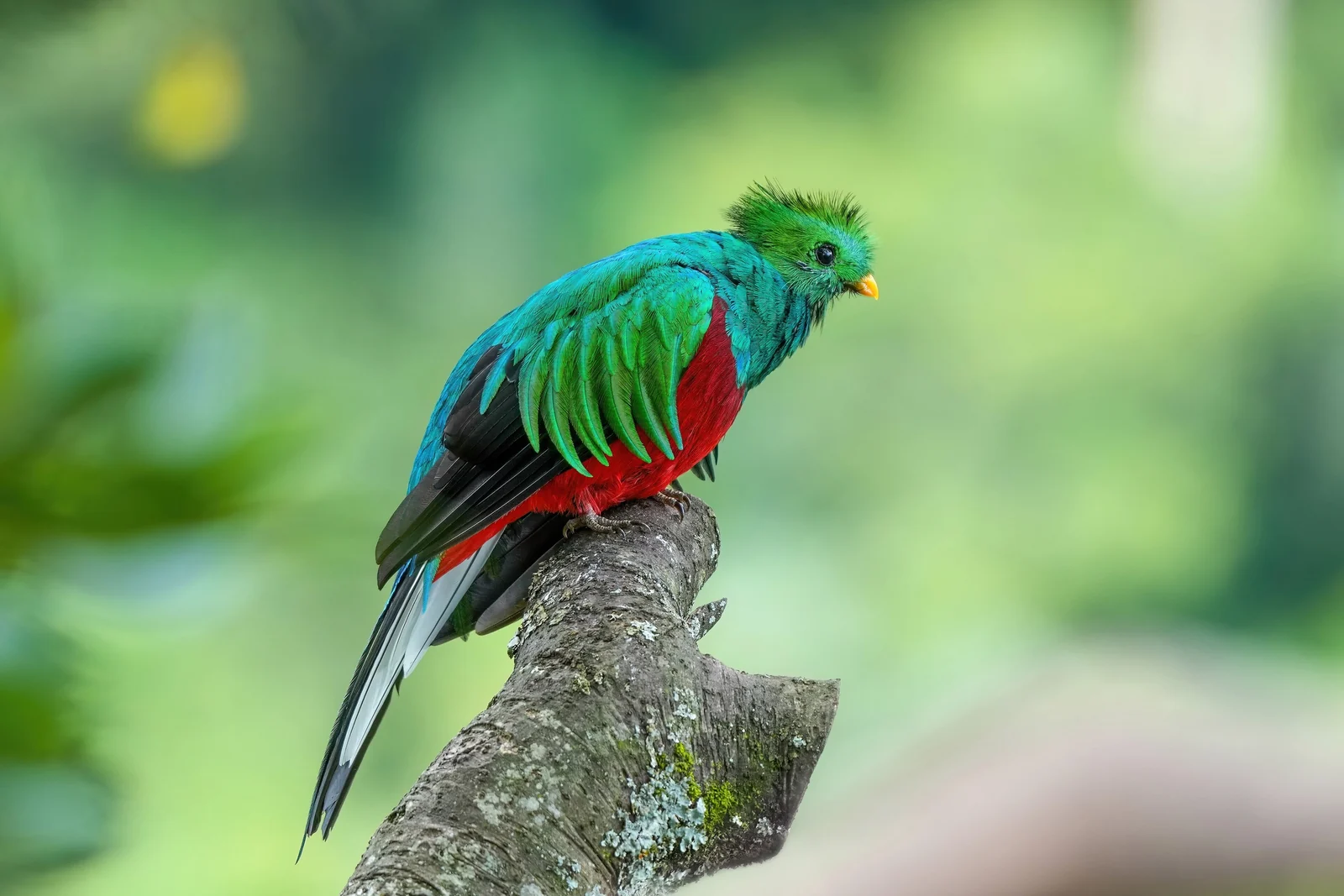
Here is the honest truth: on your own you will walk past most of it. Certified naturalist guides know which tree the sloth slept in yesterday and carry a spotting scope that turns a green smudge into a frame-filling quetzal. A guided walk in your first park teaches you how to look for the rest of the trip.
Go early, walk slowly, look up, and never feed animals. If rainforest wildlife hooks you, our piece on lost cities in the Amazon rainforest shows another side of tropical forest travel.
Best Time to Visit Costa Rica by Region
Costa Rica has two seasons: the dry season, roughly December to April, and the rainy or "green" season, roughly May to November. The catch is that the pattern changes by coast, so the right month depends on where you are going.
- Guanacaste and the North Pacific: the driest region, with long sunny spells from December to April. The landscape turns brown late in the dry season.
- Central and South Pacific (Manuel Antonio, Osa): dry season is easiest; September and October are the wettest months, and some Osa lodges close for part of that stretch.
- Arenal and Monteverde: rain is possible all year, and Monteverde is misty by nature. Bring a rain jacket whenever you go.
- Caribbean coast: its own pattern. Rain can fall in any month, but September and October are often among the drier, calmer months here, just when the Pacific is wettest.
The green season is underrated: mornings are often clear, rain tends to arrive in the afternoon, and prices and crowds drop. Christmas, New Year and Easter are the busiest weeks, so book early for those.
Getting to Costa Rica and Getting Around
San José and Liberia Airports
Most international flights land at Juan Santamaría International Airport (SJO), which is actually in Alajuela, a short drive west of San José. It is the better gateway for Arenal, the Caribbean, Manuel Antonio and Osa. Daniel Oduber Quirós International Airport (LIR) in Liberia serves Guanacaste and is handy for beach trips and Rincón de la Vieja. Flying into one and out of the other saves backtracking.
Rental Car and 4x4 Notes
A car gives you the most freedom. Keep these points in mind:
- Mandatory liability insurance is added at the counter, so the price you saw online is rarely the final price. Read the terms before you book.
- A 4x4 or high-clearance SUV is worth it for Osa, parts of the Nicoya Peninsula and many lodge driveways. For the main loop on paved roads, a regular car can manage in the dry season.
- Distances look short on a map but take long: mountain roads, trucks and one-lane bridges slow everything. Waze is widely used.
- Avoid driving after dark, never leave bags visible in a parked car, and do not try to cross rivers without local advice.
Shuttles, Buses and Domestic Flights
Shared tourist shuttles link the main stops door to door. Between La Fortuna and Monteverde, the jeep-boat-jeep transfer across Lake Arenal beats the long road around. Public buses are cheap but slow, and small domestic planes reach Tortuguero, Drake Bay, Puerto Jiménez and Quepos.
A 10 to 14 Day Costa Rica Itinerary
The first ten days cover the classic loop; add one wilder region with two weeks. Driving times are approximate.
| Days | Base | Highlights | Getting there |
|---|---|---|---|
| 1 | Alajuela or San José | Arrive, rest, try your first casado | Short transfer from SJO |
| 2–4 | La Fortuna | Arenal trails, hanging bridges, the waterfall, hot springs | About 3 hours by road |
| 5–6 | Monteverde | Cloud forest reserve, zipline, night walk | Jeep-boat-jeep or about 3 to 4 hours by road |
| 7–9 | Manuel Antonio | Guided park walk, beaches, a lazy day | About 4 hours by road |
| 10 | Alajuela | Final night near the airport | About 3 hours by road |
| 11–14 (option A) | Osa Peninsula | Guided Corcovado day or overnight, Drake Bay | Road south from Manuel Antonio, or a domestic flight |
| 11–14 (option B) | Puerto Viejo or Tortuguero | Cahuita, Caribbean food, turtle season tours | Long drive or shuttle east; Tortuguero by boat or plane |
| 11–14 (option C) | Guanacaste | Rincón de la Vieja, beach days, fly out of Liberia | Head northwest from Monteverde instead of south |
Avoid changing base every night; two or three nights per stop leaves room for rain, wildlife and lazy afternoons. Combining with Mexico? Our Mexico City travel guide makes a good city contrast.
Pura Vida, Food and Practical Tips
You will hear pura vida constantly. Literally "pure life," it works as hello, goodbye, thanks and no worries. Ticos, as Costa Ricans call themselves, are friendly, and basic Spanish goes a long way.
What to Eat
Breakfast is gallo pinto, rice and black beans fried together with onion, peppers, cilantro and a splash of Salsa Lizano, usually with eggs, plantains and fresh cheese. At lunch, order a casado at a local soda, the small family-run diners found in every town: rice, beans, salad, plantain and a choice of chicken, fish or meat on one plate. It is filling, fair value and the best way to eat like a local. On the Caribbean side, look for rice and beans cooked in coconut milk and the spicy coconut stew called rondón.
Park Tickets and SINAC Bookings
National parks are run by SINAC, the national system of conservation areas. Several of the busiest parks, including Manuel Antonio, sell timed entry through SINAC's online booking system, and some no longer sell tickets at the gate. Fees are charged in US dollars for foreign visitors; check current prices and opening days there before you go. Private reserves, such as those in Monteverde, sell their own tickets. The official Visit Costa Rica site covers entry requirements and regional information.
Money and Packing
The currency is the colón, but US dollars are widely accepted in tourist areas and cards work almost everywhere. Pack a rain jacket, quick-dry clothes, sturdy shoes, insect repellent, reef-safe sunscreen, a warm layer for Monteverde and binoculars.
Heading on to South America after this? See our guide to Machu Picchu, or compare Arenal with the volcano lakes of Indonesia. Colombia is another easy addition, and our Cartagena travel guide covers the walled city, Getsemaní and the islands offshore.
Costa Rica Travel FAQ
How many days do you need in Costa Rica?
Ten days covers a classic first trip: Arenal and La Fortuna, Monteverde and Manuel Antonio, with two or three nights in each. Two weeks lets you add a fourth region such as the Osa Peninsula, the Caribbean coast, Tortuguero or the beaches of Guanacaste without rushing.
What is the best month to visit Costa Rica?
For most of the country, the dry season from December to April brings the most sunshine, with the biggest crowds. The Caribbean side often has calmer weather in September and October. The green season from May to November means afternoon rain, lusher forest and lower prices.
Do you need a 4x4 in Costa Rica?
Not for the main Arenal, Monteverde and Manuel Antonio loop on paved roads in the dry season. A 4x4 or high-clearance SUV is worth it for the Osa Peninsula, parts of the Nicoya Peninsula, many rural lodges and the rainy season, when unpaved roads turn muddy.
Do you need a guide for Corcovado National Park?
Yes. Visitors to Corcovado must be accompanied by a certified guide, and trips are arranged through authorized operators, usually from Drake Bay or Puerto Jiménez. Overnight stays at the ranger station have limited space, so book well in advance, especially in the dry season.
When can you see turtles nesting in Tortuguero?
Green turtles nest in Tortuguero mainly from about July to October, which is the best time for a night tour. Leatherback turtles nest in smaller numbers from roughly March to May. Beach visits at night are allowed only with a licensed guide, and lights and flash photography are not permitted.
Do you have to book Costa Rica national parks in advance?
For the busiest parks, yes. Manuel Antonio and several others sell timed tickets online through SINAC, often with daily limits, and some no longer sell at the gate. Book a few days ahead in the dry season, and check current opening days before you go.
Which airport should I fly into, San José or Liberia?
Fly into San José (SJO) for Arenal, Manuel Antonio, the Caribbean coast and the Osa Peninsula. Liberia (LIR) is closer to the Guanacaste beaches and Rincón de la Vieja. Many travelers arrive in one and leave from the other to avoid backtracking.