


Cartagena de Indias is Colombia's great Caribbean port, a city founded by the Spanish in 1533 and later wrapped in some of the most complete colonial fortifications in the Americas. Inside the walls you get bougainvillea-draped balconies, church domes and small plazas; outside them, a huge stone fortress, a hilltop convent, high-rise beaches and a scatter of coral islands an hour away by boat.
Three or four days is the sweet spot: two for the old town and Getsemaní, one on the water, and one for the fortress, La Popa or a day trip to Palenque. This Cartagena travel guide covers what to see, what to eat, how to handle the heat and the hustlers, and how the city fits into a longer trip. For more of the country, browse our Colombia travel guides.
The Walled City: Cartagena's UNESCO Old Town
The Ciudad Amurallada was listed by UNESCO in 1984 as part of the "Port, Fortresses and Group of Monuments, Cartagena" site. Roughly 11 kilometers of walls once enclosed the city, built over two centuries after pirate raids, including Francis Drake's sack of 1586. Today the old town is compact enough to cross on foot in 15 minutes, yet you can lose a whole day in it without trying.
Walk early, before about 10 a.m., when the light is soft, retreat indoors at midday and come back out when the heat breaks in the late afternoon.
The Clock Tower and Plaza de los Coches
Most visitors enter through the Puerta del Reloj, the main gate, topped by the yellow clock tower that local architect Luis Felipe Jaspe added in 1888. Behind it lies the triangular Plaza de los Coches, once the site of the slave market and now lined with arcades selling cocadas and other sweets. A few steps on, Plaza de la Aduana and Plaza de San Pedro Claver lead to the church dedicated to the Jesuit who ministered to enslaved Africans arriving in the port.
Plaza de Santo Domingo and Plaza de Bolívar
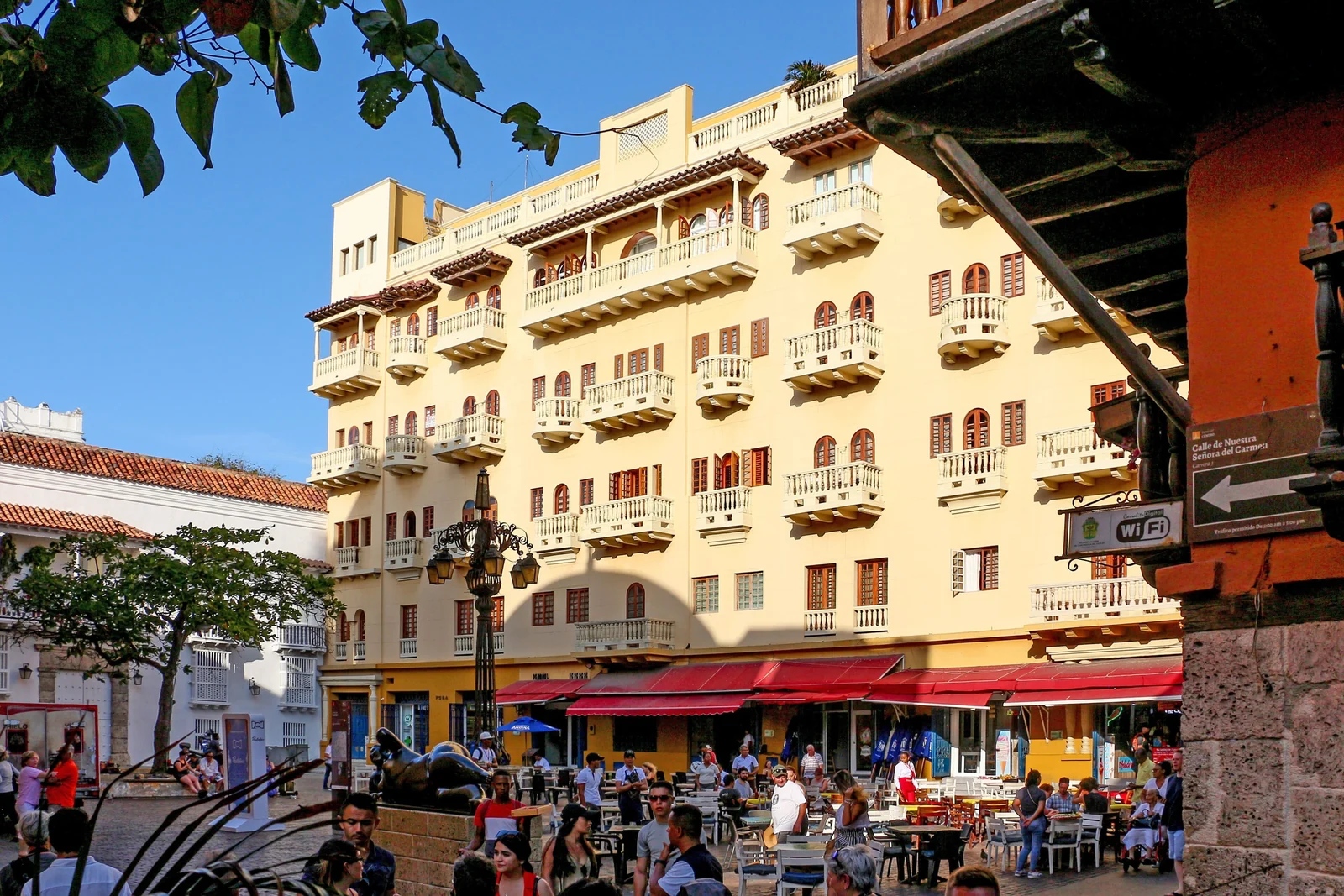
Plaza de Santo Domingo is the old town's outdoor dining room, with café tables spilling across the stones in front of one of the city's oldest churches. Fernando Botero's reclining bronze Gertrudis lies in the square, her shine worn down by tourists posing with her. It is lively at night and pricey for what you get, so have a drink here and eat elsewhere.
Shady Plaza de Bolívar is the calmer heart of the old town, framed by the cathedral, the Palace of the Inquisition (now a colonial history museum) and the free Gold Museum. A bench under the trees is the best seat for watching the city go by.
The Walls at Sunset
Climb onto the ramparts on the western side, facing the sea, about an hour before sunset. The broad top of the wall works as a promenade, and the bastions near Santo Domingo are the classic spot, with a well-known open-air bar on the walls if you want a cocktail with the view. Walk north afterward toward Las Bóvedas, a row of old vaults built into the wall that now house craft shops, and the quieter San Diego quarter.
Getsemaní: Street Art, Plazas and Evenings Out
Just outside the walls, across from the Centro de Convenciones, Getsemaní was the working-class neighborhood of artisans and freed slaves. It is still more lived-in than the old town, though hostels, rooftop bars and boutique stays have moved in fast. Its streets are covered in murals, and several alleys are strung with umbrellas, flags or paper decorations overhead.
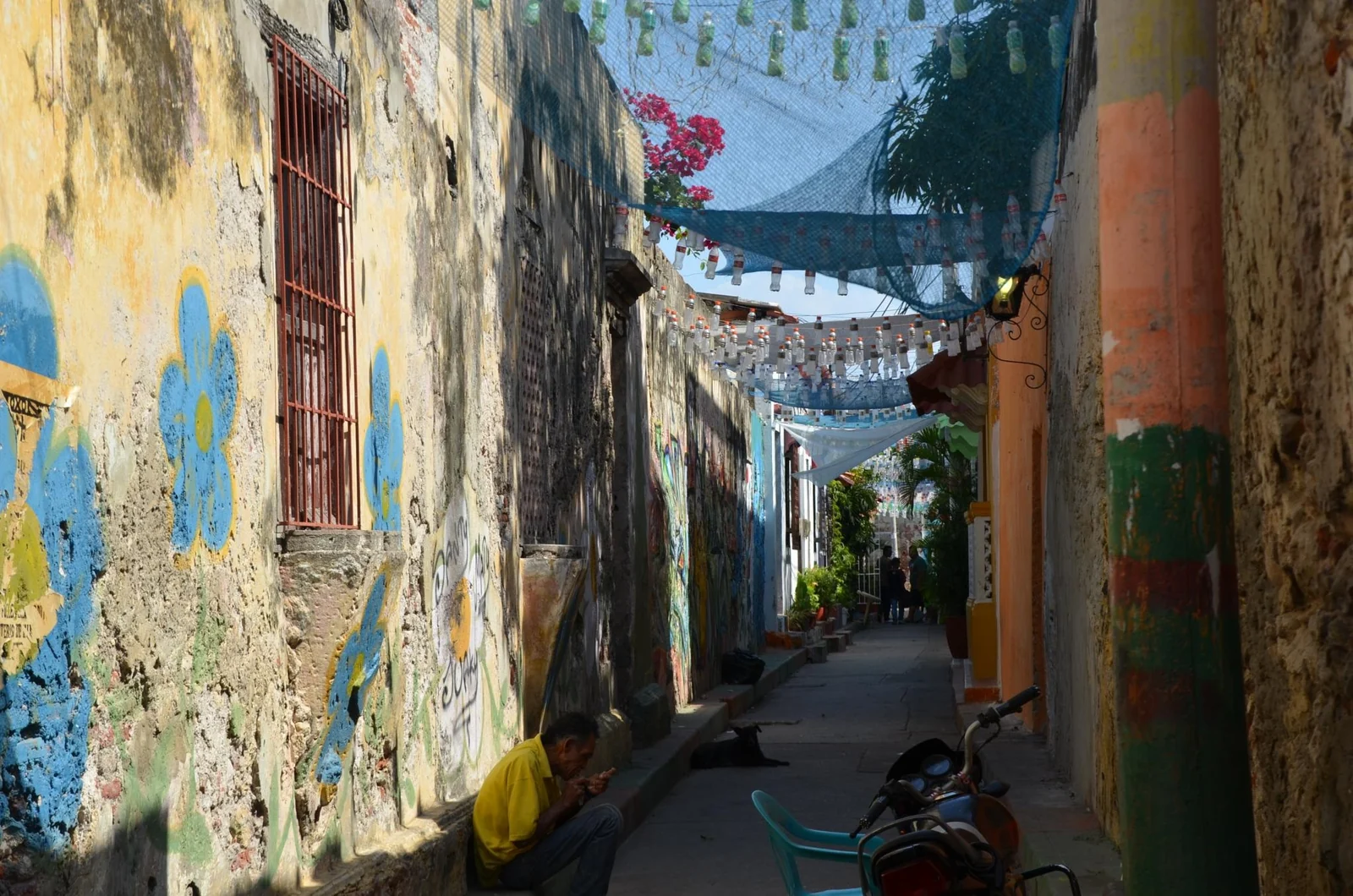
Wander in the morning for photos, when the alleys are empty, then return after dark for Plaza de la Trinidad, where families, street performers, backpackers and food carts selling arepas, skewers and juice fill the square in front of the church. It is the most local-feeling night out in the center, and the cheapest.
Beyond the Walls: Castillo San Felipe, La Popa and Bocagrande
Castillo San Felipe de Barajas
A 15-minute walk east of Getsemaní, the Castillo San Felipe de Barajas sits on San Lázaro hill and is the largest Spanish fortress in the Americas. Work began in 1536 and the fort was enlarged in 1657 and again in the 18th century, when its ramps, batteries and listening tunnels took their present shape. It held during the 1741 siege by the British admiral Edward Vernon, defended by Blas de Lezo, whose statue stands at the entrance.
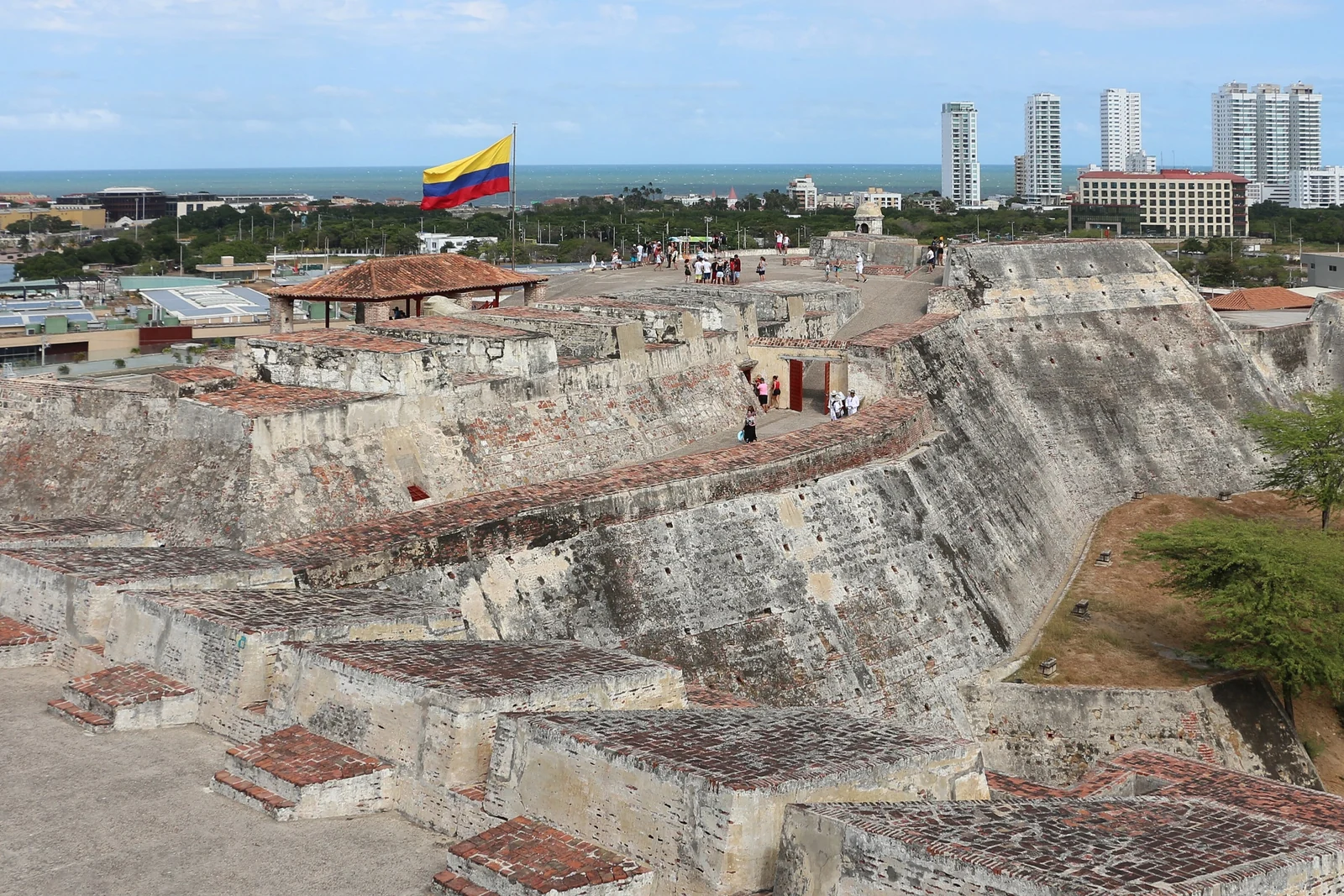
Go when it opens in the morning: there is almost no shade, and by noon the stone radiates heat. Allow about two hours, bring water and a hat, and duck into the cooler tunnels. A licensed guide at the gate brings the military history to life.
Convento de La Popa
The hill of La Popa rises about 150 meters behind the fortress, and on top stands the Convento de Santa Cruz de La Popa, founded by Augustinian friars in the early 1600s. The cloister is pretty, but the reason to come is the view over the whole city, the bay and the islands. Take a taxi up and back; walking the road is not recommended.
Bocagrande
Bocagrande is the thin peninsula of apartment towers, hotels and malls south of the old town. Its beaches are handy for a swim, but the sand is dark and the water is not the turquoise of the photos. Many travelers stay here for bigger rooms and sea views.
Rosario Islands and Barú by Boat
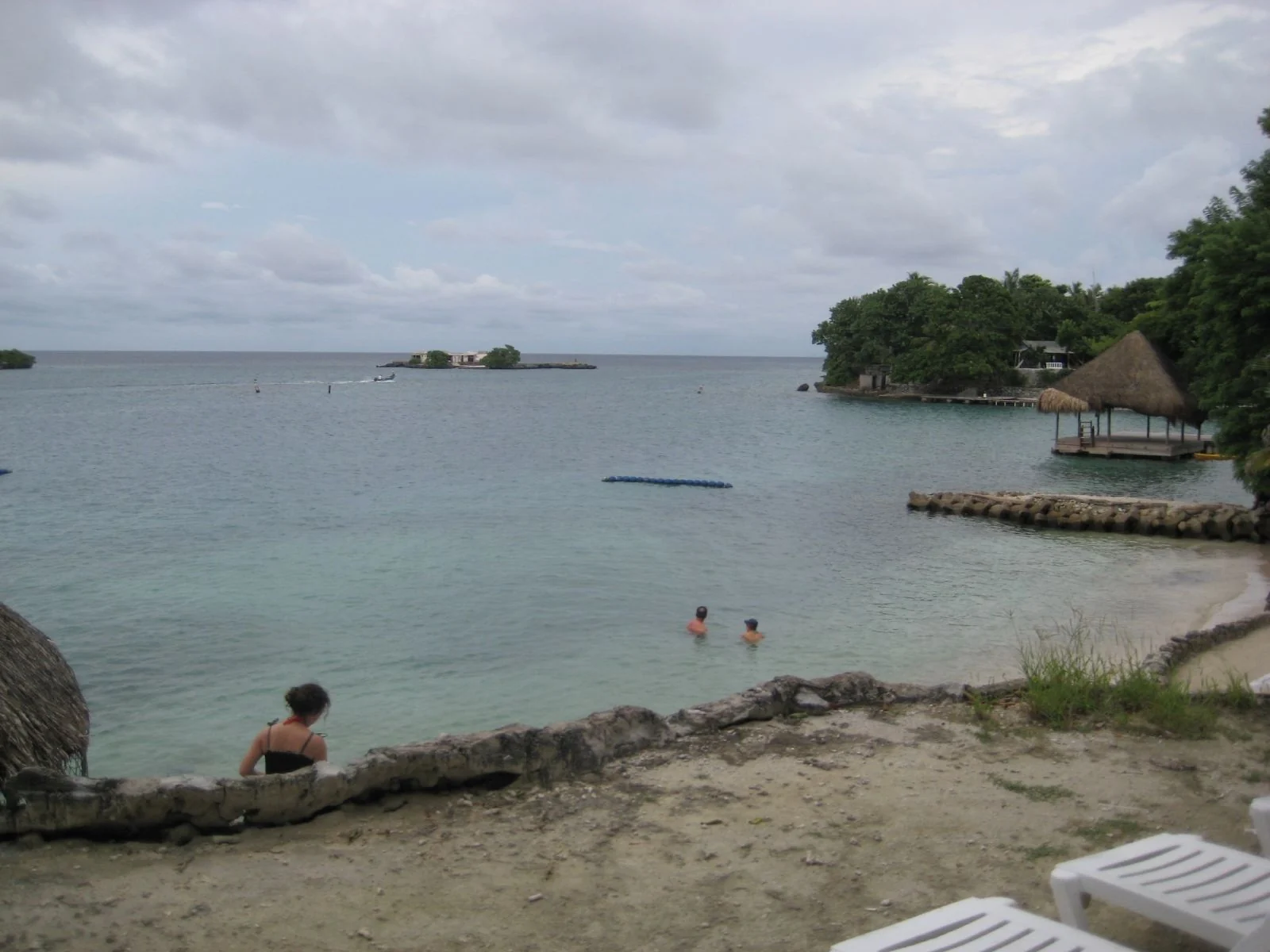
The clear water is offshore. The Rosario Islands are small coral islands about 45 kilometers southwest of the city, inside the Corales del Rosario y de San Bernardo National Natural Park. Speedboats leave in the morning from the Muelle Turístico de La Bodeguita, near the Clock Tower, and take roughly an hour.
Day tours usually combine a swim near the islands, lunch at a beach club and a stop at Playa Blanca on the Barú peninsula, which is also reachable by road over the Canal del Dique bridge. Playa Blanca has the white sand and blue water people come for, and it gets packed with day boats and vendors from late morning. Stay overnight in a simple cabaña and you get it nearly to yourself at sunrise.
| Trip | How to get there | Approx. travel time | Best for |
|---|---|---|---|
| Rosario Islands | Speedboat from La Bodeguita pier | About 1 hour | Snorkeling, quiet beach clubs, clear water |
| Playa Blanca (Barú) | Boat tour or road via the Barú bridge | About 1 hour | White sand, an overnight in a cabaña |
| Tierra Bomba | Short boat ride from Bocagrande or the old town | 15 to 20 minutes | A quick beach escape close to the city |
| Palenque de San Basilio | Organized tour or private driver | About 1.5 hours | Afro-Colombian history, music and language |
Expect a port tax and a national park fee on top of the tour price; ask whether both are included before you pay. Cheap "party boat" tours squeeze in many stops with little time at each, so if snorkeling or a quiet beach matters, pay more for a smaller boat or a single destination. Check park rules on the Parques Nacionales Naturales de Colombia site.
A Day Trip to Palenque de San Basilio
About 50 kilometers inland, San Basilio de Palenque was founded in the 17th century by maroons, enslaved Africans who escaped and built a free settlement, a resistance led by Benkos Biohó. It is often described as the first free town in the Americas. UNESCO recognized the cultural space of Palenque de San Basilio as intangible heritage in 2005, and residents still speak Palenquero, a Spanish-based creole with African roots.
Go with a community guide or a tour that works with residents. A typical day covers the town's history, music and dance, traditional medicine and lunch in a family home. Many of the palenqueras in Cartagena, the women in bright dresses carrying fruit bowls on their heads, come from here. Ask before you photograph them, and expect to tip.
What to Eat in Cartagena
Cartagena's food is Caribbean: seafood, coconut, plantain and fruit, and some of the best bites come from a street cart.
- Arepa de huevo: a corn arepa fried, split, filled with an egg (often with ground beef too), then fried again. Best eaten hot from a street stand.
- Ceviche: the Cartagena version is closer to a shrimp cocktail, served in a cup with a tangy pink sauce, lime and crackers. Buy from busy stands.
- Fried fish with coconut rice: whole fried fish with patacones (fried green plantain) and arroz con coco is the classic beach lunch.
- Fresh juices: lulo, corozo, maracuyá, níspero or tamarind, blended "en agua" or "en leche".
- Sweets: cocadas and tamarind balls from the stalls in Plaza de los Coches.
Prices drop as you move from Santo Domingo toward Getsemaní and the streets outside the walls. If you like street-food cities, our Mexico City travel guide is a natural next read.
Heat, Weather and the Best Time to Visit Cartagena
Cartagena is hot and humid all year, with daytime highs around 30 to 32°C (86 to 90°F) in every month. Plan sightseeing for the early morning and late afternoon, take a long lunch and a siesta, and choose a room with air-conditioning. Light, loose clothes, a hat and a refillable bottle matter more here than any guidebook.
- December to April: the dry season and the most popular time, with sea breezes that make the heat easier. Christmas, New Year and Easter bring the highest prices and the biggest crowds.
- May to August: hotter and stickier, with some afternoon showers and fewer tourists, except during the mid-year Colombian holidays.
- September to November: the wettest months, with heavy downpours that can flood streets briefly. Good hotel deals, but boat trips are more often rough or canceled.
Getting Around, Safety and Common Hustles
Arriving and Getting Around
Rafael Núñez International Airport sits in the Crespo district, a short taxi ride from the old town. Use the official taxi line, where you'll be given the fare before you get in. Taxis in Cartagena don't use meters, so agree on a price for every ride before you go anywhere; ride-hailing apps also operate.
Inside the walls and in Getsemaní you'll walk everywhere. Taxis are easiest for San Felipe, La Popa and Bocagrande, and the Transcaribe bus system links the center with the rest of the city.
Staying Safe and Avoiding Scams
The tourist areas are heavily policed and most visits are trouble-free, but petty theft and overcharging are common. Keep your phone out of reach, carry a passport copy and avoid empty streets and beaches late at night. Check your own government's travel advice before you go.
- The "free" massage: on Playa Blanca and Bocagrande, someone starts rubbing your shoulders, then demands a large sum. Say no firmly and early.
- Seafood and beach-chair prices: confirm the price of lobster, fish platters and loungers before anything is served or set up.
- Photo tips: palenqueras and costumed performers expect payment for pictures. Agree the amount first.
- Hawkers and drugs: a polite "no, gracias" and walking on works best. Buying drugs is illegal and can lead to setups.
- Tour touts: book island trips through your hotel or a registered agency, and get what is included in writing.
Where to Stay
Stay inside the walls (Centro or San Diego) for atmosphere, at the highest prices. Getsemaní has the best range of hostels and guesthouses and the liveliest nights. Bocagrande suits families and anyone who wants a pool and sea views.
Fitting Cartagena Into a Wider Colombia Trip
Cartagena works well as the warm, slow end of a Colombia itinerary. Domestic flights are frequent, so most people skip the long road journeys.
- Medellín: about an hour's flight. A spring-like mountain climate, cable cars over the hillside neighborhoods, Comuna 13's murals and a day trip to Guatapé.
- The coffee region: fly to Pereira or Armenia, then base yourself in Salento for farm tours and the Cocora Valley, home of the towering wax palm, Colombia's national tree.
- Santa Marta and Tayrona: around four to five hours by road along the coast. Tayrona National Park has jungle trails and wild beaches, and it closes for a few weeks at set times of the year, so check before you plan around it.
Two weeks covers Cartagena and two of these comfortably. Building a longer trip? Browse our South America guides, pair Colombia with Machu Picchu, or see the official Colombia Travel site for regional ideas. For rainforest, volcanoes and wildlife in Central America, see our Costa Rica travel guide.
Cartagena Travel FAQ
How many days do you need in Cartagena?
Three to four days is ideal. Spend two exploring the walled city and Getsemaní at a slow pace, one on a boat trip to the Rosario Islands or Playa Blanca, and one for Castillo San Felipe, La Popa or a day trip to Palenque de San Basilio.
Is Cartagena safe for tourists?
The old town, Getsemaní and Bocagrande are heavily policed and generally safe, but pickpocketing, overcharging and beach hustles are common. Keep valuables out of sight, agree taxi and seafood prices in advance, avoid empty areas late at night and check your government's travel advice.
What is the best time of year to visit Cartagena?
December to April is the dry season, with steady breezes and the most reliable weather, though holidays bring crowds and higher prices. September to November is the wettest stretch. It is hot year-round, with highs around 30 to 32°C, so plan outdoor sightseeing for mornings and late afternoons.
Can you swim at the beaches in Cartagena?
Yes, Bocagrande and the city beaches are swimmable, but the sand is darker and the water less clear. For white sand and turquoise water, take a boat to the Rosario Islands or go to Playa Blanca on the Barú peninsula, about an hour away.
How do you get to the Rosario Islands from Cartagena?
Speedboats leave in the morning from the Muelle Turístico de La Bodeguita near the Clock Tower and take about an hour. Most people join a day tour that includes lunch and Playa Blanca. Ask whether the port tax and national park fee are included.
Is Palenque de San Basilio worth a day trip?
Yes, if you are interested in history and culture. Founded by escaped enslaved Africans, it is often called the first free town in the Americas, and residents still speak the Palenquero language. Visit with a local guide for music, food and history, about an hour and a half each way.