Valencia is Spain's third-largest city, a Mediterranean port founded by the Romans in 138 BC, and it manages to pack a medieval Old Town, a futuristic arts complex, a nine-kilometer park and a city beach into one flat, bikeable package. It is also the birthplace of paella, which changes how you think about the dish the moment you eat it in the right place.
Three days is a comfortable length for a first visit, four if you want the Albufera lagoon and a day trip. This Valencia travel guide covers what to see, what to eat, when to go and how to get around. For more of the country, browse our Spain travel guides.
Valencia Old Town and the Central Market
The Old Town (Ciutat Vella) is compact enough to cross on foot in half an hour, and the best way to see it is without a plan. Lanes open onto small squares, shuttered doorways hide courtyards, and every few blocks a Gothic tower or Baroque facade interrupts the grid.
Mercado Central
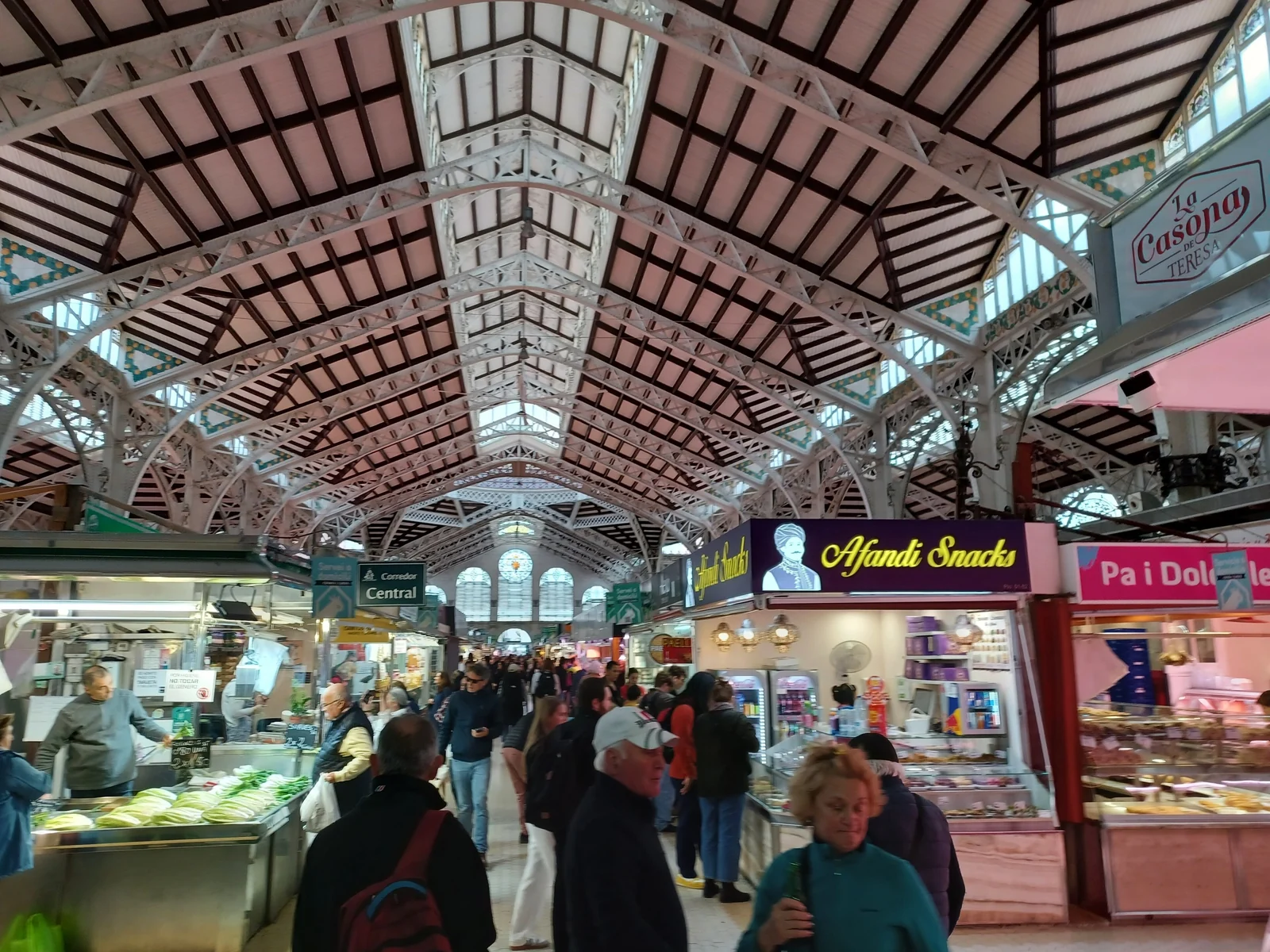
Valencia's Central Market is one of the largest fresh-food markets in Europe, covering more than 8,000 square meters under a dome of iron, glass and ceramic. Construction began in 1914 and finished in 1928, and the Valencian Art Nouveau style is easy to spot in its tiled roofline and metalwork.
Go in the morning, when the fishmongers, ham counters and fruit stalls are at full volume. Buy a bag of oranges, a few slices of cured ham or a cone of nuts and eat as you wander. Opening hours vary by day, so check the official Visit Valencia site before you plan around it.
La Lonja de la Seda
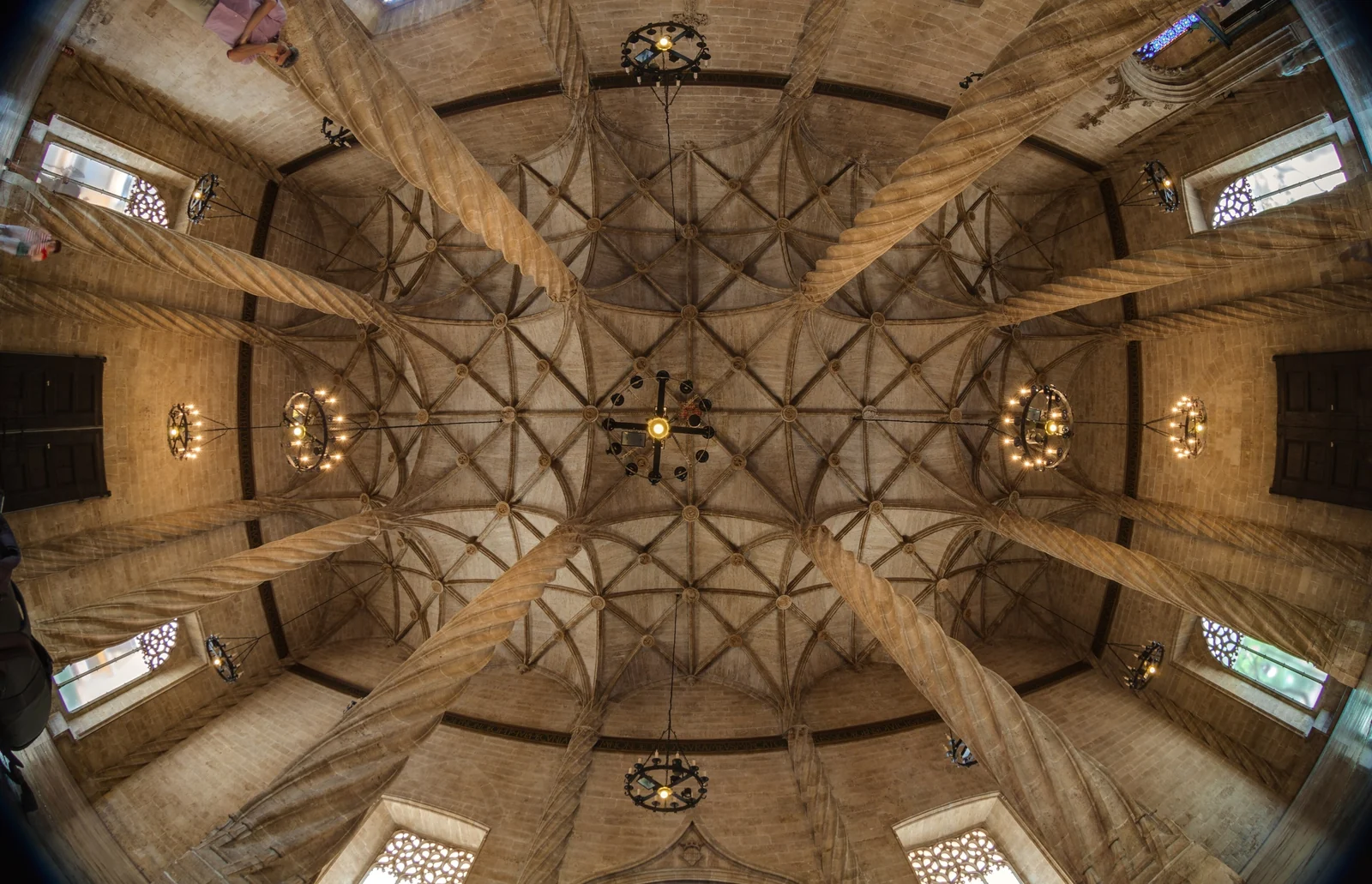
Directly opposite the market stands the Lonja de la Seda, the old silk exchange, built between 1482 and 1533 and listed by UNESCO in 1996 as a masterpiece of late Gothic architecture. The star is the Columns Hall, where slender twisted pillars fan out into a vaulted ceiling like palm trees. It is a short visit, 20 minutes is plenty, and one of the most graceful interiors in Spain.
The Cathedral and the Miguelete
Valencia Cathedral holds a cup carved from agate that is venerated as the Holy Grail, and Pope Benedict XVI used it at a Mass here in 2006. The bell tower beside it, the Miguelete, has 207 steps in a tight spiral. They are steep, but the payoff is a 360-degree view over terracotta roofs, the Turia gardens and the sea. A separate ticket is required for the tower, so check current prices on the cathedral's official page.
The Old Gates: Serranos and Quart
Two medieval gateways survive from the city walls, the Torres de Serranos and the Torres de Quart. Serranos faces the old riverbed and gives a good view of the Old Town from the top. Quart, on the western side, still carries pockmarks from cannon fire. Both are quick stops on a walking loop.
City of Arts and Sciences
At the eastern end of the old riverbed, the City of Arts and Sciences looks like a film set built from white bone and glass. Most of it was designed by Santiago Calatrava, who grew up in the region, and it was built over a little more than a decade starting in the late 1990s.
| Building | Opened | What it is |
|---|---|---|
| L'Hemisfèric | 1998 | Eye-shaped planetarium and IMAX cinema |
| Museu de les Ciències Príncipe Felipe | 2000 | Hands-on science museum |
| L'Umbracle | 2001 | Landscaped walkway and garden terrace |
| L'Oceanogràfic | 2003 | Aquarium designed by Félix Candela |
| Palau de les Arts Reina Sofía | 2005 | Opera house and performing arts center |
| L'Àgora | 2009 | Covered event space |
Walking through the complex is free, and the white forms mirrored in the shallow pools are best around sunset and again after dark, when they are lit. Tickets are needed only for the interiors. Most visitors choose between the Oceanogràfic, which is often described as the largest aquarium in Europe with more than 500 species, and the science museum, which suits families with older children.
Plan half a day, and bring a hat in summer, as there is little shade on the plazas. The area is easy to reach by bike along the riverbed or by bus from the center.
The Turia Gardens: A River Turned Into a Park
After a devastating flood in October 1957, the Turia River was diverted south of the city. Rather than pave the empty riverbed, residents campaigned to turn it into a park, and the result is the Jardí del Túria, a green ribbon of more than nine kilometers that curls around the Old Town from the Parque de Cabecera in the west to the City of Arts and Sciences in the east.
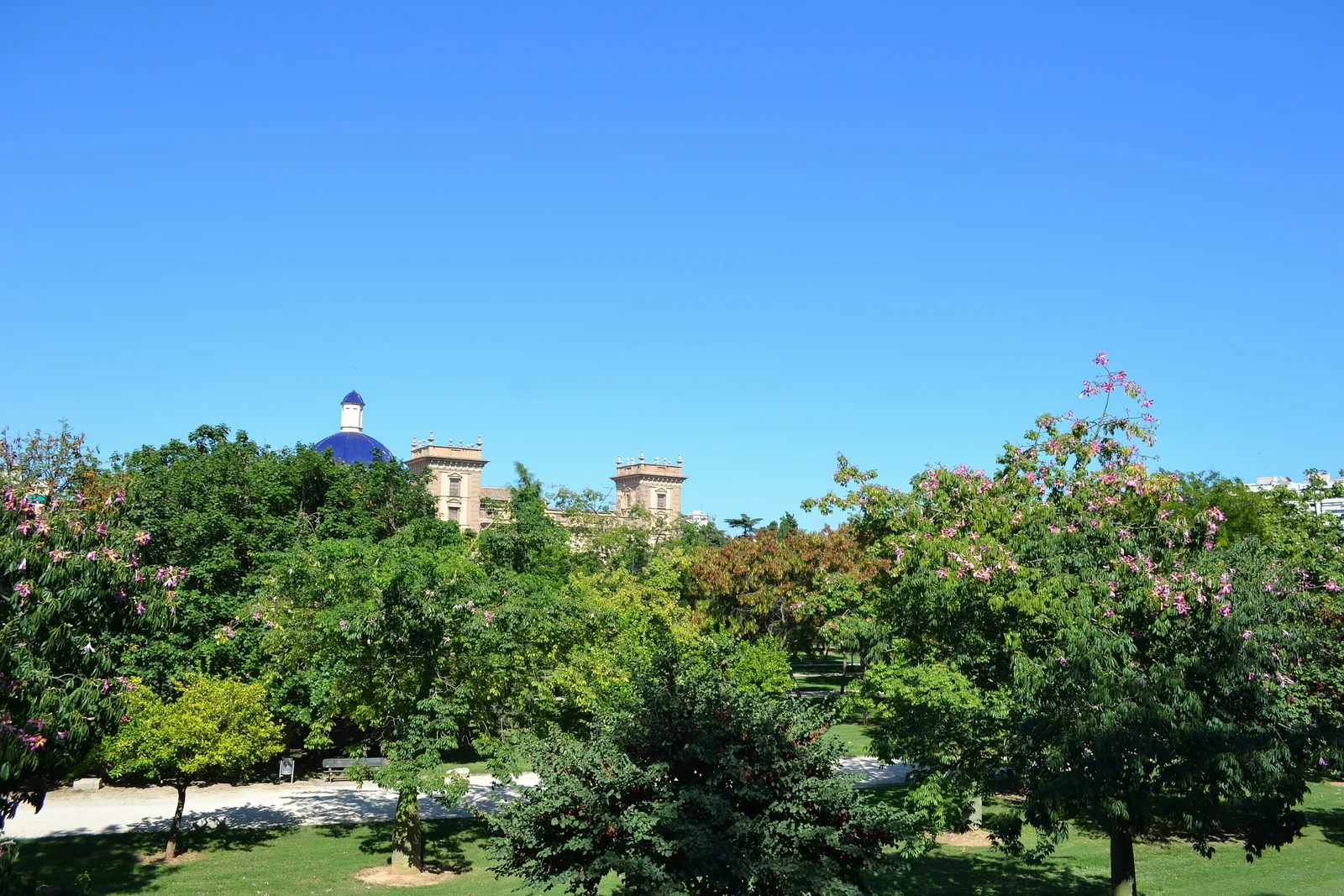
Eighteen bridges cross it, from the Gothic Trinity Bridge to Calatrava's Assut d'Or. Along the way you pass the Serranos Towers, the Fine Arts Museum, the glass Palau de la Música and Gulliver, a giant figure that children climb and slide down. The Bioparc, which recreates an African savanna, sits at the western end.
The easiest way to see it is by bicycle: the path is flat and car-free for most of the way. Rent one for a morning and ride from the Bioparc to the City of Arts and Sciences, stopping when something catches your eye.
Valencia Beaches: Malvarrosa and Beyond
Valencia's city beach, Malvarrosa, is wide, sandy and backed by a long promenade of restaurants. It fills up on summer weekends, but there is room to spread out. The former fishing quarter of El Cabanyal sits just behind it, and its tiled facades and low-rise streets give you a calmer way to get to the sand than going straight from the tram.
For a wilder stretch, head south to the beaches at El Saler, backed by dunes and pine forest inside the Albufera natural park, which has about 17 kilometers of coastline in total. Here the sea is the main attraction, and the paella restaurants stay a short walk inland.
Swimming is comfortable from late spring through early autumn. Outside those months the beaches are better for walks and long lunches than for a dip.
Paella and Horchata: What to Eat in Valencia
Real Paella Valenciana
Paella took its modern form in the mid-19th century around the Albufera, and Valencians take the definition seriously. The traditional paella valenciana combines rice with rabbit, chicken, green beans, lima beans, tomato, saffron and olive oil, and some cooks add duck or snails. Seafood is not part of the original recipe, which is why a tourist-menu seafood version near a landmark is unlikely to impress locals.
- Eat it at lunch. Paella began as a farmworker's midday meal, and restaurants that serve it well tend to do so between about 1 and 4 p.m.
- Look for the crust. The scorched layer at the bottom of the pan, the socarrat, is the prize.
- Skip the laminated photo menu. The best places cook to order, so expect to wait and order for at least two people.
- Ask about wood. Traditionally paella is cooked over an open wood fire, and restaurants proud of that will say so.
Horchata and Fartons
Valencian horchata is not the rice drink sold elsewhere. It is made from chufa, or tiger nuts, a tuber grown in the farmland north of the city around Alboraya, and it tastes sweet, nutty and cold. Pair it with a fartón, a long, soft, sugar-glazed bun made for dipping. Traditional horchaterías serve both, and the combination makes a fine afternoon break.
Albufera Natural Park and El Palmar
About 10 kilometers south of the center lies the Albufera, a freshwater lagoon and wetland of roughly 21,000 hectares that has been a Ramsar-listed site since the 1990s. Rice has been farmed around it since the 18th century, and the fields still supply the grain for the city's paella.
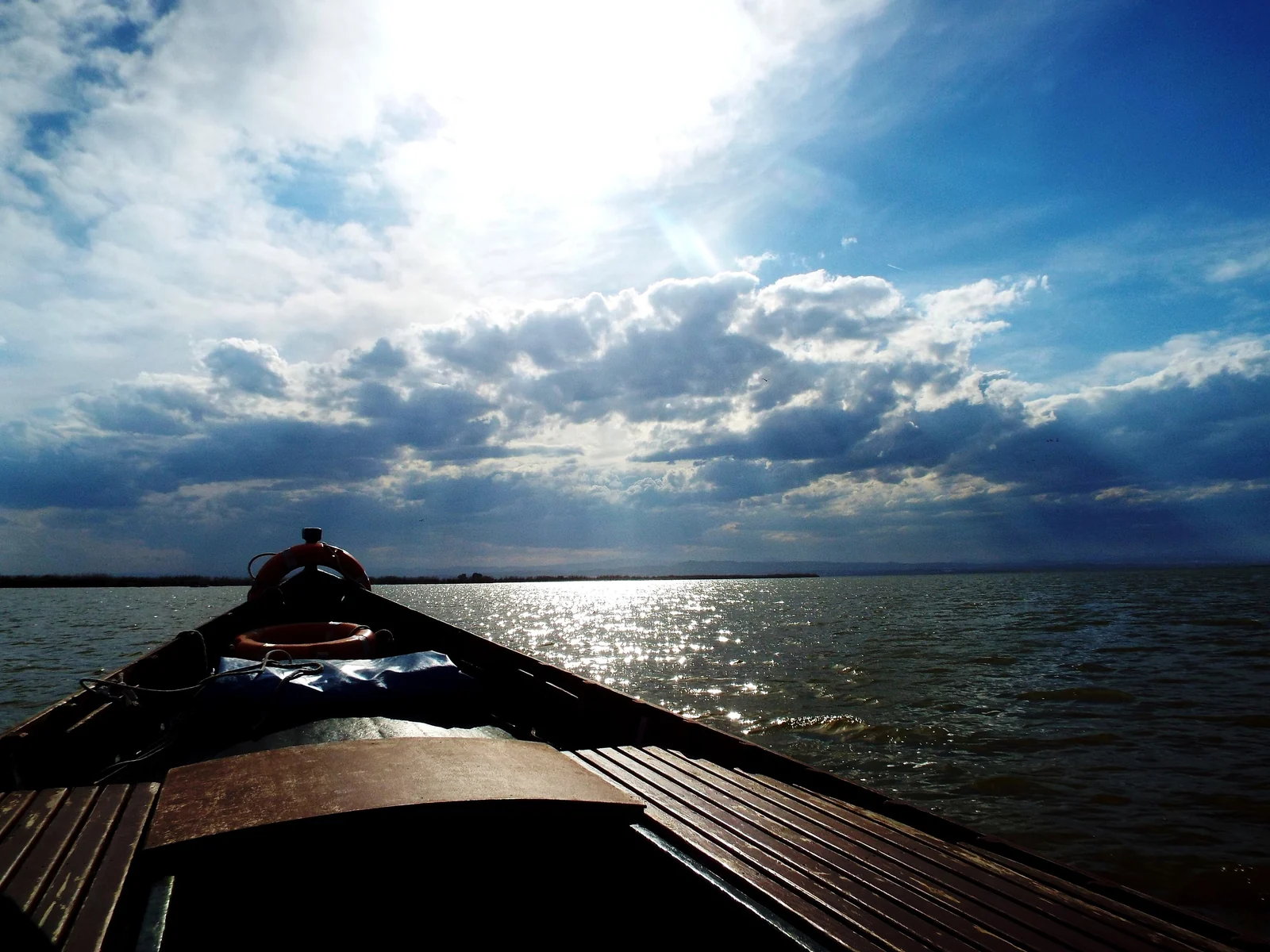
Take EMT bus line 24 from the center to El Palmar, a village of canals and fishing boats at the heart of the park; the official Albufera page lists the current routes. Boat trips on traditional wooden boats leave from the village jetties, and sunset sailings are especially popular. Finish with lunch at one of El Palmar's rice restaurants and try all i pebre, a local eel-and-potato stew.
Best Time to Visit Valencia
Valencia is a year-round city. Winters are among the mildest in Europe, with daytime highs averaging about 17 °C, while July and August typically reach 28 to 32 °C with warm nights.
- April to June: warm, bright and good for walking, cycling and the first beach days.
- July and August: hot and humid. Plan museums and the shade of the Old Town for midday, and the beach for morning and evening.
- September and October: the sea is still warm and the heat has eased, a favorite window for many visitors.
- November to February: mild, quiet and good value, with plenty of sunshine for a European winter.
- Mid-March: Fallas, spectacular but busy.
Fallas in Mid-March
Fallas is the city's defining festival, a mid-March celebration that UNESCO added to its Intangible Cultural Heritage list in 2016. Neighborhood groups spend the year building enormous satirical sculptures, called fallas, filled with painted figures known as ninots.
The main days run from March 15 to 19. Every afternoon at 2 p.m. the mascletà, a thunderous daytime fireworks show of synchronized firecrackers, rocks the Plaça de l'Ajuntament. On the final night, around midnight, the fallas are set on fire in the cremà, and only one figure, chosen by popular vote, is spared.
It is a loud, crowded, joyful week. Hotels fill early and prices rise, so book well in advance, or choose another month if you would rather see the city quietly.
Getting There, Getting Around and Where to Stay
Getting to Valencia
Metrovalencia lines 3 and 5 connect the airport with the center in roughly half an hour; get off at Xàtiva station, which sits beside the main railway station and the Old Town. Trains and high-speed services link the city with Madrid and Barcelona, so Valencia pairs easily with a longer Spanish route through Barcelona or Seville.
Getting Around
Inside the city, you will rarely need more than your feet, a bicycle or a bus. The Old Town is walkable, the Turia path is made for bikes, and the metro, tram and EMT buses cover the beach and the City of Arts and Sciences. Ask at a tourist office about transport passes and the Valencia Tourist Card, which covers selected buses and attractions.
Where to Stay in Valencia
- Ciutat Vella (Old Town): the most atmospheric base, close to the market, Lonja and cathedral. Weekend nights can be noisy.
- El Carmen: the oldest, most characterful corner of the Old Town, with narrow lanes, street art and bars.
- Ruzafa: a lively neighborhood just south of the center, known for cafés, restaurants and nightlife.
- El Cabanyal and Malvarrosa: good if the beach is your priority. It is a short ride from the center.
- Near the City of Arts and Sciences: modern and quiet, but you will travel into the Old Town for evenings.
Day Trips and a 3-Day Itinerary
| Destination | Distance from Valencia | Best for |
|---|---|---|
| Albufera and El Palmar | About 10 km south | Boat trips, rice fields, paella lunch |
| Sagunto | About 30 km north | Roman theater and hilltop castle |
| Xàtiva | About 62 km southwest | Hilltop castle and Borgia history |
Sagunto, the ancient Saguntum, was besieged by Hannibal in 219 BC, an event that helped trigger the Second Punic War. Its partly restored Roman theater and the walls of the castle above it make an easy half-day trip. Xàtiva, home to a large castle on the Bernisa range, was the birthplace of two Borgia popes, Callixtus III and Alexander VI, and is reached by regional train. For a different Spanish city, our Bilbao guide covers the Basque side of the country.
Day 1: The Old Town
Start at the Central Market, step across to the Lonja, then climb the Miguelete for the view. Wander through El Carmen, walk up to the Serranos Towers and end with drinks in a plaza as the light drops.
Day 2: Turia Gardens and the City of Arts and Sciences
Rent a bicycle and follow the Turia path east. Spend the middle of the day at the Oceanogràfic or the science museum, then walk the white plazas at sunset.
Day 3: Albufera and the Beach
Take the bus to El Palmar, book a boat trip and sit down for a long paella lunch. Return via the beach at El Saler or Malvarrosa for a late swim. Exploring more of the continent next? Browse our European destinations.
Valencia Travel FAQ
How many days do you need in Valencia?
Three days cover the Old Town, the City of Arts and Sciences, the Turia gardens and a beach afternoon. Add a fourth for the Albufera lagoon or a day trip to Sagunto or Xàtiva.
What is the best time to visit Valencia?
April to June and September to October offer warm weather without the peak summer heat. Winters are mild and quiet, while mid-March brings the Fallas festival, which is spectacular but crowded and expensive.
Is paella from Valencia made with seafood?
The traditional paella valenciana uses rabbit, chicken, green beans, lima beans, tomato and saffron. Seafood versions exist and are widely served, but locals regard them as a separate dish rather than the original.
How do you get from Valencia airport to the city center?
Take Metrovalencia line 3 or 5 from the airport station. The ride to the center takes roughly half an hour, and you can get off at Xàtiva station near the Old Town. Check the timetable for late arrivals.
Can you swim at Valencia's city beach?
Yes. Malvarrosa is a wide, sandy city beach with a promenade of restaurants. Swimming is comfortable from late spring to early autumn, and El Saler to the south is quieter, with dunes and pine forest behind it.
What is horchata and where do you try it?
Valencian horchata is a cold, sweet drink made from chufa, or tiger nuts, grown around Alboraya. Order it in a traditional horchatería with a fartón, a soft glazed bun for dipping, especially on a warm afternoon.
How do you get to the Albufera from Valencia?
Take EMT bus line 24 from the center to El Palmar, a trip of under an hour. From the village you can book a traditional boat trip on the lagoon and eat at one of the rice restaurants.