The Camino de Santiago is a network of pilgrim routes that all end at the cathedral of Santiago de Compostela in Galicia, northwest Spain, where tradition places the tomb of the apostle James. Some people walk it for faith, others for the challenge or just to spend a few weeks moving slowly. You do not need to be religious or especially fit. You need good shoes, a bit of planning and a willingness to keep going when your feet complain.
This guide is for first-timers. It explains which route to pick, how the Compostela certificate works, what the credencial is, how albergues function, how far to walk each day, when to go and what to pack. If you are building a wider trip, our Spain travel guides cover the places before and after the walk.
What the Camino de Santiago Is
There is no single Camino. Pilgrims have been walking toward Santiago since the Middle Ages, and routes grew up from wherever people lived: France, Portugal, the Spanish interior and the northern coast. What they share is the scallop shell and yellow arrow waymarking, the pilgrim hostels and the finish in the Plaza del Obradoiro in front of the cathedral.
The best known route, the Camino Francés, was inscribed on the UNESCO World Heritage List in 1993, and several northern routes were added to that listing in 2015. Those dates matter less than the practical point: this is a well-marked, well-served walk through villages that have been feeding and sheltering walkers for centuries.
Choosing a Route: Camino Francés, Portugués and Others
For a first Camino, two routes dominate: the Camino Francés and the Camino Portugués. Pick based on how much time you have and what kind of walk you want.
Camino Francés
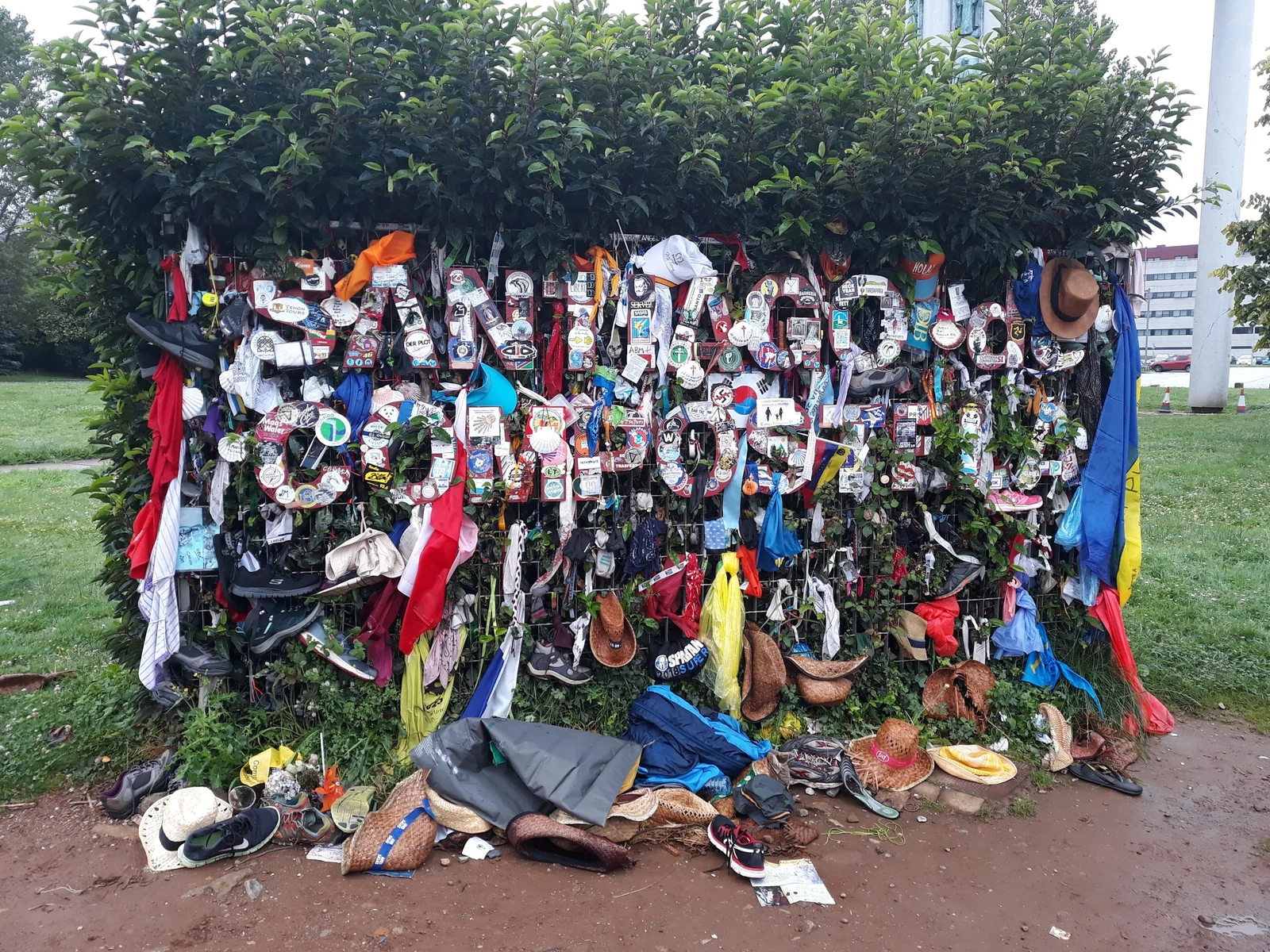
The classic. It starts in Saint-Jean-Pied-de-Port in France, crosses the Pyrenees to Roncesvalles, then runs across Navarra, La Rioja, Castilla y León and Galicia, roughly 780 km in all. Walking the whole thing takes about five weeks. It has the most infrastructure, the most company and the most variety, from vineyards to the high plateau of the Meseta to the green hills of Galicia.
Camino Portugués
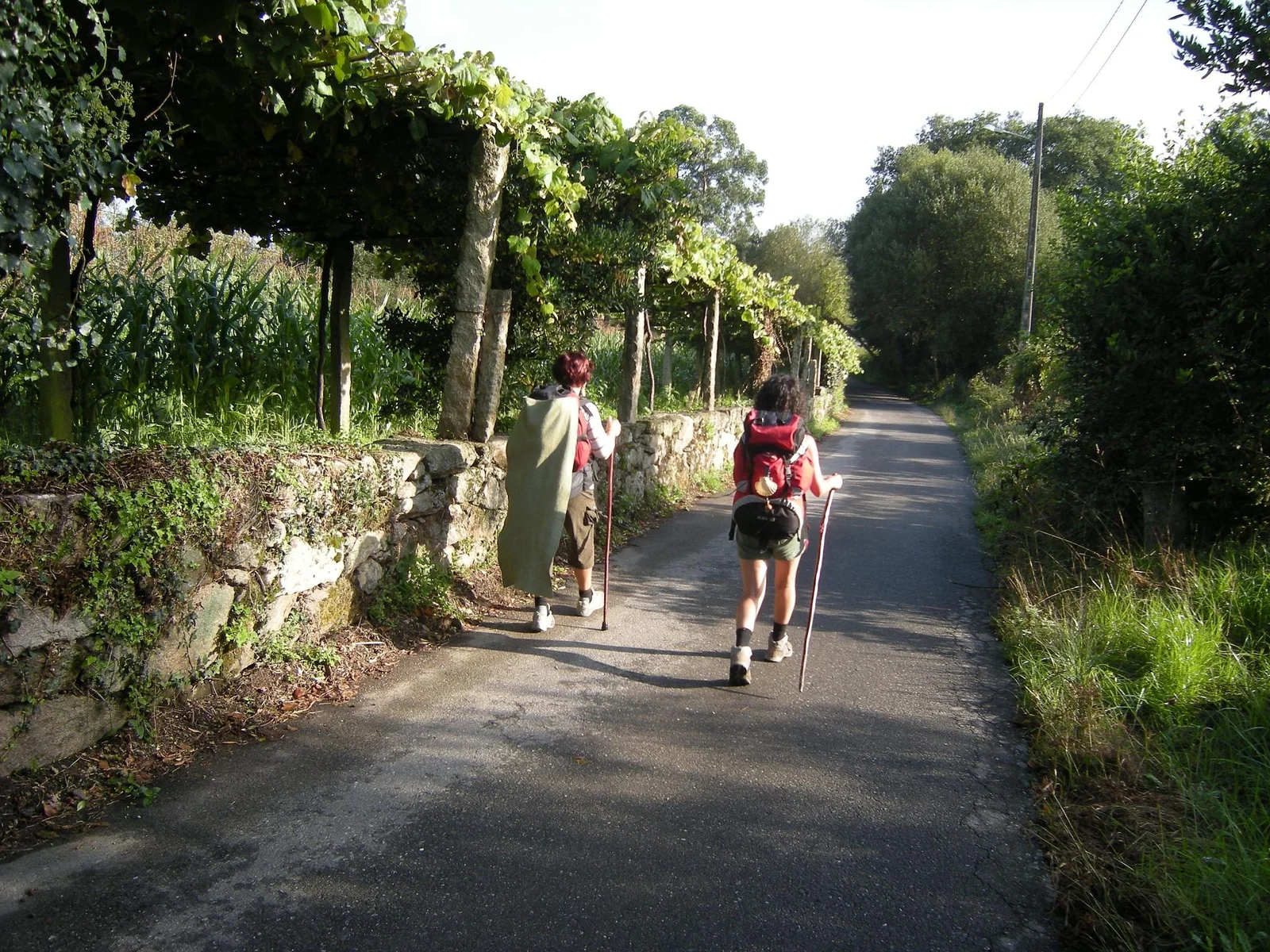
The Portuguese Way runs north from Lisbon or, more commonly, from Porto. From Porto it is roughly 240 km to Santiago; from Tui, just over the border in Spain, it is about 115 km, which is enough for the Compostela. It is gentler, quieter and often a nice first choice if you only have a week. Our Portugal travel guides help with the days before you start.
Camino del Norte, Primitivo and Finisterre
The Camino del Norte follows Spain's northern coast from Irun and suits experienced walkers who like hills and sea views, with a long distance to match. The Camino Primitivo, said to be the oldest route, starts in Oviedo and is short but tough. Many pilgrims also continue to Finisterre or Muxía on the Atlantic after reaching Santiago, which adds a few more days. Our Bilbao guide is useful if you pass through the Basque Country.
| Route | Starting point | Approx. length | Typical time | Best for |
|---|---|---|---|---|
| Camino Francés | Saint-Jean-Pied-de-Port | About 780 km | 4 to 5 weeks | The full classic experience |
| Camino Francés (last section) | Sarria | About 115 km | 5 to 6 days | Short trip with the Compostela |
| Camino Portugués | Porto | About 240 km | 10 to 12 days | Gentler terrain, coast and towns |
| Camino Portugués (last section) | Tui | About 115 km | 5 to 6 days | Quiet first Camino |
| Camino del Norte | Irun | Over 800 km | 5 weeks or more | Experienced walkers, sea views |
| Camino Primitivo | Oviedo | About 320 km | 2 weeks | Hills and fewer crowds |
Distances vary a little by source and variant. Treat the table as a planning guide and confirm exact figures with a current guidebook or the Pilgrim's Office.
The Last 100 km and the Compostela
The Compostela is the certificate issued by the Pilgrim's Office in Santiago. To qualify you must walk at least the last 100 km into the city (or cycle at least the last 200 km) and collect stamps along the way. In the last 100 km the requirement is two stamps per day, which is easy to meet in cafes, albergues and churches.
The office asks about your motivation. A religious or spiritual reason earns the Compostela; other reasons usually receive a separate certificate of welcome. Check current rules and opening hours on the Pilgrim's Office website before you plan your arrival day.
That is why Sarria, about 115 km out on the Camino Francés, is the most popular starting point. It is a sensible choice for a first trip, but it is also the busiest section, so book ahead and start earlier each morning if you want space on the path.
The Credencial and Pilgrim Stamps
The credencial, or pilgrim passport, is a folded card that records where you slept and walked. You get it from pilgrim associations, from some churches and hostels at popular starting points, or at the start of the route. Many albergues require it to give you a bed. Stamps, called sellos, come from albergues, churches, town halls, bars and shops along the way.
Collect a stamp every day from the start, not just in the last 100 km. It becomes a keepsake, and it protects you if a stretch of the walk is not recorded clearly. Keep the credencial dry in a plastic sleeve, since a soaked and torn card is hard to stamp and harder to present.
Albergues, Beds and Where to Sleep
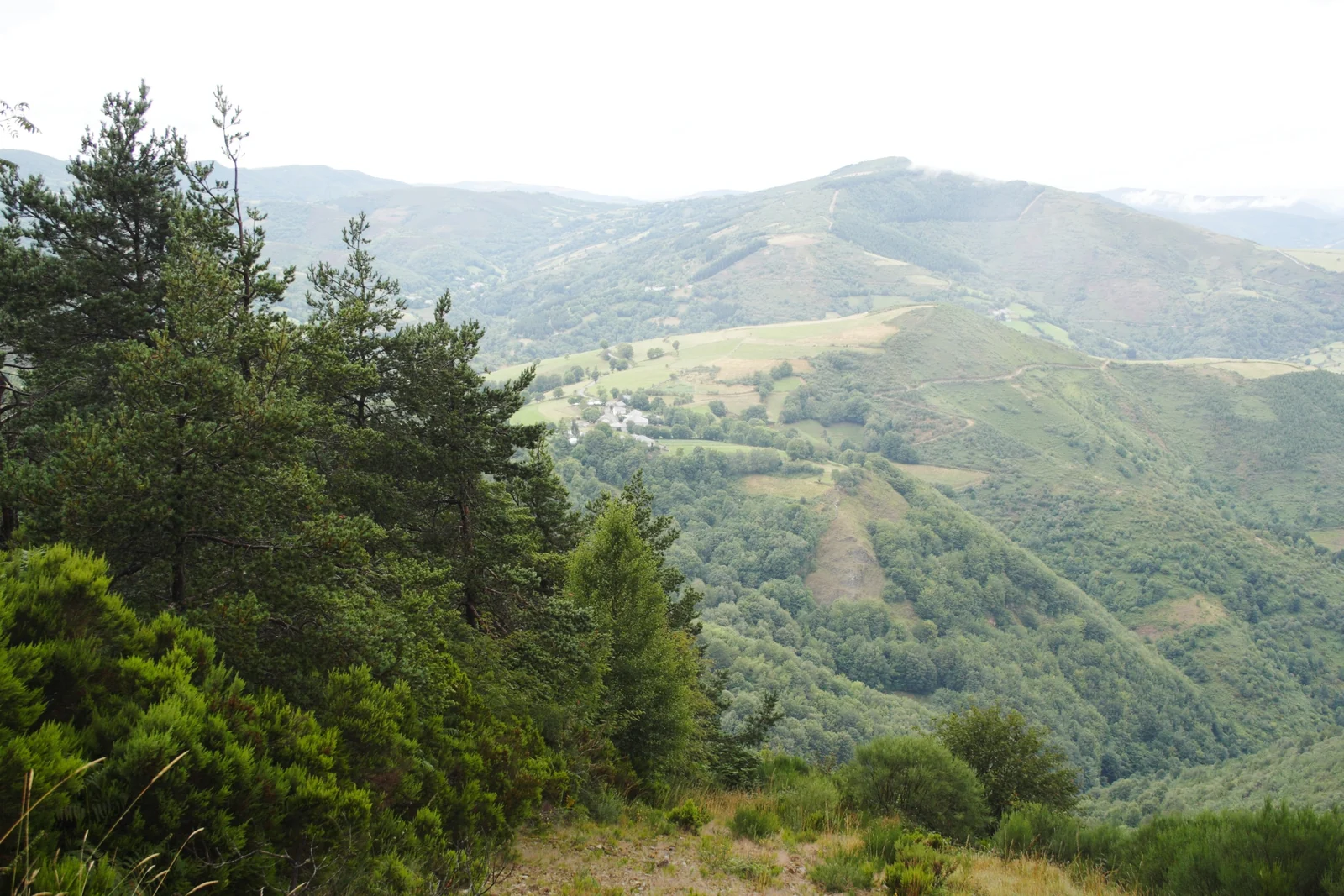
An albergue is a pilgrim hostel with dormitory beds, shared bathrooms and often a kitchen. There are public ones run by town councils or regional governments, parish and association albergues sometimes running on donations, and private ones that take reservations. Prices vary by type and region, so check current rates locally rather than relying on old figures.
Albergues are the cheapest and most social option, but they can be noisy, with snoring, early starts and rustling plastic bags. Pack earplugs. Many routes also have guesthouses, small hotels and rural inns, and some companies will book your rooms and forward your luggage. A mix works well: albergues most nights and a private room when you need a proper sleep.
Booking Etiquette
- Public albergues often do not take reservations and fill on a first-come basis, so arrive early in busy periods.
- Private albergues and hotels can usually be booked in advance, and on the Sarria stretch in peak season it is wise to do so.
- Lights go out early, often around 10 p.m., and you are expected to be up and out by morning.
- Wash your clothes the same afternoon so they dry, and carry safety pins to hang them on your pack.
Daily Stages and Pace
Most first-timers walk 20 to 25 km a day, which is about five to seven hours with breaks. That pace suits most people in decent shape, but it is better to go shorter than to push through blisters. The Camino is a long chain of small days, and most injuries come from doing too much in the first week.
The first big test on the Camino Francés is the crossing from Saint-Jean-Pied-de-Port to Roncesvalles. It climbs steadily over the Pyrenees and ends at the famous monastery, so many pilgrims split it with an overnight stop. After that, the daily rhythm becomes easier. Galicia brings the greenest scenery, with rolling hills and more rain, and the walk from Sarria is a series of short, manageable stages.
- Read your body, not the guidebook, when deciding how far to go.
- Start early, ideally around dawn, to avoid midday heat and to get the first pick of beds.
- Eat a proper breakfast and carry water and a snack, since some stretches have no services.
- Take a rest day if you have a persistent pain, and treat blisters as soon as you feel a hot spot.
Best Time to Walk the Camino
Spring and early autumn are the sweet spots. Weather is milder, days are long enough and the routes are active but not at their busiest.
- April to June: mild, green and popular. Expect rain at times, especially in Galicia.
- July and August: the busiest period, with hot days on the Meseta and crowded albergues. Start before dawn if you walk then.
- September and October: comfortable temperatures and good light, though more rain arrives in Galicia later in autumn.
- November to March: cold, wet and short days. Snow is possible in the mountains, and some albergues and services close, so check what is open before you commit.
The Meseta, the wide plateau in the middle of the Camino Francés, is hot and exposed in summer and cold and windy in winter. Some walkers skip it by bus or train. That is a personal choice, though you should not claim the Compostela for a stretch you did not walk.
What to Pack for the Camino
The golden rule is to carry as little as possible. A common guideline is that your pack, with water, should weigh no more than about 10 percent of your body weight. Everything you pack you will carry for weeks.
- Footwear: broken-in trail shoes or light boots, plus sandals for evenings. Never start in new shoes.
- Socks and blister care: several pairs of good walking socks, plus tape, plasters and anti-friction balm.
- Clothing: quick-dry layers, a rain jacket, a warm layer and a hat. Cotton dries slowly.
- Sleep kit: a light sleeping bag or liner, earplugs and a sleep mask for dorms.
- Small essentials: a headlamp, a reusable water bottle, sun protection, trekking poles if your knees need them and a small towel.
- Documents: passport, credencial, travel insurance details and a copy of key documents.
Resist the urge to bring an item for every scenario. Spanish towns have pharmacies and shops along nearly the whole route, and what you forget you can usually buy.
What the Camino Costs
Costs vary widely by route, season and how you travel, so exact figures would only mislead you. Beds in albergues are generally the cheapest accommodation, a pilgrim meal in a cafe is usually modest, and private rooms cost more. Your main expenses are flights or trains to the start, accommodation, food, travel insurance and gear.
The easiest way to control spending is to decide your accommodation mix early. Albergues most nights keep the daily budget low, while private rooms and luggage transfer raise it. Always carry some cash, since small villages and rural albergues may not accept cards.
Arriving in Santiago de Compostela
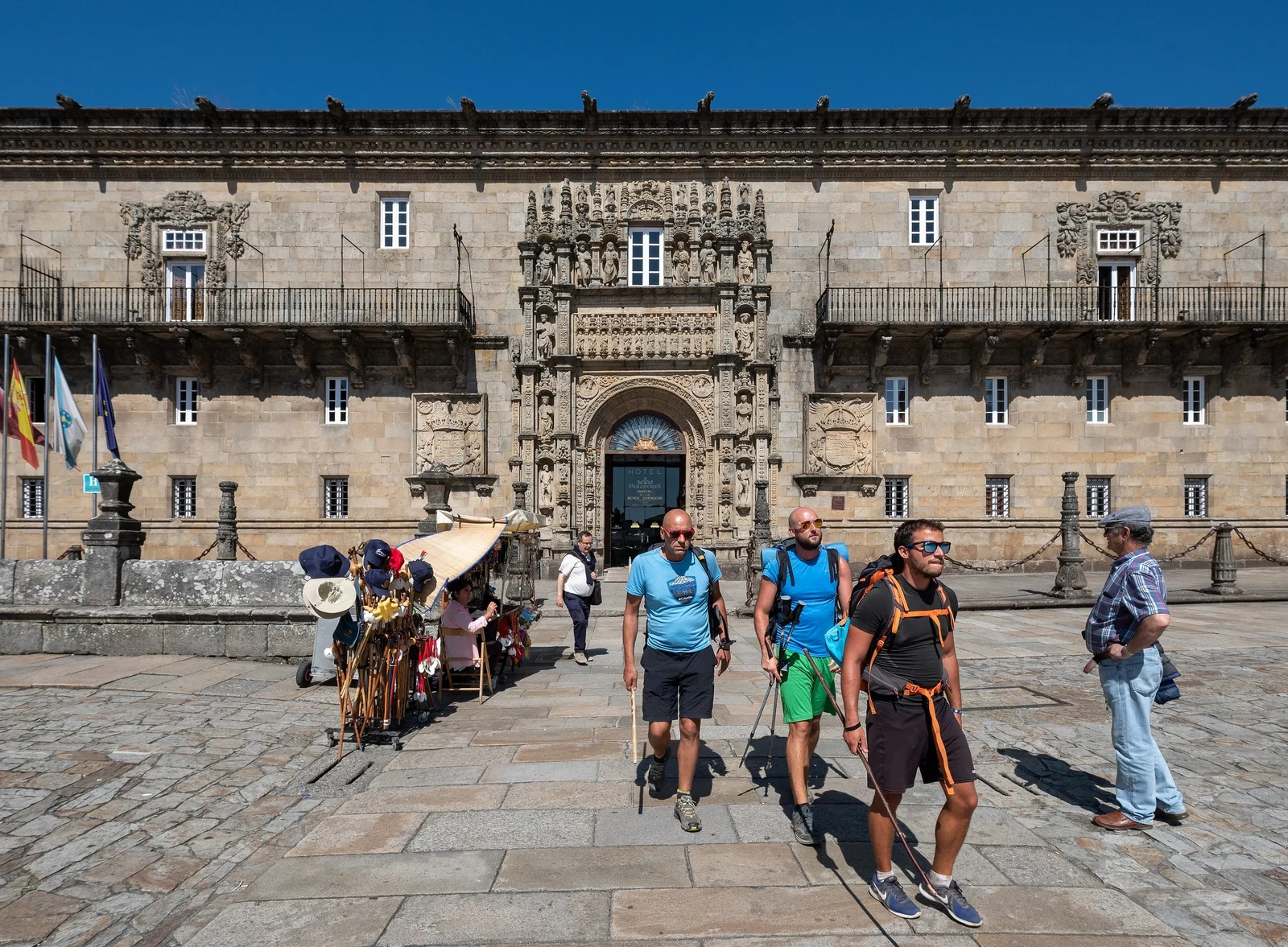
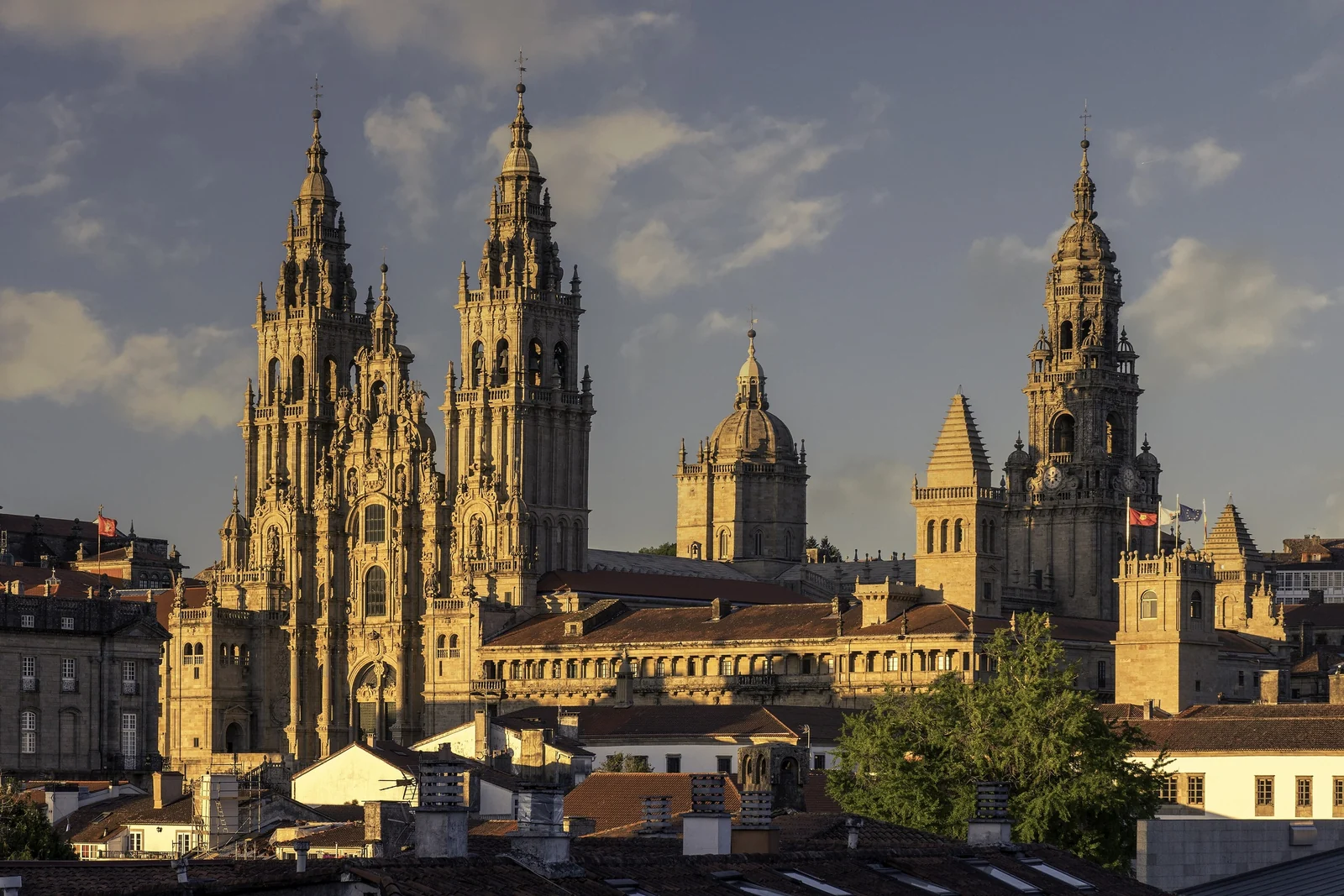
After days of walking, the last kilometers lead through the old town to the Plaza del Obradoiro, where the cathedral's Baroque facade faces the square. Many pilgrims simply sit on the stones and stare. The cathedral houses the shrine of St. James, and the Pilgrim Mass is a major draw. Check the cathedral's official site for Mass times and whether the botafumeiro, the huge incense burner, is swung.
Go to the Pilgrim's Office first to collect your Compostela, then explore. Santiago is compact and walkable, with granite lanes, arcades and plenty of cafes serving Galician seafood. If you want to keep walking, Finisterre and Muxía are reachable on foot, and flights or trains connect Santiago with Madrid and other Spanish cities. For onward planning, our guide to traveling from Barcelona to Madrid covers the main transport options.
Camino de Santiago FAQ
How long does the Camino de Santiago take?
It depends on the route. The full Camino Francés from Saint-Jean-Pied-de-Port takes around five weeks. The Portuguese Way from Porto takes roughly ten to twelve days, and the last 100 km from Sarria or Tui can be done in five or six days.
Do you need to be religious to walk the Camino?
No. Pilgrims of every belief and none walk it. The Compostela certificate is awarded for a religious or spiritual motive, while other walkers can usually receive a certificate of welcome. Check the Pilgrim's Office for current wording.
What is the best Camino route for beginners?
The last 100 km of the Camino Francés from Sarria is the easiest to organize, though it is busy. The Camino Portugués, especially from Tui, is quieter and gentler. The full Camino Francés is the classic choice if you have five weeks.
How do you get the Compostela certificate?
Walk at least the last 100 km (or cycle at least 200 km), collect the required stamps in your credencial and present it at the Pilgrim's Office in Santiago. In the last 100 km, two stamps per day are required.
What is a credencial and where do you get it?
It is the pilgrim passport that records your stamps and gives access to albergues. You can get one from pilgrim associations, from some churches and hostels at popular starting points, or at the start of your route.
Do you need to book albergues in advance?
Public albergues often work on a first-come basis, while private albergues and hotels can be booked. In peak season and on the busy Sarria stretch, reserving ahead is sensible. Outside high season you can usually decide each day.
When is the best time to walk the Camino?
Spring and early autumn, roughly April to June and September to October, offer mild weather and open services. Summer is busy and hot, while winter is cold and wet, with some albergues closed.