


Barcelona is the capital of Catalonia, a Mediterranean port city of medieval lanes, wide 19th-century avenues and some of the strangest buildings in Europe. Most people come for Antoni Gaudí, and they are right to: the Sagrada Família, Park Güell and Casa Batlló are the reason Barcelona looks like nowhere else. But the city is just as good for wandering, eating late and spending an afternoon on a city beach.
Three full days cover the essentials, and a fourth lets you add a mountain monastery or a seaside town. This Barcelona travel guide explains which Gaudí sites to book ahead, how the old quarters differ, how to use the metro, how to protect your pockets, where to stay and how to put it all into a workable plan. If Spain is your wider destination, our Spain travel guides have more.
Gaudí's Barcelona and How to Book It
Seven of Gaudí's works in and around Barcelona belong to a UNESCO World Heritage listing, first inscribed in 1984 and extended in 2005. The three that most visitors want are all ticketed with timed entry, and the popular slots sell out. Book on the official sites before you fly, not at the door.
Sagrada Família
Work began in 1882, Gaudí took over the project a year later, and he died in 1926 with the basilica far from finished. Construction is still going on, so towers, scaffolding and cranes are part of the picture. What you see inside is not: a forest of branching columns that turn the nave into something close to a stone grove, lit by stained glass that shifts from cool blue to warm orange across the day.
Tickets are timed, and tower access is sold separately with its own slots. Check opening hours, ticket types and the current state of the works on the official Sagrada Família site. For the best color, pick a morning slot for the Nativity side or an afternoon slot for the glass on the Passion side, and allow about two hours.
Casa Batlló and Casa Milà
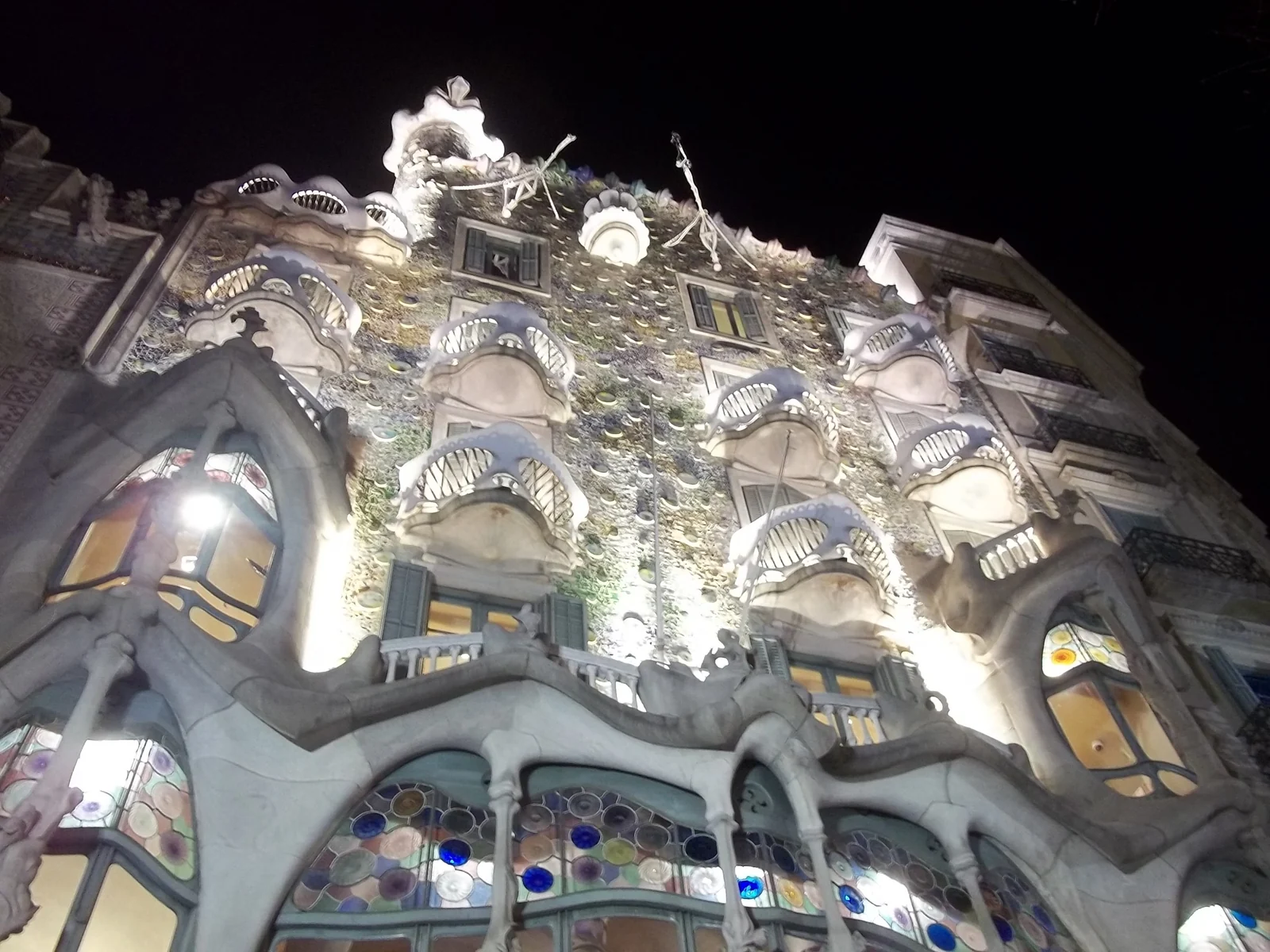
Casa Batlló, remodeled between 1904 and 1906, has a skeletal, wave-like facade and a roof ridge often compared to a dragon's back. Four blocks up Passeig de Gràcia, Casa Milà (La Pedrera, 1906 to 1912) is the rippling stone building with a rooftop of sculpted chimneys. Doing both on one day is too much Gaudí interior for most people. If you must choose, pick Batlló for the facade and light, or La Pedrera for the roof and quieter rooms. The facades are free to admire from the pavement either way.
Park Güell
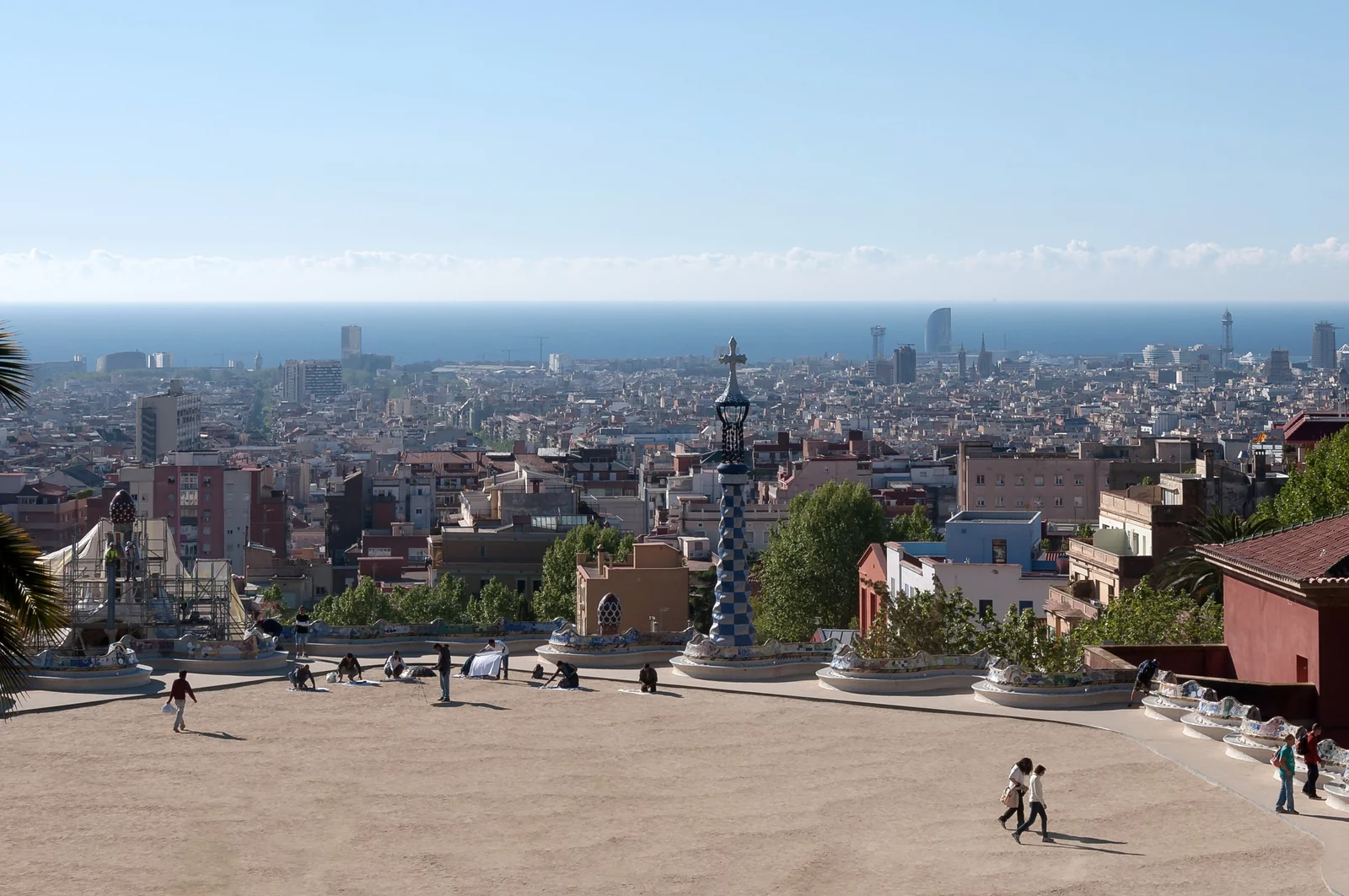
Planned as a garden suburb for the businessman Eusebi Güell and built from 1900 to 1914, it never found enough buyers and became a public park in 1926. The famous mosaic terrace, the lizard fountain and the colonnaded hall are in a fenced monumental zone that needs a timed ticket, while the wooded hillside around it is a free park. Check details on the official Park Güell site. Go early, because the terrace gets crowded and hot.
The Old Quarters and the Eixample
Barcelona's old city is a tight knot of lanes between the Rambla and the sea, and it is best explored with no plan at all. Three neighborhoods run together here, each with its own mood.
The Gothic Quarter
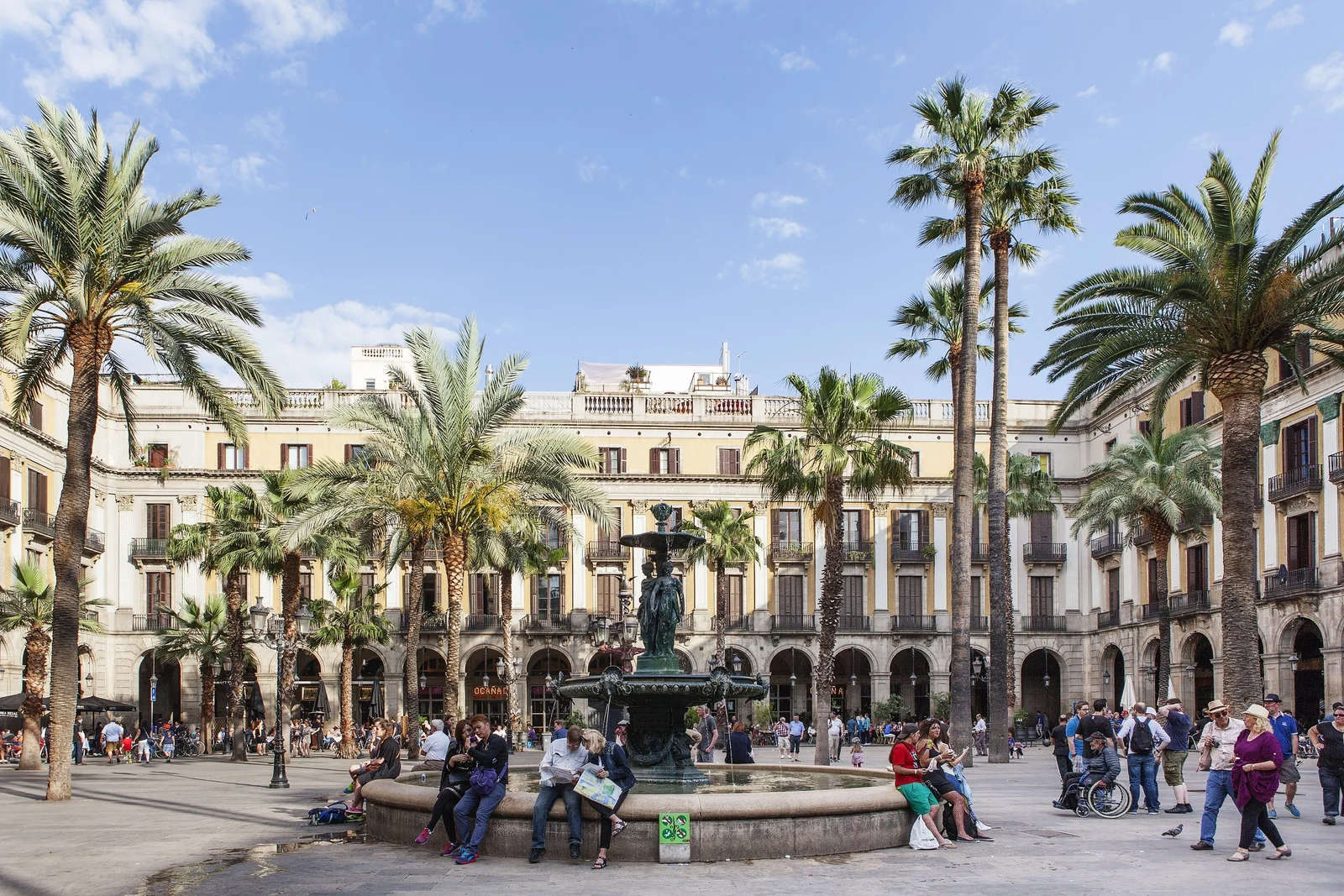
The Barri Gòtic is the oldest core, built over Roman foundations. Its center is the cathedral and the small squares around it, including Plaça Sant Felip Neri, a quiet corner that is easy to walk past. Plaça Reial, with its palm trees and arcades, is handsome but touristy, so look at it, then eat elsewhere.
El Born
Across Via Laietana lies El Born, my pick of the three for an evening. The basilica of Santa Maria del Mar, a 14th-century Catalan Gothic church with plain, soaring walls, is the anchor, and the Picasso Museum sits a few minutes away. The streets around them are lined with wine bars, small designer shops and tapas counters. It is more relaxed than the Gothic Quarter and still very central.
The Rambla and La Boqueria
The Rambla is the famous boulevard through the old city and the least Barcelona thing in Barcelona: crowded, pricey and full of people waiting to relieve you of your phone. Walk it once. La Boqueria market, just off it, is gorgeous to look at, but the stalls near the entrance are aimed at visitors. Go deeper inside, or use the Sant Antoni market in the Eixample for a more local shop.
Eixample and Modernisme
The Eixample ("expansion") is the grid of wide streets laid out in the mid-19th century to the plan of the engineer Ildefons Cerdà. Its blocks have chamfered corners, which make the intersections feel open and sunny, and it became the showcase for Catalan Modernisme, the Art Nouveau movement to which Gaudí belongs. Besides his buildings, look up on Passeig de Gràcia for the work of Lluís Domènech i Montaner and Josep Puig i Cadafalch.
Montjuïc and the Beaches
Montjuïc
Montjuïc is the hill above the port, shaped by the 1929 International Exposition and the 1992 Olympic Games. It is a good half-day for anyone who needs a break from stone and crowds. The Museu Nacional d'Art de Catalunya (MNAC) holds a major collection of Romanesque murals, the Fundació Joan Miró shows the painter's work in a light-filled modern building, and the terraced gardens drift down toward the city.
A cable car and a funicular both reach the hill, and the old fortress at the top has wide views over the harbor. The Magic Fountain at the foot of the hill runs light and music shows on a seasonal schedule, so confirm the times on the official Barcelona tourism site before planning an evening around it.
Barcelona Beaches
- Barceloneta: the closest to the old town and the busiest. Great for people-watching, less so for peace. Seafood restaurants line the promenade, and quality is mixed.
- Nova Icària and Bogatell: a short walk or metro ride north, with room to spread out and a more local crowd.
- Mar Bella: farther along the coast, with a relaxed feel and a section where nudity is accepted.
- Sant Sebastià: at the southern end by the fishing quarter, with a fine view back to the skyline.
What and How to Eat in Barcelona
Catalan food is its own thing, not simply a version of Spanish. It leans on seafood, good tomatoes and olive oil, cured meats and a handful of sauces like romesco and allioli. Meals run late: lunch usually starts after 1:30 p.m. and dinner after 8:30 p.m., so a restaurant that is empty at 7 p.m. is only early.
- Pa amb tomàquet: bread rubbed with ripe tomato, oil and salt. It comes with almost everything.
- Patatas bravas, croquetas and anchovies: the standard tapas order, and a good test of any bar.
- Fideuà and arròs negre: noodle and black-rice seafood dishes close to paella.
- Crema catalana: the local custard dessert, with a burnt-sugar crust.
- Vermut: the Sunday-lunch aperitif, served with olives and a splash of soda.
A cheaper trick: many restaurants serve a fixed-price weekday menú del dia at lunch, usually with a starter, a main, a dessert and a drink. It is the best value meal in the city. Tapas culture here is also a cousin of the one in the Basque Country, which we cover in our Bilbao travel guide.
Getting Around and Staying Safe
Metro and the T-casual
Barcelona is compact and the center is very walkable, but the metro will save your legs between Gaudí sites. The system run by TMB covers the city well, and buses, trams and local rail fill the gaps. The most useful ticket for a short stay is the T-casual, a multi-trip card for ten journeys inside a zone. It works on the metro, buses, trams and the city section of the regional trains, and several people can share one card. Check fares, zones and current rules on the TMB tickets page.
From the airport, the Aerobús runs to Plaça de Catalunya, a train line links the airport with central stations, and a metro line serves the terminals. Airport stations often fall outside standard city fares, so check the TMB page rather than assuming the T-casual covers you.
Pickpockets and Common Scams
Barcelona is generally safe for walking at night, and violent crime against visitors is uncommon. Pickpocketing is a different matter. Theft is a real, constant risk in the tourist zones, and the pros are quick and well organized.
- Hot spots: the Rambla, La Boqueria, Plaça de Catalunya, the metro and busy trains, the Sagrada Família queue and the beaches.
- Bags: wear a cross-body bag in front, zipped, and never hang one on a chair back.
- Distractions: if someone spills something on you, asks for directions with a map or crowds you at a doorway, check your pockets.
Where to Stay in Barcelona by Area
| Area | Best for | Trade-off |
|---|---|---|
| Gothic Quarter | Atmosphere, walking everywhere | Noise at night, pickpockets, small rooms |
| El Born | Evenings, wine bars, a local feel | Lively late; light sleepers should ask for an inner room |
| Eixample | First-timers, Gaudí access, quieter nights | Less historic; some rooms are by busy avenues |
| Gràcia | Village feel, plazas, independent cafes | A metro ride from the old town |
| Barceloneta and the waterfront | Beach days | Touristy, with an average food scene |
Best Time to Visit Barcelona
- May to June and September to October: warm, bright and good for both sightseeing and the beach. My favorite window, and the sea is warmest in early autumn.
- July and August: hot, humid and at peak crowds and prices. Plan early mornings and long lunches.
- November to March: cooler and much quieter, ideal for museums and food, with the occasional sunny, T-shirt-warm afternoon.
Two recurring festivals are worth planning around. Sant Joan, on the night of June 23, brings bonfires and fireworks to the beaches. La Mercè, the city's main festival in the last week of September, has parades, human towers (castells) and free concerts. Both are fun and both fill the hotels, so book early.
Day Trips from Barcelona: Montserrat, Girona and Sitges
| Destination | How to get there | Approx. travel time | Best for |
|---|---|---|---|
| Montserrat | Regional train from Plaça Espanya, then rack railway or cable car | About 1 hour to 1.5 hours | Mountain scenery, the monastery, hiking |
| Girona | Train from Barcelona Sants | From about 40 minutes to 1.5 hours, depending on the service | A walled medieval center, the river houses, the Jewish quarter |
| Sitges | Regional train from Sants or Passeig de Gràcia | About 40 minutes | A beach town with a pretty old center |
Montserrat
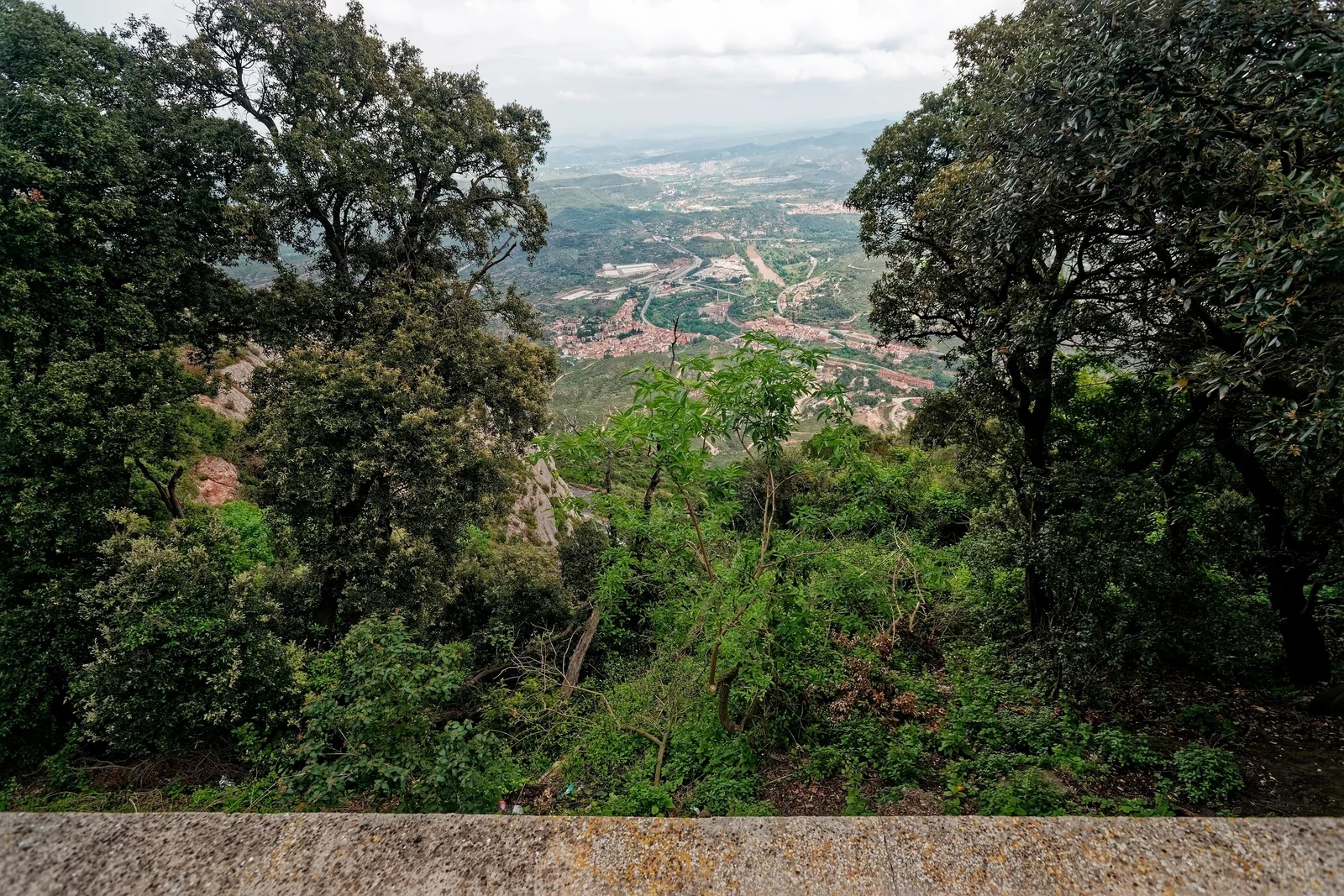
Montserrat ("serrated mountain") is a jagged rock massif northwest of the city, with a Benedictine monastery wedged into its side. The basilica holds the Black Madonna known as La Moreneta, the monastery's boy choir sings on most days, and trails climb from the monastery toward the peaks. Take the early train so you arrive before the tour buses, and check the choir schedule if you want to hear it.
Girona
Girona is a compact walled city whose colorful houses hang over the Onyar river. Walk the old Jewish quarter and the medieval walls; it is quieter than Barcelona.
Sitges
Sitges is the easy beach escape, with a whitewashed old town and long sandy beaches. Trains run back regularly into the evening.
A 3 to 4 Day Barcelona Itinerary
Day 1: Gaudí and the Eixample
Start at the Sagrada Família with a booked morning slot, then walk or ride to Passeig de Gràcia for Casa Batlló and Casa Milà (one inside, one from the street). Spend the evening with vermouth and tapas in the side streets of the Eixample.
Day 2: The Gothic Quarter and El Born
Wander the Gothic Quarter in the morning, see the cathedral and then a quick look at La Boqueria. Take a menú del dia lunch, then cross to El Born for Santa Maria del Mar and the Picasso Museum. Stay for the evening, when the wine bars fill.
Day 3: Park Güell, Montjuïc and the Sea
Visit Park Güell as early as your ticket allows, then head south for an afternoon at MNAC or the Fundació Miró on Montjuïc. End the day on the beach or the Barceloneta promenade, with seafood in the fishing quarter.
Day 4: Montserrat, Girona or Sitges
Pick one. Montserrat is the most dramatic, Girona the most atmospheric and Sitges the most relaxed. Coming from or heading to Portugal next? See our Lisbon guide or browse all European destinations.
Barcelona Travel FAQ
How many days do you need in Barcelona?
Three full days cover Gaudí's main sights, the old quarters, Montjuïc and a beach evening. A fourth day lets you add Montserrat, Girona or Sitges without rushing. With only two days, book the Sagrada Família and focus on the old town.
Do you need to book Sagrada Família tickets in advance?
Yes. Entry is by timed ticket and popular slots sell out, especially in high season. Tower access is sold separately. Book on the official site as early as your dates allow, and check the current ticket types and opening hours.
Is Park Güell free?
Partly. The famous monumental zone with the mosaic terrace and the lizard fountain needs a timed ticket, while the wooded park around it is open to everyone. Check the official Park Güell site for the current setup before you go.
What is the T-casual card?
The T-casual is a multi-trip transport card that gives ten journeys within a zone on the metro, buses, trams and the city section of regional trains. Several people can share one card. Check TMB for zones, fares and airport exceptions.
Is Barcelona safe for tourists?
Yes, with sensible habits. The main risk is pickpocketing on the Rambla, in the metro, at major sights and on beaches. Carry a zipped cross-body bag, keep your phone out of sight and leave your passport in the hotel.
What is the best area to stay in Barcelona for first-timers?
The Eixample near Passeig de Gràcia and the fringe of El Born suit most first visits. They are central, well connected by metro and calmer at night than the Rambla. The Gothic Quarter suits people who want atmosphere and accept noise.
When is the best time to visit Barcelona?
May to June and September to October balance warm weather, beach days and manageable crowds. July and August are hot and crowded. Winter is quiet and mild, a good choice if you care more about museums and food than swimming.