Seville is the capital of Andalusia and the city most people picture when they think of southern Spain: orange trees along the streets, a Moorish palace, a vast Gothic cathedral, flamenco in small rooms and tapas bars that fill up after 9 p.m. It is compact enough to walk, and the main sights sit within a couple of kilometers of each other on the east bank of the Guadalquivir River.
Three days is the right amount for the city: the Real Alcázar, the Cathedral and Giralda, the Santa Cruz and Triana neighborhoods, a flamenco night and a lot of eating. The region rewards extra time too, since Córdoba, Granada, Ronda, Jerez and Cádiz are all feasible as day trips. This Seville travel guide explains what to see, when to go, where to stay and how to plan it. For more of the country, see our Spain travel guides.
The Real Alcázar: Seville's Palace of Tiles and Gardens
The Real Alcázar is the one place in Seville you should book ahead. It began as a Moorish fortress, and most of what you see today comes from the 14th century, when the Christian king Pedro I had craftsmen build a palace in the Mudéjar style, a blend of Islamic and Gothic design. The result is a series of courtyards and halls with carved plaster, painted ceilings and glazed tilework so dense that it takes a while to stop staring at the walls.
The Alcázar is still used by the Spanish royal family, which makes it one of the oldest royal residences in Europe still in use. It was inscribed on the UNESCO World Heritage list in 1987 together with the cathedral and the Archivo de Indias.
Palacio de Pedro I and the Hall of Ambassadors
The Mudéjar palace is the core of the visit. Start in the Patio de las Doncellas, then head to the Salón de Embajadores, topped by a wooden dome in gold and deep red.
The Gardens
The gardens are as much a draw as the palace. Terraces, fountains, pavilions and hedges step down in a mix of Moorish, Renaissance and later styles, and the shade is welcome in warm months.
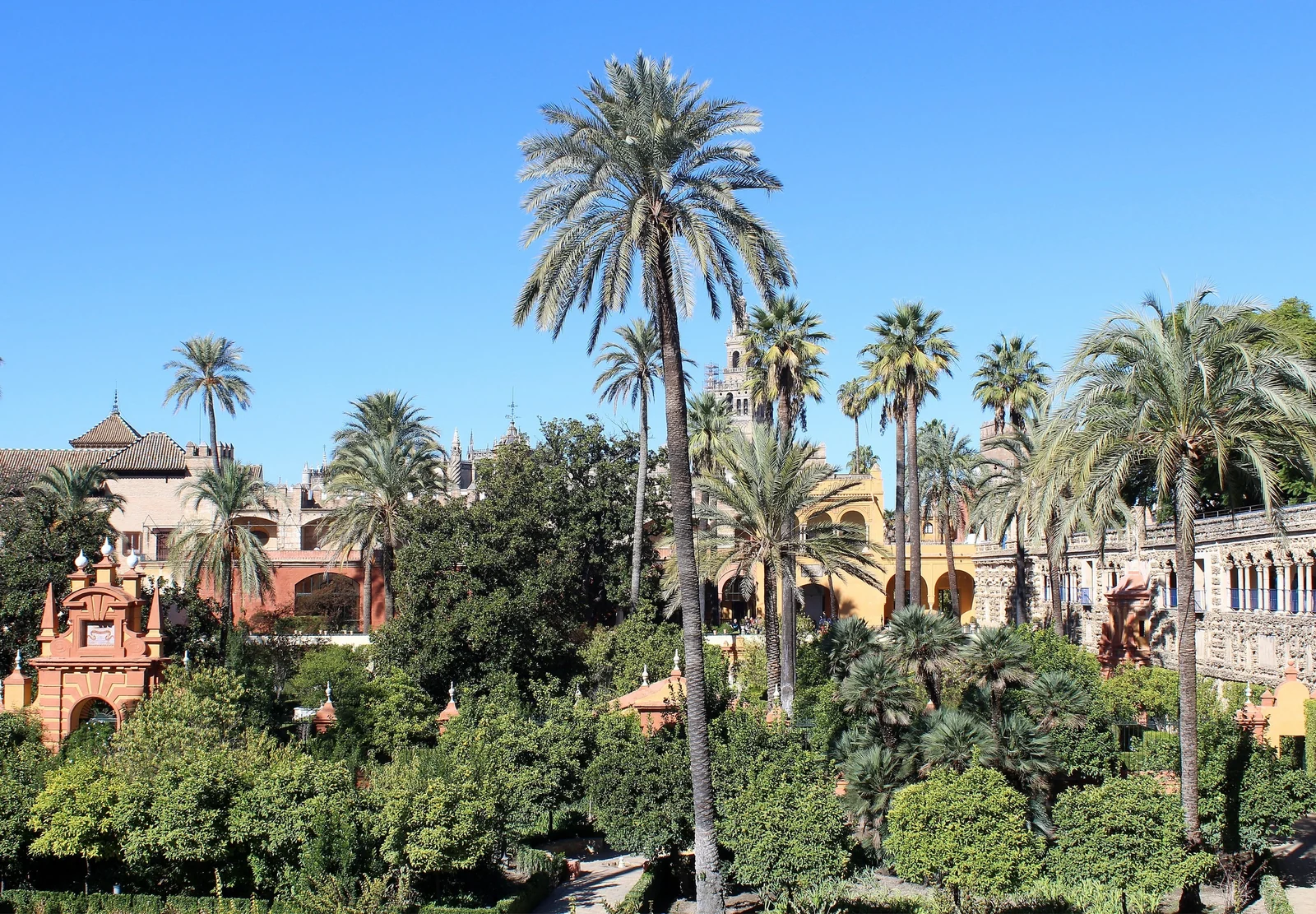
Tickets and opening times change by season, and the palace sometimes closes for official events, so use the official Real Alcázar website to book.
Seville Cathedral and the Giralda
Across the plaza stands Seville Cathedral, one of the largest Gothic churches in the world. Work began in the early 15th century on the site of a former mosque, and the builders are said to have wanted a church so big that people would take them for mad. The interior is huge and dim, with a gilded altarpiece, side chapels and the tomb of Christopher Columbus, carried by four bronze figures of kings.
The Giralda is older than the cathedral. It started as the minaret of the Almohad mosque in the 12th century, and a Renaissance belfry was added on top after the Christian conquest. Instead of stairs, you climb a series of ramps, wide enough for a rider on horseback, up to a viewing level above the rooftops. The view of the terracotta city is the best reason to go early in the morning.
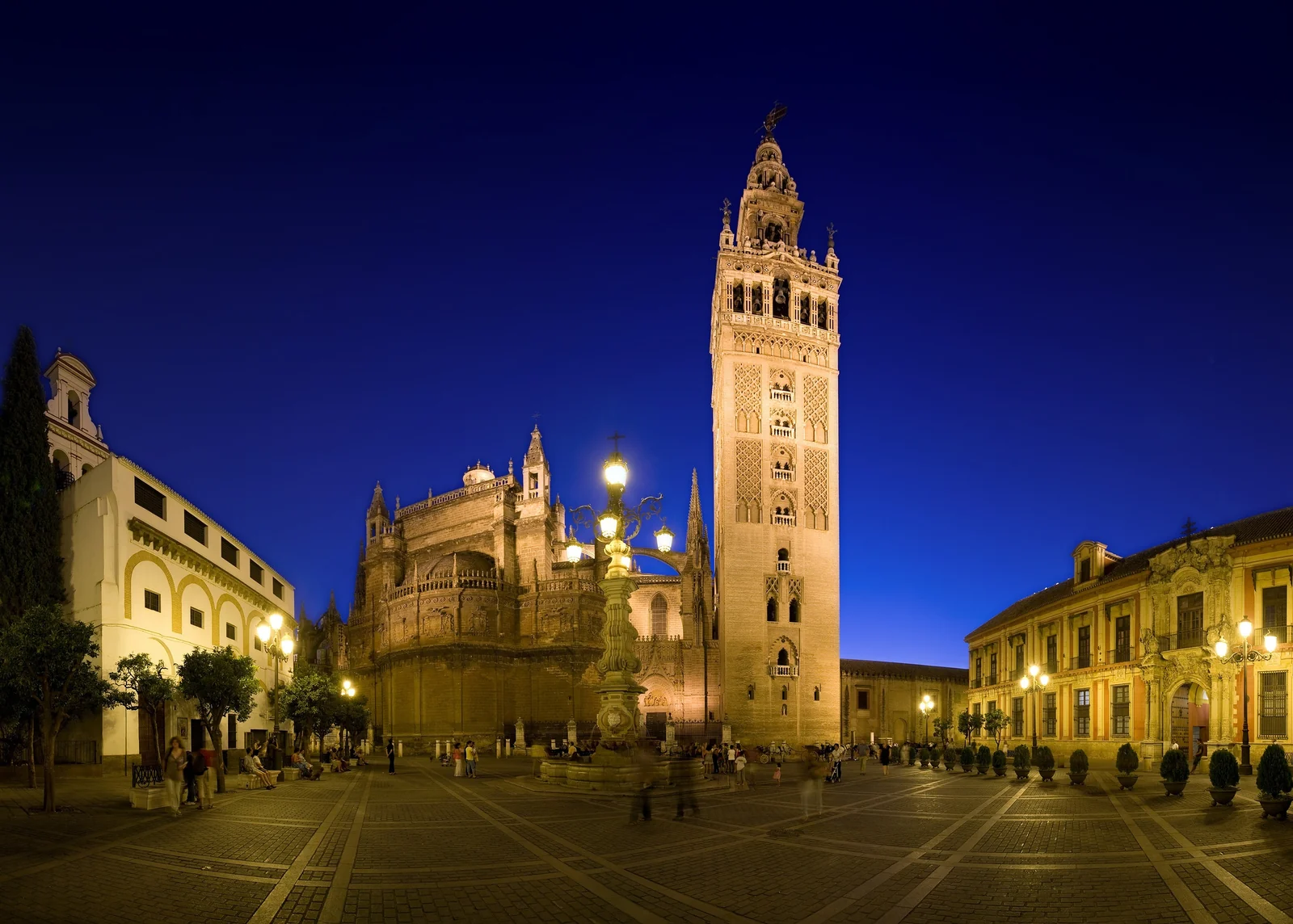
Check ticket options and opening hours on the cathedral's official website. Dress modestly, with shoulders and knees covered, and expect a queue unless you book a timed slot.
Santa Cruz, Plaza de España and Maria Luisa Park
Barrio de Santa Cruz
The old Jewish quarter lies just east of the Alcázar walls, a tangle of whitewashed lanes, tiny squares and wrought-iron balconies. It is also the most touristed part of Seville, so you will not be alone. Treat it as a place to get pleasantly lost early in the morning or after dinner, and eat elsewhere, because restaurants with picture menus are rarely the best choice.
Plaza de España
This semicircular brick-and-tile complex was built for the 1929 Ibero-American Exposition and designed by the architect Aníbal González. A canal runs around the curve, spanned by four bridges, and along the walls there is a row of alcoves, one for each Spanish province, each decorated with ceramic scenes. It is free to enter and looks best in late afternoon light.
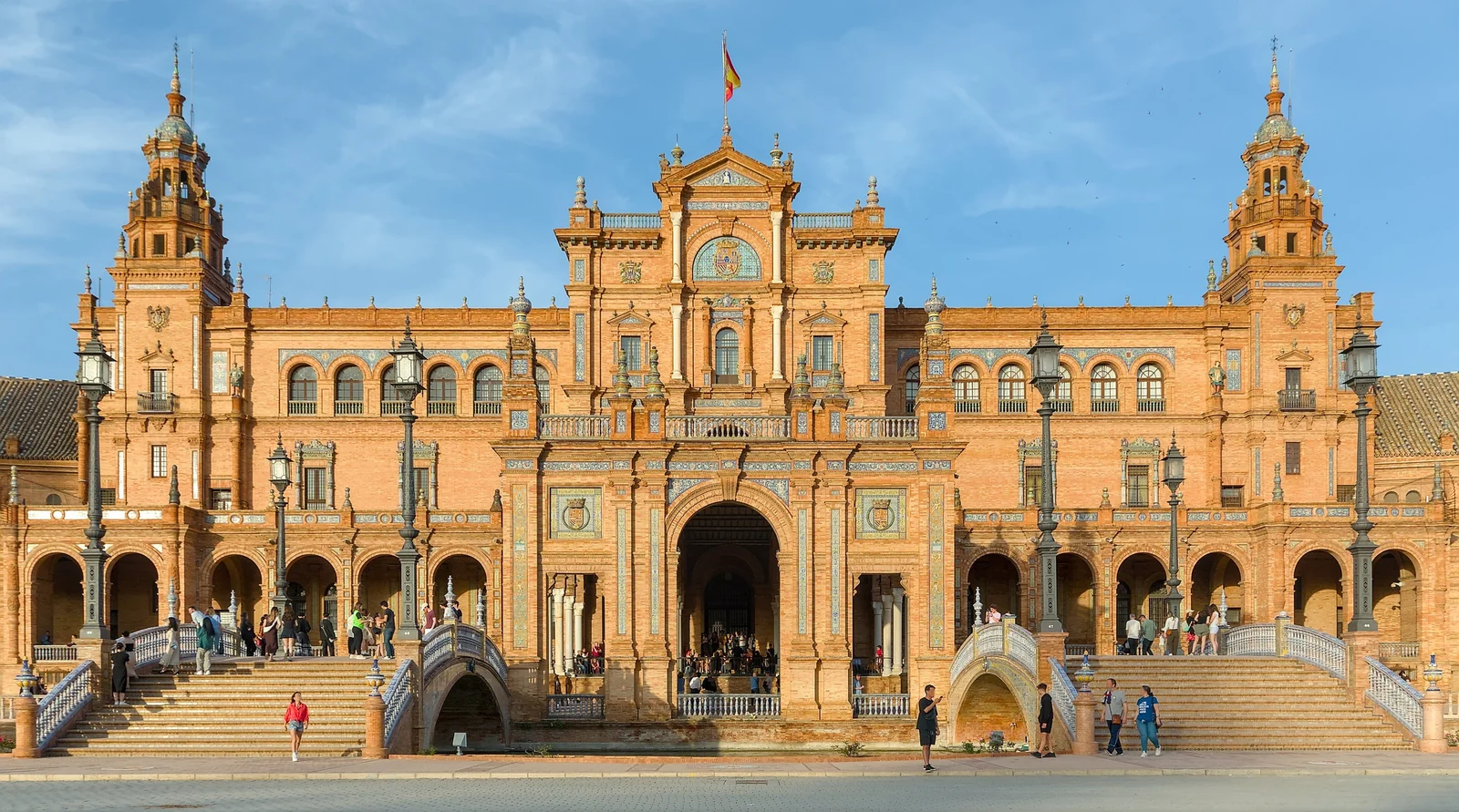
Behind it is Parque de María Luisa, a shaded park with fountains, pavilions and long paths.
Triana, Flamenco and the River
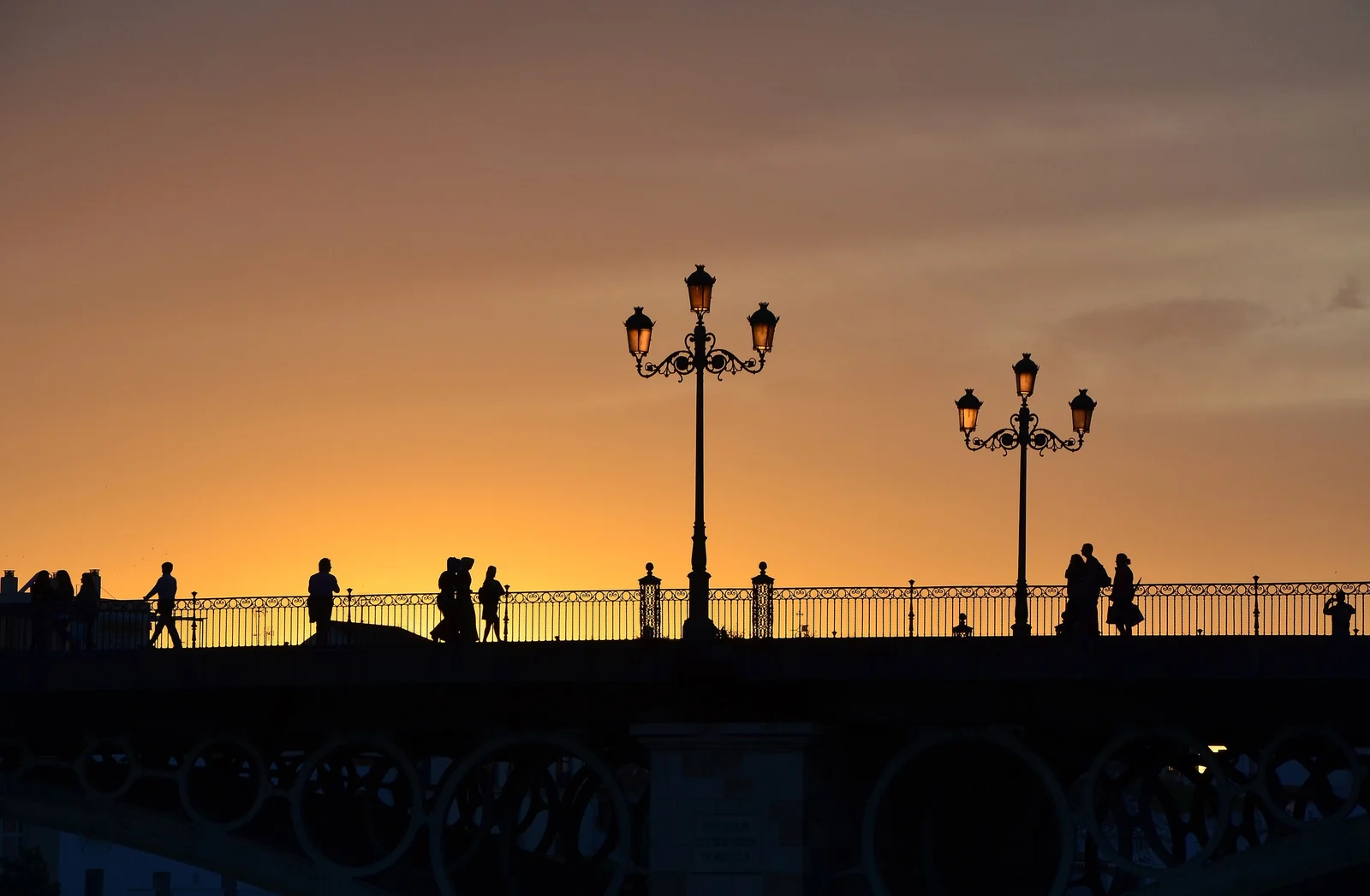
Cross the Puente de Isabel II, known as the Triana Bridge, and you enter a former sailors' and potters' quarter that locals still treat as its own village. Triana is known for ceramics, for its flamenco heritage and for the covered Mercado de Triana, where you can have a quick breakfast or lunch among the stalls. Walk the riverside Calle Betis at sunset, when the city across the water turns gold.
Seeing Flamenco in Seville
Flamenco grew up in Andalusia, and UNESCO added it to its list of intangible cultural heritage in 2010. Seville is one of its main homes, so a live show is worth planning. You will find a few types of venue.
- Tablaos: small stages with scheduled shows and a drink or dinner. They are the easiest to book and usually the most polished.
- The flamenco museum: Seville has a dedicated museum in Santa Cruz that also stages evening performances.
- Peñas and local bars: neighborhood clubs where the audience is mostly local. Performances are less predictable and often more intense.
Whatever you choose, pick a small room where you sit close to the dancers, listen to the guitar and singing, and put your phone away. Stay for the whole show; the best moments tend to come late.
Tapas, Markets and What to Eat
Tapas in Seville means standing or squeezing onto a stool at a bar, ordering a few small plates and a cold drink, then moving on. Locals start dinner late, usually after 9 p.m., and many kitchens close in the afternoon, so do not count on hot food at 4 p.m.
- Jamón ibérico: cured ham sliced thin. Worth paying more for the acorn-fed kind.
- Salmorejo: a thick, cold tomato and bread soup, close to gazpacho, usually topped with egg and ham.
- Espinacas con garbanzos: spinach with chickpeas, a Seville staple with Moorish roots.
- Carrillada: slow-cooked pork cheek in a rich sauce, a bar classic.
- Pescaíto frito: fried fish, a habit of the Andalusian coast that is everywhere in Seville.
- Sherry: fino and manzanilla from nearby Jerez and Sanlúcar are good with almost everything.
For ordering, ask for a tapa for a small plate, a media ración for a half portion and a ración for a full plate to share. Bars in residential streets, away from the cathedral, generally cost less and have more locals.
Metropol Parasol and Modern Seville
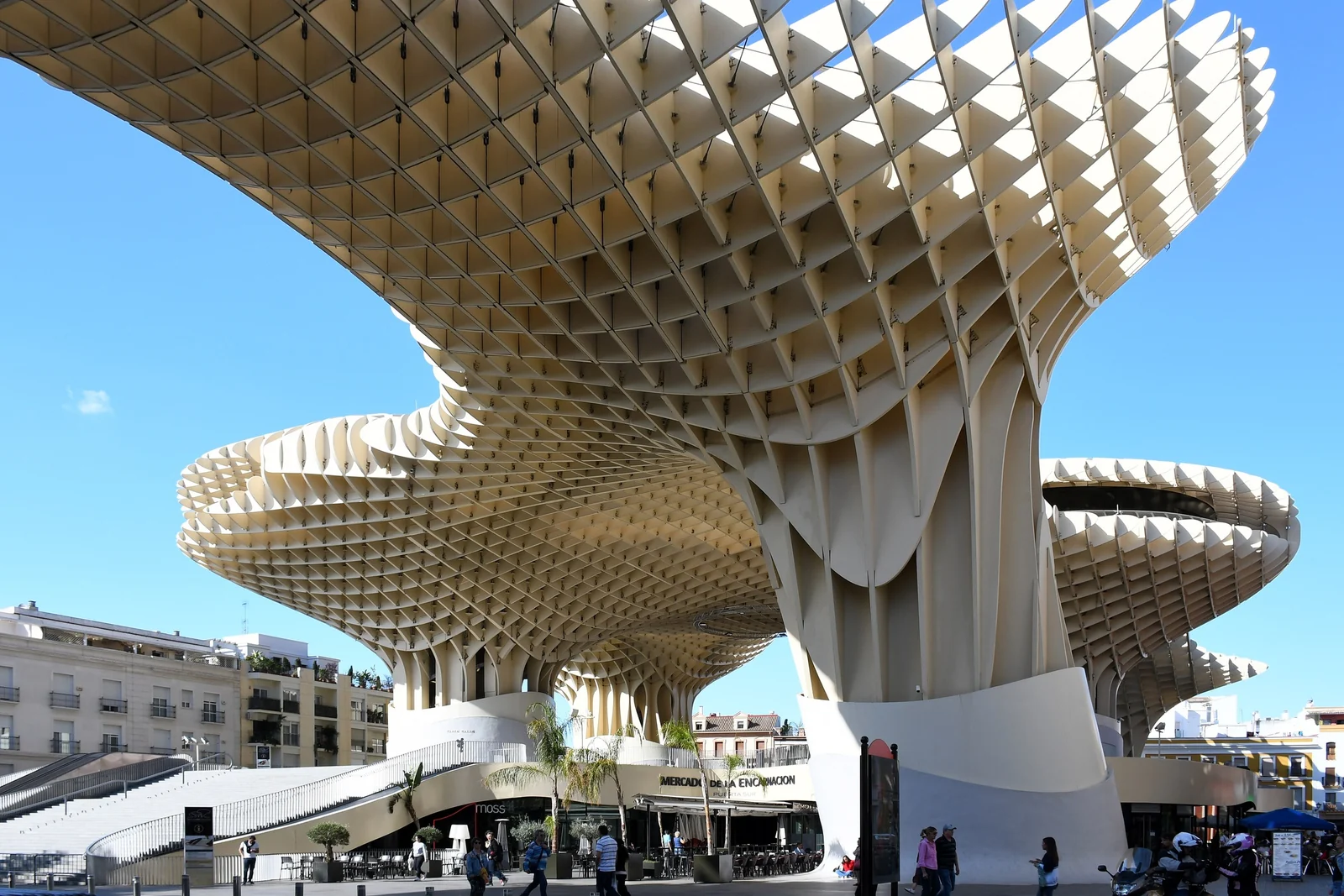
Not everything in Seville is old. In Plaza de la Encarnación, the Metropol Parasol, nicknamed Las Setas (the mushrooms), is one of the world's largest wooden structures, designed by the German architect Jürgen Mayer. Its waffle-like canopies shade a market and, below ground, the Antiquarium, which displays Roman remains found while the plaza was being rebuilt. A walkway on top gives wide views over the rooftops, and sunset is the usual time to go.
Best Time to Visit Seville
Seville is hot in summer, and July and August regularly bring temperatures above 40°C (104°F). Sightseeing in the afternoon becomes a chore, and locals sensibly retreat indoors. Plan for the shoulder seasons if you can.
| Season | What to expect | Verdict |
|---|---|---|
| Spring (March to May) | Mild days, orange blossom, major festivals, higher prices | Best overall, but book early |
| Summer (June to August) | Very hot, quiet afternoons, long evenings | Avoid if you dislike heat |
| Autumn (September to November) | Warm early on, cooler and pleasant later, fewer crowds | Excellent value |
| Winter (December to February) | Mild and sunny with some rain, quiet monuments | Good for sightseeing |
Semana Santa and the Feria de Abril
Two festivals shape the calendar. Semana Santa, Holy Week, runs from Palm Sunday to Easter Sunday, with solemn processions of brotherhoods carrying ornate floats through the streets, often late into the night. About two weeks after Easter, the Feria de Abril fills a fairground with decorated casetas, horses, flamenco dresses and sherry. Both are spectacular, and both push hotel prices up and sell rooms out, so book months ahead and expect crowds. Check the dates on the official Seville tourism site, since they move with Easter.
Day Trips from Seville: Córdoba, Granada, Ronda, Jerez and Cádiz
Seville is an easy hub for the rest of Andalusia. Trains cover Córdoba, Jerez and Cádiz well, while Granada and Ronda are easier by bus or car. Journey times below are approximate, so check current schedules.
| Destination | How to get there | Approx. travel time | Best for |
|---|---|---|---|
| Córdoba | High-speed train | About 45 minutes | The Mezquita and the Jewish quarter |
| Granada | Bus or car | About 3 hours | The Alhambra |
| Ronda | Bus, train or car | About 2 to 2.5 hours | The gorge and the Puente Nuevo |
| Jerez de la Frontera | Regional train | About 1 hour | Sherry bodegas, horses, flamenco |
| Cádiz | Regional train | About 1.5 hours | Beaches, seafood, an old port city |
Córdoba
Córdoba is the easiest day trip, and the Mezquita is the reason. The vast prayer hall of columns and red-and-white arches was begun as a mosque in the 8th century and later had a cathedral built into its center.
Granada
The Alhambra is one of Spain's most visited monuments and its Nasrid palaces admit limited numbers, so tickets can sell out well ahead. Granada works better as an overnight stay than a day trip, because the round trip by bus takes a large part of the day. If you only have a day, go early and book the Alhambra before anything else.
Ronda
Ronda perches on both sides of a deep gorge, joined by the Puente Nuevo, finished in 1793. It is a dramatic town with one of Spain's oldest bullrings, and it is best enjoyed with an overnight stay, once the day-trippers have left.
Jerez and Cádiz
Jerez is the home of sherry, with bodegas that offer tours and tastings, plus a strong flamenco tradition. Cádiz, farther along the Atlantic coast, is one of the oldest continuously inhabited cities in western Europe, with a seafront promenade, a market and a city beach.
A 3-Day Seville Itinerary
Day 1: Palace, Cathedral and Santa Cruz
Book the Real Alcázar for opening time and spend the morning there. Walk to the cathedral for the Giralda climb, then lose yourself in Santa Cruz over lunch. In the evening, watch a flamenco show and finish with late tapas.
Day 2: Plaza de España, Parks and Triana
Start at Plaza de España while it is quiet, then wander Parque de María Luisa. After lunch, cross to Triana, browse the market and ceramics shops, and walk the riverside at sunset.
Day 3: Metropol Parasol or a Day Trip
If you want to stay in the city, visit the Metropol Parasol and the Alfalfa district in the morning, add the Museo de Bellas Artes and spend your last evening on tapas. Otherwise take the train to Córdoba or Jerez and return for dinner. Heading on to Portugal? Our Lisbon guide is a good next stop, and the Barcelona guide covers Spain's other big city. Crossing the strait? See our Marrakech guide for another city shaped by Moorish design.
Where to Stay in Seville
Seville's center is small, so you can reach most sights on foot. Choose by atmosphere.
- Santa Cruz: the most scenic base, steps from the Alcázar and the cathedral. Expect smaller rooms, higher prices and crowds in the daytime.
- Arenal and the Cathedral area: a central choice near the river, the bullring and many tapas bars.
- Alfalfa and Encarnación: livelier and more local, with good nightlife, close to the Metropol Parasol.
- Triana: across the river, calmer and more local, good for flamenco and food, a short walk from the center.
- Near Santa Justa station: practical for early trains and day trips, less atmospheric.
Practical Tips for Visiting Seville
- Book ahead: the Alcázar, the Giralda and any Alhambra visit are best reserved online in advance.
- Mind the clock: shops often close for the afternoon, and dinner starts late.
- Beat the heat: sightsee early, rest in the afternoon and walk again in the evening.
- Getting there: Seville has its own airport, and high-speed trains link the city with Madrid and other Spanish cities.
Seville Travel FAQ
How many days do you need in Seville?
Three days cover the Alcázar, the cathedral, Santa Cruz, Plaza de España, Triana and a flamenco night at an easy pace. Two days is workable if you are rushed. Add extra days for Córdoba, Granada or Ronda.
When is the best time to visit Seville?
Spring and autumn are best, with comfortable temperatures for walking. Summer is very hot, and July and August are the hardest months for sightseeing. Winter is mild and quiet, with fewer crowds at the monuments.
Do you need to book the Real Alcázar in advance?
Yes. It is one of Spain's most visited attractions, and timed tickets can sell out in busy periods. Reserve on the official website, and choose an opening-time slot for the quietest rooms.
Is Plaza de España free to visit?
Yes, entry to the plaza is free and it is open to everyone. It is most pleasant in the morning or late afternoon, when the light is soft and the crowds are thinner. Parque de María Luisa next door is free too.
What are the best day trips from Seville?
Córdoba is the easiest, with a fast train and the Mezquita. Granada offers the Alhambra, Ronda has a dramatic gorge, and Jerez and Cádiz suit sherry and seafood lovers. Granada and Ronda are best with an overnight stay.
Where can you see flamenco in Seville?
Seville has tablaos with scheduled shows, a flamenco museum with evening performances and local peñas. Book a small venue in advance, sit close to the stage and check the current schedule, since programs change.
What are Semana Santa and the Feria de Abril?
Semana Santa is Holy Week, with religious processions through the streets. The Feria de Abril is a week-long fair of casetas, music and dancing held a couple of weeks after Easter. Both draw crowds, so book accommodation very early.