


Bilbao is the largest city in the Basque Country, a former steel and shipbuilding port on the Nervión estuary in northern Spain. It is worth a trip for three reasons that fit into one compact, walkable city: Frank Gehry's Guggenheim Museum, the medieval lanes of the Casco Viejo and some of the best bar food in Europe, served as pintxos on crowded counters.
Two full days cover the city itself. Add a third for the coast, where a UNESCO-listed transporter bridge, surf beaches and the island chapel of San Juan de Gaztelugatxe sit within an hour or so by public transport. This Bilbao travel guide covers what to see, how pintxos bars actually work, when to go, where to stay and a realistic 3-day plan.
Bilbao topped Google's 2025 Year in Search list of trending travel destinations, yet it still feels lived-in rather than staged, and most of what makes it enjoyable costs little more than a glass of wine. For more ideas around the country, browse our Spain travel guides.
The Guggenheim and Bilbao's Reinvented Riverfront
The Guggenheim Museum Bilbao opened in October 1997 on former industrial land along the river, and it changed how the world saw the city. Gehry wrapped the building in thousands of thin titanium panels that shift from silver to gold as the light changes, which is why it looks different at 9 a.m., at sunset and under the frequent Basque drizzle.
Inside the Museum
The permanent highlight is Richard Serra's The Matter of Time, a ground-floor room of enormous weathering-steel spirals that you walk through rather than look at. Temporary exhibitions fill most of the other galleries, so check what is on before you go. Allow two to three hours, and more if a major show is running.
According to the official Guggenheim Bilbao visitor page, the museum opens Tuesday to Sunday from 10 a.m. to 7 p.m., with longer summer hours and a few holiday Mondays. Adult tickets are €18 at the time of writing, under-18s enter free, and an audio guide is included. Book online and take an early slot; the first hour is the calmest.
Walking the Abandoibarra Riverfront
Some of the best art is free and outdoors. Jeff Koons's Puppy, a giant terrier covered in flowering plants, guards the city-side entrance, and Louise Bourgeois's bronze spider Maman stands on the river terrace. Follow the promenade upstream past Santiago Calatrava's white Zubizuri footbridge and you reach the old town in about 20 minutes.
The Museo de Bellas Artes, on the edge of nearby Doña Casilda park, covers Spanish old masters and Basque painters, and sells a combined ticket with the Guggenheim. With only one rainy afternoon, choose the Guggenheim.
Casco Viejo and the Siete Calles
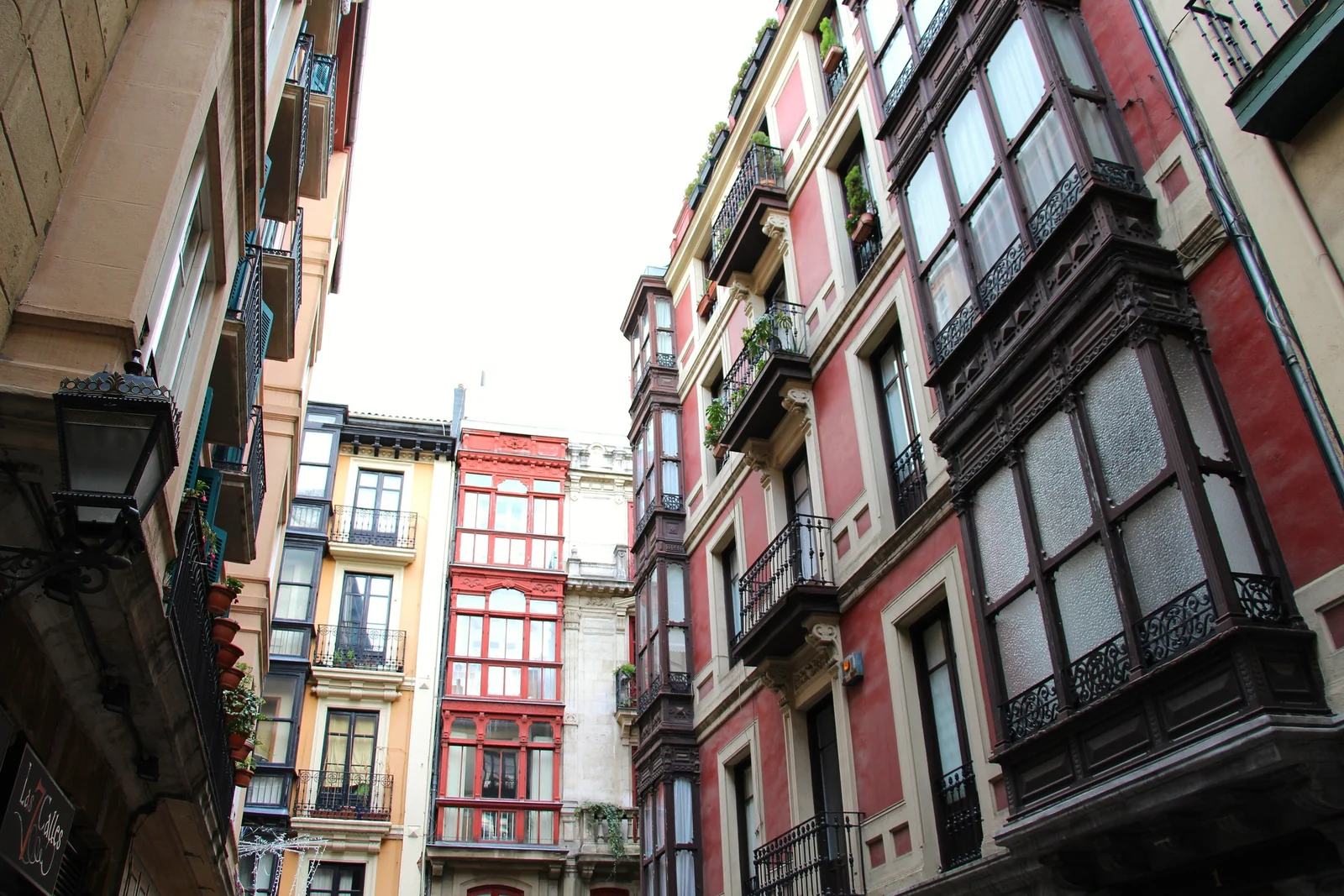
Bilbao's medieval core sits on the right bank of the river, across from the Arenal. Its heart is the Siete Calles (Zazpi Kaleak in Basque), seven parallel streets that date to the 1400s: Somera, Artekale, Tendería, Belostikale, Carnicería Vieja, Barrenkale and Barrenkale Barrena. Several of the names still describe what happened there, from Tendería's workshops to Carnicería Vieja's butchers.
Plaza Nueva
This arcaded 19th-century square is the old town's living room. Its arches shelter some of the city's best-known pintxos bars, and on Sunday mornings locals browse stamp, coin and flea-market stalls before the aperitif hour. Come back at night, when the terraces fill and the noise bounces off the stone.
Mercado de la Ribera
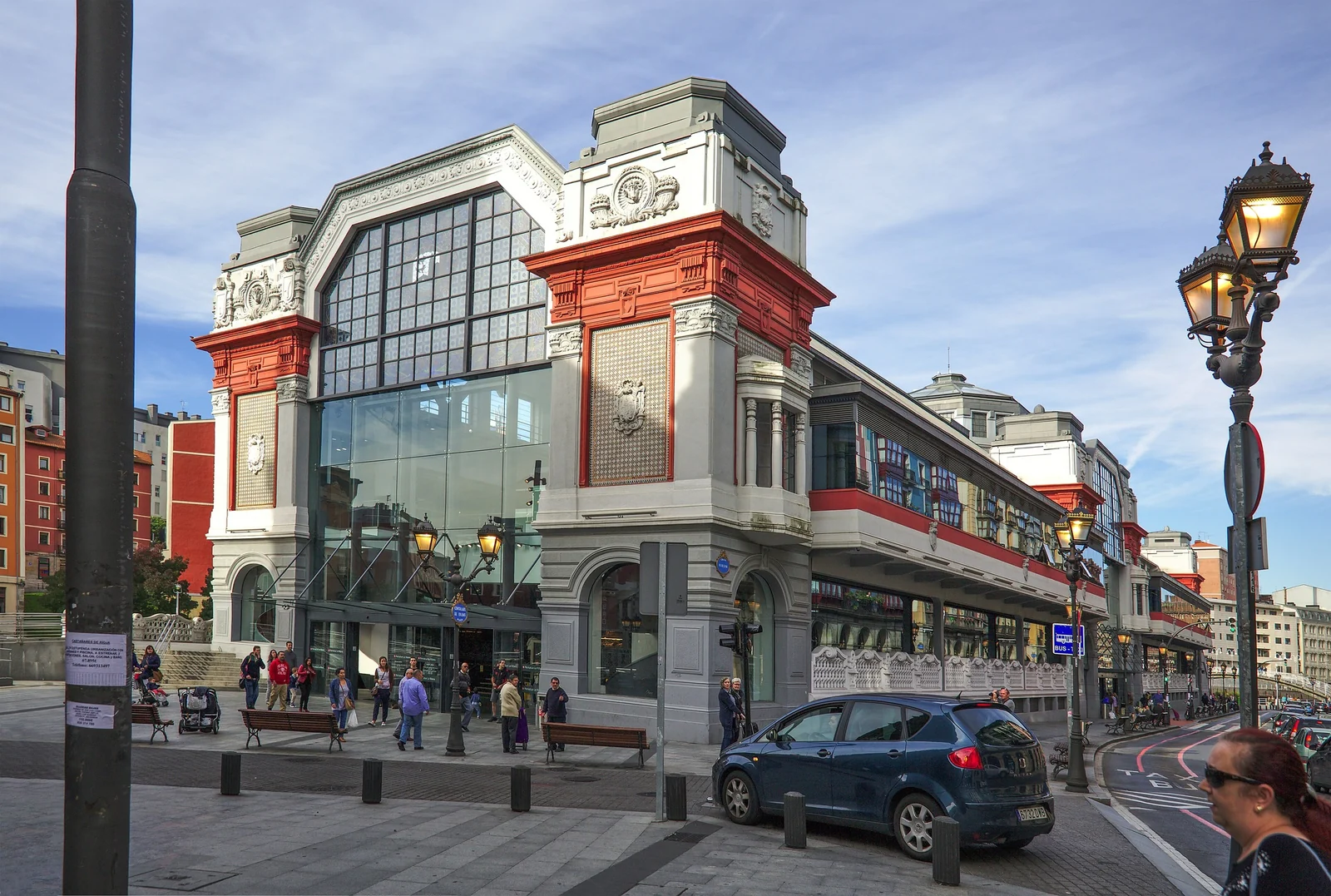
Bilbao's riverside food market opened in 1929 in a striking Art Deco building filled with natural light. Upstairs, fishmongers and greengrocers serve the neighborhood; downstairs, a gastro area sells pintxos with a terrace over the water. Come on a weekday morning, and skip Sunday, when it is closed.
How Pintxos Bars Work in Bilbao
A pintxo is a small bite, often on bread and held together with a toothpick, eaten standing at the bar with a small drink. The point is not to sit down for a meal in one place. Locals have one or two bites in a bar, then move on to the next, a habit known as txikiteo.
- Squeeze in. Nobody queues formally. Stand near the counter, catch the bartender's eye and order your drink first.
- Ask before you grab. Some bars hand you a plate to help yourself; others prefer you point. Watch what the person next to you does.
- Check the chalkboard. The best bites are often hot pintxos cooked to order, not the ones on display.
- Pay at the end. Bartenders keep track on trust. Tell them what you had and settle up before moving on.
- Keep it moving. One or two pintxos per bar is normal, then step back and let the next person in.
What to Eat and Drink
Look for salt cod (bacalao) in its many forms, anchovies, croquetas, grilled mushrooms, txistorra sausage and the gilda, a skewer of olive, anchovy and pickled guindilla pepper. To drink, order a zurito (a small beer), a glass of Rioja or txakoli, the light, slightly sparkling local white wine poured from a height.
Where to Go for Pintxos
Plaza Nueva and the Siete Calles are the obvious start, and they get packed on weekend evenings. For a more local crowd, try the bars on Ledesma and Diputación streets in the Ensanche. Many neighborhoods also run a weekly pintxo-pote evening, when bars sell a drink and a pintxo together at a set price.
City Views and Neighborhoods Beyond the Center
Ride the Artxanda Funicular
Bilbao sits in a narrow valley, and the easiest way to understand its shape is from above. The Artxanda funicular, running since 1915, climbs from near the Zubizuri bridge to the top of Mount Artxanda in about three minutes. Up there you get a park, grill restaurants and a view over the whole city. Go in the late afternoon, when the light hits the river.
Bilbao La Vieja and San Francisco
Across the river from the Ribera market, these older working-class streets have become the city's creative quarter, with galleries, small bars and multicultural shops. It is rough around the edges in places, so stick to the main streets late at night, but it is where you'll find some of Bilbao's most interesting new food.
Day Trips from Bilbao: Bridges, Beaches and San Sebastián
| Destination | How to get there | Approx. travel time | Best for |
|---|---|---|---|
| Portugalete and the Vizcaya Bridge | Metro line 2 | Under 30 minutes | Industrial history, a gondola ride |
| Getxo and Algorta | Metro line 1 | About 25 to 30 minutes | Beaches, the old fishing port, sea walks |
| San Juan de Gaztelugatxe | Bizkaibus to Bakio, then a connecting bus or taxi | 1 to 1.5 hours | Coastal scenery, the 241-step climb |
| Mundaka and Urdaibai | Euskotren E4 train via Gernika | About 1 hour 15 minutes | Estuary landscapes, surf, quiet villages |
| San Sebastián | Direct intercity bus | About 1 hour 15 to 20 minutes | Beaches, pintxos, a second city |
The Vizcaya Bridge in Portugalete
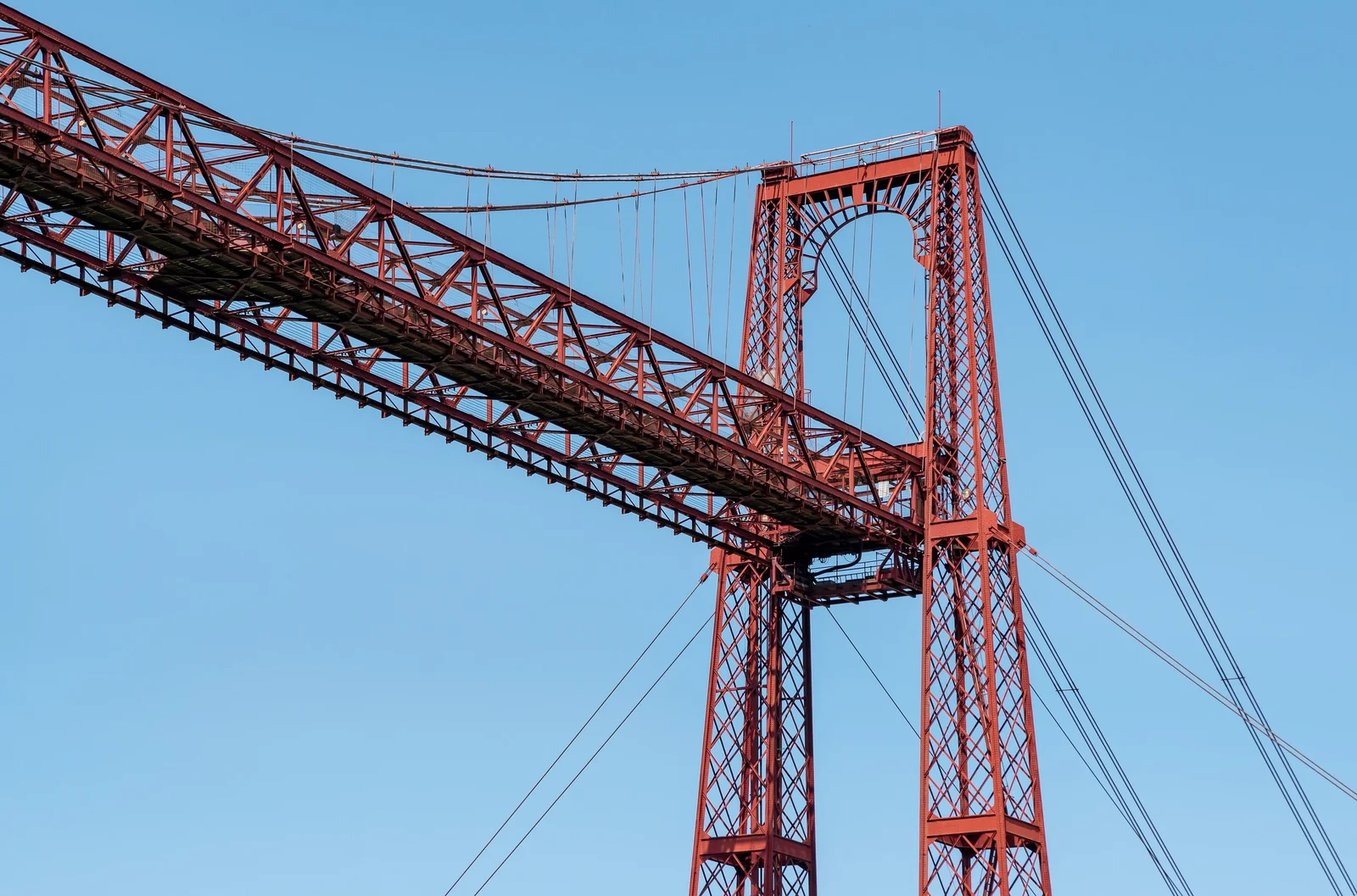
Built in 1893, the Vizcaya Bridge (Puente Colgante) is the world's oldest transporter bridge and a UNESCO World Heritage Site since 2006. A gondola hangs from the high crossbeam and ferries people and cars between Portugalete and Getxo for a small fee. A separate, pricier ticket takes you by lift to the walkway, about 50 meters above the estuary.
Getxo and the Beaches
Cross on the gondola and you are in Getxo, a well-heeled seaside town of grand villas. Walk north past Ereaga beach to the Puerto Viejo of Algorta, a cluster of whitewashed fishermen's houses, then catch metro line 1 back. Surfers ride farther up the same line to the beaches of Sopela.
San Juan de Gaztelugatxe
A small hermitage on a rocky islet, joined to the mainland by a stone bridge and a zigzag path of 241 steps, Gaztelugatxe is the most photographed spot on the Basque coast. Access is free, but at busy times, including summer, Easter and many spring and autumn weekends, you need a free timed reservation. Dates change every year, so check the official booking page before you go.
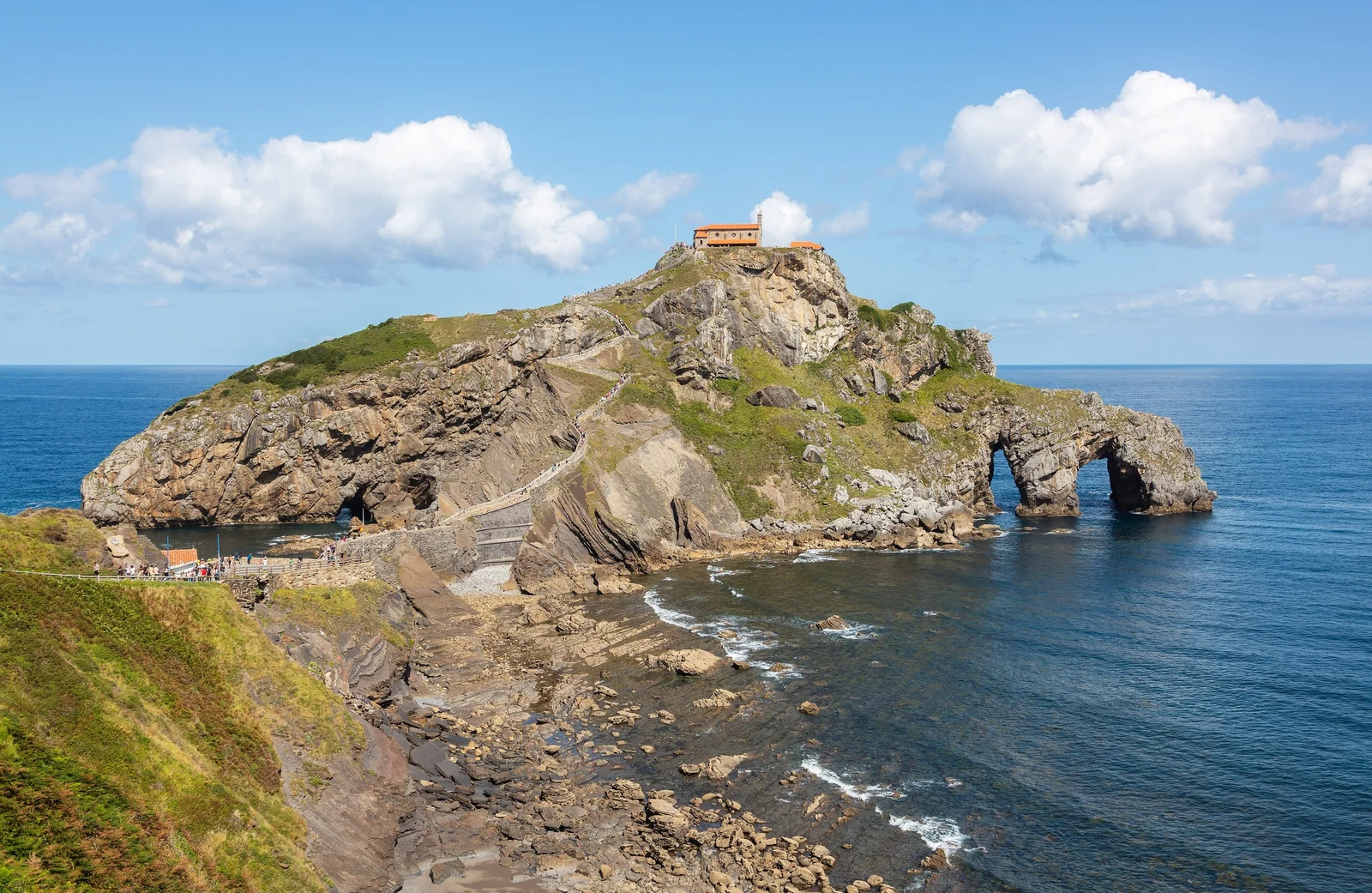
Wear proper shoes: the walk down from the parking area is steep, and the return is all uphill. Without a car, take Bizkaibus A3518 from Plaza Moyua to Bakio and connect from there. The onward bus is infrequent, so check times or budget for a taxi.
Urdaibai and Mundaka
The Urdaibai estuary, a UNESCO Biosphere Reserve since 1984, shows a quieter coast of wetlands, oak woods and fishing towns. The Euskotren E4 line runs through Gernika, remembered in Picasso's painting, to Mundaka, known for one of Europe's longest left-hand surf waves, and on to Bermeo.
San Sebastián by Bus
Direct buses leave Bilbao's Intermodal station roughly every hour and reach San Sebastián in about an hour and a quarter. That is enough for La Concha beach and a pintxos lunch, but the city deserves a night if you can spare one. Heading into France afterward? Our guide to castles in France has ideas for the road north.
Best Time to Visit Bilbao
Bilbao has a mild, green, Atlantic climate, which means rain is possible in any month. That shouldn't put you off; the city is built for it, with covered arcades, bars and museums never far away. Pack a light rain jacket whatever the season.
- May to June and September to October: the sweet spot, comfortable for walking and quieter than midsummer.
- July and August: the warmest beach days, the highest hotel prices and the busiest coast.
- November to March: wetter and quieter, fine for museums and pintxos, with better hotel rates.
Aste Nagusia in August
Bilbao's big summer festival, Aste Nagusia, takes over the city for nine days in the second half of August; in 2026 it ran from August 22 to 30. Expect free concerts, fireworks, Basque sports and riverside festival bars called txosnas, all presided over by Marijaia, a giant rag doll with raised arms. Book early, or pick other dates if you want a quiet museum trip.
Getting to Bilbao and Getting Around
From Bilbao Airport (BIO)
Bilbao Airport lies north of the city in Loiu. The Bizkaibus A3247 stops at Alameda Recalde and Plaza Moyua in the center before ending at the Intermodal bus station. It runs every 15 to 20 minutes from early morning until late evening and takes roughly 20 to 30 minutes.
By Train, Bus or Ferry
Long-distance trains from Madrid and other Spanish cities arrive at Abando station in the center. Intercity buses use the Intermodal station by the San Mamés stadium. Ferries from the UK dock at Santurtzi, on the estuary west of the city.
Getting Around the City
The center is walkable. For longer hops, Norman Foster's two-line metro, recognizable by its curved glass entrances, reaches Getxo, the beaches and Portugalete, and a tram runs along the river past the Guggenheim. A rechargeable Barik card cuts fares on the metro, tram, buses and the Artxanda funicular. The official Bilbao tourism site lists current transport cards and passes.
Where to Stay in Bilbao
Bilbao is small, so almost anywhere central works. Choose based on how you want your evenings to feel.
- Casco Viejo: the most atmospheric base, with pintxos bars on your doorstep. Rooms can be small and weekend nights noisy.
- Abando and the Ensanche: the practical choice, close to Abando station, the Gran Vía and the airport bus.
- Guggenheim and Abandoibarra: polished, quiet at night and close to the museums. Expect higher prices.
- Indautxu: residential, well connected by metro and slightly better value.
- Getxo: a summer option if beaches matter more than nightlife; the metro reaches the city in under half an hour.
A 3-Day Bilbao Itinerary
Day 1: The Guggenheim and the Riverfront
Be at the Guggenheim when it opens and spend the morning inside. After lunch, see Puppy and Maman, then walk the river to the Fine Arts Museum or Doña Casilda park. Late in the afternoon, ride the Artxanda funicular for the view, come back down and finish with pintxos in the Ensanche.
Day 2: Casco Viejo, La Ribera and Pintxos
Start at the Mercado de la Ribera while the stalls are busy, then wander the Siete Calles, the cathedral and Plaza Nueva. Cross the river for an afternoon in Bilbao La Vieja. In the evening, do a proper pintxos crawl around Plaza Nueva, sticking to one or two bites per bar.
Day 3: The Coast
Take metro line 2 to Portugalete, ride the Vizcaya Bridge gondola to Getxo and walk the seafront to the Puerto Viejo for lunch. If you hold a Gaztelugatxe reservation, take an early bus to Bakio instead. Planning a wider Iberian trip? Read our Lisbon guide or browse all European destinations.
Bilbao Travel FAQ
How many days do you need in Bilbao?
Two full days cover the Guggenheim, the old town, the Ribera market, the Artxanda funicular and two evenings of pintxos. Add a third day for the coast and a fourth if you want to see San Sebastián.
Is the Guggenheim Bilbao open on Mondays?
Usually not. The museum opens Tuesday to Sunday from 10 a.m. to 7 p.m., with longer summer hours, plus selected Mondays in summer and around holidays. Check the official calendar if Monday is your only free day.
Do you need to book San Juan de Gaztelugatxe?
Entry is free, but at busy times, generally summer, Easter, public holidays and many spring and autumn weekends, you need a free timed reservation. Dates change each year, so check the official booking system well ahead.
How do you get from Bilbao Airport to the city center?
Take the Bizkaibus A3247, which stops at Alameda Recalde and Plaza Moyua before ending at the Intermodal bus station. It runs every 15 to 20 minutes for most of the day and takes roughly 20 to 30 minutes.
Can you do San Sebastián as a day trip from Bilbao?
Yes. Direct buses leave Bilbao's Intermodal station about every hour and take around an hour and a quarter. A day covers La Concha beach and a pintxos lunch, though a night lets you enjoy the evening bar scene.
What is the difference between pintxos and tapas?
Pintxos are the Basque take on bar snacks, often on bread with a toothpick, displayed on the counter or cooked to order. You eat one or two with a small drink, move on to the next bar and pay at the end.
When is Aste Nagusia in Bilbao?
Aste Nagusia lasts nine days in the second half of August, starting on the Saturday after August 15. The 2026 edition ran from August 22 to 30, with free concerts, fireworks and riverside festival bars.