The abandoned villages in Spain you can actually visit are Belchite Viejo in Aragón, Granadilla in Extremadura, and a handful of reservoir and mountain villages such as Ruesta, Escó, Búbal and Umbralejo. Some are ruins you walk through on a guided tour. Some have been partly rebuilt as hostels or educational centers. A few are tangled in legal disputes, and one of them is best admired from a distance.
Spain has thousands of empty or near-empty villages, and the country has a name for the problem: España vaciada, or emptied Spain. Exact counts of abandoned places vary by source, so treat any single headline number with caution. What matters for a traveler is simpler. Each of the places below has a documented story, a clear way to see it, and rules you should follow. If you like this kind of trip, our guides to abandoned villages in Greece and the ghost towns of Scotland cover similar ground.
Abandoned Villages in Spain at a Glance
| Place | Region | Why it was abandoned | Access |
|---|---|---|---|
| Belchite Viejo | Zaragoza, Aragón | Destroyed in the 1937 battle of the Civil War | Guided tours only, day and night |
| Granadilla | Cáceres, Extremadura | Evacuated in the 1960s for the Gabriel y Galán reservoir | Walled site open on set days; check hours |
| Ruesta | Zaragoza, Aragón | Expropriated in the 1960s for the Yesa reservoir | Open village with a hostel and cultural house |
| Escó | Zaragoza, Aragón | Land taken for the Yesa reservoir in the 1960s | Free ruins above the reservoir; steep, no services |
| Búbal | Huesca, Aragón | Expropriated in 1961 for the Búbal reservoir, left empty by 1971 | Used for educational programs; check visiting rules |
| Umbralejo | Guadalajara, Castilla-La Mancha | Expropriated in 1971 by the state forestry agency | Educational center; public access is limited, so check first |
| Fraguas | Guadalajara, Castilla-La Mancha | Emptied in the late 1960s for state reforestation | Legal dispute over repopulation; not a normal tourist stop |
Why Spain's Villages Were Abandoned
There is no single cause, and that is what makes these places interesting. Three stories repeat across the map.
- Reservoirs. Mid-century dam building flooded valleys and forced entire communities out. Some villages went under the water. Others, like Granadilla and Escó, stayed dry but lost their fields and their reason to exist.
- War. Belchite was shattered in 1937, and the regime that won the war chose to leave the ruins standing and build a new town beside them.
- Emigration and state land policy. From the 1950s onward, people left mountain and dry-farming villages for cities and for jobs abroad. In places such as Fraguas and Umbralejo, the state forestry agency also bought up land and homes.
The result is a country where a medieval walled town, a Civil War battlefield and a slate-roofed mountain hamlet can all be described with the same word, abandoned. They are very different visits.
Belchite Viejo: The Civil War Ruins
Belchite is the most dramatic of all Spain's empty places. The old town, about 50 km south of Zaragoza, was fought over in August and September 1937, when Republican forces drove Nationalist defenders out after heavy fighting. Afterward, the Franco government declined to rebuild it and put up a new town next door. The old streets, the shell of the church and the brick tower stand as they were left.
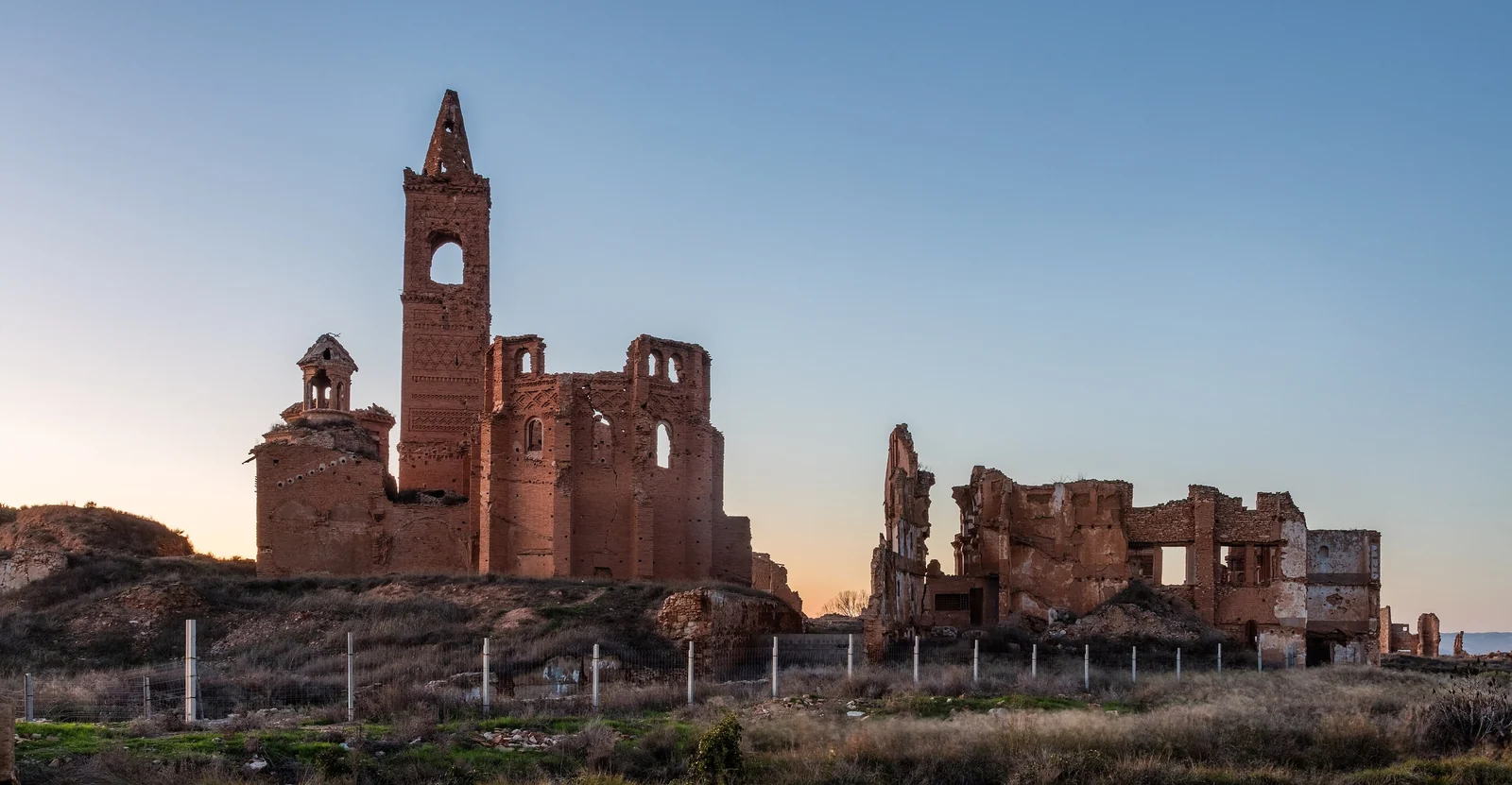
You cannot wander in on your own. Visits to the old town are guided, with daytime and night options, and the official Aragón tourism site describes the history and local stories the guides share. Tour times, languages and ticket prices change, so check the Aragón tourism page or the local tourist office, and book ahead for weekends. The route is on uneven ground, so wear sturdy shoes.
This is also a war memorial. People died here, and many descendants of the former residents still live in the new town. Keep your voice down, don't climb on walls and treat the guide's instructions as rules, not suggestions.
Granadilla: The Walled Town That Did Not Flood
Granadilla is the easiest abandoned village in Spain to visit, and one of the most beautiful. According to the Extremadura tourism board, Moors founded it in the 9th century, and Almohad walls later protected a town that was an important stop on the Vía de la Plata. A castle on the northwest side became Christian in the Middle Ages.
In the 20th century the town was declared a flood-risk zone when the Gabriel y Galán reservoir was built, and its people were moved out in the 1960s. Here is the odd part: the water never reached the walls. The town stayed dry and empty. It was declared a Site of Historic and Artistic Interest in 1980 and joined a state program to recover abandoned villages in 1984. Students have helped restore it since.
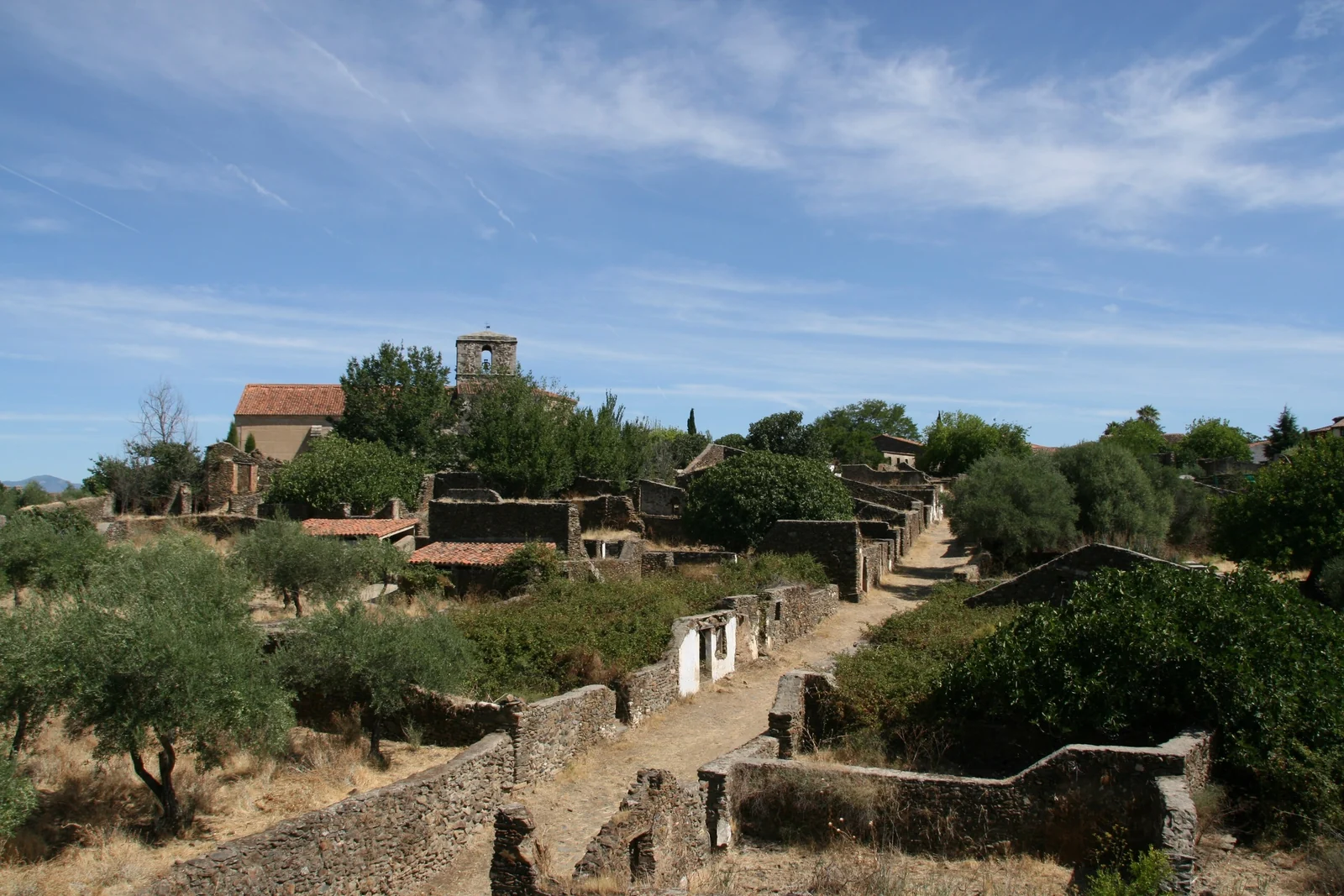
Visiting is simple. The walled town is open on set days with morning and afternoon hours and is closed on Mondays except holidays, but hours differ between summer and winter, so confirm them on the Extremadura tourism page. There is no café or shop inside the walls. The nearest village with food is Zarza de Granadilla, a short drive away. Some areas may be fenced off while conservation work continues.
The Yesa Reservoir Villages: Ruesta and Escó
The Yesa reservoir in northern Zaragoza province emptied several villages in the 1960s. Two of them make a good pair for a day trip, and both sit near the Camino Aragonés, the Aragonese branch of the Camino de Santiago.
Ruesta
Ruesta was expropriated for the reservoir and left mostly empty, though the upper part of the old town survived above the water line. In 1988 the village was handed to the CGT union in Aragón, which restored several buildings with help from architects. Today the village has a hostel and a cultural house, a medieval castle tower and a good deal of award-winning restoration work. Film fans may recognize it from Luis García Berlanga's La vaquilla.
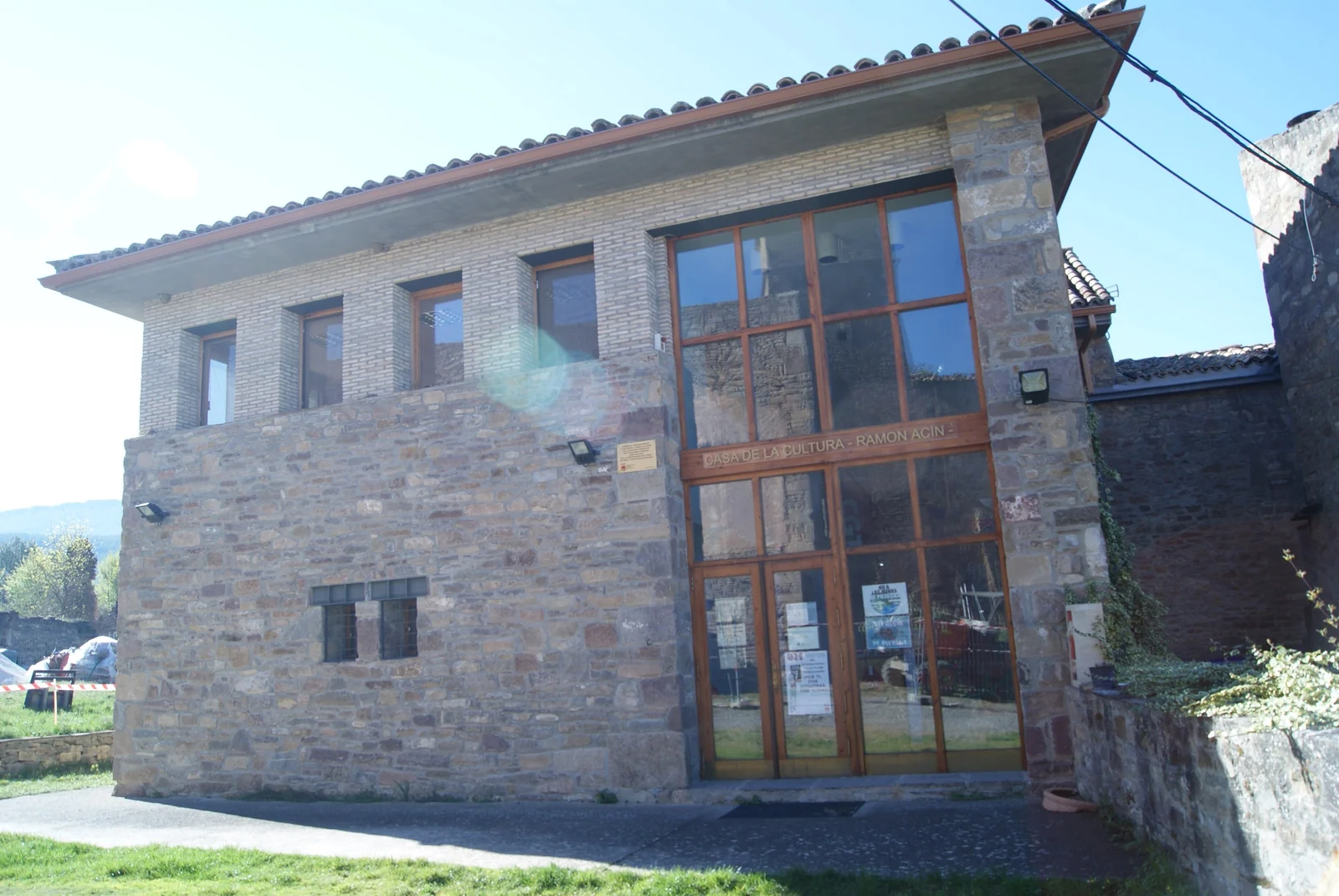
Because Ruesta has a working hostel and a nearby campground, it is the one place in this guide where you can sleep inside an abandoned village. Opening periods change, so contact the hostel directly before you plan around it.
Escó
Escó is the wilder neighbor. Most of its land was taken for the reservoir, and the village was abandoned, leaving ruins in different stages of decay on a hillside above the water. The best-known building is the church of San Miguel Arcángel. There are no services and the streets are steep, so go in daylight, avoid leaning walls and skip windy days.
Búbal: The Pyrenean Village Reborn as a Classroom
Búbal sits in the Tena Valley in Huesca, in the municipality of Biescas. It was expropriated in 1961 for the Búbal reservoir on the Gállego river and was definitively abandoned by 1971. Part of the old village went under the reservoir, and many houses were demolished.
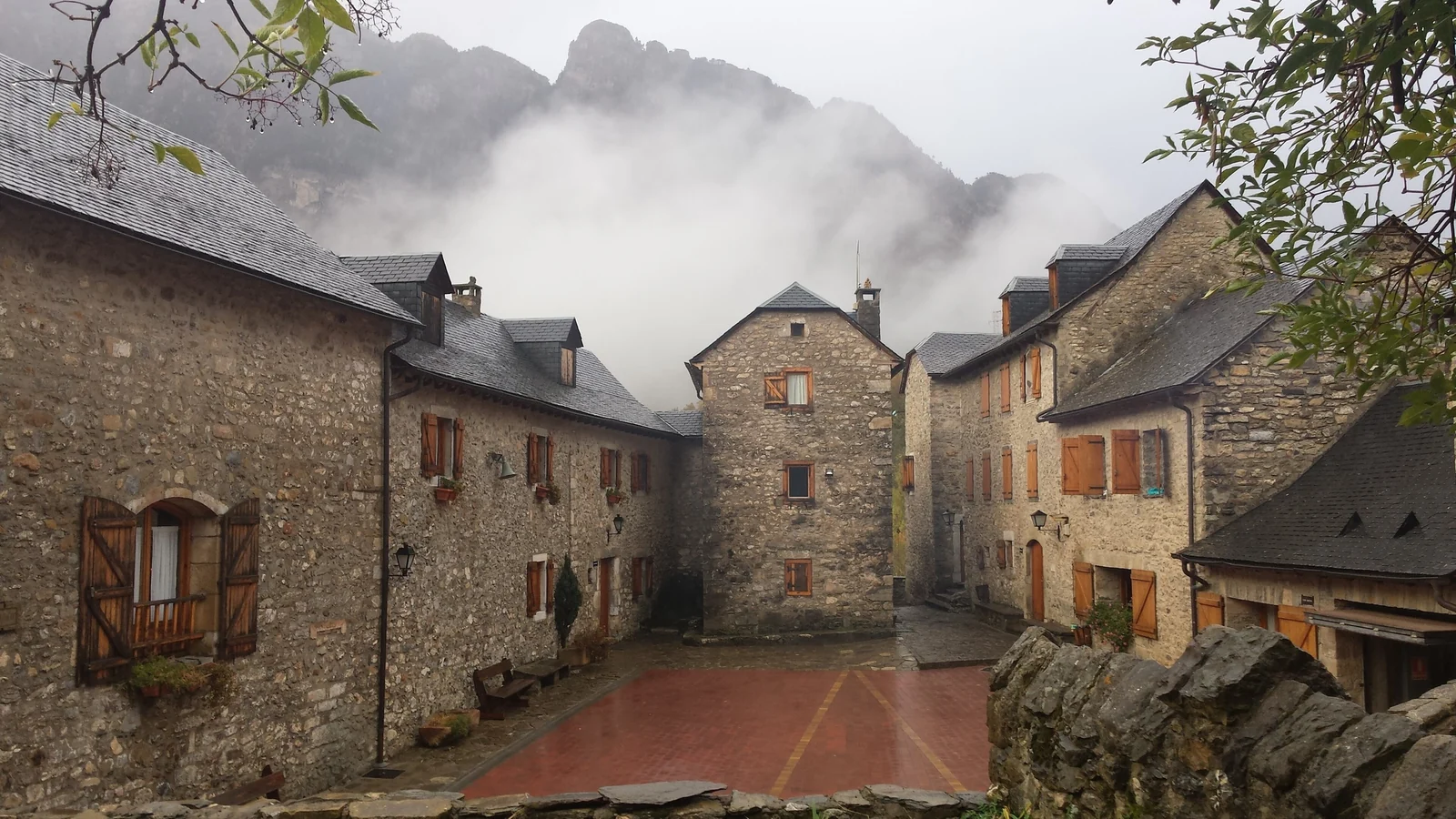
Since 1984, Búbal has belonged to Spain's program for the recovery and educational use of abandoned villages, along with Granadilla and Umbralejo. The houses have been rebuilt in the traditional Pyrenean style, but it works mainly as a place for school and student groups. The program's page does not promise public visits, so check the Spanish environment ministry's educational villages page and the local tourist office before driving up. Rural houses are easy to find in nearby Sallent, Panticosa and Biescas.
Umbralejo: Black Architecture in the Sierra de Ayllón
Umbralejo is one of the Pueblos de la Arquitectura Negra in Guadalajara, so called for the dark slate and quartzite used to build them. It stands above 1,250 meters in the Sierra de Ayllón, in the Sorbe valley. Records of the village go back to 1495. In 1971 the state forestry agency expropriated the buildings and land, and the last residents left.
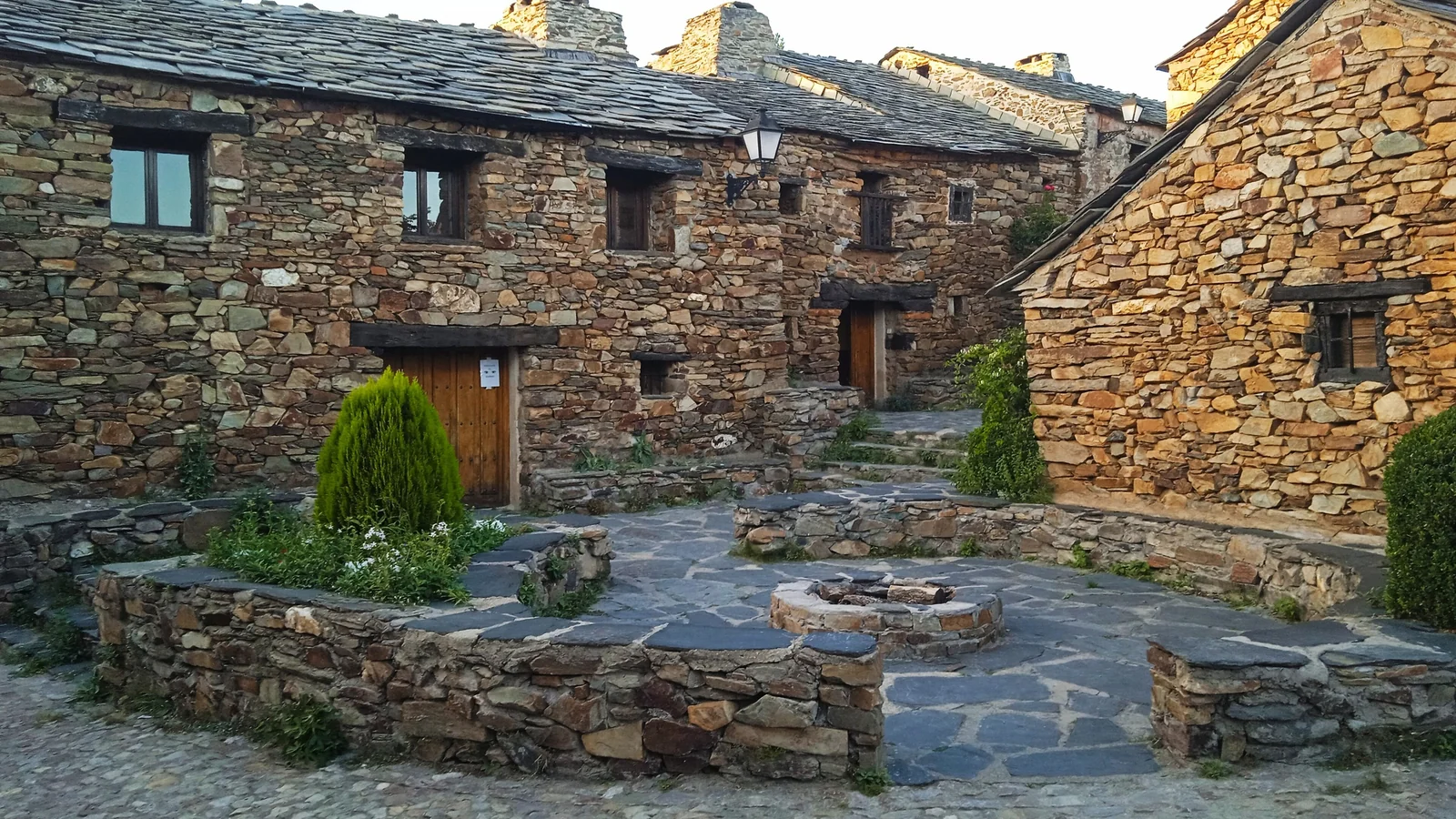
Like Búbal and Granadilla, Umbralejo became an educational center in 1984, and its restoration is the work of the students who have stayed there. It is a fine place to see black architecture in a village with nobody selling anything. Public access is not guaranteed, so confirm the rules before you go. If the village is closed to you, nearby Valverde de los Arroyos and Campillo de Ranas, both still lived in, are good alternatives.
Fraguas: The Village People Rebuilt and the Courts Contested
Fraguas, in the Sierra Norte of Guadalajara, was emptied in the late 1960s as part of a reforestation program, and in 1970 the state forestry agency registered it in its name. Later the land was used for army training. From around 2012, a group of young people moved in and rebuilt houses.
That led to criminal convictions in 2019 for offenses against land-use rules, a confirmed sentence and, in 2022, a court valuation of the cost of demolishing what had been built. Researchers at Spain's national research council argued that the village as a whole could be regarded as archaeological heritage. I would not plan a trip around Fraguas. Check recent news before you consider a visit, and remember that people may live there under legal pressure.
Practical Tips for Visiting Abandoned Villages in Spain
Getting there
You need a car for almost all of these. Belchite is about 50 km south of Zaragoza, which sits between Madrid and Barcelona on the high-speed line, so Zaragoza is a sensible base for Belchite, Ruesta and Escó. Granadilla is reached by road from Zarza de Granadilla in northern Extremadura, and Umbralejo and Fraguas are a drive from Madrid into Guadalajara province. Mountain roads to Búbal and Umbralejo can be slow in winter. If you are flying in, a stop in Barcelona pairs well with a few days in Aragón.
Best season
Spring and autumn are the best times. Summers in Extremadura and the Ebro valley are hot and shadeless, which makes Belchite and Granadilla hard work at midday. Winter can bring snow and ice to Búbal and Umbralejo, which sit at altitude. Late afternoon light is kind to ruins everywhere.
Safety and respect
- Never enter ruined houses. Adobe, brick and old stone walls can collapse without warning, and roofs and floors are often rotten.
- Stay on the routes your guide or the signs allow, and respect fences. Many sites are fenced for a reason.
- Treat private property as private. An empty-looking farm building usually has an owner.
- Take nothing home. Roof tiles, door fittings and pieces of masonry belong to the site.
- Bring water, a charged phone and a map. Several places have no services and patchy signal.
- Remember that some villages are memorials, others are classrooms and some are homes. Behave accordingly.
For another take on how places become empty and then come back, read our guide to St Kilda, Scotland's abandoned island village.
Abandoned Villages in Spain FAQ
What is the most visited abandoned village in Spain?
Belchite Viejo in Aragón is probably the best known, because it preserves the ruins of a Civil War battle. Granadilla in Extremadura is the easiest to visit on your own, since you can walk its restored walled town on open days.
Can you stay overnight in an abandoned village in Spain?
Yes, in a few. Ruesta in Zaragoza province has a hostel and a nearby campground in a restored part of the village. Opening periods change, so contact them directly. Most other places in this guide have no lodging and are best reached from a nearby town.
Is it legal to explore abandoned villages in Spain?
Only where access is allowed. Many ruins stand on private or state land, and some sites are fenced or restricted. Visit places that are signposted, guided or officially open, and never enter buildings. Fraguas shows how serious the legal consequences of occupying land can be.
Why were so many Spanish villages abandoned?
The main causes are rural emigration to cities and abroad, reservoir construction that took land and homes, Civil War destruction and state forestry programs that bought land. Today the broader depopulation of inland Spain is known as España vaciada.
Are Granadilla and Búbal really abandoned?
They were emptied in the 20th century, but both have since been rebuilt in part. They are run under a state program that uses abandoned villages for education. So you see restored houses with few or no permanent residents, not untouched ruins.
When is the best time to visit?
Spring and autumn offer mild weather and good light. Summer is very hot in Extremadura and the Ebro valley, and winter brings cold and sometimes snow to mountain villages such as Búbal and Umbralejo. Check opening hours for each site in any season.
Can you visit Belchite without a guide?
No. Visits to the old town are guided, with daytime and night options. Book through the official channels, check the language of the tour and allow around an hour or more. Bring sturdy shoes and water, because there is little shade.