


Tenerife is the largest of Spain's Canary Islands, an Atlantic volcano island off the coast of northwest Africa that packs a snow-capped peak, ancient laurel forest, black-sand beaches and a colonial old town into roughly 80 kilometers from end to end. Most visitors know it for sunshine and resorts. The island is a lot more interesting than that, and the contrast between its green north and dry south is the key to planning a good trip.
This Tenerife travel guide is organized by region: the volcanic highlands around Teide, the cloud forest of Anaga, the dramatic west coast near Masca, the university town of La Laguna and the beaches on both sides of the island. It also covers whale watching without harming the animals, where to base yourself and when to go. For more Spanish destinations, see our Spain travel guides.
Teide National Park and the Cable Car
Mount Teide is the highest peak in Spain, at roughly 3,700 meters above sea level, and it rises from the floor of a vast volcanic caldera known as Las Cañadas. The national park around it was declared in 1954 and became a UNESCO World Heritage Site in 2007. It draws around four million visits a year, which makes it one of the busiest national parks in Europe.
The landscape is the point. Expect lava fields in rust, black and ochre, pale pumice plains, strange wind-carved boulders such as the Roques de García, and silence broken mostly by wind. In late spring the endemic Teide bugloss sends up tall red flower spikes, which is a good reason to visit in May or early June.
Riding the Teide Cable Car
The Teide cable car is the easy way up. The lower station sits at about 2,356 meters, and in around eight minutes the cabin lifts you to La Rambleta at about 3,555 meters, where the views run across the caldera to the other Canary Islands on clear days. The altitude is real: expect cooler air, thinner oxygen and possible headaches or breathlessness, so wear layers and go slowly.
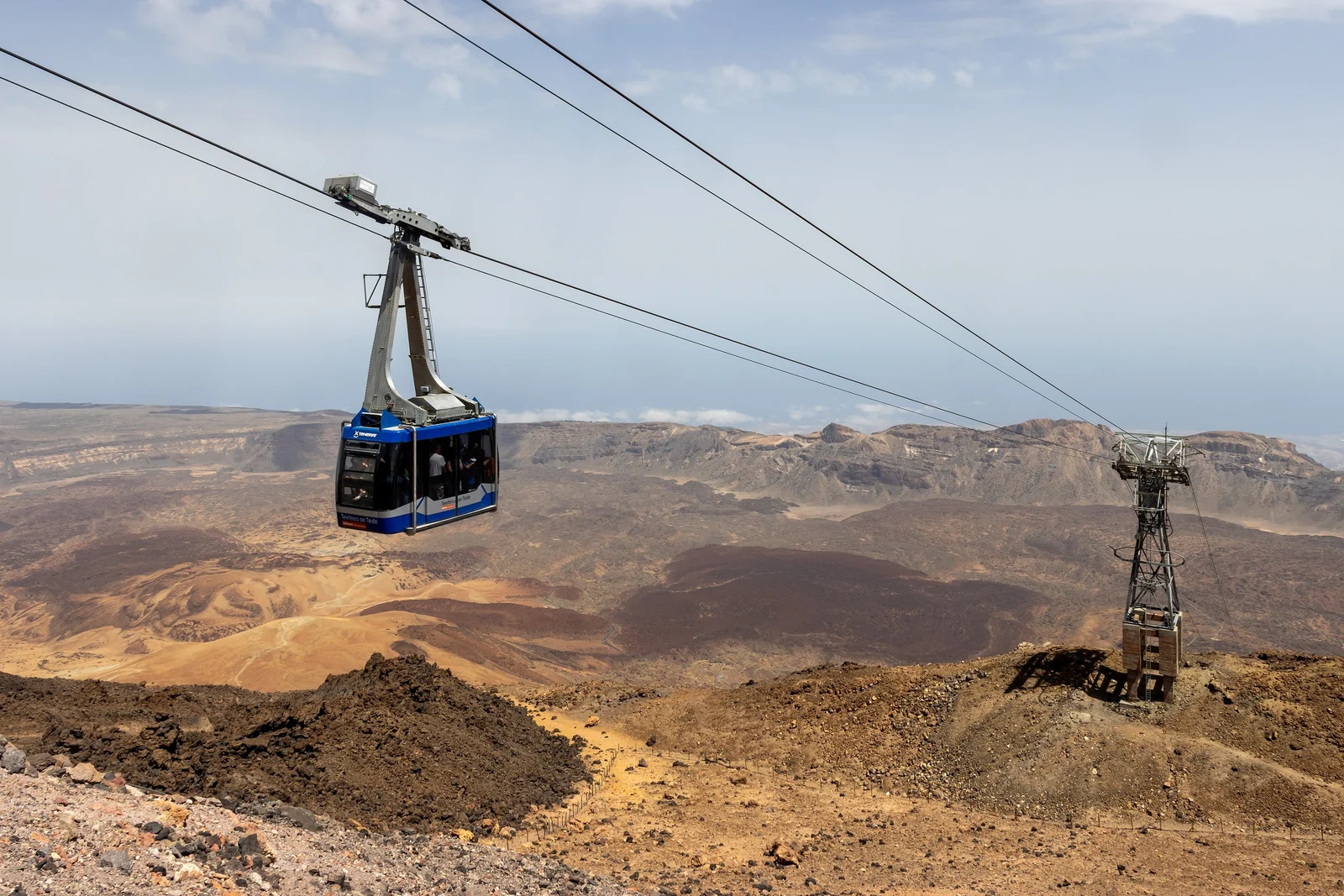
Queues can be long and the cable car stops in strong wind, so book a timed ticket in advance on the official cable car website and go early in the day. Check the weather forecast for the summit, not for the coast; the two can be completely different.
The Summit Permit and Other Teide Walks
From the upper cable car station, the last stretch to the crater rim is on a regulated path. Reaching the actual summit requires a free permit that must be booked in advance through the national park authority, and a cable car ticket does not include it. Spaces are limited, so reserve early or plan to enjoy the lower viewpoints instead.
If you would rather walk, the park has well-marked trails of every length, from short loops around the Roques de García to long climbs from Montaña Blanca. Bring water, sun protection and a warm layer, because there is almost no shade and the weather turns quickly. Public buses reach the park, but services are limited, so check current timetables on the official Tenerife tourism site or rent a car for flexibility.
Anaga Rural Park: Tenerife's Ancient Forest
The northeastern tip of the island could hardly be more different from Teide. Anaga is a knot of steep ridges and ravines covered in laurisilva, a type of subtropical laurel forest that once spread across southern Europe and survives in only a few places. It is a UNESCO Biosphere Reserve, designated in 2015, and the mist that drifts in from the Atlantic keeps it permanently green.
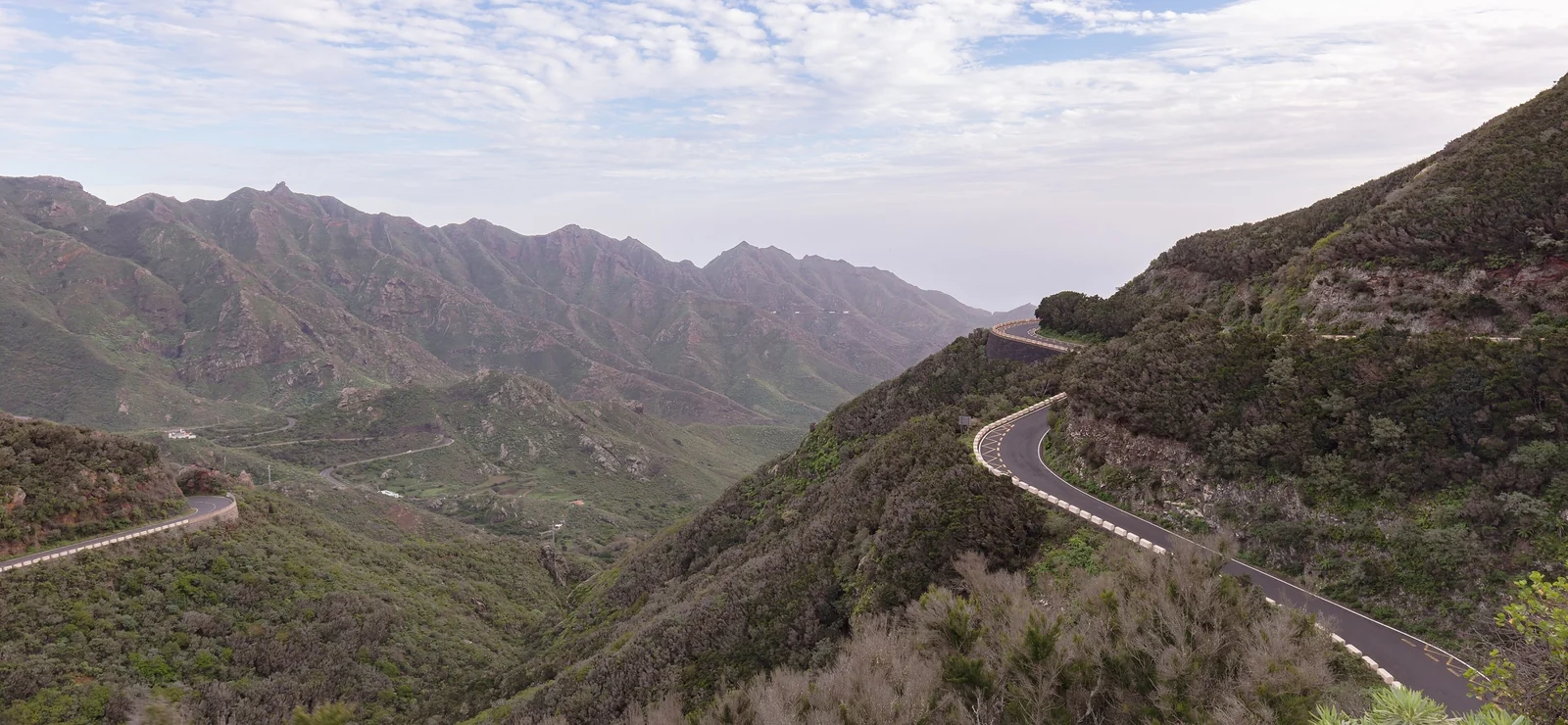
Where to Walk in Anaga
Most visits start at the Cruz del Carmen visitor center, where short forest paths and several viewpoints give you a first taste. Longer trails drop to hamlets such as Chinamada, known for its cave houses, and to the village of Taganana on the north coast. Mornings are best, before cloud and day-trippers build up.
Mist, steep drops and slippery stone are normal here, so wear shoes with grip and carry a light rain jacket even when the south is sunny. Roads are narrow and winding, and car parks at the main viewpoints fill early. Rules for some areas can change, so check the visitor center or the park's official pages before you set out.
After the walk, head down to the north coast to eat fish at one of the small restaurants near Benijo, where black-sand coves sit below sharp volcanic rocks. Swimming here depends heavily on swell, so respect any warning flags.
Masca and the West Coast
Masca is a tiny village at roughly 650 meters in the Teno Mountains, with stone houses hanging on a ridge above a deep gorge. It was inhabited before the Spanish conquest of the island in 1496, and its remoteness is what keeps it atmospheric. The drive in is spectacular and nerve-testing, with sharp hairpins and few places to pull over.
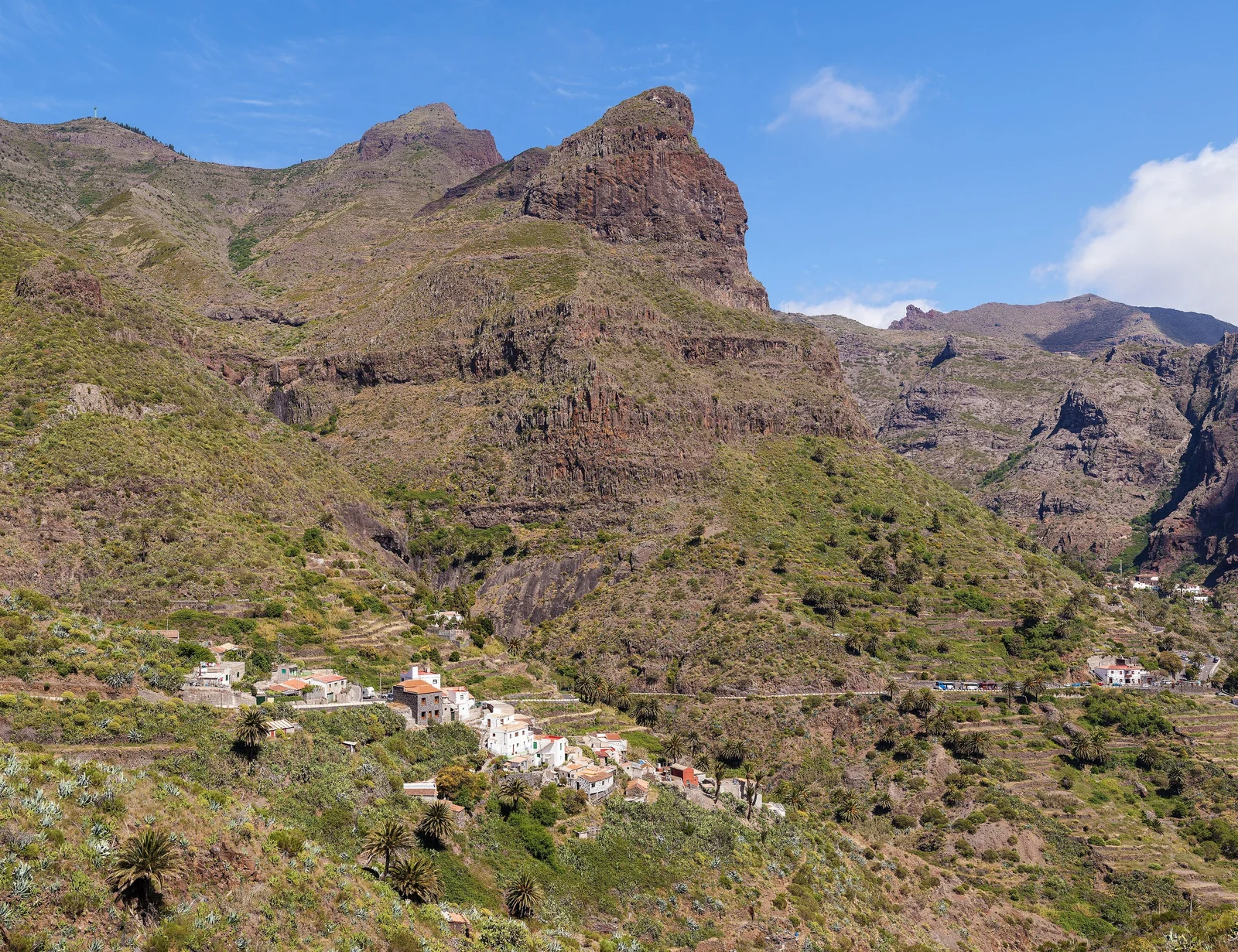
Hiking the Masca Gorge
The classic walk follows the gorge from the village down to a small beach on the Atlantic, taking about three hours one way. It is strenuous, with loose rock and scrambling, and you have to get back out by boat or climb up again. Access to the gorge and to the village itself has become regulated in recent years, with limits on numbers and booking requirements. Check the current rules and book through the official Cabildo of Tenerife channels before you plan around it.
If you only want the views, the viewpoints on the road and a coffee in the village are enough. Combine Masca with the cliffs of Los Gigantes and the old port town of Garachico, which was largely buried by a volcanic eruption in 1706 and rebuilt around natural lava rock pools.
San Cristóbal de La Laguna: The Old Capital
La Laguna, a short tram ride from Santa Cruz, was the island's first capital and is now a lively university town. Its historic center has been a UNESCO World Heritage Site since 1999, recognized as the first Spanish colonial town not laid out around a fortress. Its gridded streets became a model for colonial cities across Latin America.
It is a place for slow wandering. Look for the colorful facades and carved wooden balconies of the old mansions, the cathedral and the Church of the Immaculate Conception, then settle into a bar for local dishes and wine. Students keep the streets busy in term time, and the cooler highland air makes a welcome break from the coast.
Spanish colonial cities are a theme across the country. For comparison, our guides to Seville and Andalusia and Barcelona show how different the mainland feels.
Tenerife Beaches: North vs. South
The island's trade winds split it into two climates. The north catches clouds and moisture, so it is greener, a little cooler and more changeable. The south sits in the rain shadow of the mountains and is usually drier and sunnier. That difference shapes the beaches as much as the sand does.
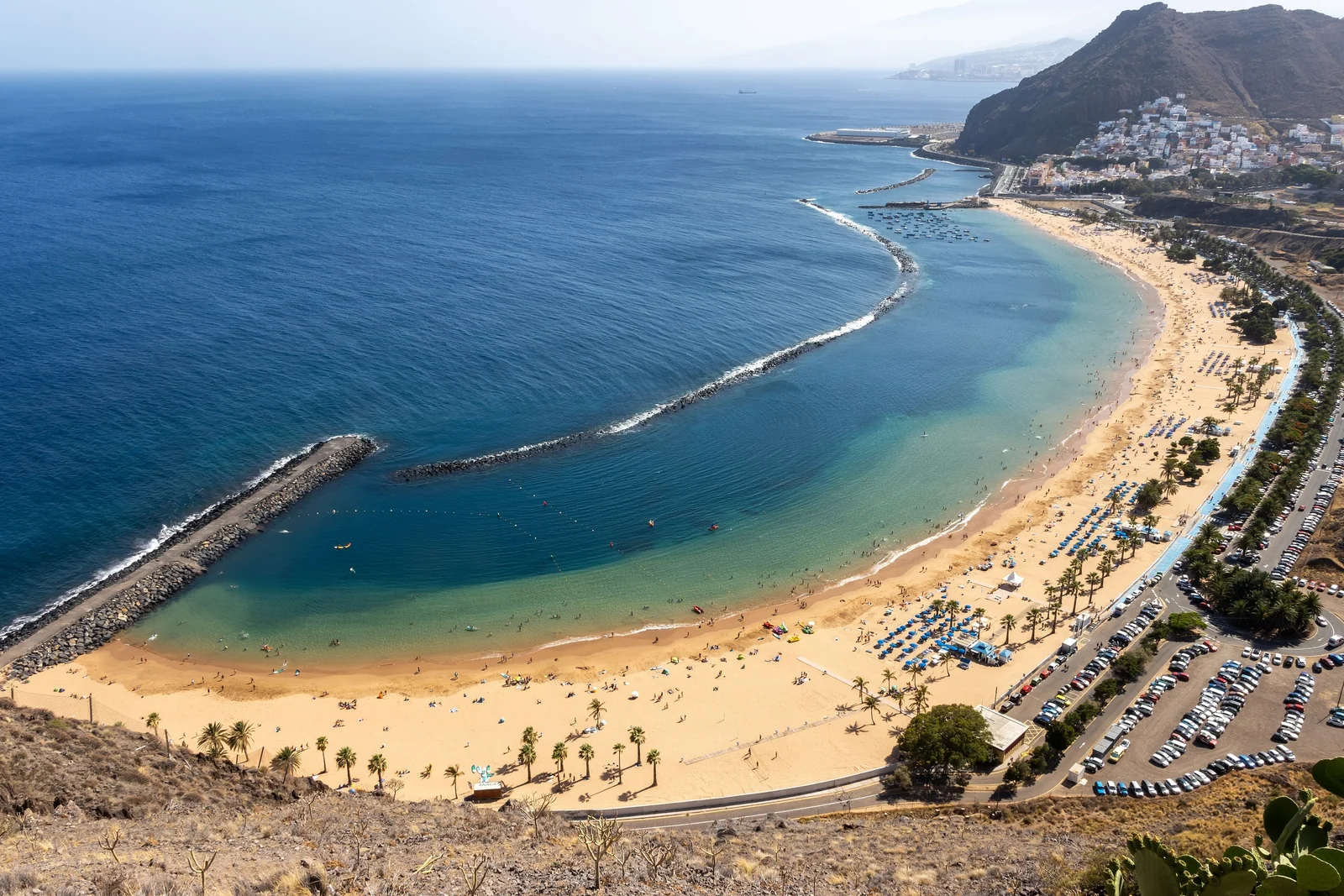
The North: Black Sand and Natural Pools
North-coast beaches are mostly dark volcanic sand and shingle, and the Atlantic can be rough. The city beach of Las Teresitas near Santa Cruz is the exception, with pale sand that was largely brought in, set in a sheltered bay. Elsewhere, look for natural and designed seawater pools, such as the swimming lagoons at Puerto de la Cruz created by the artist César Manrique, which are safer than open surf.
The South: Calm Bays and Wind
South of the mountains, the coast around Los Cristianos, Playa de las Américas and Costa Adeje has sheltered, easy beaches with services, sun loungers and gentle swimming. Farther east, El Médano is windy and attracts windsurfers and kitesurfers, while nearby Playa de la Tejita is wilder and less developed. Pick the south if guaranteed beach time matters most.
- For families and easy swimming: sheltered bays around Los Cristianos and Costa Adeje.
- For wind sports: El Médano on the southeast coast.
- For scenery over comfort: the black-sand coves of the north and Anaga coast.
- For a day with city access: Las Teresitas, reachable from Santa Cruz.
Whale Watching in Tenerife, Done Responsibly
The sea off the southwest coast, between Tenerife and La Gomera, is home to resident short-finned pilot whales and bottlenose dolphins, so sightings are common throughout the year. Most boats leave from Los Cristianos, Puerto Colón and Los Gigantes. That convenience also means heavy boat traffic, and the quality of the operator matters.
Choose carefully, and keep these points in mind:
- Look for authorized operators. Boats flying the yellow Barco Azul flag from the Canary Islands government follow local rules on whale and dolphin watching. Ask about their permits when you book.
- Keep your distance. A good captain approaches slowly, stays at a respectful distance and does not chase or surround animals.
- Never swim with, touch or feed them. This is not allowed and disturbs natural behavior.
- Prefer smaller, quieter boats and limited trip times. Fewer people and less engine noise mean less stress for the animals.
- Be wary of guarantees and bargain prices. Sightings can never be promised, and a trip that promises close contact is a warning sign.
Where to Stay in Tenerife by Area
Tenerife is big enough that your base shapes your trip. Distances look short on a map but mountain roads are slow, so choose the area that matches your priorities and plan day trips from there.
| Area | Best for | Trade-off |
|---|---|---|
| Costa Adeje and Playa de las Américas | Beaches, resorts, nightlife, sunny weather | Heavily developed and busy |
| Los Cristianos | Ferries to La Gomera, whale watching, easy beach | Mostly package tourism |
| El Médano | Wind sports, a relaxed seaside town | Windy, less polished |
| Los Gigantes | Cliffs, boat trips, quieter west coast | Steep streets, limited beaches |
| Puerto de la Cruz | Walkable town, sea pools, easy north-coast access | Cooler and cloudier than the south |
| La Laguna and Santa Cruz | Culture, food, local life, access to Anaga | Not a beach base |
| Rural north (La Orotava, Garachico) | Historic villages, quiet stays, hiking | A car is almost essential |
A common approach is to split the stay: a few nights in the sunny south for beaches and whale watching, and a few in the north or La Laguna for Anaga, Teide and food. If you only have one base, the northwest or the south coast works, because both put Teide within a long but manageable drive.
Best Time to Visit Tenerife
Tenerife has a mild subtropical climate and can be visited all year, which is a big reason it is popular in winter. Sea temperatures stay moderate, so swimming is possible in any month, though the water is cool compared with the Mediterranean in summer.
- Spring (April to June): warm days, flowers on the highlands and fewer crowds than midsummer. The best all-round window for hiking.
- Summer (July to September): the driest and hottest period, good for beaches, with the highest prices and busiest roads. The north is cooler and less crowded.
- Autumn (October to November): still warm, with the first showers in the north and good value.
- Winter (December to March): mild at sea level and popular with northern Europeans, but rain and clouds are more likely in the north and snow can close Teide roads or the cable car.
Whatever the month, pack layers. The temperature drops quickly with altitude, and it is common to leave a warm beach and arrive at a windy, cold Teide viewpoint within a couple of hours.
Getting to Tenerife and Getting Around
Tenerife has two airports: Tenerife South in the dry southern half, used by most holiday flights, and Tenerife North, which serves inter-island and mainland Spanish routes. Choose the airport closest to your base to avoid a long transfer.
A rental car is the most flexible way to see the island, especially for Anaga, Masca and Teide. Roads are good but mountain routes are steep and twisty, and parking at popular viewpoints can be tight. Buses run between the main towns and a tram links Santa Cruz with La Laguna, so you can manage a south-coast beach holiday and some day trips without a car. If you plan to combine Spain with other Atlantic islands, our Azores island-hopping guide offers a useful comparison.
Tenerife Travel FAQ
How many days do you need in Tenerife?
Five to seven days is a comfortable first visit. That gives you a day for Teide, a day for Anaga, another for La Laguna and the north coast, one for Masca and the west, plus beach and whale-watching time.
Do you need a permit to go to the top of Teide?
The cable car takes you to about 3,555 meters, but the final stretch to the summit needs a free permit booked in advance with the national park. The permit is separate from the cable car ticket and numbers are limited.
Is it better to stay in the north or south of Tenerife?
The south is sunnier and better for beaches and resorts. The north is greener, quieter and closer to Anaga, La Laguna and the old towns. Many travelers split their stay between the two.
Can you still hike the Masca gorge?
Yes, but access is regulated and limited, with booking requirements that have changed in recent years. Check the official Cabildo of Tenerife channels before you go, and be prepared for a strenuous, rocky walk.
How do you choose a responsible whale-watching tour?
Look for authorized operators, such as boats flying the Barco Azul flag, and avoid anyone offering to swim with or touch animals. A good tour keeps its distance, uses small groups and never promises a sighting.
What is the best time to visit Tenerife?
Spring is the best all-round time for hiking and mild weather, and summer is best for beaches. The island is also popular in winter because the south stays mild, though the north and Teide are cooler and wetter.
Do you need a car in Tenerife?
It is not essential if you stay in a southern resort and join tours, but a car makes Anaga, Teide and Masca far easier. Buses cover the main routes and a tram links Santa Cruz and La Laguna.