St Kilda is a remote Atlantic archipelago about 40 miles west of the Outer Hebrides, and its main island, Hirta, holds the ruins of a village that was abandoned in 1930. You reach it only by boat: day trips run in summer from Harris and Skye, and whether you land depends entirely on the sea.
It is worth the effort. St Kilda is one of very few places in the world with dual UNESCO World Heritage status, for both its natural and its cultural value, and it is owned and cared for by the National Trust for Scotland. This guide covers the story of the evacuation, what you see ashore, how the boat trips work and when to go.
How to Visit St Kilda: The Short Version
There are no ferries and no flights. You have four realistic options: a day trip by small boat from Leverburgh on Harris or Stein on Skye, a longer cruise that includes St Kilda, a place on a National Trust for Scotland volunteer work party, or your own boat. Day trips are by far the most common choice.
Plan for flexibility. Boats can only land people in suitable weather, and an operator that has doubts about getting ashore may cancel the sailing. Nobody can promise a landing months ahead, so keep a spare day in your plans. Treat St Kilda as the highlight of a longer Scotland trip rather than a single fixed appointment.
The St Kilda Evacuation of 1930
On 29 August 1930, the last 36 islanders left Hirta aboard HMS Harebell and were taken to the mainland, to Morvern. The decision was the islanders' own, made together after they asked the government for help. The population stood at about 180 in the late 17th century and had dwindled to a few dozen by the end.
There was no single disaster. Emigration, harsh winters, illness and a growing dependence on the outside world made life on the edge too hard to sustain. Young people left, and there were too few hands to cut peat, climb the cliffs for birds or crew a boat. Anyone expecting a tale of catastrophe will find something more human: a community that decided, together, that it was time to go.
Village Bay, the Street and the Cleits
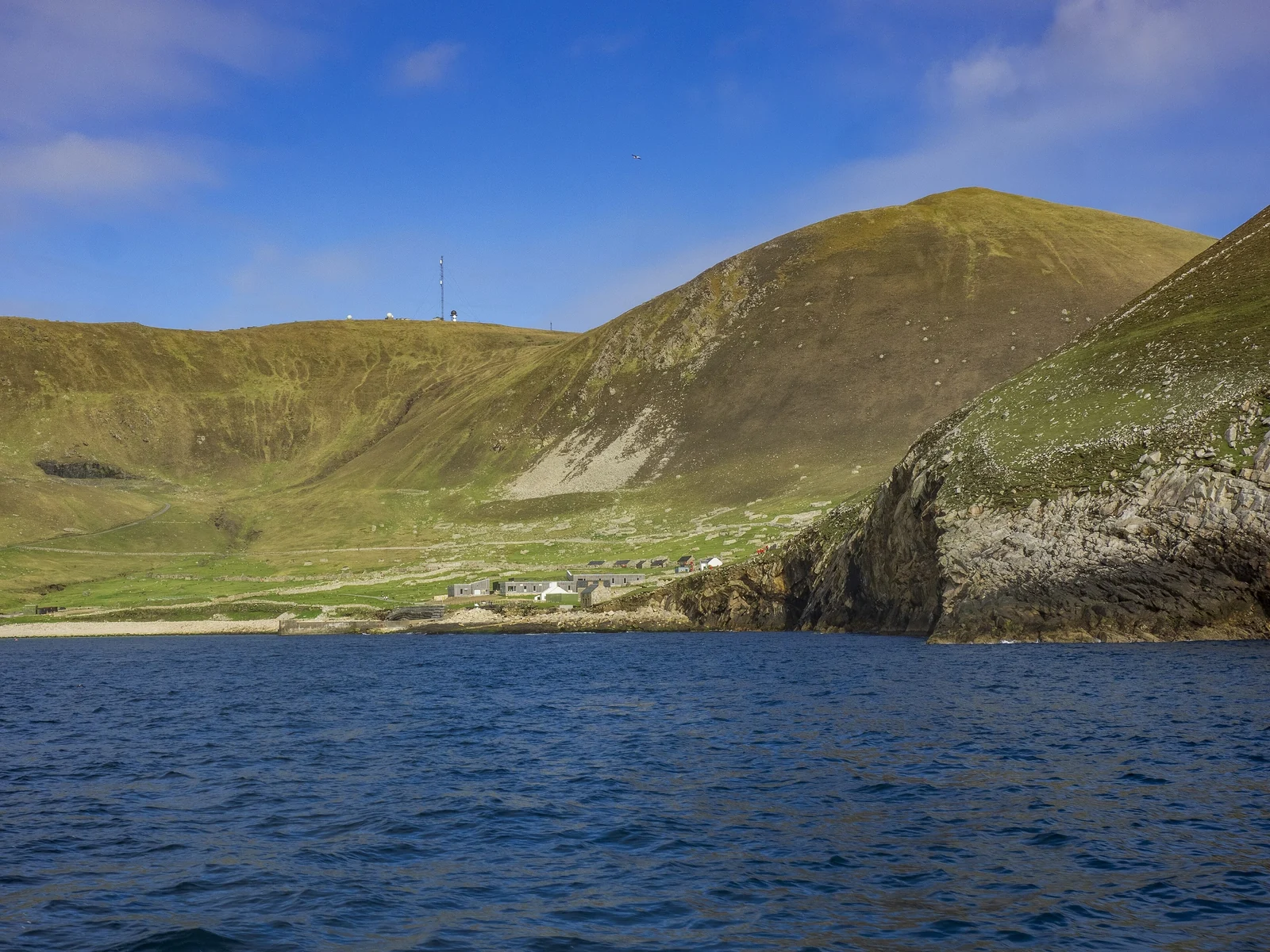
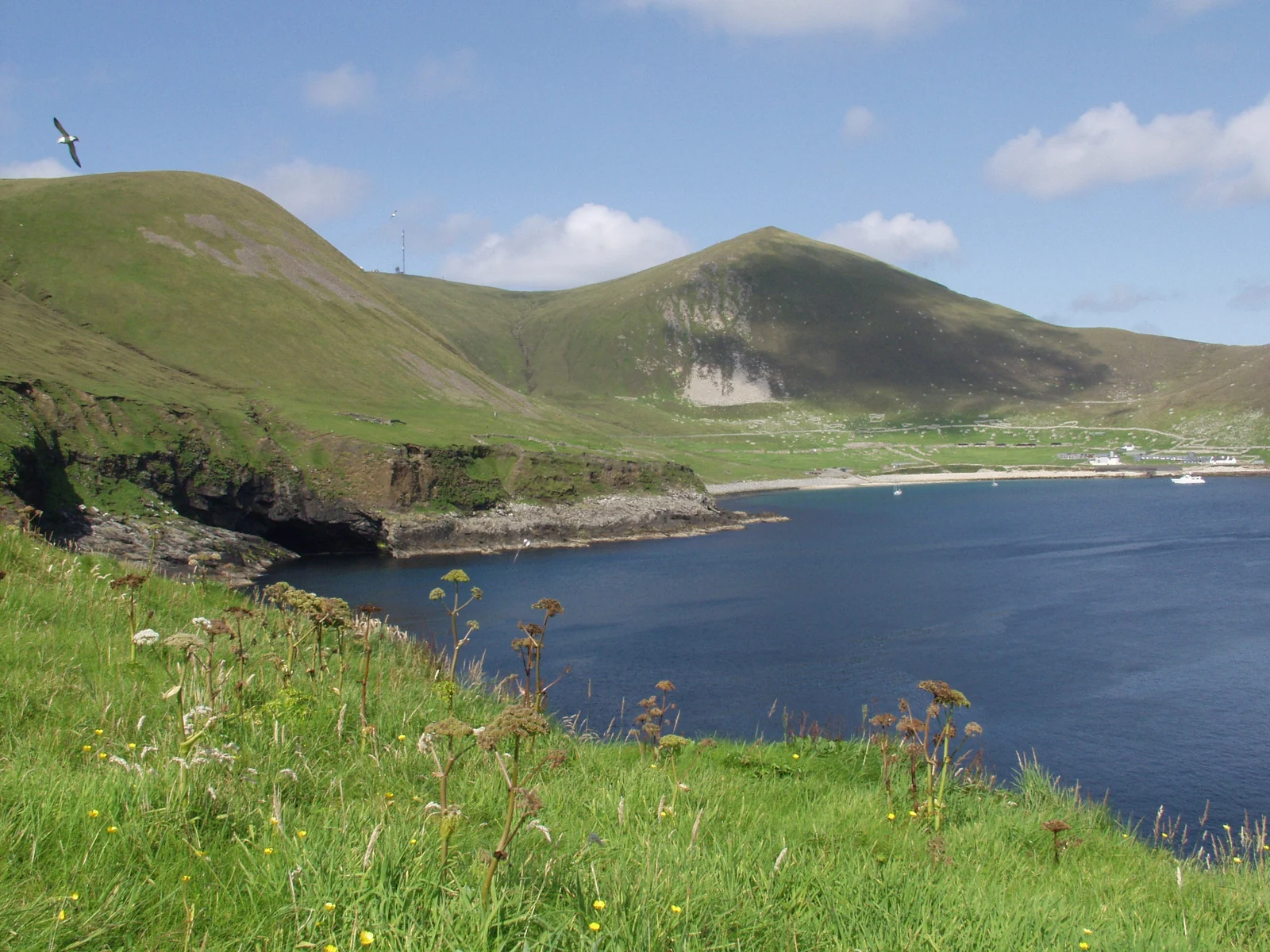
Almost every visit centers on Village Bay, the sheltered curve on Hirta's southeast side where boats drop you at a small jetty. The ruined village sits just above it, backed by steep green slopes and the hill of Conachair, which at 430 meters (1,410 feet) is the highest point in the archipelago.
The Street
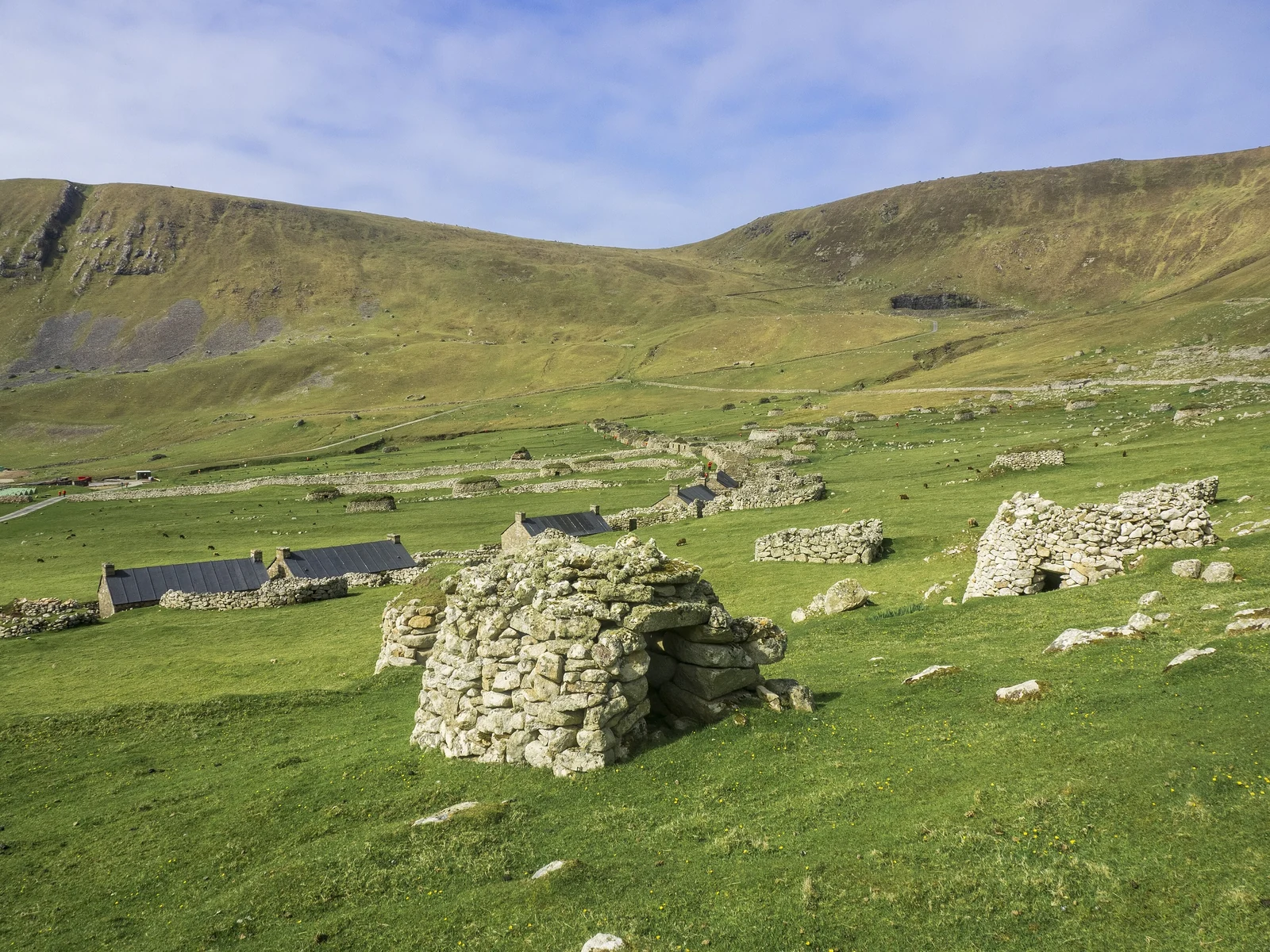
The curved line of cottages known as the Street was largely rebuilt in the 19th century, replacing older turf-and-stone blackhouses. Many of the roofless shells are still clear enough to count doorways and hearths. A few buildings have been re-roofed and are used by the National Trust for Scotland and visiting work parties, and one has housed a small museum, so check what is open when you go.
The cleits
What surprises most visitors is the number of cleits: small dry-stone storehouses with turf roofs, used to keep dried seabirds, eggs, peat and grain. Estimates vary by source, but there are well over a thousand on Hirta alone, scattered across the hillsides as well as around the village. Their airy stonework kept food dry in a damp, windy climate, and they are a big part of why the cultural landscape was recognized.
How the islanders lived
For centuries the islanders lived largely on seabirds. Men climbed the sea cliffs and stacks to catch fulmars, puffins and gannets, and feathers helped pay the rent. Sheep, barley and a little cattle did the rest. One famous 19th-century invention was the St Kilda mailboat: a small wooden boat with a sheepskin float, sent adrift with a message inside in the hope the current would carry it to Scotland or Norway.
Boreray and the Sea Stacks
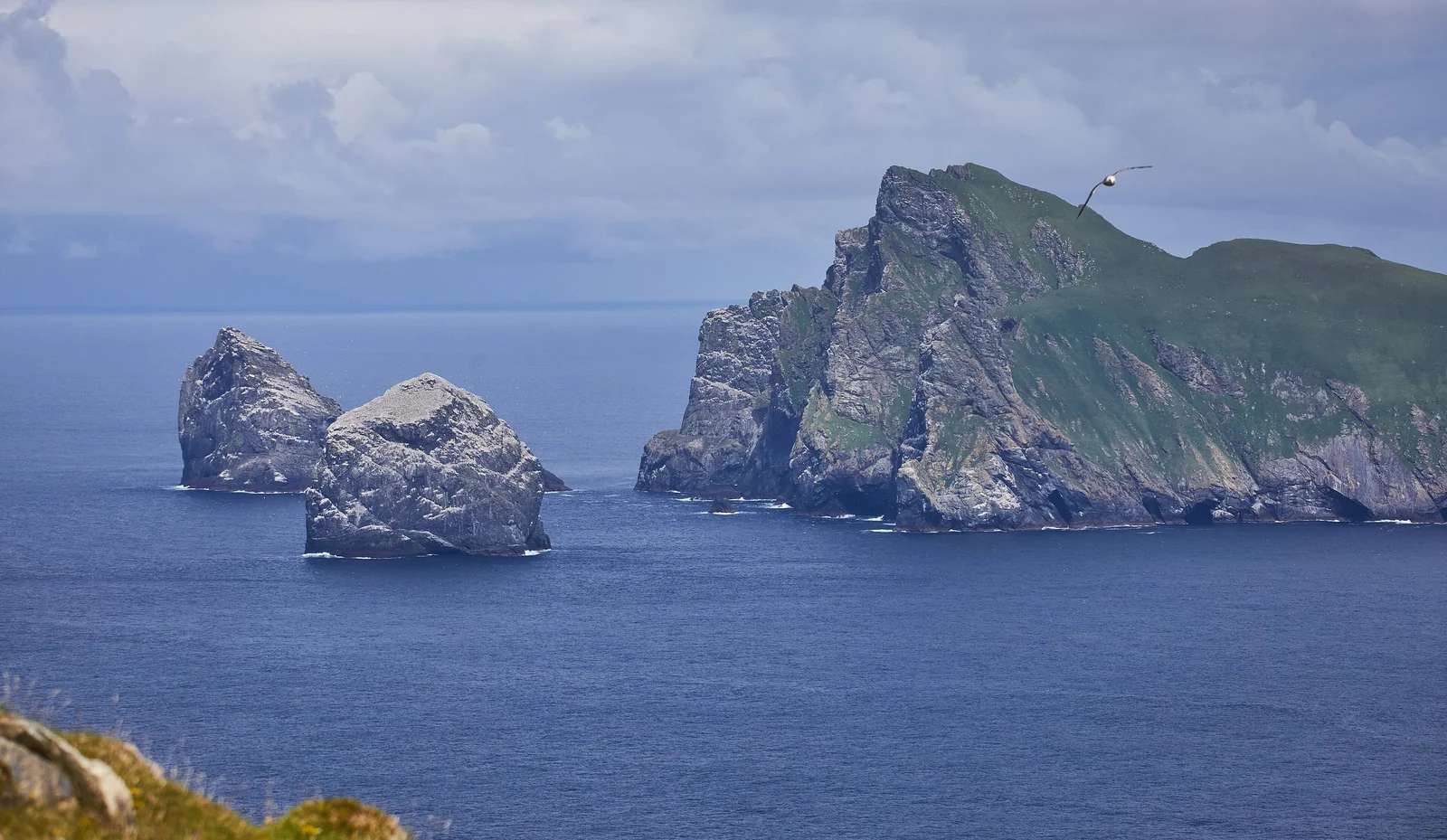
North of Hirta lie the other islands. Boreray rises to 384 meters and is home to a feral population of sheep of an ancient type. Beside it, Stac an Armin (196 meters) and Stac Lee (172 meters) are among the highest sea stacks in Britain, white with gannets in summer and almost unreal in scale when a small boat is dwarfed beneath them.
Landing on Boreray and the stacks is not part of a standard visit, so most people see them from the water. A good operator will pass them slowly on the way back from Hirta, weather permitting. Do not skip this part; many people say it is the part they remember best.
Seabirds: Gannets, Puffins and Fulmars
St Kilda is one of the great seabird stations of the North Atlantic. The northern gannet colony on Boreray and its stacks is among the largest in the world, with a vast number of breeding pairs. The birds dive from height into the sea and nest on every ledge, so the rock looks snow-covered from a distance.
Atlantic puffins nest in burrows in the turf, with a large colony on Dùn, the rocky arm that shelters Village Bay, and they are one of the easiest birds to see from the paths in summer. Fulmars are everywhere, gliding along the cliffs and nesting among the ruins. Keep your distance, and never approach nests or burrows.
Great skuas, shags, guillemots, razorbills, kittiwakes and the St Kilda wren, a distinct island subspecies, also occur here. Most breeding seabirds are present from spring to late summer, so a trip in that season is what you want if birds matter to you.
UNESCO Status and Who Owns St Kilda
UNESCO first inscribed St Kilda as a natural World Heritage Site in 1986. The area was extended to include the surrounding marine environment in 2004, and in 2005 it was also recognized for its cultural landscape, making it a mixed site. Only a small number of places worldwide carry that dual recognition.
The whole archipelago belongs to the National Trust for Scotland. It was bought in 1931 by Lord Dumfries, later the 5th Marquess of Bute, and passed to the Trust on his death in 1956. The Trust looks after the buildings, the cleits and the wildlife, and organizes the conservation work parties that help keep the village from collapsing.
St Kilda Boat Trips: Where They Depart and How Long They Take
There are several ways to arrive by sea, and they differ in cost, time and certainty. We have left prices out because they change; check each operator's own website.
| Option | Departs from | What to expect |
|---|---|---|
| Day trip, small boat | Leverburgh (Harris) or Stein (Skye) | A few hours each way (faster boats from Harris take roughly two and a half), several hours ashore, weather permitting |
| Multi-day cruise | Various ports | Longer Outer Hebrides itineraries; a St Kilda call is not guaranteed |
| Work party | Arranged by the National Trust for Scotland | Volunteer conservation work, popular, apply far ahead |
| Own boat or charter | Various | For experienced sailors or charter guests, sleeping aboard |
Operators have included Sea Harris and Kilda Cruises from Leverburgh and Go to St Kilda from Skye, and some Outer Hebrides tour firms run trips from other ports. Operators change, so start with the National Trust for Scotland St Kilda page and read recent reviews before booking.
Check what the boat provides, then pack a lunch, waterproofs, warm layers and motion-sickness tablets if you are prone to seasickness, because the Atlantic swell is real even on a calm day.
Landing, Cruise-Only Trips and Weather Cancellations
Landing at the jetty in Village Bay depends on the swell, and getting ashore can be difficult in rough seas. A day that looks calm on the mainland can still be impractical for landing, so the final call always belongs to the skipper.
That is why some sailings become cruise-only: the boat circles Hirta, Dùn, Boreray and the stacks, but nobody steps ashore. This is still a worthwhile trip for the seabirds and the scale of the cliffs, but it is a different experience from walking the Street. Ask the operator about its landing policy and refund terms before you pay.
Stay flexible, keep a spare day, and do not book flights home for the day after your sailing window. Agree a meeting point and a return time with your crew, and be back at the jetty when they expect you.
The Ministry of Defence Presence and Visitor Rules
St Kilda is not entirely empty. In the 1950s it became part of a missile-tracking range, and a Ministry of Defence base on Hirta, leased from the National Trust for Scotland, is still staffed by civilian personnel on rotation. The base is not a visitor attraction, so stay on the routes you are directed to and keep clear of the facilities.
Follow the instructions of the boat crew and any National Trust for Scotland staff on the island. Dogs are generally not allowed ashore, so confirm the rule with your operator before you book. Do not move stones, climb on cleits or ruined walls, or disturb nests. Take all rubbish back with you.
Overnight Options and the Best Season
Few people sleep on St Kilda. Volunteer work parties run by the National Trust for Scotland are the classic way to stay, and places are oversubscribed, so apply early. Some visitors arrange camping and then need one-way boat trips, which are harder to organize. Sailing charters offer a third route, with the boat as your bed and the shelter of Village Bay as your anchorage.
The season is short. Day trips generally run from late spring to early autumn and do not run in winter. Late May to July suits puffins and long daylight, while the gannet colony is busy through the summer. Weather matters more than the calendar: a calm, clear day in any summer month beats a rough one at the peak.
Planning St Kilda Into a Wider Scotland Trip
Most people combine St Kilda with the Outer Hebrides or Skye. Start with Edinburgh if you are flying in, then head west by road and ferry. If the story of the evacuation grabs you, our guide to the ghost towns of Scotland looks at other abandoned settlements you can walk to.
Other Atlantic edges make good companions: the cliffs and coast of the Wild Atlantic Way, the Lofoten Islands and Norwegian fjords, or the remote volcanic Azores.
St Kilda FAQ
How do you visit St Kilda?
By boat only. Small-boat day trips leave from Leverburgh on Harris and Stein on Skye, while some cruises include it. You can also join a National Trust for Scotland work party. There are no scheduled ferries or flights to the islands.
How long does the crossing take?
From the Western Isles, the crossing takes a few hours each way, and faster boats from Harris take roughly two and a half. Day trips leave several hours ashore, and the sailing from Skye makes for a longer day. Check the operator's own schedule.
Why was St Kilda evacuated in 1930?
The population had shrunk to just 36 people, too few to maintain the traditional way of life. After years of emigration, illness and hardship, the islanders asked the government to help them leave, and they were taken to the mainland on 29 August 1930.
Can you stay overnight on St Kilda?
Not easily. The main routes are National Trust for Scotland work parties, limited camping arranged in advance, or a sailing charter where you sleep aboard. Places are scarce and weather can delay boats, so plan well ahead.
What if the weather cancels my trip?
Cancellations are common, especially when wind or swell makes landing unsafe. Operators usually offer a flexible window and set their own refund or rebooking terms, so read them before paying and keep a spare day in your plans.
Is St Kilda a World Heritage Site?
Yes. It was inscribed for its natural values in 1986, extended to the marine area in 2004, and recognized for its cultural landscape in 2005. That gives it dual World Heritage status, which few places in the world share.
When is the best time to go?
Late spring to summer, when day trips run and the seabirds are breeding. Late May to July suits puffins and long daylight. There are no regular trips in winter, and calm weather matters more than the exact month.