The Norway fjords are long, steep-sided inlets carved by glaciers, and the best of them sit along the western coast between Bergen and Ålesund. Far to the north, the Lofoten Islands offer something different: jagged peaks rising straight out of the Arctic sea, red fishing cabins and villages that look like film sets. Most first-timers want both, and Norway's trains, ferries and coastal ships make the combination workable.
This guide covers Bergen as a base, the Flåm Railway, the Nærøyfjord and Geirangerfjord, the hike to Preikestolen, Lofoten's villages, the seasons for midnight sun and northern lights, and how to move between them. Browse more routes in our Norway travel guides or the wider Europe destinations.
Bergen: The Gateway to the Fjords
Bergen is a hillside port of wooden houses, rain and good coffee, and it is the most practical starting point for the southern fjords. Trains, express boats and buses fan out from here, and the city itself deserves a full day before you leave.
Bryggen and the Harbor
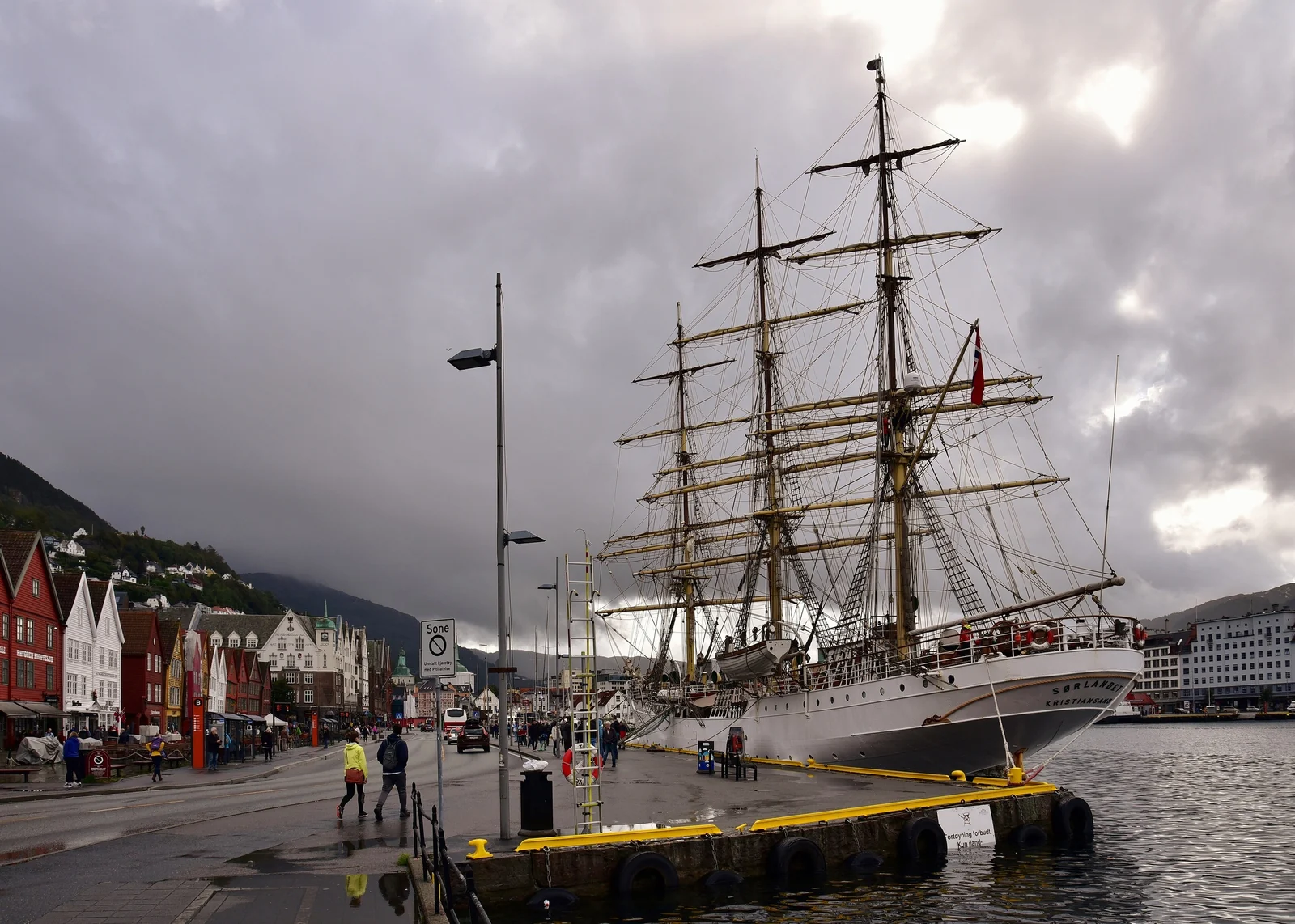
Bryggen, the old Hanseatic wharf, has been on the UNESCO World Heritage list since 1979. Its tilted, gabled timber buildings once housed German merchants who traded grain for dried cod from northern Norway. Walk the narrow passages behind the facade, where small workshops and galleries now occupy the old storerooms, then continue to the fish market by the water.
Mount Fløyen and Mount Ulriken
The Fløibanen funicular, running since 1918, climbs Mount Fløyen in a few minutes, and the top gives you a view over the harbor, the islands and the fjord mouth. Forest paths start right there. For a bigger perspective on a clear day, Mount Ulriken, reached by cable car, is the higher option. Bergen is one of Europe's wettest cities, so take any clear hour seriously and pack a rain jacket in every season.
The Flåm Railway and Norway in a Nutshell
The Flåm Railway is only about 20 kilometers long, yet it drops from the mountain station of Myrdal to the Aurlandsfjord at Flåm through some 20 tunnels, past waterfalls and steep valley walls. The ride takes about an hour each way. It is a sightseeing trip as much as a transport link, and in summer the carriages fill up, so book ahead through the official Flåm Railway timetable and fares page.
Myrdal sits on the Bergen Line, the railway between Oslo and Bergen, a journey of roughly seven hours across the high Hardangervidda plateau. The popular self-guided Norway in a Nutshell loop links the Bergen Line, the Flåm Railway, a fjord cruise and a bus, usually as a long day from Bergen or Oslo, or as an overnight with a stop in Flåm.
Why Stay a Night in Flåm
Day-trippers arrive in waves when the cruise ships dock and leave a few hours later. Stay overnight in or near Flåm and you can walk the valley, paddle a kayak or simply watch the evening light on Aurlandsfjord once the crowds have gone. The village is small, so book accommodation early for summer.
Nærøyfjord and Geirangerfjord: The UNESCO Pair
Both fjords were listed together as the West Norwegian Fjords by UNESCO in 2005. They look very different, and if you have the time, see both.
Nærøyfjord
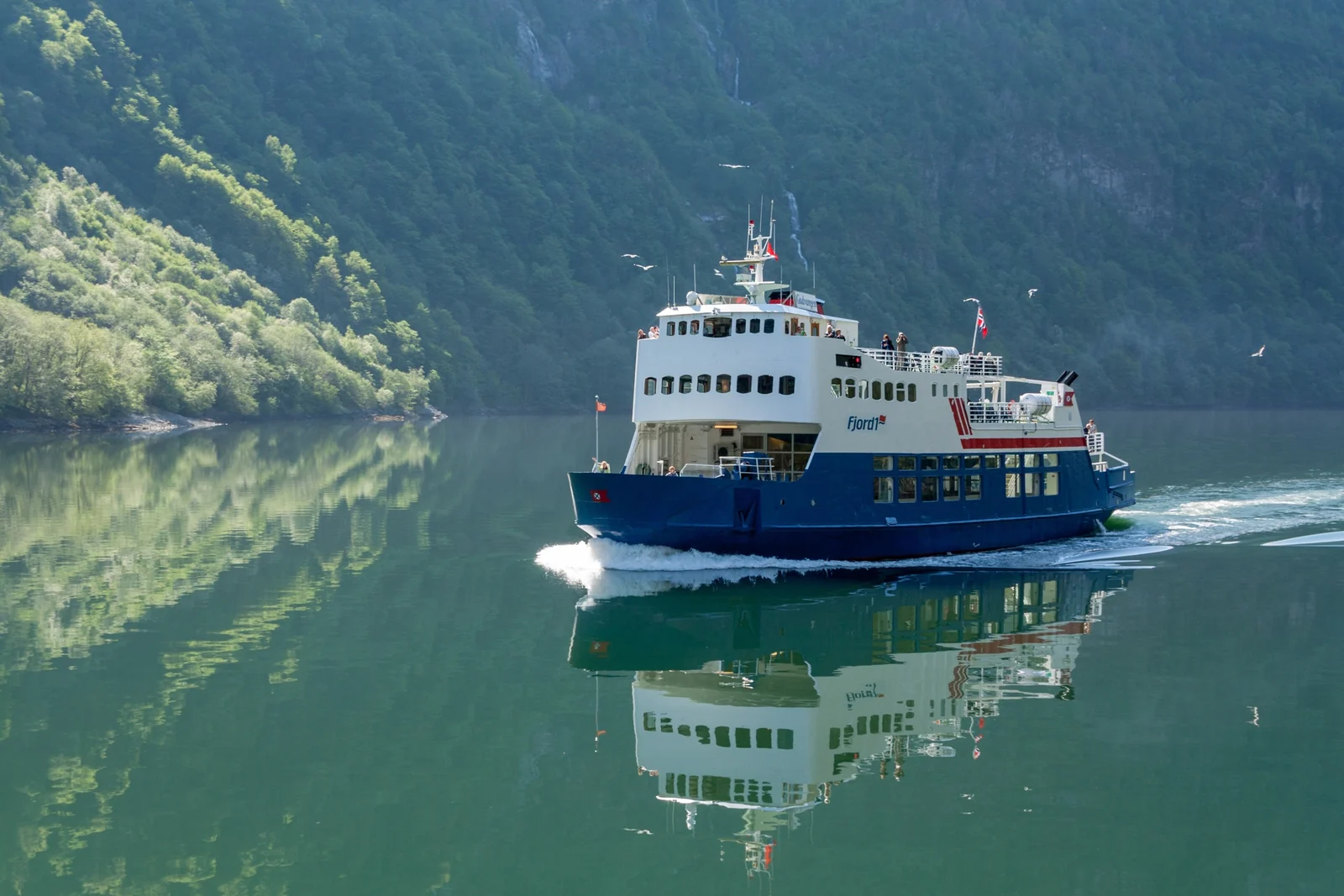
The Nærøyfjord is a narrow arm of the great Sognefjord, with walls rising steeply from a channel that narrows to a few hundred meters in places. Small farms cling to shelves above the water and waterfalls drop straight in. Passenger ferries and smaller sightseeing boats run between Flåm and Gudvangen, and a quiet electric boat gives the best sense of the silence. Pick a boat with an open deck, because window glass flattens the scale.
Geirangerfjord
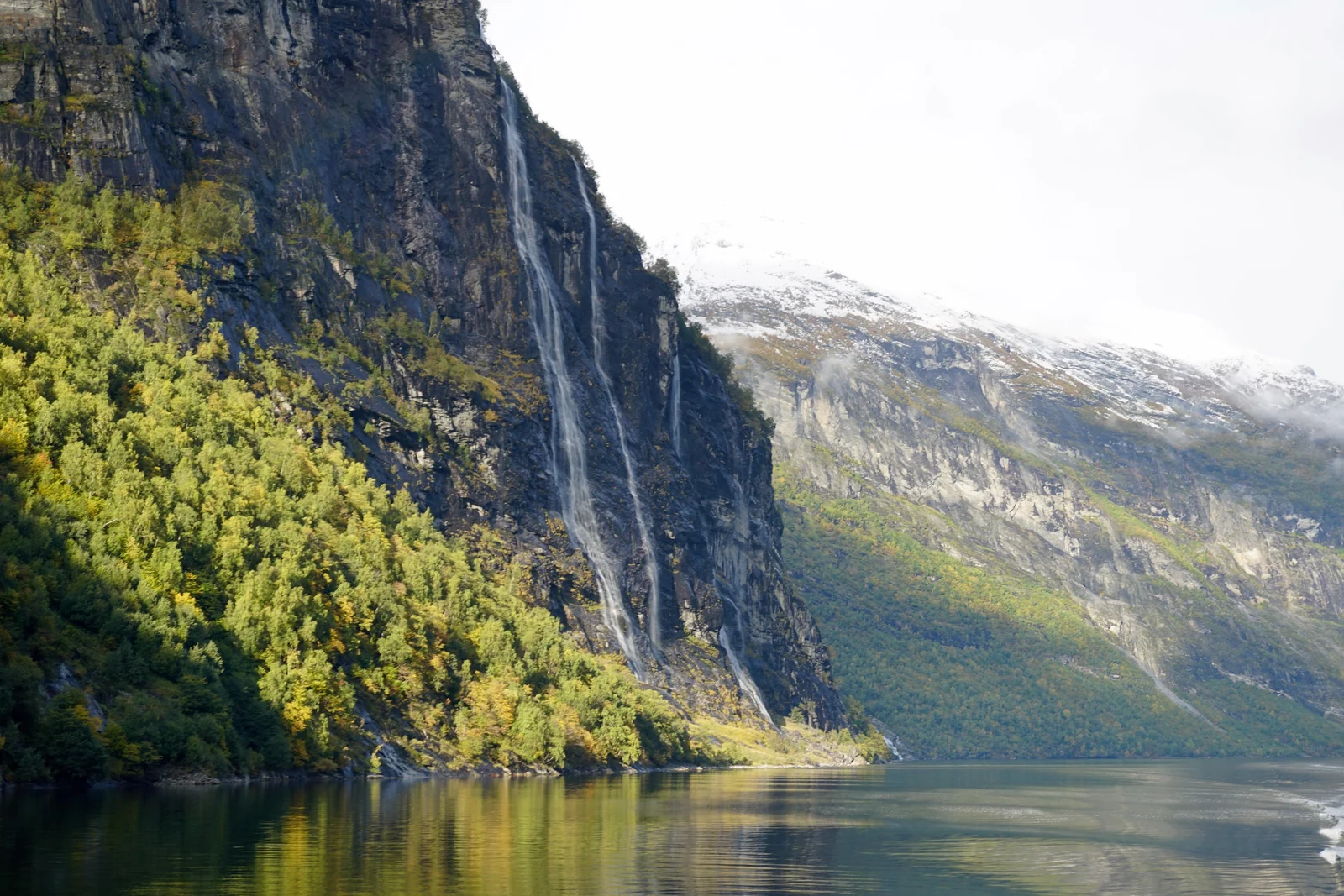
Geirangerfjord, further north in the Møre og Romsdal region, is a dramatic, winding fjord with famous waterfalls such as the Seven Sisters and the Suitor, which face one another across the water. It is a favorite cruise-ship stop, so mornings and evenings are calmer. A ferry connects Geiranger with Hellesylt in roughly an hour, and mountain roads such as the Eagle's Road and Trollstigen link the area to Åndalsnes and Ålesund.
Hiking here is excellent, but check weather and road status on the official site before heading to the high passes. Several close for winter and reopen only once the snow has been cleared.
Preikestolen: Hiking to Pulpit Rock
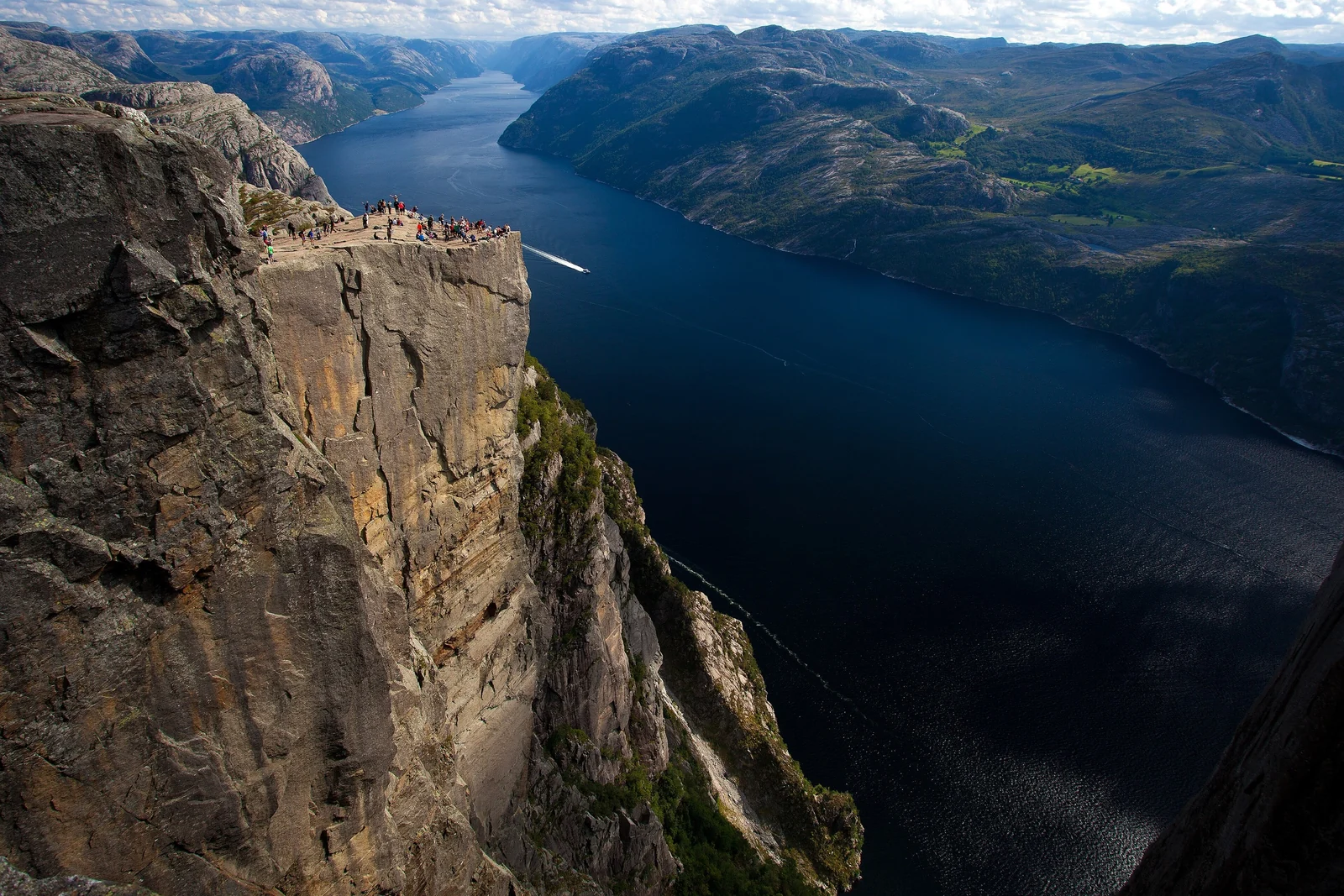
Preikestolen, or Pulpit Rock, is a flat cliff platform roughly 600 meters above the Lysefjord near Stavanger. The hike is about 8 kilometers round trip and normally takes around four hours, with rocky steps and a steady climb. You do not need technical gear, but you do need sturdy shoes, water and a rain layer.
From Stavanger you can reach the trailhead by public transport or by road. Check current bus and ferry options and parking rules before you go, since the routes changed after the long Ryfylke road tunnel opened. Start early. The path is busiest from late morning in summer, and fog can erase the view entirely.
Lofoten: Villages, Peaks and Arctic Light
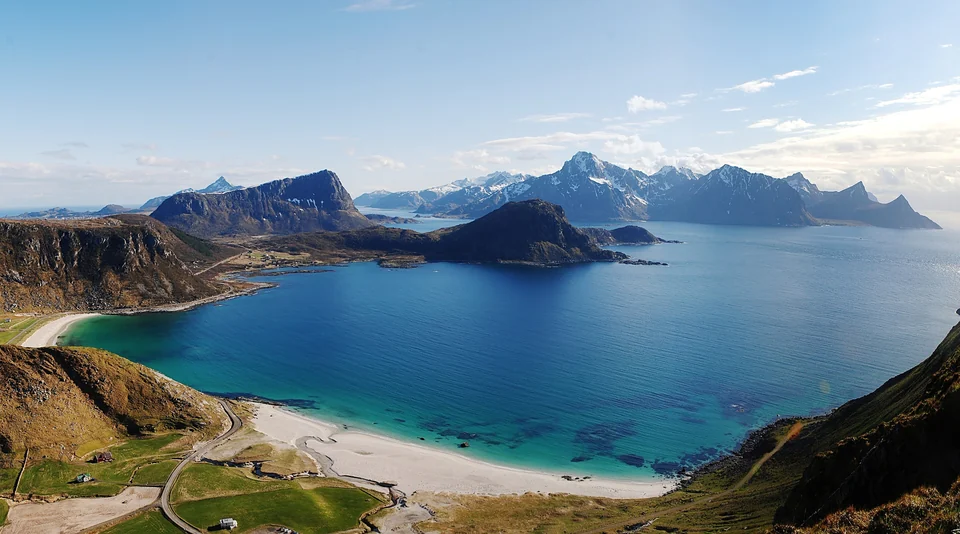
Lofoten is an archipelago above the Arctic Circle, linked by bridges and tunnels along the E10 road. The scenery is sharp-edged and photogenic, but what stays with you is the scale: peaks dropping straight into green water, with pale beaches tucked between them.
Reine and Å
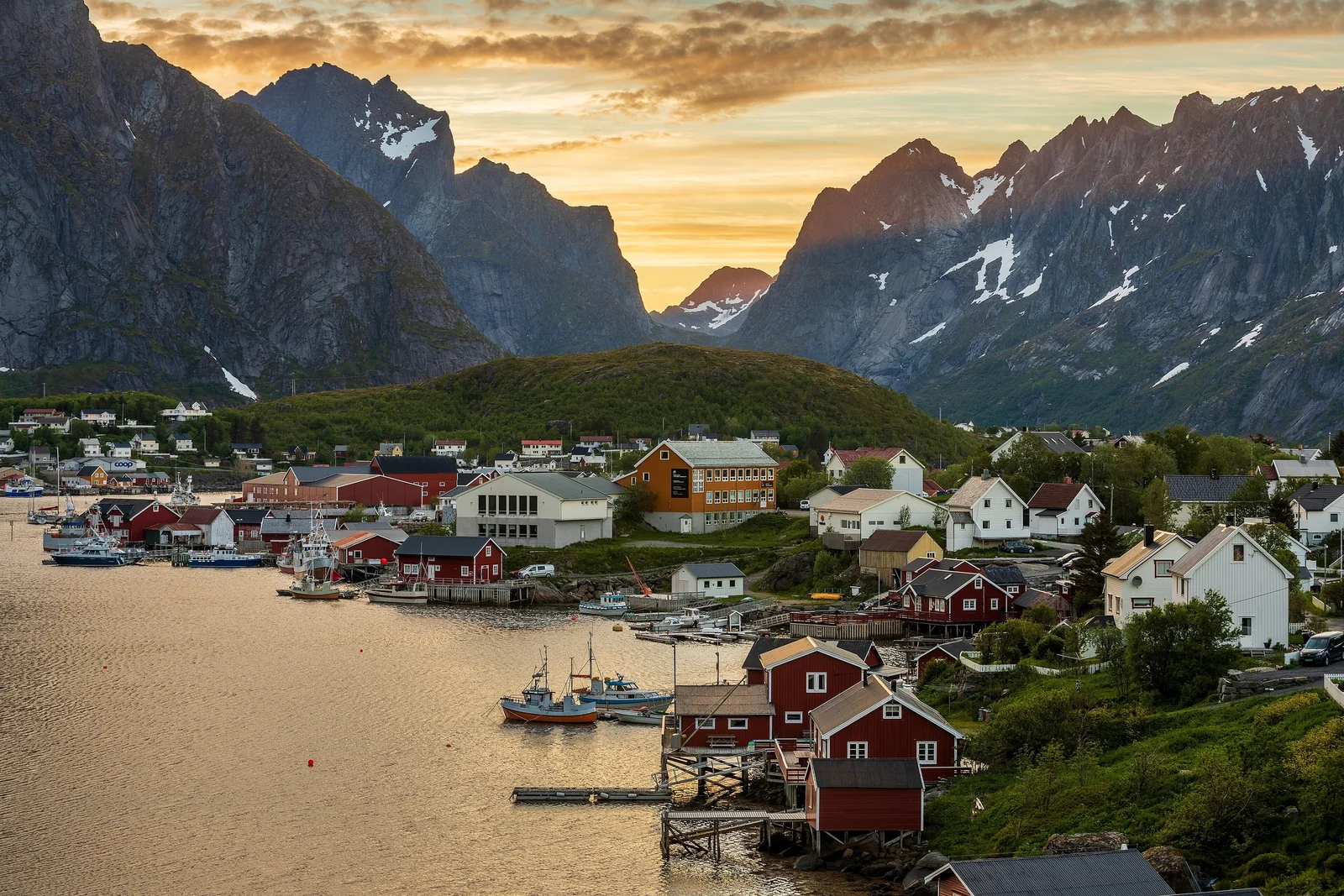
Reine, on the island of Moskenes, is the picture most people have in mind: rorbuer (fishermen's cabins) around a bay beneath sharp peaks. A short but steep path leads up to the Reinebringen viewpoint, so treat it as a proper hike, not a stroll. The road ends a few minutes beyond in the tiny village of Å, at the tip of the island chain.
Henningsvær, Svolvær and Nusfjord
Henningsvær is a working fishing village spread across small islands, with galleries, cafés and a football pitch squeezed onto the rock. Svolvær is the main town and a handy transport hub. Nusfjord is a well-preserved old fishing station that is protected as a heritage site. Many visitors rent a car, but local buses connect the main villages, with thinner schedules in winter.
Midnight Sun and Northern Lights: When to Go
Lofoten lies far enough north that the sun stays up for several weeks around midsummer, and the aurora is a realistic goal in the dark half of the year. The fjords of the southwest have long summer evenings but no true midnight sun.
| Season | What to expect | Best for |
|---|---|---|
| Late May to mid-July | Midnight sun in Lofoten, long light further south, busy ferries | Hiking, kayaking, photography at any hour |
| August to September | Darker nights return, cooler weather, quieter trails | Hiking, fewer crowds, first chances of aurora |
| October to March | Short days, snow in the mountains, reduced fjord tours | Northern lights, winter scenery |
| April to mid-May | Spring light, swollen waterfalls, some mountain roads still closed | Photography, quiet trips |
Northern lights are never guaranteed. Clear skies, darkness and solar activity all have to line up, so give yourself several nights in a row and stay away from town lights. For another place to chase them, see our list of places to watch the northern lights. Visit Norway, the national tourism site, has regional guidance.
Things to Do Around Lofoten
Beyond photography, the islands suit slow days. Sea kayaking, boat trips to look for sea eagles, surfing at cold-water beaches such as Unstad, and short coastal walks all work when the big peaks are in cloud. Dried cod, called stockfish, hangs on wooden racks in the cold season and remains the islands' signature product, so look for it in local restaurants and shops.
Getting Around: Trains, Ferries and Hurtigruten
Trains and Buses
Norway's trains and buses are searchable on Entur, the national journey planner. The Bergen Line and the Flåm Railway are the scenic highlights. Elsewhere, express buses link fjord towns and fill the gaps the rails leave.
Ferries and Fast Boats
Short car ferries are part of ordinary road travel in fjord country, and many take card payment. Fast passenger boats run between Bergen and some western towns, and a ferry from Bodø to Moskenes brings Lofoten within reach of travelers heading north by rail or road.
Hurtigruten
The Hurtigruten coastal route sails between Bergen and Kirkenes, calling at dozens of ports on the way, including stops in Lofoten. It began as a mail and freight service and still carries locals as well as cruise passengers. You can ride a short stretch instead of the whole voyage, which is a good way to see the coast without committing to a long cruise.
A Sample 10-Day Route
Ten days is enough to link the south and the Arctic without constant rushing. This is one way to split the time, and you can trim it to fit.
- Days 1 to 2, Bergen. Bryggen, the fish market, Fløyen and a slow evening in the harbor.
- Days 3 to 4, Flåm and the Nærøyfjord. Take the Bergen Line to Myrdal, ride down to Flåm, sleep there and sail to Gudvangen the next morning.
- Days 5 to 6, Stavanger and Preikestolen. Fly or take the coastal route south, then give the hike a full morning.
- Day 7, Geirangerfjord. Fit this in only if you have a car or want a long transfer; otherwise skip it and keep the time for the north.
- Days 8 to 10, Lofoten. Fly in, base yourself around Reine or Svolvær, and leave a spare evening for weather.
Weather decides a lot in Norway, so keep one or two days loose. A cancelled ferry or low cloud on a viewpoint is much easier to absorb when the schedule has slack.
What to Pack
Layers beat a single heavy coat. Bring a waterproof shell, a warm mid-layer, hiking shoes with real grip and a hat even in summer. In Lofoten and on high fjord ridges, wind can drop the felt temperature quickly, and in the dark season you will want proper boots, gloves and a headlamp.
Costs and Planning Basics
Norway is expensive compared with most of Europe, especially for restaurants, alcohol and rental cars. Prices swing with season and region, so check current rates before you book. A few habits keep the budget in check:
- Book early. Flåm Railway seats, popular rorbu cabins and summer rental cars sell out first.
- Cook some meals. Supermarkets are good, and many cabins and hostels have kitchens.
- Travel in shoulder season. May and September are cheaper and calmer than July.
- Use passes selectively. A rail pass or regional ticket only pays off if you ride a lot.
Allow at least a week for the south and another four or five days for Lofoten. Planning a wider Scandinavian trip? Our Copenhagen travel guide makes a convenient start. Our older piece on Norway's so-called Blue Lagoon covers a different topic.
Norway Fjords and Lofoten FAQ
How many days do you need for the Norway fjords?
Three to five days cover Bergen, the Flåm Railway and a fjord cruise comfortably. Add two more for Geirangerfjord and Preikestolen, which sit in different regions and need extra travel time between them.
What is the best month to see the fjords?
May to September gives the best odds of long days and open mountain roads. June has the longest light, while September is quieter. Waterfalls run strongest in late spring and after rain.
When is the midnight sun in Lofoten?
The sun stays above the horizon from roughly late May to mid-July, depending on where in the islands you are. Late June is the peak, and the light stays soft and golden for hours.
When can you see the northern lights in Lofoten?
The dark season, roughly September to early April, offers the best chances on clear nights. Stay several nights, get away from light pollution and check aurora and cloud forecasts each evening.
Do you need a car in Lofoten?
A car is the most flexible way to explore, but buses link the main villages and some visitors use bikes in summer. Services are less frequent in winter, so check timetables before relying on them.
Is Norway in a Nutshell worth doing?
Yes, if you want an easy way to combine train, ferry and bus in one route. It can feel rushed as a day trip, so staying a night in Flåm or Gudvangen makes it more relaxing.
How do you get from Bergen to Lofoten?
There is no direct train. Most travelers fly via connecting flights to Bodø, Leknes or Svolvær, or take the Hurtigruten coastal route north. Check current schedules on the official sites.