Edinburgh is Scotland's capital, a compact city of volcanic hills, medieval lanes and Georgian crescents where a castle looks down on almost every street. It is easy to cover on foot, and three days is enough to see the main sights without rushing. The essentials are Edinburgh Castle, the Royal Mile, the contrast between the Old Town and the New Town, and a climb up one of the hills.
This Edinburgh travel guide explains how the city is laid out, what is worth your time, where to eat and drink, which day trips repay the effort, and when to come. It ends with a practical 3-day plan. If Scotland is a bigger goal, our Scotland travel guides cover more of the country.
Edinburgh Castle and the Royal Mile
The castle stands on Castle Rock, a plug of volcanic rock that gives the Old Town its dramatic skyline. It has been a royal residence, a fortress and a military base, and the buildings reflect all three. Book a timed ticket on the official Edinburgh Castle site and arrive early, because the crowds build by late morning.
What to See Inside the Castle
Several things deserve your time. The Honours of Scotland, the country's crown jewels, are the oldest in Britain, and photography is not allowed in the display. St Margaret's Chapel, probably built around 1130, is the castle's oldest building and a calm, tiny space after the crowds outside. Mons Meg, a huge 15th-century siege gun, sits nearby.
The One O'Clock Gun is fired from the battlements at 1 p.m. every day except Sunday, a tradition dating to 1861, when it served as a time signal for ships in the Firth of Forth. Allow two to three hours for the whole visit.
Walking the Royal Mile
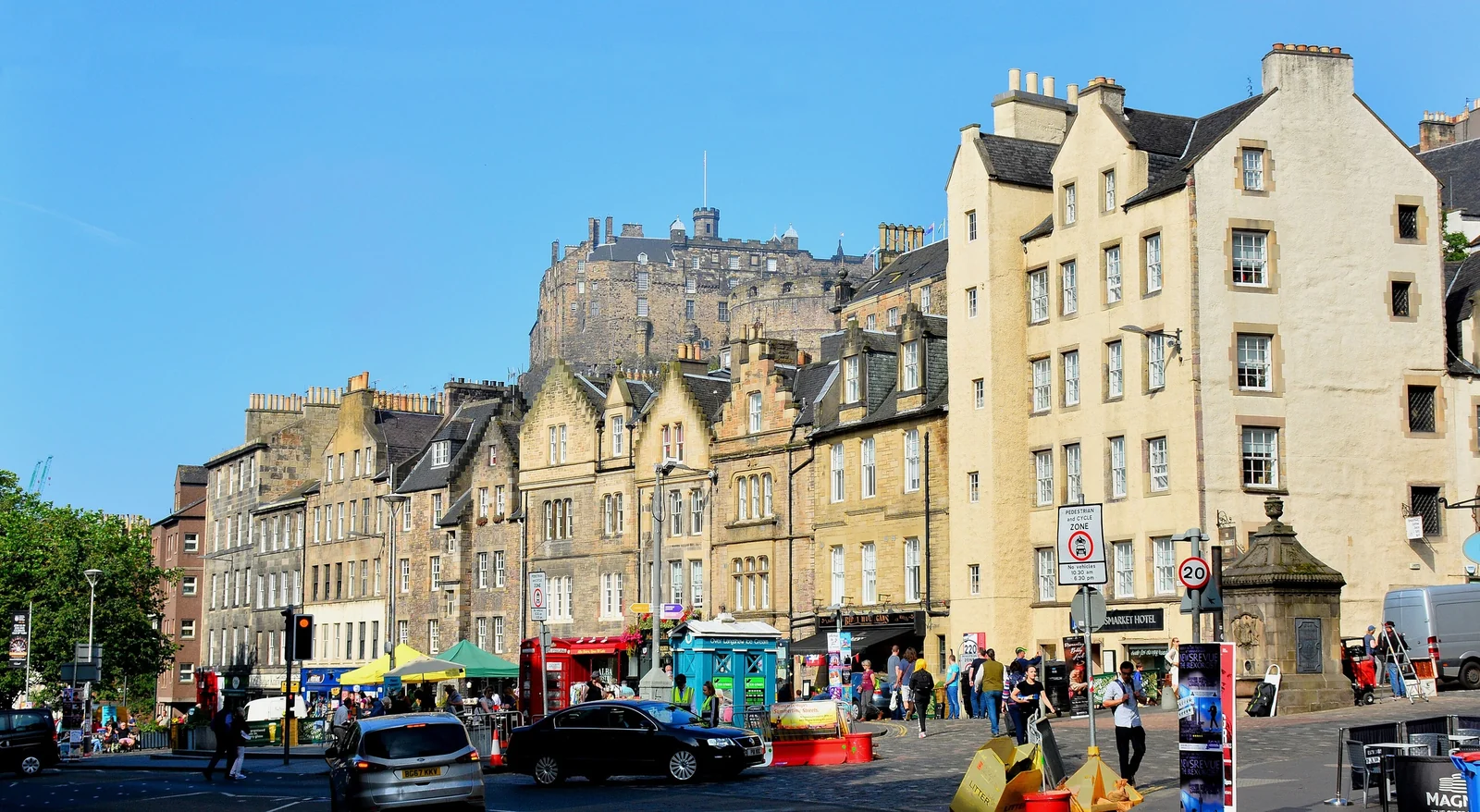
The Royal Mile is the spine of the Old Town, a string of streets (Castlehill, the Lawnmarket, the High Street and the Canongate) that run downhill from the castle to the Palace of Holyroodhouse, roughly a mile in all. It is touristy, with plenty of tartan shops, but the real interest lies just off it, in the narrow closes and wynds that drop away on either side.
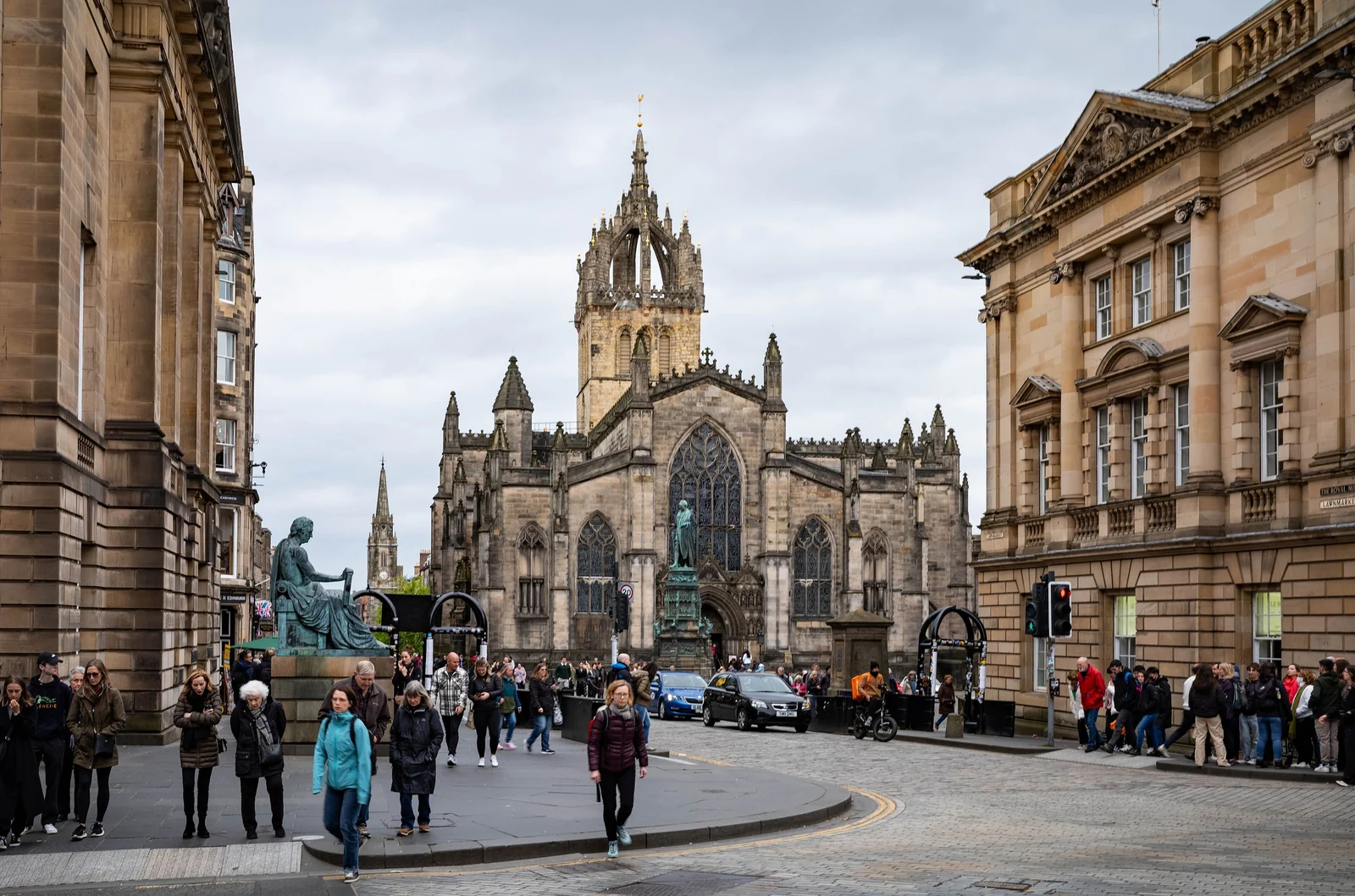
Step into St Giles' Cathedral, with its crown-shaped spire, and look at the Thistle Chapel. Pause at the Heart of Midlothian mosaic outside, then duck down a close or two. Walk it downhill for the easiest route, and do it early or at dusk to avoid the midday crush.
Old Town, New Town and the Grassmarket
The Old and New Towns of Edinburgh were listed as a UNESCO World Heritage Site in 1995. UNESCO recognized the pairing as a remarkable blend of two urban phenomena: the organic medieval growth of the Old Town and the planned, Enlightenment-era layout of the New Town. You can feel the difference in about ten minutes of walking.
The Old Town: Closes and the Grassmarket
South of the castle, the Grassmarket is a long, sloping square lined with pubs and independent shops, and a place where public executions were once held. From it, Victoria Street curves upward in a sweep of colorful shopfronts, a fine shortcut back to the Royal Mile. Nearby, the statue of Greyfriars Bobby and the kirkyard beside it draw a steady stream of visitors.
The New Town: Georgian Edinburgh
Built from the late 18th century on a clean grid north of the Old Town, the New Town is all straight streets, honey-colored stone, squares and terraces. Walk George Street and Queen Street, then explore Charlotte Square. Princes Street, its busy shopping boulevard, faces the castle across Princes Street Gardens, where the Gothic Scott Monument is a fun climb for city views.
Arthur's Seat, Calton Hill and Holyrood
Climbing Arthur's Seat
Arthur's Seat is an extinct volcano inside Holyrood Park, rising roughly 251 meters (about 823 feet) above sea level, though sources vary slightly. It is an easy half-day hike rather than a mountain expedition: allow about an hour up and back at a steady pace, longer if you stop for the views. The final stretch is steep and can be slippery, so wear shoes with grip, and bring a windproof layer even on a mild day.
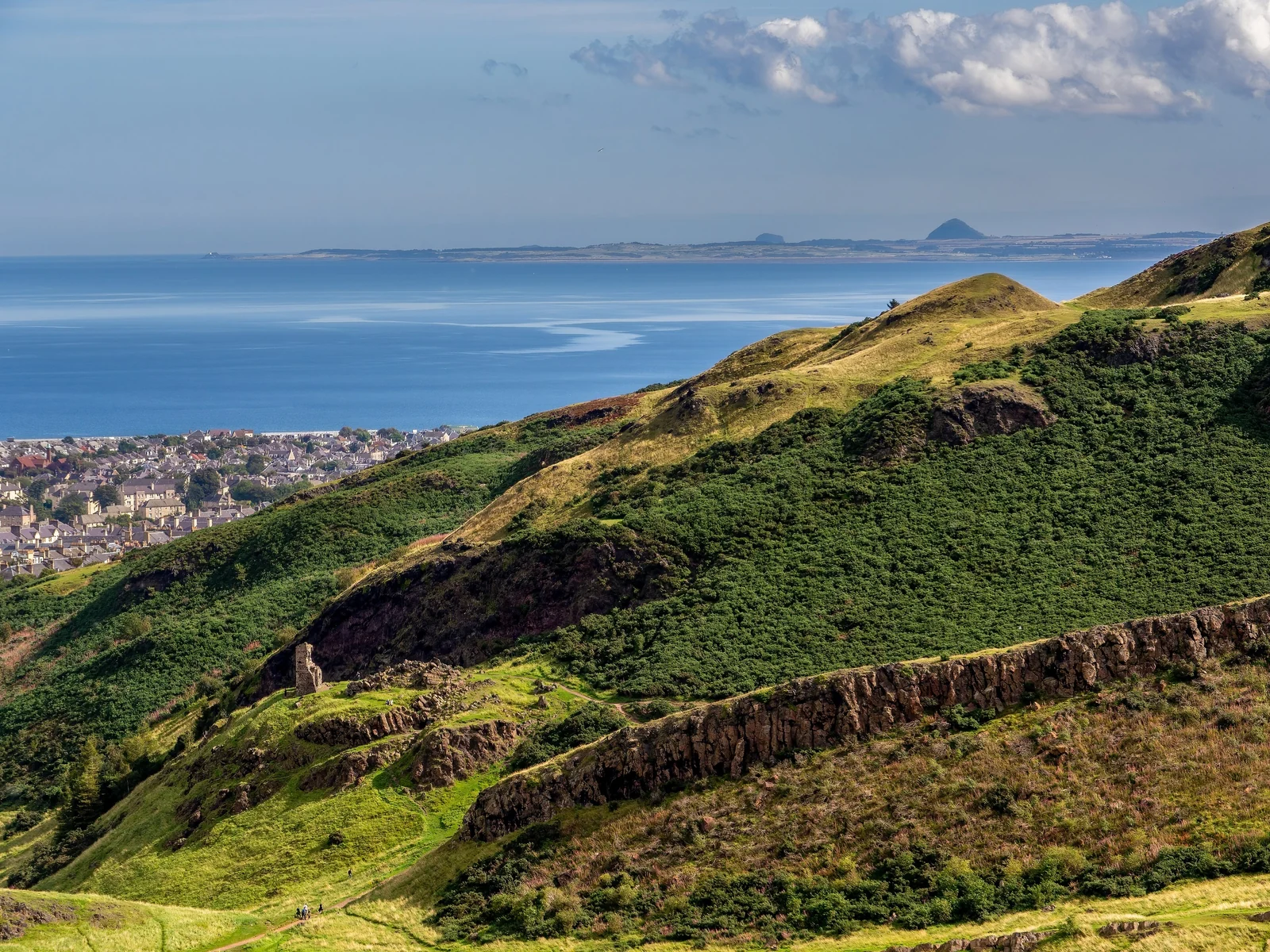
Salisbury Crags, the cliff line beside it, offer a shorter, gentler walk with a view of the Old Town.
Calton Hill for an Easy View
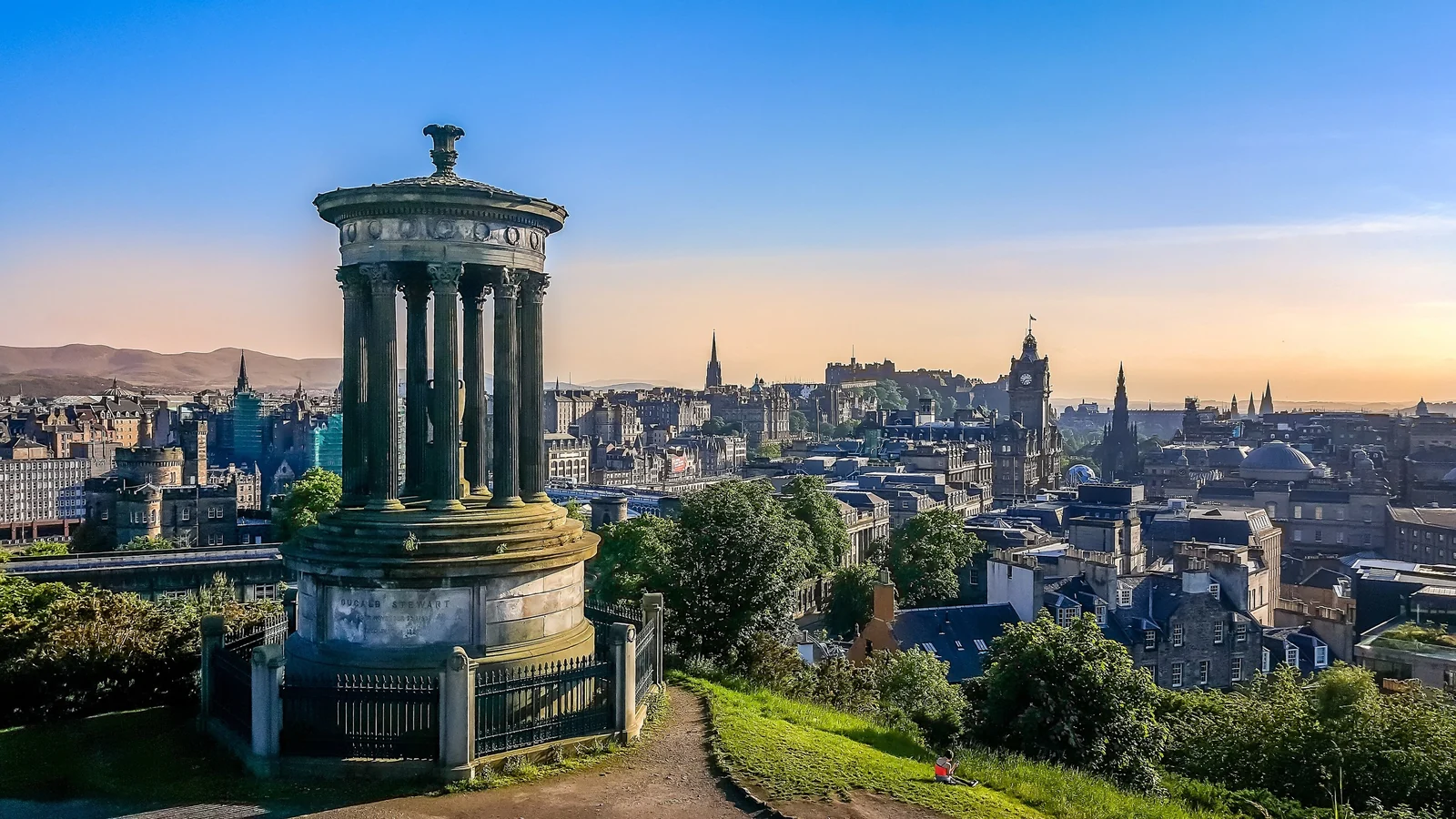
Calton Hill is a short climb from the east end of Princes Street, about 108 meters high, and gives one of the best views of the city for the least effort. The unfinished National Monument, modeled on the Parthenon in Athens, makes a good foreground. It is the best place for golden-hour photographs with the castle and Old Town spread out below.
Holyrood Palace and the Parliament
At the foot of the Royal Mile, the Palace of Holyroodhouse is the monarch's official residence in Scotland and ties closely to Mary, Queen of Scots. Opening days change when the royal family is in residence, so check the palace website before you plan the day. The modern Scottish Parliament building stands across the road, and you can visit it free of charge when it is open to the public.
Dean Village, the Botanic Garden and Museums
Dean Village and the Water of Leith
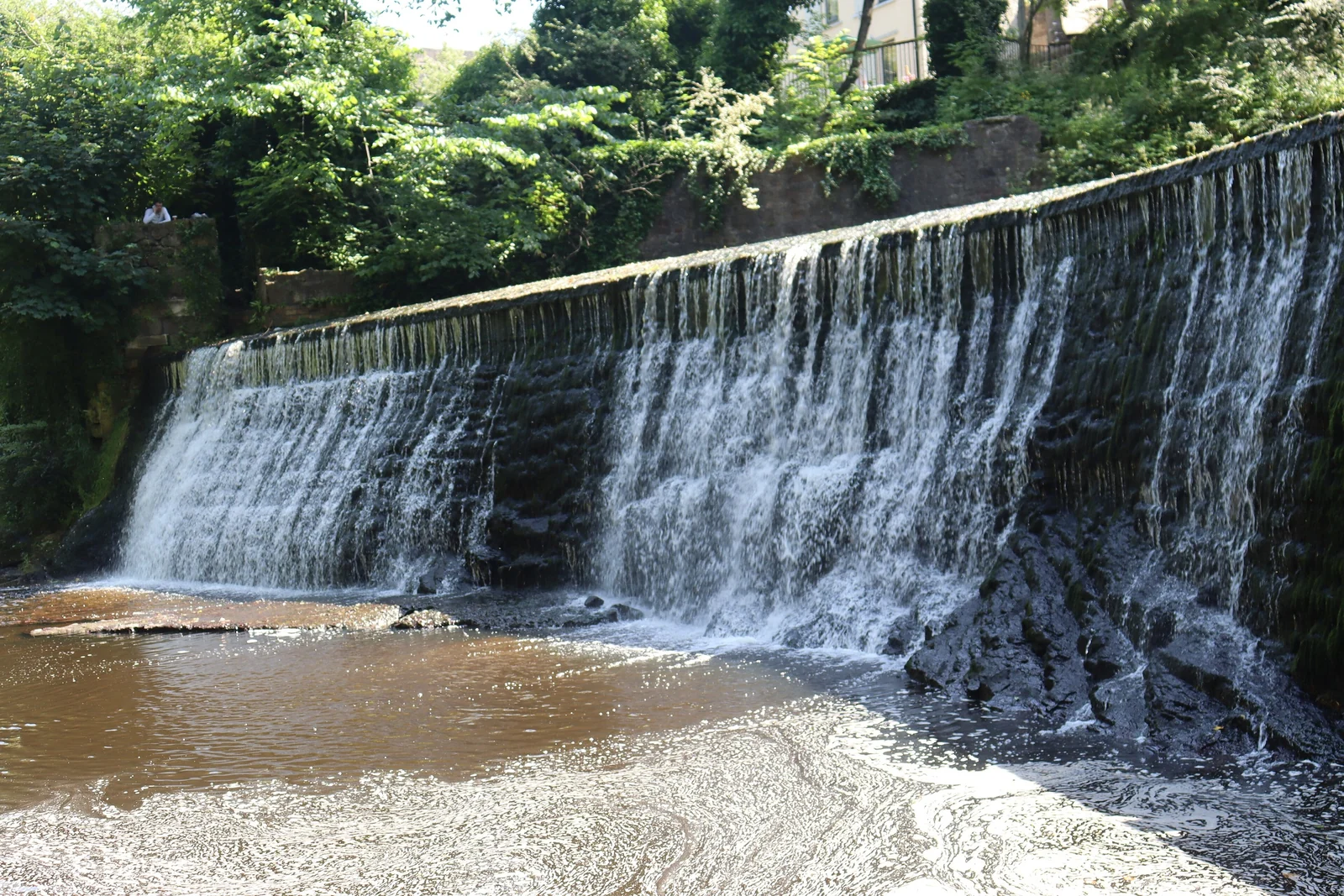
Only a short walk from the West End, Dean Village was once a grain-milling community on the Water of Leith, and its mill buildings, converted into homes, still stand beside the river. It feels like a country village in the middle of the capital. Follow the riverside path downstream toward Stockbridge for cafés, small shops and a Sunday market.
Royal Botanic Garden Edinburgh
Just north of the New Town, the Royal Botanic Garden is a large, calm green space with glasshouses, a rock garden and a long view back to the skyline. Entry to the gardens is generally free, with a charge for the glasshouses, but check the official site for current arrangements. It pairs well with a Stockbridge lunch.
Museums Worth Your Time
The National Museum of Scotland on Chambers Street is the best rainy-day choice: it mixes natural history, science and Scottish history under one roof, and general admission is free. Nearby, the Museum on the Mound and the Writers' Museum add a smaller, more focused look at money and literature. Edinburgh is a UNESCO City of Literature, and you will see references to Burns, Scott and Stevenson in the streets.
Food and Whisky in Edinburgh
Traditional Scottish dishes are easy to find and worth trying once. Haggis with neeps and tatties (turnip and potato) is the classic plate, cullen skink is a smoky haddock soup, and porridge, shortbread and Scottish seafood show up everywhere. Pubs on and around the Grassmarket, in Stockbridge and in Leith serve all of these, and Leith has the strongest reputation for seafood restaurants.
For whisky, start with a tasting that explains the regions rather than guessing from a menu. The Royal Mile has an experience built around the topic, and many pubs run a dozen or more malts by the dram. Ask for a short flight, taste a Speyside and an Islay side by side, and add a drop of water to open the flavor. Book popular tastings ahead.
Day Trips from Edinburgh: St Andrews, Rosslyn, North Berwick, Stirling and the Highlands
Edinburgh's rail links make a day away easy. Journey times below are rough, so check the current timetable before you go.
| Destination | How to get there | Approx. travel time | Best for |
|---|---|---|---|
| Rosslyn Chapel | Lothian bus 37 from the city center | About 45 to 60 minutes | Carved medieval chapel, short half-day |
| North Berwick | Train from Waverley | Around 30 to 40 minutes | Beach, harbor, coastal walks |
| Stirling | Train from Waverley | Under an hour | Castle, Wallace Monument, history |
| St Andrews | Train to Leuchars, then bus | About 1 to 1.5 hours, plus the bus | Old golf town, ruins, beaches |
| Glencoe and the Highlands | Organized day tour | Full day, early start | Mountain scenery without a car |
Rosslyn Chapel
Rosslyn Chapel, in the village of Roslin south of the city, is a 15th-century church famous for its dense stone carving. According to the chapel's official site, Lothian bus 37 takes around 45 to 60 minutes from the city center, and the chapel is a few minutes' walk from the stop. Book a time slot in season.
North Berwick and the East Lothian Coast
North Berwick is the easy seaside day: sandy beaches, a working harbor, boat trips in summer to see the seabirds of the Firth of Forth, and the volcanic Berwick Law for a walk. Trains run from Waverley, and the station is a short walk from the town.
Stirling and St Andrews
Stirling Castle sits on another volcanic crag and played a central role in Scotland's wars of independence, with the Wallace Monument and the Bannockburn site close by. St Andrews gives you the ruined cathedral, a university town feel and the famous links, with beaches along West Sands. Go to Stirling for history, St Andrews for atmosphere.
Glencoe and Highlands Tours
Glencoe is a long way for a day trip, so most visitors take a guided coach tour from the city. These leave early and return in the evening, covering mountain scenery, lochs and a village or two. Our guide to the ghost towns of Scotland suits a slower trip.
Best Time to Visit Edinburgh and Weather
Edinburgh's weather is changeable, cool and often windy, and rain can arrive in any month. Pack layers and a waterproof jacket whatever the season. Summer evenings stay light very late, while winter days are short but atmospheric.
- May to June and September: the sweet spot, with long days, comfortable temperatures and fewer crowds than August.
- July and August: the warmest and busiest months, with the Fringe in August. Book rooms well ahead and expect higher prices.
- October to March: cooler and quieter, with good value on rooms and cozy pubs, apart from the winter festival period.
The Fringe Festival in August
The Edinburgh Festival Fringe takes over the city for most of August, with comedy, theater, music and street performance in venues large and small. If you love live shows, it is worth the chaos. If you want a quiet castle visit, choose another month.
Hogmanay in Late December
Hogmanay, the Scottish New Year, is Edinburgh's other big celebration. The festivities run over several days, opening with a Torchlight Procession through the Old Town to Calton Hill, and many events need a ticket. Book accommodation and tickets very early, and bring warm clothes.
Getting to Edinburgh, Getting Around and Where to Stay
From the Airport and by Train
Edinburgh Airport has both a tram and the Airlink 100 bus into the center. The bus is usually a little quicker, around 25 to 30 minutes to Waverley, and the tram takes longer but ends near St Andrew Square. Check fares on the official sites. Long-distance trains arrive at Waverley station, right between the Old and New Towns.
Getting Around Edinburgh
The center is walkable, but hills and cobbles add up, so wear comfortable shoes. Lothian Buses cover the rest, and the tram is handy for the airport. See our London travel guide if you are adding the capital of England to your trip.
Where to Stay in Edinburgh
- Old Town: the most atmospheric base, close to the castle and the Royal Mile. Expect steps, noise at weekends and higher prices in August.
- New Town and the West End: elegant, central and well connected, with good restaurants and a quieter feel at night.
- Stockbridge: a relaxed neighborhood with cafés and the Botanic Garden nearby, ideal for a slower stay.
- Leith: a waterfront district with a strong food scene and better value, about a bus or tram ride from the center.
- Haymarket: practical for rail and tram links, with easier access to the airport.
A 3-Day Edinburgh Itinerary
Day 1: Castle and Royal Mile
Visit the castle when it opens, see the 1 p.m. gun, then walk the Royal Mile downhill, stopping at St Giles'. Finish at Holyrood and, if the day is clear, take the gentle walk beside Salisbury Crags before dinner in the Grassmarket.
Day 2: New Town, Hills and Museums
Start with the National Museum of Scotland, then stroll Princes Street Gardens and the New Town streets. Climb Calton Hill in the late afternoon, or Arthur's Seat if the weather is good. Have a whisky tasting and an easy dinner after.
Day 3: Dean Village or a Day Trip
Take a slower morning in Dean Village and Stockbridge, then the Botanic Garden. Or pick one day trip from the table: Rosslyn and North Berwick are the easiest, Stirling the best for history. Browse all European destinations for more ideas.
Edinburgh Travel FAQ
How many days do you need in Edinburgh?
Three days cover the castle, the Royal Mile, the New Town, a hill climb and a museum comfortably. Two days work if you stay focused on the Old Town. Add a day if you want a trip to Stirling, St Andrews or the coast.
Is Edinburgh Castle worth visiting?
Yes. The Honours of Scotland, St Margaret's Chapel, Mons Meg and the views are all worth the time. Book a timed ticket online, go early and allow two to three hours for the visit.
How long does it take to climb Arthur's Seat?
Allow about an hour up and back at a steady pace, longer with stops. The hill is roughly 251 meters high and the final section is steep and can be slippery, so wear shoes with good grip.
When is the best time to visit Edinburgh?
May, June and September give long days and fewer crowds. August is the busiest because of the Fringe. Winter is quieter, with short days and a lively Hogmanay at the turn of the year.
How do you get from Edinburgh Airport to the city center?
The Airlink 100 bus and the tram both run to the center. The bus is usually a little quicker, around 25 to 30 minutes, and the tram takes longer. Check current fares and timetables on the official sites.
What are the best day trips from Edinburgh?
Rosslyn Chapel and North Berwick are the easiest, Stirling suits history fans and St Andrews adds a university town and golf heritage. For Glencoe and the Highlands, an organized coach tour is the simplest way.
Is Edinburgh walkable?
Yes, the center is compact and most sights are within a short walk of each other. The hills and cobbled streets can be tiring, so wear comfortable shoes and use a bus or taxi for longer distances.