


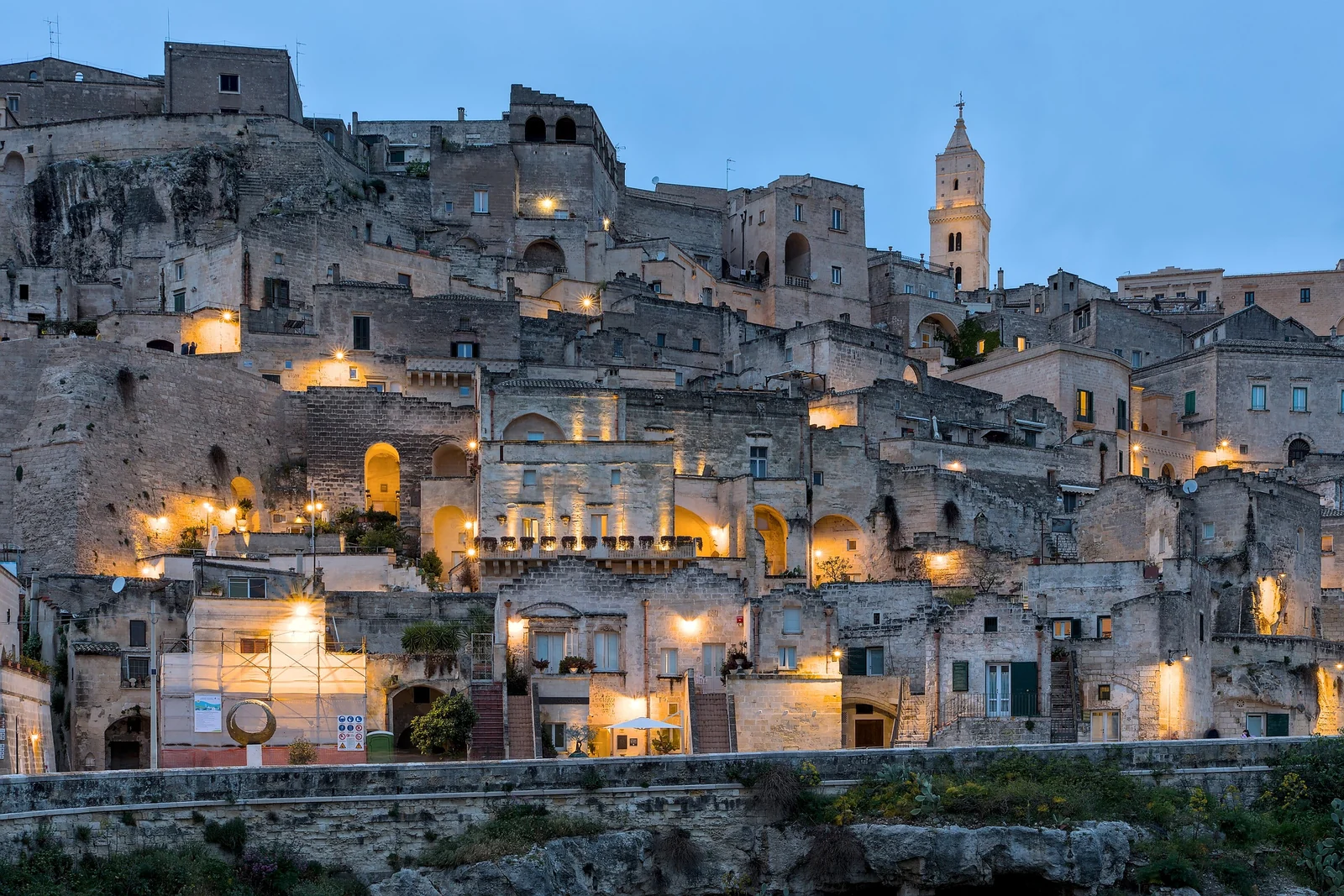
Matera is a city in the southern Italian region of Basilicata, built on and into the edge of a limestone gorge. Its old districts, the Sassi di Matera, are a maze of cave houses, stone terraces and rock-cut churches that climb the ravine wall, and they were inscribed on the UNESCO World Heritage list in 1993. Nothing else in Italy looks quite like it.
Two days is the sweet spot, three if you want to walk the gorge and add a day trip. This Matera travel guide covers the Sassi, the cave churches, the viewpoint across the ravine, how the city went from cave dwellings to European Capital of Culture, where to sleep, what to eat and how to get here from Puglia, which sits right next door. For the wider region, start with our Puglia travel guide.
The Sassi di Matera Explained
Sassi means stones, and the name fits. The two districts, Sasso Barisano and Sasso Caveoso, spill down the slope on either side of a rocky spur called the Civita, where the cathedral stands. Houses were first dug into the soft calcarenite rock, then extended outward with blocks cut from the same stone, so the line between cave and building blurs at every turn.
Water shaped everything. Families collected rain in cisterns and channels carved into the rock, and some of the large underground cisterns can still be visited. Narrow stairways link the levels, and the roof of one home is often the street in front of the next. Get properly lost for an hour. Matera rewards wandering far more than checking off sights.
Sasso Barisano and Sasso Caveoso
Sasso Barisano faces the modern town and is the more polished side, with restaurants, boutique stays and restored lanes. Sasso Caveoso is rougher, steeper and more dramatic, with cave facades opening straight onto the ravine. If your time is short, walk Barisano in the morning and Caveoso toward sunset.
Cave Churches and the Rock-Cut Heritage
Matera and its surroundings hold well over a hundred rock-cut churches, many of them founded by monastic communities in the early medieval centuries. Some are plain hollows with a single niche. Others keep Byzantine-style frescoes in faded reds, ochres and blues. The UNESCO listing covers both the Sassi and the Park of the Rupestrian Churches for exactly this reason.
Churches Worth Seeking Out
In the Sasso Caveoso area, Santa Maria de Idris and San Pietro Barisano are among the best known, and both are partly carved from the rock itself. San Pietro Barisano has frescoes and a crypt that reward a slow look. Opening hours and tickets for cave churches change often and some are run by local associations, so check on the day or ask at a tourist office.
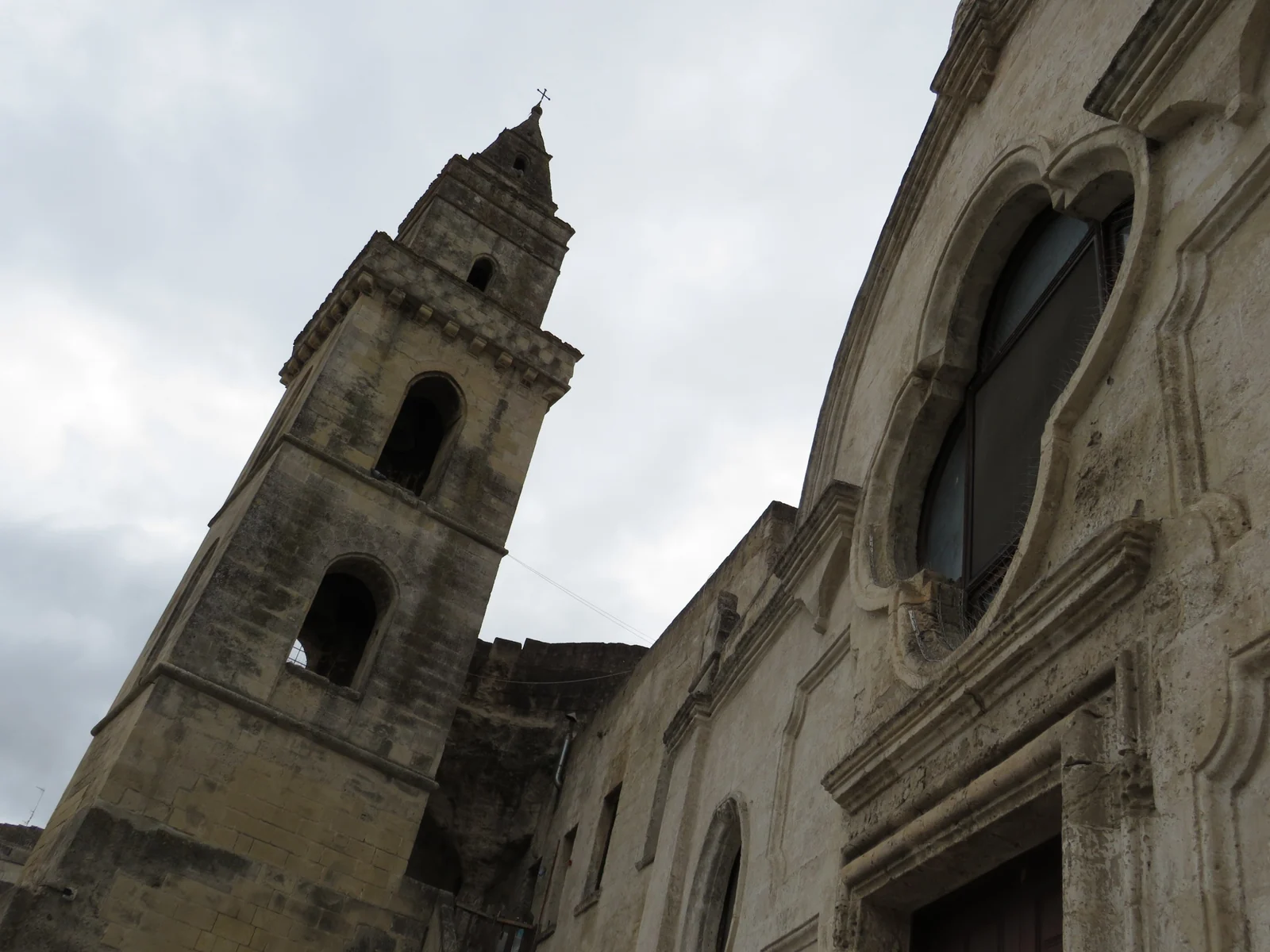
The Cathedral and a Cave Home
Matera Cathedral, an Apulian Romanesque building from the 13th century, crowns the Civita and offers the best sense of the city's skyline. To see how people actually lived, visit one of the small museum homes in the Sassi, where a single cave room once held a family, their tools and sometimes their animals.
The Murgia Park and the Gravina Viewpoint
Across the ravine from the Sassi lies the Parco della Murgia Materana, a plateau of dry grassland, limestone outcrops and caves. The stream below, the Gravina, cut the gorge that makes Matera look the way it does. The best-known viewpoint is the Belvedere Murgia Timone, where the whole city fills the opposite wall.
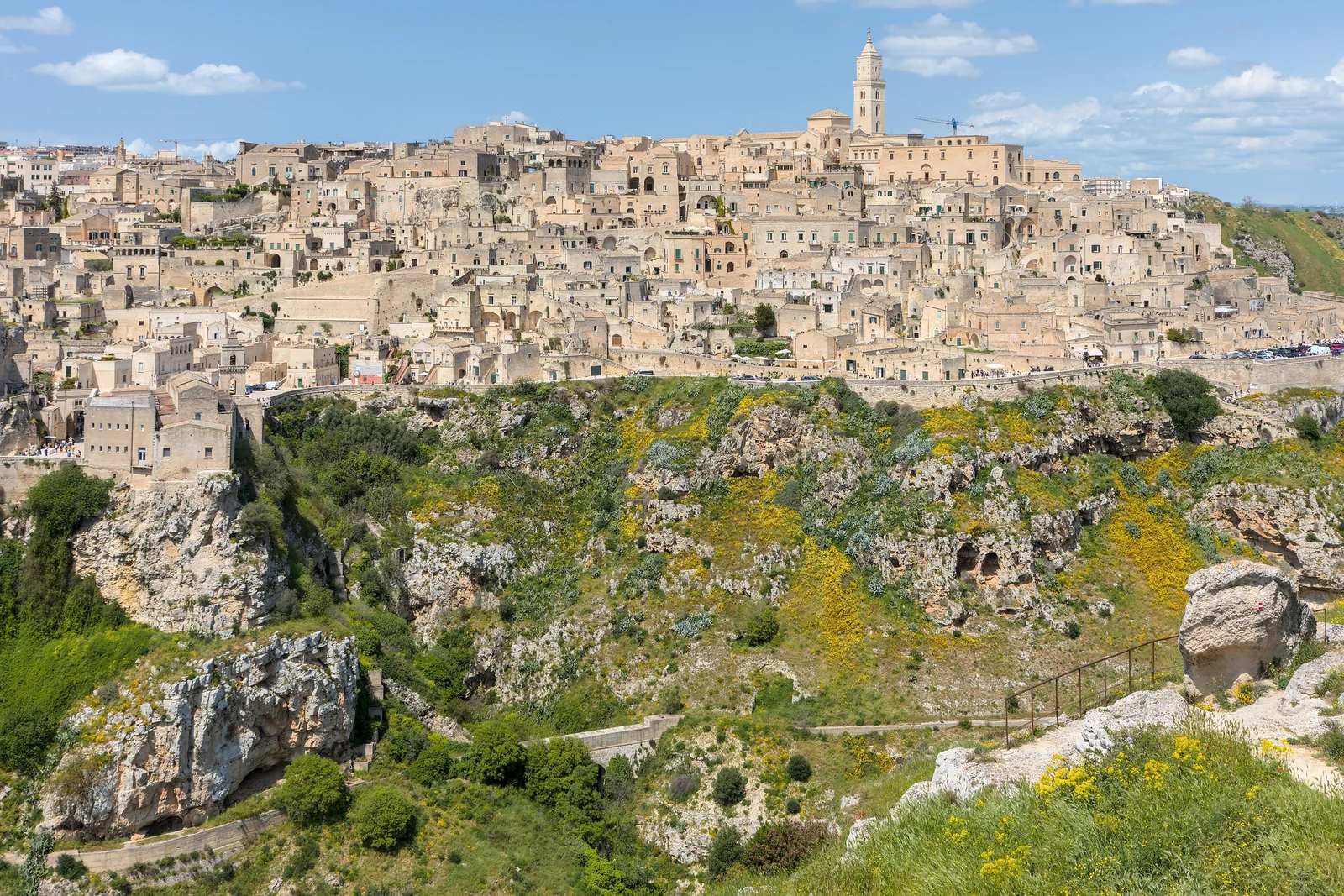
Go in the late afternoon, when the light turns the stone gold, and bring water, a hat and shoes with real grip because the paths are rocky and exposed. Walking down into the gorge and up the other side takes effort in summer heat. A taxi or guided tour is a sensible alternative, and several operators run sunset visits.
From Cave Dwellings to Capital of Culture
People have lived in the caves around Matera since prehistoric times, which makes it one of the oldest continuously inhabited places in Europe. For centuries, the Sassi were home to farmers and artisans. By the 20th century they had become overcrowded and unhealthy, with many families living in damp caves without proper water or sanitation.
Carlo Levi's memoir Christ Stopped at Eboli brought the poverty of Basilicata to national attention, and in the 1950s the government moved thousands of residents to new housing on the plateau. The Sassi were left half empty and widely seen as a shame. Then came restoration, UNESCO listing in 1993 and a slow return of homes, hotels and restaurants.
In 2019, Matera held the title of European Capital of Culture, which pushed the city onto international itineraries. Its look has also drawn filmmakers, including Pier Paolo Pasolini for The Gospel According to St. Matthew in 1964. The arc from stigma to showpiece is the real story here, and it is worth keeping in mind when you stand in a restored cave that was once a poor family's entire home.
Where to Stay in Matera
Cave hotels are the signature choice: guest rooms carved into the rock, with vaulted stone ceilings, thick walls that stay cool in summer and often a terrace over the ravine. They are not all alike. Some are luxury conversions, others small family-run stays, and a few have low-ceilinged rooms with limited daylight, so read recent reviews and look at room photos before booking.
- Sasso Barisano: the most practical base, with the widest choice of restaurants and stays and an easier walk from the modern town.
- Sasso Caveoso: the most atmospheric and the quietest at night, but steep and stair-heavy. Pack light.
- Civita: the ridge between the two, close to the cathedral and the best views. Fewer rooms, so book early.
- Modern center: a flatter, easier option near the bus and train stops, with simpler hotels and short walks into the Sassi.
Many Sassi lanes are stepped and cannot be reached by car, so check luggage access when you book. If you have limited mobility, ask the property how many steps lead to your room.
What to Eat in Matera and Basilicata
Basilicata cooking is rooted in poor-kitchen traditions: few ingredients, simple technique and strong flavor. Bread comes first. Altamura bread, made from durum wheat semolina in the nearby Puglian town of Altamura, has protected DOP status in the European Union, with a thick crust and a soft, yellowish crumb that keeps for days. Matera has its own bread tradition, too, often shaped in a high cornetto form.
- Peperoni cruschi: sweet dried peppers from the Senise area, fried until crisp and shattering. Crumbled over pasta or eaten as a snack, they taste smoky and slightly sweet.
- Pasta: look for orecchiette, strascinati and handmade shapes served with turnip tops, tomato sauce or simple breadcrumbs.
- Lucanian sausage: a spiced local pork sausage, usually grilled.
- Cucina povera dishes: bean and chicory purée, vegetable soups and lamb are common on traditional menus.
A glass of the local red, often made from Aglianico, suits the heavier dishes. Many restaurants occupy cave rooms, which is atmospheric but can be dim and busy at dinner, so reserve in advance on weekends.
How to Get to Matera
Matera does not have its own airport. The usual gateways are Bari and Brindisi airports in Puglia, with Bari the closer and more convenient option. From Bari the city is roughly an hour away by road, and slower by public transport.
| Route | Mode | Notes |
|---|---|---|
| Bari to Matera | Train or bus | A regional rail line from Bari Centrale reaches Matera in around 1.5 hours; buses also run |
| Bari Airport to Matera | Bus, taxi or car | Check current bus connections; a car or transfer is the simplest |
| Brindisi to Matera | Car | A longer drive, more practical if you are touring Puglia |
| Alberobello to Matera | Car | A scenic drive of roughly an hour and a quarter |
Matera is not served by the main Trenitalia network, so do not rely on a direct train from Rome or Naples. A rental car gives the most freedom for Basilicata and Puglia, but do not drive into the Sassi itself, where access is restricted. Park at the edge and walk in.
Best Time to Visit Matera
- April to June: mild days, green Murgia slopes and wildflowers on the plateau. Ideal for walking.
- July and August: hot and bright, with the busiest crowds. Sightsee early and rest in the middle of the day.
- September to October: warm, golden light and fewer visitors, a very good time overall.
- November to March: cool and quiet, sometimes damp, with lower prices and an almost private feel in the lanes.
Matera's biggest local festival honors the Madonna della Bruna in early July, with a procession and a lively parade through the old town. It is memorable, but also loud and crowded, so book accommodation well ahead if you plan to attend.
Day Trips from Matera
Craco, the Ghost Town
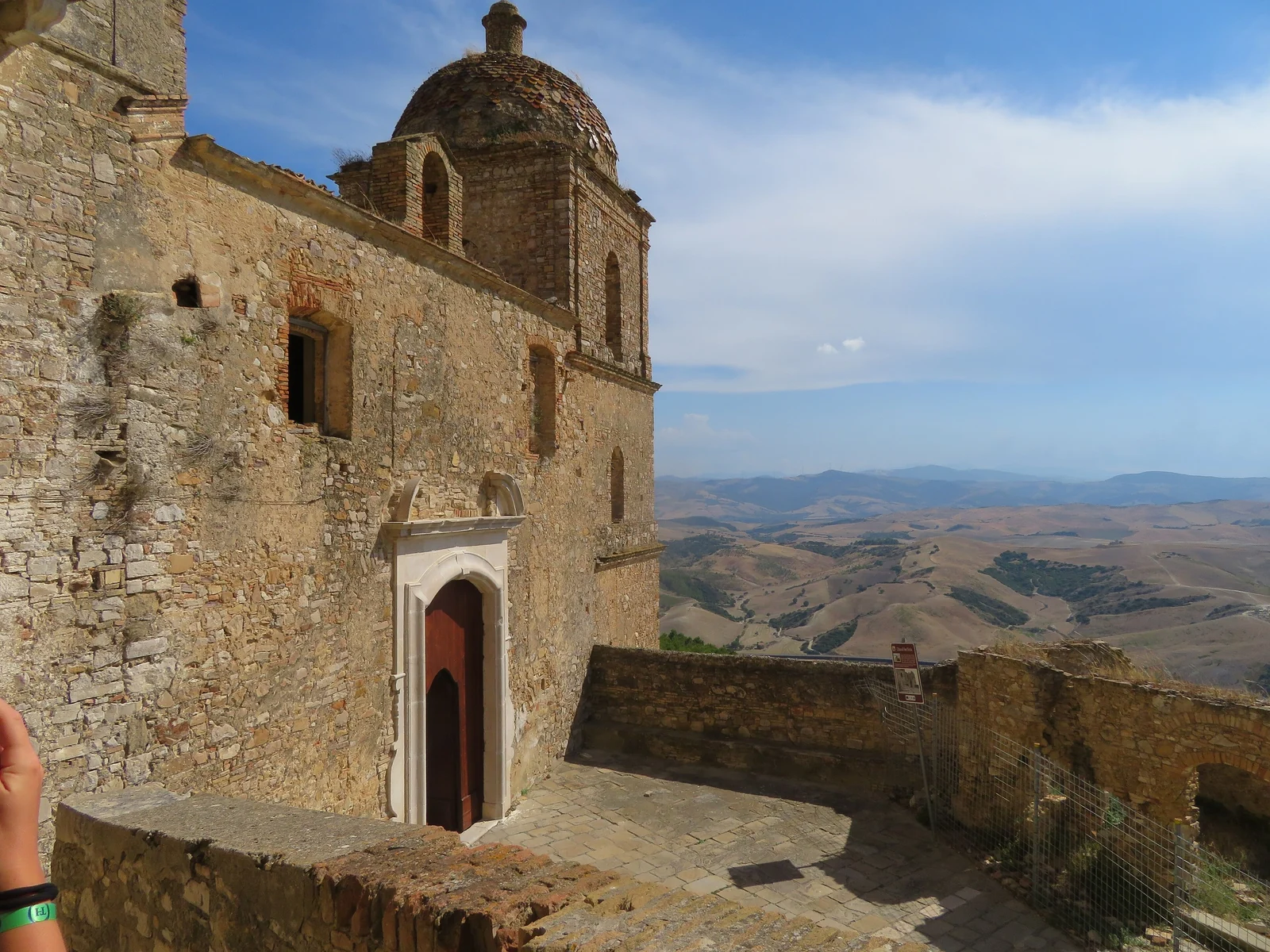
About an hour from Matera, Craco is a medieval hill town abandoned in the 20th century after landslides made it unsafe. Its empty stone houses and tower stand on a ridge above badlands, and it has served as a film location. Visits are generally by guided tour with a safety helmet, so check current access and book ahead.
Alberobello and Puglia
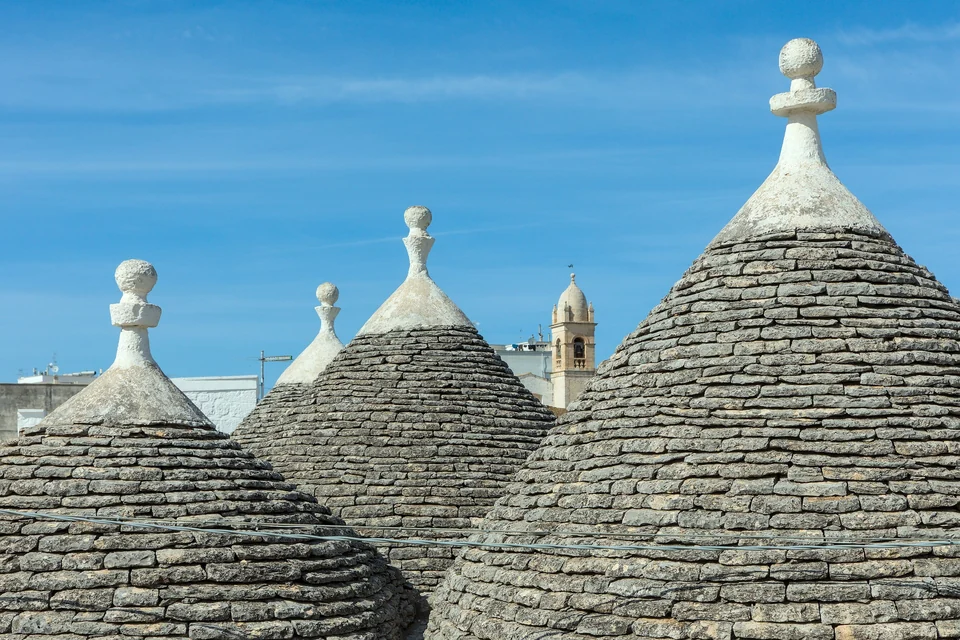
Alberobello, with its conical dry-stone trulli, is the classic pairing with Matera and the gateway to Puglia. You can see both in a long day by car, but each is better with a night of its own. Our Puglia guide covers the trulli country, Lecce and the Salento coast in detail.
Maratea and the Tyrrhenian Coast
Basilicata also has a short stretch of western coast, and Maratea is its showpiece: a steep, wooded shoreline of small coves and a hilltop statue of Christ the Redeemer. It lies a long drive from Matera, so treat it as an overnight rather than a rushed day trip. For other coastlines, see our guide to the islands of Italy.
A 2-3 Day Matera Itinerary
Day 1: The Sassi on Foot
Start early in Sasso Barisano before the heat and the day groups. Walk up to the cathedral on the Civita, visit one cave church and a museum home, then rest at lunch. In the afternoon, cross into Sasso Caveoso and finish at a terrace for sunset and dinner.
Day 2: The Gorge and the Park
Spend the morning in the Parco della Murgia Materana, either on a guided walk or with a taxi to the Murgia Timone viewpoint. Return for a late lunch of bread and pasta, then use the afternoon for another cave church or a cistern. Walk the lanes once more after dark.
Day 3: Craco or Puglia
Add a guided visit to Craco in the morning, or drive toward Alberobello and the Valle d'Itria for the trulli. If you are continuing around Italy, the wonders of Italy overview and our Italy guides help you choose the next stop.
Matera Travel FAQ
How many days do you need in Matera?
Two days cover the Sassi, a couple of cave churches, the cathedral and the viewpoint across the gorge. Add a third day for Craco, a walk in the Murgia park or a drive toward Alberobello and Puglia.
Is Matera in Puglia?
No. Matera is in Basilicata, just across the border from Puglia. It is close enough to Bari and Alberobello that most Puglia trips include it, either as a day trip or, better, an overnight stop.
What are the Sassi di Matera?
The Sassi are Matera's two historic cave districts, Sasso Barisano and Sasso Caveoso. Homes and churches were dug into the limestone ravine wall and extended with stone. They were listed by UNESCO in 1993.
What is the nearest airport to Matera?
Bari is the nearest major airport, roughly an hour away by road. Brindisi is the other option, with a longer transfer. Matera has no commercial airport of its own, so plan a train, bus, taxi or rental car onward.
Can you stay in a cave hotel in Matera?
Yes. Cave hotels are a signature option, with rooms carved into the rock and stone vaults. Standards vary from boutique to simple, so check recent reviews, room photos and how many steps lead to your door before you book.
What is the best time of year to visit Matera?
Spring and autumn are best, with mild weather, good light and manageable crowds. July and August are hot and busy, while winter is quiet and cool, with a more local feel in the old town.
Can you visit Craco from Matera?
Yes, it is about an hour away by car. Craco is generally visited on a guided tour with a helmet, because the abandoned buildings are unstable. Check current access and book ahead.