You can visit the Craco ghost town only on a guided tour. The abandoned hilltop village in Basilicata sits roughly an hour and a quarter by car from Matera, and the old town is fenced off for safety. Guides from the local visitor center hand out hard hats and lead small groups through the ruins, so there is no wandering in on your own.
It is the best half-day you can add to a stay in Matera, and it works well as a full day if you pair it with the Sassi. This guide covers how Craco was abandoned, how the tours run, how to reach it, what to expect on the walk and how to plan the day. For the city itself, start with our Matera travel guide.
Craco Ghost Town at a Glance
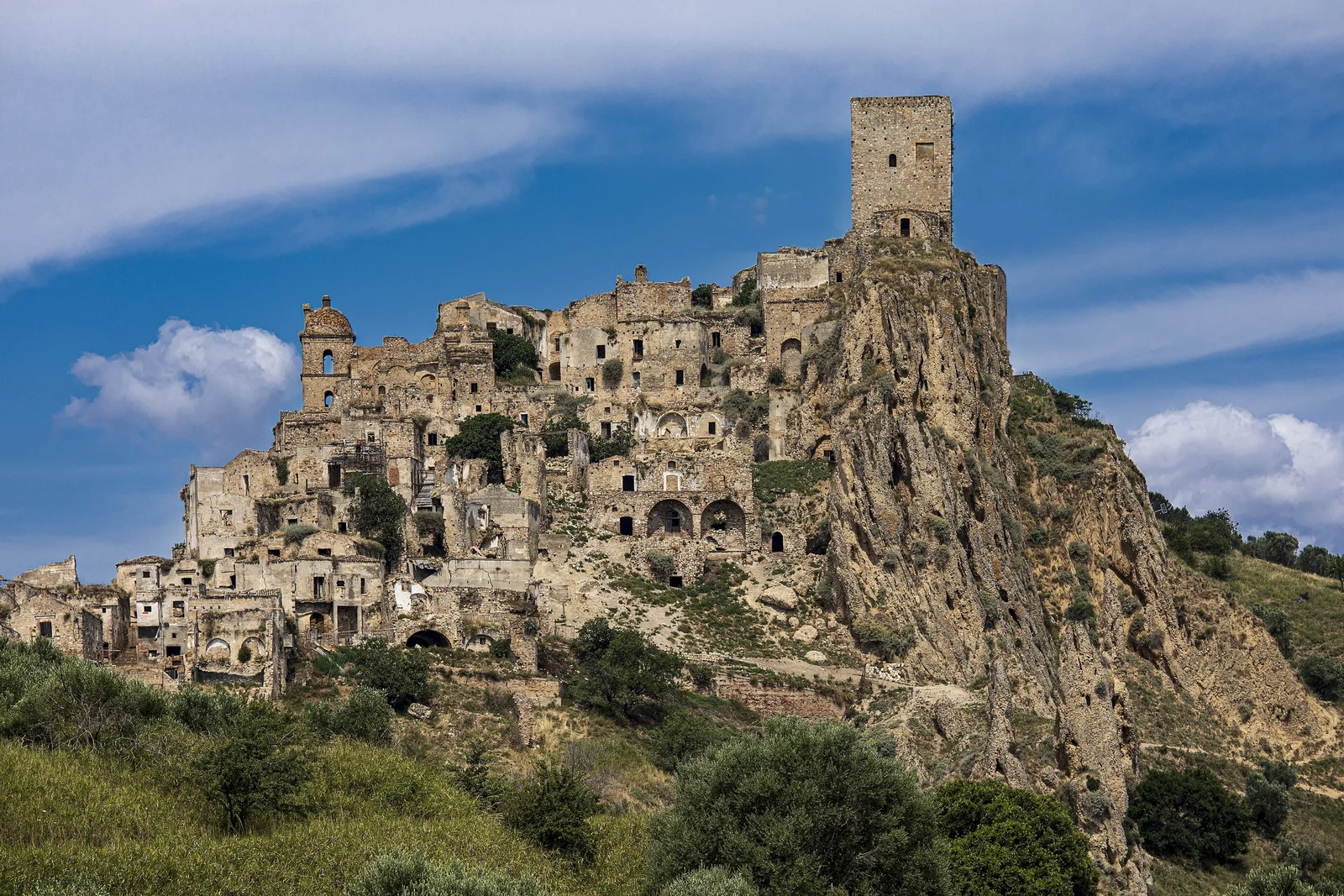
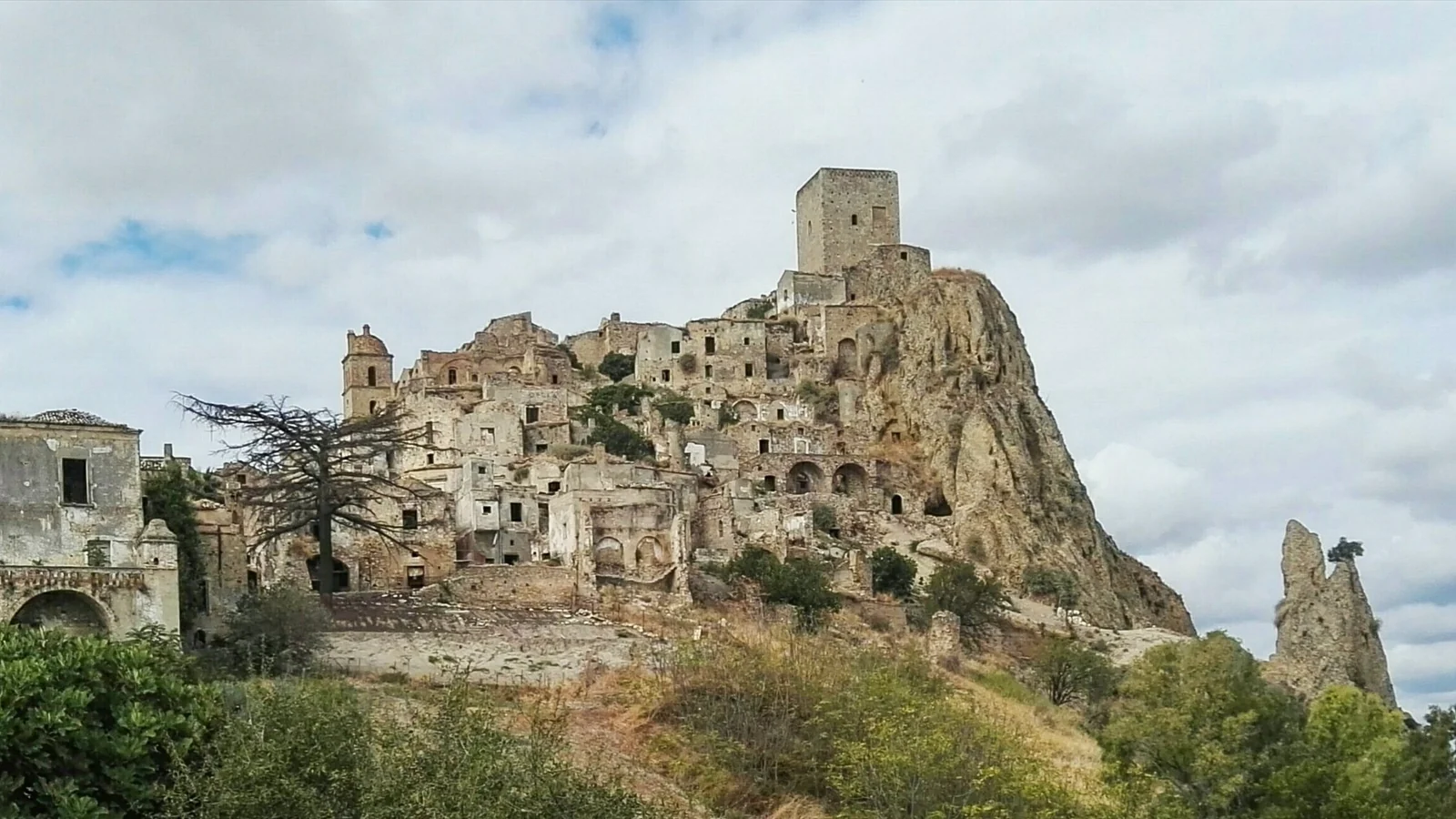
Craco is a medieval hill village in the province of Matera, about 40 km (25 miles) inland from the Gulf of Taranto, at an elevation of around 390 meters (1,280 feet). The old town clings to a rocky spur and is crowned by a square Norman tower. Almost nobody lives in it. Residents moved to the valley below, to a settlement called Craco Peschiera, which is still part of the same municipality.
What you get is a village frozen mid-sentence: roofless houses, stairways that end in air, a church with a tiled dome, and wide views over the clay hills. It looks dramatic from the road and more so on foot, which is why the guided visit is worth the effort. If you like places where the story is written in the stone, this is one of the strongest in southern Italy.
The History of Craco: From Greek Settlers to Ghost Town
Tombs from the 8th century BC have been found nearby, and around 540 BC Greeks from the coastal city of Metaponto are thought to have moved into this area. The name appears in documents from 1060, when the land belonged to the Archbishop of Tricarico and the settlement was called Graculum. A university is recorded in the town in 1276, which is a surprise for a place this remote.
The population grew from about 450 in 1277 to roughly 2,600 in 1561 and then settled at around 1,500 for centuries. Life depended on farming the surrounding hills, and that is where the trouble began. The slopes are made of clay that moves.
Landslides and the 1960s Evacuation
In 1963 a series of landslides forced the evacuation of the old town, and residents were relocated to the valley at Craco Peschiera. Wikipedia notes that the slides appear to have been triggered by infrastructure works, including sewer and water systems, on unstable ground. A flood in 1972 made things worse and ended hopes of moving people back.
Earthquakes Finish the Job
The strong 1980 Irpinia earthquake did further damage, and after it the historic center was abandoned completely. Ground movement, quakes and rain still shape how the ruins can be visited today, and they are the reason for the helmets.
Why Craco Is a Film Location
Directors keep coming back for the same reason you will: the village looks like a stage set that nobody had to build. Productions shot here include Christ Stopped at Eboli (1979), King David (1985), The Passion of the Christ (2004), The Nativity Story (2006) and Quantum of Solace (2008). The honey-colored stone and the empty lanes suit biblical and historical stories especially well.
You do not need to be a film fan. Standing in a famous screen backdrop is a bonus, but the real draw is the silence and the scale of what was left behind.
How Visits Work: Guided Tours, Hard Hats and Booking
Access to the old village is by guided visit only. Accredited guides supply protective helmets, and tickets and helmets are handled at the visitor center in the new settlement below the ruins. Tours run at set times during opening hours, and travel sources describe the visit as lasting roughly two hours, ending in a small chapel. Treat that as a guide, not a promise.
Prices, opening hours, group minimums and booking rules change, and older websites still repeat outdated numbers, so this guide does not quote a fare. Check the Comune di Craco website and the regional Basilicata tourism site for the current operator, schedule and any seasonal closures. Booking ahead is sensible in summer and on weekends, and some tours from Matera bundle transport with the entry.
- Wear sturdy shoes. Paths are uneven and steep, and sneakers with a good grip are the minimum.
- Bring water and sun protection. There is little shade on the hillside.
- Expect a waiver or safety briefing. This is normal for the site, so follow the guide's route exactly.
- Check weather and closures. Rain and wind can affect access to the old center.
Getting From Matera to Craco
A car is the simplest way. Travel sites put the drive from Matera at about an hour and a quarter, and there is no direct train. Confirm the route and time in your navigation app on the day, because roads in this part of Basilicata can have works or detours. Parking is at the new settlement, not at the old town.
Without a car, join a guided excursion from Matera. Several operators run half-day and full-day trips, and some combine Craco with other stops in the area. Read what each one includes, since entry, transport and the length of the Craco visit differ. Public transport is thin and does not make a practical day trip.
What You See on the Craco Tour
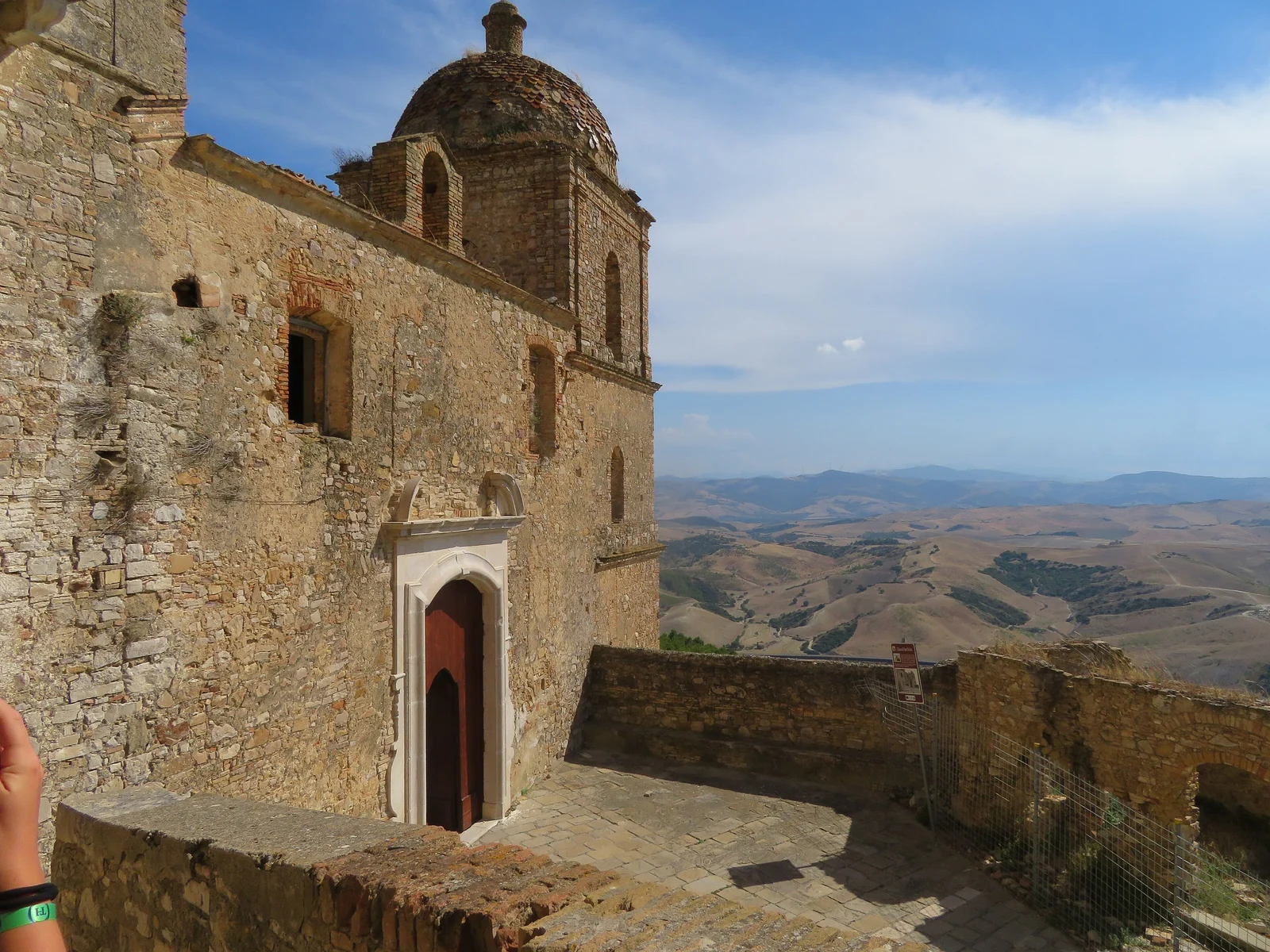
The group climbs through lanes of abandoned houses, past arched doorways and rooms open to the sky. You pass the church with its tiled dome, which sits on bedrock and has fared better than the buildings around it. Guides point out the Norman tower above the town, the palaces of the old noble families and the stairs that no longer lead anywhere, and they explain which areas slid and why.
Some places are out of bounds. Treat any rope or fence as final, even if a wall looks solid. The last stop on many visits is a small chapel in the ruins that holds a relic of the town's patron saint.
Best Season and Time of Day
Spring and autumn are the most comfortable. The hills are green in spring and golden in autumn, and walking uphill in a hard hat is easier when it is not 95°F. Summer is hot, with almost no shade on the route, so book the first tour of the day if you go then. Winter can be clear and quiet, though rain and mud make the paths less pleasant, and operators may adjust schedules.
For photography, the village glows in low morning or late afternoon light. The classic view of the tower and ruins is from the road approaching Craco, which is worth a stop before or after your tour.
Photographers should know the tour pace is set by the guide, so you will not have unlimited time at any one spot. Decide in advance which two or three frames matter most, and use the road approach for the wide shots. A telephoto lens helps for details on the tower and the church dome.
Plan your food and water around the visit too. The old town has no services, so eat before you climb or save lunch for after the tour, when the walk back down to the new settlement leaves you hungry. Bring a light layer even in warm months, because the hilltop can be windy.
Who Craco Suits, and Who Might Skip It
It suits history and film fans, photographers, curious families with older children and anyone who finds ruins more moving than museums. It is less suited to people with mobility problems, because the route is steep and uneven, and to very young children who cannot walk the full tour. If you only have a day in the region and love cities, the Sassi alone may be enough. If you want something unexpected, give Craco a morning.
Be realistic about the mood, too. Craco is a place of loss as much as a photo stop, and the guides do not rush the history. Visitors who arrive curious about the people who lived here tend to get far more out of the walk than those who arrive only for pictures.
A Day-Trip Plan Combining Craco and Matera
Start early in Matera and drive out in the morning to catch an early Craco tour. Finish the visit around midday, have lunch nearby, then return to Matera in the afternoon. Spend the late afternoon in the Sassi and stay for dusk, when the cave districts light up. Our Matera guide covers what to see there, and the wider Italy section has ideas for what comes next.
Nearby Stops and Ways to Visit
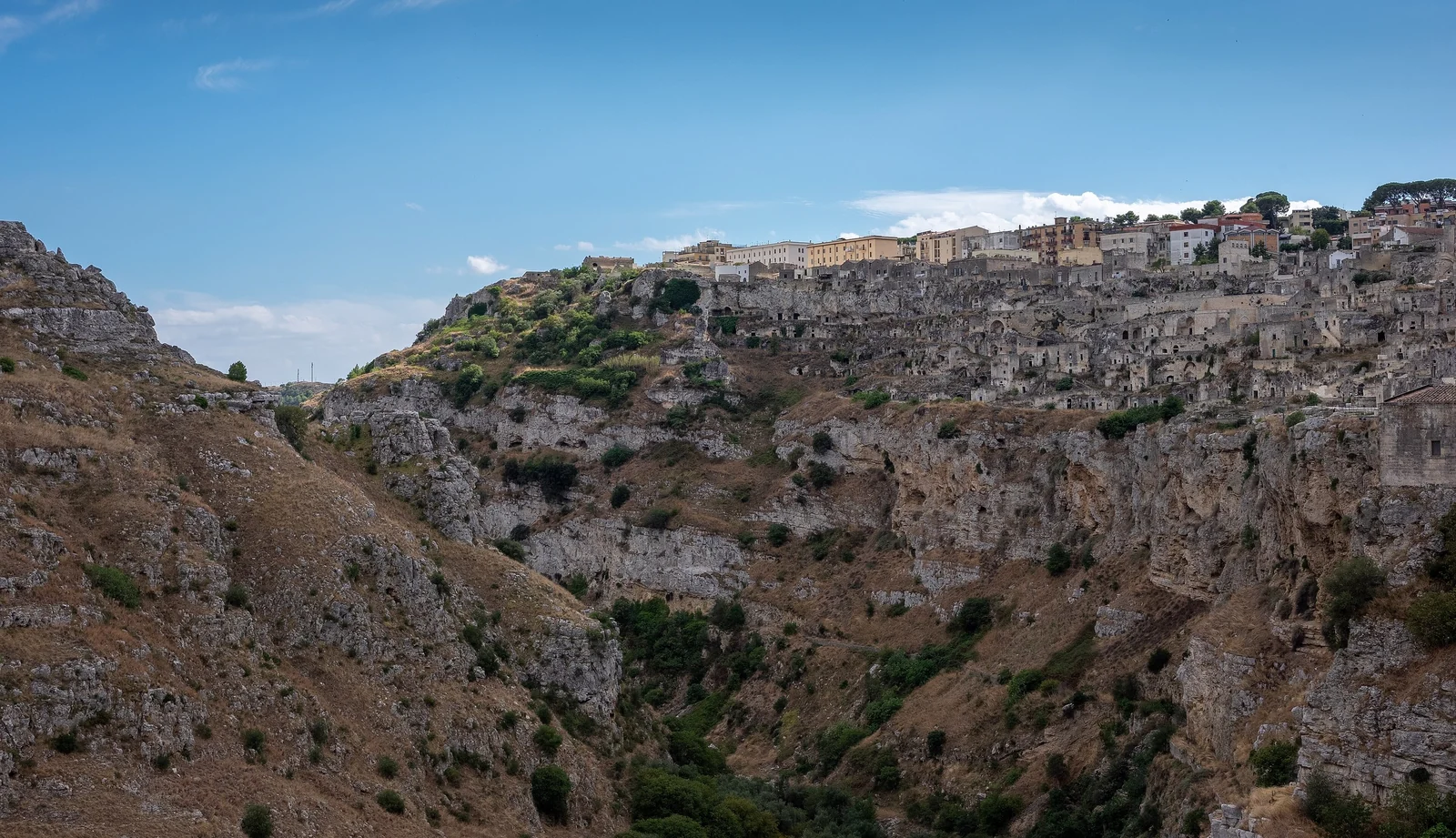
Craco Peschiera, the newer settlement, is where the visitor center is. The surrounding clay hills are the calanchi, eroded badlands that you can see from the road and that explain the landslides. Metaponto, on the Ionian coast, has Greek temple remains and beaches, and fits a longer itinerary or a stay in the area. Compare the main ways to do it:
| Option | Effort | Best for |
|---|---|---|
| Self-drive plus guided tour | Moderate: driving and a steep walk | Flexible timing, photo stops on the road |
| Organized excursion from Matera | Low: transport included | Travelers without a car |
| Craco and Matera in one day | High: long day | Short stays with limited time |
| Craco with Calanchi and Metaponto | Moderate to high: more driving | Longer trips and landscape lovers |
Visiting Craco Respectfully
Craco was home to families who lost their houses, and former residents still gather for the festival of their patron saint. Treat the place like a village, not a theme park. Stay behind barriers, take nothing, leave nothing and keep your voice down in the church and chapel. Follow the guide and never climb on walls, because the ruins are fragile. Drones are often restricted around heritage sites, so check the rules before flying one.
Craco Ghost Town FAQ
Can you visit Craco without a guide?
No. The old town is open only on guided visits, and the guides provide the hard hats. You can see the village from the road without a ticket, but entry into the ruins requires joining a tour. Check the official sites for the current schedule.
How far is Craco from Matera?
Travel sources put the drive at about an hour and a quarter. Check your navigation app for the exact time, as roads in the area can change. There is no direct train, so a car or an organized tour is the practical choice.
How long does the Craco tour take?
Visits are described as lasting roughly two hours, though this varies by operator and group. Allow extra time to park, collect your helmet and meet the guide at the visitor center. Confirm the length when you book.
Why was Craco abandoned?
Landslides forced the evacuation that began in 1963, and residents moved to the valley at Craco Peschiera. A flood in 1972 and the 1980 earthquake ended any hope of returning, and the old center was fully abandoned.
Which films were shot in Craco?
They include Christ Stopped at Eboli, King David, The Passion of the Christ, The Nativity Story and Quantum of Solace. The village's ruined look suits historical and biblical stories, which is why directors return.
Is Craco safe to visit?
It is safe on a guided tour that follows the approved route and uses helmets. The buildings are unstable, so never enter closed areas or climb walls. Wear sturdy shoes and follow your guide's instructions at all times.
When is the best time to visit Craco?
Spring and autumn offer mild weather and good light. In summer, take the earliest tour because there is little shade. Check the official sites for seasonal hours, since winter schedules and weather conditions can change.