The Amalfi Coast is a 40-kilometer stretch of southern Italy where mountains drop straight into the Tyrrhenian Sea, and a single road, the SS163, clings to the cliffs between Vietri sul Mare and Positano. UNESCO listed the Costiera Amalfitana as a World Heritage landscape in 1997, and the reasons are obvious from the first bend: pastel villages stacked on slopes, lemon terraces held up by stone walls, and water in impossible shades of blue.
The coast rewards three to four days. That is enough for Positano, Amalfi town and its cathedral, the gardens of Ravello and the Path of the Gods hike, with a boat day to Capri or a train day to Pompeii if you want one. This Amalfi Coast travel guide covers the places worth your time, how to move around without a car, when to go, where to base yourself and a realistic itinerary. It pairs well with our Rome guide if you are building a longer Italian trip.
Positano and the Western Coast
Positano is the coast's postcard, and it earns the reputation. Houses in pink, ochre and terracotta spill down a ravine to a pebble beach, with the domed church of Santa Maria Assunta at the bottom. It is steep, so expect stairs everywhere and wear shoes you trust.
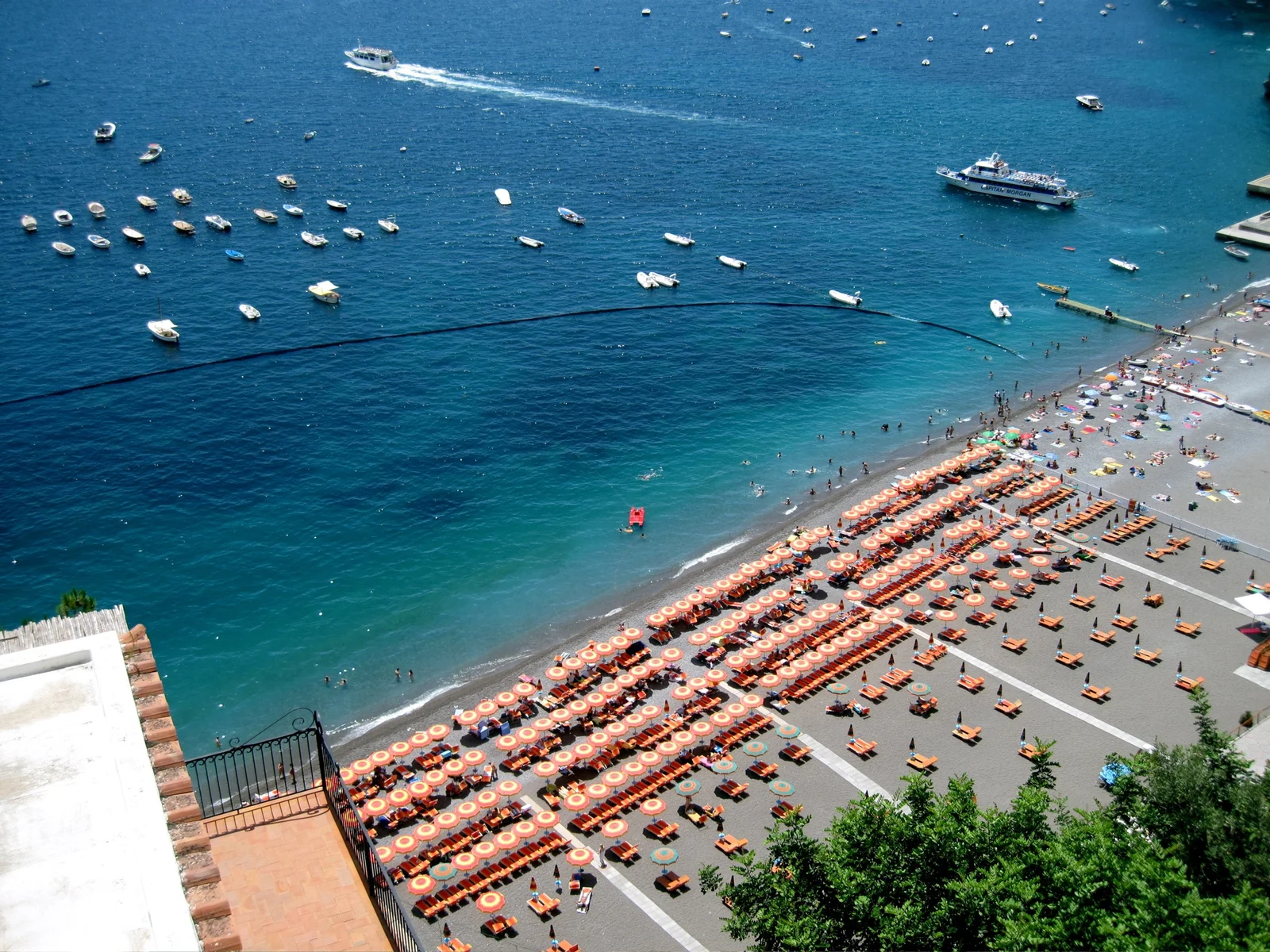
Come early or late. Between late morning and mid-afternoon in summer the main lane is a slow shuffle of day-trippers. Walk to the quieter end of the beach, climb to the upper lanes for views, and save the shopping for the evening, when the town finally exhales. Honestly, Positano is best treated as a place to swim, eat and look, not as a checklist.
Praiano and the Furore Fjord
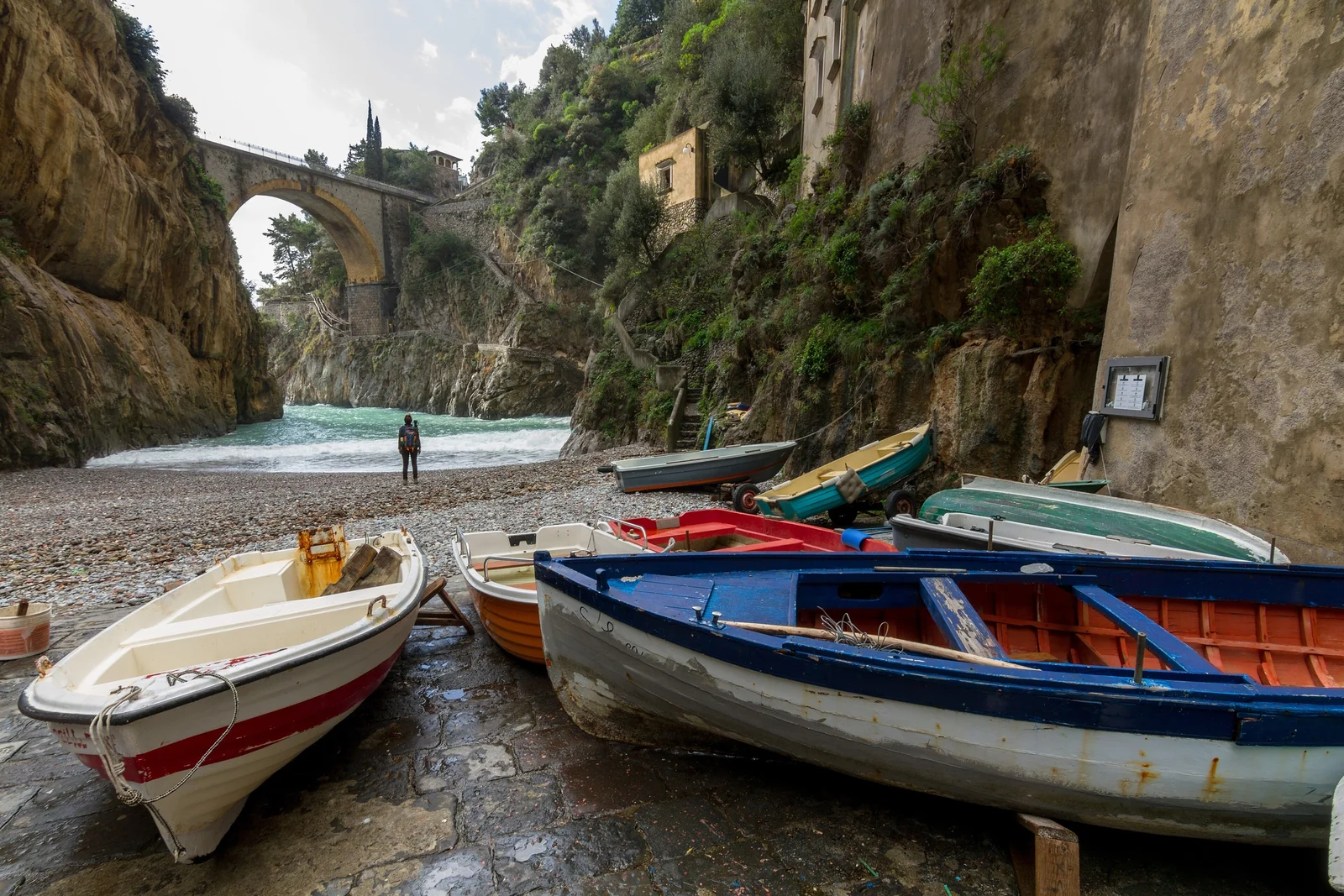
East of Positano, Praiano is the calmer alternative: fewer crowds, sunset terraces and a working fishing-village feel at Marina di Praia. Just beyond, the Fiordo di Furore is a narrow cleft in the cliffs, crossed high above by the coast road. Strictly speaking it is a deep, sheltered gorge-inlet rather than a Norwegian-style fjord, but the little beach at the bottom is a lovely stop for a swim if the sea is calm.
Amalfi Town, Atrani, Minori and Maiori
Amalfi was once a maritime republic whose ships traded across the Mediterranean, and that past still shows. The town is the coast's hub, which means it is busy, but its center is far more of a real town than Positano. Locals shop on the main street, bells ring from the cathedral and kids kick footballs in the square.
The Duomo di Sant'Andrea
The cathedral dominates the Piazza del Duomo at the top of 62 steps. Its origins go back to the 9th and 10th centuries, and the striped facade you see today was completed in 1891 after an earlier one partly collapsed in 1861. The Romanesque bell tower, begun in 1180, is covered in majolica tile. Inside, the 13th-century Cloister of Paradise, with its Arab-Norman arches, is the quietest corner of town. The crypt holds the relics of Saint Andrew, said to have been brought from Constantinople in 1206.
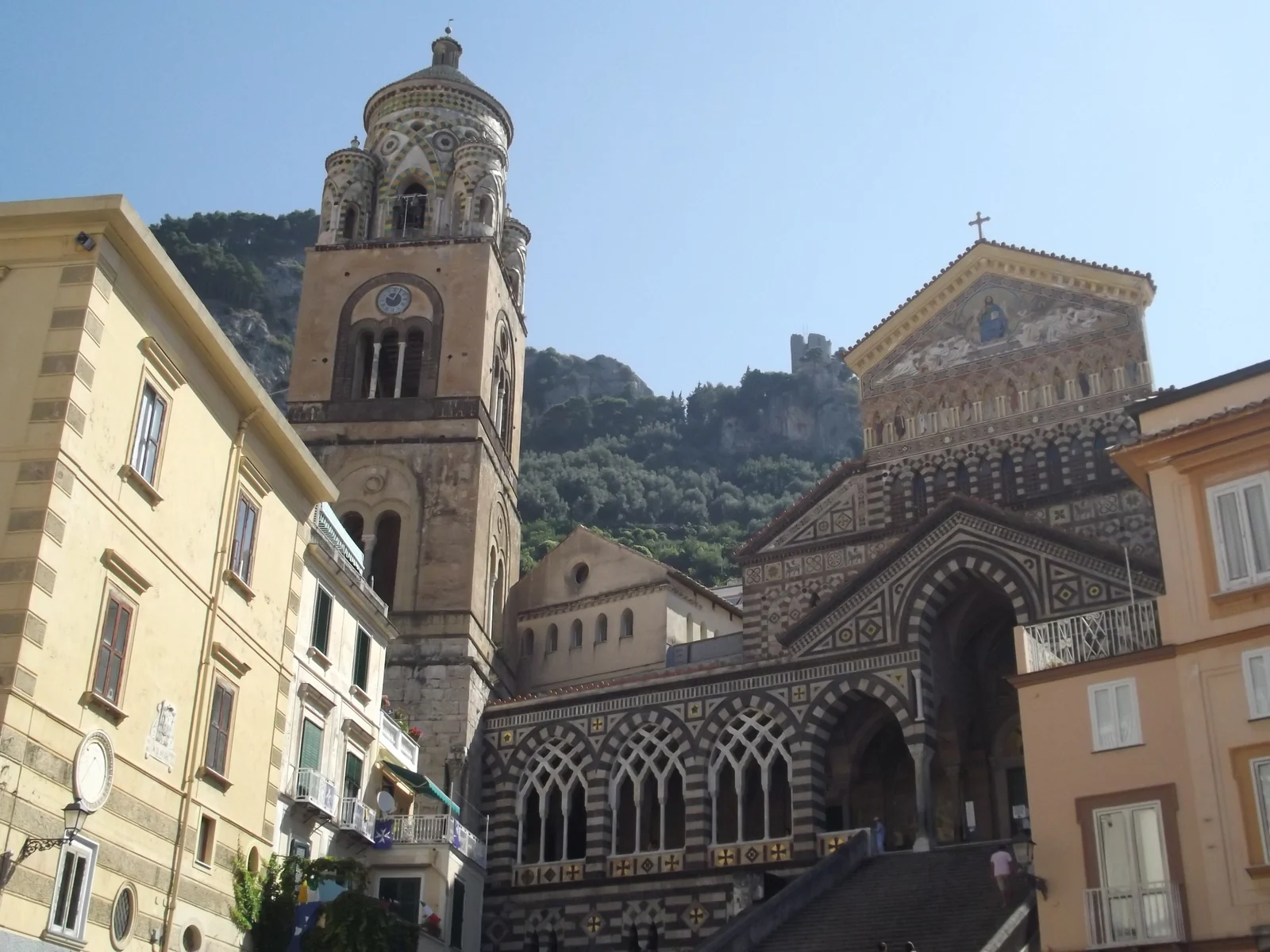
Dress with shoulders and knees covered, and check the current opening hours and entry fee for the cathedral and cloister locally, since both change.
Atrani
A ten-minute walk east along the shore, Atrani is one of the coast's smallest towns and a rare place that still feels private. A single piazza opens onto the sea, with a tight tangle of covered lanes behind it. Have an aperitivo in the square and you will see more of daily Italian life than in any other village here.
Minori and Maiori
Past Atrani the coast flattens and the mood changes. Minori is a small, easygoing town with a sandy beach, a short promenade and a reputation for pastries and handmade pasta. Maiori, next door, has one of the longest beaches on the coast, so it is the practical choice for families who want a real stretch of sand rather than a tiny cove.
Both are calmer and generally better value than Positano, and both have buses and ferries. Walk the shore between the two, or take the old stepped path up through lemon terraces toward Ravello if your legs are willing. These towns are where many Italians holiday, which is a good sign.
Ravello: Villas and Gardens Above the Sea
Ravello sits high above the water, which is exactly the point. Up here the air is cooler, the crowds thinner and the pace slower. It has long attracted musicians and writers, and its two famous villas explain why.
Villa Rufolo, a medieval complex with terraced gardens and a Moorish-style tower, is the setting for a summer music festival. Villa Cimbrone is the one to see if you only pick one: a long garden walk ends at the Terrace of Infinity, a belvedere lined with marble busts over a drop to the sea. Go late in the afternoon when the heat fades and the light softens, and linger on the cathedral square afterward with a coffee.
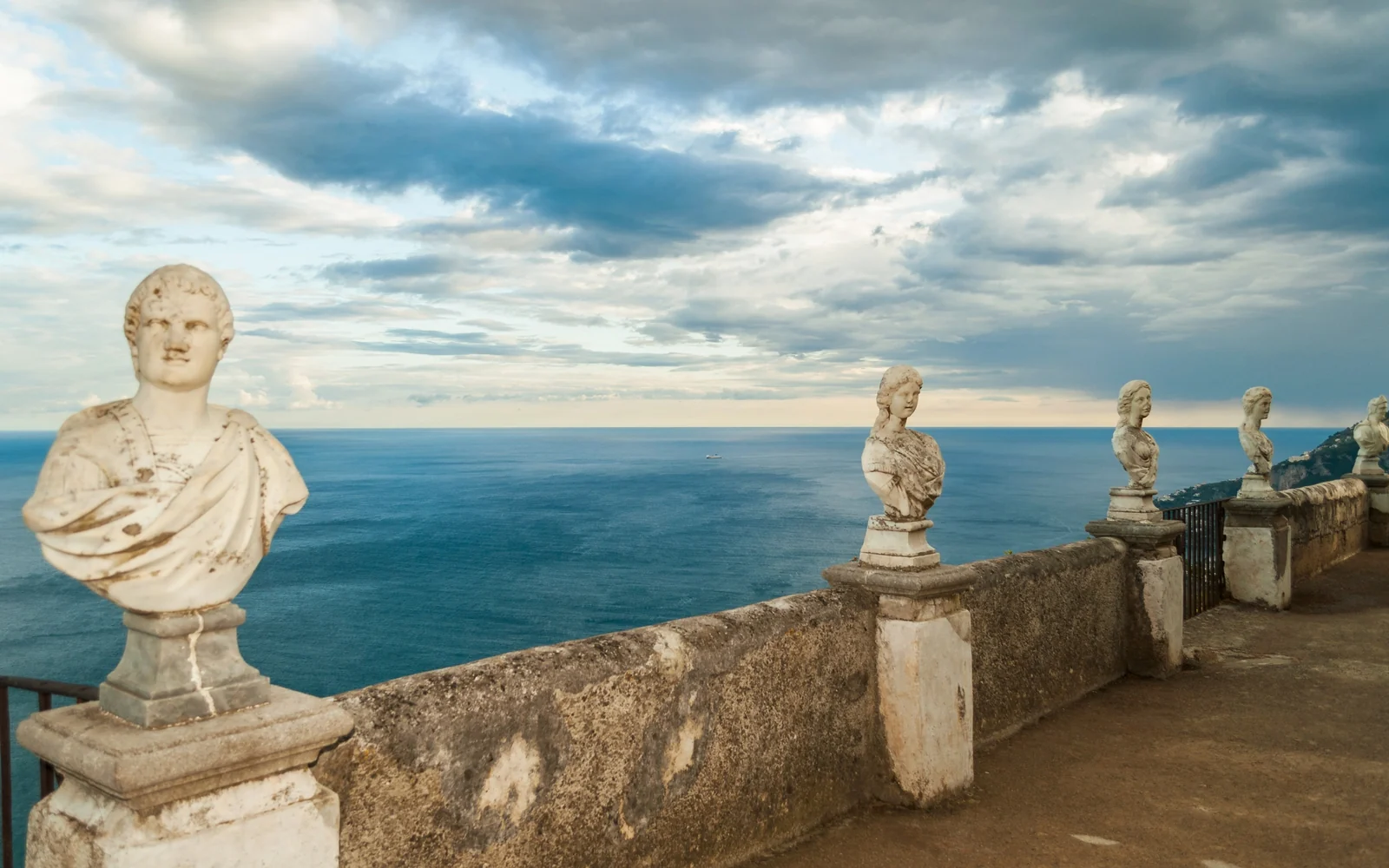
Buses climb to Ravello from Amalfi along a road as winding as you would expect, and the ride takes roughly half an hour. Check opening hours and ticket prices for both villas on their official sites before you go.
The Path of the Gods Hike
The Sentiero degli Dei is the coast's best-known walk, a high trail that contours along the mountainside from Bomerano, in Agerola, to Nocelle, above Positano. Sources vary on exact figures, but expect roughly 6 kilometers and about two to three hours one way at a relaxed pace. It is mostly gentle, with a few rocky sections. The payoff is a long row of views over the sea and the islands below.
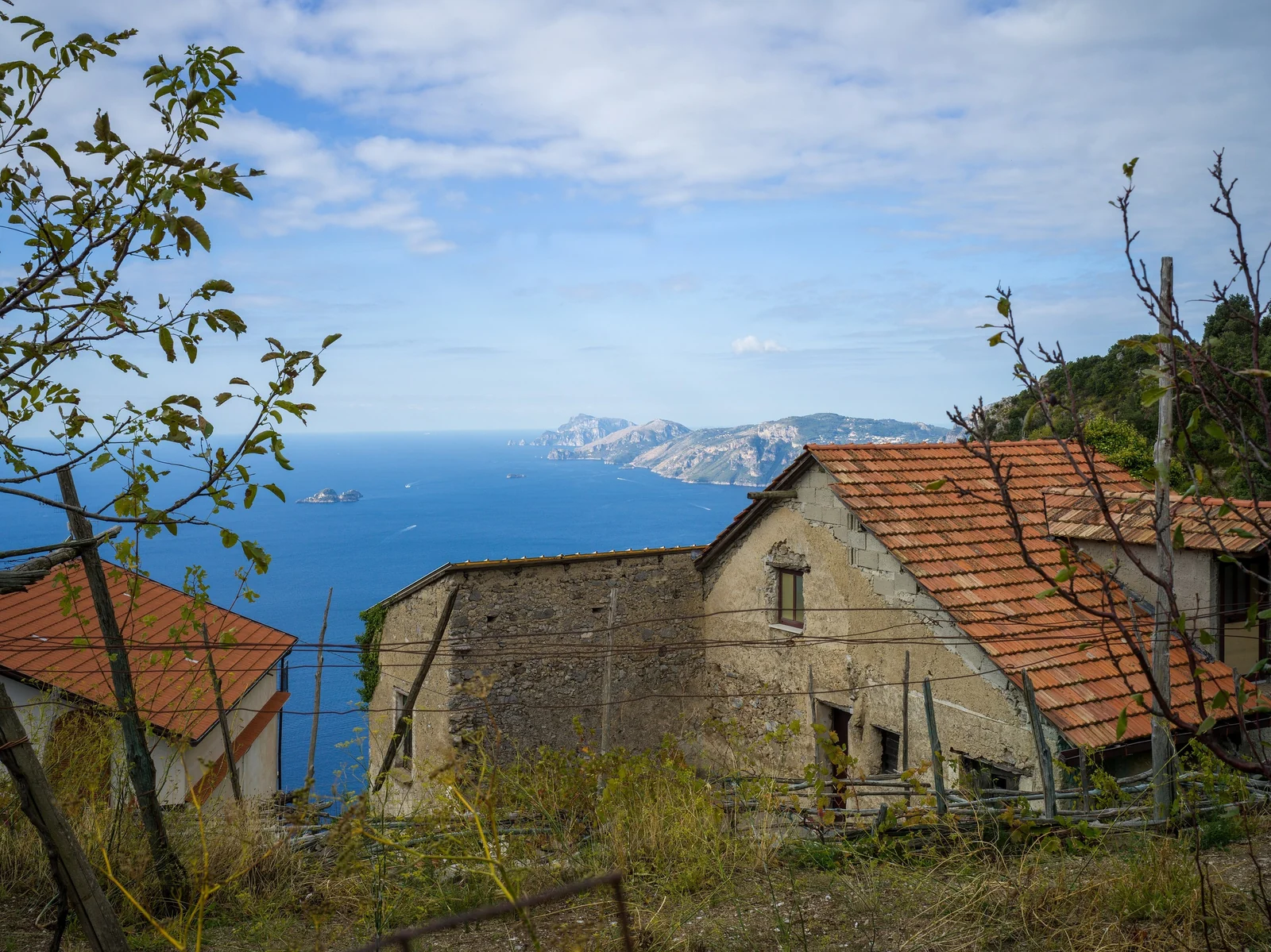
- Direction: most hikers start at Bomerano, reached by bus from Amalfi, and finish at Nocelle, because the route is mostly downhill that way. From Nocelle, a long staircase leads down to Positano.
- Timing: start early in summer. There is little shade, and the final stairs are hard on tired knees.
- Gear: sturdy shoes, a hat and plenty of water. Cafes along the way are few.
- Conditions: trails can be damaged or closed after storms, so check local conditions before you set out.
Capri, Ischia, Pompeii and Naples Day Trips
The coast is a good base for several day trips, though each one eats a large part of your day. Pick one, not three.
| Trip | How you get there | Best for |
|---|---|---|
| Capri | Ferry from Amalfi or Positano in season; more frequent from Sorrento and Naples | Sea views, gardens and clifftop lanes |
| Ischia | Ferry from Naples or Pozzuoli; better as a longer stay | Thermal gardens and beaches |
| Pompeii and Herculaneum | Circumvesuviana train from Naples or Sorrento | Roman history, buried by Vesuvius in AD 79 |
| Naples | Train or ferry from Salerno or Sorrento | Pizza, the historic center, the archaeological museum |
Pompeii and Herculaneum were both buried by the eruption of Vesuvius in AD 79. Pompeii is bigger and needs most of a day; Herculaneum is smaller and well preserved, and fits a morning. Look for the stations named Pompei Scavi and Ercolano Scavi on the Circumvesuviana line, since other stops with similar names are far from the sites. Check tickets and opening details on the official Pompeii Archaeological Park site.
Capri is crowded at midday, so go early or stay late, and walk away from the harbor and the main square. Ischia is quieter and larger, and worth more than a few hours. For other Italian islands to compare, read our guide to the islands of Italy. Naples is best seen on its own terms, with a full day of street food and churches.
Lemons, Limoncello and Seafood
The coast's famous lemon is the sfusato amalfitano, a large, fragrant fruit grown on terraces often shaded by pergolas. Limoncello is made from its peel, and you will see it for sale everywhere, along with lemon soap, ceramics and cakes. Buy from small producers if you can, and taste before you buy.
The cooking leans on the sea. Look for anchovies, scialatielli ai frutti di mare, grilled fish sold by weight and fried calamari. Colatura di alici, an amber anchovy sauce from the small town of Cetara, is a local specialty worth carrying home. Eat a block or two off the main waterfront and you will usually pay less and eat better.
Getting Around the Amalfi Coast
The Amalfi Drive (SS163) is the only road along the coast: narrow, curving and shared with large buses. It is more scenic than relaxing, and plenty of travelers decide they would rather not drive it at all.
SITA Buses
SITA buses link Sorrento, Positano, Amalfi and Salerno along the SS163, and they are the cheapest option. They are also slow and in summer often full by the time they reach the middle stops. Buy tickets before boarding, at a tobacconist or bar, and validate them. Sit on the sea side if you can, and bring patience.
Ferries
Ferries are the best way to arrive. They connect Amalfi, Positano, Salerno, Sorrento, Capri and Naples, generally from around Easter into October. Winter service is limited and rough seas can cancel sailings, so check the operators' timetables and do not count on a boat in the cold months.
Driving, Parking and Scooters
In summer, local authorities often limit traffic on the SS163 with rules such as alternate-day access by license plate, with exemptions for residents, buses and taxis. Details vary, so check the current rules before you plan to drive. Parking is scarce and expensive, and garages in the main towns fill early.
Scooters are tempting, but they are not a beginner's vehicle here. The road is narrow, tour buses swing wide on the curves and the surface can be slick. If you have little experience, pick a bus, a boat or a driver.
When to Go and Where to Base Yourself
May, June and September are the sweet spot: warm, mostly dry and with the boats running. July and August are hot, crowded and expensive. Winter is quiet and many hotels and restaurants close; the coast works as a low-key escape then, but ferries are limited and some trails may be closed.
| Base | Pros | Cons |
|---|---|---|
| On the coast (Positano, Amalfi, Praiano, Minori) | Boats and buses at your door, sunsets, atmosphere | Higher prices, stairs, fewer options in low season |
| Sorrento | Good transport links, Circumvesuviana train, more choice | Not on the Amalfi stretch; buses and ferries needed |
| Salerno | Train station, lower prices, a real city, easy access to the east | Farther from Positano; fewer coastal views |
If you have time for only one base, Amalfi or Praiano gives the easiest access in both directions. Sorrento suits a trip that adds Pompeii and Capri. Salerno suits budget travelers and rail arrivals. For a different part of southern Italy, see our guides to Matera and Puglia.
A 4-Day Amalfi Coast Itinerary
Day 1: Amalfi and Atrani
Arrive by ferry if you can. Visit the cathedral and cloister, wander the lanes behind the main street and walk to Atrani for an aperitivo at sunset.
Day 2: Ravello
Take the morning bus up to Ravello, see Villa Rufolo, then lunch near the square. Spend the late afternoon at Villa Cimbrone and take the bus or the steps back down.
Day 3: Path of the Gods and Positano
Take the early bus to Bomerano and hike to Nocelle. Walk down the stairs to Positano for a swim and a seafood dinner, then catch a late ferry or bus back.
Day 4: Capri or Pompeii
Pick one. Capri suits a lazy, scenic day if the sea is calm; Pompeii suits history lovers. Short on time or energy? Skip both and spend the day in Minori and Maiori. Our Italy travel guides have more ideas for what to do next, including the wonders of Italy.
Amalfi Coast FAQ
How many days do you need on the Amalfi Coast?
Three to four days cover Amalfi, Positano, Ravello and the Path of the Gods at a comfortable pace. Add a day if you want Capri or Pompeii. Two days is workable but rushed, and much of it ends up spent on buses.
What is the best month to visit the Amalfi Coast?
May, June and September offer warm weather, open beaches and full boat schedules without the peak crowds of July and August. Winter is quiet, with limited ferries and some seasonal closures.
Is it better to stay in Sorrento, Salerno or on the coast?
The coast itself gives atmosphere and boat access but costs more. Sorrento has better transport links and suits trips with Pompeii and Capri. Salerno is cheaper and on the rail line but farther from Positano.
How do you get around the Amalfi Coast without a car?
Use SITA buses along the SS163 and ferries between the main towns from around Easter into October. Buy bus tickets before boarding, and expect crowding in summer. Taxis and local transfers fill the gaps.
How long is the Path of the Gods hike?
Sources vary, but most put the Bomerano to Nocelle route at roughly 6 kilometers, around two to three hours one way. It is mostly gentle with some rocky stretches and little shade, so start early.
Can you visit Pompeii from the Amalfi Coast?
Yes. Reach Sorrento by bus or ferry, then take the Circumvesuviana train to Pompei Scavi. Allow most of a day for Pompeii, or combine a morning at Herculaneum with an afternoon in Naples.
Is it safe to rent a scooter on the Amalfi Coast?
It is risky for inexperienced riders. The SS163 is narrow and curvy, buses swing wide on bends and traffic is heavy in summer. If you are not confident, use buses, ferries or a driver.