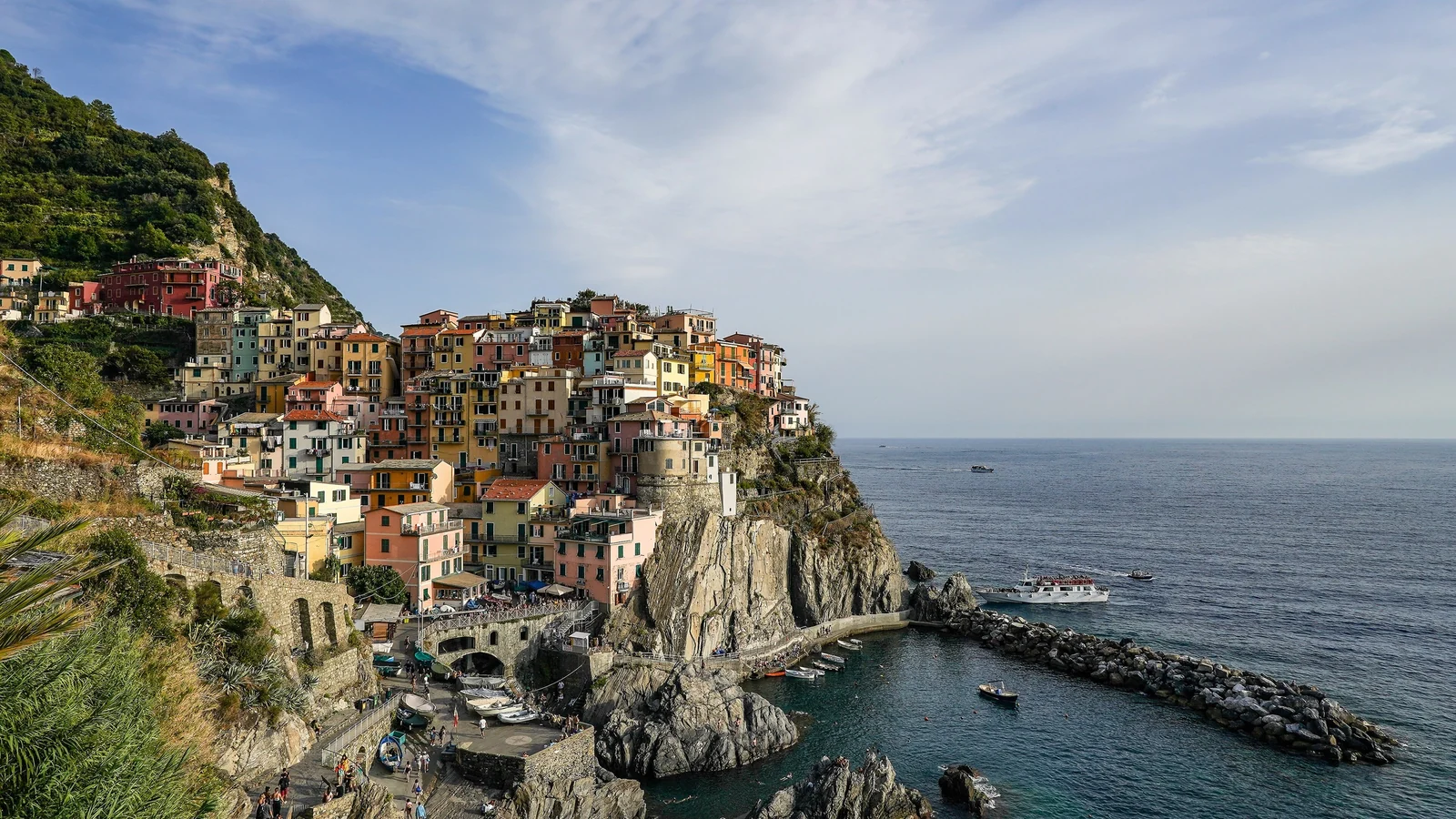
The Cinque Terre are five small villages on the Ligurian coast of northwest Italy: Monterosso al Mare, Vernazza, Corniglia, Manarola and Riomaggiore. Pastel houses stack up steep cliffs above the sea, terraced vineyards climb the hillsides behind them, and there are almost no roads. You get around by regional train, by ferry or on foot. The area has been part of a UNESCO World Heritage Site since 1997.
Most visitors come for a day. Two nights is better, because the villages feel completely different once the day-trip crowds leave on the evening trains. This Cinque Terre travel guide covers each village, the coastal trail and why you must check its status before you lace up, the Cinque Terre Card, trains and ferries, where to stay, and what to do if you would rather skip the crowds. For more of the country, browse our Italy travel guides.
The Five Villages of the Cinque Terre
They are only a few minutes apart by train, but each one has its own character. Here they are from north to south.
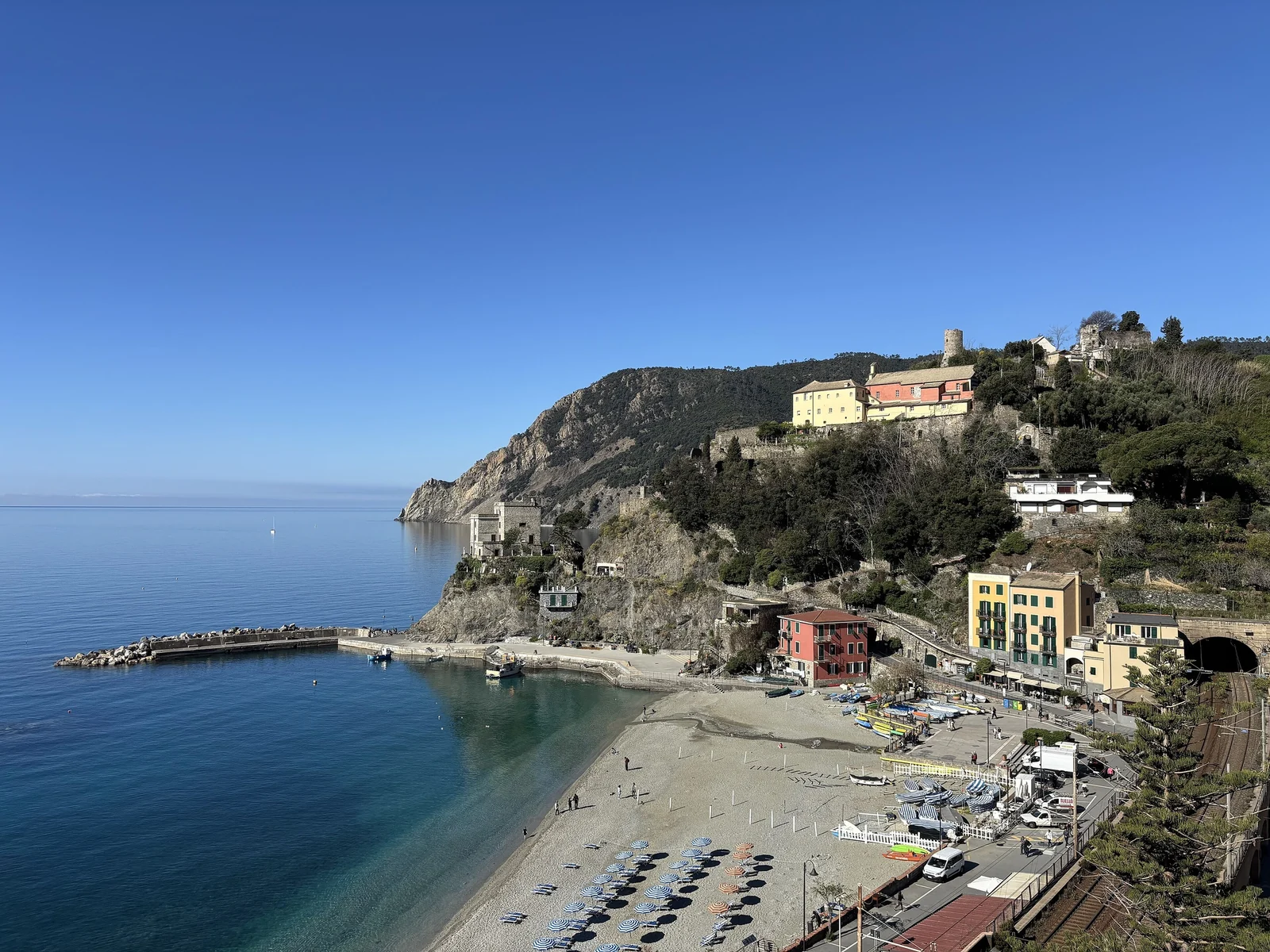
Monterosso al Mare
The northernmost and biggest village, and the only one with a proper sandy beach. It is split into an old town with narrow lanes and a newer seafront area, Fegina, joined by a short tunnel. It suits families and anyone who wants a swim, and it has the most hotels and restaurants of the five.
Vernazza
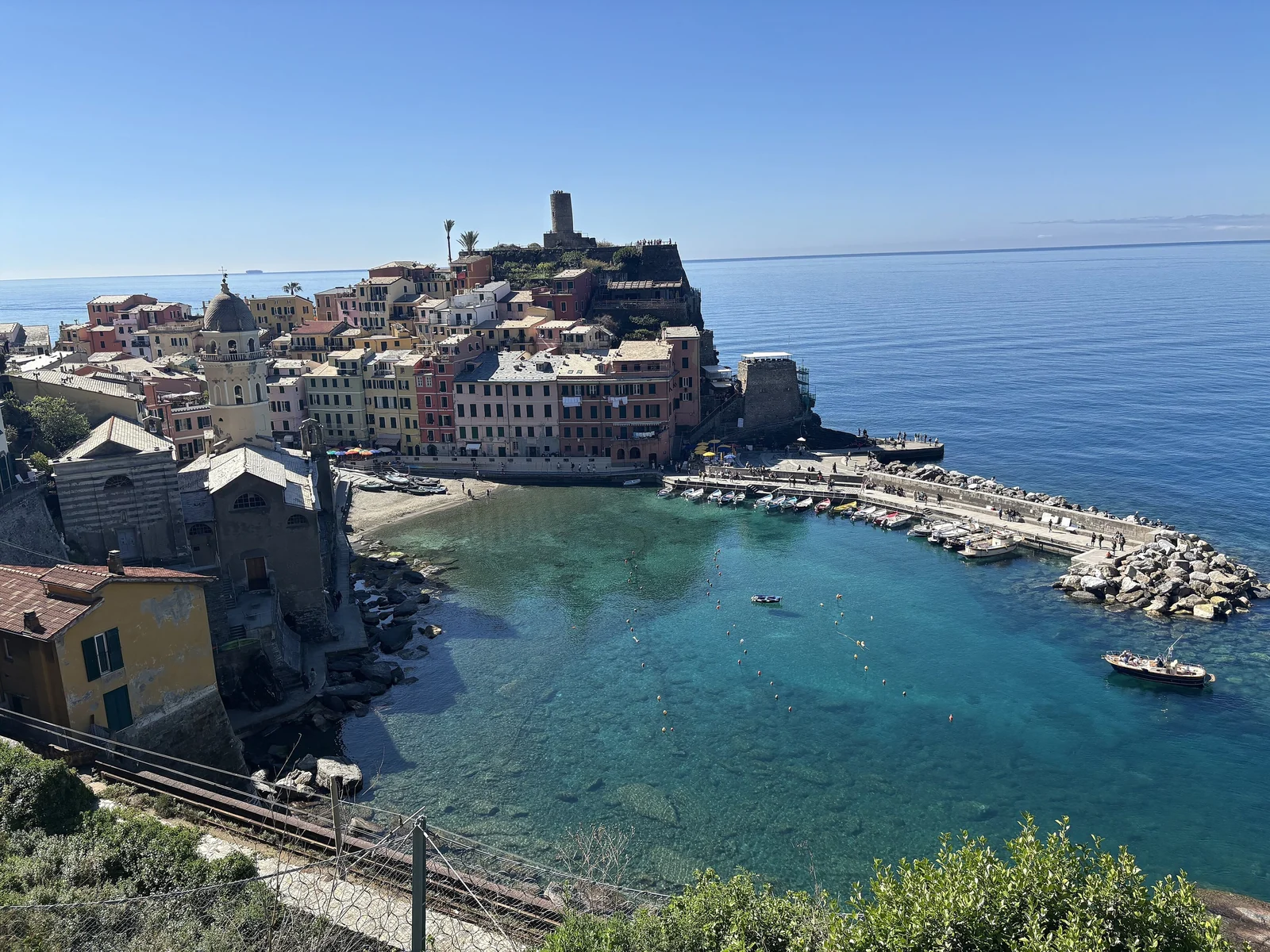
Many travelers rank Vernazza as the prettiest of the five. A tiny harbor opens into a small square lined with café tables, and a medieval castle tower watches over the whole scene. Floods and mudslides hit the village hard in October 2011, and it was rebuilt afterward. It is also the village that gets the most crowded, so come early or stay the night.
Corniglia
The odd one out. Corniglia sits on a high headland rather than at sea level and has no harbor, so ferries do not stop here. From the station you climb a long brick staircase of roughly 380 steps, or ride the shuttle bus that runs up the road. The reward is a quieter village with good views and fewer people.
Manarola
A cluster of houses on a dark rocky spur, with a small harbor and swimming spot at the bottom. Terraced vineyards surround it, and the area is known for Sciacchetrà, a sweet wine made from locally grown grapes. Walk to the cliff viewpoint at the edge of the village for the classic postcard angle, especially at sunset.
Riomaggiore
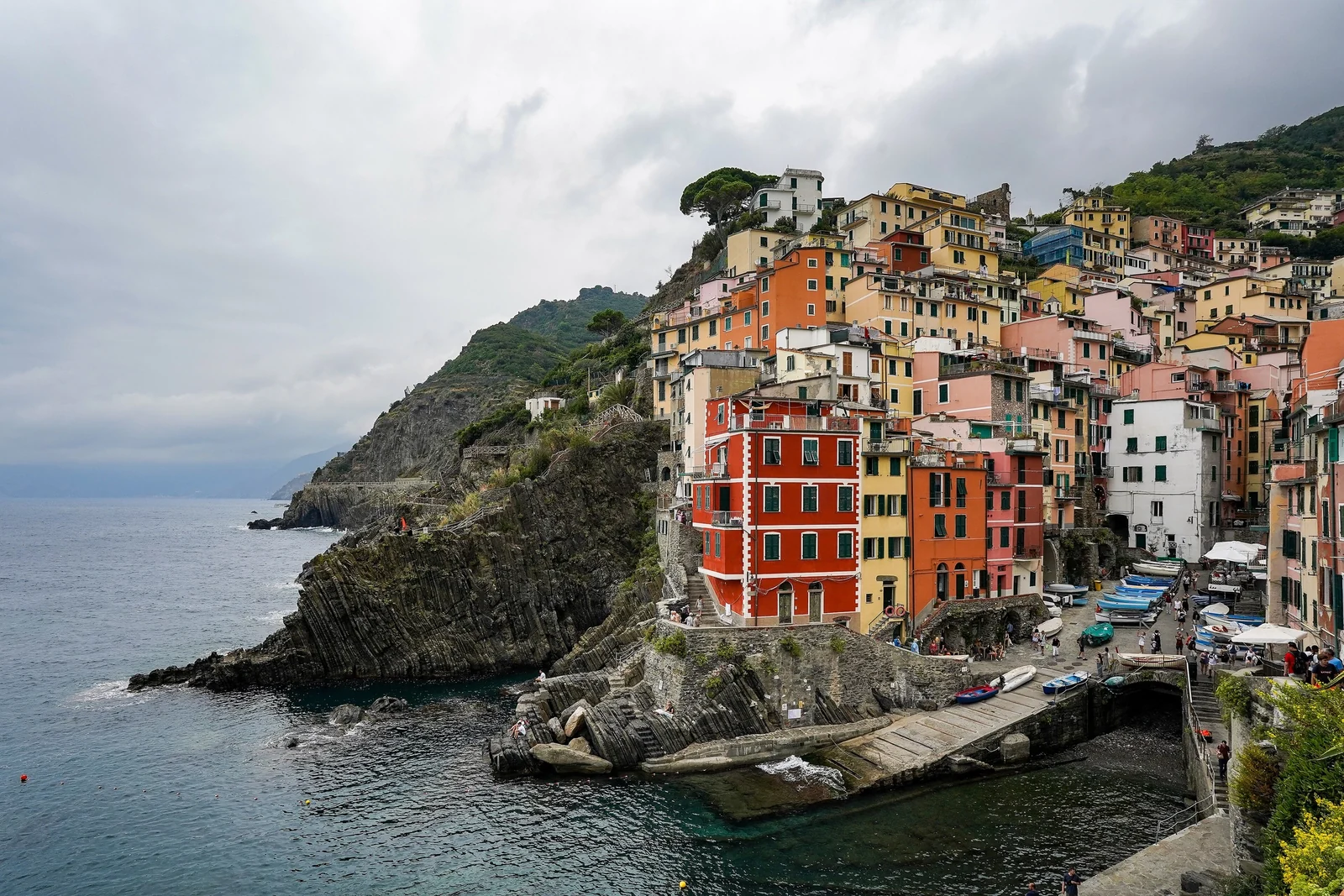
The southernmost village is steep, lively and a little less polished than the others. Houses climb a narrow valley to a small marina, and it is the first stop on the line from La Spezia, which makes it the easiest village to reach. Its main street has plenty of bars and restaurants, and it is a good base if you want to keep costs sensible.
Sentiero Azzurro and the Cinque Terre Trails
The Sentiero Azzurro (the Blue Trail, path 592) is the classic coastal route linking all five villages. When every stage is open it runs about 12 km, with each village-to-village stage taking somewhere between 30 minutes and two hours. The stages are below, with approximate distances.
| Stage | Approx. distance | Typical time | Character |
|---|---|---|---|
| Riomaggiore to Manarola (Via dell'Amore) | About 1 km | Under 30 minutes | Paved, flat, the easiest section |
| Manarola to Corniglia | About 3 km | About 1 hour | Easy, mostly flat |
| Corniglia to Vernazza | About 3.5 km | 1.5 to 2 hours | Moderate to hard, steep in places |
| Vernazza to Monterosso al Mare | About 4 km | 2 hours or more | Moderate to hard, many steps |
Check Trail Status First
This is the single most important practical point in the guide. The Cinque Terre sit on steep, unstable ground, and landslides and storm damage regularly close sections of the coastal trail, sometimes for years. The Manarola to Corniglia stage has been closed for long periods, and other stages close at short notice, particularly after heavy rain. When the weather alert is orange or red, trails can close across the park.
Do not trust an old blog post, including this one, for what is open today. Check the official Cinque Terre National Park trail pages the morning you plan to walk, and ask at a park information point in any station if you are unsure. If the coastal trail is closed, you often still have higher inland paths and the train, so you can usually link at least two villages on foot.
Via dell'Amore
The Via dell'Amore, or Lovers' Lane, is the flat, paved stretch between Riomaggiore and Manarola, carved into the cliff above the sea. It was closed for many years after rockfalls and reopened following extensive safety work. Access is managed with park rules, so check the park's Via dell'Amore page for the current ticket and reservation setup before you plan around it.
Hiking Tips
- Wear real shoes. Sandals and flip-flops are a bad idea on stone steps.
- Carry water. Fountains are few and the afternoon sun on the cliffs is strong.
- Start early. You avoid the heat, and the trails are far quieter before 10 a.m.
- Plan for the weather. Wet rock gets slippery, and storms can close paths fast.
- Consider walking one way. Corniglia to Vernazza is the best-known scenic stretch when open, and the train brings you back.
Cinque Terre Card: Trails, Trains and What to Buy
You need a pass for the paths that charge a fee and for unlimited train rides, and the park sells both as the Cinque Terre Card. There are two main versions, explained on the official Cinque Terre Card page.
- Trekking Card: gives access to the paid trails, along with the park's shuttle buses and some other services. It does not cover the train.
- Train Card: adds unlimited regional train rides between Levanto and La Spezia for the validity period, on top of the trekking access.
- Neither card is needed if you stick to free trails and buy single train tickets.
Prices depend on the season and the number of days, and they change, so check the official page for current rates. Buy at park information points in the stations or through the official channels, and keep the card until you leave the area, since inspectors do check.
Getting There: Trains, Ferries and La Spezia
By Train
The villages sit on the Genoa to Pisa line, and regional trains stop at all five stations. The usual gateway is La Spezia Centrale, where regional trains to Riomaggiore, Manarola, Corniglia, Vernazza and Monterosso leave several times an hour in the busy season. Rides between neighboring villages take only a few minutes, and much of the track runs through tunnels, so you see little of the coast. Fast long-distance trains generally do not stop in the villages, so plan on changing at La Spezia or Levanto.
Validate paper tickets before boarding, and check the timetable on the day. Trains fill up in summer, and strikes or weather can disrupt services.
By Ferry
Seasonal ferries link several villages with La Spezia and Portovenere, and they are a relaxed way to see the cliffs from the sea. Service depends on the weather, ferries do not call at Corniglia, and the villages' small docks mean sailings are canceled on windy days. Check schedules and tickets with the operators or the tourist office.
By Car
Do not drive into the villages. They are largely car-free, parking above them is limited and fills early, and narrow hill roads are slow. If you do arrive by car, park near La Spezia or Levanto and use the train.
When to Visit and How to Handle the Crowds
The Cinque Terre are busiest from late spring to early autumn, and midsummer and weekends are the most packed. Cruise groups and day trippers peak between roughly 10 a.m. and 4 p.m.
- April to early June: green hillsides, mild weather and good hiking, though rain is possible and the sea is still cool.
- July and August: hot, busy, expensive and the best for swimming.
- September and October: warm sea and lower crowds, the best balance, though autumn storms can start.
- November to March: quiet and moody, with some restaurants and hotels closed and more trail closures after storms.
To beat the crowds, arrive before 9 a.m. or after 5 p.m., stay overnight, and choose weekdays. The evening, when day trippers have left, is the best part of the day.
Where to Stay in the Cinque Terre
Accommodation is mostly small guesthouses and rented apartments, and it is limited and pricey, so book early for summer. Staying inside the villages is the more atmospheric choice, while the nearby towns are cheaper and easier.
- Monterosso al Mare: the most beds, the beach and the easiest station access. Best for first-timers and families.
- Riomaggiore and Manarola: classic views, lots of stairs and a strong sense of place.
- Vernazza: the most beautiful, the most expensive and the most crowded by day.
- Corniglia: calm, with few rooms and a climb with your luggage.
- La Spezia: a real city with a major station and lower prices. Good for budget travelers.
- Levanto: a beach town on the same railway line just north of the villages, with a relaxed feel.
Luggage is the underrated problem. Many lodgings sit up lanes and stairs where no car can reach, so pack light and ask your host how to get there from the station.
Alternatives: Portovenere and Levanto
If the Cinque Terre feel too busy, or the trails are closed, two nearby places offer a similar Ligurian atmosphere with fewer visitors.
Portovenere
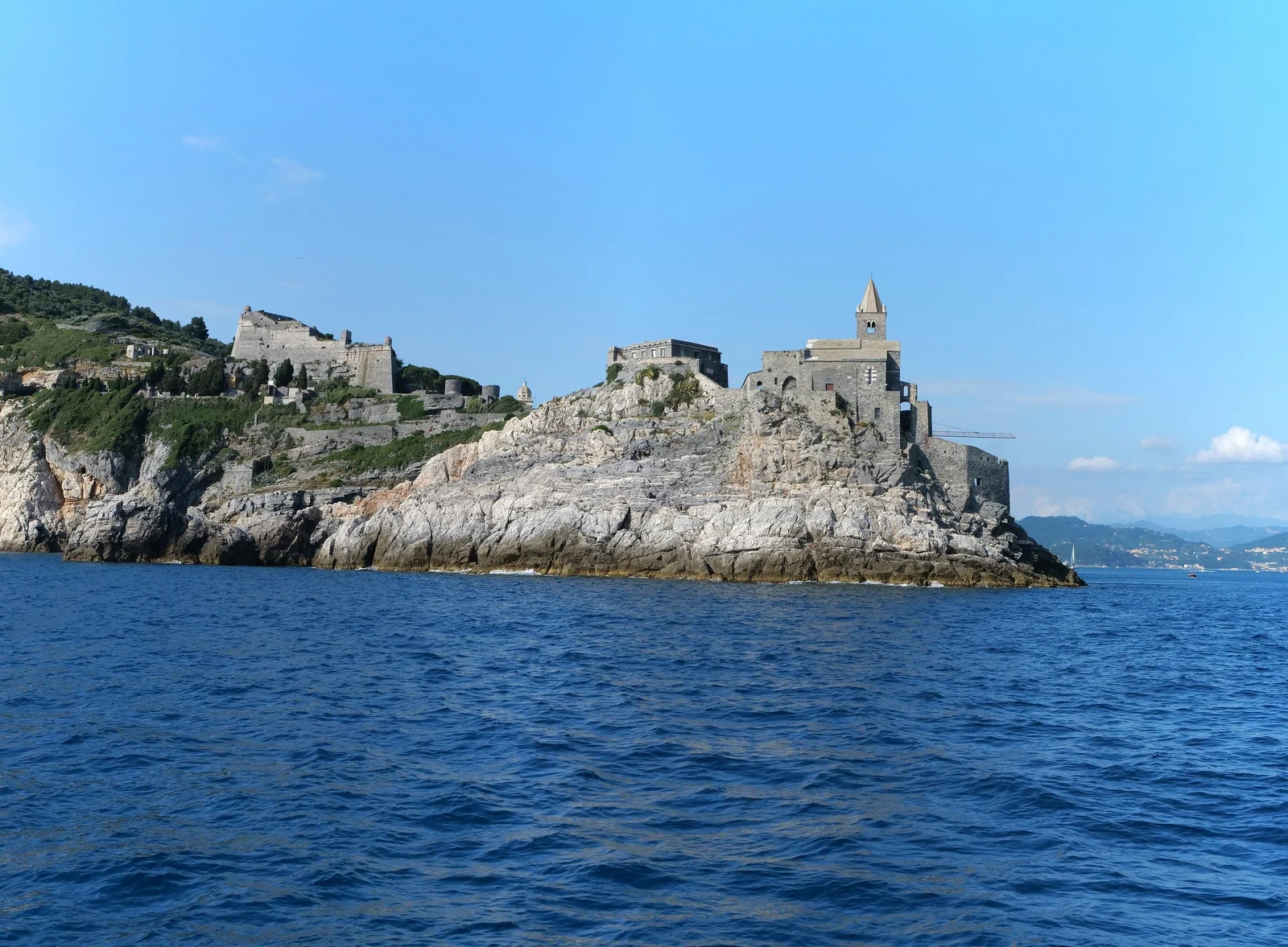
Portovenere, south of La Spezia, is part of the same UNESCO listing as the Cinque Terre, together with the islands of Palmaria, Tino and Tinetto. Its tall colored houses line the harbor, and the black-and-white striped church of San Pietro sits on a rocky point above the sea. There is no train, so you arrive by bus from La Spezia or by ferry.
Levanto
Levanto is a relaxed seaside town just north of the Cinque Terre, with a long beach and an old center. It has a train station on the same line, so it works as an easy, quieter base, and surf schools use its beach.
Planning a longer Italian trip? Our Rome travel guide and the Amalfi Coast guide pair well with this coast, and Rome or Florence helps you choose a city to link with it.
A Simple Two-Day Cinque Terre Plan
Day 1: Arrive and Walk
Arrive from La Spezia by mid-morning and drop your bags. Take whatever coastal or inland stage is open to link two villages, then ride the train to a third. Plan a long lunch, and finish in Manarola for sunset.
Day 2: Slow Villages and the Sea
Spend the morning in Vernazza or Corniglia before the crowds arrive. In the afternoon, take a ferry along the coast if the sea is calm, swim at Monterosso, or visit Portovenere. Catch an evening train back, once the tour groups have gone.
Cinque Terre Travel FAQ
How many days do you need in the Cinque Terre?
Two nights is a good minimum. One full day lets you see the villages, but staying overnight gives you the quiet evenings and mornings, and a spare day covers closed trails or bad weather. Three nights suits slow travelers and hikers.
Is the Sentiero Azzurro open?
It changes. Landslides and storms regularly close stages of the coastal trail, sometimes for long periods. Check the official Cinque Terre National Park trail pages on the morning you plan to walk, because any article, including this one, can be out of date.
Do you need the Cinque Terre Card?
You need the Trekking Card for the paths that charge a fee. The Train Card adds unlimited regional trains between Levanto and La Spezia. If you only take a couple of single train tickets and use the free trails, you can skip it. Check the park site for current options.
How do you get from La Spezia to the Cinque Terre?
Take a regional train from La Spezia Centrale. Trains stop at Riomaggiore, Manarola, Corniglia, Vernazza and Monterosso, with the first village only a few minutes away. A seasonal ferry also connects La Spezia and Portovenere with several villages.
Which Cinque Terre village is best to stay in?
Monterosso al Mare suits most first-timers because it has the most hotels, a beach and easy train access. Manarola and Riomaggiore are the choice for views, Vernazza for atmosphere, and La Spezia or Levanto for lower prices.
Is Via dell'Amore open?
The Via dell'Amore between Riomaggiore and Manarola reopened after a long closure, with access managed under park rules. Check the park's official Via dell'Amore page for the current ticket and reservation details before you go.
What is the best alternative to the Cinque Terre?
Portovenere is the closest, with colored houses, a striking church and the same UNESCO listing. Levanto is a calmer beach town next door on the same railway. Both are less crowded and work as bases for day trips.