The best day trips from Rome are Tivoli for gardens and an emperor's villa, Ostia Antica for a Roman port town you can walk through almost alone, and Orvieto for a cathedral on a volcanic rock. All three work as a single day by public transport, and none needs a car. Add the Castelli Romani for wine and lake views, or the Etruscan tombs at Cerveteri and Tarquinia if you want something older than Rome itself.
Rome can swallow a week without you noticing, so leaving it for a day feels like a risk. It shouldn't. The regional rail network is cheap and frequent, and a day outside the center is often the thing travelers remember most. This guide covers what each trip is actually like, how to get there, which one to pick for your interests and what to skip in the extremes of summer and winter. If you haven't covered the city itself yet, start with our Rome travel guide.
How to Pick the Right Day Trip from Rome
Choose by what you enjoyed in the city. Loved the Forum and the Colosseum? Go to Ostia Antica and Hadrian's Villa, which show the same civilization at everyday scale. Prefer food, wine and a long lunch? Head for the Castelli Romani. Want a medieval hill town with a famous interior? Orvieto. Chasing a photograph of a village that looks impossible? Civita di Bagnoregio.
A few rules help. Most of these trips are easier on a weekday, when you avoid the weekend crowds heading out of the city, and some sites close one day a week, often Monday for state-run museums and archaeological parks. Always check the official site before you go. And pick one destination per day. Two towns in a day on public transport sounds efficient and usually ends with you eating a sandwich at a station.
| Trip | Best for | Rough time from Rome | Main transport |
|---|---|---|---|
| Tivoli | Gardens, fountains, Roman villa | About 1 hour | Regional train from Tiburtina or Cotral bus |
| Ostia Antica | Roman ruins, short and easy | About 30–40 minutes | Metro B to Piramide, then Lido train |
| Orvieto | Cathedral, old town, Underground tour | About 1 hour 15 minutes to 1.5 hours | Train from Termini, then funicular |
| Castelli Romani | Wine, lake views, lunch | 30–60 minutes | Regional train or Cotral bus |
| Civita di Bagnoregio | Dramatic hill village | About 2.5 hours, best via Orvieto | Train, local bus and a footbridge |
| Cerveteri and Tarquinia | Etruscan tombs | About 1 to 1.5 hours | Cotral bus or train, then local bus or walk |
Tivoli: Villa d'Este and Hadrian's Villa
Tivoli sits on a hillside about 30 kilometers east of Rome, and it has been where Romans go to escape the heat for two thousand years. It has two UNESCO sites that are very different from each other, and the standard advice is to do both in one day if you start early.
Villa d'Este
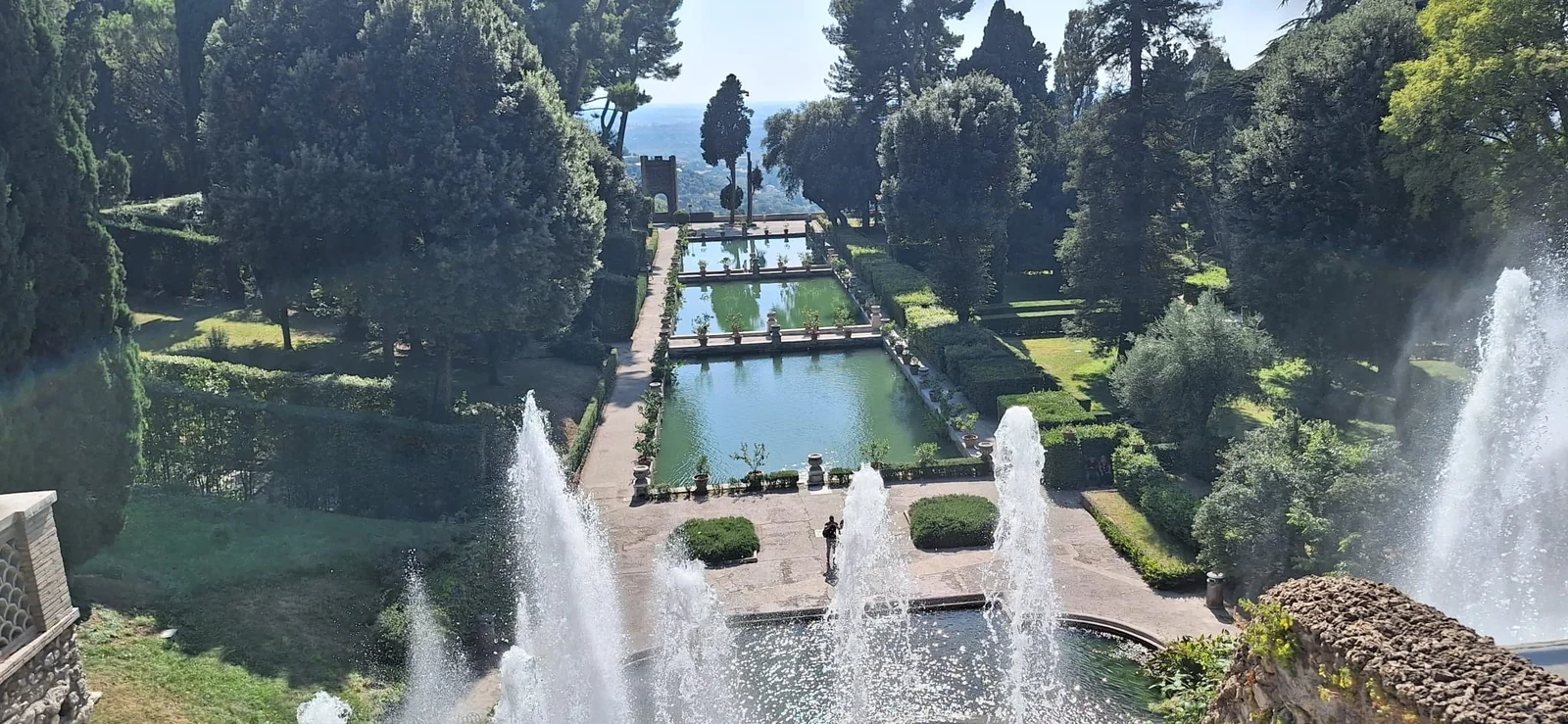
Villa d'Este is a Renaissance villa with a steep garden built for Cardinal Ippolito II d'Este in the 16th century. The point is the water: hundreds of jets, cascades and basins fed by gravity, with no pumps. The long Avenue of the Hundred Fountains is the classic view. Wear shoes with grip, because the paths are uneven and the walk back up is a climb. The villa is on the UNESCO list as part of the historic center of Tivoli.
Hadrian's Villa
Hadrian's Villa (Villa Adriana) is the other half of the day. The emperor Hadrian built this sprawling retreat in the 2nd century AD, and it was less a house than a small city of baths, theaters, libraries and pavilions spread across a large site. The Canopus, a long pool lined with statues and columns, is the postcard image, but the real pleasure is wandering the ruins between olive and cypress trees with few other people around. UNESCO listed it in 1999.
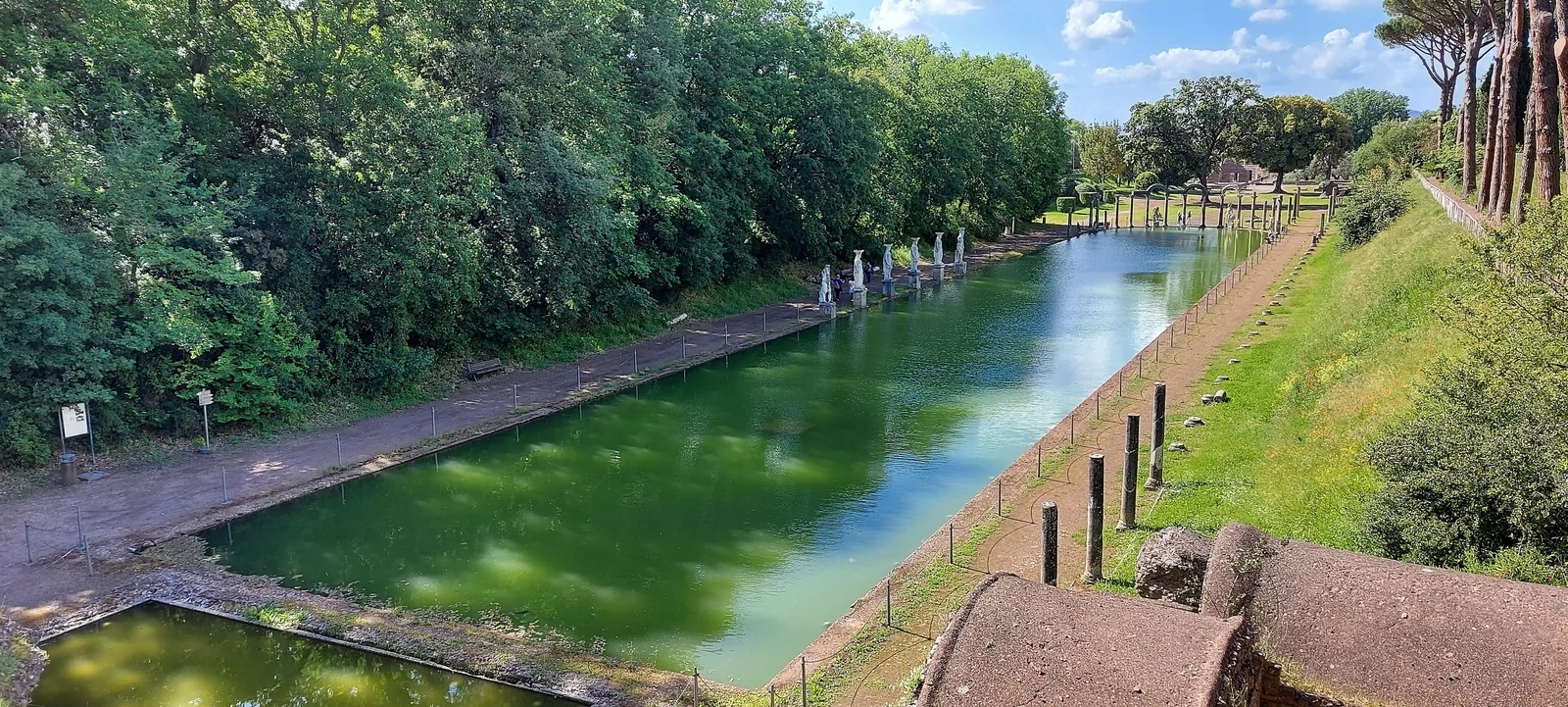
Allow about two and a half hours at the villa and the same at Villa d'Este, plus lunch in Tivoli's old town. Hadrian's Villa is a few kilometers from the center, so plan a local bus or taxi between the two. For background, see Hadrian's Villa on UNESCO's World Heritage List, and check each site's own page for opening days.
Ostia Antica: The Easiest Ancient Ruins Near Rome
Ostia Antica was Rome's main harbor town at the mouth of the Tiber, and it was abandoned and slowly buried by river silt and neglect. That is lucky for visitors. What survives is a street-level view of Roman life: apartment blocks, bakeries, a theater, mosaic-floored baths, a forum and long rows of shops. It feels closer to Pompeii than to the Roman Forum, and it is far less crowded.
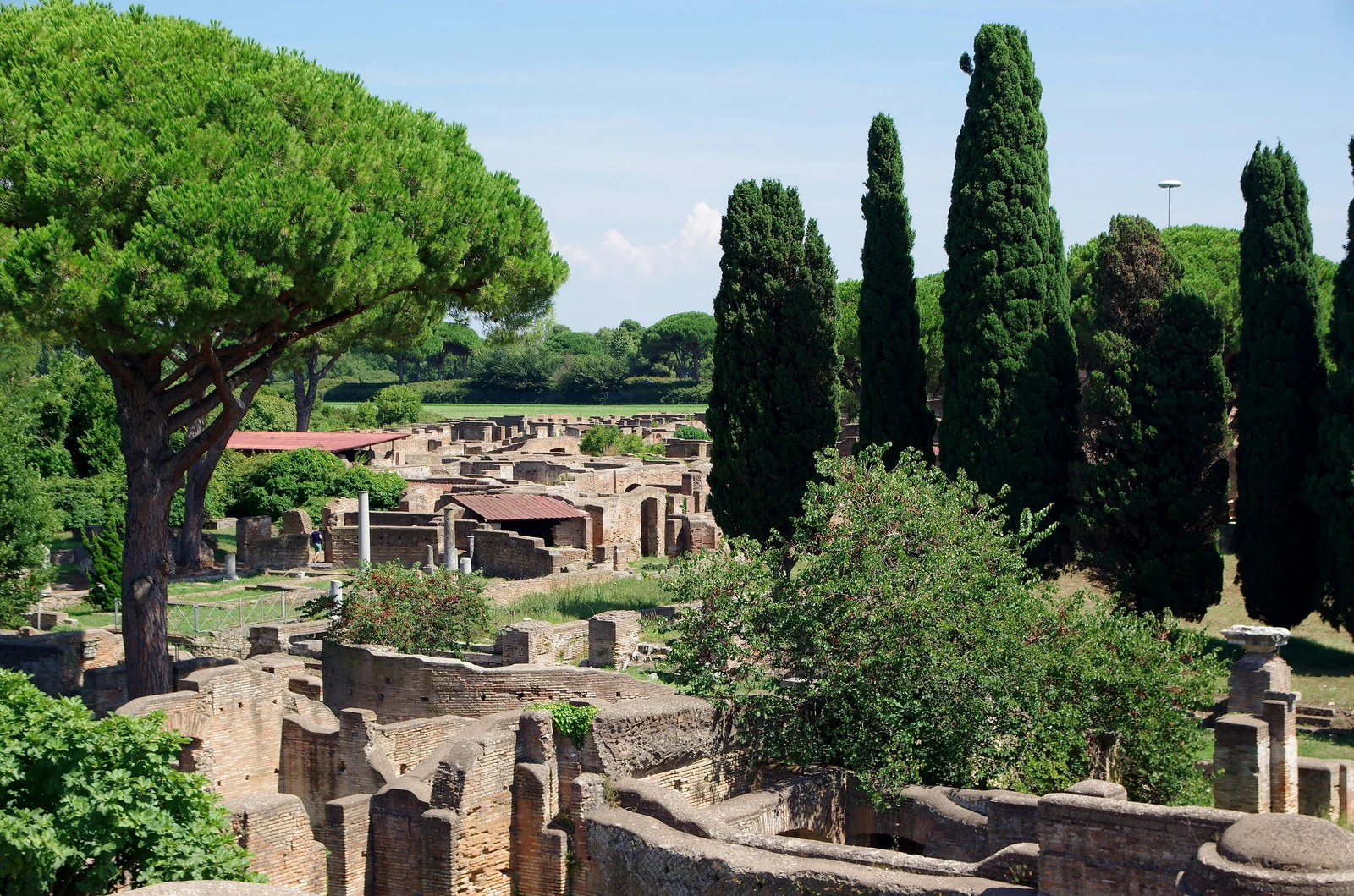
Allow three to four hours. Look for the theater, the mosaics in the baths and the thermopolium, a Roman snack bar with a marble counter. In summer, bring water and a hat, because shade is limited and the site is large. It is also the best choice if you only have half a day, since the trip is short.
Getting to Ostia Antica
Take Metro B to Piramide, walk across to Porta San Paolo station and board the Roma–Lido urban train toward Ostia Lido. Get off at Ostia Antica; the entrance is a short walk from the station. Your normal city transit ticket generally covers it, but check the current fare rules before you go. You can pair the ruins with a beach afternoon at Ostia Lido in warm months, though the city beaches are a local scene more than a scenic one.
Orvieto: Cathedral, Funicular and the Underground
Orvieto stands on a flat-topped volcanic rock above the Umbrian countryside, and it is the most satisfying of the classic day trips if you like medieval towns. The main reason is the Duomo, begun in the late 13th century. Its facade is covered in mosaics and sculpted reliefs, and in good light it glows. Inside, look for the Chapel of San Brizio, with its Last Judgment frescoes by Luca Signorelli.
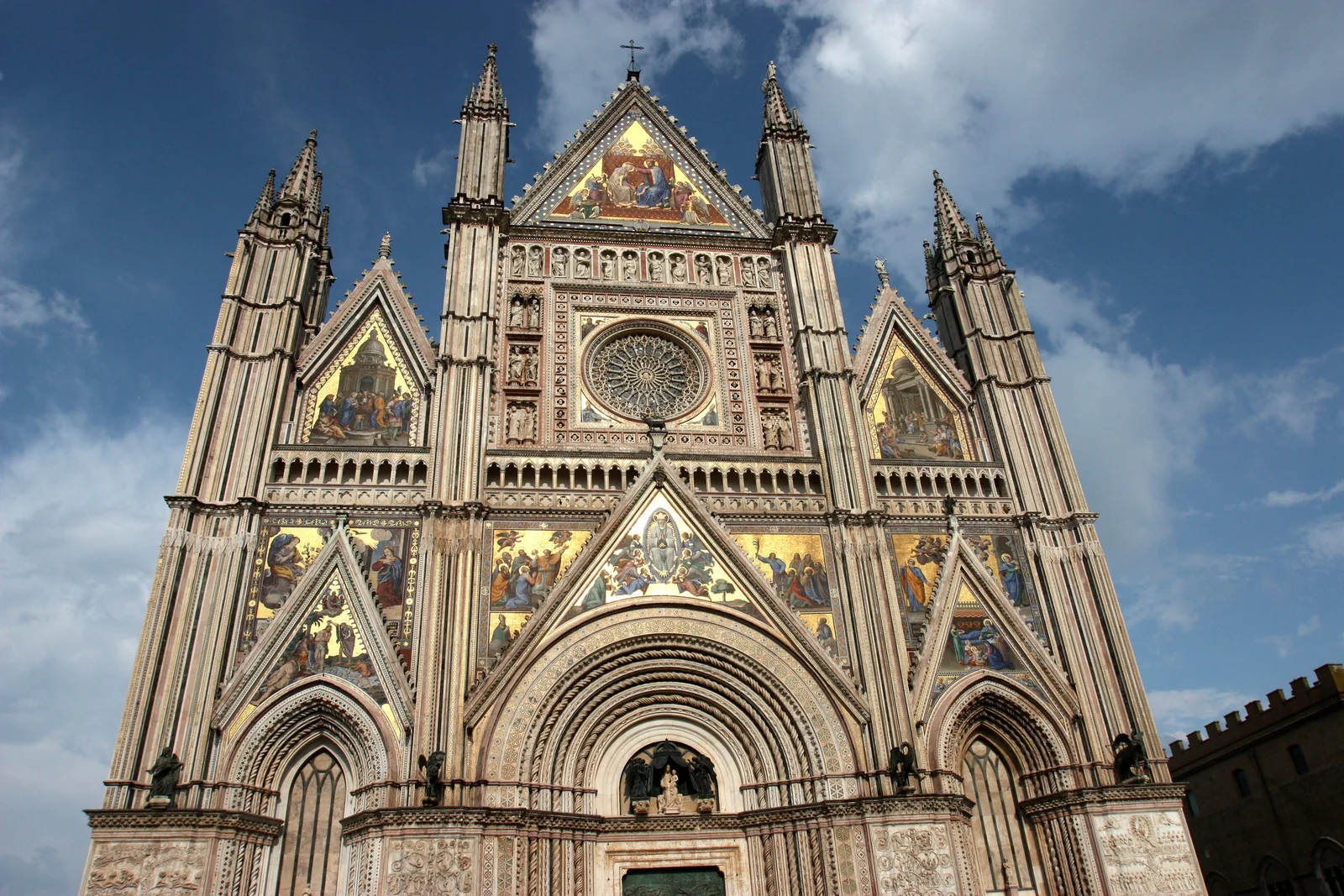
Get there on a train from Roma Termini; the journey takes roughly an hour and a quarter on the faster services and longer on regional ones. At Orvieto station, a funicular runs up the hill to the old town, with a bus connection for the last stretch. Orvieto's other draw is Orvieto Underground, a network of caves and tunnels carved in the soft rock over centuries. You visit on a guided tour, so check times at the visitor office when you arrive.
Plan on five to six hours in town: the cathedral, a loop through the old center, a slow lunch (the local white wine is Orvieto Classico) and perhaps the Underground. If you want to keep going north into the countryside, our Tuscany road trip itinerary covers the next region.
Castelli Romani: Frascati, Castel Gandolfo and the Wine Hills
The Castelli Romani are a cluster of hill towns in the Alban Hills southeast of Rome, built around old volcanic lakes. This is where Romans go for Sunday lunch, and the draw is simple: cooler air, white wine and porchetta. It is the laziest day trip on the list, and sometimes that is exactly what you need.
Frascati
Frascati is the most convenient, with a regional train from Roma Termini that takes about half an hour. It is known for its white wine and for its cellars and wine bars, where you can sit down for simple food. Walk up to the main piazza, then visit one of the historic villas if you want a garden stroll.
Castel Gandolfo and Lake Albano
Castel Gandolfo overlooks Lake Albano, a volcanic crater lake, and it is famous as the papal summer retreat. The town is small and easy to walk, with views across the water. Regional trains run from Termini; check the schedule and the walk from the station. Swimming in the lake is possible in warm months, though access changes, so look at local advice.
If wine is the point, don't drive after lunch. Use the train or a Cotral bus and plan to be back in Rome in the evening. Many visitors pair Frascati with a nearby town such as Grottaferrata, but two stops is plenty.
Civita di Bagnoregio: The Town on the Edge
Civita di Bagnoregio is a tiny medieval village on a tower of soft tufa rock, reached by a long pedestrian footbridge. Erosion has eaten at the surrounding valley for centuries, and the village is slowly shrinking, which is part of why it draws so many visitors. It looks extraordinary, and there is not much inside beyond quiet lanes, a church and a few cafés.
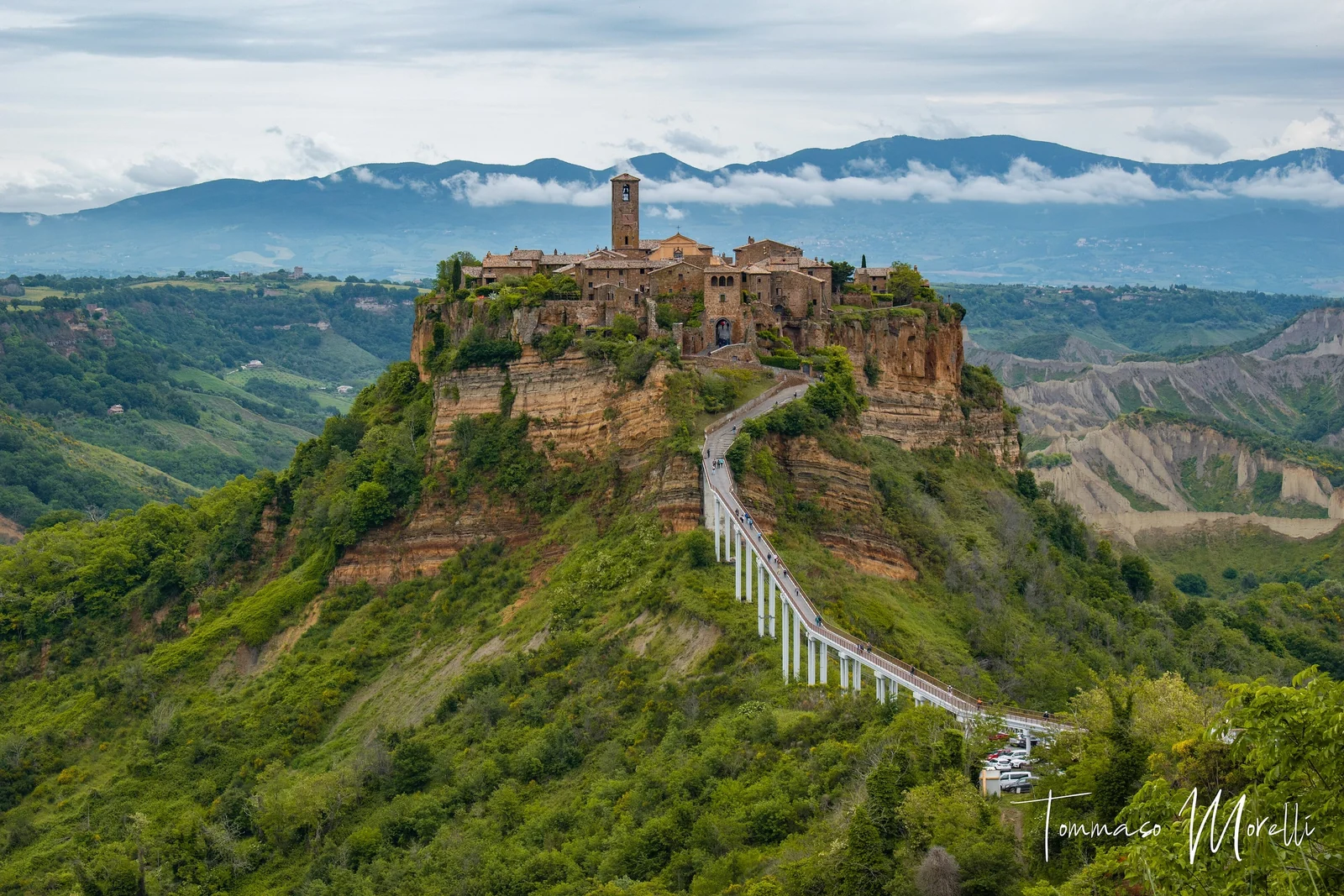
From Rome, the practical route is a train to Orvieto and a local bus to Bagnoregio, then the walk over the bridge. It is doable in a long day but tight, and there is a small entry fee for the village. Many people combine it with Orvieto on an overnight stay instead. Check bus times in advance, because services are limited.
Etruscan Tombs at Cerveteri and Tarquinia
The Etruscans lived in central Italy before Rome rose to power, and two of their great cemeteries are within reach of the capital. UNESCO lists Cerveteri and Tarquinia together. They suit travelers who like ancient history without crowds.
Cerveteri has the Banditaccia necropolis, a field of round, mound-shaped tombs laid out along streets like a miniature city for the dead. Tarquinia is famous for its painted tombs, with scenes of banquets, dancers and hunters. Some tombs are viewed through a protective window, and access to individual tombs can change, so check before you commit. Tarquinia's national museum is worth the stop too.
Cerveteri is reached by Cotral bus from Cornelia on Metro A; Tarquinia has a train station on the coastal line, with a local bus or a walk into the old town. Both reward travelers with time to spare more than a rushed day. See UNESCO's page on the Etruscan necropolises for background and the local sites for hours.
Getting There: Trains, Buses and Practical Tips
Rome has several rail stations, and picking the right one saves time. Termini is the main one, with trains to Orvieto and Frascati. Tiburtina serves Tivoli, and the Lido line to Ostia starts at Porta San Paolo, beside Piramide Metro. Buy regional tickets on the Trenitalia site or app or at the station, and validate paper tickets before boarding unless they carry a fixed date. Check timetables on Trenitalia before you leave.
Cotral buses fill the gaps where trains do not go, including some Tivoli and Cerveteri routes. They usually leave from outer Metro stations such as Ponte Mammolo or Cornelia. Keep an eye on the last return, because late buses can be sparse. A central base makes early starts easier, and our guide on where to stay in Rome helps you pick an area near Termini or a Metro line.
Best Order if You Have a Few Days
If you are staying a week, a sensible order is Ostia Antica first (easy and close), then Tivoli, then Orvieto, with the Castelli Romani as a rest day. Save Civita and the Etruscan sites for a second visit or an overnight. Naples and Pompeii are a bigger undertaking, covered in Rome to Naples and Pompeii by train, while the question of adding Florence is in Rome or Florence.
Seasons: What to Skip in Heat and Winter
Summer in Rome is hot, and the ruins offer little shade. In July and August, favor Tivoli's shaded gardens, the Castelli Romani and Orvieto's cooler hilltop air, and visit open-air archaeological sites such as Ostia Antica or Hadrian's Villa in the morning. Skip Civita in the middle of the day.
Winter is quieter and often sunny, which suits Ostia Antica, Orvieto and the Etruscan sites. Daylight is short, so start early and check the last train back. Rain can make garden paths in Tivoli slippery, and some fountains and lake activities are more limited in the cold months. Spring and fall are the best seasons for nearly all of these trips.
Day Trips from Rome FAQ
What is the best day trip from Rome?
It depends on your interests. Ostia Antica is the easiest and best for Roman ruins, Tivoli suits gardens and history, and Orvieto is the pick for a medieval hill town. If you have only one day, most travelers choose Tivoli or Orvieto.
Can you do Tivoli in half a day?
You can see one site in a half day. Doing both Villa d'Este and Hadrian's Villa is much better with a full day, since each takes a couple of hours and the two are a short ride apart.
How do you get to Ostia Antica from Rome?
Take Metro B to Piramide, walk to Porta San Paolo and catch the Roma–Lido train to Ostia Antica station. The ruins are a short walk from the station, and the whole trip takes roughly 30 to 40 minutes.
Is Orvieto worth visiting as a day trip?
Yes. The train from Rome is direct, a funicular takes you up to the old town, and the cathedral is one of Italy's finest. Add the Underground tour and a long lunch for a full day.
Can you visit Pompeii or Florence as a day trip from Rome?
Both are possible by fast train but make a long day. Pompeii via Naples is better with an overnight, and Florence deserves more time. We cover both in separate guides on this site.
Do you need a car for day trips from Rome?
No. Trains and Cotral buses reach Tivoli, Ostia Antica, Orvieto, Frascati and the Etruscan sites. A car helps mainly for the smaller Castelli Romani villages and Civita di Bagnoregio, but it is not necessary.