Plitvice Lakes National Park is a chain of sixteen turquoise lakes joined by waterfalls, set in beech and fir forest in central Croatia. It is the oldest and largest national park in the country and has been on the UNESCO World Heritage List since 1979. A Plitvice Lakes day trip from Zagreb is the easiest way to see it, and it is also doable from Zadar and, with a very early start, from Split.
The park is built around wooden boardwalks that cross the water at lake level, so the walking is gentle and the views are constant. What decides whether the day goes well is not fitness but planning: which entrance you use, which official route you pick, and what time you arrive. This guide covers all three, plus tickets, transport, seasons and where to sleep.
What Makes Plitvice Lakes Special
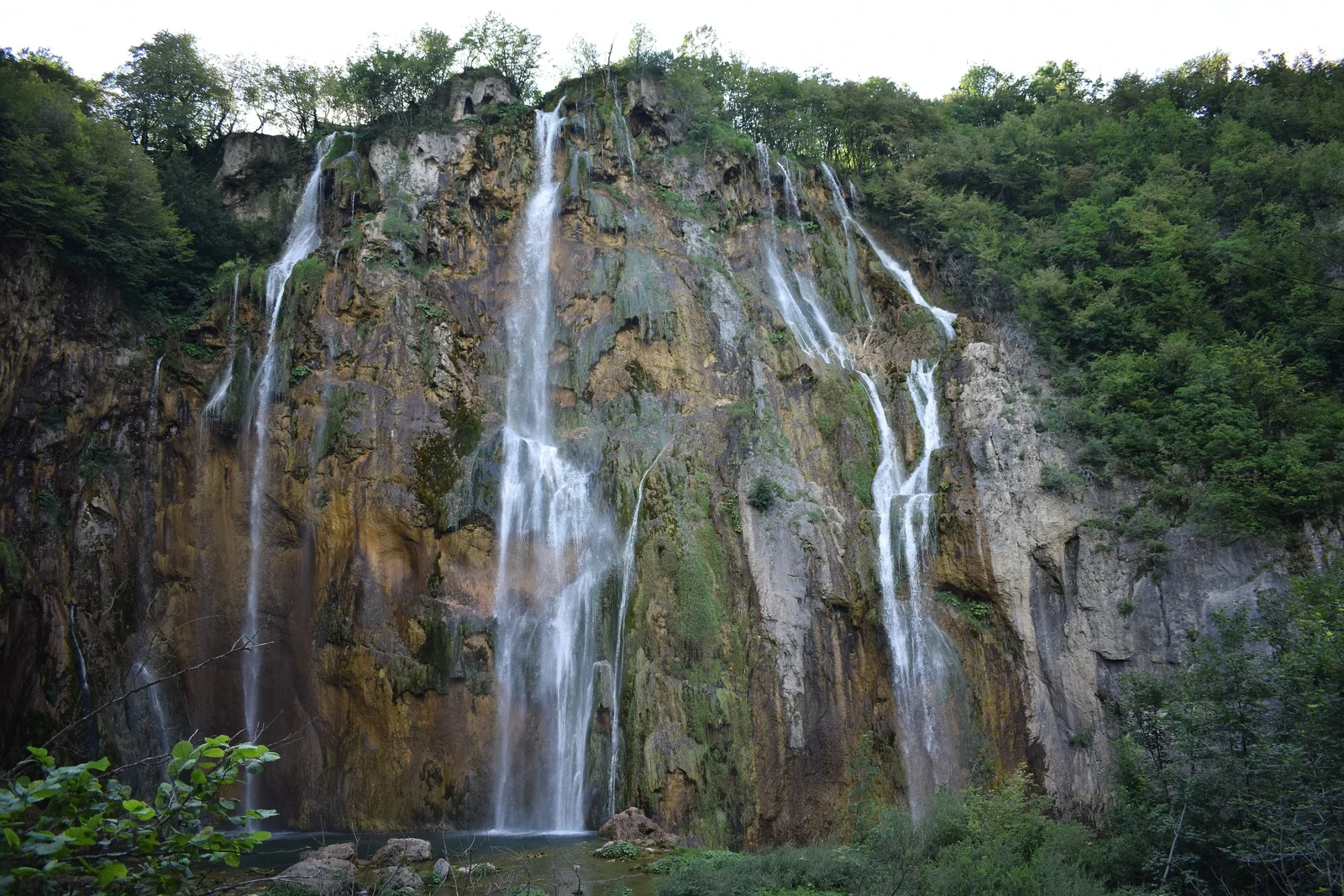
The lakes exist because of water and limestone. The streams here carry dissolved calcium carbonate, and when moss and algae slow the flow, that mineral settles out as travertine (tufa). Over thousands of years it has built natural dams, and each dam holds back a lake. The process is still going: the barriers keep growing, at a rate that can reach roughly a centimeter a year in the fastest spots.
Sixteen lakes can be seen from the surface, split into the Upper Lakes in the south, which sit in dolomite, and the Lower Lakes in the north, which sit in limestone. Kozjak, the deepest lake in the park, separates the two groups. The colors shift between emerald, turquoise, gray and blue depending on the minerals, the light and the season. The tallest waterfall, Veliki Slap, drops roughly 78 meters.
How to Get to Plitvice from Zagreb, Split and Zadar
The park sits roughly between Zagreb and the Adriatic coast, which is why it works as a stop on the way or as a long day trip from either end.
From Zagreb
Zagreb is the most common starting point. By car or direct intercity bus the trip takes a little over two hours each way in normal traffic, and several operators run daytime services. Check the timetable for the return bus before you commit, because the last departures leave in the afternoon and a late finish in the park can strand you. Organized day tours from Zagreb also exist and remove the logistics, though they fix your time on the trails.
From Zadar
Zadar is the closest big coastal city and the most comfortable base for a day trip. Buses and tours run on the same road corridor, and driving is straightforward. If you are working through the coast, Plitvice slots neatly into our Dalmatian Coast itinerary, which starts in Zadar.
From Split
Split is much farther. A same-day round trip is possible by car or tour, but it means several hours on the road each way and little slack in the park. If Split is your base, a better plan is to break the journey with a night near the park, or to treat Plitvice as a stop between the coast and Zagreb rather than an out-and-back.
By car
Driving gives you the freedom to arrive early and leave late. Both entrances have parking areas, and parking arrangements are explained on the park's official site. A car also lets you combine Plitvice with other stops en route, and it makes the trip to Slovenia easy: our Slovenia travel guide covers Ljubljana and Lake Bled, which are an easy onward drive from Zagreb.
Upper Lakes vs Lower Lakes
Most visitors want both, but they feel different, and if time is short it helps to know what you are choosing.
- Upper Lakes: larger, stepped lakes with wide boardwalks, many cascades and forest all around. The walking is relaxed and the scenery is the classic postcard view.
- Lower Lakes: smaller lakes in a narrower canyon, with limestone cliffs, caves and the big finish at Veliki Slap. Paths here are steeper in places, with stairs and some climbing.
- Lake Kozjak: the large lake in the middle. You either cross it by electric boat or walk around its shore, which is the main difference between the shorter and longer routes.
Plitvice Lakes Entrance 1 or 2?
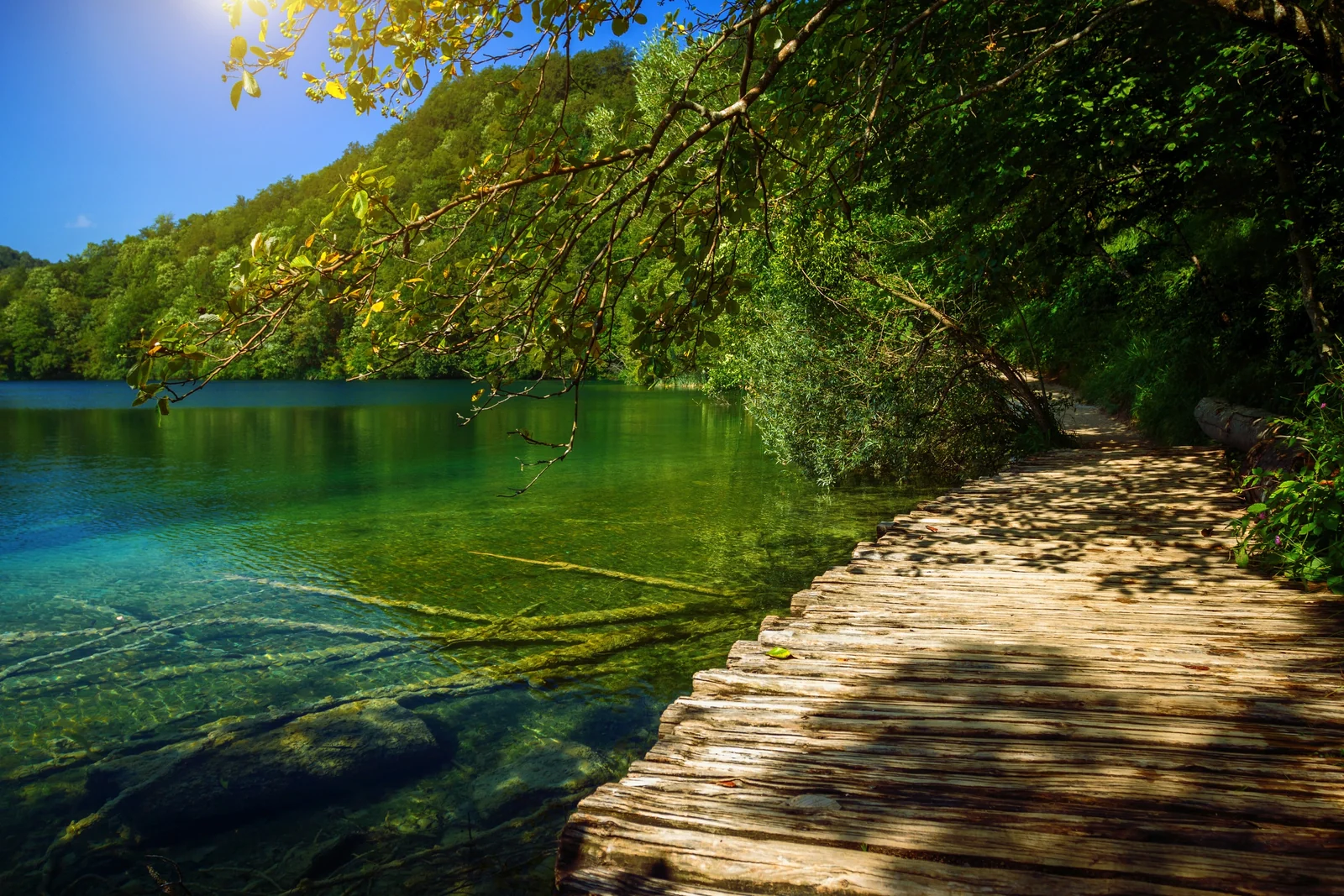
The park has two main entrances, and the choice shapes your route. Entrance 1 is on the northern side, close to the Lower Lakes and the view of Veliki Slap. Entrance 2 is farther south and gives access to the Upper Lakes and the shuttle stop on that side. Each entrance has parking, a ticket point and information.
A simple way to choose: if you arrive from Zagreb or Zadar and want the waterfall straight away, start at Entrance 1. If you are staying in a hotel or guesthouse near Entrance 2, or you prefer to finish at the larger Upper Lakes in the afternoon light, use Entrance 2. Either way, you can cross between sections by boat and shuttle, so you are never locked into one side.
Plitvice Lakes Routes A to K
The park signposts a set of numbered-by-letter itineraries, labeled A, B, C, E, F, H and K, each with its own start point, length and mix of walking, boat and shuttle. Routes A, B and C begin at Entrance 1, routes E, F and H begin at Entrance 2, and route K can be started from either. Exact distances and times vary a little between the park's own materials and third-party guides, so check the current park map before you choose.
| Route | Starts at | Character | Best for |
|---|---|---|---|
| A | Entrance 1 | Shortest walk, Lower Lakes, no boat | Short visits and tight schedules |
| B | Entrance 1 | Lower Lakes walk plus boat and shuttle | A compact loop with less climbing |
| C | Entrance 1 | Both sections, boat and shuttle | The best single-day all-rounder |
| E | Entrance 2 | Short loop focused on the Upper Lakes | Easy walking from the south |
| F | Entrance 2 | Upper Lakes with boat and shuttle | A balanced half-day |
| H | Entrance 2 | Longer loop through both sections | Full coverage from the south |
| K | Either entrance | Longest route, around Kozjak on foot | Keen walkers with a full day |
For a first visit with a single day, route C (or the matching H from the south) is the usual recommendation because it links the Upper Lakes, the Lower Lakes and the waterfall without needing a marathon. Route K is the one to pick if you want to cover the whole park on foot and are comfortable with a six-to-eight-hour day.
Boats, Shuttles and Boardwalk Rules
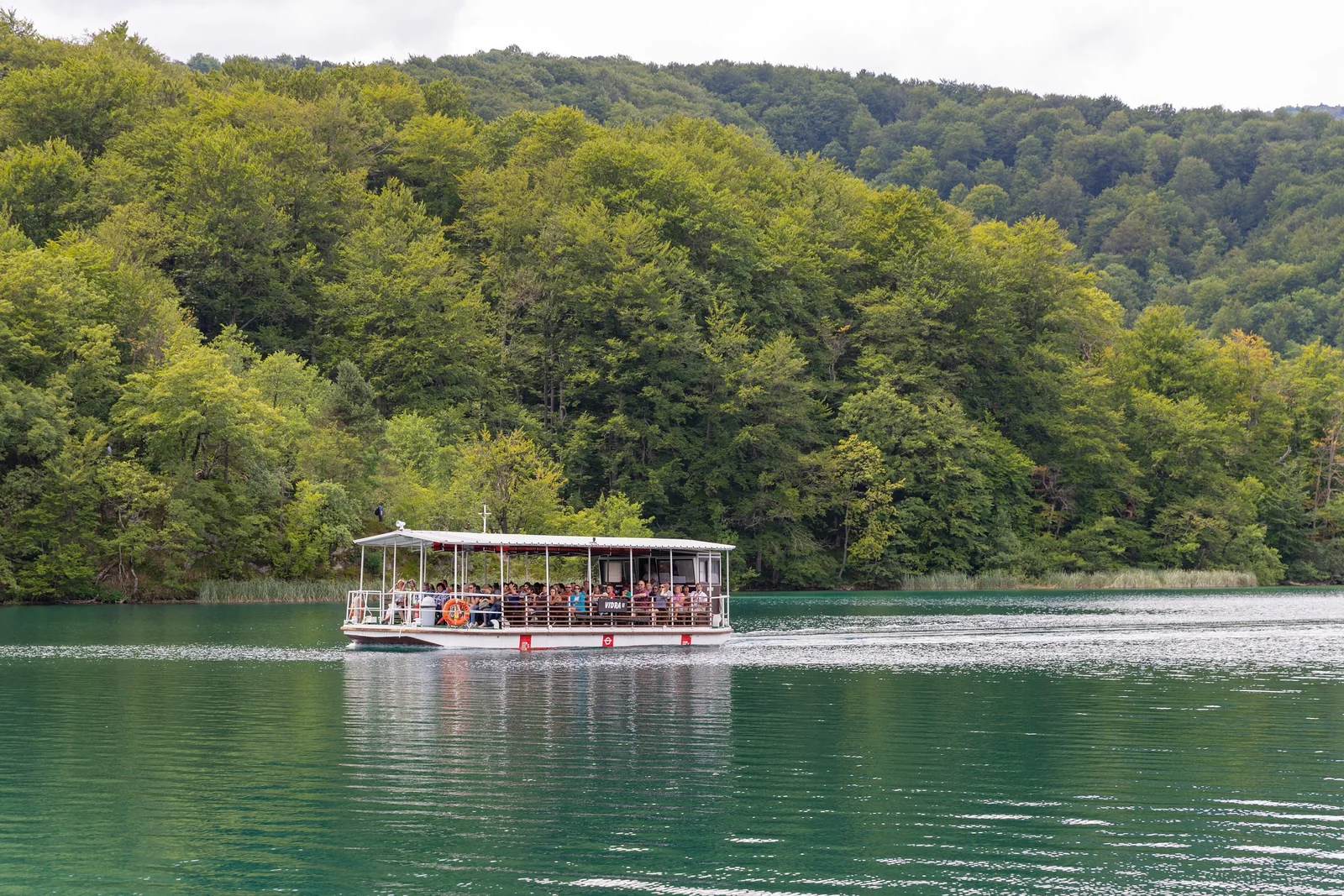
Electric boats cross Lake Kozjak and a panoramic shuttle links stops along the park, both of which are part of the standard ticket on the routes that use them. Queues for the boat can build up at midday in busy months, so it pays to cross early or late.
The rules exist to protect a fragile landscape, and rangers enforce them:
- No swimming. Swimming is not allowed anywhere in the park, however warm the day.
- Stay on the boardwalks and marked paths. Stepping off damages the travertine and moss that build the lakes.
- No feeding animals, no picking plants, no litter. Carry your own waste out or use the bins provided.
- Follow the one-way sections. Some narrow stretches are signposted for a single direction to keep crowds moving.
- Check the full list of rules on the park's official site before you go, as they can be updated.
Tickets and Booking
Tickets are sold through the park's official website, and booking online in advance is the safest approach, particularly in busy months when time slots and ticket sales can be limited. Prices change with the season, with higher rates in the warmest months and lower ones in the quieter parts of the year. Children, students and some other groups may be eligible for reduced fares, and the park also offers combined offers with accommodation. Look at the official price list for the date you plan to visit, rather than relying on old figures.
Opening hours also change with the season, and ticket points can close earlier than the park itself. The official site lists current hours and conditions, and it gives phone numbers for checking on trail status before you set off.
Best Time to Visit Plitvice
There is no bad season, only different trade-offs. The question of the best time to visit Plitvice comes down to crowds against color.
| Season | What you get | Trade-off |
|---|---|---|
| Spring | Strong water flow, full waterfalls, fresh green forest | Some paths wet or muddy; weather can be changeable |
| Summer | Longest days, warmest weather, all services running | The biggest crowds and the hottest hours midday |
| Autumn | Gold and orange foliage reflected in the lakes | Shorter days; popular in the early part of the season |
| Winter | Snow, ice formations and very few visitors | Cold, slippery paths and limited trails, boats or shuttles |
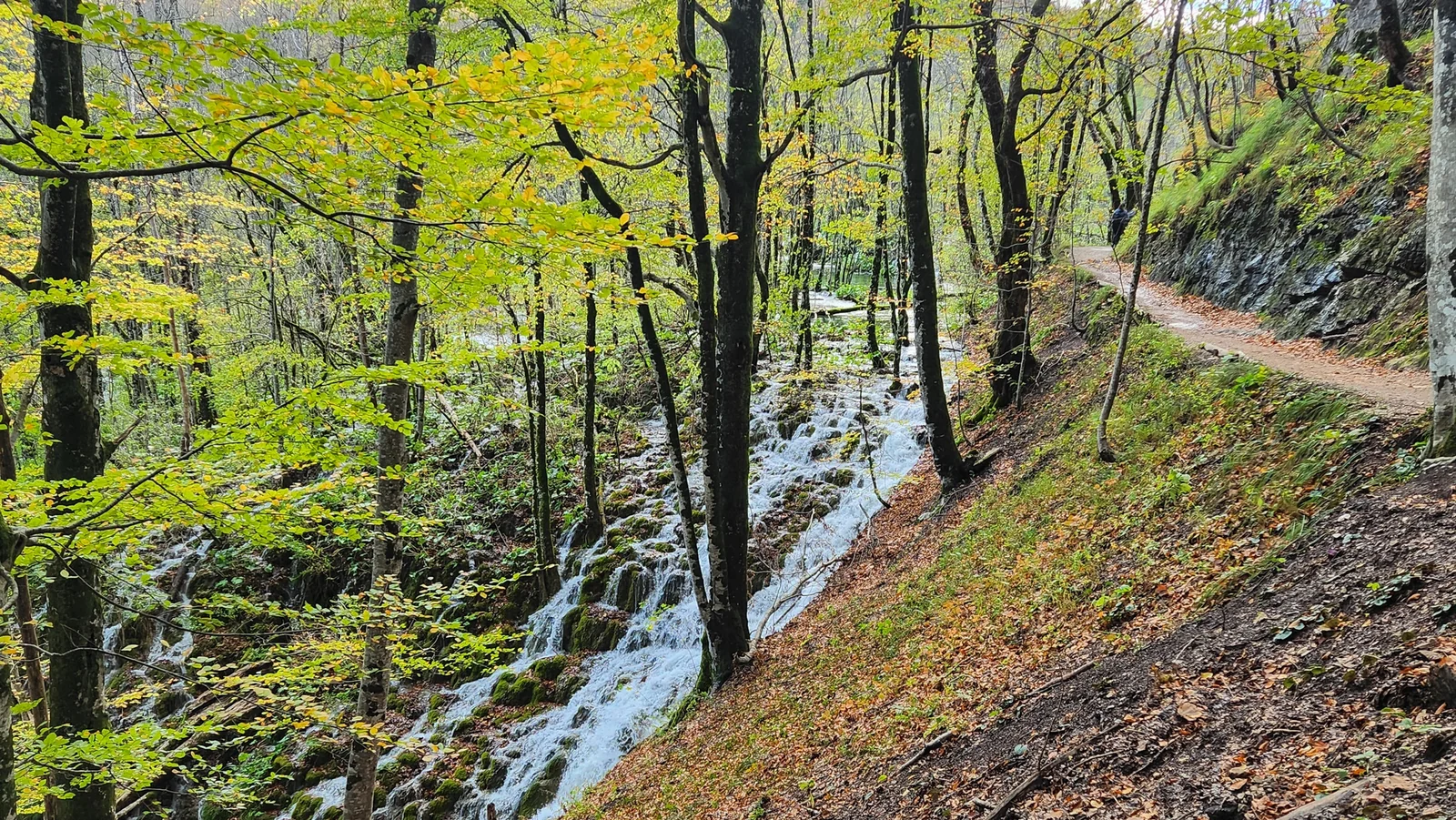
Spring suits waterfall lovers, because meltwater and rain make the cascades at their most powerful. Autumn is the photographer's pick for the foliage. Summer is the busiest period, and in winter some trails and transport services can be restricted, so check conditions with the park before traveling.
Crowds, Timing and What to Wear
Timing matters more than anything else. Arrive soon after the park opens, walk the busiest stretches first, and keep the boat crossing for a quieter slot. Most tour groups arrive late in the morning, so the first hour and the last couple of hours are the calmest. Weekdays are lighter than weekends.
- Shoes: sturdy sneakers or light hiking shoes with good grip. Boardwalks get slippery when wet.
- Layers: the park is forested and the lakes cool the air, so mornings and shaded stretches feel colder than the car park.
- Rain jacket: showers pass through often, and spray from the waterfalls will dampen you anyway.
- Water and snacks: bring a refillable bottle and something to eat, and check what food services are open on the day.
- Sun protection: open stretches of boardwalk have little shade in summer.
Wildlife in the Park
The forests around the lakes are home to European brown bears, along with wolves, lynx and wildcats. You are very unlikely to meet any of them on the busy boardwalks, since they avoid people and noise. What you will notice are birds, dragonflies and fish in the clear shallows. Keep to marked paths, stay quiet on the quieter trails and never feed wildlife.
Where to Stay Near Plitvice
A night near the park turns a rushed day into a relaxed one, because you can be on the trail before the crowds. The area close to the entrances has hotels, guesthouses and a campground, and the nearby villages along the main road offer private rooms and small family-run places. The park's official site lists accommodation and sometimes sells ticket and room bundles. Book ahead in summer and at weekends.
If you prefer a city base, Zagreb and Zadar both work for day trips, and our wider Croatia guides can help you decide where to sleep for the rest of the trip.
Plitvice Lakes FAQ
Can you visit Plitvice Lakes as a day trip from Zagreb?
Yes. Zagreb to the park takes a little over two hours each way by car or bus, so a day trip is realistic. Leave early, check the return bus times in advance, and choose a route that finishes comfortably before dark.
Which entrance is better, 1 or 2?
Neither is better outright. Entrance 1 is closest to the Lower Lakes and the big waterfall, while Entrance 2 is closer to the Upper Lakes. Pick the one that matches your route, your parking and where you are staying.
How long do you need at Plitvice Lakes?
Short routes take a couple of hours, the popular all-rounder routes take most of a day, and the longest route can fill six to eight hours. Add time for boat queues, photos and a meal. Check route times on the official park map.
Can you swim in Plitvice Lakes?
No. Swimming is not allowed anywhere in the park, because contact with the water damages the travertine and the ecosystem. Plan a swim at the coast instead, where beaches are within reach of Zadar and Split.
Do you need to book Plitvice tickets in advance?
It is strongly advised, especially in busy months. Tickets are sold on the park's official website, and prices vary by season. Booking ahead saves queuing at the gate and avoids being turned away when the park is busy.
Is Plitvice worth visiting in winter?
Yes, if you like quiet. Snow and ice change the look of the waterfalls and crowds are thin. The trade-off is cold, slippery paths and limited trails or transport, so check current conditions with the park before you go.