


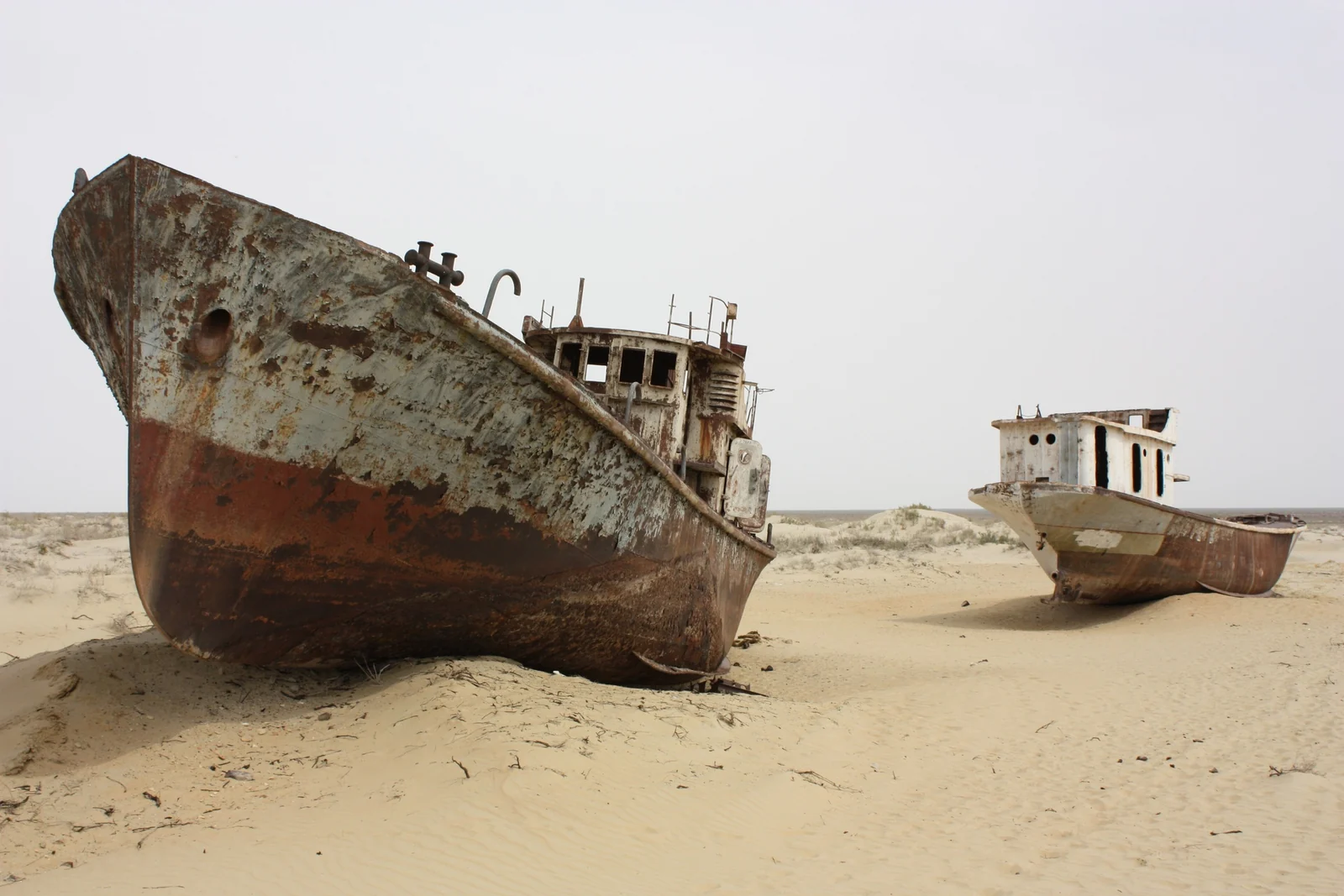
Moynaq (also spelled Muynak) is a former fishing port in Karakalpakstan, in the far northwest of Uzbekistan, and its ship graveyard is the most direct way to see what happened to the Aral Sea. Rusting trawlers and tugs stand on dry, salty ground where water once lapped the harbor. Most visitors reach Moynaq as a long day trip from Nukus, the regional capital, or on an overland route that links it with Khiva.
It is not a comfortable trip, and it is not meant to be pretty. The road is long, the wind is dry, and the town has few services. But the wrecks are real, the story is one of the clearest environmental disasters of the twentieth century, and the people who still live here are glad when visitors treat it with respect. This guide covers how the sea disappeared, what you will see, how to get there and what to bring. If Moynaq is one stop in a wider Central Asian journey, start with our Uzbekistan Silk Road itinerary.
How the Aral Sea Disappeared
The Aral Sea sits in a basin fed mainly by two rivers, the Amu Darya from the south and the Syr Darya from the northeast. For most of recorded history it was one of the largest inland bodies of water in the world. In the decades after the Second World War, Soviet planners decided that Central Asia should grow cotton and other irrigated crops on an industrial scale, and the two rivers were the obvious source of water.
From the 1960s onward, huge volumes were drawn off into irrigation canals, many of them unlined and leaky. A large share of that water never reached a field, and far less reached the sea. The Aral began to shrink, first slowly, then at a pace that startled even the scientists watching it. The shoreline pulled back, the water grew steadily saltier, and in time the sea split into separate pieces. Today it is only a small fraction of its former area, and the Amu Darya no longer reliably reaches it.
The northern part, on the Kazakh side, has been partly restored since a dam was built there in the 2000s. The southern part, the one nearest Moynaq, has not had that luck. The exposed seabed is now often called the Aralkum, a young desert of salt and sediment.
Moynaq: The Port That Lost Its Sea
Moynaq was once a proper harbor town. It had a fishing fleet and a fish cannery, built in 1932, and through much of the Soviet era it offered steady work and some civic pride. Fish were landed here, canned here and shipped out. Later, as the local catch collapsed, the cannery kept going for a while on fish brought in from elsewhere, until it too closed.
The collapse followed a clear chain. As the water retreated it got saltier, native fish could not cope, and the fisheries failed. The shoreline kept moving away, and in time the harbor lay many kilometers from any water. Boats were left where they sat. Today Moynaq is a small town of roughly 13,000 people, and it feels like a place that has been waiting a long time for something to change.
The Ship Graveyard, the Monument and the Museum
The ship graveyard
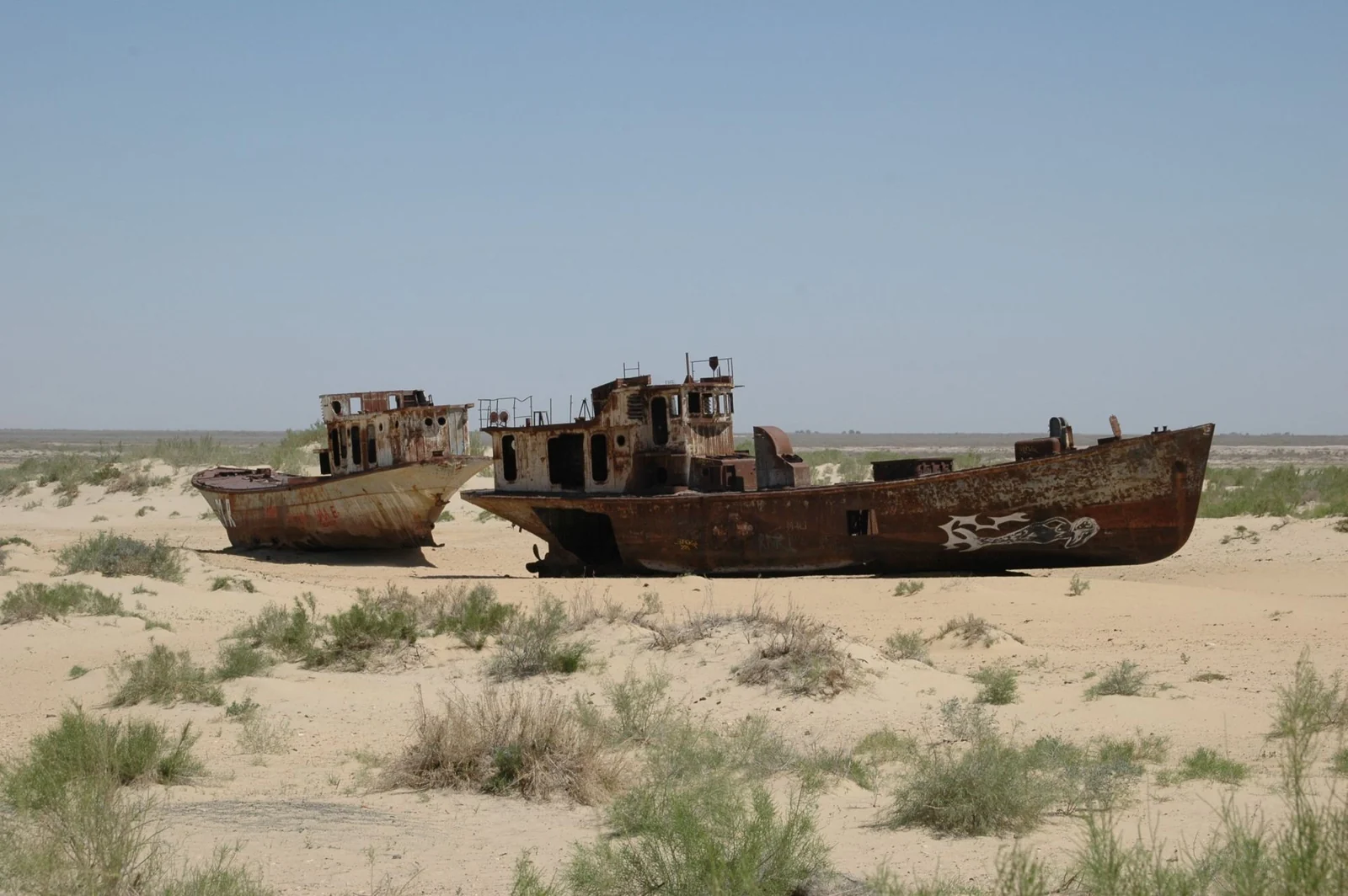
The ships stand at the edge of town on a stretch of open, pale ground. They are fishing vessels and small cargo boats from the Soviet fleet, stripped for metal over the years and now rust-red, some tilted at odd angles, some with their hulls sagging open. The wind is constant and the light is hard and flat.
You can walk among most of the hulks, but treat them with care. The metal is rotten, edges are sharp, and there are no barriers or guard rails. Do not climb into or onto a wreck that looks unstable, and keep a close eye on children. Early morning and late afternoon give the best light for photographs and are also far more comfortable than midday.
The Soviet-era monument
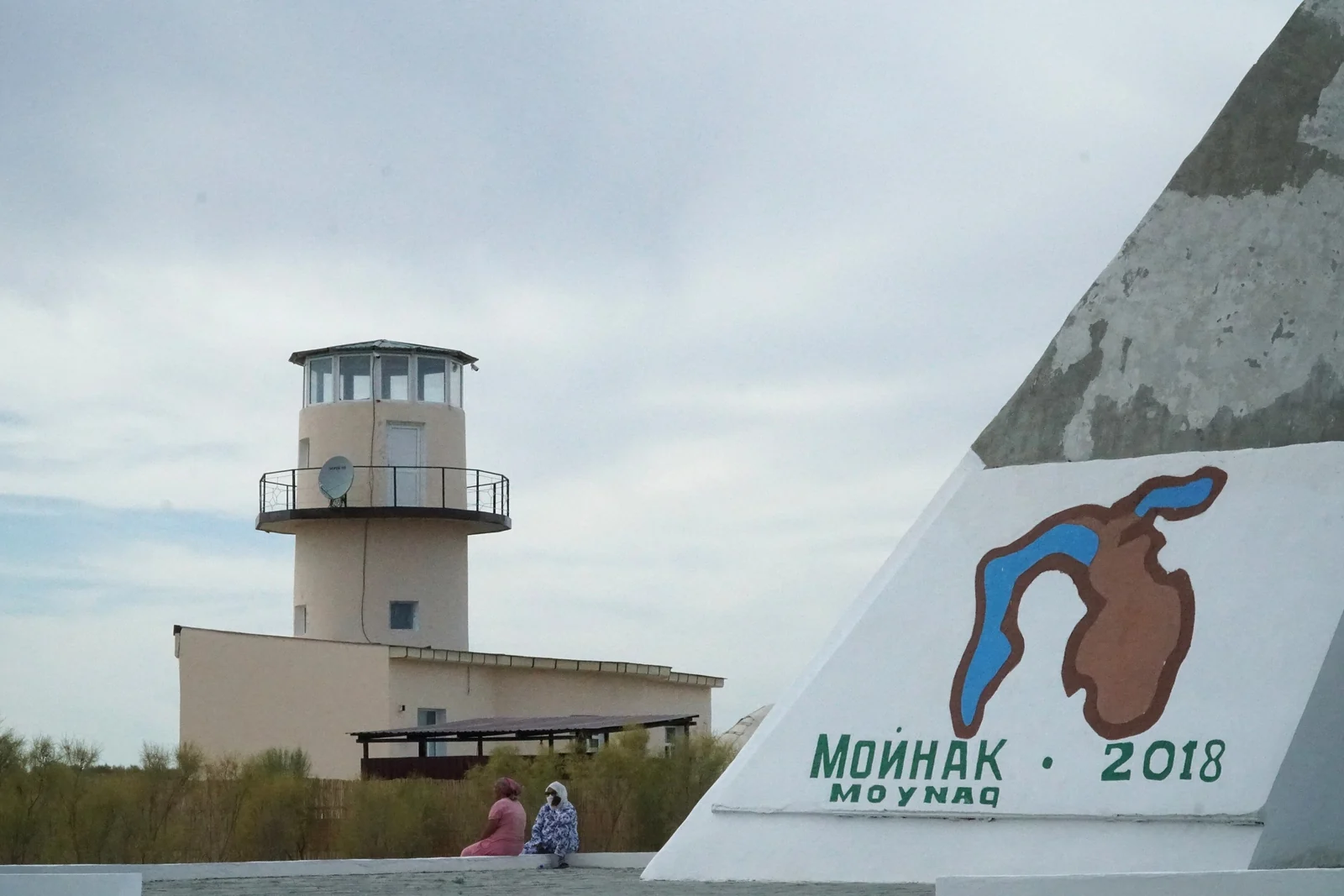
Close to the wrecks, on the high ground that once overlooked the shore, stands the Aral Sea memorial with a lighthouse-style tower. It looks out over the dry basin, and it reads as a quiet marker for a sea that is gone. It is also the best place to grasp the scale, because from up here the old waterline is simply out of sight.
The Moynaq museum
The small museum in town tells the story in photographs and paintings, from the busy years of fishing to the retreat of the water. Opening hours can be irregular, so ask your driver or guide to confirm before you count on it.
Nukus and the Savitsky Museum: Your Base Stop
Moynaq is far from everything, so most trips are built around Nukus, the capital of Karakalpakstan. It is a plain, Soviet-planned city and would not earn a detour on looks alone. It earns one for the Savitsky Museum, formally the Nukus Museum of Art, founded in 1966 by the painter, archaeologist and collector Igor Savitsky.
The story behind it is as good as the art. Savitsky quietly gathered works by Russian and Central Asian avant-garde painters whose styles had been condemned under Stalin, saving them from destruction, and kept them in a remote corner of the Soviet Union where few people were looking. The collection is now counted among the largest of Russian avant-garde art in the world, alongside galleries of antiquities and Karakalpak folk art.
My advice is to spend a half day here, ideally before the drive to Moynaq rather than after it. The museum gives you a human reason to care about Karakalpakstan, and it makes the shipwrecks feel less like a stop on a checklist.
How to Get to Moynaq
Moynaq is roughly 200 km north of Nukus by road. Distance estimates vary by source and route, and road quality changes over time, so plan on a long half day each way rather than a short hop. Allow several hours of driving in each direction from Nukus, and considerably more if you start from Khiva.
| Starting point | How it usually works | What to know |
|---|---|---|
| Nukus | Day trip by private car with a driver; several hours each way | Best base; combine with the Savitsky Museum and Mizdakhan |
| Khiva | Long day trip, or a one-way transfer to Nukus via Moynaq | Needs an early start; many operators sell it as a tour |
| Tashkent | Fly to Nukus, then continue by road | Overland from the capital is a very long journey and rarely worth it |
| Moynaq itself | Overnight in a basic local guesthouse, arranged through an operator | Services are limited; book ahead |
Flights. Nukus has an airport with domestic connections from Tashkent. Schedules change, so check the current timetable rather than relying on a fixed number of weekly flights. The flight spares you a very long road journey and is the sensible choice if you are short on time.
Tours versus independent. You can book a driver for the day, join a small-group tour, or fold Moynaq into a longer Karakalpakstan trip with an operator. Public transport exists in theory, but it is slow and awkward for a site that is spread across open ground. I would not try it unless you have plenty of time and some Russian or Uzbek.
Why a driver is practical. The ship graveyard, the memorial and the museum are spread out, the town has few taxis, and the road from Nukus crosses long, empty stretches. Agree the route, the stops and the price before you set off.
Optional Stops: Mizdakhan and the Ustyurt Plateau
Mizdakhan
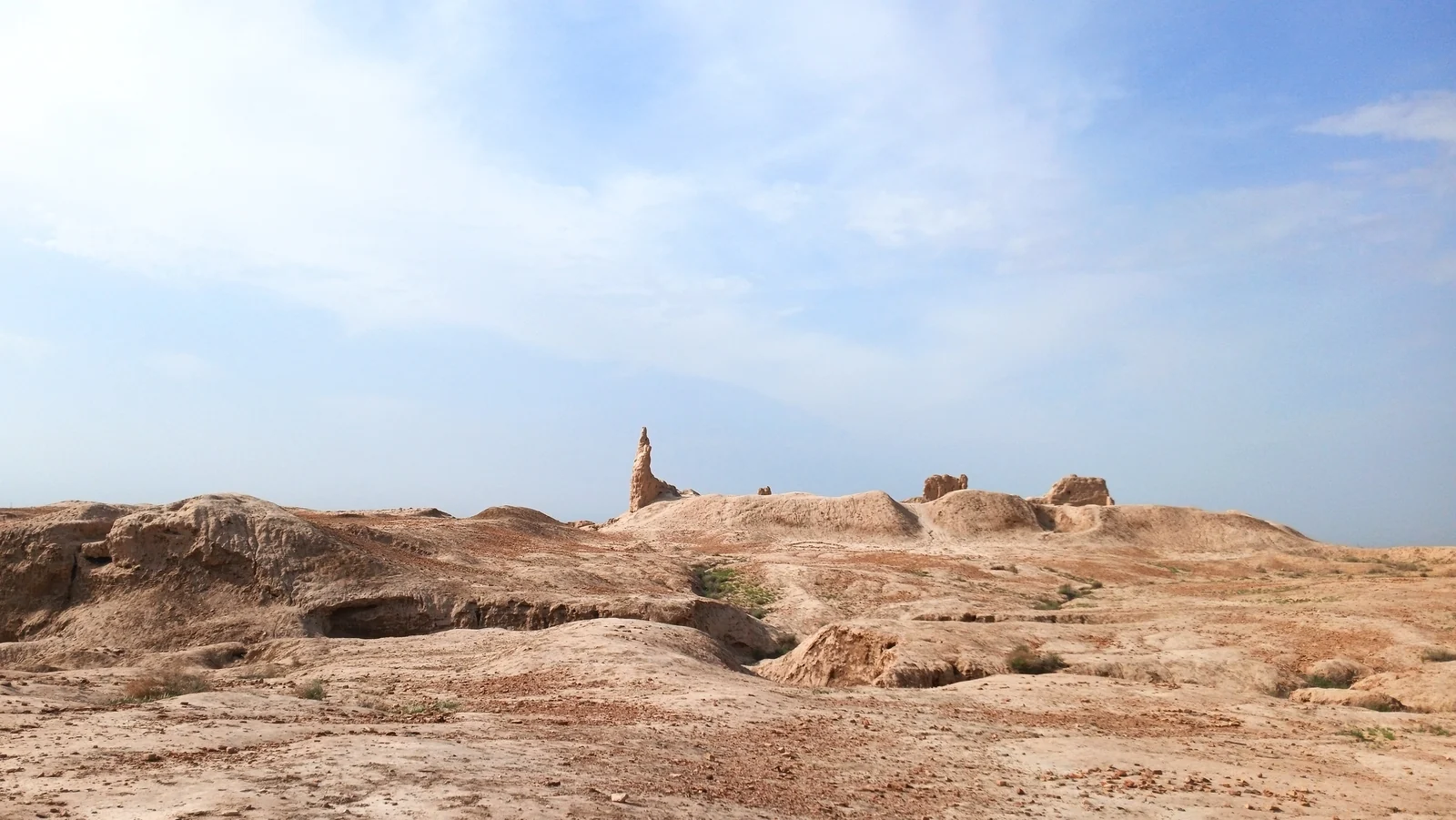
Mizdakhan is an ancient settlement and necropolis on a ridge close to Nukus, with fortress remains and a vast cemetery of mausoleums that has been used for centuries. It is an easy add-on at the start or end of the Moynaq day, and it shows you a much older layer of Karakalpak history than the Soviet one.
The Ustyurt Plateau
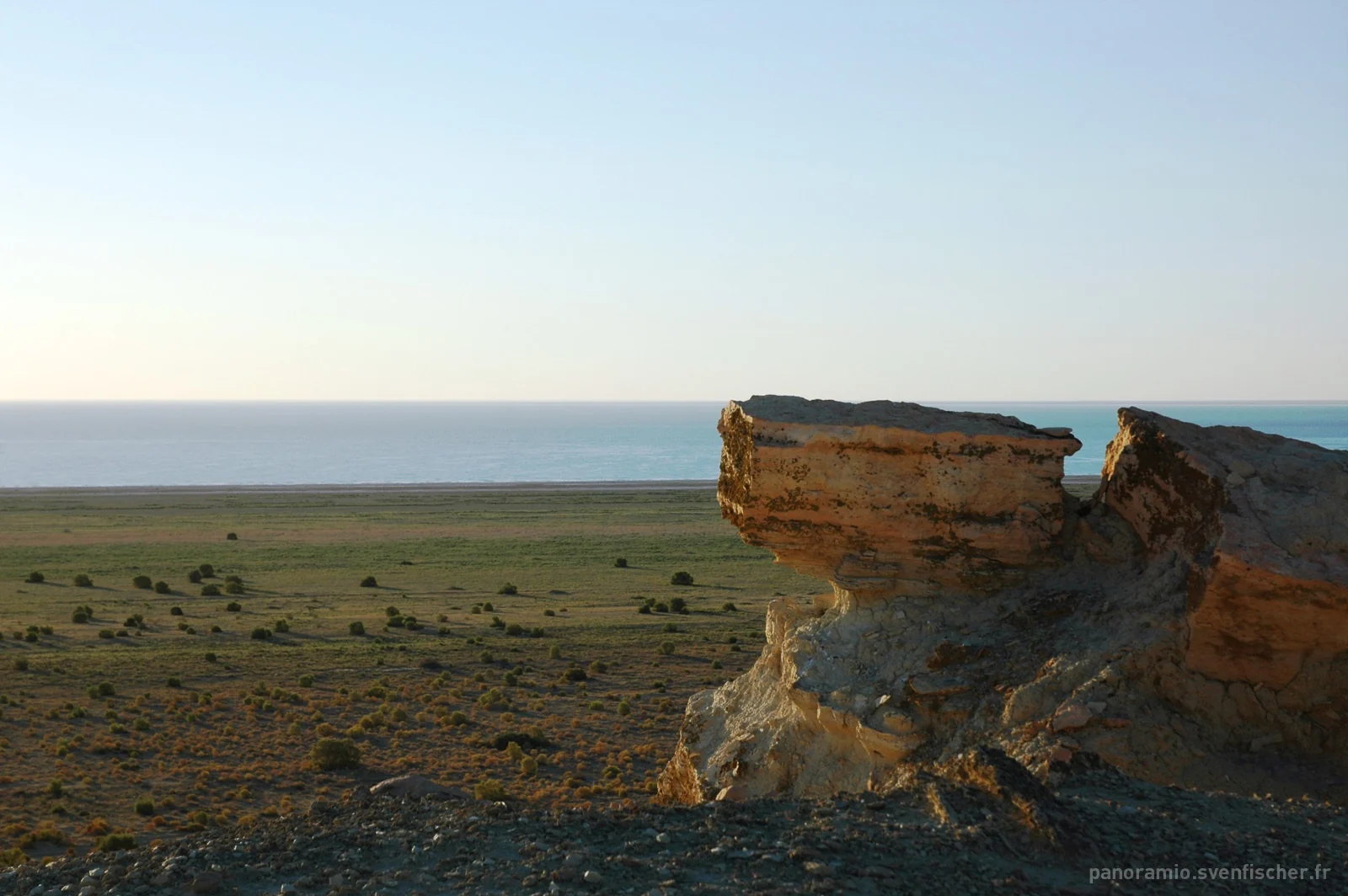
West of the Aral basin, the Ustyurt Plateau rises as a flat, empty upland with steep cliff edges. Some longer tours go to a viewpoint on the escarpment to look down onto the dry seabed. It is remote, usually done with an experienced 4x4 driver and often with a camping night, so treat it as a separate expedition rather than a quick detour.
Season, Heat, Dust and Health
Karakalpakstan has a continental desert climate: summers are very hot and dry, winters are cold, and the wind can blow hard in any season. Spring and autumn are the easiest times to go, with milder days and more comfortable walking among the wrecks. Midsummer is possible but demanding, and there is almost no shade on site.
The dry seabed carries salt and fine sediment, and the region has a long history of dust storms. Some of the dust has been reported to carry residues from agriculture, so take it seriously, especially if you are sensitive to dust or have a respiratory condition.
- Water: carry more than you think you need, plus a hat and sunscreen.
- Dust: a light scarf, buff or mask helps on windy days, and sunglasses protect your eyes.
- Clothes: long sleeves in summer for sun and wind, layers in spring and autumn, proper warm clothing in winter.
- Footwear: closed, sturdy shoes, because of sharp metal and loose ground.
- Health: check with a doctor or travel clinic before you go, and ask about local water and food.
Visiting Respectfully: The Ethics of a Disaster Site
Moynaq is not a theme park. People live and work here, and a small tourism economy of guesthouses, drivers and shops depends on visitors who behave well. That is a good reason to come, and also a reason to be careful about how you do it.
- Ask before photographing people, and do not treat residents as part of the scenery.
- Do not remove metal, rivets or other pieces from the ships; leave the site as you found it.
- Take your rubbish with you.
- Stay with your guide or driver, and keep out of areas you are told to avoid.
- Buy something local, such as a meal, a handicraft or a cup of tea, where it feels natural.
The honest answer to the ethical question is that visiting is better than looking away, provided you go to learn and not to gawk. A trip here should leave you thinking about water, agriculture and how far a government can reshape a landscape.
How Moynaq Compares With Other Abandoned Places
Moynaq belongs to a loose family of places left behind by economic change, but it is a different kind of site from most. Humberstone in Chile is a company town frozen when the saltpeter business collapsed, and Gunkanjima in Japan is a coal-mining island emptied when the coal ran out. Kolmanskop in Namibia is a diamond town being slowly buried by sand.
What sets Moynaq apart is that the thing that vanished is not a mine or a factory. It is an entire sea, and the community is still here. The landscape is also open, windswept and huge, closer in feel to a desert crossing such as our Sahara Desert guide than to a ruined town. If you are building a wider trip through the region, our Kyrgyzstan guide is a natural next read.
Practical Tips for Planning Your Day
- Start early. The drive is long, and the best light and the best temperatures are in the morning.
- Bring snacks and drinks. Services in town are basic, so carry some cash in local currency rather than relying on cards.
- Download an offline map and keep your phone charged, since coverage can be patchy on the open road.
- Check current road conditions, opening hours and entry requirements with your operator and the national tourism site, uzbekistan.travel.
- Keep your plan flexible. Weather and road works can change a day quickly.
Moynaq FAQ
Is Moynaq worth visiting?
Yes, if you are interested in environmental history or in landscapes that tell a story. It is a long trip for a short visit, so go to learn rather than for a quick photo stop. If you dislike long drives and basic services, you may find it hard going.
How far is Moynaq from Nukus?
Roughly 200 km by road, though sources vary a little depending on the route. Allow several hours each way by car. Most people do it as a long day trip from Nukus, starting early and returning in the evening.
Can you visit Moynaq from Khiva or Tashkent?
Yes. From Khiva it is a very long day or a transfer toward Nukus, and many operators offer it. From Tashkent, fly to Nukus and continue by road. Going overland from the capital takes far longer and is rarely worth it.
Do you need a guide or driver?
You do not need a guide to walk among the ships, but a driver is very practical. Distances are long, sites are spread out, and public transport is slow. A guide adds context about the sea and the town, which many visitors value.
When is the best time to visit Moynaq?
Spring and autumn are usually the most comfortable, with milder temperatures. Summer is very hot with almost no shade, and winter is cold with short days. Wind and dust can be an issue in any season, so pack accordingly.
Is it safe to breathe the dust at the Aral Sea?
For a short visit most people are fine, but the dry seabed is dusty and salty, and some dust has been reported to contain agricultural residues. Wear a mask or scarf on windy days, drink water, and ask a doctor if you have a respiratory condition.
Is it ethical to visit a disaster site?
Generally yes, if you go respectfully. Local businesses benefit from visitors, and the story deserves to be told. Ask before photographing people, leave the ships as you found them, and spend money locally where you can.