


Gunkanjima, officially Hashima Island, is an abandoned coal-mining island about 15 kilometers off the coast of Nagasaki in southern Japan. For almost a century it was one of the most crowded places on Earth, a tiny rock packed with concrete apartment blocks, schools, shops and a pithead that reached deep under the seabed.
Since the mine closed in 1974, the island has been empty. Today you can visit it on a licensed boat tour from Nagasaki, walk a short guided route among the ruins and see why it is one of the most striking industrial heritage sites in Japan. This guide covers its history, its complicated legacy and everything you need to plan a landing.
What Is Gunkanjima (Battleship Island)?
Hashima is small: roughly 480 meters long and 160 meters wide, with a total area of about 6.3 hectares. High seawalls and land reclamation turned what was once a bare reef into a walled platform crowded with buildings. Seen from the sea, its tall concrete blocks and sheer walls look like the superstructure of a warship, which is where the nickname Gunkanjima, “Battleship Island,” comes from.
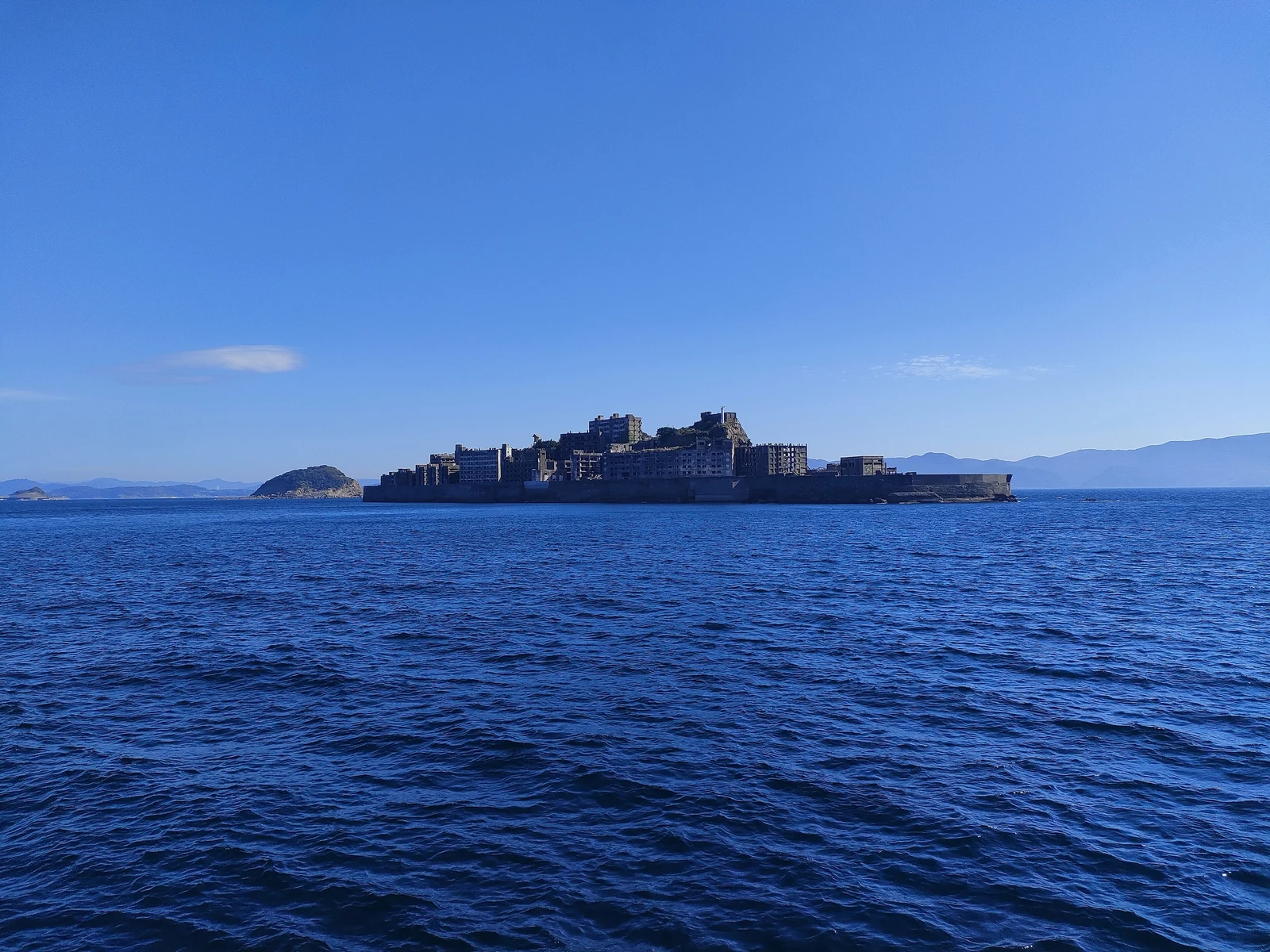
The island belongs to Nagasaki City and is part of a group of former mining islands in the waters southwest of the city, together with neighboring Takashima. It sits in open sea, which explains both why it was so isolated and why boat trips there depend so heavily on the weather.
A Short History of Hashima Island
Coal was found on Hashima around 1810, but serious mining began after Mitsubishi bought the island in 1890 and started extracting coal from undersea seams. Over the following decades the shafts reached around a kilometer deep, and roughly 15.7 million tons of coal were brought up between 1891 and 1974. The high-quality coal fed the steelworks and shipyards that powered Japan’s rapid industrialization.
Japan’s first large concrete apartment block
To house miners and their families on so little land, Mitsubishi built upward. In 1916 it completed what is regarded as Japan’s first large reinforced concrete building, and many more apartment blocks followed. Residents lived with schools, a hospital, shops, bathhouses and a shrine on the island, and rooftop gardens were planted because there was almost no soil at ground level.
Peak population and sudden abandonment
The population peaked at 5,259 people in 1959, a density of about 835 people per hectare across the whole island. As Japan switched from coal to petroleum in the 1960s, mines across the country closed. Hashima’s mine shut in January 1974, and the last residents had left by April 20 of that year. The island then stood empty for 35 years until tourist landings began on April 22, 2009.
| Year | Milestone |
|---|---|
| c. 1810 | Coal discovered on the island |
| 1890 | Mitsubishi acquires Hashima and begins undersea mining |
| 1916 | First large reinforced concrete apartment building completed |
| 1959 | Population peaks at 5,259 |
| 1974 | Mine closes in January; island empty by April 20 |
| 2009 | Guided tourist landings begin on April 22 |
| 2015 | Inscribed on the UNESCO World Heritage List |
UNESCO World Heritage Status and Its Difficult History
In July 2015, Hashima was inscribed as part of the Sites of Japan’s Meiji Industrial Revolution: Iron and Steel, Shipbuilding and Coal Mining, a serial World Heritage listing that tells the story of how Japan industrialized in the late 19th and early 20th centuries. The official heritage period focuses on the Meiji era, but the island’s full history goes further.
During the Second World War, Korean and Chinese laborers were brought to Hashima and forced to work in the mine under harsh conditions. This part of the story was central to the debate around the 2015 inscription, and it remains a sensitive subject, especially in South Korea and China. A respectful visit means understanding the island as a place of both industrial achievement and real human suffering.
What You See on a Gunkanjima Landing Tour
For safety reasons, more than 95 percent of the island is off-limits. Visitors land at a pier on the southern end and follow a fenced walkway to three observation decks, while a guide explains what each ruin once was. You will not enter any building, but you get close views of collapsed structures, mine facilities and the apartment blocks on the western side.
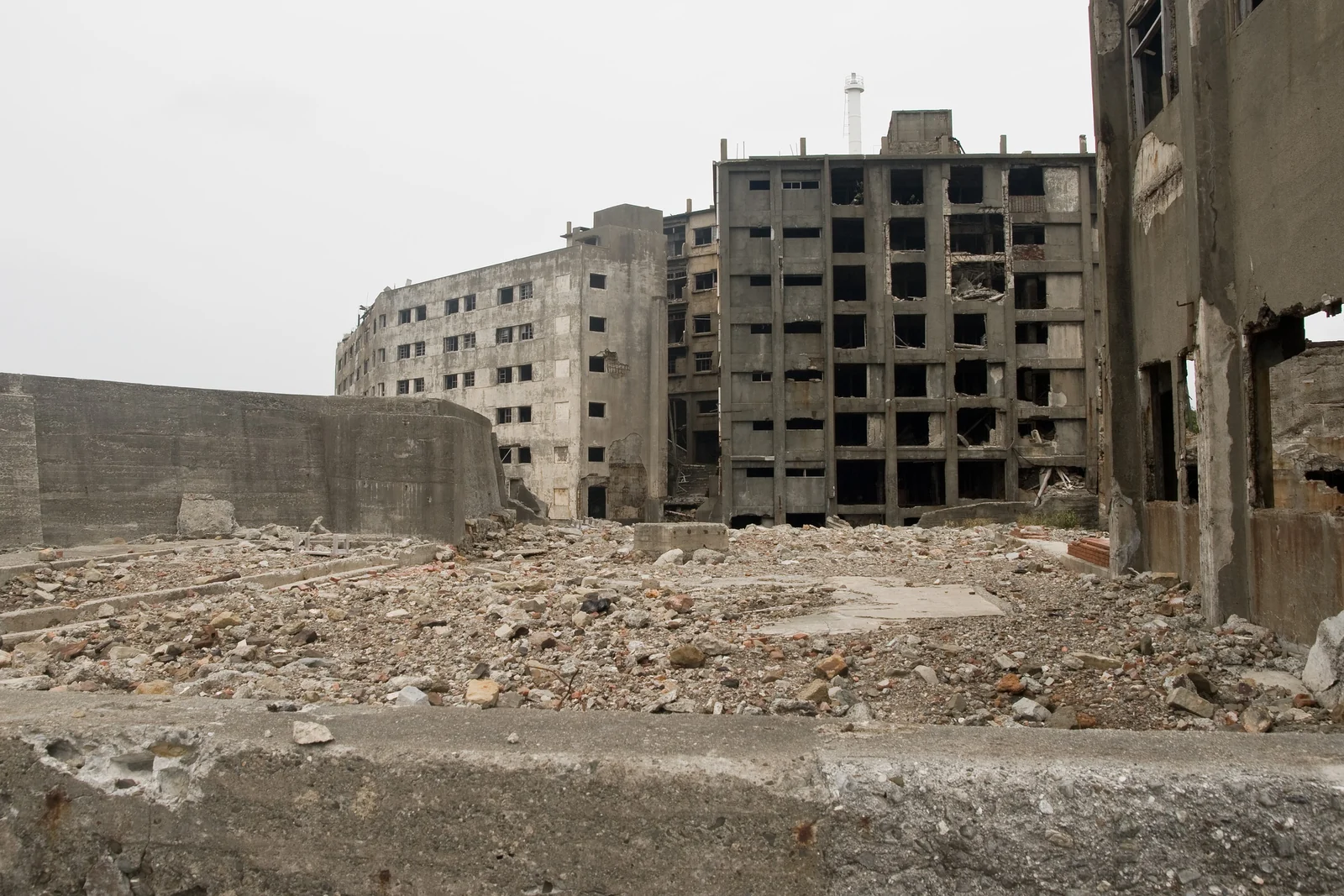
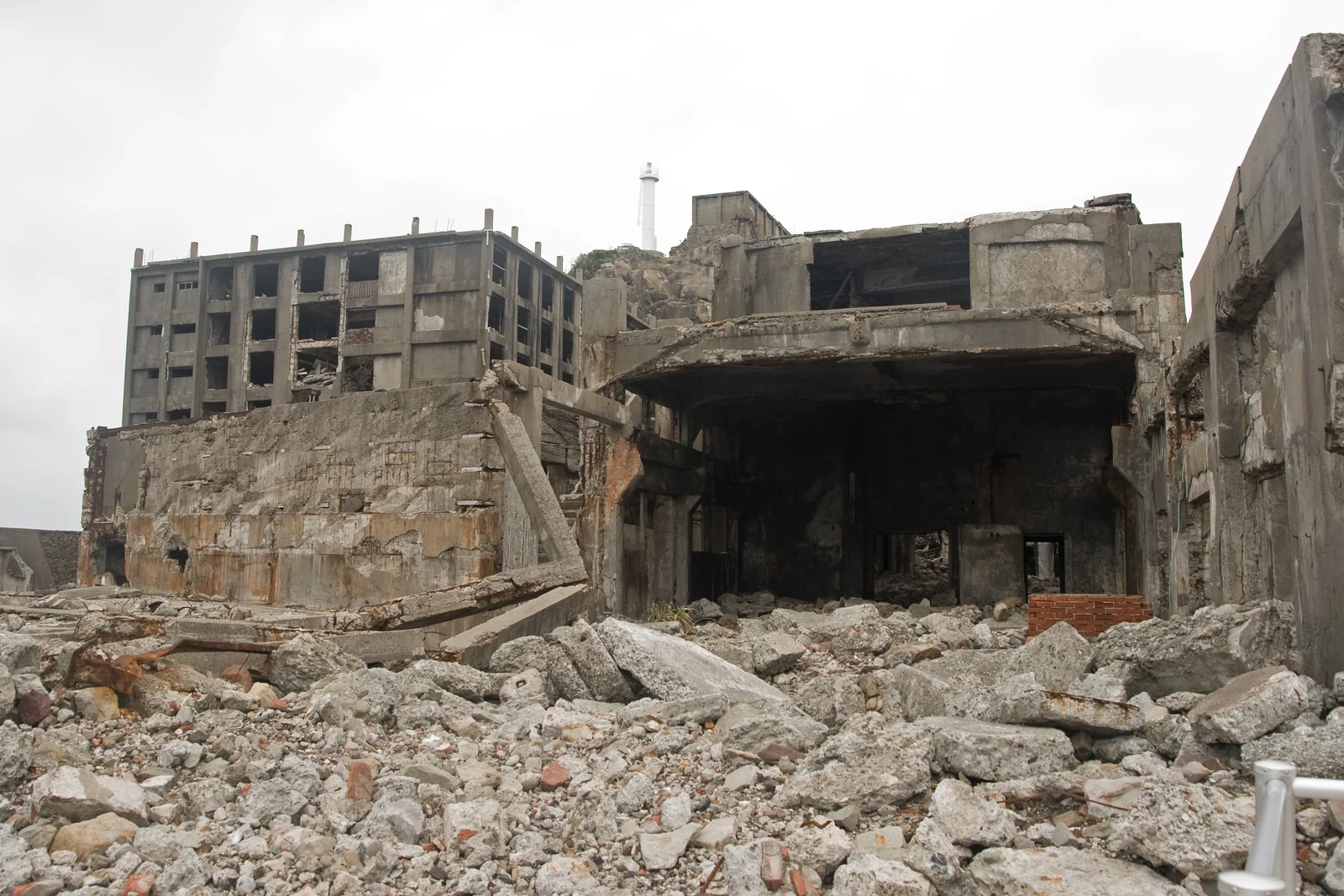
Most tours also sail around the island before or after the landing, which is the best chance to photograph the dense housing blocks that are hidden from the walkway. Look for the contrast between the gray concrete, the sea spray on the walls and the plants that have taken hold on rooftops and balconies since 1974.
How to Visit Gunkanjima from Nagasaki
You cannot visit Hashima on your own. Every landing is made on a tour run by one of several licensed operators from Nagasaki Port, and you must sign a safety pledge before boarding. The Japan National Tourism Organization recommends booking in advance, especially on weekends and holidays.
- Get to Nagasaki. The city is served by Nagasaki Airport and by the Nishi-Kyushu Shinkansen, with rail connections from Fukuoka (Hakata).
- Book a tour. Compare operators on the official city tourism site; they differ in departure point, language support, age limits and whether they combine the trip with Takashima.
- Go to the port. Boats leave from the Nagasaki Port Ferry Terminal near the Ohato tram stop or from Tokiwa Terminal near Oura Kaigan-dori. Arrive early to check in.
- Sail and land. The crossing takes around 30 minutes or a little more each way, depending on the operator. A typical tour lasts around three hours in total, with roughly 45 minutes on the island.
- Check for cancellations. Operators confirm on the day whether landing is possible; if the sea is rough, the boat may only circle the island or not sail at all.
Ticket prices vary by operator and include a small landing fee charged by Nagasaki City. Check current fares and timetables directly with the operators listed on Discover Nagasaki, the city’s official tourism site.
Best Time to Visit Gunkanjima
Because landings depend on wave height, the season matters more than it would for most sights. Plan a flexible day or two in Nagasaki so you can move your tour if the first attempt is canceled.
| Season | What to expect |
|---|---|
| Spring (March to May) | Generally calmer seas and mild weather; a good window for landings |
| Early summer rainy season (June to July) | Frequent rain and more cancellations |
| Late summer (August to September) | Typhoon season; tours can be canceled at short notice |
| Autumn (October to November) | Often settled weather and clear views |
| Winter (December to February) | Strong winds can make the sea too rough to land |
Safety and Etiquette on Hashima
The buildings on Hashima are decaying in salt air and are genuinely unsafe, which is why the rules are strict. Staying on the route protects you and the site.
- Stay inside the fenced walkway and follow your guide at all times.
- Wear flat, closed shoes; the landing pier and decks can be wet and uneven.
- Bring sun protection and water in summer, as there is little shade.
- Some operators have age or health restrictions, and not all tours are wheelchair accessible; ask before booking.
- Entering buildings or leaving the route is not allowed; follow any photography or drone rules your operator gives you.
- Remember the forced labor history and treat the site with the same respect you would give a memorial.
Gunkanjima in Film and Popular Culture
Hashima’s eerie skyline has made it a favorite with filmmakers and photographers. It became known worldwide after it inspired the villain’s island hideout in the James Bond film Skyfall (2012), and it has appeared in many documentaries, music videos and games since. The 2017 South Korean film The Battleship Island dramatized the wartime forced labor on the island.
If you enjoy places like this, you may also like our guides to the ghost towns of Scotland and the abandoned sections of the Great Wall of China.
More Meiji Industrial Heritage in Nagasaki
Hashima is only one of several World Heritage components in and around Nagasaki, so it is easy to build a full heritage day around your tour.
- Gunkanjima Digital Museum: near the port, it uses projections and virtual reality to show parts of the island you cannot enter. A good backup if your landing is canceled.
- Giant Cantilever Crane: a working crane at the Mitsubishi shipyard, built in 1909 with machinery from Scotland and best seen from the harbor.
- Former Glover House: the hillside home of Scottish merchant Thomas Glover, who helped introduce Western industry to Japan, inside Glover Garden.
- Takashima: the neighboring island where Western-style coal mining began in Japan; some tours stop here.
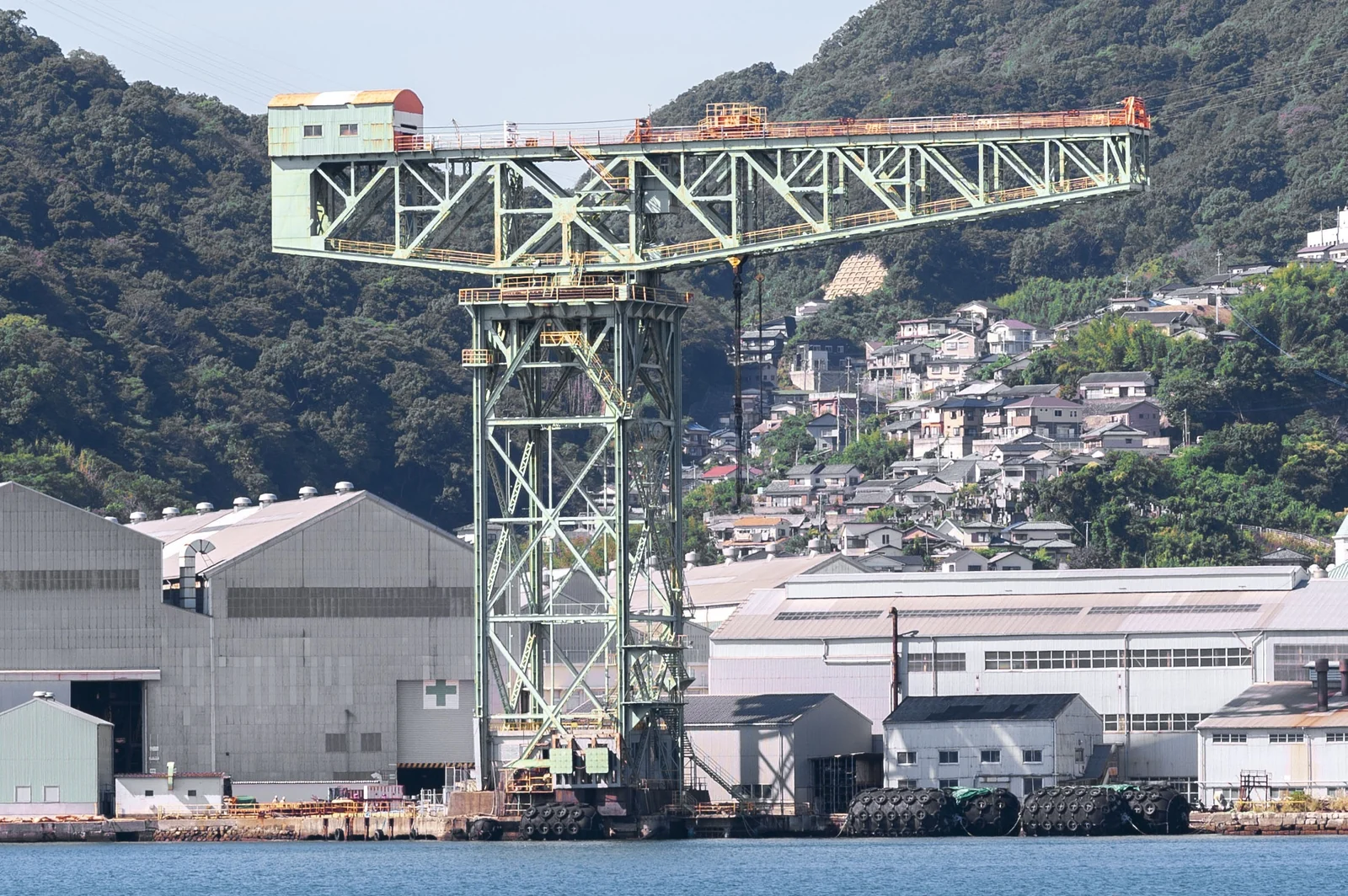
On clear days you can also see Gunkanjima from the southern tip of the Nagasaki Peninsula around Nomozaki. If you are planning a longer trip, our list of places to go when you go to Japan and our Kyoto guide will help you plan the rest of your route.
Gunkanjima FAQ
Can you visit Gunkanjima?
Yes. Since April 2009, guided landing tours have run from Nagasaki Port. You must book with a licensed operator, sign a safety pledge and stay on the designated walkway. Independent visits are not permitted, and landings are canceled when the sea is too rough.
Why is Hashima Island called Battleship Island?
Gunkanjima means “Battleship Island” in Japanese. With its high seawalls and tall concrete buildings, the island’s silhouette looks like a warship from the sea, and the nickname became more widely used than its official name, Hashima.
Why was Gunkanjima abandoned?
Hashima existed for its undersea coal mine. When Japan shifted from coal to oil in the 1960s, the mine became uneconomic and closed in January 1974. With no other work on the island, every resident had left by April 20, 1974.
How long is a Gunkanjima tour?
Most tours last about three hours from Nagasaki Port, including a boat crossing of around 30 minutes or more each way and around 45 minutes on the island. Some also circle Hashima by boat or stop at nearby Takashima, which adds time.
Was Skyfall filmed on Gunkanjima?
Hashima inspired the villain’s island lair in the 2012 James Bond film Skyfall and appears in the movie, but the actors did not film on the ruins themselves. The close-up scenes were shot on sets built to recreate the island’s look.
Is Gunkanjima a UNESCO World Heritage Site?
Yes. Since 2015 it has been part of the Sites of Japan’s Meiji Industrial Revolution World Heritage listing. The inscription was controversial because of the forced labor of Korean and Chinese workers on the island during World War II.