Humberstone is an abandoned saltpeter town in the Atacama Desert, about 47 km (roughly 45 minutes) east of Iquique, and it works well as a half-day trip. Together with its neighbor Santa Laura, it is a UNESCO World Heritage site. You can go on a guided tour from Iquique, take public transport toward Pica and get off at the entrance, or drive yourself along Route 16 and Route 5.
What you find at the end of that road is not a ruin in the romantic sense. It is a company town frozen mid-sentence: a theater, a plaza, a school, a company store and rows of workers' houses, all standing on bare desert ground. Here is how to get there, what to look at and how to do it respectfully. If Chile is on your list, our Chile travel guide covers the wider route.
What Humberstone and Santa Laura Were
Humberstone and Santa Laura were oficinas salitreras, the industrial settlements where sodium nitrate, known as saltpeter, was extracted and processed from the Pampa del Tamarugal. Both were founded in 1872, when this part of the desert still belonged to Peru. Humberstone began life as La Palma and was later named after James Thomas Humberstone, who is associated with its founding. Santa Laura started out under a separate company.
Nitrate mattered because it was a fertilizer and an ingredient in explosives. For decades the caliche ore under the pampa made the region one of the most valuable pieces of land on earth, and it changed hands after the War of the Pacific, when Tarapacá became part of Chile. Workers, called pampinos, came to live in company housing, and much of what they earned went back to the company through its store.
At their peak the two works held about 4,000 people, with more than 3,700 of them in Humberstone itself. That is not large, but it was a full town in a place where almost nothing grows.
Boom and Bust on the Pampa
The decline was slow, then sudden. Synthetic nitrogen fertilizer, made possible by the Haber-Bosch process, undercut natural saltpeter, and the Great Depression of 1929 finished off much of the market. A new extraction method, the Shanks process, kept Santa Laura going for a time, and one company took over both works in 1934. That company disappeared in 1958, and both works were abandoned in 1960.
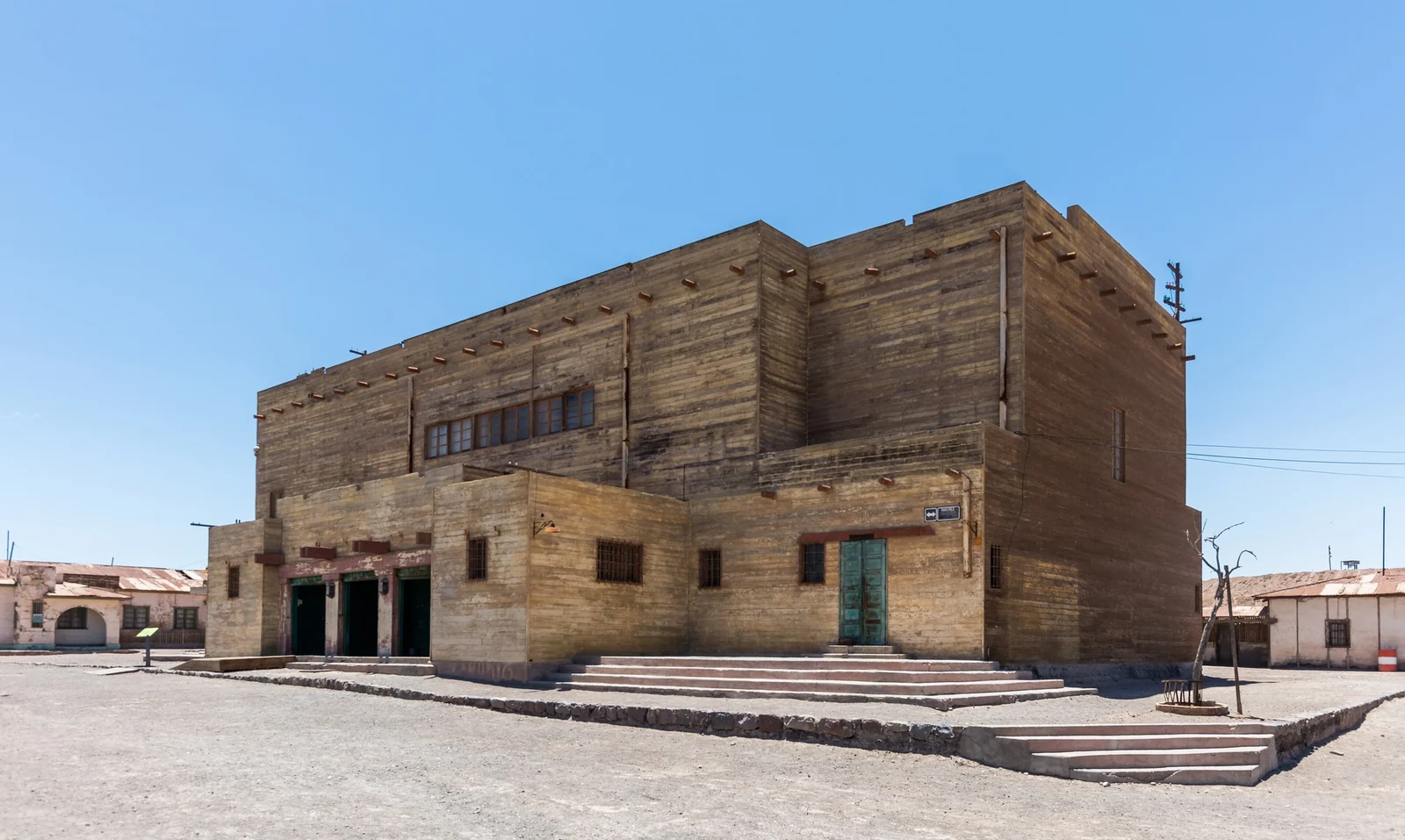
The desert kept almost everything. In such dry air, timber, tin roofs and iron machinery decay slowly, which is why the place still reads as a town. The theater, church and company store are built largely from Oregon pine that was brought in by sea.
UNESCO World Heritage Status and the Danger List
The Humberstone and Santa Laura Saltpeter Works were inscribed on the UNESCO World Heritage List in 2005 and placed on the List of World Heritage in Danger in the same year, because the buildings were fragile and had gone without maintenance for decades. Chile had already declared both sites national monuments in 1970.
A long program of restoration and conservation followed, and the World Heritage Committee removed the site from the danger list in 2019. That is good news, but it does not mean the work is finished. Wood, salt and earthquakes keep testing the town, and some areas can close for safety, which is one more reason to check the official site before you travel.
What You See Inside Humberstone
Walk it as a small town, because that is what it was. Most visitors loop around the plaza first and then head into the industrial zone.
The Plaza, Theater and Company Store
The plaza is the center of everything. The theater faces it, and the old company store, the pulpería, is nearby. This is where workers spent their pay, and it makes the economics of the town easy to grasp. On a guided visit you will hear more of the story than the signs alone can tell.
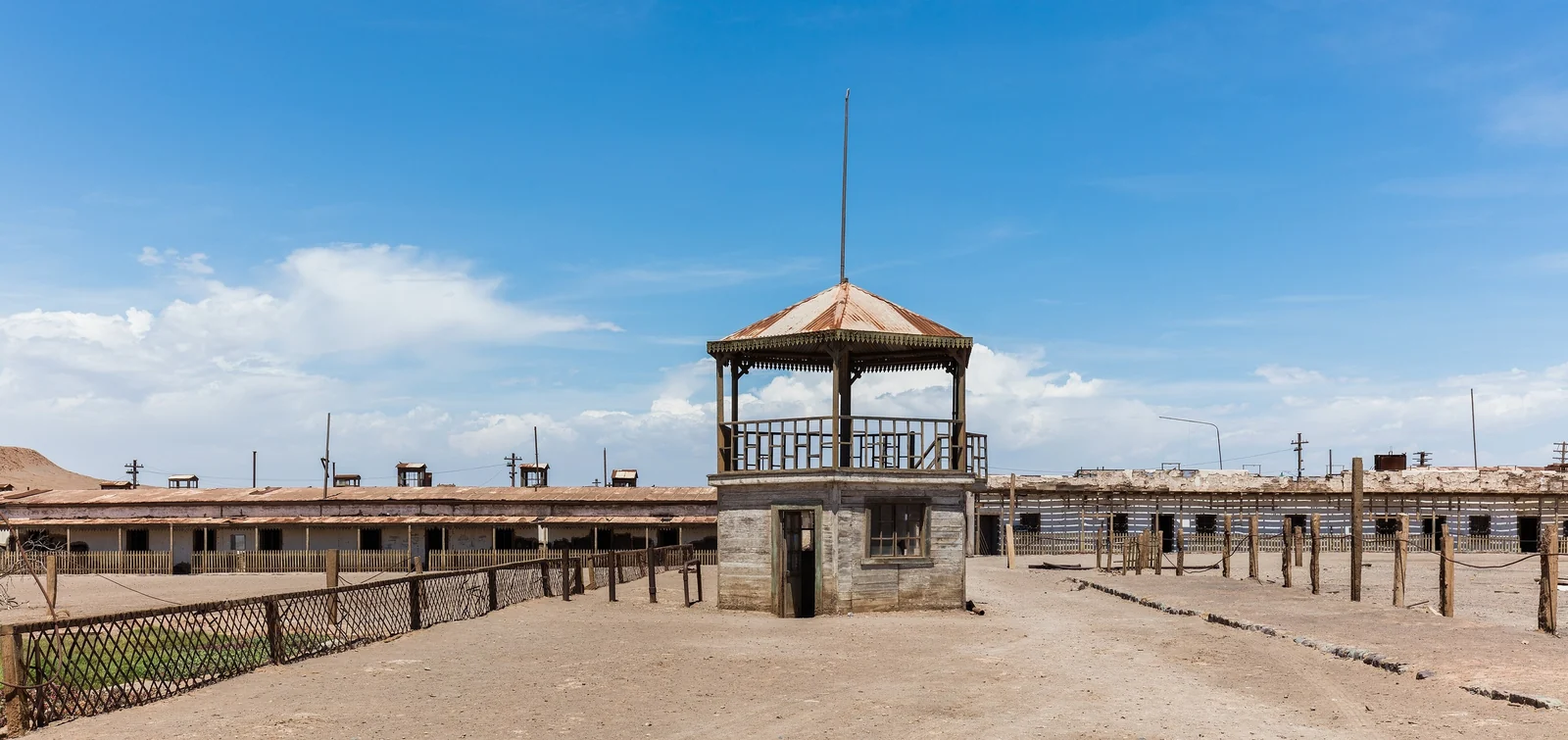
The School, Houses and Pool
The school still has desks in place, and the long rows of workers' houses show how life differed by rank, with simple rooms for laborers and larger homes for staff. The swimming pool is a favorite stop. It is widely described as built from the metal plates of a ship, a detail that fits the improvised engineering of the whole town, though I would treat that origin as local lore unless a guide can back it up.
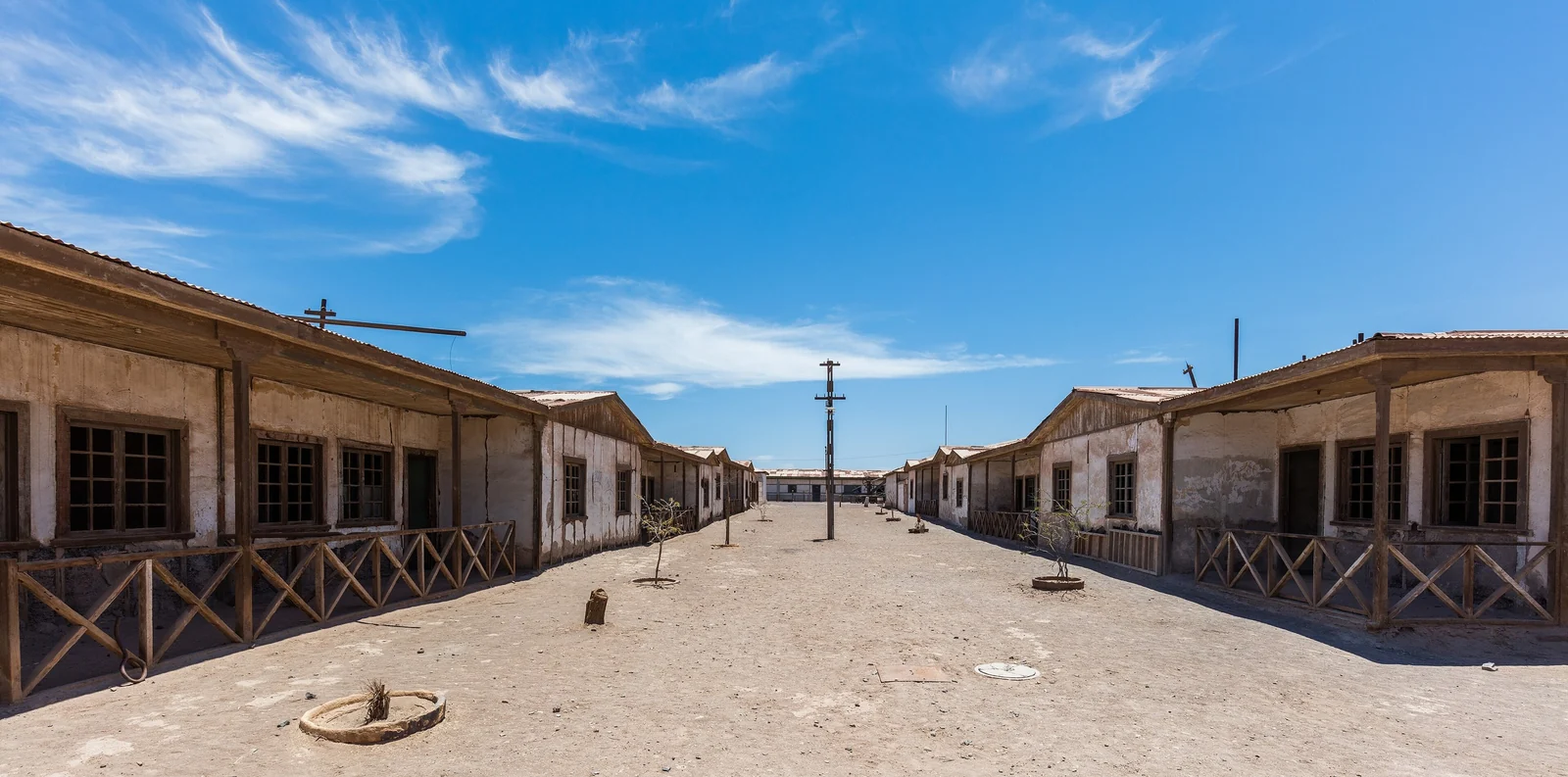
Machinery and the Railway
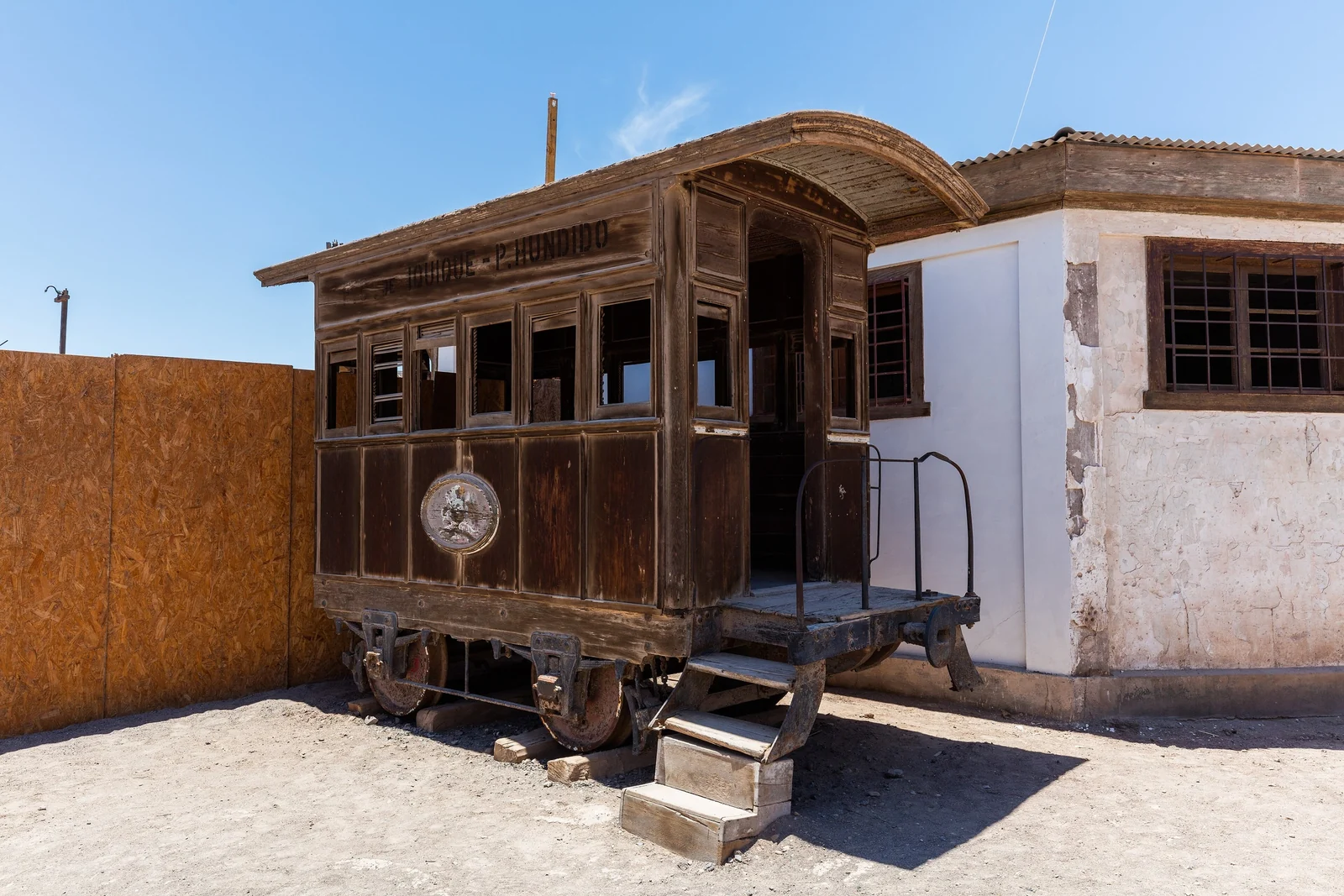
The industrial zone holds rusting equipment, ore carts and the remains of the processing works. A wooden railcar marked for the Iquique line stands beside one of the buildings, a reminder that the whole operation depended on a railway down to the port.
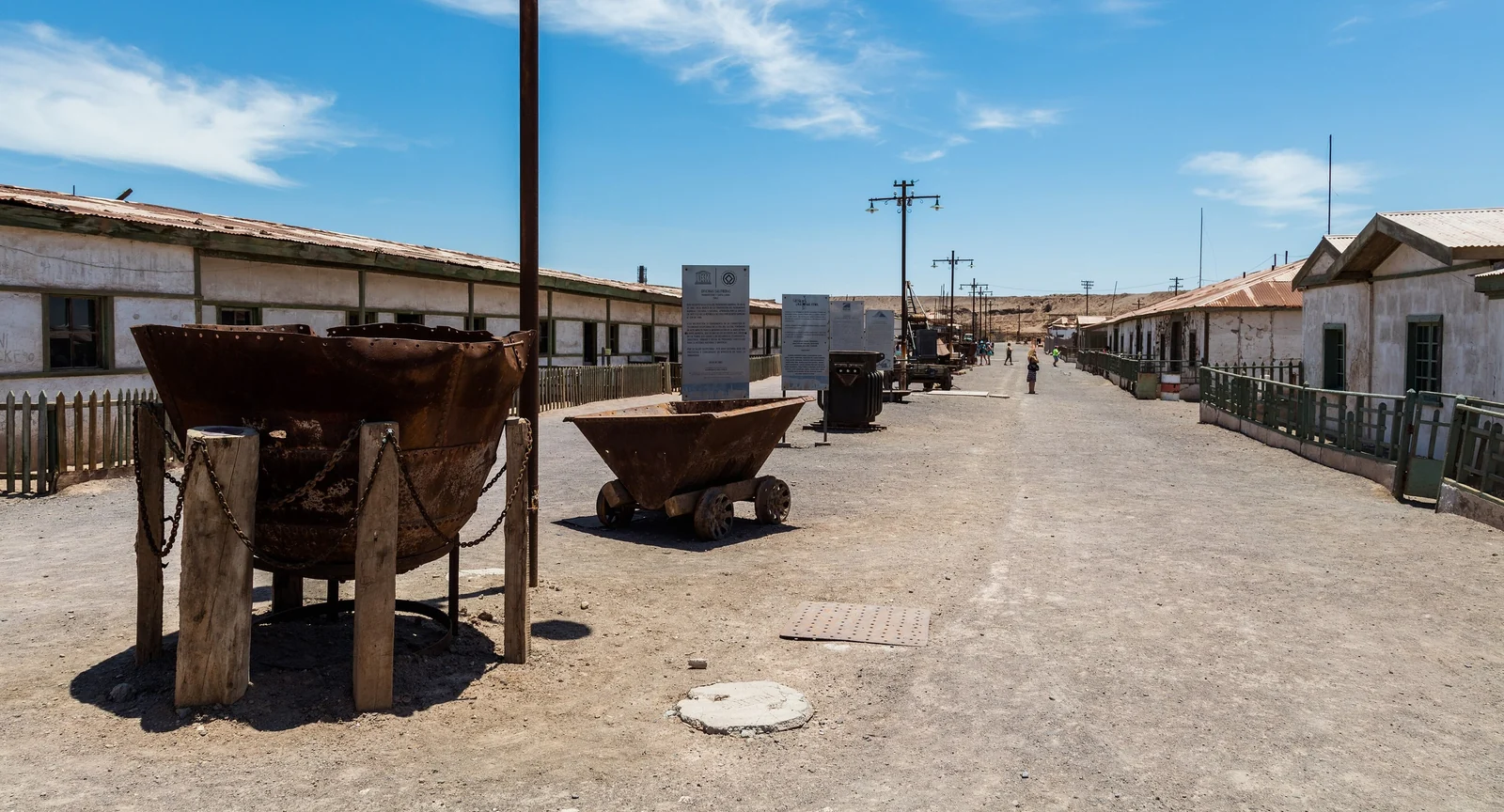
Santa Laura: The Second Site
Santa Laura is smaller and more industrial. It has the large processing plant, a crushing plant, a power house, an administration building and a tall chimney visible across the pampa. It sits a bit more than a mile from Humberstone, and on foot that walk is a hot one. Many guided tours include both sites. If you are on your own without a car, decide how you will cover that gap before you arrive.
How to Get to Humberstone From Iquique
Humberstone is in the commune of Pozo Almonte. Chile Travel says to take Route 16 inland until it connects with Route 5 North, where the entrances to Humberstone and Santa Laura are located, and it puts the trip at about 47 km and 45 minutes. Other mapping sources give somewhat longer road distances, so treat the figures as approximate.
Guided Tour
This is the easiest option, and Chile Travel recommends a guided visit for the historical context. Tour operators in Iquique offer half-day trips, and many combine Humberstone and Santa Laura with other stops. Compare itineraries and what is included before you book.
Bus or Colectivo
Local buses and shared vehicles that run toward Pica pass along the route. Ask the driver to drop you at the Humberstone entrance and work out how you will get back, because flagging a return ride in the desert is less certain. Schedules change, so ask the operators in Iquique.
Taxi
A private taxi or transfer from Iquique or Alto Hospicio can wait while you walk around. Agree the price and the waiting time before you set off.
Self-Drive
Driving gives you the most freedom, especially if you want to see Santa Laura or continue to other places in the Tarapacá region. Fuel stops can be far apart in the desert, so fill up in town.
Which Option Suits You
| Option | Effort | Best for |
|---|---|---|
| Guided tour from Iquique | Low: pickup and a guide | First-timers who want the history explained |
| Bus or colectivo toward Pica | Medium: timing and drop-off to sort out | Independent travelers on a budget |
| Taxi or private transfer | Low to medium: agree the wait time | Small groups who want a flexible pace |
| Self-drive | Medium: navigation and fuel | Combining several stops in one day |
Opening Hours, Time Needed and Best Season
Opening days and hours change, and the site has had closures for safety work. Check the official Corporación Museo del Salitre website before you go, and confirm ticket details there too.
Allow about two hours at Humberstone if you like to read signs and take photos, and more if you add Santa Laura. A tour that includes other stops usually fills most of a day.
The Atacama is dry in every season, so the real questions are sun and wind. The pampa has almost no shade, and the light is harshest around midday. Early or late in the day is more comfortable and better for photos, and afternoon wind can lift dust. Mornings and evenings can feel cool.
What to Bring
- Sun protection: a hat, sunglasses and sunscreen, as Chile Travel advises.
- A warm layer: the desert cools quickly once the sun drops.
- Water and snacks: do not count on buying much on site.
- Sturdy shoes: the ground is loose and uneven.
- A scarf or buff: useful when the wind kicks up dust.
- Some cash and a charged phone: signal and card machines in the desert can be unreliable.
Combine Humberstone With Other Stops
Humberstone fits easily into a longer trip through the Tarapacá region. These are the main add-ons.
Pica Oasis
Pica is a green oasis town inland, known for its fruit and natural pools. It lies along the same Route 5 corridor, which makes it a natural pairing for a long day or an overnight.
Pisagua
Pisagua is a small old port on the coast to the north, tied to the nitrate shipping trade and to a darker 20th-century history. It is a longer outing, so give it its own day if you can.
Atacama Giant
The Atacama Giant is a huge figure on the slope of Cerro Unita, east of Huara. Sources cite different sizes, commonly about 119 m, so take the figure as approximate. The site has suffered from off-road damage, so go with a guide or check access conditions first.
Chacabuco and Other Nitrate Towns
Humberstone is not the only one. Other former nitrate towns, including Chacabuco, María Elena and Pedro de Valdivia, are in the Antofagasta region, far to the south. If you are traveling between regions, they add another angle on the same industry. For other abandoned places elsewhere, see our guides to Gunkanjima in Japan and the abandoned island village of St Kilda.
If you are continuing into the high desert of the region, our guide to Salar de Uyuni covers the famous salt flat in Bolivia.
Visiting Respectfully
Humberstone is a heritage site, but it is also the memory of people who lived and worked in hard conditions. Treat it that way.
- Stay on the marked paths and keep out of closed or roped-off buildings.
- Do not take anything, move objects or write on walls.
- Do not climb on machinery, roofs or unstable timber.
- Keep your voice low inside buildings and ask before photographing people.
- Follow the instructions of your guide and the site staff.
The structures are fragile, and the whole point of the conservation work is to keep them standing.
Humberstone FAQ
How far is Humberstone from Iquique?
Chile Travel gives about 47 km, roughly 45 minutes by car, via Route 16 and Route 5 North. Other mapping sources show slightly longer distances, so treat the numbers as approximate and allow extra time for a tour or stops along the way.
Is Humberstone a UNESCO World Heritage site?
Yes. Humberstone and Santa Laura were inscribed in 2005 and placed on the danger list the same year. The World Heritage Committee removed them from that list in 2019 after restoration and conservation work.
How long do you need at Humberstone?
About two hours covers the main buildings at a relaxed pace. Add time for Santa Laura, which is a short drive away. A guided half-day or full-day tour from Iquique usually includes both sites.
Can you visit Humberstone without a tour?
Yes. You can go by local bus or colectivo toward Pica, by taxi or by rental car. A guide helps explain the history, and Chile Travel recommends one, but independent visits are common. Check current opening details first.
When is the best time to visit Humberstone?
The desert is dry year-round, so choose by comfort. Early morning and late afternoon bring softer light and less heat, while the midday sun is harsh. Bring a hat, sunscreen and a warm layer for the cooler hours.
Why was Humberstone abandoned?
Synthetic fertilizer and the Great Depression collapsed the market for natural nitrate. The company that ran the works disappeared in 1958, and Humberstone and Santa Laura were abandoned in 1960.
Can I combine Humberstone with Pica?
Yes, they lie along the same inland corridor. Many people pair them on a long day or split them over two days, with Pica offering oasis scenery, fruit and a chance to cool off after the dusty pampa.