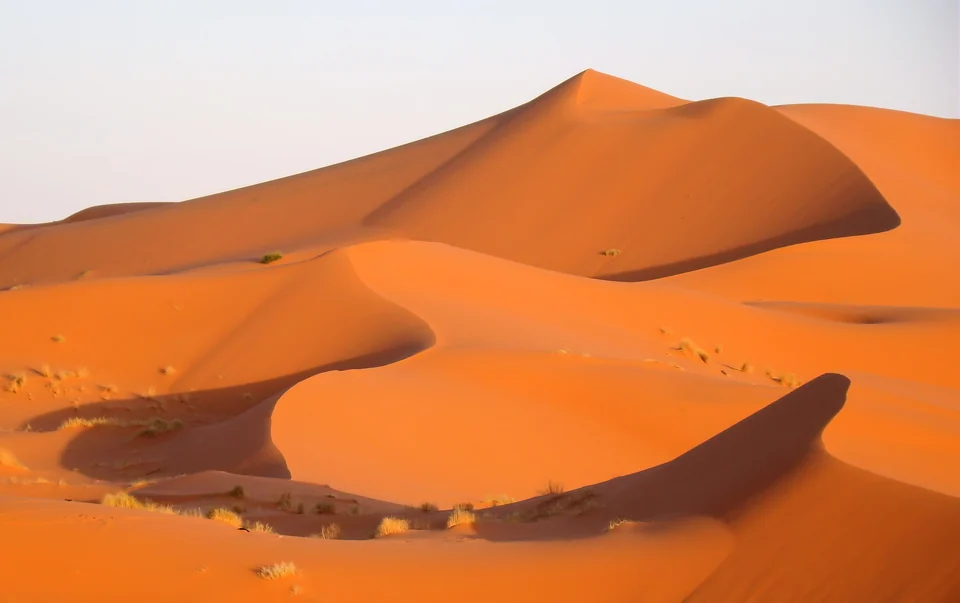
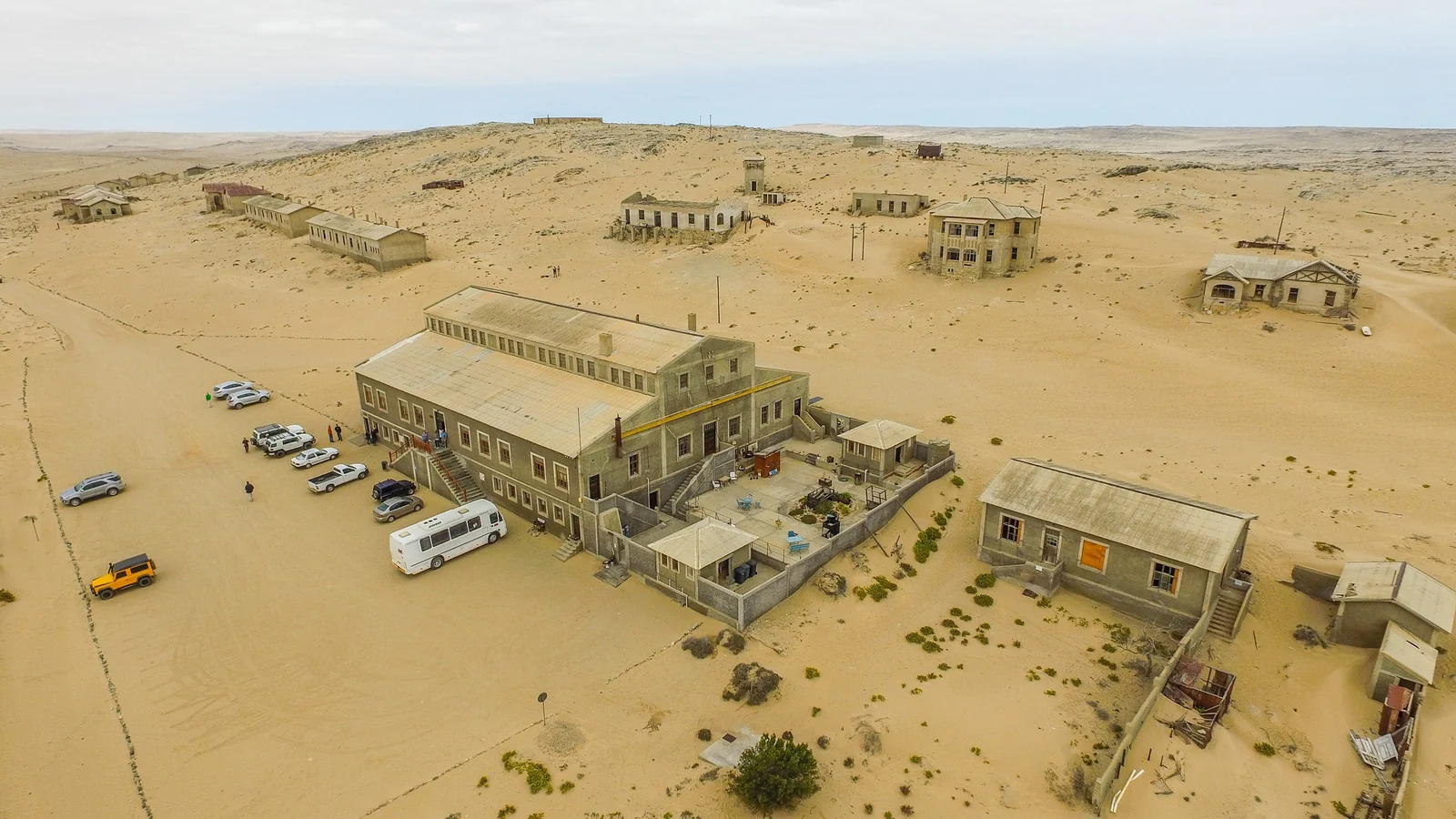
Kolmanskop is an abandoned diamond-mining town in the Namib Desert, about 10 km (6 miles) inland from Lüderitz in southern Namibia, and you can visit it on a permit that covers entry to the marked town area. The sand has been moving back into the German-style houses for decades, and in some rooms it now sits knee-deep against the walls.
Most people see it as a half-day outing from Lüderitz, either on a guided walk or by wandering the streets on your own after getting a ticket. If you are building a bigger route through the country, this stop fits into our Namibia road trip guide, though it needs its own long detour south.
What Kolmanskop Is and Why It Draws Photographers
Kolmanskop (the Afrikaans name means roughly “Coleman’s hill”, after a transport driver named Johnny Coleman) was a proper town, not a mining camp. Residents built a hospital, a ballroom, a school, a theater, a casino, a power station and even an ice factory, all in a place with almost no rain and no natural water. It looked like a slice of small-town Germany dropped onto the dunes.
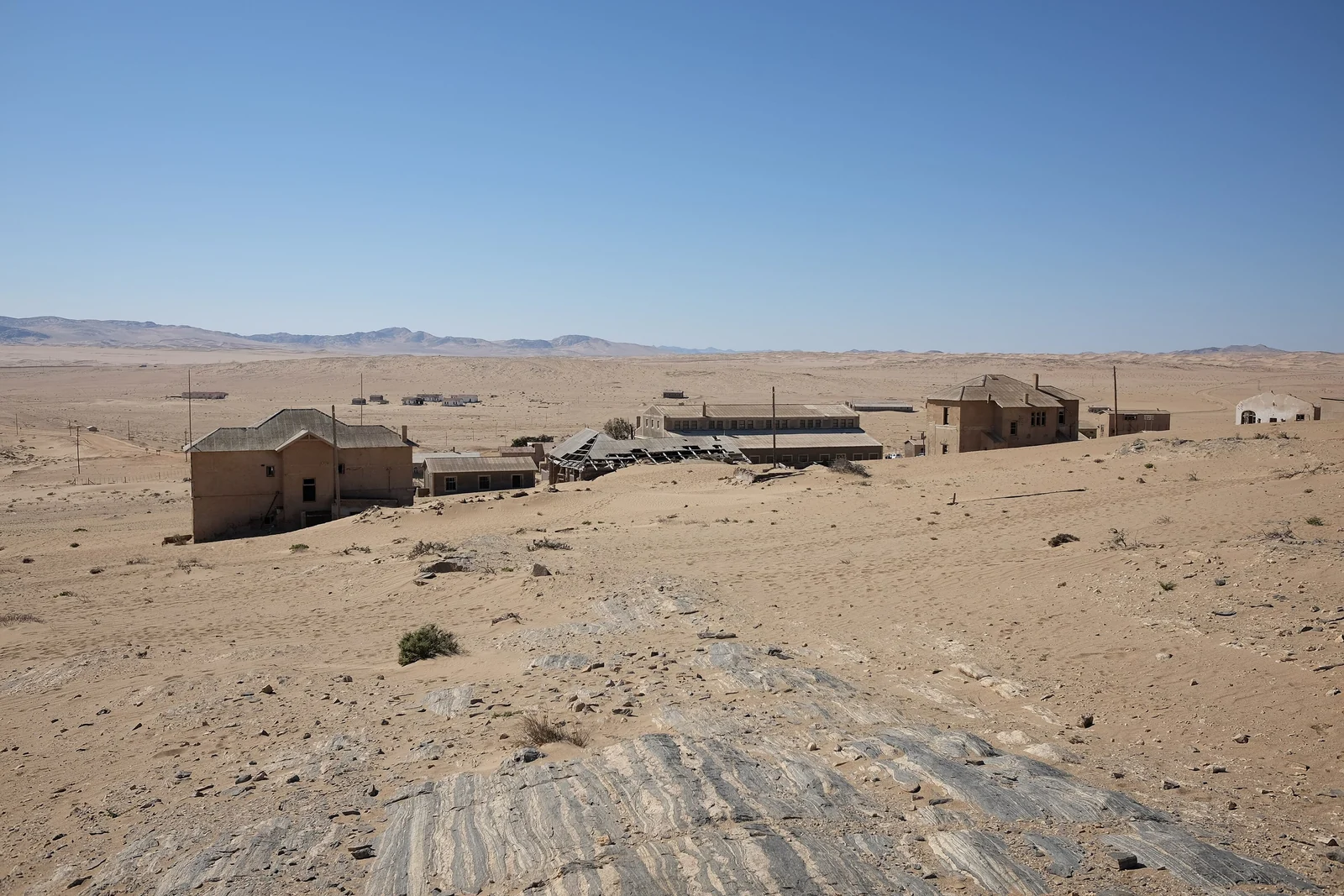
Today it is the reverse picture. Doors hang open, floorboards buckle, and drifts of orange sand pour through broken windows and across staircases. The contrast of faded paint, dark door frames and glowing dunes is exactly why photographers rank it among the most striking ghost towns anywhere.
The Diamond Rush: How Kolmanskop Began in 1908
The story starts in 1908, when a railway worker named Zacharias Lewala found a diamond and showed it to his supervisor, the German railway inspector August Stauch. Stauch recognized what it was. Word spread, prospectors poured in, and the surrounding area was soon closed off as a restricted zone, which is the reason you still need a permit today.
The town grew fast on the back of those early finds, and the community built itself up with the confidence of people who thought the supply would last. It did not. The deposits began to run thin around the time of the First World War, and a richer find in 1928 near the Orange River pulled many residents further south. Kolmanskop was finally abandoned in 1956.
Remember that the town’s comfortable life rested on labor you will not see in the photographs. The mining workforce lived under much harder conditions than the families who danced in the ballroom, and the wider colonial history of this coast is a heavy one. The museum and any guide you hire can add that context.
Permits and Entry: How Access Works
Kolmanskop lies inside the Sperrgebiet, the restricted diamond area of the Namib. It is run as a tourist site by Namdeb, a joint company owned by the Namibian government and De Beers. In practice, your ticket is your permit, and it covers the marked Kolmanskop area only. You cannot treat it as a pass to drive off into the surrounding desert.
Tickets are sold at the entrance gate and through agents and the visitor office in Lüderitz. The gate is not always staffed early in the morning, so many travelers buy the day before. In busy periods it is smart to sort this out ahead of time, especially if you want a guided tour slot. Fees and rules change, so confirm the current ones locally rather than trusting a number in a blog post, this one included.
A few rules apply almost everywhere in the restricted area. Stay inside the marked zone, do not take sand, stones or objects away, and do not fly a drone. Keep your permit with you in case someone asks to see it.
Guided Tour or Self-Visit?
You have two basic options, and both work. The best choice depends on whether you care more about the story or the pictures.
| Option | What you get | Best for |
|---|---|---|
| Guided tour | A walk through selected buildings with commentary on the diamond era, the houses and daily life | First-timers, history lovers, anyone who wants context |
| Self-visit on a standard ticket | Free wandering through open buildings and streets at your own pace during visiting hours | Confident travelers, families who want flexibility |
| Photography permit | Longer access for photographers, arranged ahead of time and with conditions | Serious amateurs chasing early or late light |
My own lean is toward doing both if you have the time: take the guided tour first for the names and dates, then wander alone afterward when your eye is tuned to what you are looking at. A guide tells you which building was the bowling alley and which was the butcher. Without one you are just looking at nice sand.
Tours usually start in the morning, and the visiting day is generally short, running from morning into the early afternoon. Exact hours and tour times differ by season, so check with the operator in Lüderitz before you plan your day around them.
What to See Inside the Town
The Sand-Filled Houses
These are the main event. Many have wooden floors that are slowly lifting, wallpaper that has curled into abstract shapes, and rooms where dunes have arrived through the windows and settled like furniture. The German-influenced architecture, with gables and wide verandas, makes the scene feel stranger still.
The Hall, Casino and Theater
The larger community buildings show how seriously the town took leisure. The hall, with its stage, hosted dances and performances, and the casino hints at how much money was moving around in the boom years.
Hospital, Power Station and Ice Factory
The ice factory is the detail people remember. In a desert town with no local water, making ice was the ultimate sign that the diamond money had no ceiling. The hospital and power station tell the same story of a town that wanted every comfort of home.
The Museum
A small museum gives background on the founders, the mining and everyday life. It is worth a short stop even if you are mostly there for pictures.
Photography Tips for Sand and Shadow
The light does most of the work here, so plan for it rather than fighting it. Early visiting slots are the best bet, when low sun rakes across the sand and throws long shadows through the doorways.
- Shoot through doorways. A dark frame with bright sand behind it is the classic Kolmanskop image, and it also helps your camera handle the contrast.
- Look for lines. Staircases, corridors and floor patterns help organize a scene that can otherwise feel like a pile of debris.
- Protect your gear. Wind lifts fine sand. Keep lenses capped between shots and change them out of the breeze.
- Mind the floors. Some boards are rotten and the buildings are old. Do not climb on walls or test weak floors for a better angle.
- Bring a wide lens. Rooms are small, and a wide angle makes the sand drifts feel as large as they look in person.
- Leave the props alone. Do not move objects or stage scenes. The town is a heritage site, and what you leave untouched is what the next visitor sees.
If photography is the whole point of your trip, ask in Lüderitz about the dedicated photography permit and its conditions. Commercial shooting is handled separately and needs its own arrangement.
Getting to Lüderitz From Windhoek and Keetmanshoop
Lüderitz is a port town on the Atlantic coast, and it feels far from everything because it is. It is a long way from Windhoek, so plan for most of a full travel day by road rather than treating it as a quick hop.
The usual approach is to drive south from Windhoek to Keetmanshoop, then turn west across the desert to the coast. The last stretch crosses open, windswept country, so fill your tank and carry water before leaving Keetmanshoop. Many travelers break the journey with a night in Keetmanshoop or near Aus rather than doing it in a single push.
| Leg | Character | Planning note |
|---|---|---|
| Windhoek to Keetmanshoop | Long highway drive south through open country | A sensible place to stop for the night |
| Keetmanshoop to Lüderitz | Remote road west to the coast, with wind and sand near the end | Fuel up before you leave and avoid arriving after dark |
| Organized tour or flight | Faster, but availability changes | Useful if you are short on time; check current options |
A rental car gives you the most freedom, and the drive to Kolmanskop from town is short and simple. Check current road conditions and your rental company’s rules for gravel before setting off.
Beyond Kolmanskop: Lüderitz and Elizabeth Bay
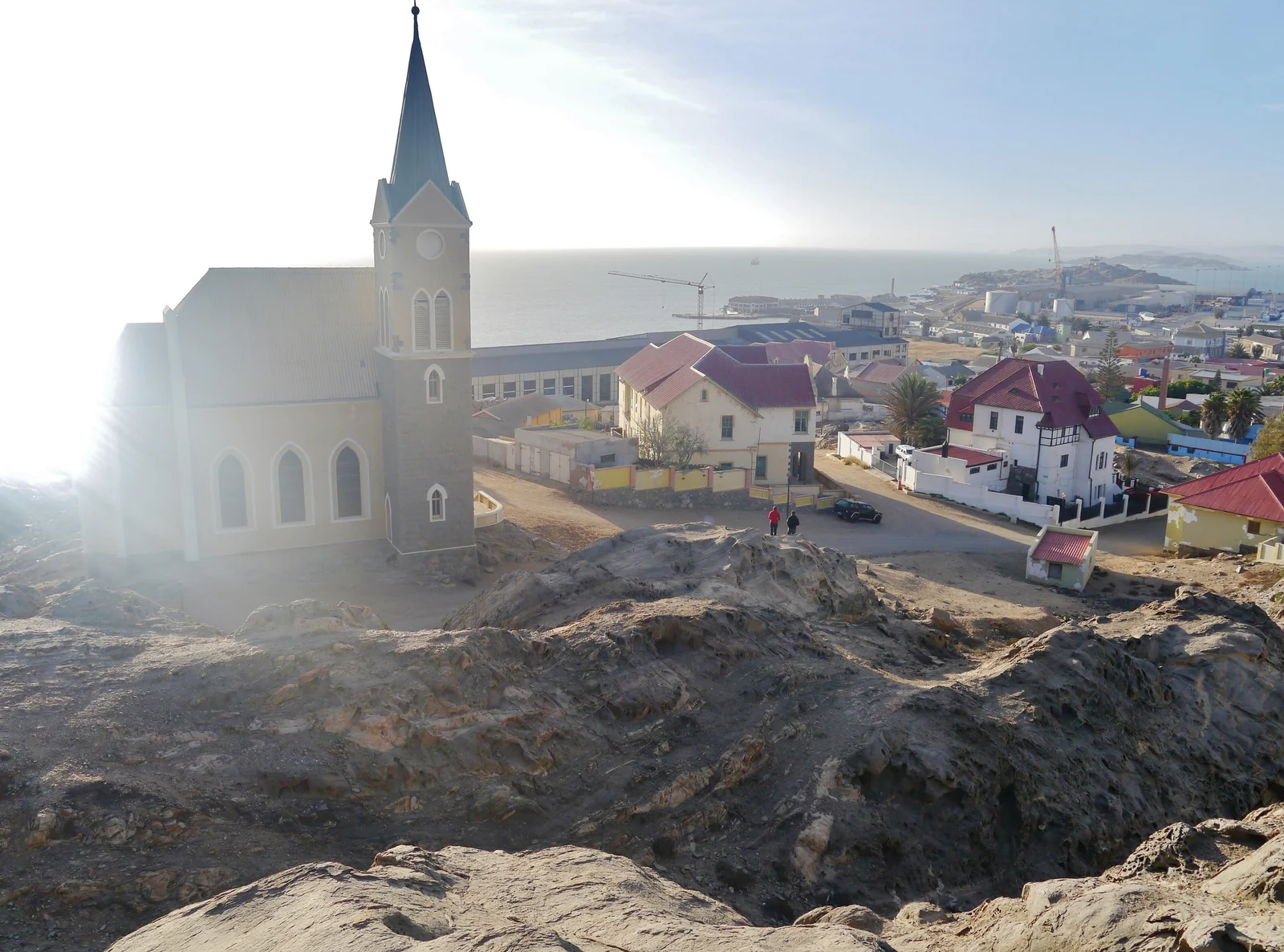
Give yourself a night or two in Lüderitz rather than racing in and out. The town was founded in the 1880s, and the cold South Atlantic current gives it wind, mist and a sharper climate than the desert just inland. It is compact, easy to walk, and full of colonial-era buildings, some in Art Nouveau style.
Lüderitz Town
The Felsenkirche (Rock Church), consecrated in 1912, sits on a hill above town and gives a good view over the harbor. The coast nearby is known for seals, penguins and flamingos. The town also has painful history: a German concentration camp operated on Shark Island between 1905 and 1907, where many Herero and Nama people died, and it deserves a respectful visit if you go.
Elizabeth Bay
Elizabeth Bay is a second, quieter ghost town farther south along the coast, deep inside the diamond area. You cannot simply drive there. Access is by organized tour only, run by operators with the right concession, and permits can take days to arrange, so book early. Tours generally start from Lüderitz and pass the Namdeb checkpoint at Kolmanskop on the way. It is a good add-on if you want a rawer, emptier picture of the coast.
Wind, Weather and the Best Time to Go
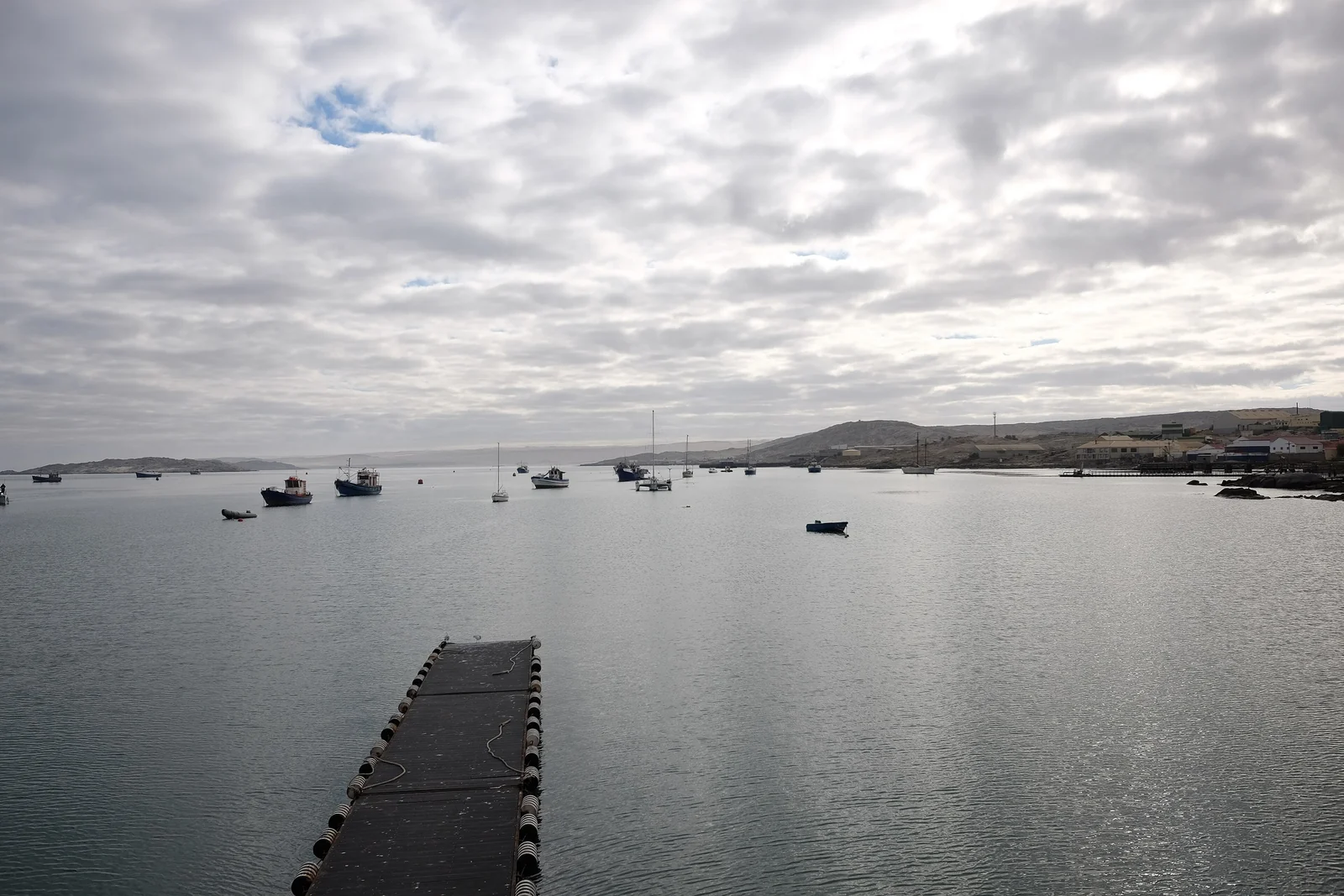
Wind is the defining feature of this coast. Lüderitz is known for strong winds and cool, often overcast weather, and sand blowing through Kolmanskop is simply part of the experience. The same wind that fills the houses will fill your camera bag if you are careless.
There is no perfect season. Rainfall is minimal all year, so the question is comfort and light. Clear mornings give the best pictures, and the middle of the day can be harsh in the town itself even when the coast is cool. Whatever the month, bring a wind-proof layer, sunglasses, a hat and sunscreen, and cover your phone and camera when the gusts pick up.
Visit early if you can. You will have softer light, fewer people in your frames and cooler air for walking inside the buildings.
Where to Stay and Practical Planning
Stay in Lüderitz itself. The town has a range of guesthouses, small hotels and self-catering places, usually clustered near the waterfront and the older center, and that is far more convenient than any overnight out on the road. Book ahead if your dates fall in a busy holiday period, because the town is small.
- Plan two nights if you can: one to arrive, one to do Kolmanskop and the town without rushing.
- Buy your Kolmanskop ticket or permit the day before if the gate may not be open when you arrive.
- Carry cash and a card, since small businesses can be inconsistent about payments.
- Fuel up in advance and carry water. Distances between services are long.
- Check current hours, fees and tour options with the operator or the visitor office in Lüderitz. The Namibia Tourism Board is a good starting point for general information.
- Wear closed shoes. You will be walking on sand and uneven floors.
If ghost towns are your thing, Kolmanskop sits comfortably beside other abandoned places. Chile’s Humberstone tells a similar boom-and-bust story in the Atacama, Japan’s Gunkanjima does it on an island, and in Britain you can wander Scotland’s abandoned cottages in a very different climate. For a wider survey, try our guide to abandoned villages in Spain.
Kolmanskop FAQ
Do I need a permit to visit Kolmanskop?
Yes. The town is inside the restricted diamond area, so you enter with a ticket that works as a permit. It covers the marked Kolmanskop site only. Buy it at the gate or through agents in Lüderitz, and check current rules locally.
Can I visit Kolmanskop without a tour?
Yes. A standard ticket lets you walk the streets and open buildings on your own during visiting hours. A guided tour adds history and context, so many visitors do the tour first and then explore alone.
How far is Kolmanskop from Lüderitz?
About 10 km (6 miles) inland, so it is a short drive from town. Most people go by rental car or as part of a tour. Lüderitz is the natural base for visiting.
When was Kolmanskop founded and why was it abandoned?
It was founded in 1908 after a railway worker, Zacharias Lewala, found a diamond. Deposits thinned from around the First World War, a richer find near the Orange River drew people south in 1928, and the town was abandoned in 1956.
Can I take photographs and use a drone at Kolmanskop?
Photography is a main reason people visit, and a dedicated photography permit exists for longer access. Drones are generally not allowed in the restricted area. Check conditions with the operator before you go.
What is Elizabeth Bay and can I visit it?
Elizabeth Bay is another diamond ghost town on the coast south of Lüderitz, inside the restricted area. You can only see it on an organized tour with the right concession, so arrange it in advance through an operator in Lüderitz.
How long do I need at Kolmanskop?
Plan for a couple of hours for a guided tour and a walk around. Photographers often want longer. Add time for the museum and for travel from Lüderitz, and keep the rest of the day for the town.