

Petra is a city carved into rose-colored sandstone cliffs in southern Jordan, built by the Nabataeans more than 2,000 years ago. Wadi Rum, about two hours to the south, is a desert valley of red sand and sheer rock towers where you can sleep in a Bedouin-style camp under a sky packed with stars. Together they are the reason most people fly to Jordan, and they pair beautifully on one trip.
Give Petra two days and Wadi Rum one night at the very least. Add the Dead Sea, Amman and the Roman ruins of Jerash and you have a natural 5–7 day loop. This guide covers what to see, how long to stay, the Jordan Pass, when to go, what to wear and a route that works. For more on the country, browse our Jordan travel guides.
Petra's History: From the Nabataeans to UNESCO
The Nabataeans were Arab traders who grew rich controlling caravan routes that carried incense, spices and other goods between Arabia, Egypt and the Mediterranean. Petra became their capital, and at its height, around the 1st century BC and the 1st century AD, it was a city of temples, tombs, markets and remarkably clever water channels that stored winter rain for the dry months.
Rome annexed the kingdom in AD 106. Trade routes shifted, earthquakes damaged the city, and over the following centuries Petra faded from European knowledge, although the local Bedouin always knew it was there. In 1812 the Swiss traveler Johann Ludwig Burckhardt, traveling in disguise as a Muslim scholar, talked his way into the valley and became the first European in modern times to describe it.
UNESCO inscribed Petra as a World Heritage Site in 1985, and only a fraction of the city has been excavated. If you have been to Machu Picchu, the story will sound familiar: a lost city that was never really lost to the people who lived nearby.
Walking Into Petra: The Siq, the Treasury and the Royal Tombs
Everyone enters from the visitor center in Wadi Musa. The main trail runs downhill to the city center, so the walk in feels easy and the walk out at the end of the day does not.
The Siq
After the Bab al-Siq area with its first tombs and block monuments, the path narrows into the Siq, a winding gorge roughly 1.2 kilometers long with walls that rise far above your head. Look for the carved water channels and the worn relief of a camel caravan along the walls.
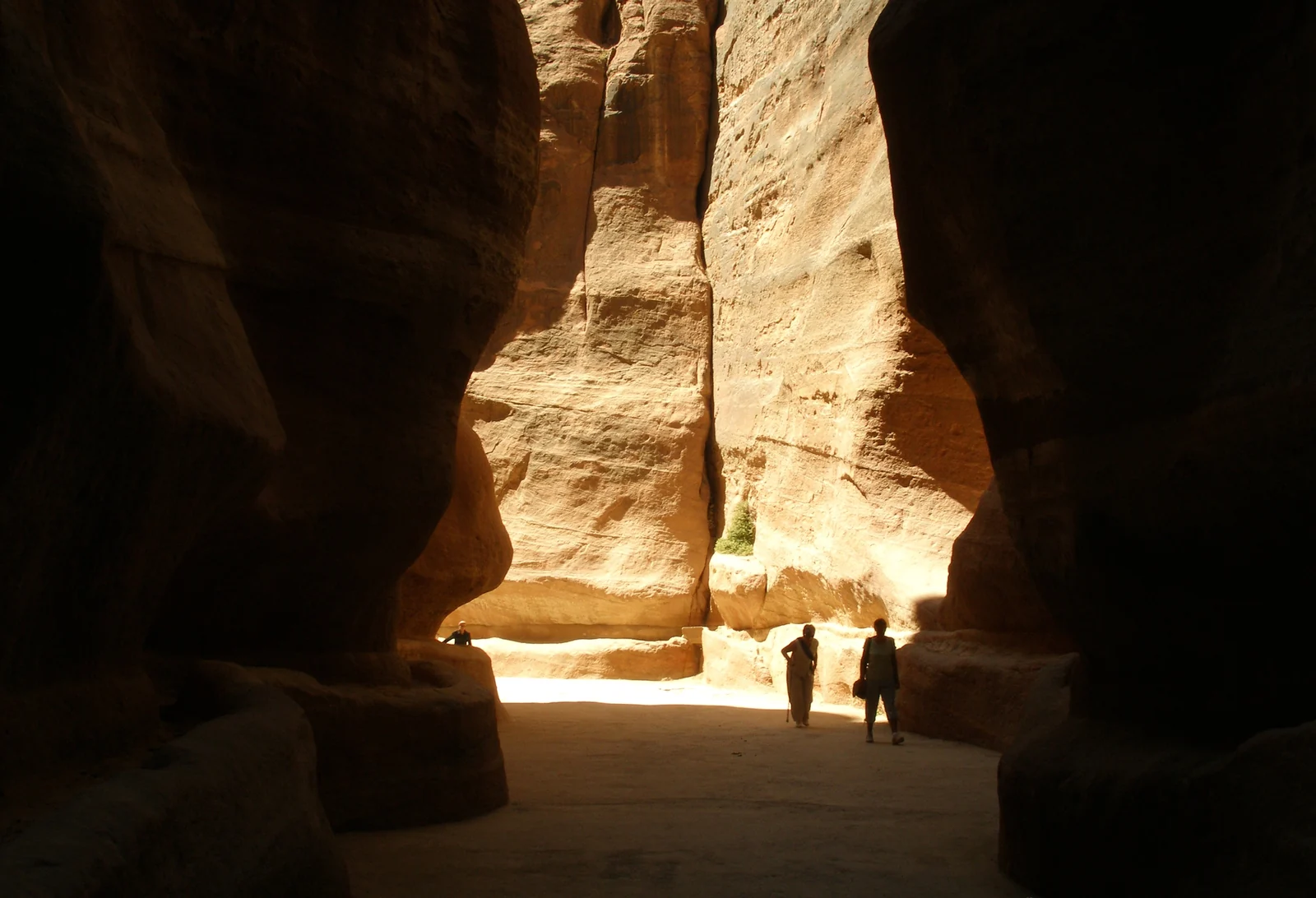
The Treasury (Al-Khazneh)
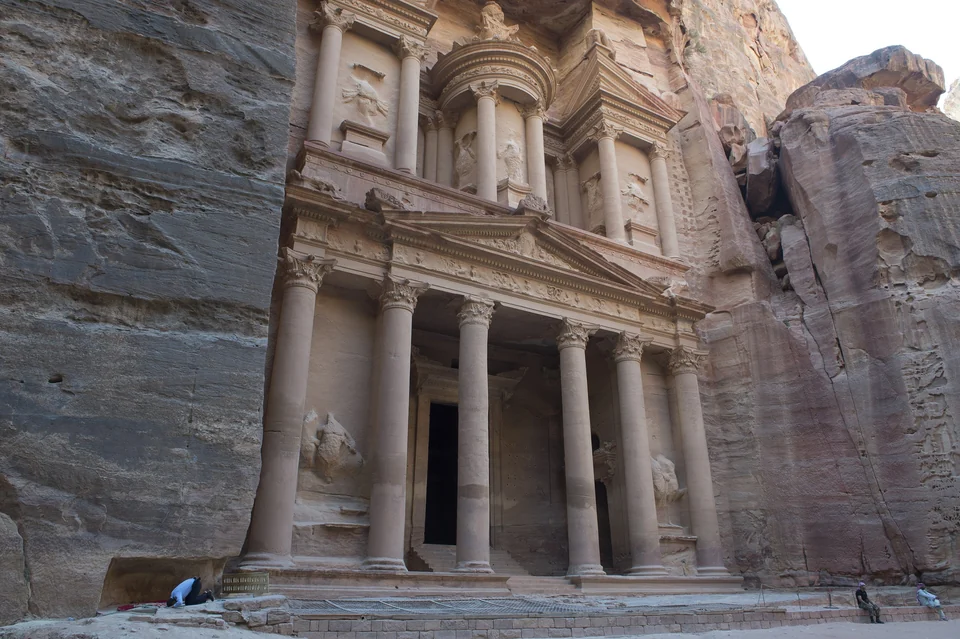
The Siq ends with a sliver of pink facade appearing through the gap, then the full Treasury. Despite the name, it was most likely a royal tomb, and the bullet marks on the urn at the top come from people who believed the legend that treasure was hidden inside. Come in the first hour after opening, when the square is quiet. The facade catches its best light from mid-morning.
Street of Facades and the Theater
Beyond the Treasury the valley widens. The Street of Facades is a row of tombs cut side by side into the cliff, with the stepped crow-step tops typical of Nabataean design. Just past it sits the theater, carved straight into the hillside and later enlarged under Roman rule.
The Royal Tombs
On the right, high on the face of Jebel al-Khubtha, stand the Royal Tombs: the Urn Tomb, the Silk Tomb with its striped rock, the Corinthian Tomb and the Palace Tomb. Climb the steps to the Urn Tomb terrace for a view back across the whole valley. Late afternoon light is best here.
Beyond the Main Trail: Climbs, Little Petra and Petra by Night
The Monastery (Ad Deir)
The Monastery is Petra's other headline monument, bigger than the Treasury and far less crowded. Reaching it means climbing a rock-cut stairway of roughly 800 steps from the basin, usually 45 minutes to an hour at a steady pace. Start in the morning or late afternoon, never at midday in summer, and carry water. Donkeys are offered on the way up; many visitors prefer to walk, both for safety on the steps and for the animals' sake.
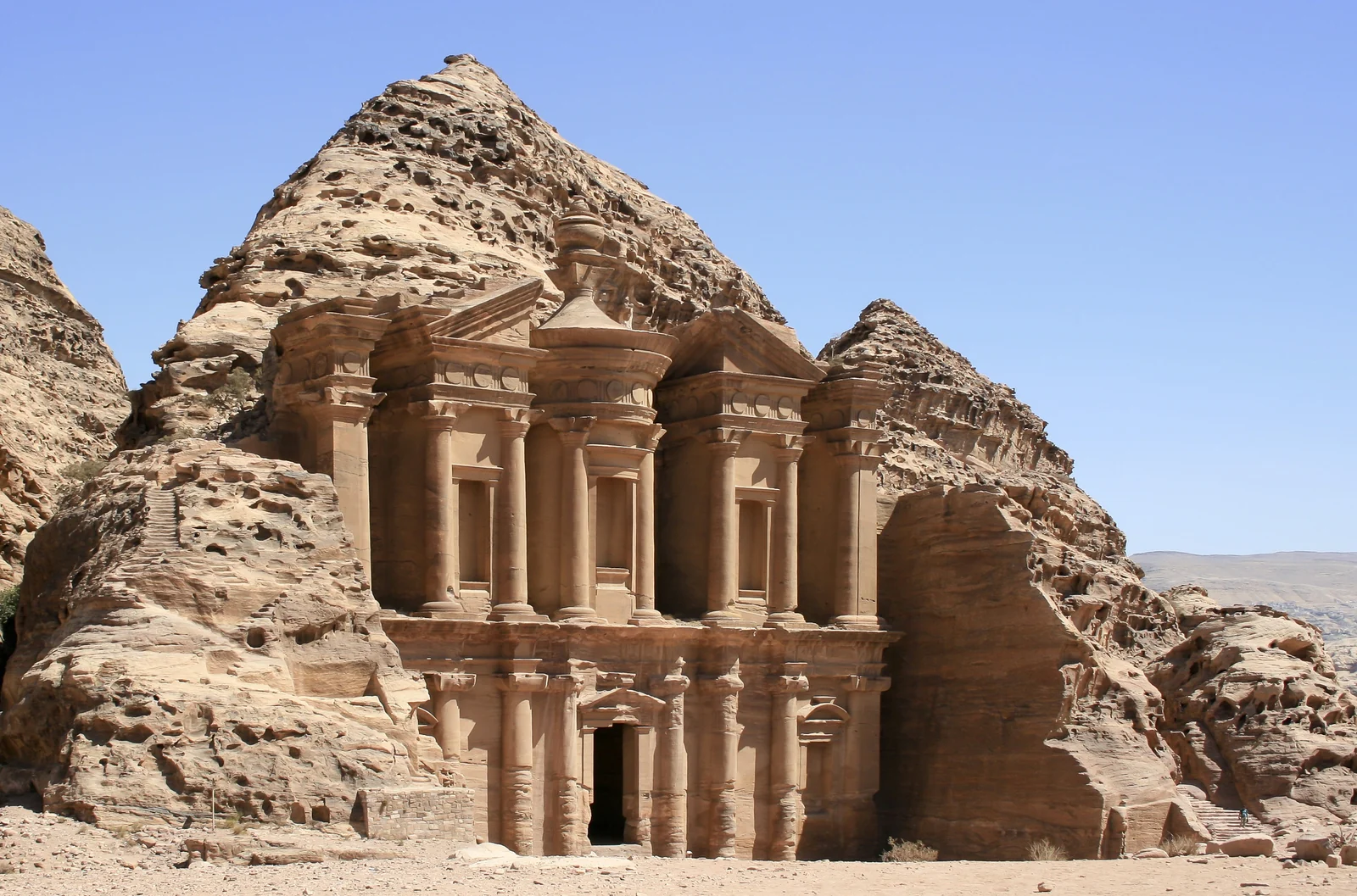
The High Place of Sacrifice
A steep stairway near the theater climbs Jebel al-Madhbah to a flattened summit with a Nabataean altar and the best panorama over the central city. The real treat is the descent on the far side through Wadi al-Farasa, past the Lion Fountain, the Garden Tomb and the Roman Soldier Tomb, which drops you back near Qasr al-Bint. It takes a few hours and feels much wilder than the main trail.
Little Petra (Siq al-Barid)
A short drive north of Wadi Musa, Little Petra is a miniature version of the city that probably served passing caravans. It has a small siq, carved halls and a rare fragment of painted ceiling inside one chamber. It takes about an hour, and pairing it with the nearby Neolithic village of Beidha makes a gentle half day after a hard day in the main site.
Petra by Night
On a few evenings a week, the Siq and the square in front of the Treasury are lit with candles in paper bags, and visitors sit on mats for music and stories. It is atmospheric, if busier than you might hope. It needs its own ticket, separate from day entry and from the Jordan Pass, and the schedule changes, so check the official Petra site before you plan around it.
How Many Days in Petra, and the Jordan Pass
One day in Petra is a sprint: the Siq, the Treasury, the Royal Tombs and the Monastery, then a long uphill walk out. Two days is the sweet spot, letting you split the Monastery and the High Place of Sacrifice across separate mornings. Three days suits hikers who want longer trails or a slower pace with Little Petra on the side.
Most visitors buy the Jordan Pass online before arrival. It bundles entry to more than 40 attractions, including Petra, Wadi Rum and Jerash, and waives the tourist visa fee for travelers who meet a minimum stay requirement. The Petra element comes in one-, two- and three-day versions; multi-day passes must be used on consecutive days. Prices and visa rules are set by the authorities and do change, so check the official site and your own nationality's entry rules before buying.
Wadi Rum: Desert Camps, Jeep Tours and Stargazing
Wadi Rum is a protected desert of sandstone and granite mountains, red dunes, narrow canyons and natural arches. UNESCO listed it in 2011 as a mixed World Heritage Site, for both its landscape and its thousands of rock carvings and inscriptions left over millennia. The local Zalabia Bedouin run most of the tours and camps from Rum Village.
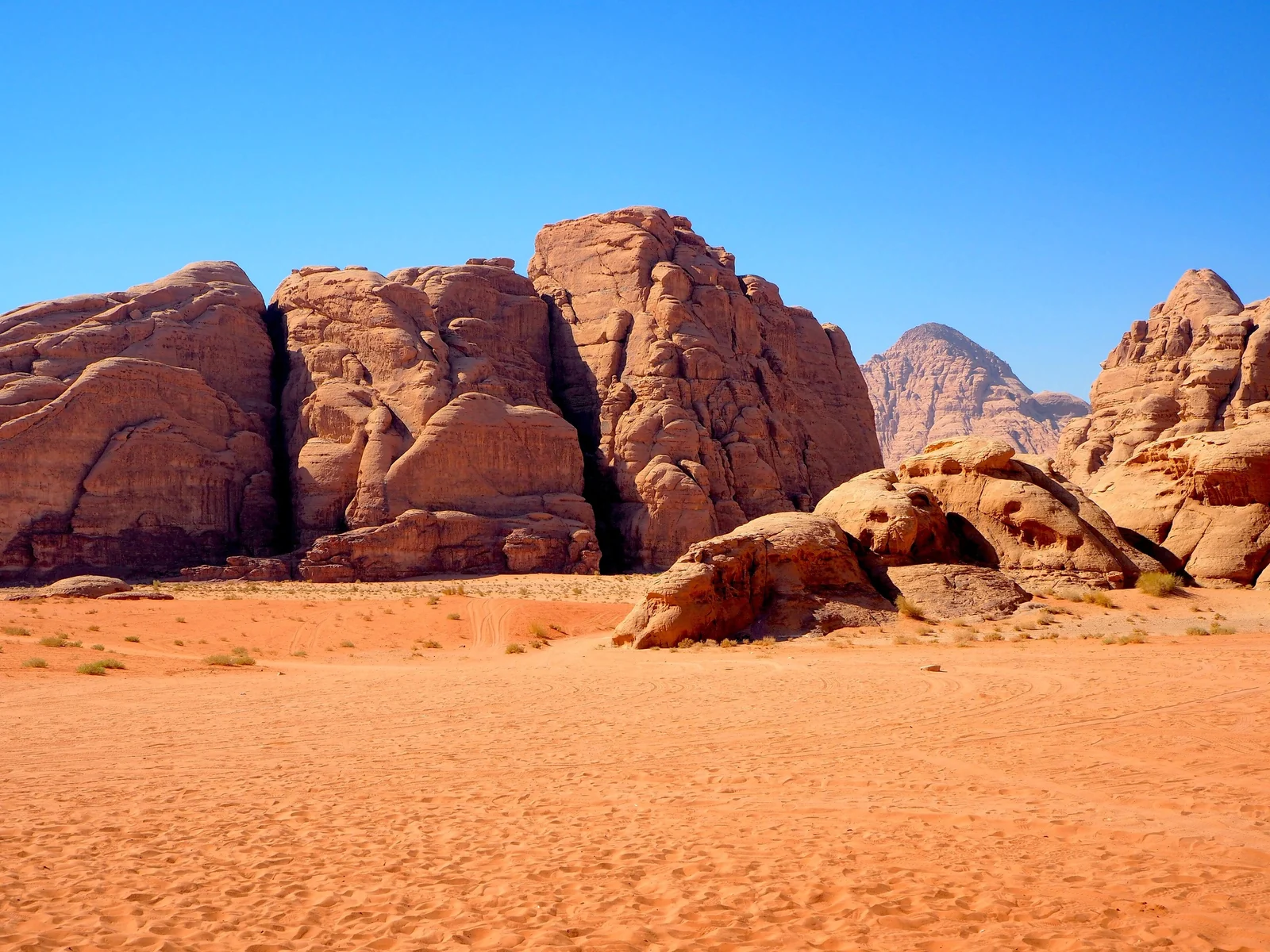
Lawrence of Arabia in Wadi Rum
T. E. Lawrence passed through Wadi Rum during the Arab Revolt of 1916–1918 and wrote about it in Seven Pillars of Wisdom. David Lean's 1962 film Lawrence of Arabia shot scenes here, and the desert has since stood in for Mars in several Hollywood productions. Tours visit a spring and a ruin that carry Lawrence's name, though the links are more legend than history.
Jeep Tours and Camps
The standard way in is a 4x4 pickup with benches in the back, driven by a Bedouin guide. Half-day tours cover the classic stops: the Khazali canyon with its inscriptions, red dunes you can climb, rock bridges such as Um Fruth and Burdah (viewed from below or climbed with a guide) and a sunset viewpoint. A full day goes deeper and quieter.
Camps range from simple goat-hair tents with shared bathrooms to glamping bubbles with private showers. Dinner is often zarb, meat and vegetables slow-cooked in an underground pit. Confirm whether transfers and the jeep tour are included, since camps quote prices in very different ways.
Stargazing in the Desert
Wadi Rum's dry air and dark skies make the Milky Way plain to see on clear nights. Plan your night close to the new moon if stars matter more than moonlit dunes. Walk away from the camp lights and bring a warm layer; desert nights get cold in winter. If dunes are what you love, our guide to the Sahara Desert makes a good next read.
The Dead Sea, Amman and Jerash
The Dead Sea
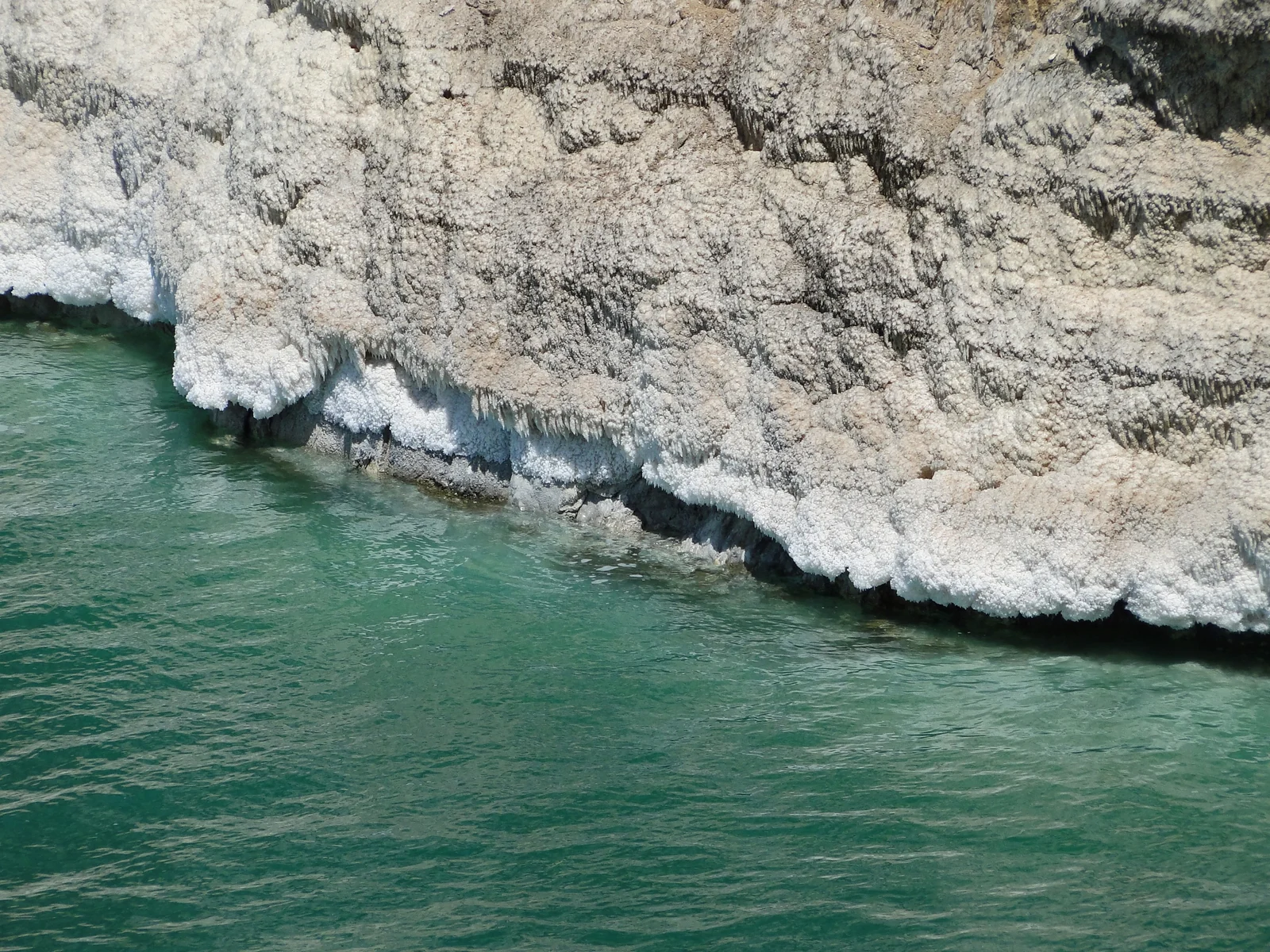
The shore of the Dead Sea is the lowest point on land, roughly 430 meters below sea level, and the water is so salty that you float without trying. Most access is through resort beaches or public beach facilities on the Jordanian shore, about an hour from Amman. Don't shave the day before, keep the water out of your eyes and rinse off at the showers afterward.
Amman
Jordan's capital spreads across a series of hills. Give it half a day: the Citadel, with the remains of the Temple of Hercules and an Umayyad palace, the Roman theater below it, and the downtown souks for falafel and kunafa.
Jerash
About an hour north of Amman, Jerash (ancient Gerasa) is one of the best-preserved Roman provincial cities anywhere. Walk through Hadrian's Arch, across the oval plaza and down the long colonnaded street to the temples and theaters. Allow three hours, and go early to beat the heat and the coach tours.
A 5–7 Day Jordan Itinerary Along the King's Highway
Jordan has two main north–south roads. The Desert Highway is fast and dull. The King's Highway is slow, winding and full of stops, so the best plan is to drive it southbound and return on the Desert Highway or fly out of Aqaba.
| Day | Route | Highlights | Overnight |
|---|---|---|---|
| 1 | Arrive in Amman; Jerash | Jerash ruins, Amman Citadel at sunset | Amman |
| 2 | King's Highway south | Madaba mosaics, Mount Nebo, Wadi Mujib viewpoint, Karak Castle, Shobak | Wadi Musa (Petra) |
| 3 | Petra | Siq, Treasury, Royal Tombs, Monastery | Wadi Musa |
| 4 | Petra and Little Petra | High Place of Sacrifice, Little Petra | Wadi Musa |
| 5 | Wadi Rum | Jeep tour, sunset, stargazing | Desert camp |
| 6 | Desert Highway north (or Aqaba) | Dead Sea float and spa | Dead Sea |
| 7 | Dead Sea to Amman | Downtown souks, departure | Amman or flight home |
With only five days, drop the second Petra day and the final Amman day, and fly in and out of Amman with a straight drive from Wadi Rum to the Dead Sea. Day 2 is long; leave early so you reach Petra before dark. Planning a wider trip through the region? Our Dubai travel guide covers another easy add-on by air.
Best Time to Visit, Dress and Etiquette
- March to May: the best season, with mild days for hiking and wildflowers in the desert after winter rain. Also the busiest.
- September to November: almost as good, with warm days and comfortable desert nights.
- June to August: very hot in Petra and Wadi Rum, and unbearable at the Dead Sea. Hike at dawn only.
- December to February: quiet and clear but cold, with occasional rain, flash-flood closures and even snow on the high plateau around Petra.
Jordan is a conservative, mostly Muslim country, though used to visitors. Cover shoulders and knees in towns and villages; loose, light clothing is also the most comfortable choice on the trails. Swimwear belongs at the Dead Sea and resort pools only. During Ramadan, avoid eating or drinking openly in public during daylight. Ask before photographing people, and accept tea when it is offered; it is how conversations start. Pack shoes with grip, a hat and plenty of water.
Getting to Jordan and Getting Around
Most international flights land at Queen Alia International Airport, south of Amman. The road to Petra via the Desert Highway takes around three hours. In the far south, King Hussein International Airport in Aqaba is about an hour from Wadi Rum, and a convenient way to arrive at one end of the country and leave from the other.
Renting a car is the easiest way to follow the King's Highway; roads are generally good, but watch for speed bumps and slow trucks. JETT buses link Amman with Petra and Aqaba, and private drivers are widely available for a fixed daily rate. In Wadi Rum you leave your car at the visitor center or in Rum Village and switch to your camp's jeep. The Visit Jordan tourism board site has transport and entry information.
Petra and Wadi Rum FAQ
How many days do you need in Petra?
Two days is ideal. The first covers the Siq, the Treasury, the Royal Tombs and the Monastery climb; the second covers the High Place of Sacrifice and Little Petra. One long day is possible if you start at opening time, but you will be rushing.
Is the Jordan Pass worth it?
For most visitors who see Petra, yes. It combines entry to Petra, Wadi Rum, Jerash and dozens of other sites, and it waives the tourist visa fee if you meet the minimum stay. Check current rules and prices on the official Jordan Pass site before you buy.
How hard is the climb to the Monastery in Petra?
It is a steady climb of roughly 800 rock-cut steps that takes most people 45 minutes to an hour. It is not technical, but it is tiring in the heat. Go early or late in the day, wear shoes with grip and carry plenty of water.
Should you stay overnight in Wadi Rum?
Yes. A day trip shows you the scenery, but the desert is at its best at sunset, under the stars and at sunrise. One night in a camp, combined with a half- or full-day jeep tour, is enough for most travelers.
What is the best time to visit Petra and Wadi Rum?
Spring (March to May) and autumn (September to November) bring comfortable hiking temperatures. Summer is very hot, and winter can be cold, wet and occasionally snowy around Petra, with chilly nights in the desert camps.
Was Lawrence of Arabia filmed in Wadi Rum?
Yes, partly. David Lean's 1962 film shot scenes in Wadi Rum, where T. E. Lawrence spent time during the Arab Revolt. Several spots on jeep tours carry his name, though their real links to him are loose.
What should women wear in Jordan?
Loose clothing that covers shoulders and knees works everywhere and is cooler in the sun. Headscarves are not required for visitors outside mosques. Swimwear is fine at Dead Sea resorts and hotel pools, but not in towns.