A Shirakawa-go day trip is one of the easiest ways to see rural Japan without renting a car. The village of Ogimachi, in the mountains of northern Gifu Prefecture, is packed with steep-roofed thatched farmhouses called gassho-zukuri, and a highway bus gets you there in roughly 50 minutes from Takayama or 75 minutes from Kanazawa. Together with Ainokura and Suganuma in neighboring Gokayama, it has been a UNESCO World Heritage Site since 1995.
Is it worth the trip? Yes, if you go early or late and treat it as a half-day village walk, not a checklist. The roofs are the real subject, and so is the fact that people still live under them. This guide covers what to see, how the buildings work, how to get there from Takayama, Kanazawa and elsewhere, which base is better, and how to dodge the worst of the crowds. If you are still choosing where to go in the country, start with our places to go in Japan overview.
Why Shirakawa-go Is a World Heritage Site
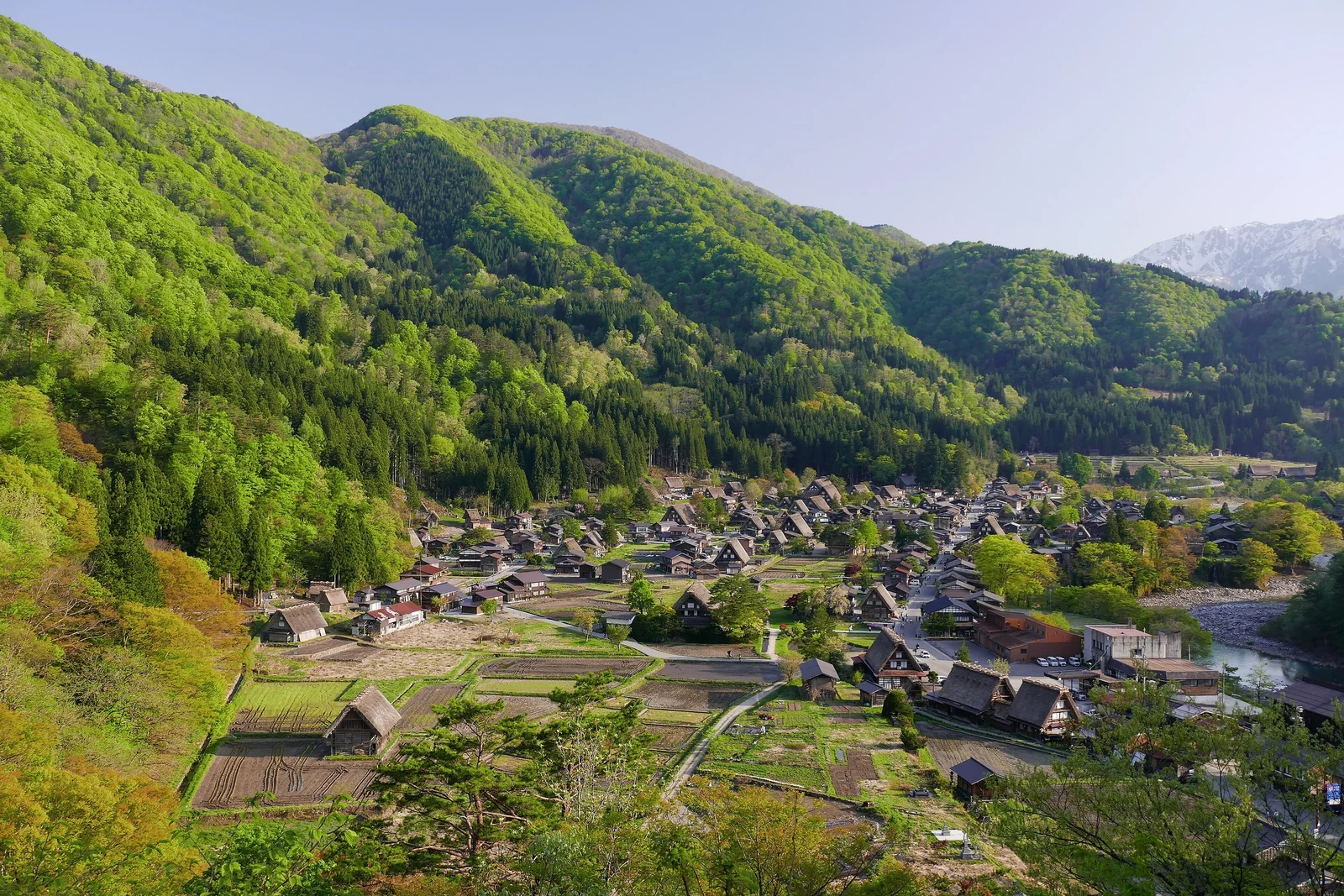
The 1995 listing covers three settlements: Ogimachi in Shirakawa-go (Gifu Prefecture), and Ainokura and Suganuma in Gokayama (Toyama Prefecture). UNESCO recognized them under criteria (iv) and (v), as outstanding examples of a traditional human settlement shaped by its environment. Ogimachi is the biggest and by far the busiest of the three, with dozens of gassho-style farmhouses among rice fields and a river along the edge of the valley. Details are on the UNESCO World Heritage Centre page.
The environment is the point. This is one of the snowiest inhabited places in Japan, and the architecture is a direct answer to that. The word gassho means hands pressed together in prayer, which is what the roof line resembles from the gable end.
How the Gassho-zukuri Roofs Are Built and Rethatched
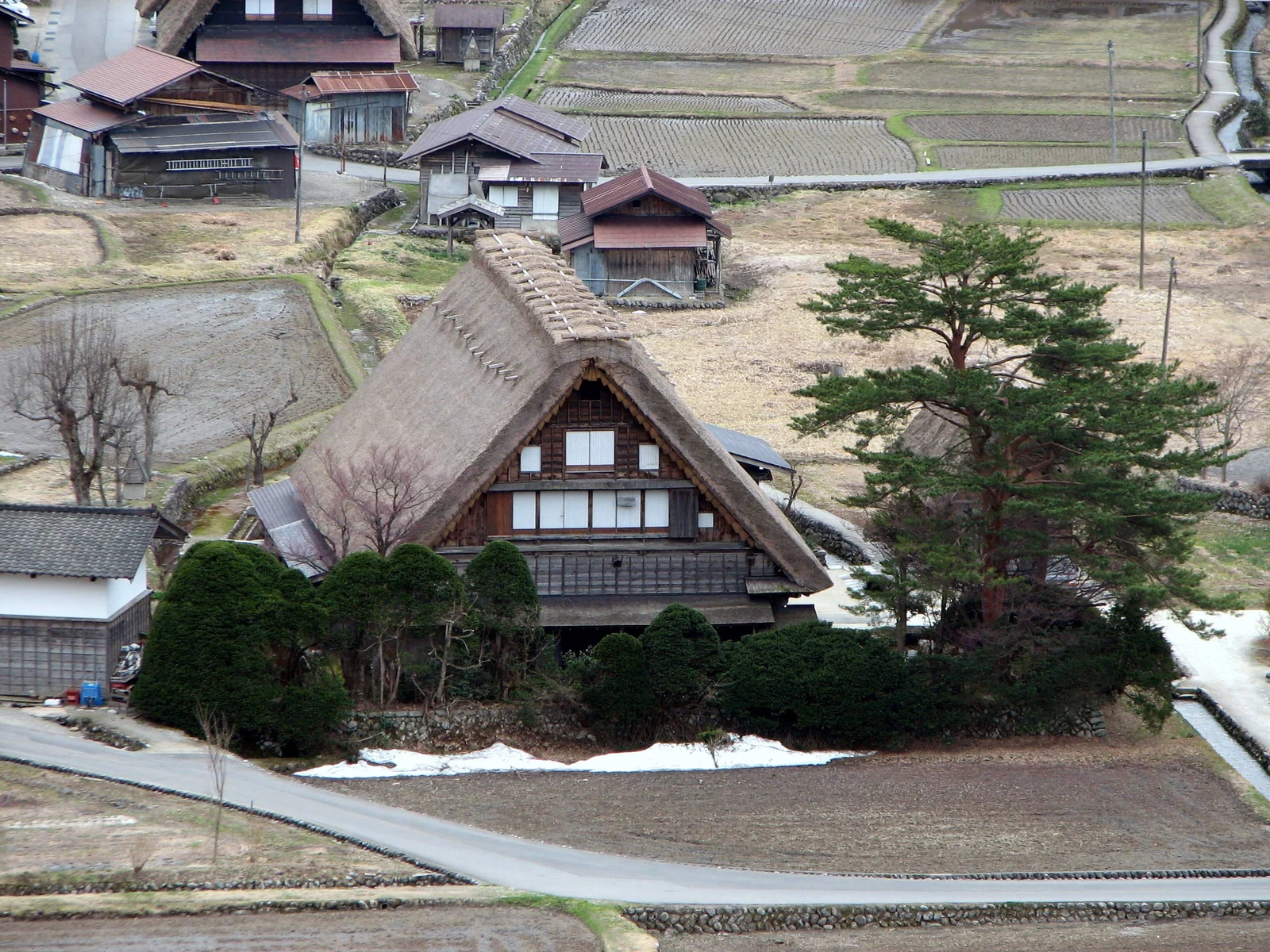
A gassho-zukuri roof is very steep, so heavy snow slides off instead of piling up and crushing the frame. It is thatched thickly with reed-like grass, and the timber frame beneath is traditionally lashed together with rope rather than nailed. That gives the structure some give under wind and snow load. It is clever carpentry, and worth standing inside one to see the frame from below.
The huge roofs also created usable space. The upper floors of many farmhouses were traditionally used to raise silkworms, which is why the attics are so tall and airy. The ground floor held the family and an open hearth, whose smoke, over the years, helps preserve the thatch.
Rethatching is a community job
A roof lasts roughly 30 to 40 years before it needs rethatching. The work is done through a cooperative labor system known as yui, in which neighbors and relatives pitch in; a full job can take some 200 to 300 people a day, after years of preparation. When you see a section of roof that looks paler and fresher than the rest, you are looking at recent community work. Keep that in mind when you decide how close to walk to a private house.
What to See in Ogimachi
Ogimachi is small and flat enough to cover on foot. Most visitors arrive at the bus terminal near the Deai Bridge, cross the river, and are in the village lanes within minutes. Allow three to four hours for a proper visit, including the viewpoint and one or two interiors.
Shiroyama viewpoint
The postcard shot of the whole valley is taken from Shiroyama, a hill on the site of a former castle above the village. You can walk up a steep path in roughly 15 to 20 minutes or ride a shuttle from near Wada House, which charges a small fare. The viewpoint closes in heavy snow, so check before you commit. Go early or late; midday is when tour groups crowd the railings.
Wada House
Wada House is the largest gassho-zukuri farmhouse in the village, more than 300 years old, and designated a National Important Cultural Property. Part of it is still lived in, and you can go inside the open sections to climb into the attic levels and see how the roof is framed. It is the best single interior in Ogimachi and worth the modest admission.
Gassho-zukuri Minkaen open-air museum
The Minkaen is an open-air museum of farmhouses and outbuildings relocated to one hillside site at the edge of the village. It is quieter than the main street, you can wander through several buildings at your own pace, and it gives a better sense of how a working farmstead fitted together, from storehouses to hearth rooms. Opening hours and entry fees change, so check the Shirakawa-go Tourist Association before you go.
The village lanes
Walk the back lanes between the rice fields and the river, not only the main street. Many farmhouses now run as guesthouses, small restaurants, shops or tiny museums, so you can combine a walk with a bowl of noodles or a look inside. Ask what is on the menu, since daily offerings vary.
Snow, Seasons and the Winter Light-Up
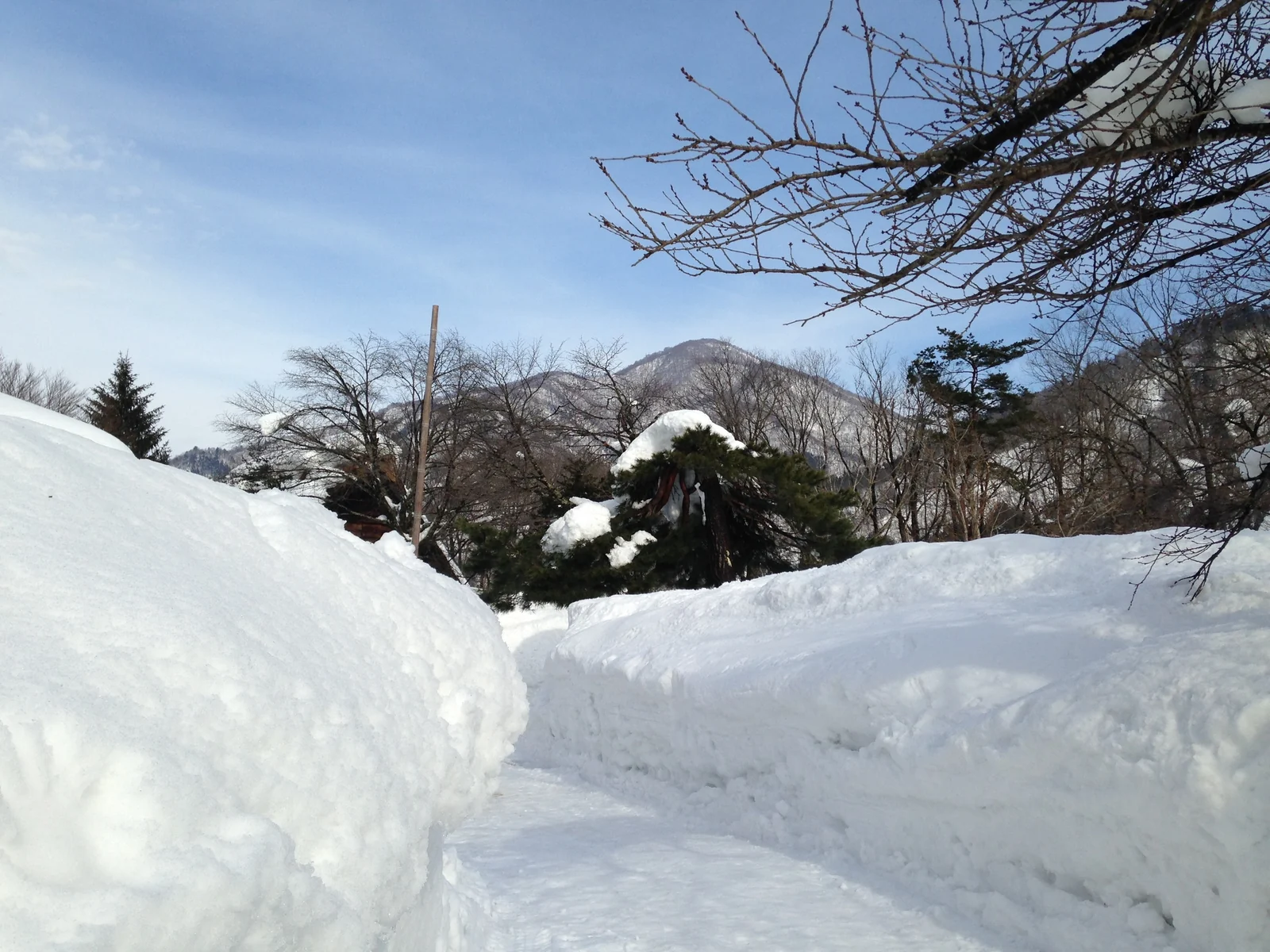
Shirakawa-go changes more across the year than most day-trip villages. Spring brings flooded rice paddies and meltwater, summer is lush and humid, and autumn adds color to the hills. Winter is the iconic season: roofs buried in snow, smoke from chimneys, quiet lanes. It is also the hardest to travel in, so build slack into your schedule, wear waterproof boots and check bus operations on the day. For another great snow region, our Hokkaido guide covers the northern island.
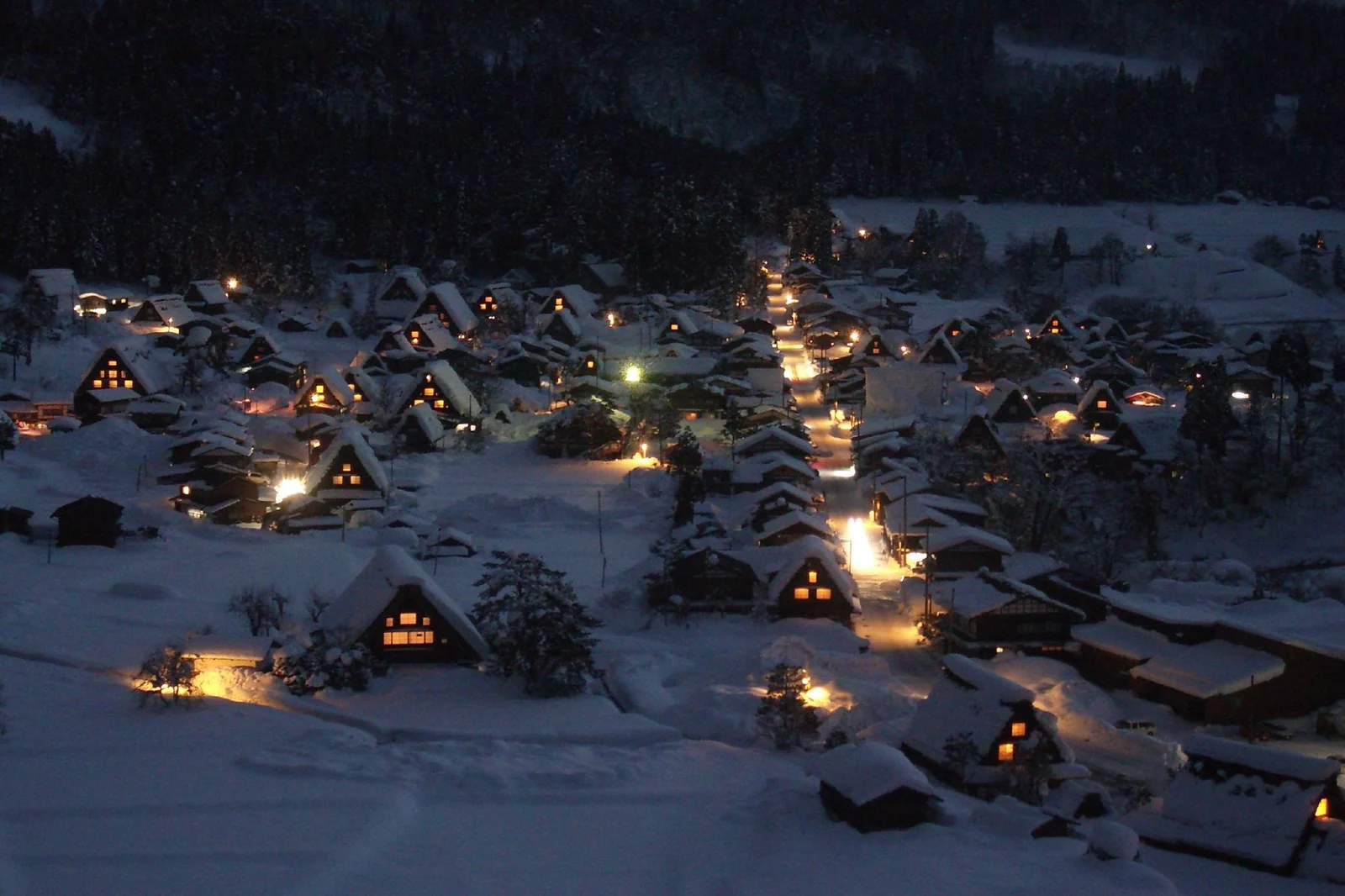
On a handful of winter evenings, floodlights illuminate a selection of farmhouses against the snow, and the village becomes one of the most photographed night scenes in the country. Those evenings are few and controlled; access, parking and overnight stays are managed through advance reservations or lotteries. Do not turn up expecting to walk in. The tourist association's official site posts the rules, so either plan well ahead or skip the light-up and enjoy an ordinary snowy day.
How to Get to Shirakawa-go
There is no passenger railway in Shirakawa, so you arrive by road. The bus terminal near Ogimachi is served by highway buses from Takayama, Kanazawa, Toyama, Takaoka, Nagoya and Gero. A tunnel shortened the road from Takayama, which is why that run takes only about 50 minutes.
- From Takayama: about 50 minutes by highway bus. The shortest and easiest approach.
- From Kanazawa: about 75 minutes by highway bus, usually with reserved seats.
- From Nagoya: a longer bus ride of a few hours, often combined with an overnight in Takayama.
- From Toyama or Takaoka: buses link the Hokuriku side with Shirakawa-go; check the timetable for frequency and travel time.
Reservations matter. Many highway services on these routes require a seat reservation, particularly in peak seasons, and some departures are reserved-only while others take walk-ups. Book through the bus operator, and reserve the return leg too, since the last buses leave the village in the early evening. Timetables and fares change, so confirm them with the operator rather than relying on any guide, including this one.
Driving is possible, but village parking is restricted and winter roads can be demanding. For most travelers the bus is simpler. If you are stringing together a longer route, the Tokyo or Osaka comparison and our Kyoto guide help place this detour.
Takayama or Kanazawa as Your Base
Both cities work. Takayama is closer and keeps your day flexible; Kanazawa gives you a bigger city to come home to. Here is how they compare.
| Takayama | Kanazawa | |
|---|---|---|
| Bus to Shirakawa-go | About 50 minutes | About 75 minutes |
| Reservations | Many departures reserved; some open | Usually reserved seats, book ahead |
| Best for | Early start, long village day, old town evening | Garden, museums and food city, village as a half-day |
| Evening | Old town lanes and quiet streets after dark | Wider choice of restaurants and sights |
| Combine with | Takayama old town | Kenroku-en and the castle area |
| Main downside | Smaller city, fewer late options | Less time in the village |
My pick: Takayama if Shirakawa-go is the main event, Kanazawa if it is a side trip from a city stay. You can also use the bus as a transfer, going Takayama to Shirakawa-go to Kanazawa (or the reverse) in a single day. That uses the day well and avoids backtracking, though you will have to sort out luggage at the terminal or send it ahead.
Gokayama, the Quieter Alternative
Gokayama is the Toyama Prefecture half of the World Heritage listing. Ainokura and Suganuma are far smaller than Ogimachi, with only a few dozen households between them, and Suganuma keeps just nine gassho-style houses. Fewer tour buses, more silence, less of a commercial street.
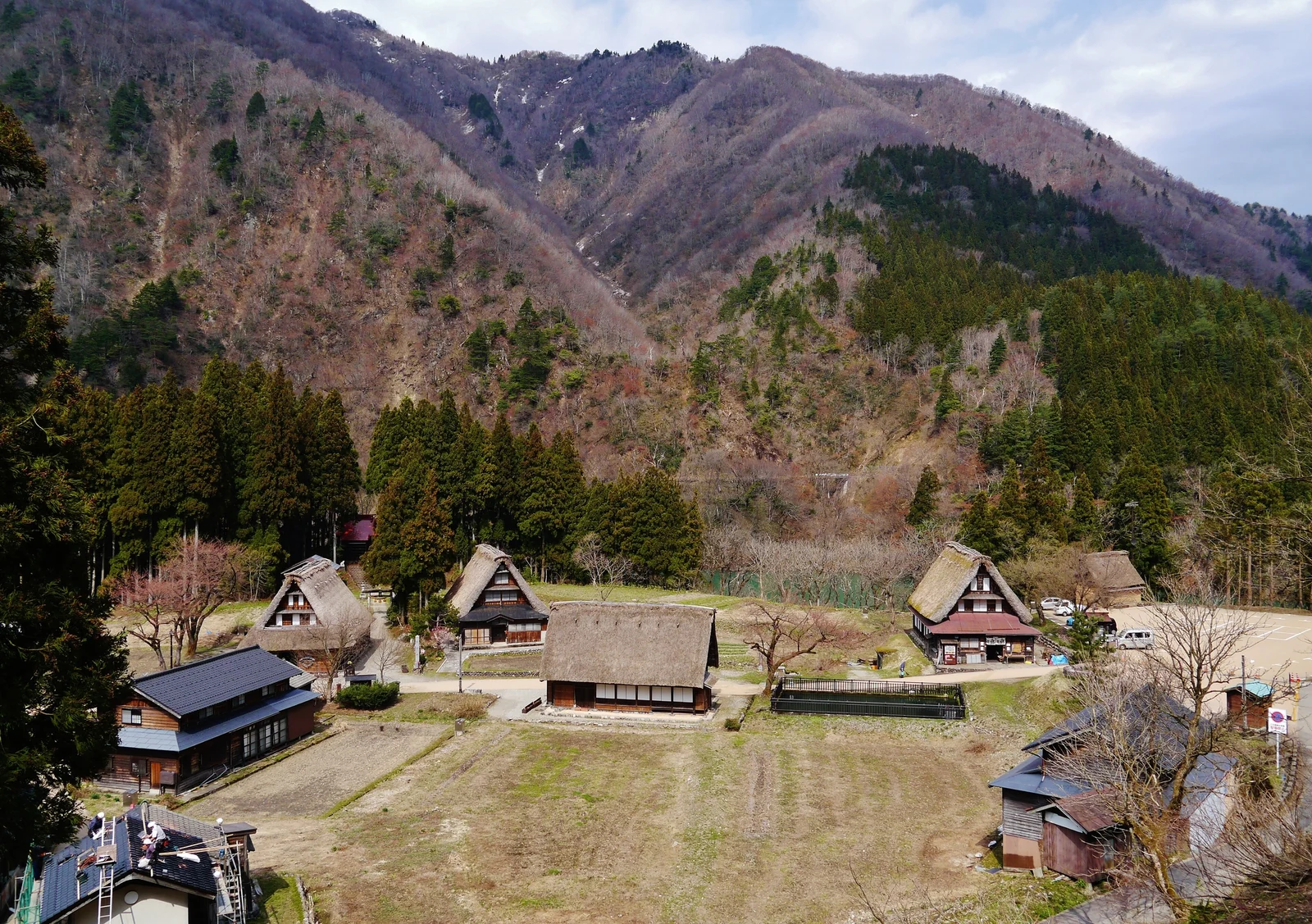
The catch is access. Local buses on the Gokayama side are less frequent than the Shirakawa-go highway services, so a day there needs careful timetable planning, or a stop on the way between Shirakawa-go and Kanazawa or Takaoka. Some travelers choose Gokayama instead of Ogimachi to escape the crowds; others do both. If you have time for only one and want the classic view and the most interiors to enter, choose Ogimachi.
Crowds and Respectful Behavior in a Living Village
Ogimachi has only a few hundred residents. Tourism is the main livelihood for many of them, but the lanes are also where they drive to work, school and the shops.
To beat the crowds, arrive on the first buses or take a late-afternoon service and stay for the evening light, and avoid national holidays and weekend peaks when you can. Midday is the busiest window. A weekday visit in a shoulder season is the calmest option.
- Stay on public paths and respect signs marking private property, gardens and fields.
- Do not enter a house or yard that is not open to visitors, and do not peer into windows.
- Keep drones on the ground unless local rules explicitly allow them.
- No smoking or open flames near thatch, and follow any fire-safety rules posted at houses.
- Keep voices down, take rubbish with you, and mind tripods in narrow lanes.
- Ask before photographing residents; farmhouses open as shops or museums are fine.
One-Day Plan: Takayama Old Town and Shirakawa-go
This plan assumes you are staying in Takayama and take a mid-morning bus. Confirm departures first, because timetables vary.
- Early morning: walk the old town of Takayama before the day crowds arrive. The preserved merchant streets are at their best with few people around.
- Mid-morning: board the highway bus to Shirakawa-go, about 50 minutes, with your return seat already reserved.
- Late morning: cross to the village, visit Wada House, then eat lunch in a farmhouse restaurant before the rush peaks.
- Afternoon: walk up to Shiroyama or take the shuttle, then spend time at the Minkaen and the back lanes.
- Late afternoon: catch the return bus to Takayama, leaving a buffer in case of snow delays, and finish with dinner in town.
From Kanazawa the schedule is tighter, so skip the Minkaen or Shiroyama if bus times are fixed. If you are heading on to the big cities later, our Tokyo guide and Osaka guide pick up the trail.
Shirakawa-go FAQ
Is Shirakawa-go worth a day trip?
Yes, if you like architecture and rural landscapes. Plan three to four hours in the village, go early or late to avoid the crowds, and see at least one farmhouse interior. If you only want a quick photo, a half-day is enough.
How long is the bus from Takayama and from Kanazawa?
About 50 minutes from Takayama and about 75 minutes from Kanazawa by highway bus. Services from Nagoya, Toyama and Takaoka also exist. Check current timetables and reservation rules with the operator before you plan around them.
Do I need to book the bus in advance?
Often, yes. Many highway services on these routes require a seat reservation, and some departures are reserved-only. Book the outbound and return legs ahead, especially in busy periods, and confirm details with the operator.
Is Takayama or Kanazawa the better base?
Takayama is closer, gives you more village time and pairs naturally with its old town. Kanazawa is a bigger city with more to do in the evening. Choose Takayama if Shirakawa-go is the priority.
Can I visit Shirakawa-go in winter?
Yes, and the snow-covered roofs are the classic image. Expect cold, slippery lanes, possible bus delays and a closed viewpoint in heavy snow. Special evening light-ups are limited and run on reservations, so plan far ahead.
What is the difference between Shirakawa-go and Gokayama?
Both are part of the same UNESCO site. Shirakawa-go (Ogimachi) is larger, easier to reach and more crowded. Gokayama (Ainokura and Suganuma) is smaller and quieter, but transport is less frequent.
Can I go inside the farmhouses?
Some are open as museums, shops, guesthouses or restaurants, including Wada House and the Minkaen. Most are private homes, so stay on public paths and do not enter anything that is not marked open.