The best abandoned places in Japan that you can visit legally are former mines, military forts and island ruins that are open to the public, plus a handful of ghost-town landscapes you can see from public roads. Think Sado's gold-mine ruins in Niigata, the Meiji-era forts of Tomogashima in Wakayama, the power-plant shell on Okunoshima in Hiroshima Prefecture, the fenced apartment blocks of Matsuo Mine in Iwate and the depopulated coal town of Yubari in Hokkaido.
This guide covers the culture behind it, the rules that keep you out of trouble and how to reach each site. Gunkanjima, the most famous of them all, has its own guide: see our Gunkanjima (Hashima Island) guide. For the wider country, start with our Japan travel guides.
What Haikyo Means and Why Japan Has So Many Ruins
Haikyo (廃墟) simply means ruins. In travel and photography circles it refers to a subculture of people who seek out abandoned factories, mines, schools, hotels and villages. Japan has produced a lot of material for it, because the country industrialized fast, concentrated its people in a few big cities and then watched whole regions lose their reason to exist.
Three forces explain most of what you will see. Energy and mining towns collapsed when coal and sulfur gave way to oil and imports. Military sites were left behind after 1945. And rural depopulation, driven by an aging society and a low birth rate, keeps emptying villages and individual houses.
The practical point for a visitor: most haikyo are private property, many are structurally unsafe, and the only sensible way to see them is at sites that are open, fenced for viewing or run as tours.
Akiya: The Quiet Version of Abandonment
Akiya (空き家) means vacant house, and it is the everyday side of Japan's abandonment story. A national housing survey by the country's statistics bureau counted about 9 million vacant homes, roughly one in seven, and the number has grown over several decades. The biggest reasons are an aging population, inherited houses that nobody lives in and rural areas that keep losing residents.
As a traveler you will see akiya in small towns without looking for them: shuttered storefronts, overgrown gardens, a farmhouse with the shutters closed. They are not attractions. They belong to families, and some are being renovated by new residents and local governments under revival schemes. Photograph the streetscape, not the house.
Trespass, Safety and the Rules You Should Respect
Entering a building or fenced property without permission can be a criminal offense in Japan, even if the door is broken and the place looks forgotten. Owners, local governments and former mining companies still hold these sites, and some are monitored. A visitor who treats a ruin like a free-for-all can end up answering police questions.
Safety is the other reason to stay out. Collapsed floors, asbestos, rusting stairways, unmarked shafts, wasps and wild boar are all normal hazards. Volcanic and former sulfur sites add gas and acidic water to the list. None of the places below require you to go inside a closed building.
- Stay on marked paths and respect every fence, rope and "no entry" sign. At several sites a sign is the legal boundary.
- Choose guided tours and official islands where they exist. Guides know which areas are cleared and which are not.
- Skip drones unless you have checked the local rules and permissions in advance.
- Do not take souvenirs: no bricks, bottles or fittings. Many sites are protected heritage.
- Tell someone your plan if you go to a mountain or island site, and check that the last boat or bus leaves after you plan to finish.
A Place to Skip: Nichitsu
Nichitsu in Chichibu, Saitama, is a former mining settlement that appears in nearly every haikyo list online. There is no official visitor program for it that I could find, and the accounts that exist describe restricted areas and risky approaches. That is a signal to stay away. If a site has no tour, no ticket office and no tourism page, assume it is not open to you.
A better rule: if you cannot find the site on a prefectural or city tourism page, on the JNTO website or in a tour operator's listing, treat it as private.
Places at a Glance
| Place | Region | What happened | How you can visit |
|---|---|---|---|
| Gunkanjima (Hashima) | Nagasaki | Coal-mining island abandoned in 1974 | Licensed boat tours with landing; see our guide |
| Sado gold mine area | Niigata | Gold and silver mining until 1989, UNESCO listing in 2024 | Open mine tours, guided heritage tour at Kitazawa |
| Matsuo Mine | Iwate | Sulfur mining town from 1914, closed in the 1960s | Apartment ruins seen from outside the fence, municipal museum |
| Yubari | Hokkaido | Coal city that shrank after the last mine closed in 1990 | Living town, no ruins to enter |
| Okunoshima | Hiroshima | Wartime chemical weapons site | Public ferry, museum, ruins viewed from paths |
| Sarushima | Kanagawa | 19th-century coastal fort, later military use | Ferry from Yokosuka, walking route through the ruins |
| Tomogashima | Wakayama | Meiji-era coastal batteries | Ferry from Kada, hiking on marked trails |
| Tashirojima and Aoshima | Miyagi and Ehime | Shrinking island communities | Ferries to inhabited islands |
Sado Island: The Gold Mine and the Ruins of Kitazawa
Sado was one of Japan's great gold and silver producers for roughly four centuries, and mining ended in 1989. The island's mines were inscribed on the UNESCO World Heritage List in 2024, which means the ruins here are curated rather than forgotten. The Japan National Tourism Organization reported the listing when it happened.
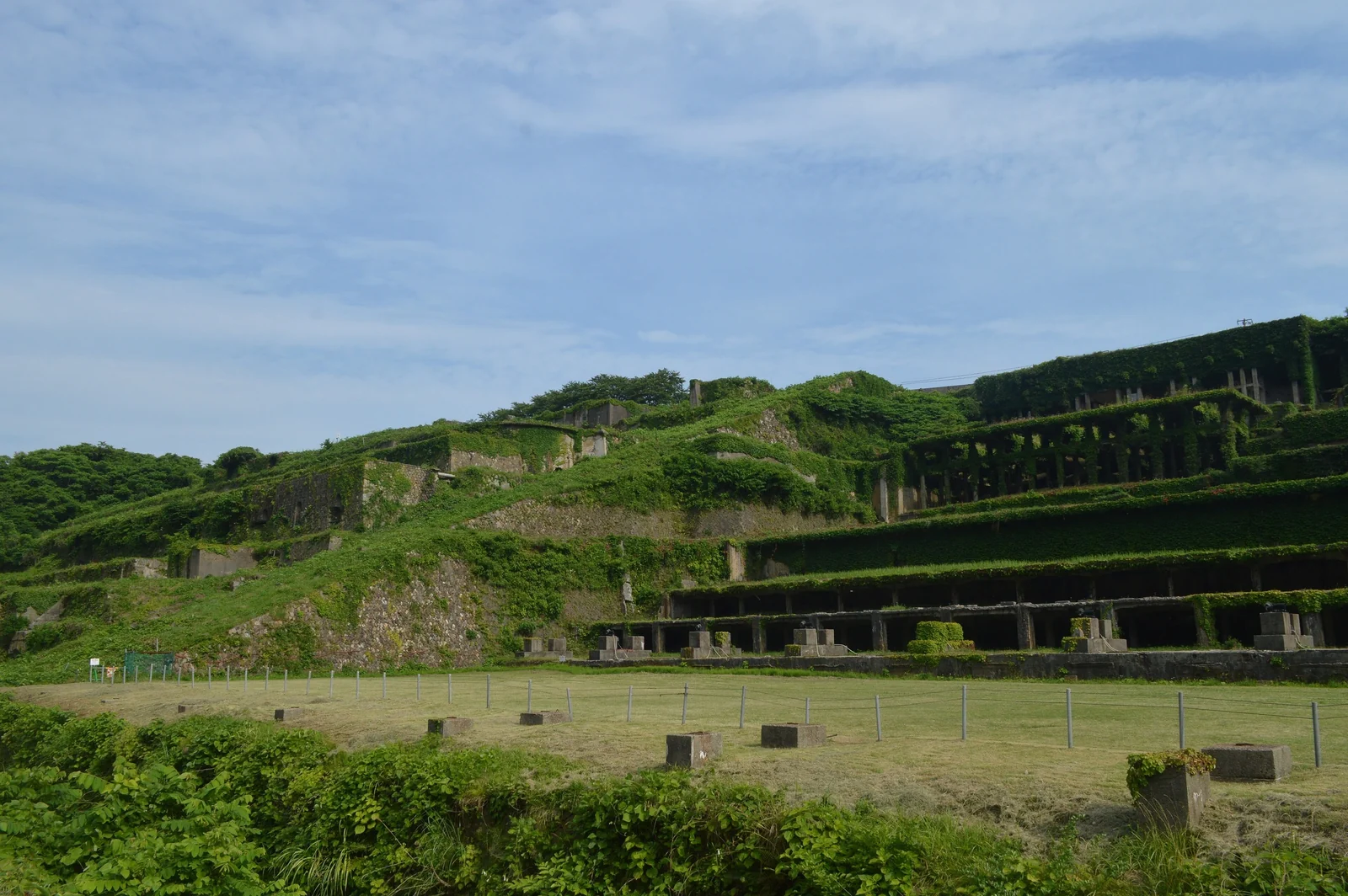
The Aikawa area has the main mine tours, where you walk through tunnels with displays. The photogenic part is Kitazawa, a hillside of concrete terraces, thickening tanks and a former power plant swallowed by green growth. People often compare it to a Ghibli film set. Reach it by bus, taxi or the guided heritage tour that runs between mining sites. Reservations and routes change, so check the island's official site at visitsado.com before you plan the day.
Sado also has a heavier chapter. The mines used forced labor from Korea during the war, and the interpretation at the site has been a subject of debate. Approach it as history, not as scenery.
Getting there: ferries run to Sado from Niigata city. Best season: late spring to early autumn, with autumn color a bonus. Winter brings rough seas and snow.
Matsuo Mine, Iwate: Sulfur, Mountain Apartments and a Museum
Matsuo Mine in Hachimantai began operating in 1914 and was once described as the largest sulfur mine in Japan. Workers and families lived on the mountain in concrete apartment blocks, which is why the site looks like a village stranded above the tree line. Mining ended in the 1960s, and sources differ slightly on the exact year.
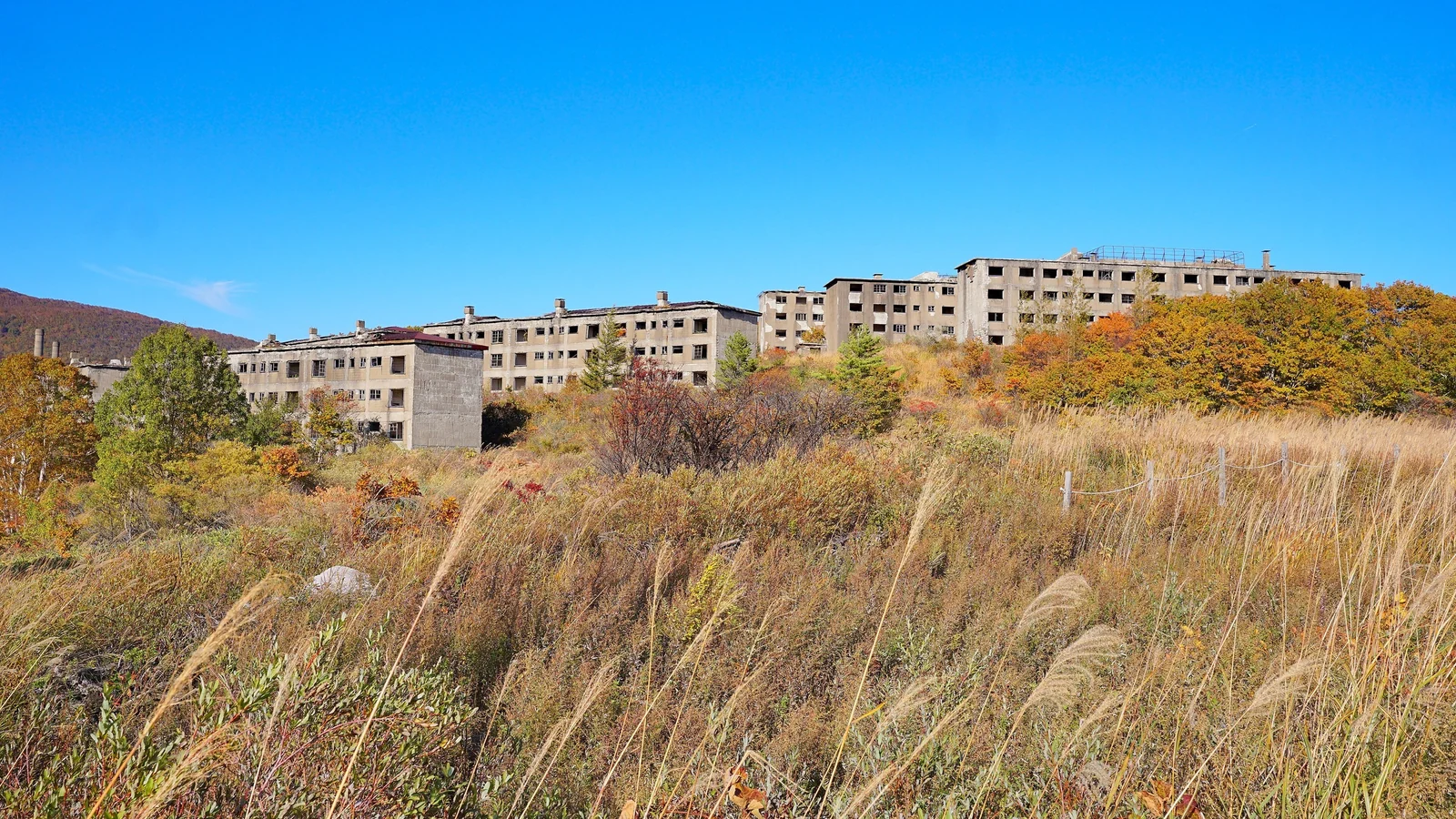
The ruins can be photographed from outside the barriers. Do not cross the rope or enter the buildings. They are in poor condition and are fenced for a reason. The Matsuo Mine Museum in the Hachimantai area is a good first stop, since it explains the mine and the life of the community. Check its opening days, which include a weekly closure.
Getting there: a car is the practical choice. Mountain roads in this area close in winter, so plan for roughly late spring through autumn and confirm road status locally. Autumn color is the best reason to go.
Yubari, Hokkaido: Where a Coal Boom Went Quiet
Yubari is not a ruin you wander through. It is a living town that shrank dramatically. Coal mining shaped it, the population peaked around 1960 at well over 100,000 by most accounts, and the last mine closed in 1990, leaving a town of a few thousand today. A municipal financial crisis in 2007 made it a national case study in how a city copes with decline.
What you see are closed schools, empty public housing and quiet streets, plus the town's efforts to reinvent itself around melons, film and mining heritage. Visit with respect for people who live there, and do not photograph residents' houses. The coal-mining heritage sites and museum have changed hands and operators over the years, so confirm what is open before you go.
Getting there: Yubari is inland from Sapporo, reached by train and bus or by car. See our Hokkaido travel guide for planning the rest of the region. Winter is snowy and atmospheric but demands more careful logistics.
Okunoshima: Rabbits and a Wartime Poison Gas Past
Okunoshima, in Hiroshima Prefecture's Seto Inland Sea, is known today as Rabbit Island. Its history is much darker. The island was used for chemical weapons production from 1929 until the end of the war, and its existence was kept secret. A small Poison Gas Museum, which opened in 1988, documents that period honestly, with some English explanation.
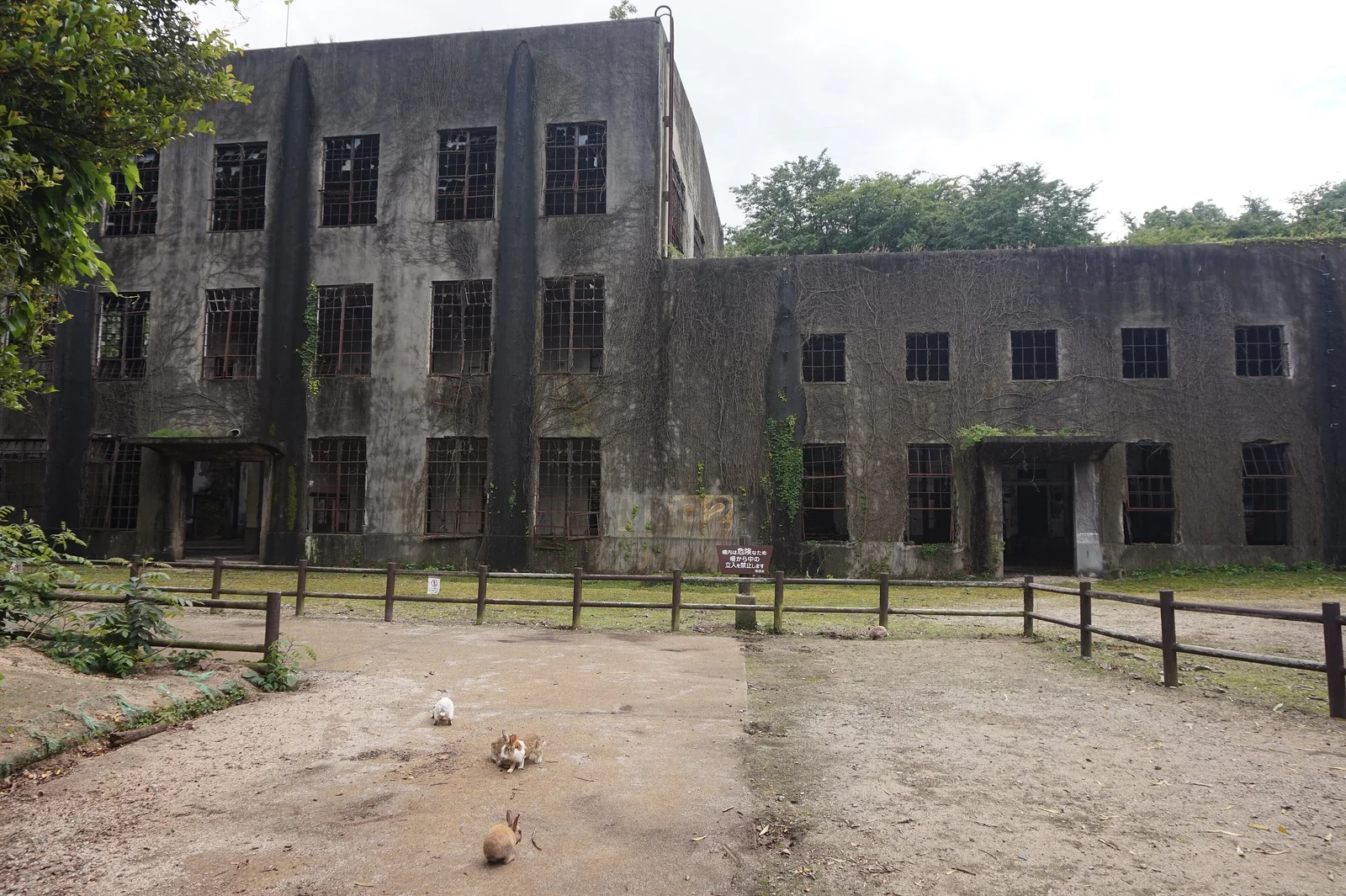
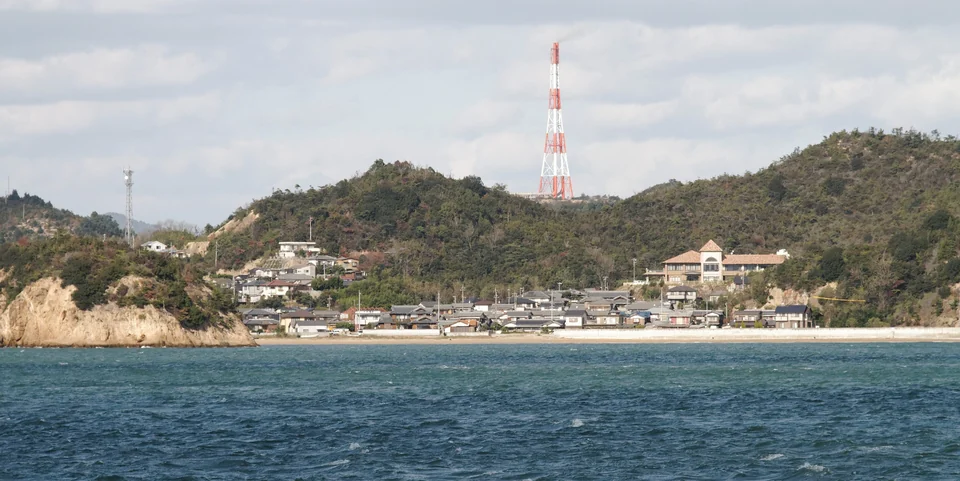
The big ruined power station and other wartime structures stand beside the island's paths. A sign in front of the power station warns that entry is dangerous and prohibited, and it should be obeyed. The island is open to the public and reached by a short ferry from Tadanoumi, which you can get to by train from Mihara. Ferry details vary by season, so check the timetable. Do not feed the rabbits human food and keep a safe distance.
Best season: spring and autumn for comfortable walking. Summer is hot with little shade.
Forts and Islands: Sarushima, Tomogashima and More
Sarushima, Yokosuka
Sarushima is the only natural island in Tokyo Bay and was fortified in the 19th century to guard the approach to Edo and later Tokyo. Brick tunnels and gun positions survive, now laid out as a visitor route. A short ferry leaves from the Mikasa pier in Yokosuka, a walk from Yokosuka-Chuo Station. The island is open on a seasonal schedule and the last ferry back can be early, so read the Kanagawa tourism page before you go.
Tomogashima, Wakayama
Tomogashima is a group of small islands at the mouth of Osaka Bay, with Meiji-era coastal batteries built from red brick and now covered in moss and vines. The Third Battery is the largest and the best known, often compared to the floating castle in a Ghibli film. You take a ferry from Kada Port, a walk from Kada Station, and follow marked trails between the batteries, the lighthouse and viewpoints.
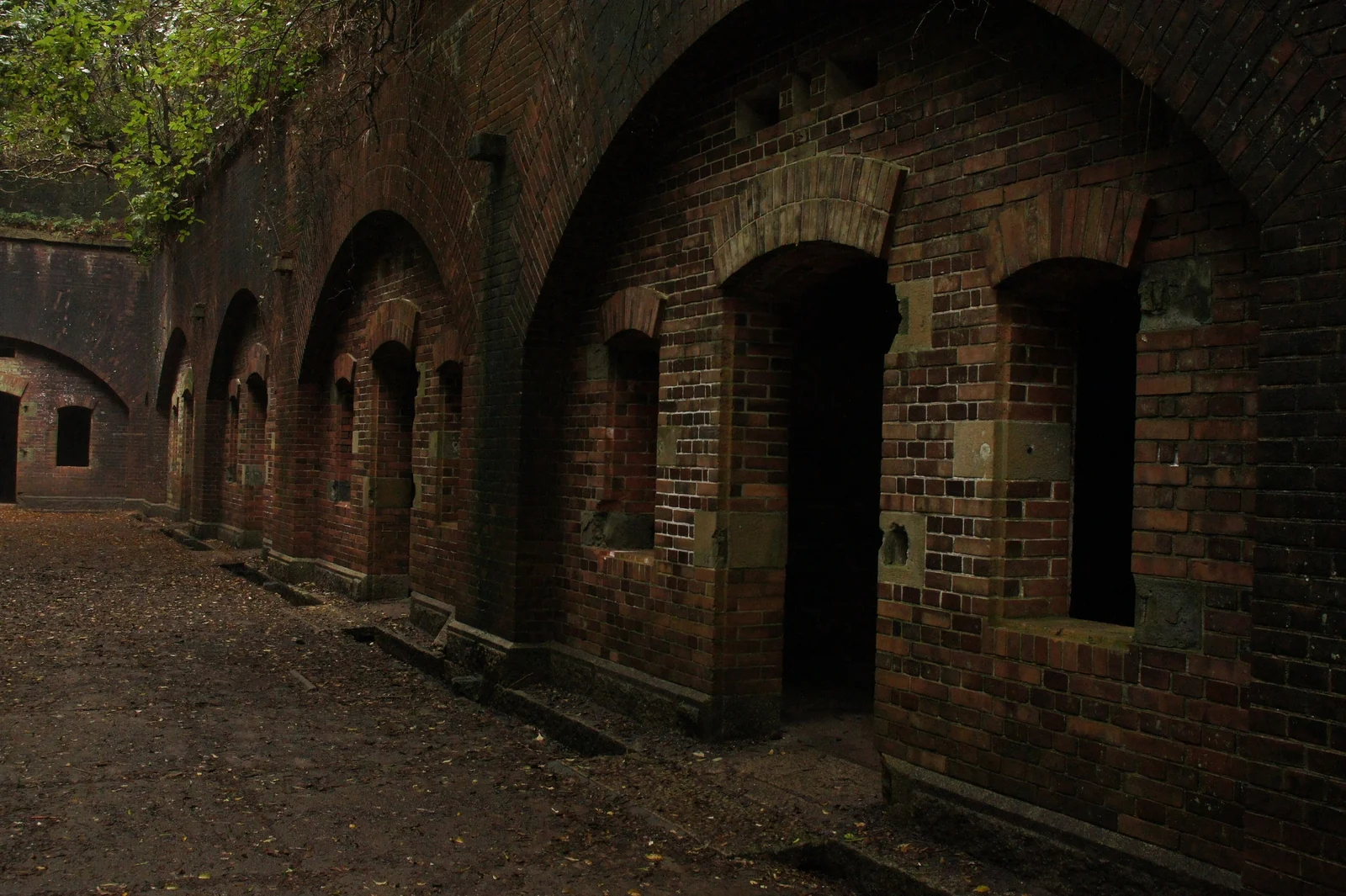
The ferry does not run every day and the schedule changes by season, so confirm it before you travel. There are no shops for meals on the island, so bring lunch. Wear shoes with grip, because the brick passages stay damp. Stay on the trail and out of fenced structures.
Tashirojima, Aoshima and Gunkanjima
Not every island on this list is a ruin. Tashirojima in Miyagi and Aoshima in Ehime are inhabited fishing islands where the population has fallen sharply and cats now draw most of the attention. They belong here as a picture of depopulation rather than as haikyo. Visit them as you would any small community: ask before photographing people, and do not leave food for the cats.
Gunkanjima is the opposite case: completely empty since the coal mine closed in 1974, and listed by UNESCO in 2015 as part of Japan's Meiji industrial heritage. You can only land in a restricted area on a licensed boat tour. Read our full guide to Gunkanjima, and for the city where those tours leave, see the Nagasaki two-day itinerary.
How to Get There, When to Go and Photography Etiquette
Most sites here need a ferry, a mountain road or both, so build your trip around transport. Island sites run on schedules that change with the season and weather, and a missed last boat can mean a night you did not plan. Get the boat timetable first, then book trains and rooms around it.
- Spring and autumn are the best seasons for nearly every site: mild walking weather, clear light and good color at Matsuo and Sado.
- Summer brings heat, insects and thick vegetation that hides paths, though it also makes Kitazawa and Tomogashima look their most overgrown.
- Winter closes mountain roads and can cancel ferries, so Matsuo, Sado and the island sites are best left for the warmer months.
- Photography: do not use flash in museums, never photograph residents without asking, and keep tripods off paths used by walkers.
- Quiet: these are sites of work and war, sometimes of death. Keep voices low, do not stage jokes and do not climb on structures.
For a trip that pairs ruins with other highlights, see our places to go in Japan list.
Abandoned Places in Japan FAQ
Is it legal to explore abandoned places in Japan?
Entering a building or fenced property without permission can be a criminal offense, even if it looks forgotten. Stick to open sites, viewpoints and guided tours. If a place has no official access or tour, treat it as private and do not enter.
What does haikyo mean?
Haikyo means ruins in Japanese. It also names a subculture that photographs abandoned mines, factories, hotels and villages. As a visitor, the safe way to enjoy it is at sites that are open to the public rather than by entering private buildings.
Can you visit Gunkanjima?
Yes, but only on a licensed boat tour from Nagasaki that lands you in a restricted area. Landings depend on weather and sea conditions. Our dedicated Gunkanjima guide explains how the tours work and when to book.
Which abandoned places in Japan are easiest to visit?
Sado's mine area, Okunoshima and Sarushima are the easiest, since all have public access and clear routes. Tomogashima and Matsuo Mine need more planning because of ferry schedules and winter road closures.
What is an akiya?
An akiya is a vacant house. A national housing survey counted about 9 million of them, roughly one in seven homes, mostly from aging owners and inherited houses in shrinking areas. They are private property, so look at them from the street only.
Is it safe to visit Japanese ruins?
It is safe if you stay on marked paths and out of closed structures. Dangers include unstable floors, asbestos, wildlife and weather. Island sites also have last-boat deadlines, so check timetables and carry water.
When is the best time to visit?
Spring and autumn suit most sites. Mountain roads and ferries can close in winter, and summer is hot with heavy vegetation. Always check local transport and opening information before you go.