


Okinawa is Japan's southernmost prefecture, a chain of subtropical islands strung across the sea between Kyushu and Taiwan. It is worth the flight for things the rest of Japan simply doesn't have: coral reefs a short ferry ride from the capital, the red-roofed legacy of the independent Ryukyu Kingdom, a food culture built on bitter melon and pork, and a calmer, warmer pace of life.
This Okinawa travel guide covers Naha and the rebuilt Shuri Castle, the kingdom's UNESCO-listed castle sites, the island's Second World War history, the Churaumi Aquarium on the Motobu Peninsula, snorkeling in the Kerama Islands and a quick look at the far-flung outer islands. Practical tips on typhoons, transport and island-hopping follow.
Our overview of places to go in Japan puts Okinawa next to the big-city classics. Here, we go deeper.
Why Okinawa Feels Different from Mainland Japan
For roughly four and a half centuries, these islands were their own country. The Ryukyu Kingdom was unified in the early 15th century and grew rich as a middleman in trade between China, Japan, Korea and Southeast Asia. Satsuma samurai from southern Kyushu invaded in 1609, and Japan formally annexed the kingdom in 1879, renaming it Okinawa Prefecture.
You see that history everywhere once you know to look. Roofs are red tile held down with white mortar, and many carry a shisa, the lion-dog guardian that wards off bad spirits. Music uses the three-stringed sanshin, and some older people still speak Uchinaaguchi. After 1945 the islands stayed under US administration until 1972, and American bases remain a large, contested presence.
Naha: Kokusai-dori, Makishi Market and Shuri Castle
Most trips start in Naha, the prefectural capital, where the airport sits close to the city. It is not pretty, but it is lively and a good base for two or three nights.
Kokusai-dori
Naha's main street runs for roughly a mile and a half through the center and much of it is souvenir shops and touristy izakayas. The more interesting part lies in the covered arcades that branch off it, such as Heiwa-dori and Ichiba-hondori, where small shops sell pottery and island fabrics to locals as much as to visitors.
Makishi Public Market
Follow the arcades to the Daiichi Makishi Public Market, known as Naha's kitchen. It moved into a new building in 2023, but the system is the same as ever: buy fish, lobster or sea grapes from the ground-floor stalls, then take them upstairs, where restaurants cook your purchase for a fee. Look for parrotfish in startling blues and greens.
Shuri Castle and Its Reconstruction
Shuri Castle was the royal palace and seat of government of the Ryukyu Kingdom for more than four centuries. It has burned several times. The Battle of Okinawa destroyed it in 1945, and the version rebuilt in 1992 burned again in October 2019, when a fire gutted the Seiden (main hall) and several neighboring buildings.
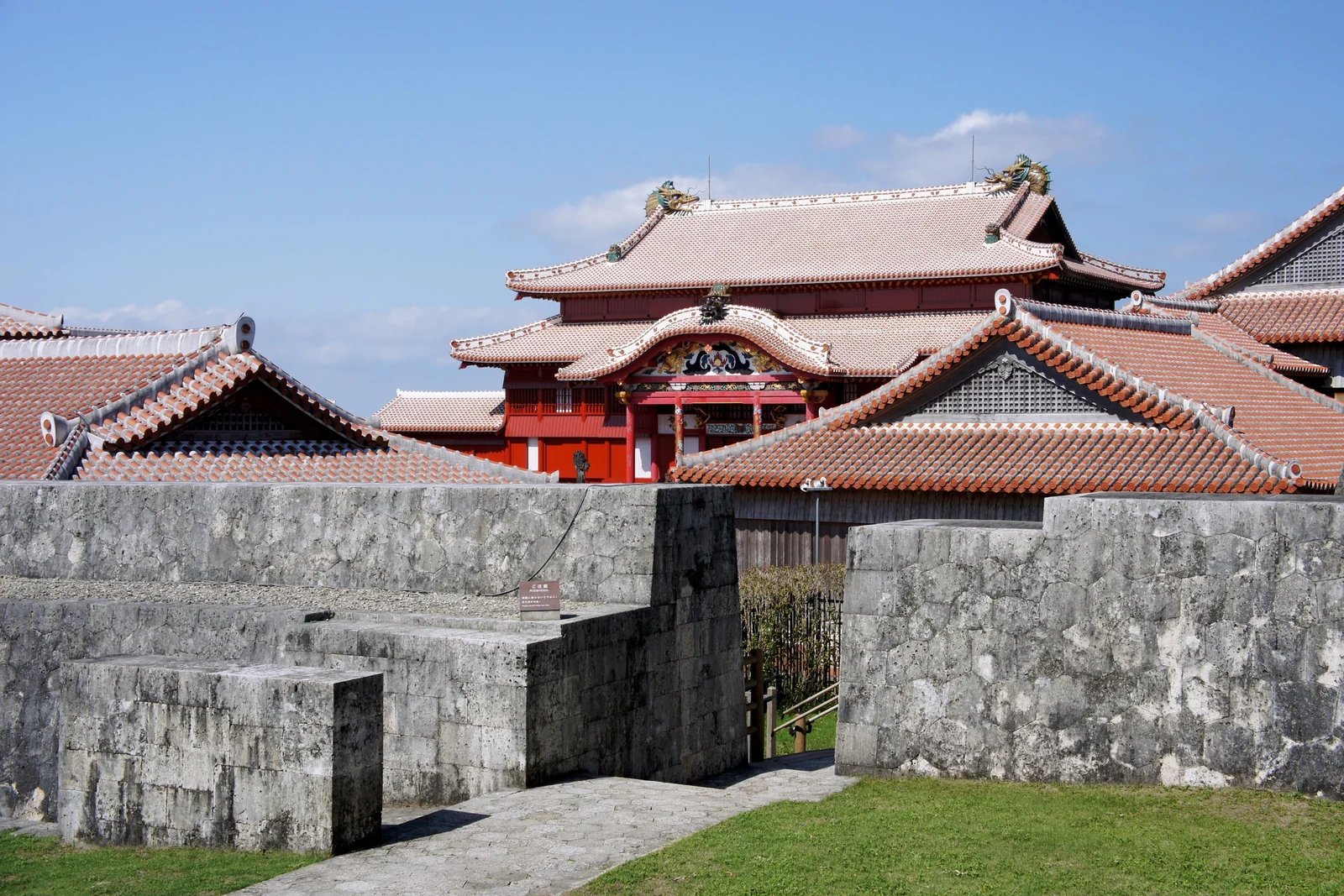
The exterior of the new Seiden is finished, and the park has announced that the hall's interior opens to the public on November 23, 2026, after a completion ceremony the day before. Interior visits need a timed reservation, at least in the first months, with tickets released in batches. Check the official Shuri Castle Park site for current booking rules.
Even without the interior, Shuri is worth half a day: walk through the Shureimon gate, then on to Tamaudun, the royal mausoleum, and the stone-paved Kinjo-cho lane below.
Ryukyu Kingdom Sites: Gusuku Castles and Sacred Groves
In 2000, UNESCO listed nine places together as the Gusuku Sites and Related Properties of the Kingdom of Ryukyu. A gusuku is a stone fortress, and what survives of most of them is walls rather than buildings. The curving limestone ramparts, often on ridges with sea views, are still among Japan's most striking ruins.
- Shuri Castle and Tamaudun: the royal palace and the kings' tomb, both in Naha.
- Sefa-utaki: the kingdom's most sacred site, a forest grove in Nanjo with a dramatic rock passage looking toward Kudaka Island. Treat it as a place of worship, not a photo stop.
- Nakijin Castle: long, snaking walls on the Motobu Peninsula, easy to combine with the aquarium.
- Katsuren and Nakagusuku castles: hilltop ruins on the east side of the main island, with wide views over the Pacific.
The Battle of Okinawa and the Peace Memorial Park
Between April and June 1945, Okinawa was the scene of one of the bloodiest battles of the Pacific War, and civilians made up a huge share of the dead. It explains a great deal about modern Okinawa and deserves a quiet morning of your trip.
The Okinawa Prefectural Peace Memorial Park sits on Mabuni Hill in Itoman, at the southern tip of the main island, where the fighting ended. Its centerpiece, the Cornerstone of Peace, is a series of black granite walls carved with the names of more than 240,000 people who died, listed regardless of nationality or whether they were soldiers or civilians. The museum tells the battle from residents' point of view.
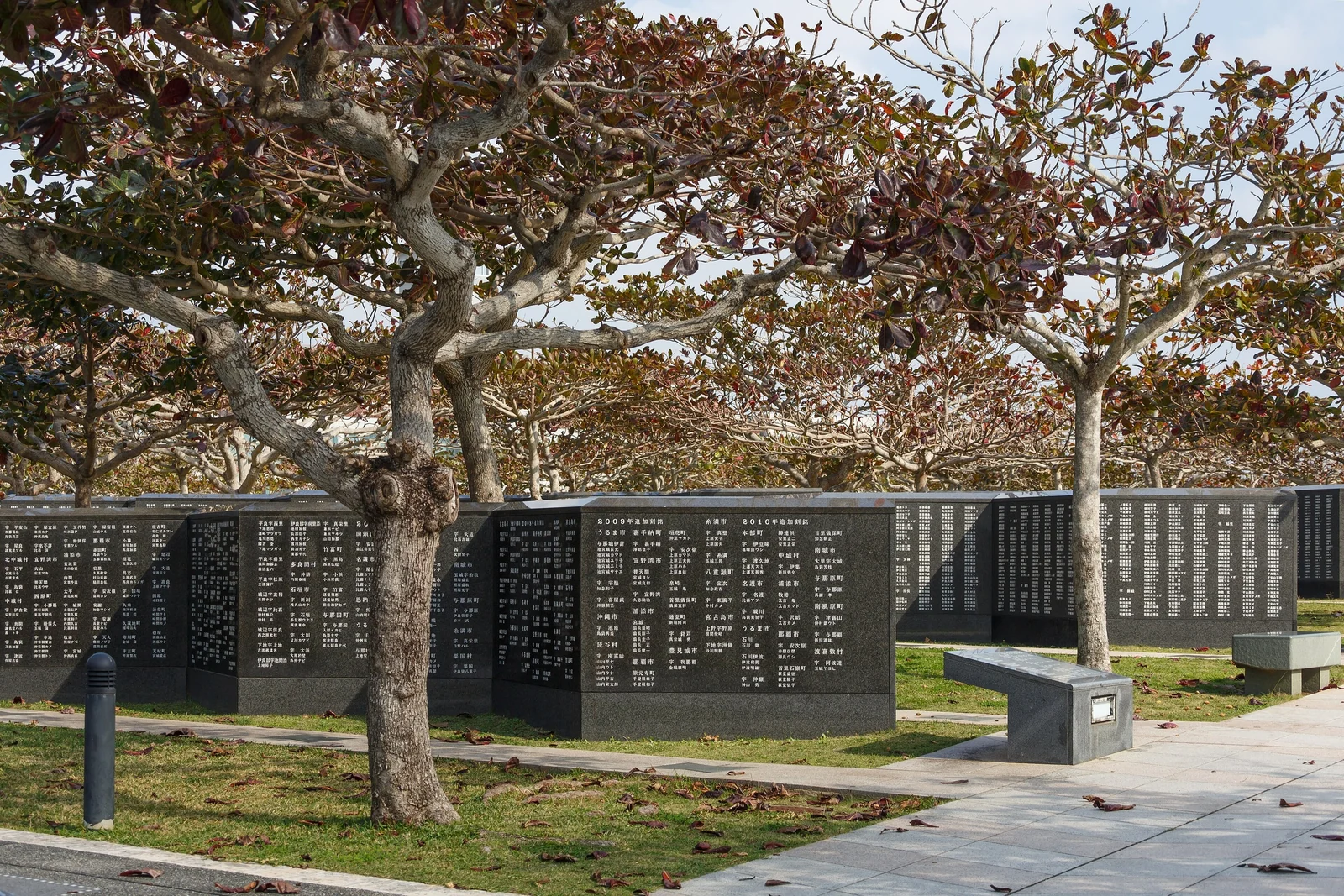
Nearby, the Himeyuri Peace Museum tells the story of the schoolgirls and teachers mobilized as nurses during the battle, one of Japan's most affecting small museums. June 23 is Okinawa Memorial Day, when ceremonies are held at the park. Dress modestly, keep voices low and skip the selfies at the memorials.
Churaumi Aquarium and the Motobu Peninsula
Allow a full day for the north. The Okinawa Churaumi Aquarium, inside Ocean Expo Park in Motobu, is one of the best aquariums in the world, and that is not hype. Its main tank, the Kuroshio Sea, holds around 7,500 cubic meters of water behind a viewing panel more than 8 meters tall and 22 meters wide, and whale sharks and manta rays glide past it at eye level.
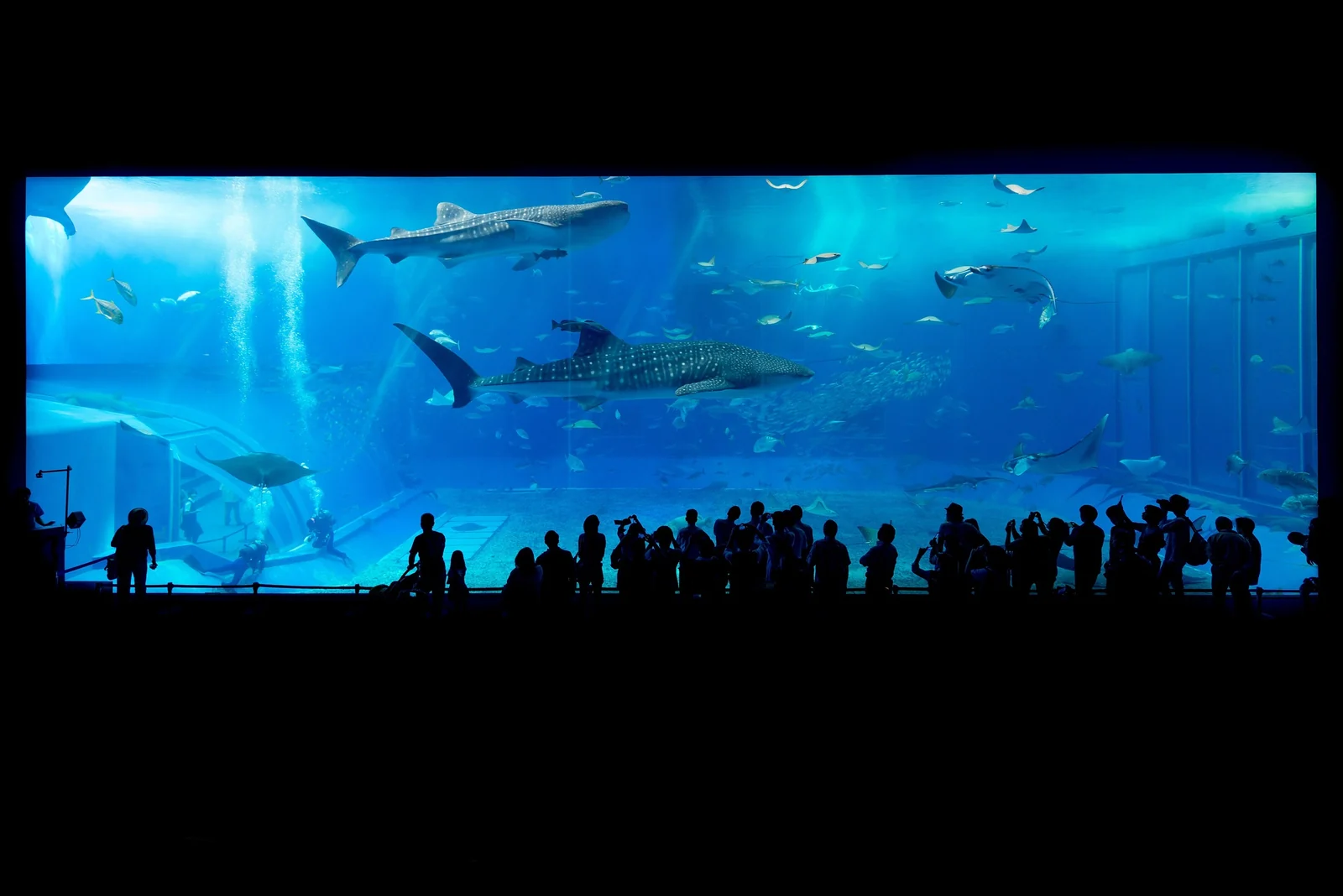
Arrive at opening or late afternoon to beat the tour buses. From Naha, the drive takes roughly two hours using the Okinawa Expressway, longer in weekend traffic. Buses run too, but a car makes the peninsula easier.
Pair the aquarium with the Bise Fukugi tree-lined lanes, a village path shaded by old windbreak trees, then Nakijin Castle and a drive across the bridge to Kouri Island for its turquoise shallows. Farther north still, the Yanbaru forest became part of a UNESCO natural World Heritage Site in 2021.
The Kerama Islands: Snorkeling and Diving Near Naha
If you only make one island trip from Naha, make it this one. The Kerama Islands lie a short boat ride west of the capital, and their water is so clear that the color has its own name in Japanese: Kerama blue. The islands and surrounding sea became Keramashoto National Park in 2014.
Ferries and high-speed boats leave from Tomari Port in Naha. The fast boat reaches Tokashiki in about 35 minutes and Zamami in about 50, while the slower car ferry takes around an hour and a half. Book ahead in summer; rough seas cancel sailings.
- Zamami: the best all-rounder, with Furuzamami Beach for snorkeling straight off the sand and lookouts over the archipelago.
- Tokashiki: the largest island and the quickest to reach, with the long Aharen Beach. Good for a day trip.
- Aka: tiny and quiet, a favorite with divers.
Sea turtles are common on the reefs, and from roughly January to March humpback whales gather here, with whale-watching boats from Zamami and Naha. Never stand on coral. Stay a night if you can.
Ishigaki, Miyako and Iriomote: The Outer Islands
Farther southwest, closer to Taiwan than to Naha, lie the Miyako and Yaeyama island groups. They feel more remote and rural, and you reach them by plane. Taiwan is close by, and our Kaohsiung travel guide covers the night markets and harbor of its big southern city.
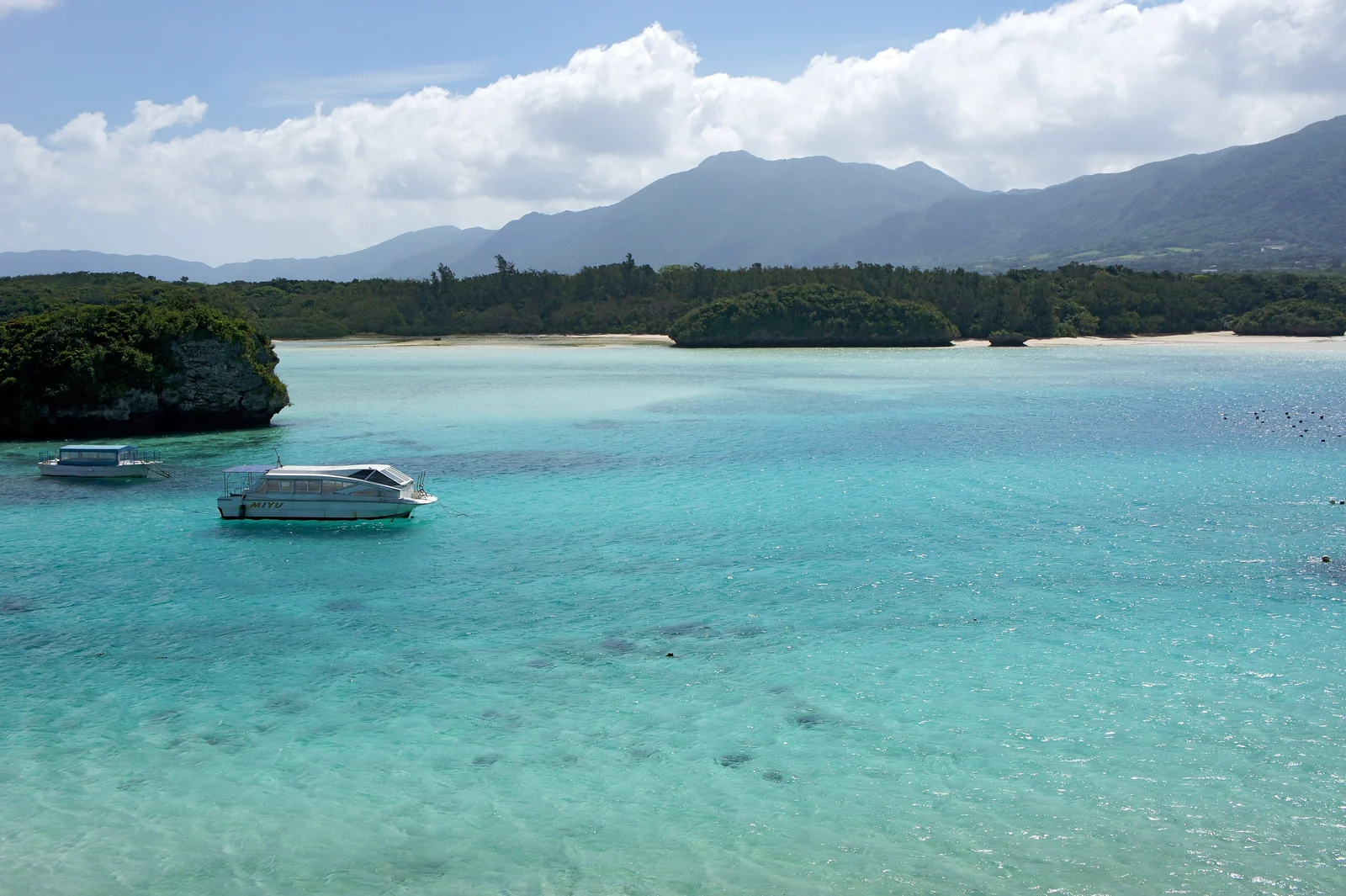
- Ishigaki: the hub of the Yaeyama Islands, with Kabira Bay, manta dive sites and ferries to the smaller islands from its port.
- Iriomote: mostly mangrove and jungle, part of the 2021 UNESCO natural listing, and home to the rare Iriomote cat. Come for kayaking and waterfall hikes.
- Taketomi: a short boat ride from Ishigaki, with a preserved village of stone walls, coral-sand lanes and red roofs.
- Miyako: a separate group east of Yaeyama, known for some of Japan's best beaches and long bridges linking it to Irabu, Kurima and Ikema islands.
Okinawan Food and the Longevity Story
Okinawan cooking borrows from China, Southeast Asia, mainland Japan and postwar America. Start with these:
- Goya champuru: a stir-fry of bitter melon, tofu, egg and pork (or Spam). The bitterness grows on you.
- Okinawa soba: thick wheat noodles, despite the name, in a light pork and bonito broth, often topped with simmered pork belly or spare ribs.
- Rafute: pork belly braised slowly in awamori, soy sauce and brown sugar.
- Umibudo: sea grapes, a seaweed that pops on the tongue.
- Awamori: the local distilled spirit, made from long-grain rice with black koji mold. Aged versions, called kusu, are smoother. Drink it with water and ice, and go slowly.
- Taco rice: taco fillings on rice, a postwar invention from the base town of Kin.
Okinawa is famous for long-lived residents, and you'll hear about moai (lifelong support groups of friends) and hara hachi bu, the habit of stopping before you are full. The traditional diet was heavy on vegetables, sweet potato and tofu. Younger generations eat far more fast food, so treat the longevity story as backdrop, not a promise.
Best Time to Visit Okinawa and Typhoon Season
Okinawa is warm all year, but its seasons matter more than the brochures suggest. The rainy season comes earlier than on the mainland, usually from around May into June. Typhoon season runs roughly from June to October, with August and September the most likely months for a storm that cancels flights and ferries for a day or two.
| Season | Weather | Good for | Watch out for |
|---|---|---|---|
| March to April | Warm, mostly dry | Sightseeing, early beach days, whales until about March | Japanese spring holidays |
| May to June | Hot and humid, rainy season | Lower prices, green landscapes | Frequent showers, Golden Week crowds |
| July to September | Hot, sunny between storms | Snorkeling, diving, beaches | Typhoons, peak summer prices |
| October to November | Warm, sea still swimmable | Best overall balance, Shuri Castle reopening | Late typhoons in October |
| December to February | Mild, often cloudy and windy | Culture, whale watching, low crowds | Too cool for most swimmers |
Our pick is October and early November, or April. In typhoon season, buy flexible tickets and leave a buffer day before your flight home.
Getting Around Okinawa and Island-Hopping
Flying In
Naha Airport has frequent domestic flights from Tokyo, Osaka, Fukuoka and other cities, plus international routes around East Asia. From Tokyo the flight takes roughly two and a half to three hours, so Okinawa pairs easily with a few days in the capital; our Tokyo travel guide covers that end of the trip.
Yui Rail in Naha
The Yui Rail monorail is the only rail line in the prefecture. It runs from Naha Airport through the city center, past Kokusai-dori and Shuri, and on to Tedako-Uranishi in Urasoe, with 19 stations along about 17 kilometers. IC cards such as Suica work on it.
Renting a Car
Beyond Naha, a rental car is the easiest way to explore. Traffic drives on the left, and you need an International Driving Permit issued under the 1949 Geneva Convention, or an official Japanese translation for licenses from a few countries. Book early for summer and expect slow rush-hour traffic around Naha.
Ferries and Island Flights
Use boats from Tomari Port for the Kerama Islands and other nearby islands. For Miyako and Ishigaki, fly: there is no regular passenger ferry from the main island, and both have direct flights from Naha as well as from several mainland cities. Local ferries then connect Ishigaki with Iriomote, Taketomi and the other Yaeyama islands.
How Many Days in Okinawa and Where to Stay
Five days is a comfortable minimum: two in Naha and the south, one in the north and one or two in the Keramas. Add three or four for Ishigaki and Iriomote. Where to stay:
- Central Naha: near Kokusai-dori or a Yui Rail station, the practical base for food, nightlife and airport access.
- Onna and the west coast: resort hotels with beaches, roughly halfway to Motobu.
- Motobu Peninsula: quieter guesthouses and resorts close to the aquarium and Kouri Island.
- Zamami or Tokashiki: small inns and guesthouses for a night or two by the sea.
Combining Okinawa with the mainland? Our Kyoto guide makes a fine contrast, and you'll find more ideas in our Japan travel guides.
Okinawa Travel FAQ
Is Shuri Castle open again?
The castle grounds, gates and walls have stayed open during reconstruction. The rebuilt Seiden main hall reopens to the public on November 23, 2026, and entering its interior requires a timed reservation booked through the official Shuri Castle Park website.
Do you need a car in Okinawa?
Not in Naha, where the Yui Rail monorail and walking are enough. For the north, the south coast and the war memorials, a rental car saves a lot of time. You need an International Driving Permit or an approved translation, and traffic drives on the left.
When is typhoon season in Okinawa?
Typhoons can arrive from roughly June to October, and August and September are the most likely months. Storms usually disrupt flights and ferries for a day or two. Book flexible tickets and leave a buffer day before connecting flights home.
Can you visit the Kerama Islands as a day trip from Naha?
Yes. High-speed boats from Tomari Port reach Tokashiki in about 35 minutes and Zamami in about 50. Book ahead in summer and watch for weather cancellations.
How do you get from Okinawa to Ishigaki or Miyako?
Fly. There is no regular passenger ferry from the main island to Ishigaki or Miyako, but both islands have frequent short flights from Naha and direct routes from several mainland cities. From Ishigaki, local ferries reach Iriomote and Taketomi.
How many days do you need in Okinawa?
Five days covers Naha, Shuri, the southern war memorials, Churaumi Aquarium and a trip to the Kerama Islands at a relaxed pace. Plan eight to ten days if you also want Ishigaki, Iriomote or Miyako.
What food is Okinawa known for?
Goya champuru (bitter melon stir-fry), Okinawa soba with wheat noodles and pork, rafute braised pork belly, sea grapes and taco rice. To drink, try awamori, the local rice spirit, and Orion beer.