A first Egypt itinerary works best as a single line down the Nile: Cairo for the Giza pyramids and the medieval city, Luxor for Karnak, the Valley of the Kings and Hatshepsut's temple, then Aswan for Philae, the river itself and the long road to Abu Simbel. Ten days is enough to do all of it without sprinting, and the route is simple because the country's people and its monuments both hug the river.
The real decisions are how you travel between the three bases (cruise, train or plane), when you go, and how much of the sightseeing you hand to a guide. This guide covers all of that, plus a day-by-day plan, tickets, scams and etiquette, and ideas for Alexandria, Siwa and the Red Sea if you have extra time. For more reading, browse our Egypt travel guides.
Best Time to Visit Egypt
Go in winter. From about late October to March, daytime temperatures in Luxor and Aswan are warm and comfortable for climbing around open-air sites, and Cairo is mild enough for long walks.
Summer is a different country. Upper Egypt regularly sees daytime highs above 40°C (104°F), and temple courtyards and tomb queues become a test of endurance. If July or August is your only option, plan sightseeing for the first hours after opening and rest through midday.
| Season | What to expect | Verdict |
|---|---|---|
| November to February | Pleasant days, cool nights, the busiest and priciest period, especially around Christmas and New Year | Best overall; book cruises and flights early |
| March to April | Warming up but workable; spring dust storms are possible | Good, but start early in Luxor and Aswan |
| May to September | Very hot in the south, quieter sites, lower prices | Only if you can handle the heat |
| October | Heat easing, crowds building | A solid shoulder choice |
Cairo and Giza: Pyramids, Museums and Islamic Cairo
The Giza Pyramids and the Sphinx
The three great pyramids stand on a desert plateau on the western edge of the metropolitan area. The largest, built for Khufu around 2560 BC, was once about 146 meters high; erosion and the loss of its casing stones have trimmed it to roughly 139. Khafre's pyramid, with a patch of original casing still clinging to its tip, and the smaller pyramid of Menkaure complete the trio, and the Sphinx crouches by the eastern edge of the site.
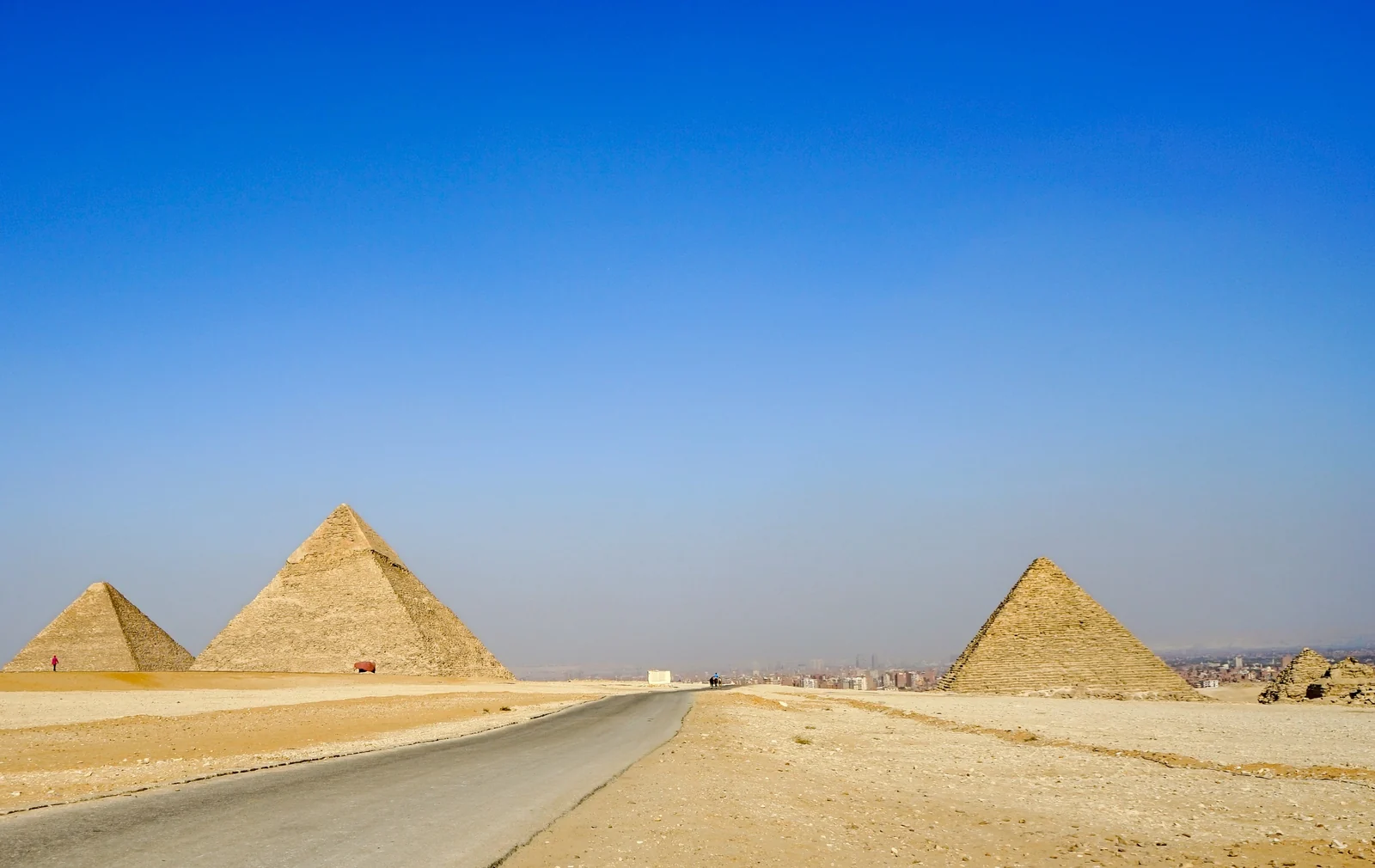
Arrive when the gates open. The first hour is the coolest and the quietest, and the light on the limestone is far kinder than at noon. Entering the Great Pyramid itself is a separate, limited ticket and a stooped, hot climb to a bare chamber; many visitors are happier walking the plateau and saving the money. Camel and horse touts are the main nuisance here, so settle every price before you sit on anything, or skip the animals altogether.
The Egyptian Museum and the Grand Egyptian Museum
Cairo has two major museums for ancient Egypt, and which holds what has been shifting, so check the Ministry of Tourism and Antiquities site before you plan. The older Egyptian Museum on Tahrir Square, a pink building from 1902, has held the national collection for over a century. The newer Grand Egyptian Museum sits at the edge of the Giza plateau and has taken on many of the headline objects, including the Tutankhamun treasures.
Islamic Cairo and Khan el-Khalili
Historic Cairo is a UNESCO World Heritage Site, and its dense medieval core is where the city feels most itself. Start on Al-Muizz Street, a long stretch of Fatimid and Mamluk mosques, madrasas and gateways, then climb to the Citadel of Saladin, begun in 1176, for the Muhammad Ali Mosque and a view over a hazy skyline. The Mosque of Ibn Tulun, finished in 879, is the older and calmer one, with a huge open courtyard and a spiral minaret.
Khan el-Khalili, the great bazaar beside Al-Hussein Mosque, dates to the 14th century. Go in the late afternoon, wander off the main alley into the metalworkers' and spice lanes, and expect to bargain. Opening with a counter offer is part of the game, not an insult.
Getting South: Nile Cruise, Train or Flight
Cairo to Luxor is roughly 500 kilometers by rail or road, and you have three realistic ways to cover it. Which one fits depends on your budget, your tolerance for logistics and how much you value time on the water.
| Option | Best for | Trade-offs |
|---|---|---|
| Flight Cairo to Luxor or Aswan | Saving time; around an hour in the air | Misses the river between cities; early departures |
| Sleeper or day train | Overnight travel without a hotel bill | Quality varies; book through the operator, not street agents |
| Nile cruise (Luxor to Aswan, 3 to 4 nights) | Stops at Edfu and Kom Ombo, a floating hotel, effortless logistics | Fixed schedule; big boats can crowd the temples |
| Felucca (sailing boat) | Short sunset trips, or a basic multi-night run from Aswan | Simple facilities, weather dependent |
What a Nile Cruise Really Gives You
The classic cruise runs between Luxor and Aswan, with stops at the lock town of Esna, the Temple of Horus at Edfu and the double temple of Kom Ombo, dedicated to the gods Sobek and Haroeris. Check what is included (guides, entrance fees, meals) and the exact itinerary, since lock delays at Esna can reshuffle it. My verdict: if your time is short and you want zero planning, a three- or four-night cruise is hard to beat. If you prefer to roam, base yourself in each city and use day tours.
Luxor: Karnak, the Valley of the Kings and Hatshepsut
Luxor is built over ancient Thebes, and the Nile divides it neatly. The east bank was the city of the living, with temples and hotels. The west bank was the city of the dead, with tombs and mortuary temples. Together they form one World Heritage Site. Give it two full days.
East Bank: Karnak and Luxor Temple
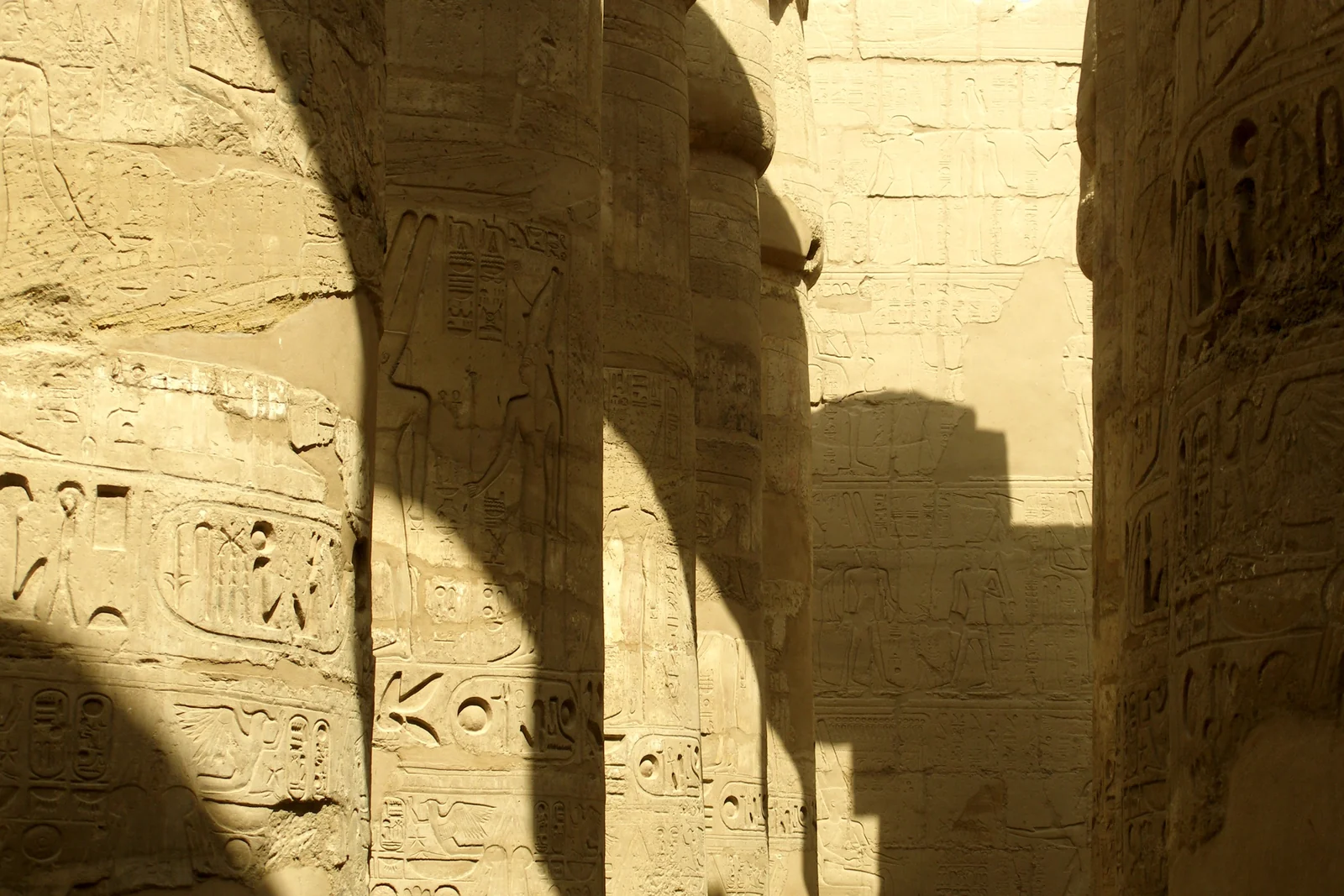
Karnak is not a single temple but a complex built and expanded over roughly two millennia. Its centerpiece, the Great Hypostyle Hall, is a forest of 134 enormous stone columns, the tallest rising about 21 meters. Visit at opening time for cooler air and quieter lanes between the pylons. Luxor Temple, a short drive away, is best at dusk, when floodlights pick out the colossal statues of Ramesses II and the avenue of sphinxes.
West Bank: Valley of the Kings and Hatshepsut's Temple
The Valley of the Kings holds the rock-cut tombs of New Kingdom pharaohs, including Tutankhamun, whose tomb Howard Carter found in 1922. A general ticket lets you enter a limited number of tombs, and a few of the most beautiful, plus Tutankhamun's small tomb, need separate tickets. Go early: the tombs get stuffy as tour groups arrive.
Just over the ridge, the terraced mortuary temple of Hatshepsut at Deir el-Bahari is one of the great pieces of ancient architecture, a colonnaded design cut against a cliff wall for one of Egypt's few female pharaohs. Stop at the Colossi of Memnon on the way out.
Aswan, Philae and Abu Simbel
Aswan feels slower than Luxor. The Nile runs through granite boulders here, feluccas tack around Elephantine Island, and the Nubian villages and the Aswan High Dam, completed in 1970, tell the story of the river's modern life. The dam also created Lake Nasser, and its rising water is the reason two of Egypt's most spectacular monuments had to be moved.
Philae Temple
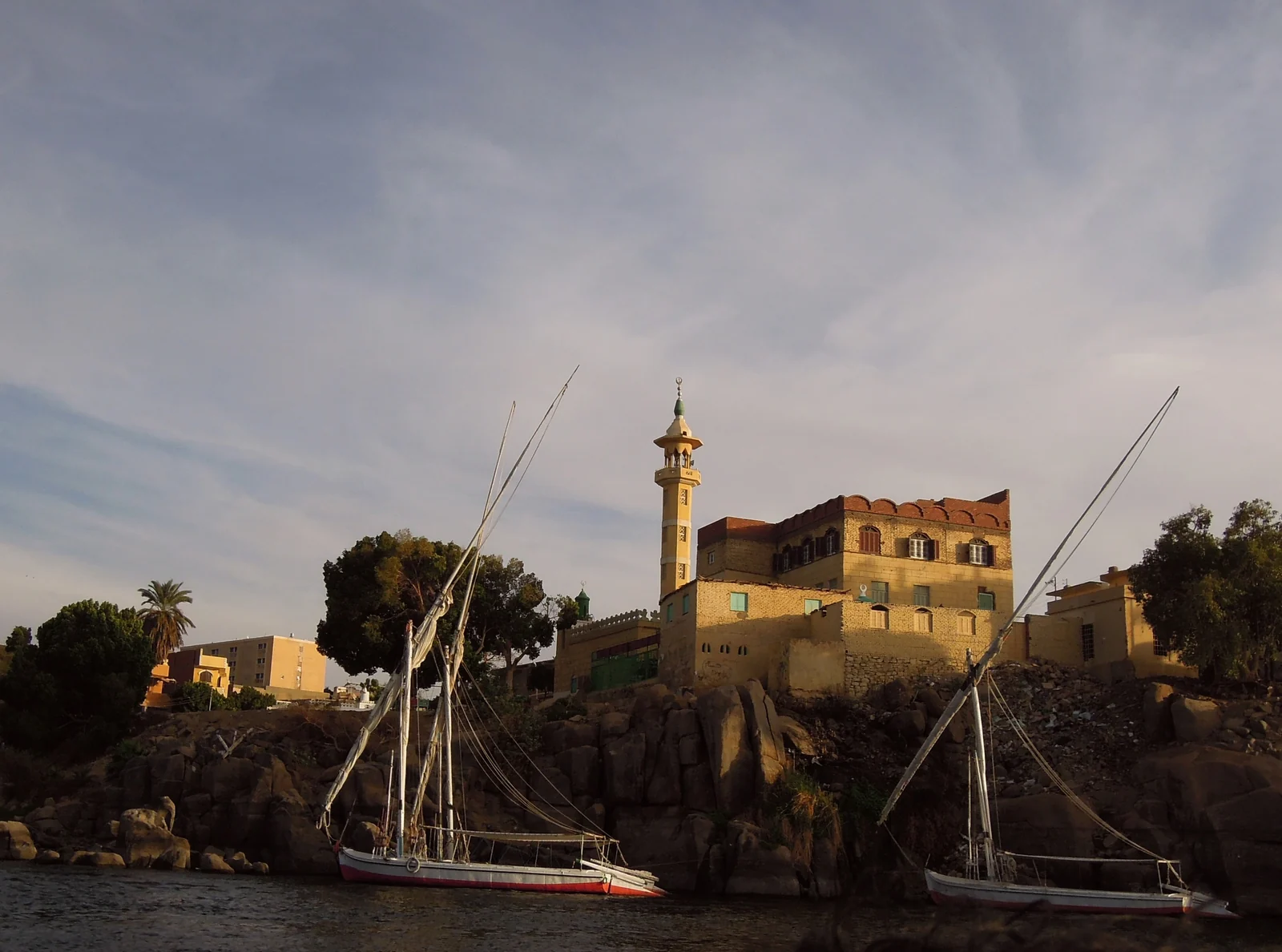
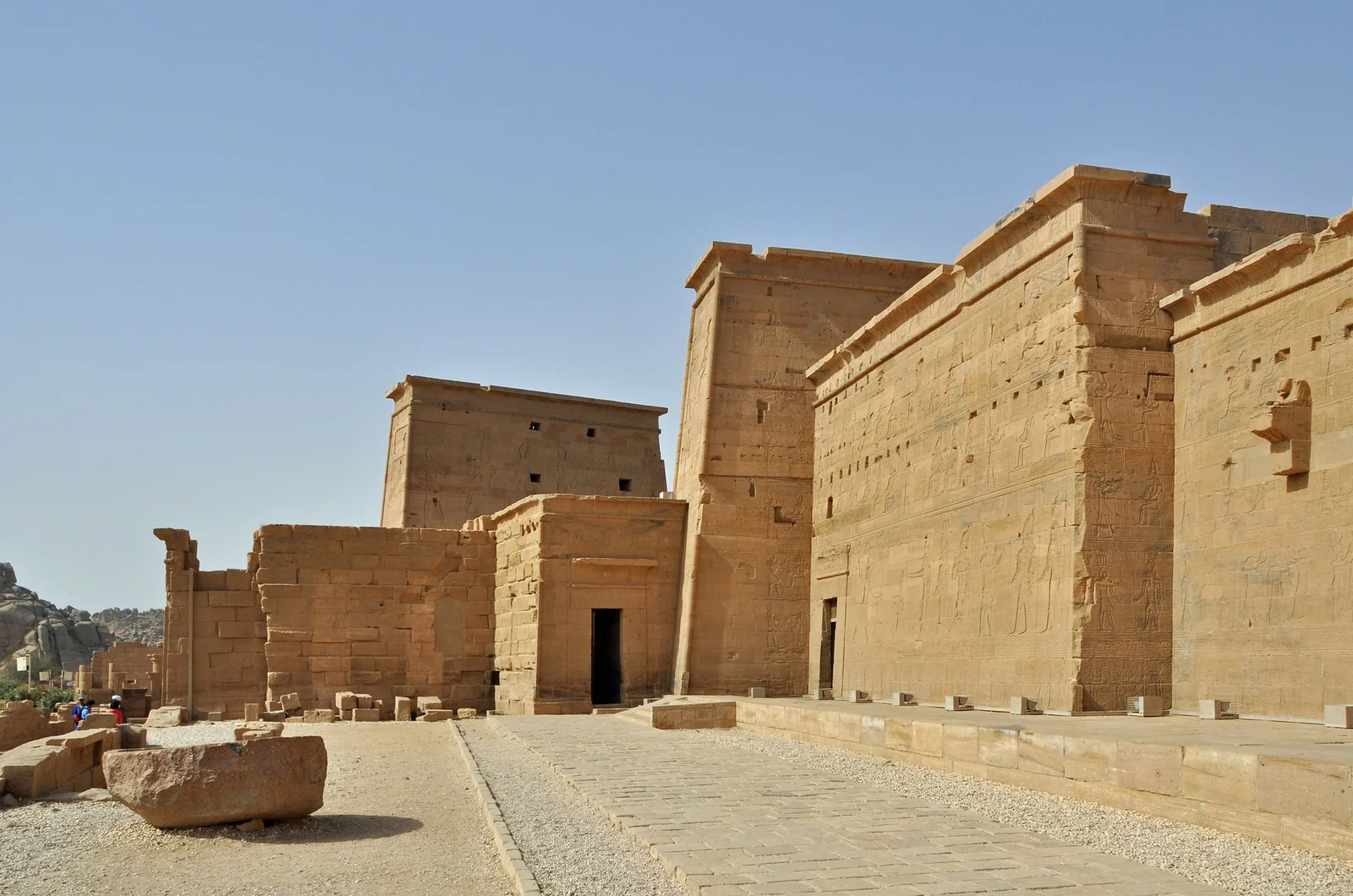
The Temple of Isis at Philae was dismantled and reassembled on Agilkia Island when the dam threatened to submerge its original island. You reach it by a short motorboat ride, and the setting among palms and water is one of the loveliest of any Egyptian site.
Abu Simbel
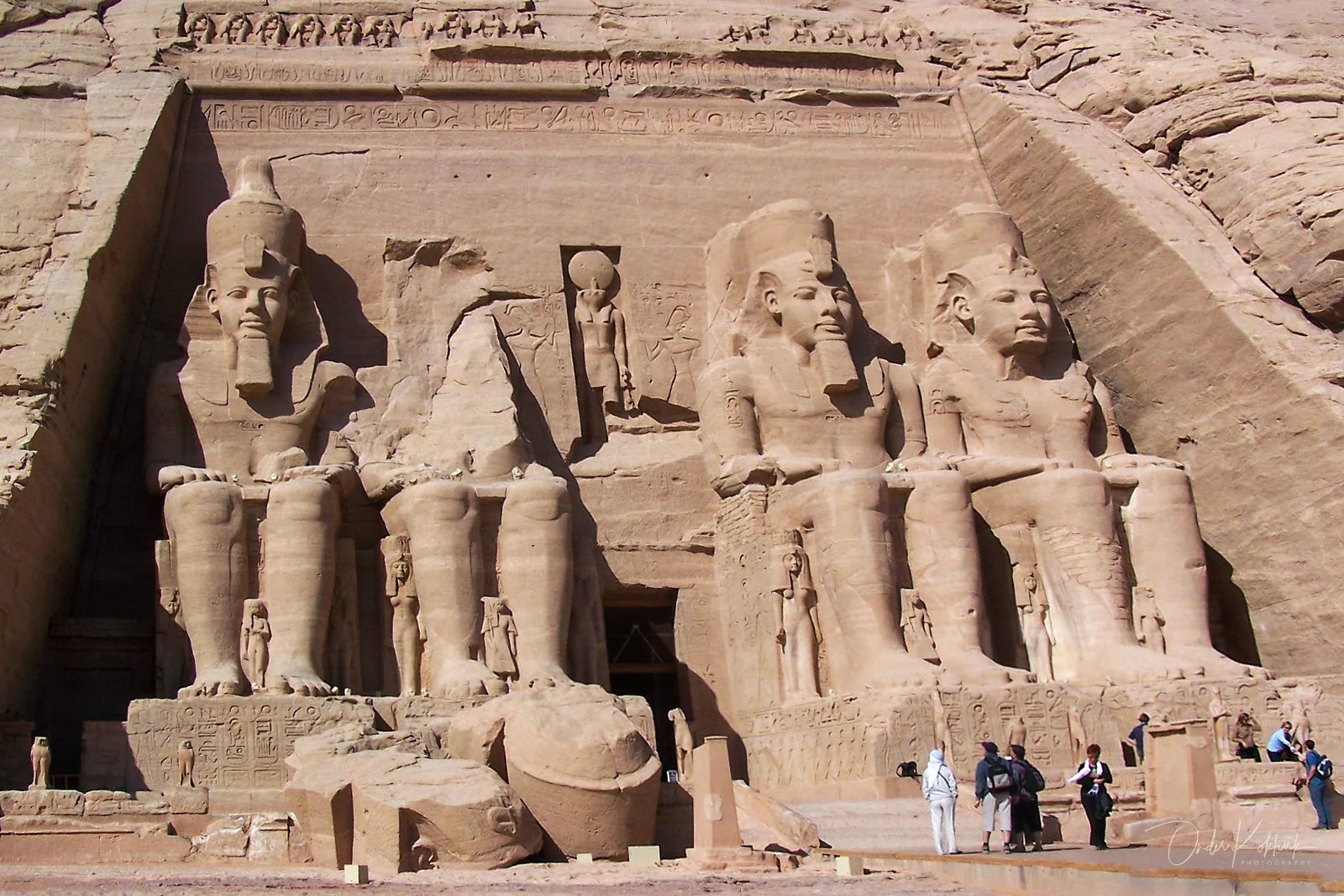
The two rock-cut temples of Abu Simbel were carved for Ramesses II in the 13th century BC, with four seated colossi of the king guarding the entrance and a smaller temple for his queen, Nefertari. In the 1960s an international rescue campaign cut both temples into blocks and rebuilt them on higher ground, part of a wider effort to save the Nubian monuments, coordinated with UNESCO.
The site lies about 280 kilometers south of Aswan, near the Sudanese border. Most visitors go by road in an early morning convoy, which takes around three hours each way, or by a short flight. It is a long day, but the facade earns it. Check current road and convoy rules with your hotel or operator.
A 10-Day Egypt Itinerary: Cairo, Luxor, Aswan
This plan assumes an international arrival in Cairo, one domestic flight south and a cruise or driver for the stretch from Luxor to Aswan. Swap days to suit your cruise schedule.
- Day 1, Cairo: arrive, rest, walk the Nile corniche or a quiet district in the evening.
- Day 2, Giza: pyramids and Sphinx at opening, then the Grand Egyptian Museum in the afternoon.
- Day 3, Islamic Cairo: Al-Muizz Street, the Citadel, Ibn Tulun and Khan el-Khalili at dusk.
- Day 4, Fly to Luxor: Luxor Temple in the late afternoon.
- Day 5, West bank: Valley of the Kings, Hatshepsut's temple and the Colossi of Memnon.
- Day 6, Karnak, then travel south: a morning at Karnak, then begin the cruise or hire a driver for Edfu and Kom Ombo.
- Day 7, Edfu and Kom Ombo: temple stops on the way to Aswan.
- Day 8, Aswan: Philae, a felucca at sunset, the Nubian villages.
- Day 9, Abu Simbel: dawn departure, back in Aswan by early afternoon.
- Day 10, Fly to Cairo: a last bazaar stop and the flight home.
Optional Extensions: Alexandria, Siwa and the Red Sea
- Alexandria: founded by Alexander the Great in 331 BC, this Mediterranean city is a day trip from Cairo by train or road, or an overnight stay. Its draws are the seafront corniche, the 15th-century Qaitbay Citadel and the modern Bibliotheca Alexandrina, which opened in 2002.
- Siwa Oasis: a green pocket in the Western Desert near the Libyan border, with salt lakes and springs. It is a long overland journey from Cairo or Alexandria, so allow at least two nights and check current travel rules for the region.
- The Red Sea: Hurghada, Marsa Alam and the Sinai resort towns offer reef snorkeling and diving. It is the easiest add-on after Luxor, by short flight or long road transfer. For a different desert and sea combination nearby, see our Petra and Wadi Rum guide.
Tickets, Scams and Etiquette in Egypt
Tickets and Visas
Most sites sell tickets at their own gates, and foreign visitors pay a higher rate than Egyptians. Some tombs, museum halls and photography permits cost extra, and prices change often, so read the current list on the Ministry of Tourism and Antiquities site rather than trusting a printed number.
Visa rules depend on your passport. Many nationalities can obtain an e-visa or a visa on arrival, others must apply in advance. Always confirm the current requirements on the official Egypt e-visa portal and with your embassy before you book.
Common Scams and How to Handle Them
- The helpful stranger: someone says the site is closed, or offers to lead you to a shop. Walk on and check at the ticket office.
- Animal rides and photos: agree the price and the duration first, and be firm about when it ends.
- Taxis: use a ride-hailing app in Cairo, or agree the fare before getting in. Insist on the meter if there is one.
- Bazaar guides and perfume or papyrus shops: a free tour usually ends in a commission-led shop. Politely decline.
- Tip demands: baksheesh is routine, but small notes are enough for most services. You are not obliged to pay for unrequested favors.
Etiquette
Egypt is a conservative country. Dress modestly, with covered shoulders and knees, especially in mosques and villages. Remove your shoes before entering a mosque. Ask before photographing people, never photograph military or police installations, and avoid public displays of affection. During Ramadan, eat and drink discreetly in public during the day; opening hours also shift. Take the tea when it is offered.
Planning Practicalities
- Where to stay: in Cairo, Zamalek or Garden City is calmer, Downtown is convenient and an area near Giza suits early pyramid starts. In Luxor, the east bank has more restaurants; the west bank is quieter and closer to the tombs.
- Guides: a licensed Egyptologist is worth paying for at Karnak, the Valley of the Kings and Giza.
If you like crowded souks, spiced food and old-city lanes, you may also enjoy our Marrakech guide, and for the desert itself, read about the Sahara.
Egypt Itinerary FAQ
How many days do you need in Egypt?
Ten days comfortably covers Cairo, Luxor and Aswan, with an Abu Simbel day. With a week you can do Cairo and Luxor, or all three at a quick pace. Add three to four more days for Alexandria or the Red Sea.
What is the best time to visit Egypt?
Winter, from roughly late October to March, has the most comfortable weather for sightseeing. Summer brings extreme heat in Luxor and Aswan, with highs often above 40°C. Spring is workable if you start early.
Is a Nile cruise worth it?
It is worth it if you want a simple, relaxed route between Luxor and Aswan with temple stops at Edfu and Kom Ombo. If you prefer to move at your own pace, base yourself in each city and take day trips.
Do I need a guide in Egypt?
Not everywhere, but a licensed guide adds a lot at Karnak, the Valley of the Kings and Giza, where the context is hard to grasp alone. Book through your hotel or a reputable agency, and agree the fee beforehand.
How do I get to Abu Simbel from Aswan?
By road, in an early morning convoy that takes about three hours each way, or by a short flight. Confirm the current road conditions and convoy times with your hotel or operator before you book.
Is Egypt safe for tourists?
Millions of visitors travel to the main sites, and the tourist zones are well policed. Take normal precautions, avoid restricted areas and check your government's current travel advice before you go.
Do I need a visa for Egypt?
Many nationalities need one, either an e-visa applied for online or one issued on arrival, while some are exempt. Rules change, so confirm on the official Egypt e-visa portal and with your embassy before you travel.