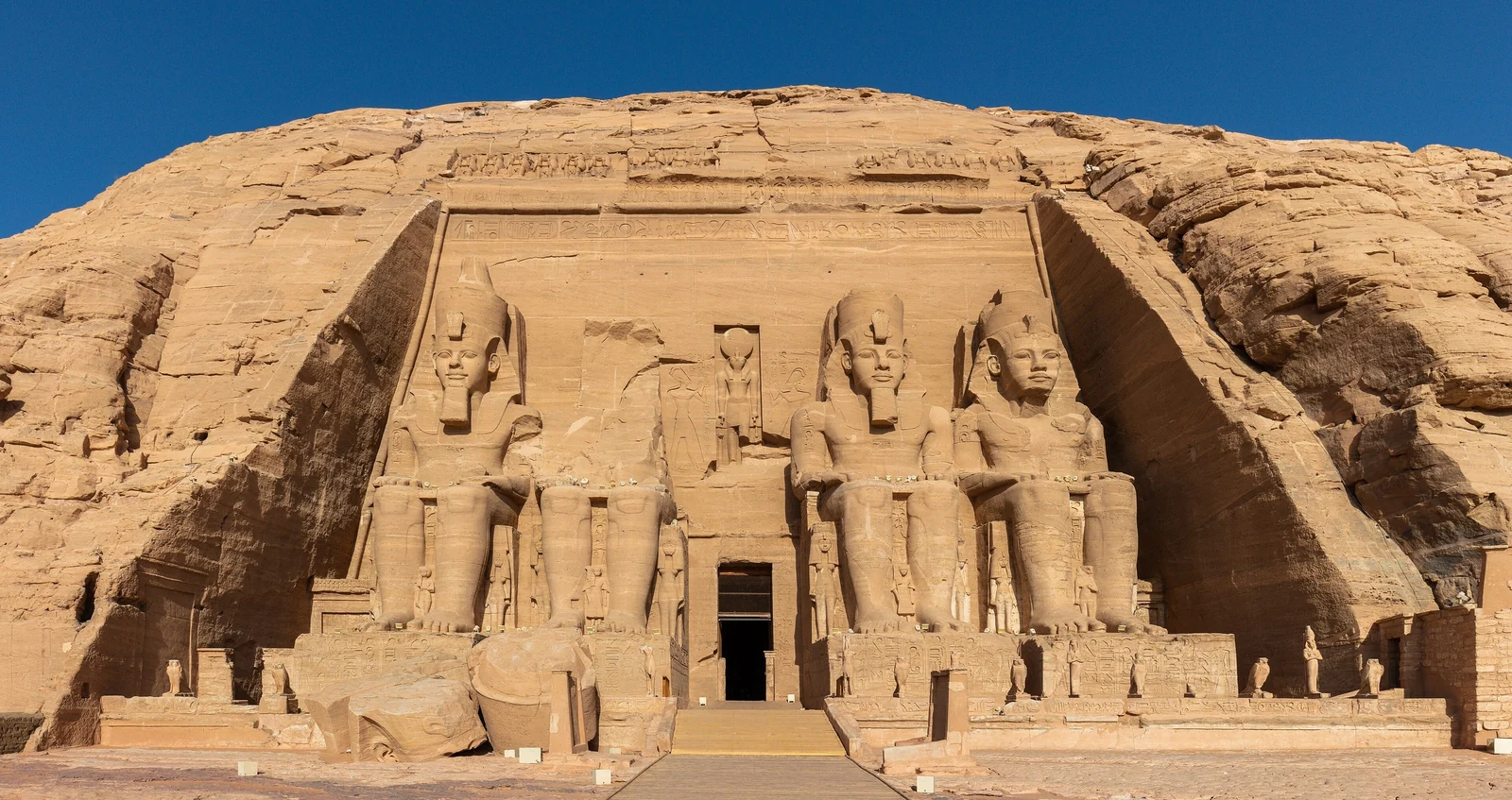
Abu Simbel is two rock-cut temples on the western shore of Lake Nasser, about 280 kilometers (175 miles) south of Aswan and a short distance from the Sudanese border. The larger one, built for Ramesses II in the 13th century BC, is fronted by four seated statues of the pharaoh, each around 20 meters tall. It is the most dramatic single monument in Egypt outside the Giza plateau, and the journey from Aswan is part of the experience.
Most visitors go as a long day trip, leaving in the dark and returning by early afternoon. You can also fly, or stay overnight. This guide explains what you will see, how the temples were saved from the rising lake, when the sun reaches the inner sanctuary, and how to organize the day. If you are still planning the wider route, start with our Egypt itinerary from Cairo to Aswan.
Why Abu Simbel Is Worth the Journey
Ramesses II ruled Egypt for more than six decades, and he was not modest. Abu Simbel was a message aimed at Nubia, the land to the south, and at anyone sailing up the Nile: this frontier belongs to a god-king. The scale still works. You walk across an open plaza toward a cliff that has been carved into a monarch's face, and the statues get larger with every step.
It is also a rare place where the engineering story rivals the ancient one. In the 1960s the whole complex was cut into blocks and rebuilt on higher ground to keep it from drowning. Knowing that, the seams you can spot in the rock make the visit feel stranger and better.
The Great Temple of Ramesses II
The facade is the postcard: four colossi, two on each side of the doorway, with smaller figures of family members at their feet. Above the entrance a figure of the falcon-headed sun god Ra-Horakhty stands in a niche. Look at the statue to the left of the door, which lost its upper body in antiquity and still lies in pieces at its feet.
Inside, the temple runs straight back into the mountain. The first hall is lined with eight Osiris-style pillar statues of the king, and the walls carry large reliefs, including a sweeping scene of the Battle of Kadesh against the Hittites, where Ramesses is shown charging in his chariot. The reliefs are propaganda, since the battle is generally considered a stalemate, but they are beautifully carved.
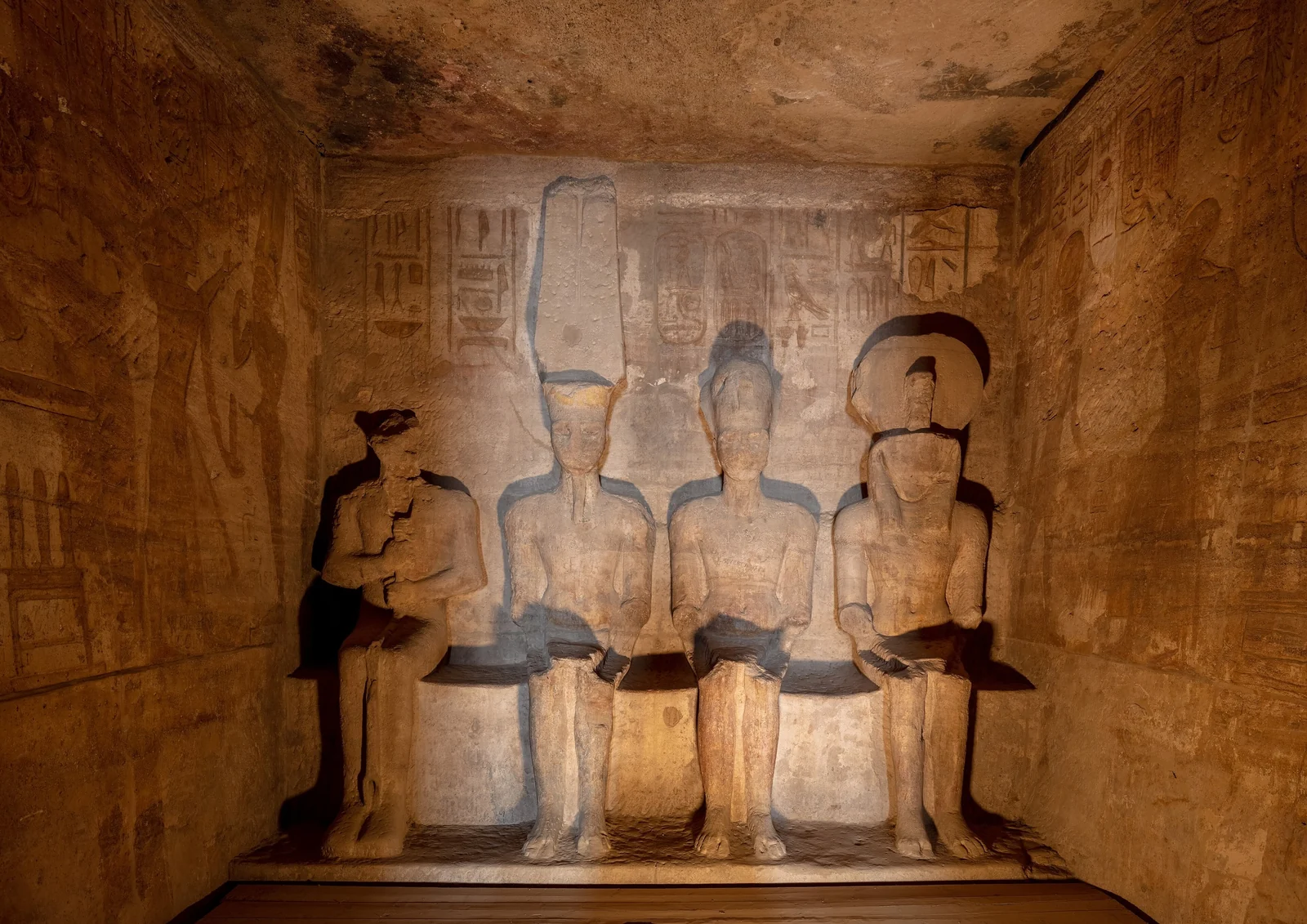
Beyond a smaller hall you reach the sanctuary, where four seated figures sit against the back wall: the gods Ra-Horakhty, Amun-Ra and Ptah, and the deified Ramesses himself. This is the chamber the sun is designed to reach.
The Temple of Nefertari and Hathor
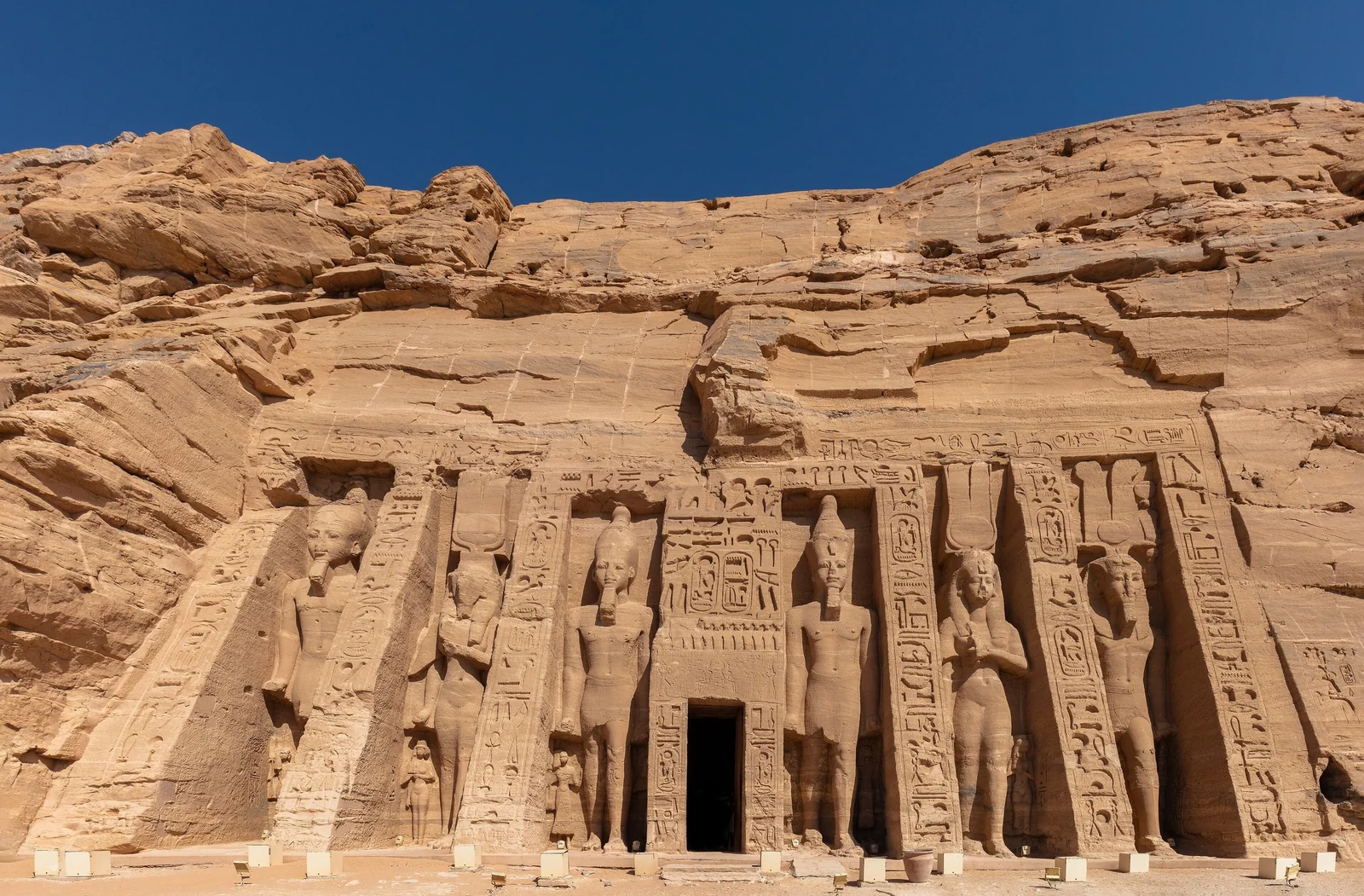
Do not skip the smaller temple a short walk north. It is dedicated to the goddess Hathor and to Ramesses' principal wife, Queen Nefertari, and it is unusual because the queen's statues stand at the same scale as the king's. Her figures flank the doorway beside those of Ramesses, each around 10 meters high.
Many people find this temple more graceful than its neighbor. The interior is quieter, with Hathor-headed columns and delicate scenes of Nefertari making offerings. It is also usually less crowded, so it is a good place to catch your breath once the tour groups have moved on.
How Abu Simbel Was Moved in the 1960s
The temples stood for over three thousand years before the Aswan High Dam threatened them. Once the dam's reservoir, Lake Nasser, began to fill, the original site would have been submerged. UNESCO launched an international campaign in 1960, and work on the rescue began in 1964.
Engineers cut the temples out of the cliff into huge blocks, numbered them, and reassembled them on a new site roughly 65 meters higher and about 200 meters farther back from the water. The inauguration took place in 1968. According to UNESCO's account of the rescue, around 50 countries contributed to the cost. The hill you now see above the temples is an artificial dome built to carry the weight of the rock.
The campaign led to wider efforts to save monuments across Nubia. The group of sites from Abu Simbel to Philae was inscribed together on the UNESCO World Heritage List in 1979 as the Nubian Monuments.
The Sun Festivals in February and October
The temple's axis was set so that, twice a year, the rising sun sends a beam deep down the length of the hall and across the sanctuary. It lights the statues of Amun-Ra, Ramesses and Ra-Horakhty, while Ptah, a god linked with the underworld, stays in shadow. The two dates usually quoted are around February 22 and October 22, and they are often linked to events in the pharaoh's reign, though that connection is a tradition rather than something proved.
Crowds are intense on those mornings, with festivities and large numbers of visitors arriving from Aswan before dawn. Hotels and transport book up well ahead, and the beam lasts only a few minutes. If seeing it is the whole point of your trip, arrange transport and a room early, and expect a crowd rather than a quiet moment with the king. On any other day of the year you get the temple without the scrum.
Getting from Aswan to Abu Simbel
| Option | Time | Best for | Trade-off |
|---|---|---|---|
| Road (private car, minibus or group tour) | About 3 to 4 hours each way | Flexibility and the desert scenery | Very early start, a long day |
| Flight (Aswan to Abu Simbel) | About 30 to 45 minutes in the air | Saving time, or combining with an overnight | Limited seats and schedules, so confirm early |
| Overnight stay at Abu Simbel | Depends on how you arrive | Quiet sunrise and sunset | Few accommodation options, and fewer services |
By Road
The road runs south through flat, empty desert, with little to see except sand, the occasional checkpoint and a glimpse of the lake. Group tours usually leave Aswan in the small hours so that you arrive in the morning, spend about two hours at the site and return by the afternoon. Arrangements for traveling in convoy and police checkpoints have changed over the years, so ask your hotel or a licensed operator what applies when you go.
A shared minibus is cheapest, while a private car costs more and lets you set a slightly less brutal start time. Either way, bring water, a hat and something to read. Many people sleep most of the way there.
By Air
Flying from Aswan to Abu Simbel takes well under an hour, and the airport is close to the temples. Schedules have varied, and the flight is usually sold as a short excursion or as an add-on to a tour package, so check current times and booking details directly with EgyptAir or your tour provider. It is the best choice if you hate pre-dawn starts or are short on time.
From the Lake by Cruise
A few multi-day cruises sail Lake Nasser and end at Abu Simbel, and the temples look good when you arrive by water. These are specialist trips rather than a way to get from Aswan in a day. If it appeals, compare itineraries carefully and confirm what is included.
Adding Philae Temple and the High Dam
Abu Simbel is a half-day of driving each way, so pair it with the nearer Aswan sights on another day. The two most obvious are the High Dam and Philae.
Philae Temple
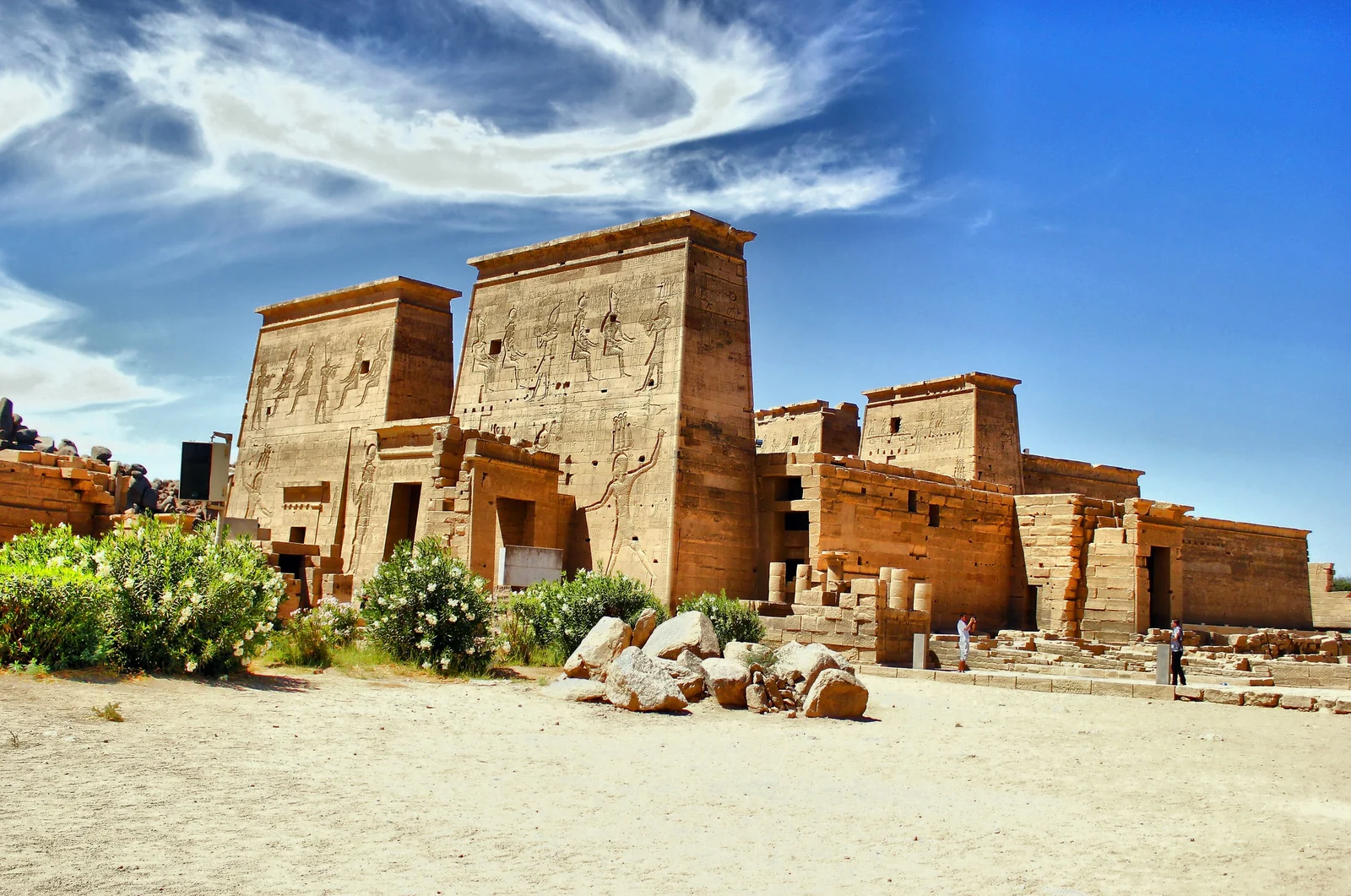
Philae is a temple to the goddess Isis, built mainly in the Ptolemaic and Roman eras. Like Abu Simbel, it was a casualty of the dams and was dismantled and rebuilt, in this case on Agilkia Island, in the 1970s. You reach it by a short boat ride from the landing, and the setting among the water and palms is lovely in the soft light of late afternoon.
The Aswan High Dam
The High Dam is the reason Abu Simbel had to move. It is not pretty, but it explains a lot about modern Egypt, from the flow of the Nile to the lake that now covers old Nubia. Most visitors stop for a short look at the dam wall and the monument beside it, often on the same trip as Philae. Treat it as a quick stop, not a headline.
Best Time to Visit and Heat Tips
Aswan and Abu Simbel are among the hottest places in Egypt. From roughly November to March the days are dry and pleasant, and early mornings can be properly cool. Summer is a different story, with midday temperatures that can pass 40°C (104°F) and almost no shade at the temple plaza.
- Go early: arrive at opening if you can. The light is gentler on the facade, and the heat and the crowds build quickly.
- Cover up: a wide-brimmed hat, sunglasses, sunscreen and light long sleeves beat shorts and a tank top, even in cool weather.
- Carry water: the site is open desert, and you will walk across wide, shadeless ground.
- Wear solid shoes: paths are sandy and uneven, and the interior floors can be polished and slick.
- Check photo rules: restrictions on cameras and phones inside the temples have changed, so confirm at the gate.
Practical Tips for the Day
Ticket prices and opening hours change, and foreign visitors are charged more than residents, so check the current details with your operator or the Egyptian tourism authorities rather than trusting an old blog post. Keep your passport handy, since you may be asked for it at checkpoints on the road.
- Book through your hotel or a licensed operator: a reputable provider will confirm the departure time, what is included and whether the site entry is part of the price.
- Allow two to three hours on site: the two temples, the plaza and the view over the lake fill that time easily.
- Bring cash for small expenses: snacks, tips and souvenirs are often paid for in cash, so carry small bills.
- Hire a guide or read ahead: the reliefs make far more sense once you know who is who, and a guide can point out the best details quickly.
- Stay overnight if you can: staying near the site gives you the temples in calmer hours, though options are limited.
For other ideas in the country, browse our Egypt travel guides, or step back to the wider African landscape if you are building a longer trip. If the empty desert along the road fascinated you, our guide to the Sahara explains what lies around you.
Abu Simbel FAQ
How far is Abu Simbel from Aswan?
Abu Simbel is about 280 kilometers (175 miles) south of Aswan. The drive takes roughly three to four hours each way, depending on traffic and checkpoints. A flight takes well under an hour, though you must allow time for airport transfers.
Is Abu Simbel worth the long trip from Aswan?
Yes, for most visitors. The scale of the Great Temple's facade, the reliefs inside and the story of its relocation make it one of Egypt's top sites. If the pre-dawn drive worries you, fly, or stay overnight near the temples.
When is the Abu Simbel sun festival?
The sun alignment is usually given as around February 22 and October 22, when light reaches the inner sanctuary. Visitor numbers are very high on those mornings, so book transport and rooms well in advance and expect a crowd.
Why was Abu Simbel moved?
The Aswan High Dam created Lake Nasser, whose rising waters would have submerged the temples. After an international UNESCO campaign launched in 1960, the temples were cut into blocks and rebuilt on higher ground, with the work finishing in 1968.
How long do you need at Abu Simbel?
Allow two to three hours. That is enough for the facade and plaza, the interior of the Great Temple, the Temple of Nefertari and the views over the lake. Many group tours allow around two hours, so ask your operator about timing.
Can you do Abu Simbel and Philae in one day?
It is possible but exhausting, and not recommended. Abu Simbel alone takes most of a day because of the travel. Visit Philae and the High Dam on a separate day, ideally in the afternoon when it is cooler and the light is softer.
What should you wear to Abu Simbel?
Wear light, breathable clothing that covers shoulders and knees, plus a hat, sunglasses and comfortable closed shoes. The site is open and shadeless, and mornings can be cold in winter, so a light layer helps for the early drive.