Essaouira is an easy day trip from Marrakech: it sits about 175 km west on the Atlantic coast, and a direct bus takes roughly three hours each way. You get a walled, UNESCO-listed medina, a row of sea-facing cannon ramparts, a working fishing port and a long windy beach, all small enough to see on foot in a single day.
A day trip works, with one honest caveat. The bus ride eats six hours of your day, which leaves about five or six on the ground. That is enough for the highlights but not for a slow lunch plus a beach afternoon plus the sunset. This guide covers how to get there, what to do hour by hour, what the wind means for your plans and when an overnight is the smarter call. If Marrakech is your base, start with our Marrakech travel guide.
Getting from Marrakech to Essaouira
Your realistic choices are the bus, a shared taxi (grand taxi) or a private driver or organized tour. Trains do not reach Essaouira, so the road is the only way in.
| Option | Typical journey | Best for | Watch out for |
|---|---|---|---|
| Supratours or CTM bus | About 3 hours each way | Budget travelers, independent days | Fixed timetable; book the return ahead in busy periods |
| Shared grand taxi | Often a bit under 3 hours | Flexibility, leaving when the car fills | Fares are negotiated; the car leaves only when full |
| Private driver or day tour | About 2.5 to 3 hours, plus stops | Families, groups, a set schedule | Cost is far higher; check how long you actually get in town |
| Rental car | About 2.5 to 3 hours | Argan stops and your own pace | Parking is outside the walls; drive carefully on the busy road |
By bus
Supratours and CTM both run coaches between Marrakech and Essaouira. The Supratours service stops close to the medina walls in Essaouira, which makes a day trip simple. Fares and departure times change, so check the operators' own sites for the current timetable and note the last bus back before you plan anything else: Supratours and CTM both sell tickets online.
Take an early departure. A bus leaving Marrakech around 8 or 9 a.m. puts you in Essaouira before noon and leaves most of the afternoon free. Pick a return coach with a cushion before dark, because the road is not one you want to improvise at night.
By shared taxi or private driver
Grand taxis leave from the main bus station area in Marrakech once they have a full load. They are faster than the bus but less comfortable, and the price is something to agree before you get in. A private driver costs more yet lets you stop at the argan cooperatives and roadside viewpoints along the way, and you set the return time.
Why Essaouira Is Worth the Trip
Marrakech is hot, dense and loud. Essaouira is breezy, whitewashed and unhurried, with gulls over the harbor and a sea smell in every lane. The contrast is the point. The city was laid out in the 18th century on a deliberate plan commissioned by Sultan Sidi Mohammed ben Abdallah, with French engineer Théodore Cornut credited with the design, which is why the medina runs on straight, regular streets instead of the maze you know from Marrakech or Fez.
UNESCO inscribed the Medina of Essaouira on the World Heritage List in 2001, recognizing it as an example of a fortified seaport town combining European military architecture with North African tradition. The old name, Mogador, still turns up on signs and in history books. Orson Welles shot scenes of his film Othello here, which locals still mention.
The Medina: Walls, Lanes and Souks
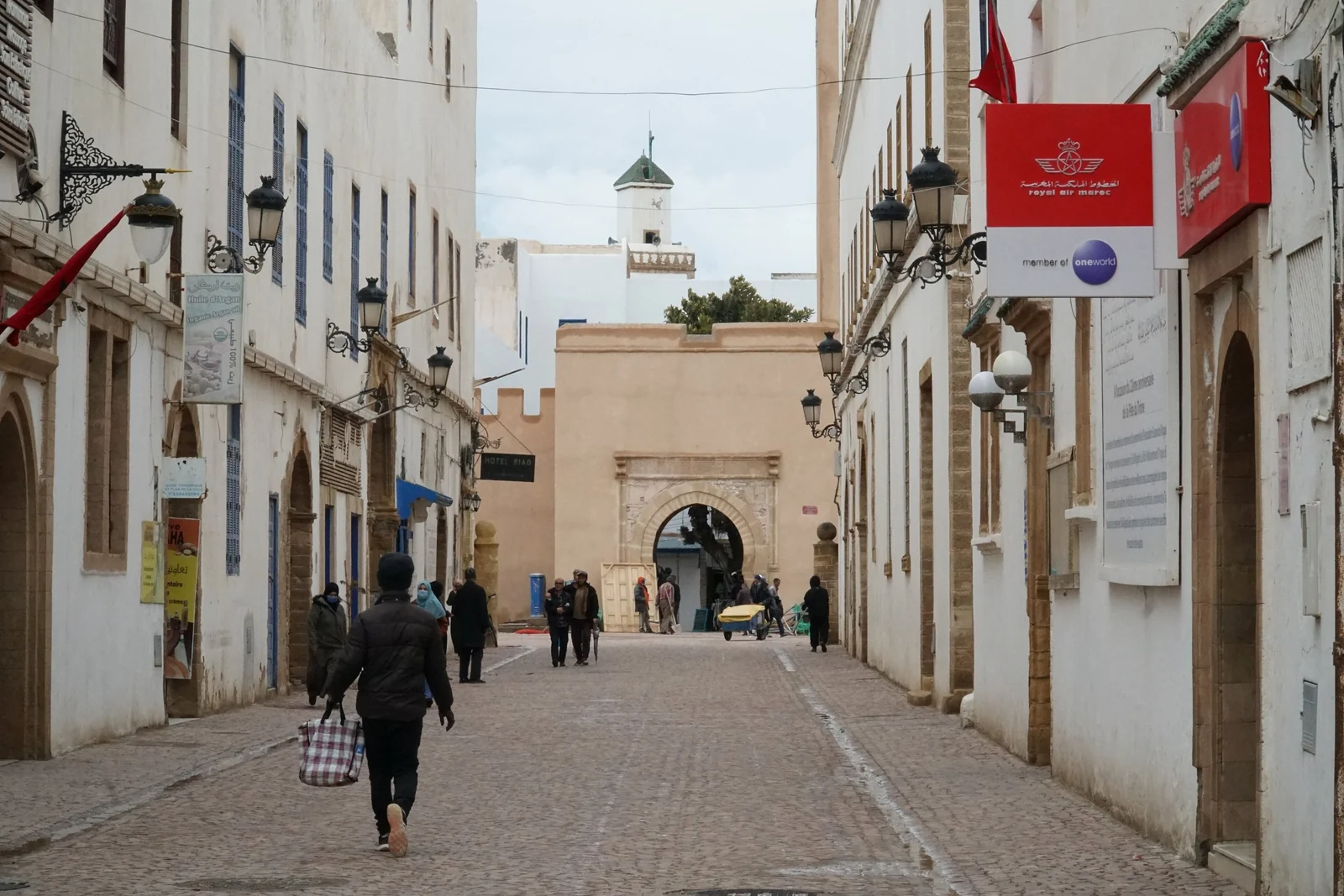
The medina is compact and flat, so you cannot get truly lost. The lanes are mostly whitewashed with blue shutters and doors, and the pace is gentler than anywhere in Marrakech. Vendors are less pushy, though bargaining is still expected.
What to look for
- Thuya wood workshops. Essaouira is known for marquetry made from the roots of the thuya tree: boxes, chess sets and small furniture. Ask about the grain and the inlay, and compare a few workshops before buying.
- Souk Jdid and the spice stalls. The market area near the main gates sells spices, textiles, slippers and household goods at a lower-key pace than in Marrakech.
- Art galleries. The medina has long drawn painters and musicians, and small galleries sit among the craft shops.
- Cafés on Place Moulay Hassan. A mint tea here is a good way to rest and watch the square fill with locals and tour groups.
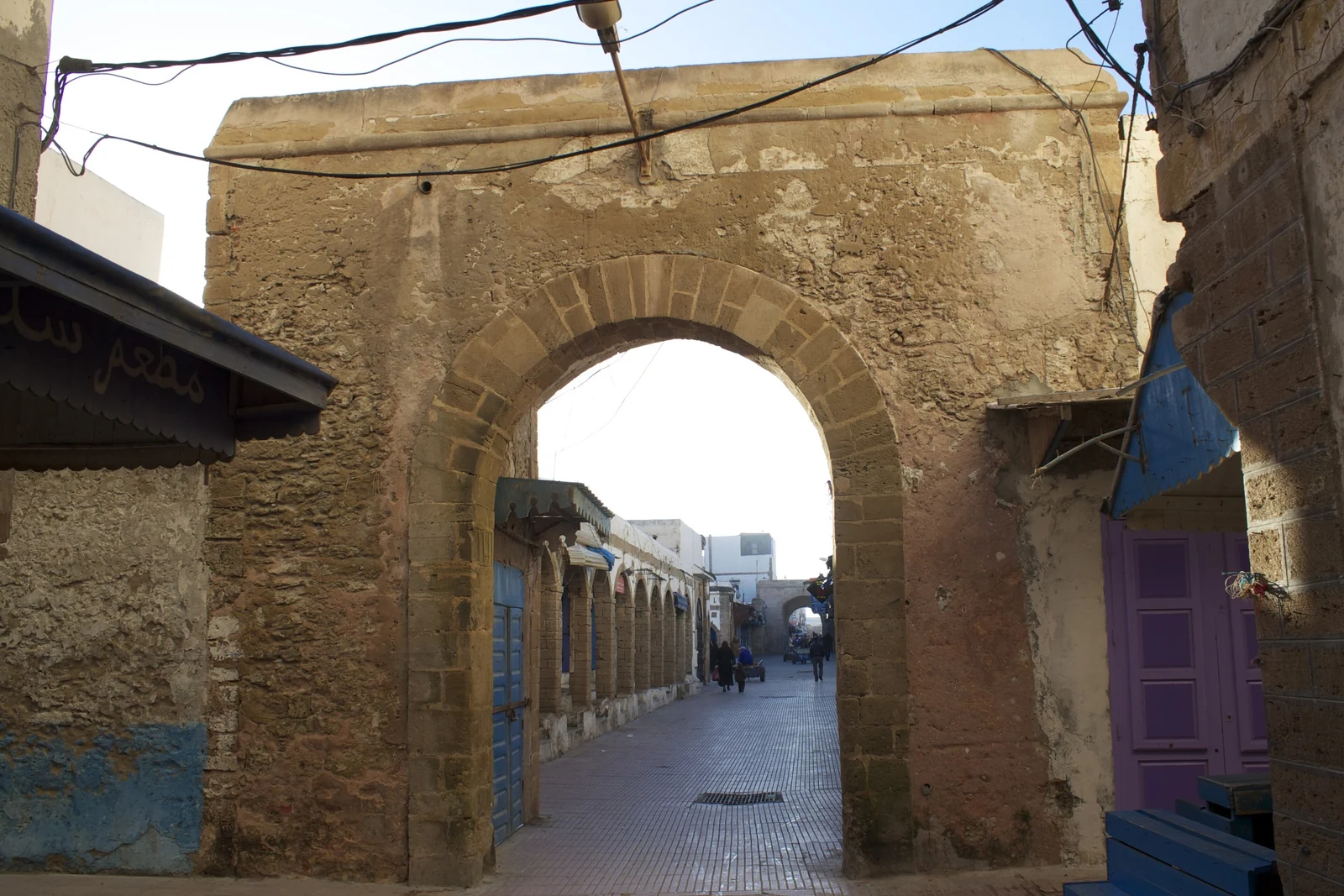
Make time for the Mellah, the old Jewish quarter, where the street layout and old houses speak to the town's mixed Muslim and Jewish past. Essaouira historically had a large Jewish community, and a few synagogues and cemeteries remain part of the story.
The Skala Ramparts and the Skala du Port
The Skala de la Ville is the sea bastion on the Atlantic side of the medina, lined with old cannon facing the ocean. Walk the broad rampart late in the day and the waves crash against the rocks below, the walls turn gold and the islands offshore come into focus. It is the single best view in town and one of the easiest to reach.
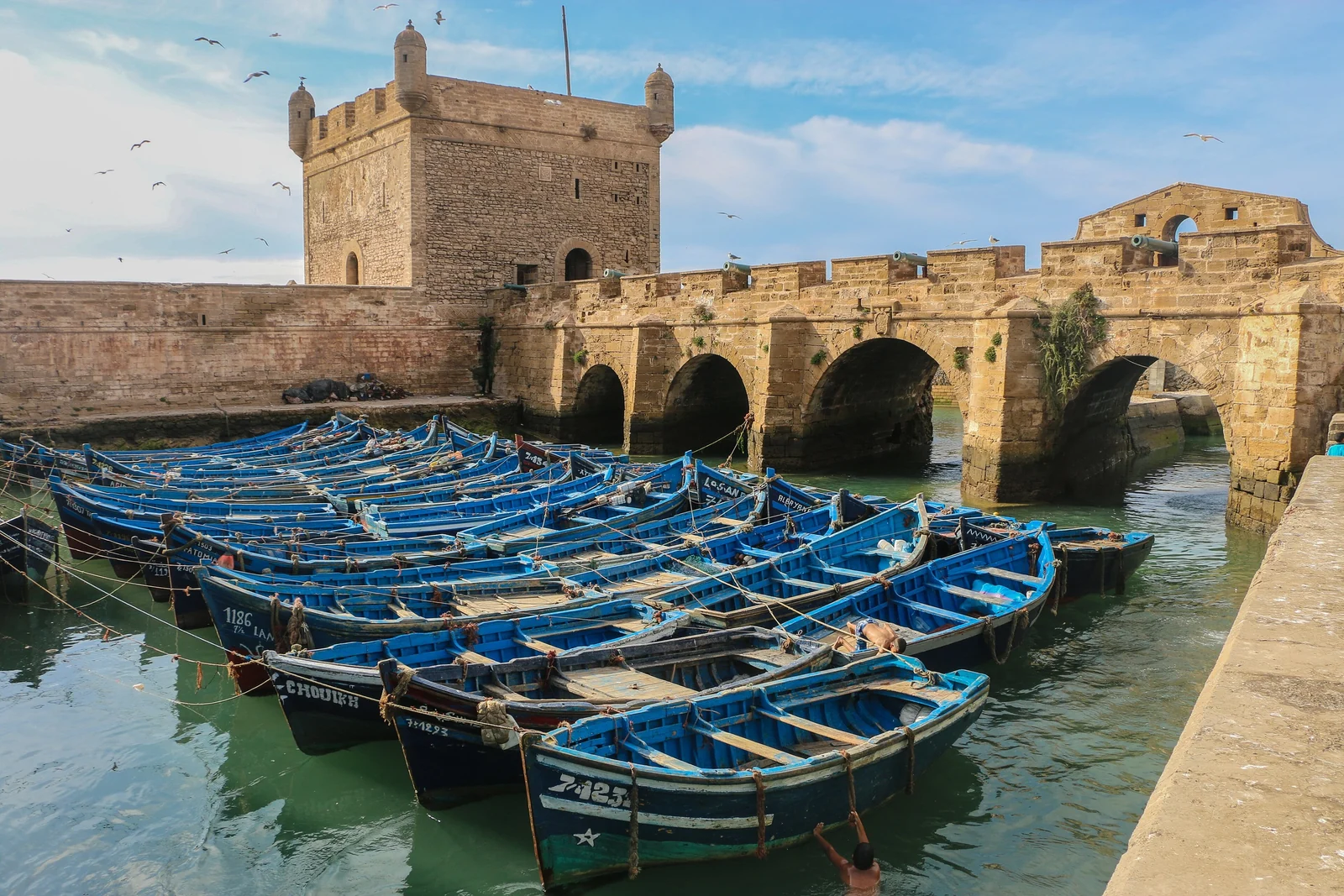
The smaller Skala du Port guards the harbor entrance and has a tower you can climb for views over the boats. Entry fees can apply at times, so keep a few coins ready, and expect to share the platforms at sunset with plenty of photographers.
The Fishing Port
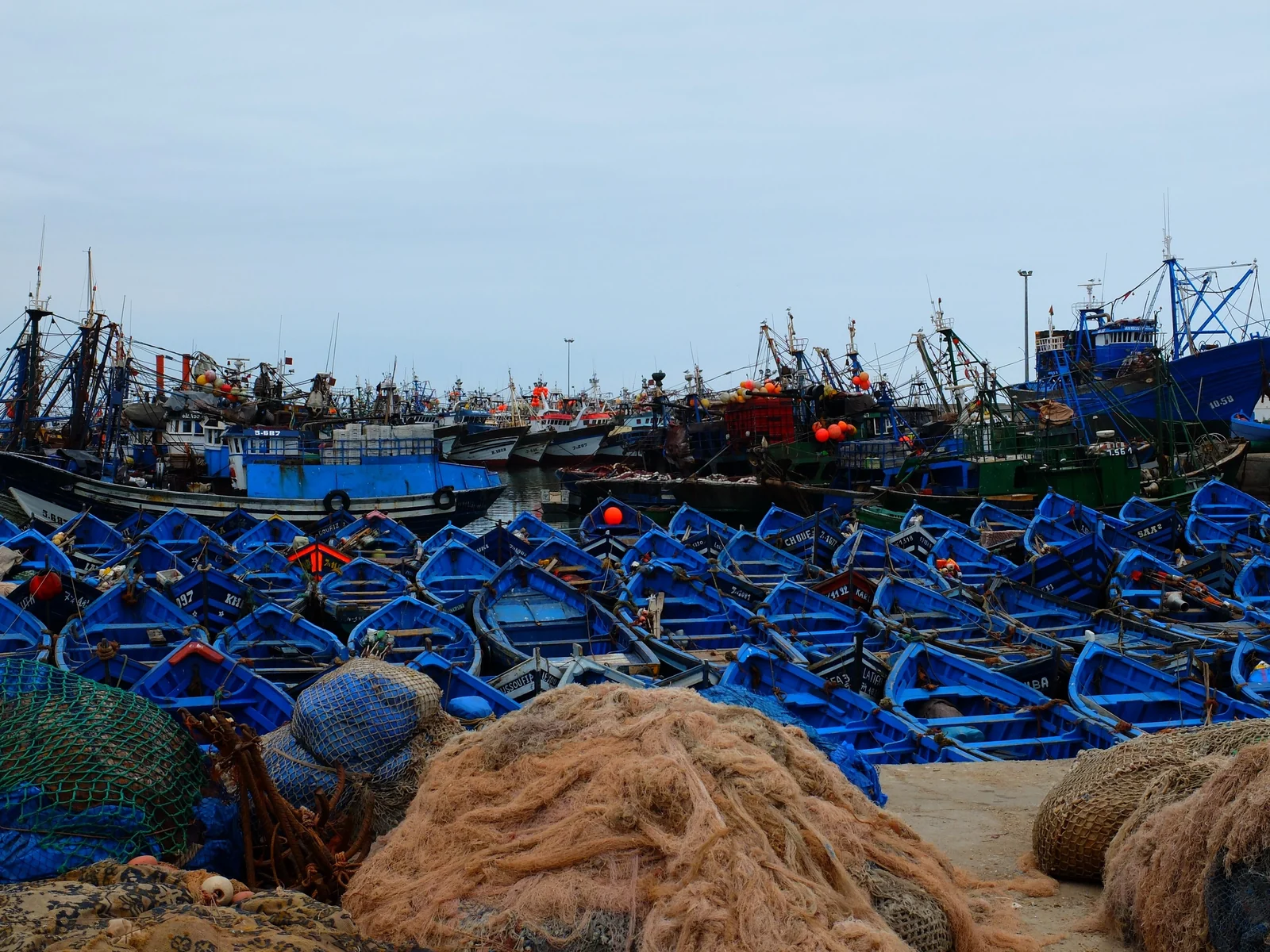
The harbor is where Essaouira feels least like a postcard and most like a working town. Painted blue wooden boats crowd the quay, nets are mended on the stones and gulls swarm whenever a catch comes in. It is loud, smelly and entirely real, and it is the best free thing in town.
Eating at the port
Stalls near the harbor sell fish by weight, which they grill on the spot. Choose your catch at the counter, agree the price before it is cooked, and eat at a plain table beside the market. Sardines, calamari and whatever else came in that morning are the safest bets. For a sit-down meal, the restaurants around the medina's main squares serve tajines and seafood.
Wind, Beach and Kitesurfing
Essaouira is windy. The Atlantic trade winds blow here for much of the year, especially in summer, and they make the city a magnet for windsurfers and kitesurfers. They also mean the beach is better to look at than to lie on, because blown sand and a cool breeze are common even on hot days. Pack a light jacket, even if Marrakech is baking.
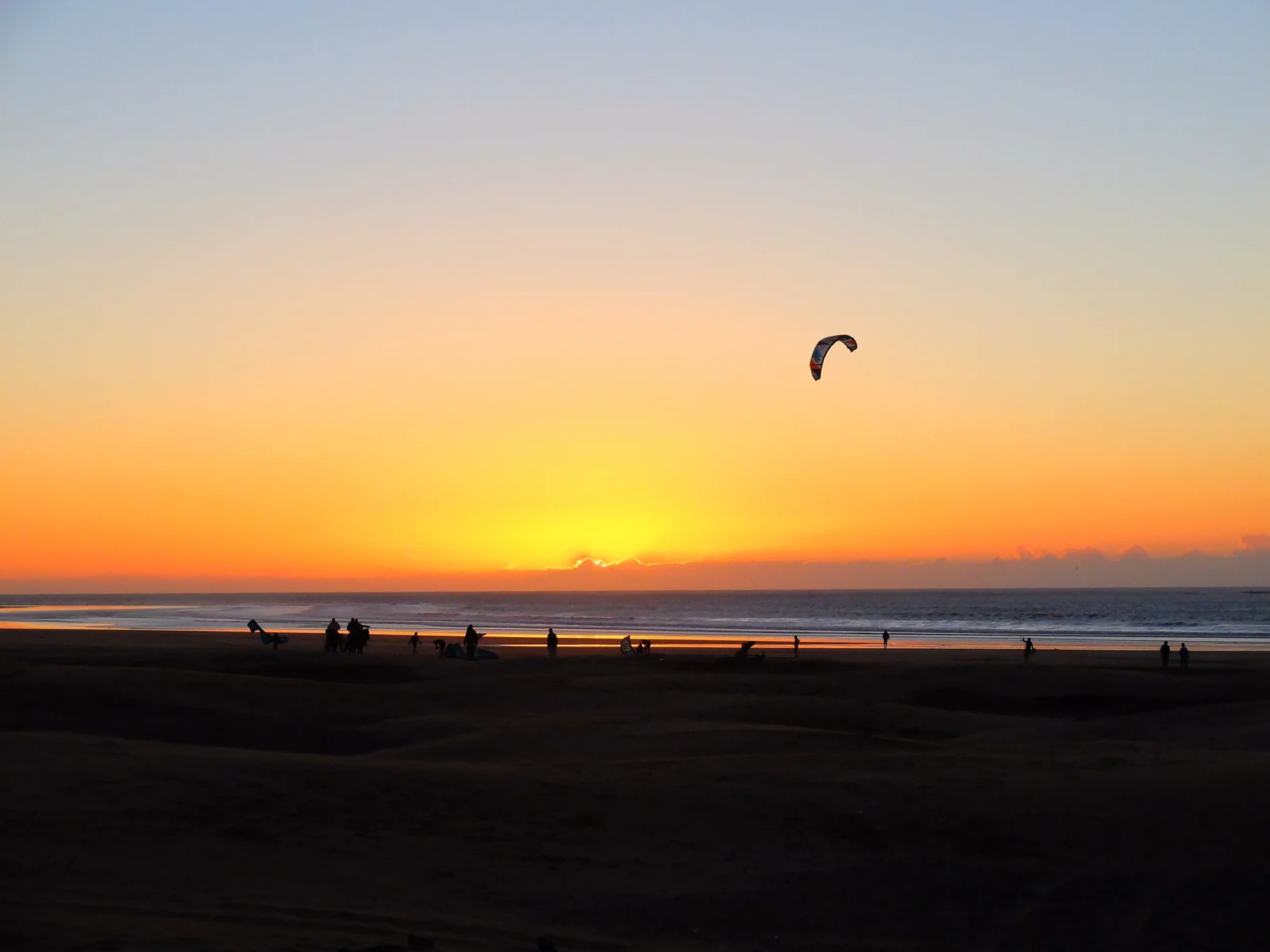
The long bay stretches south from the medina, and local schools offer lessons and equipment hire for kitesurfing, windsurfing and stand-up paddling. A short lesson fits into a day trip, but it will use up most of your free hours. Offshore, the Îles Purpuraires are a protected nature area for seabirds, and you can see them from the ramparts.
Argan Oil and the Road in Between
Between Marrakech and the coast the landscape turns to argan country. The argan tree grows in the southwest of Morocco, and UNESCO recognized the know-how around argan as intangible cultural heritage in 2014. Women's cooperatives crack the nuts by hand and press the oil used in cooking and cosmetics.
If you travel by private car, a stop at a cooperative is a good way to see how the oil is made. Cosmetic argan oil is pale and unroasted, while the culinary version is made from roasted kernels and tastes nutty. Buy from a cooperative rather than a roadside stall that looks too good to be true, and ask which type you are getting. Goats standing in the trees by the road are sometimes put there for tourists, so treat them as a curiosity, not a reason to stop.
Day Trip or Overnight: Which Is Better?
A day trip is worth it if you have limited time and only want the ramparts, the medina and a fish lunch. An overnight is better if you want to see the town after the day-trippers leave, to catch both sunrise and sunset or to try kitesurfing without rushing.
| Day trip | Overnight | |
|---|---|---|
| Time on the ground | About 5 to 6 hours | A full afternoon plus a morning |
| Pace | Rushed but doable | Relaxed |
| Best for | Short Marrakech stays, a first look | Beach time, lessons, sunsets |
| Main drawback | Six hours of travel in one day | Needs a night's accommodation |
| Evening atmosphere | You miss it | Quiet lanes, lit ramparts, calm dinner |
Essaouira has plenty of small riads and guesthouses inside the medina, and most visitors choose one there over the beachfront hotels. Prices vary a lot by season, so check current rates directly. If you stay the night, you can also plan onward trips such as a Sahara desert tour or the Aït Benhaddou day trip, both of which also start from Marrakech.
A Realistic Day-Trip Plan
- Morning. Take an early bus from Marrakech and arrive around midday, or sooner with a private driver.
- Midday. Walk straight to the port, pick a grilled-fish lunch and watch the boats.
- Early afternoon. Wander the medina, visit one or two workshops and have a mint tea on Place Moulay Hassan.
- Late afternoon. Walk the Skala ramparts. If the wind allows, take a short stroll on the beach.
- Evening. Take the return bus with a safe margin before dark.
Best Time to Visit and Practical Tips
Essaouira has a mild Atlantic climate and is cooler than Marrakech much of the year. Spring and autumn are the most comfortable seasons, while summer brings the strongest winds and the best kitesurfing but a chilly breeze in the evening. Winter days can be cool and cloudy with some rain. The Gnaoua World Music Festival, usually held in the town around June, fills the streets with concerts. Book accommodation well ahead if you plan to stay then, and expect a day trip during the festival to be crowded.
- Dress in layers. The wind can feel cold even on a sunny day.
- Carry small bills. Port stalls, ramparts and small shops often prefer cash.
- Agree prices first. This applies to shared taxis, fish at the port and guides.
- Respect local customs. Dress modestly in the medina and ask before photographing people.
- Check the return timetable. Confirm the last departure for your operator on arrival.
For more places around the country, see our Morocco travel guides. If you are heading north afterward, our Chefchaouen guide covers the blue city of the Rif.
Essaouira Day Trip FAQ
How far is Essaouira from Marrakech?
About 175 km by road. The bus takes roughly three hours each way, and a private driver or shared taxi can be a little quicker depending on traffic and stops.
Is Essaouira worth a day trip from Marrakech?
Yes, if you want a change of pace. You can see the medina, the Skala ramparts and the fishing port in a few hours, but the bus time is long, so an overnight stay suits slower travelers better.
What is the best way to get from Marrakech to Essaouira?
The Supratours or CTM bus is the simplest and cheapest option, and Supratours stops close to the medina walls. A private driver or shared taxi is more flexible. Check each operator's site for current times and fares.
When is the best time to visit Essaouira?
Spring and autumn are the most comfortable. Summer is windy, which is ideal for kitesurfing but cool on the beach. The Gnaoua World Music Festival, usually around June, is lively but crowded, so book ahead.
Can you swim and kitesurf at Essaouira?
Yes, though the Atlantic is cold and the wind is strong. Local schools offer lessons and rental for kitesurfing and windsurfing, and the long bay suits both experienced riders and beginners with an instructor.
What should you eat in Essaouira?
Grilled fresh fish from the stalls near the port is the classic choice, with sardines, calamari and other catches sold by weight. Agree the price before it is cooked, and try tajine or seafood in the medina for a sit-down meal.
Is one day enough in Essaouira?
One day covers the main sights if you start early, but you will have to skip long beach time and the evening. Stay a night if you want to try kitesurfing, enjoy the sunset and see the town after the day-trippers leave.