


Marrakech is Morocco's great southern city, a walled medina of red-ochre lanes at the foot of the High Atlas. People come for the theater of Jemaa el-Fnaa, the maze of souks, palaces covered in carved cedar and painted tile, and gardens that feel like a reward after the noise. It is also Morocco's most practical base for mountain and desert day trips.
This Marrakech travel guide covers the landmarks, the souks and haggling, Jardin Majorelle, riads versus hotels, hammams, food, day trips, timing, etiquette and scams. Three full days is a good minimum; five lets you add the mountains and the coast.
Marrakech can be loud and pushy, and preparation pays off. For more ideas, browse our Morocco travel guides.
The Medina and Jemaa el-Fnaa
The medina, founded by the Almoravids in the 11th century and enclosed by miles of earthen ramparts, was listed by UNESCO as a World Heritage Site in 1985.
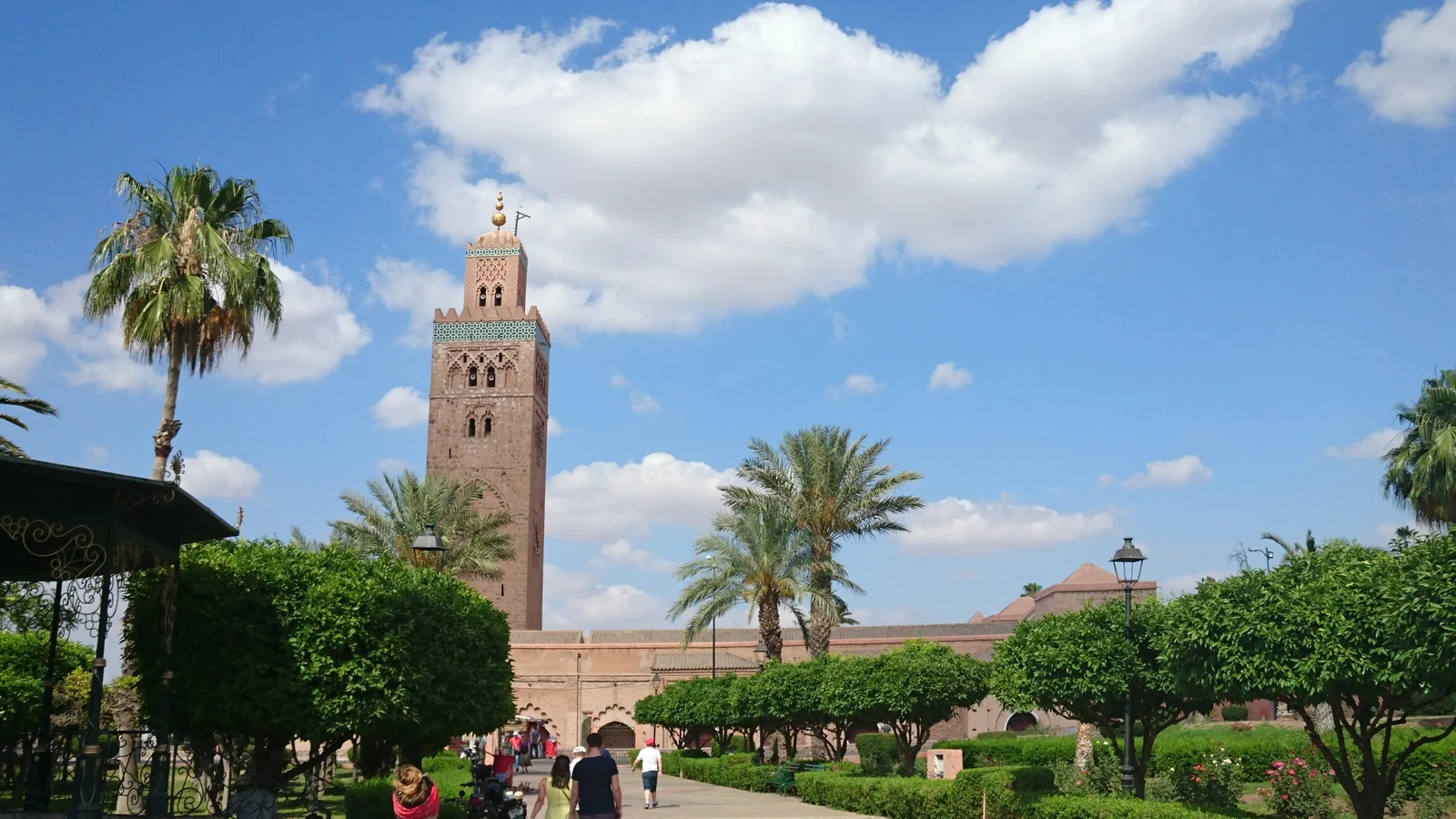
Its center of gravity is Jemaa el-Fnaa, the vast open square below the Koutoubia minaret. UNESCO recognized the square's storytellers, musicians and performers as a masterpiece of intangible heritage in 2001, and the point of coming here is the human spectacle rather than any building.
Morning to Midnight on the Square
By day the square is fairly quiet: orange-juice stalls, henna artists, water sellers in fringed hats and, sadly, snake charmers and chained monkeys we'd rather you skip. Around late afternoon the food stalls roll in, smoke rises from the grills and circles of spectators form around musicians and storytellers. Watch the sunset from a rooftop café on the edge, then walk through it, and expect anyone you photograph to ask for a tip.
How to Navigate the Souks and Haggle
The souks begin directly north of Jemaa el-Fnaa and spread toward the Ben Youssef Madrasa. Souk Semmarine is the main artery; side lanes branch off into areas once organized by trade, from leather and lanterns to spices, carpets and the dyers' quarter, where skeins of colored wool hang to dry overhead.
Finding Your Way
Getting lost is part of the experience, and it is rarely serious. Download an offline map before you go, note a landmark near your riad and remember that most main lanes eventually lead back to the square. If you need directions, ask a shopkeeper rather than accepting a teenager's offer to walk you, which usually ends with a request for money or a detour into a shop.
Haggling Without the Stress
Bargaining is expected for crafts, and it should feel like a friendly negotiation, not a fight. A few rules keep it pleasant:
- Look before you ask. Wander several shops first to get a sense of what things cost and what quality looks like.
- Let the seller name a price. Then counter well below it and work toward the middle slowly.
- Only bargain if you want it. Agreeing on a price and then walking away is considered rude.
- Be ready to leave. Polite walking away is the strongest move you have, and it often brings a better offer.
- Fixed-price shops exist. If haggling isn't for you, cooperative and fixed-price stores in Gueliz and around the medina take the pressure off.
Marrakech Landmarks: Koutoubia, Palaces, Tombs and the Madrasa
Koutoubia Mosque
The Koutoubia's 77-meter minaret, completed under the Almohad caliph Yaqub al-Mansur in the late 12th century, is the city's compass point and a model for later Almohad towers in Seville and Rabat. Non-Muslims cannot enter the mosque, but the gardens beside it are free and pleasant, especially when the call to prayer echoes across the square.
Bahia Palace
Begun in the 1860s by the grand vizier Si Moussa and expanded by his son Ba Ahmed in the 1890s, the Bahia Palace is a sequence of courtyards, gardens and reception rooms with painted cedar ceilings, zellij tilework and carved stucco. It is unfurnished, so the decoration is the show. Arrive at opening time; by late morning the tour groups fill the rooms.
Saadian Tombs
Sealed off for centuries and brought back to public attention in 1917, the Saadian Tombs hold members of the dynasty that ruled in the 16th century, including Sultan Ahmad al-Mansur. The Hall of the Twelve Columns, with its marble pillars and gilded muqarnas, is small, and the line to peek in can be long. The ruined El Badi Palace is nearby.
Ben Youssef Madrasa
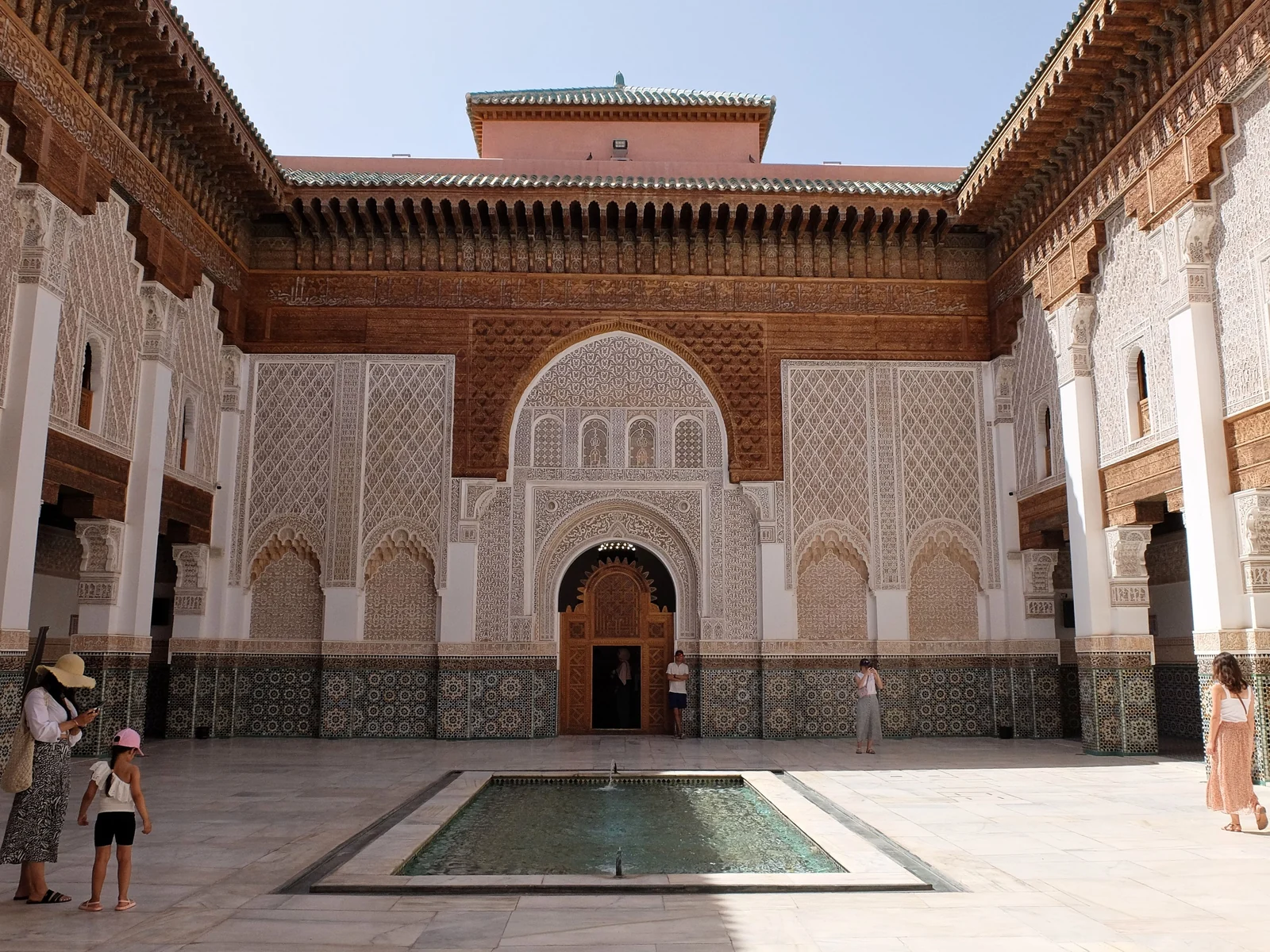
This former Quranic college, rebuilt by the Saadians in the 1560s, was once among the largest in North Africa. The central courtyard, with its long pool framed by tile, stucco and carved cedar, is one of the finest interiors in Morocco. Climb upstairs to see the tiny student cells that look onto small inner light wells.
Jardin Majorelle and the Yves Saint Laurent Museum
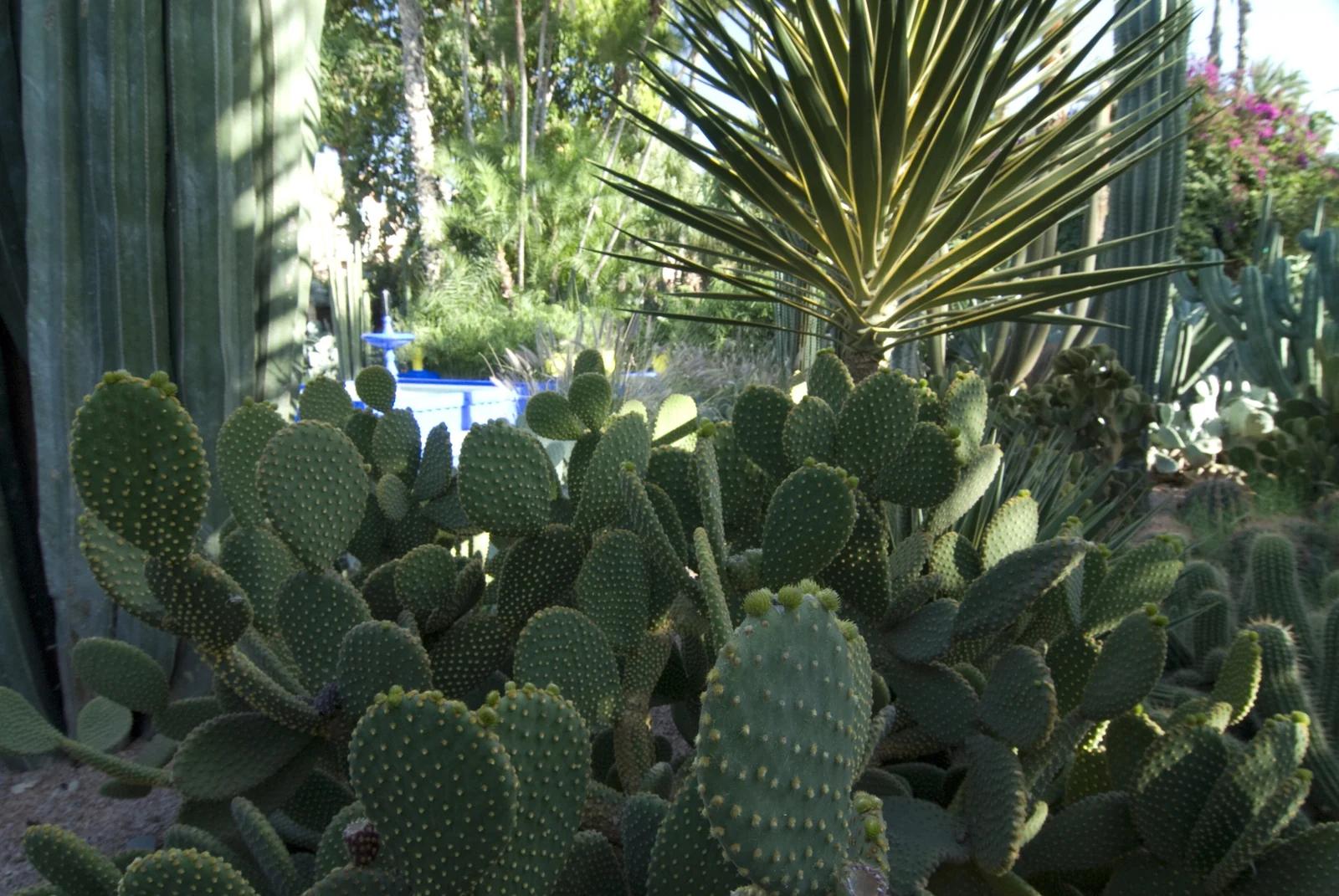
The French painter Jacques Majorelle began this garden in 1923, painting its walls and pavilions the intense shade now called Majorelle blue. Yves Saint Laurent and Pierre Bergé bought and restored it in 1980, saving it from development. Today the ticket covers the garden of cacti, palms and bamboo, the Pierre Bergé Museum of Berber Arts in the former studio, and the Musée Yves Saint Laurent Marrakech next door, which opened in 2017.
Tickets must be bought online through the official Jardin Majorelle site, which warns that tickets from other sellers will not get you in. Book a slot at opening time; the garden is small and the paths get crowded fast. Combine it with lunch in Gueliz, the modern town.
Riads vs Hotels: Where to Stay in Marrakech
A riad is a traditional house built around an inner courtyard or garden, and many in the medina have been turned into small guesthouses. Staying in one is the classic Marrakech experience: thick walls, a roof terrace, breakfast in the courtyard and the hum of the city outside. They vary enormously, from simple and family-run to lavishly designed.
| Option | Best for | Trade-offs |
|---|---|---|
| Riad in the medina | Atmosphere, walking access to the souks and square | Hard to find at first, no car access, small rooms, stairs |
| Hotel in Gueliz or Hivernage | Restaurants, easy taxis, modern comforts | Less character, a taxi or long walk to the medina |
| Resort in the Palmeraie | Pools, space and quiet | Far from everything; you depend on transfers |
Our advice: pick a medina riad within a short walk of a taxi-accessible gate, and ask the riad to meet you on arrival. Read recent reviews for noise and hot water.
Hammams and What to Eat in Marrakech
The Hammam Ritual
Moroccan steam baths are a weekly ritual for many locals. In a neighborhood public hammam, with separate hours or sections for men and women, you bring your own black olive-oil soap, a kessa scrubbing glove and a towel, and an attendant can scrub you for a small fee. Spa hammams in riads and hotels are more private and much pricier, but still worth it after a long day of walking.
Dishes to Try
- Tanjia: the Marrakech specialty, beef or lamb slow-cooked in a clay urn, traditionally in the embers of a hammam furnace.
- Tagine: named for its conical pot; try chicken with preserved lemon and olives.
- Harira: a tomato, lentil and chickpea soup, often eaten to break the fast during Ramadan.
- Msemen and amlou: flaky griddle bread with a spread of almonds, honey and argan oil, ideal for breakfast.
- Mint tea: green tea with fresh mint and plenty of sugar, poured from a height and offered everywhere.
The Jemaa el-Fnaa food stalls are fun, especially for grilled meats and the famous snail soup. Choose busy stalls with fast turnover, check the price before you sit and ignore the touts who try to steer you in. Alcohol is limited to licensed restaurants, bars and hotels.
Day Trips from Marrakech
| Destination | Approx. drive | Best for |
|---|---|---|
| Imlil and the High Atlas | About 1.5 hours | Mountain walks, Berber villages, views of Toubkal |
| Ourika Valley | About 1 hour | River valley, waterfalls at Setti Fatma |
| Agafay Desert | About 45 minutes to 1 hour | Stony desert scenery, sunset, camel rides |
| Essaouira | About 2.5 to 3 hours | Atlantic coast, a walled port town, seafood |
Imlil and the Atlas Mountains
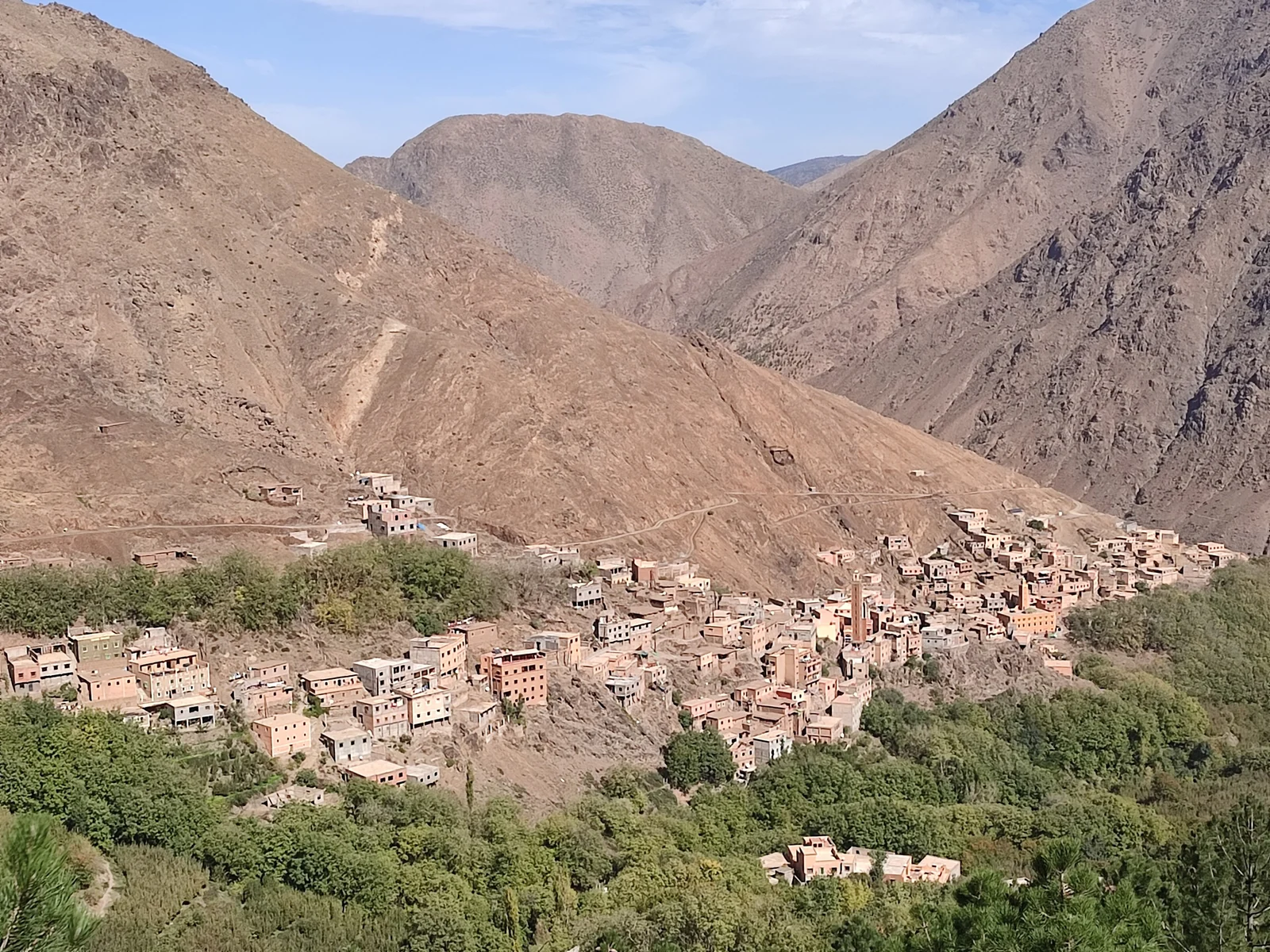
Imlil is the trailhead village for Jebel Toubkal, at 4,167 meters the highest peak in North Africa. Even without a summit attempt, a day walking between terraced villages and walnut groves with a local mountain guide is the best antidote to the city. The Al Haouz earthquake of September 2023 hit this region hard; villages have been rebuilding since, and hiring local guides keeps money in the valley.
Ourika Valley
The easiest mountain escape, the Ourika Valley follows a river lined with cafés into the foothills. At Setti Fatma, a short scramble leads up to a series of waterfalls. It gets very busy on weekends with Marrakchis escaping the heat, so go on a weekday if you can.
Agafay Desert
Agafay is a rocky, rolling desert of pale hills rather than sand dunes, close enough for an afternoon. Camps offer camel rides, quad bikes and dinner under the stars, with the Atlas on the horizon on clear days. It is a taste of the desert, not the Sahara.
Essaouira
Essaouira, whose medina is also UNESCO-listed, is a windy Atlantic port of white-and-blue houses, ramparts and a working fishing harbor. It is doable as a long day trip by bus or tour, but a night lets you enjoy it after the day-trippers leave.
What About the Sahara?
The big dunes of Erg Chebbi near Merzouga lie a long day's drive away over the Atlas, so they need at least three days from Marrakech. Read our guide to the Sahara Desert before you book a tour.
Best Time to Visit Marrakech
Spring (March to May) and autumn (September to November) are the best times, with warm days for walking and comfortable evenings. Summer is fiercely hot, often well above 35°C, and best handled with early starts, long siestas and a riad with a plunge pool. Winter brings sunny, mild days but cold nights, and snow on the Atlas makes a beautiful backdrop.
During Ramadan, whose dates move earlier each year with the Islamic calendar, many cafés close in the daytime and the city comes alive after sunset.
Getting There, Getting Around, Etiquette and Scams
Arriving and Moving Around
Marrakech Menara Airport (RAK) sits just a few kilometers southwest of the center, with an airport bus and taxis to the medina. Trains run from Casablanca, Rabat and beyond to the station in Gueliz, and long-distance buses serve Essaouira and other cities. Inside the medina you walk. For longer hops, beige petits taxis are cheap; insist on the meter or agree on the fare before getting in. The official Morocco tourism site has general travel information.
Etiquette
- Dress modestly in the medina: shoulders and knees covered is respectful for everyone.
- Ask before photographing people, and accept a no gracefully.
- Use your right hand for eating and handing over money.
- Non-Muslims cannot enter working mosques, including the Koutoubia.
- Learn a few words: salam alaykum (hello) and shukran (thank you) go a long way.
Common Scams to Avoid
- "That way is closed." Someone tells you the road or square is closed and offers to guide you. It isn't; keep walking.
- The tannery detour. A friendly stranger leads you to the tanneries, then demands a fee and steers you into a leather shop.
- Unsolicited henna. Artists grab your hand and start painting before you agree, then ask a high price. Keep your hands to yourself.
- Photo charges. Snake charmers and costumed performers expect payment for any photo, sometimes aggressively.
- Unofficial guides. Use licensed guides, booked through your riad or a reputable agency.
None of this makes Marrakech dangerous; it simply rewards a firm, polite "la, shukran" (no, thank you). Planning a wider trip across the continent? See our guide to the wonders of Africa, or, for another food-led city break, our Bilbao travel guide.
Marrakech Travel FAQ
How many days do you need in Marrakech?
Three full days cover the medina, Jemaa el-Fnaa, the souks, the main palaces and Jardin Majorelle at a relaxed pace. Add a day or two for the Atlas Mountains, the Ourika Valley or Essaouira, and at least three more if you want to reach the Sahara dunes.
Is Marrakech safe for tourists?
Marrakech is generally safe, and violent crime against visitors is rare. The main annoyances are persistent touts, fake guides and petty theft in crowds. Keep valuables close in the souks and on the square, use licensed guides and taxis with meters, and stay firm but polite when you decline offers.
Do you need to book Jardin Majorelle in advance?
Yes. Tickets must be bought online through the official Jardin Majorelle ticketing site, and the garden warns that tickets from other sellers are not valid. One ticket covers the garden, the Berber museum and the Yves Saint Laurent museum. Book an early slot to avoid the crowds.
What should you wear in Marrakech?
Light, loose clothing that covers your shoulders and knees is comfortable and respectful, especially in the medina. A scarf is handy for sun and dust. Bring comfortable closed shoes for uneven lanes, and a warm layer for winter evenings and mountain trips, when temperatures drop sharply.
Is it better to stay in a riad or a hotel in Marrakech?
Choose a riad for atmosphere and walking access to the medina, and a hotel in Gueliz or Hivernage for modern comforts and easy taxis. Many visitors split their stay. If you choose a riad, pick one close to a taxi-accessible gate and arrange to be met on arrival.
Can you visit the Sahara on a day trip from Marrakech?
No. The big dunes near Merzouga are a long day's drive each way across the Atlas, so plan at least three days. For a short taste of desert scenery, the stony Agafay Desert is under an hour from the city, though it has no sand dunes.
How much should you haggle in the souks?
There is no fixed rule. Let the seller name a price, counter well below it and settle somewhere in between, depending on quality and how much you want the item. Compare a few shops first, keep it friendly and only bargain seriously if you intend to buy.