Buenos Aires is the capital of Argentina and the city where South America feels most European and least predictable at the same time. Wide avenues, café tables on the sidewalk, late dinners and a long, argumentative love of tango, steak and football all sit side by side.
Three days is enough to see the headline sights: the Casa Rosada on Plaza de Mayo, the cobbled lanes of San Telmo, the painted houses of La Boca, the tombs of Recoleta and the leafy streets of Palermo. A fourth or fifth day lets you slip out to the Tigre delta or across the river to Uruguay. This Buenos Aires travel guide covers what to see, how to choose a tango night, when to go, how to get around and where to base yourself. For more of the country, browse our Argentina travel guides.
Plaza de Mayo and the Historic Center
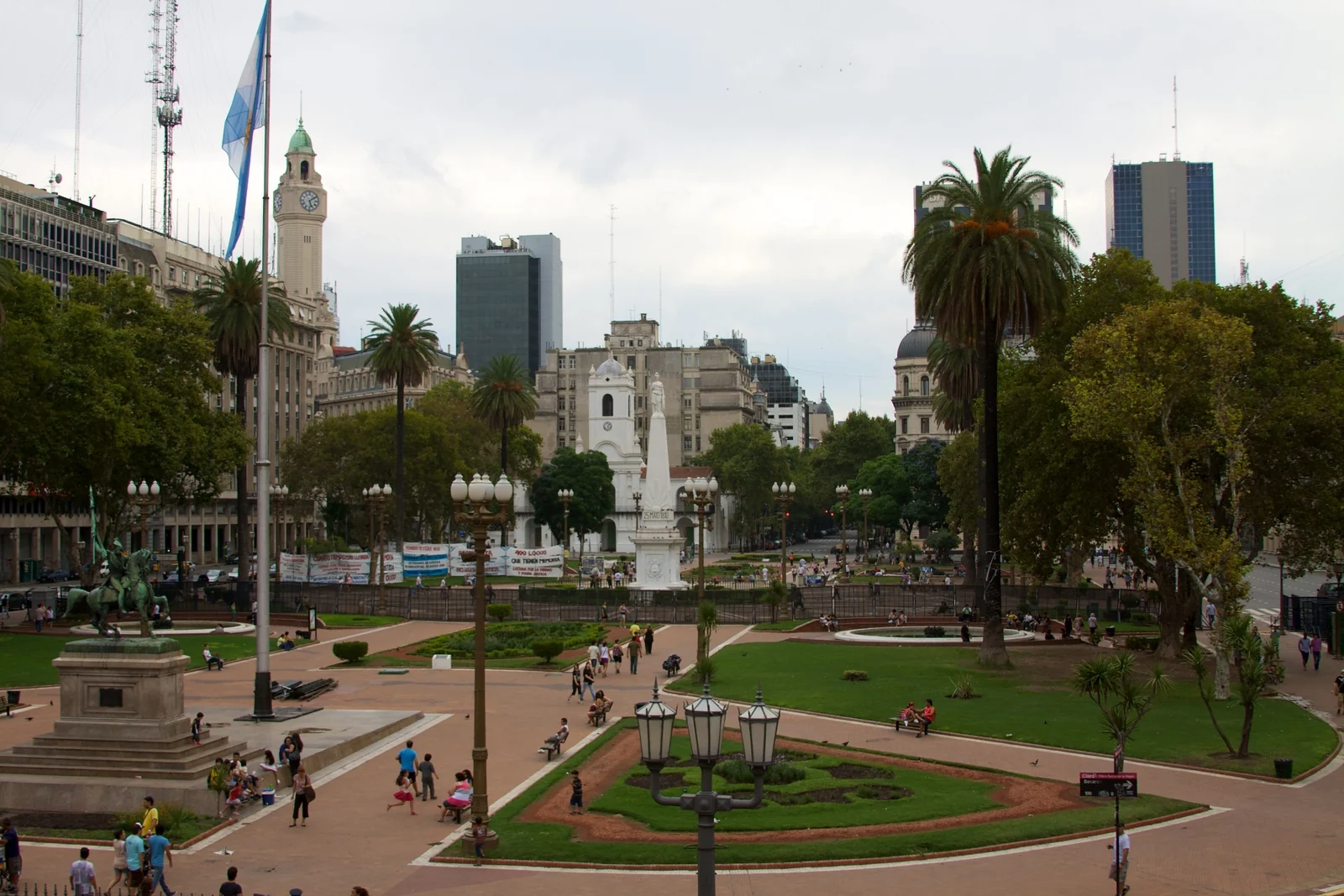
Start where the city's politics have always played out. Plaza de Mayo is a broad square ringed by the cathedral, the old town hall (the Cabildo) and the Casa Rosada, the pink presidential palace officially inaugurated in 1898. Locals tell two stories about the color: it blends Federalist red with Unitarian white, or the original paint contained cattle blood.
In the middle stands the white May Pyramid. Around it, on Thursday afternoons, the Mothers of the Plaza de Mayo still walk in a circle, a protest that began in April 1977 and became a symbol of human rights worldwide. Watch quietly and do not treat it as a photo stunt.
Visits inside the Casa Rosada and the Cabildo run on limited schedules that change, so check the opening details on the official Buenos Aires tourism site before you plan around them. From the plaza, Avenida de Mayo runs west lined with grand early-20th-century buildings and old cafés.
San Telmo, La Boca and Caminito
San Telmo
South of the plaza, San Telmo is the oldest barrio most visitors see, a grid of cobbled streets, faded townhouses, antique shops and old-fashioned bars. On Sundays the main street, Calle Defensa, turns into a long street fair of antiques, crafts and street performers.
The covered Mercado de San Telmo suits a rainy-day coffee and lunch. This is also where small tango bars and milongas are easiest to find.
La Boca and Caminito
La Boca grew around the old port, settled largely by Italian immigrants, and its tin-sided houses were painted with leftover boat paint. Caminito, a short pedestrian street of bright facades, tango statues and souvenir stalls, is the postcard version. It is touristy but fun for an hour in daylight.
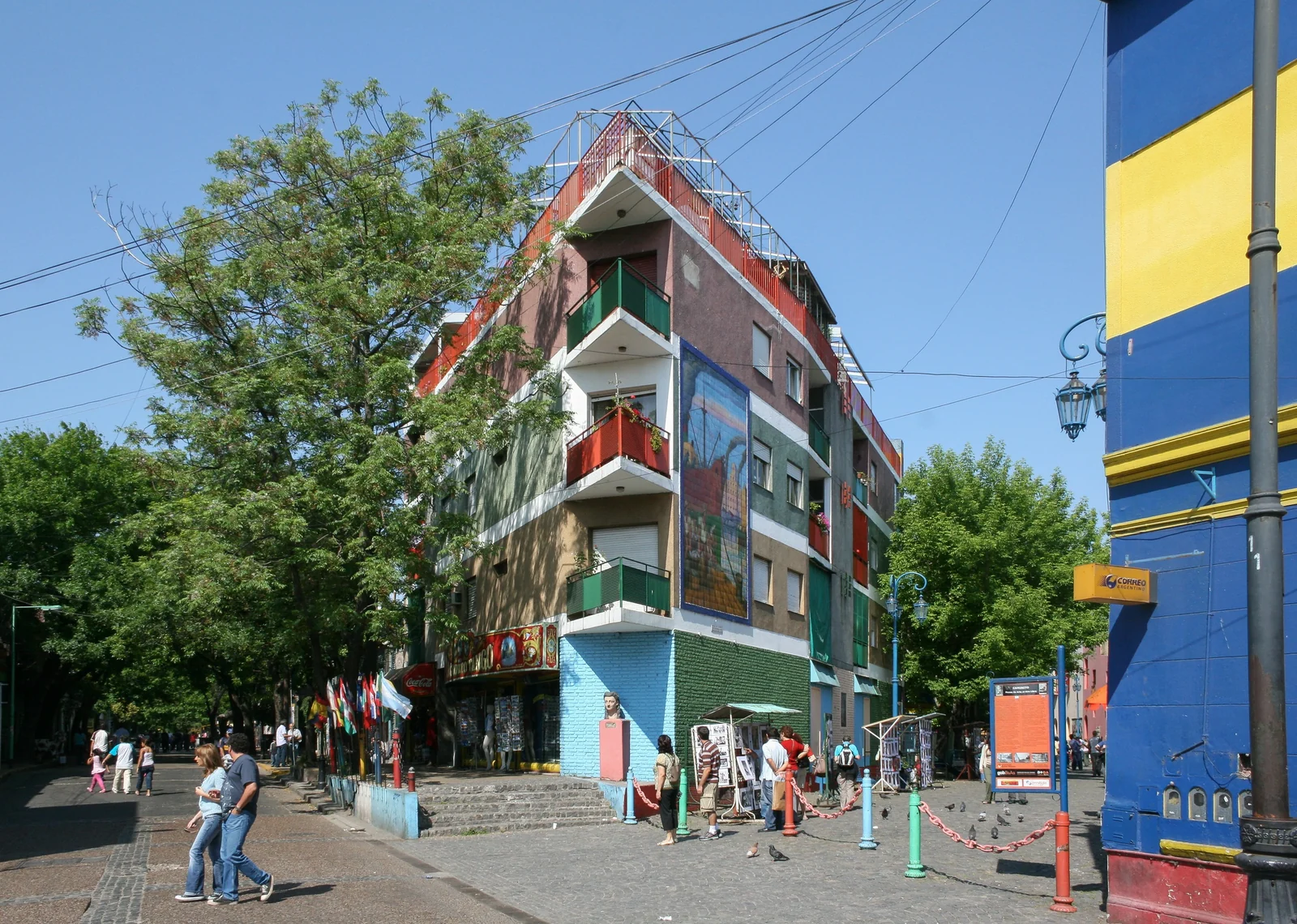
Be sensible here. Stay on the busy tourist streets, go during the day, take a taxi or ride-hail car in and out rather than walking from distant stations, and keep your phone in your pocket when you are not using it. The surrounding blocks are not a place to wander.
Recoleta, Palermo and El Ateneo
Recoleta Cemetery
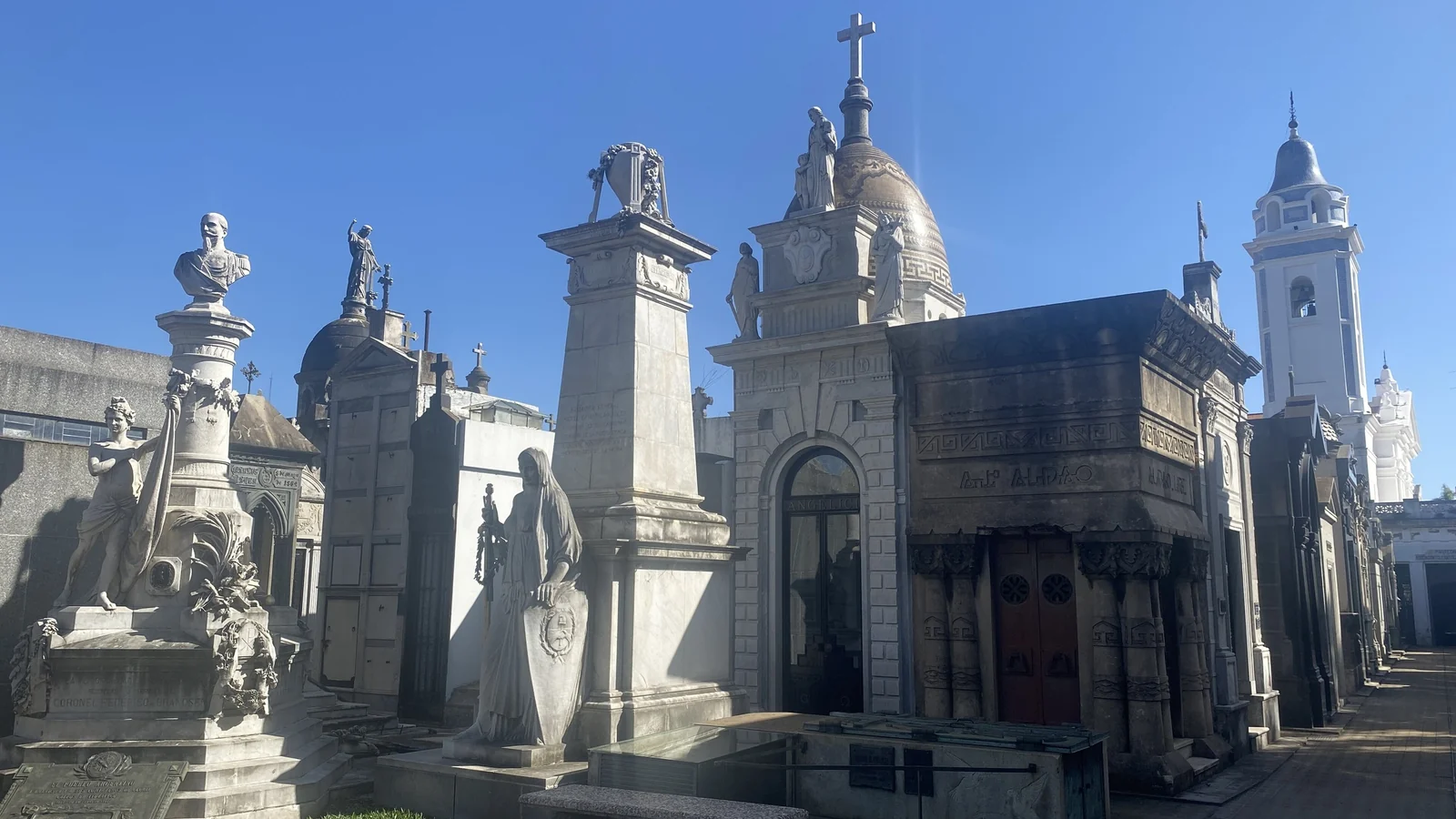
Recoleta Cemetery opened in 1822 and holds 4,691 above-ground vaults, laid out like small streets of stone houses. Marble angels and cracked glass make it eerie and elegant. The most visited tomb is that of Eva Perón, who has rested there since 1976, though the best part is simply getting lost between family mausoleums. Check opening hours and any guided-tour options on the city tourism site.
El Ateneo Grand Splendid
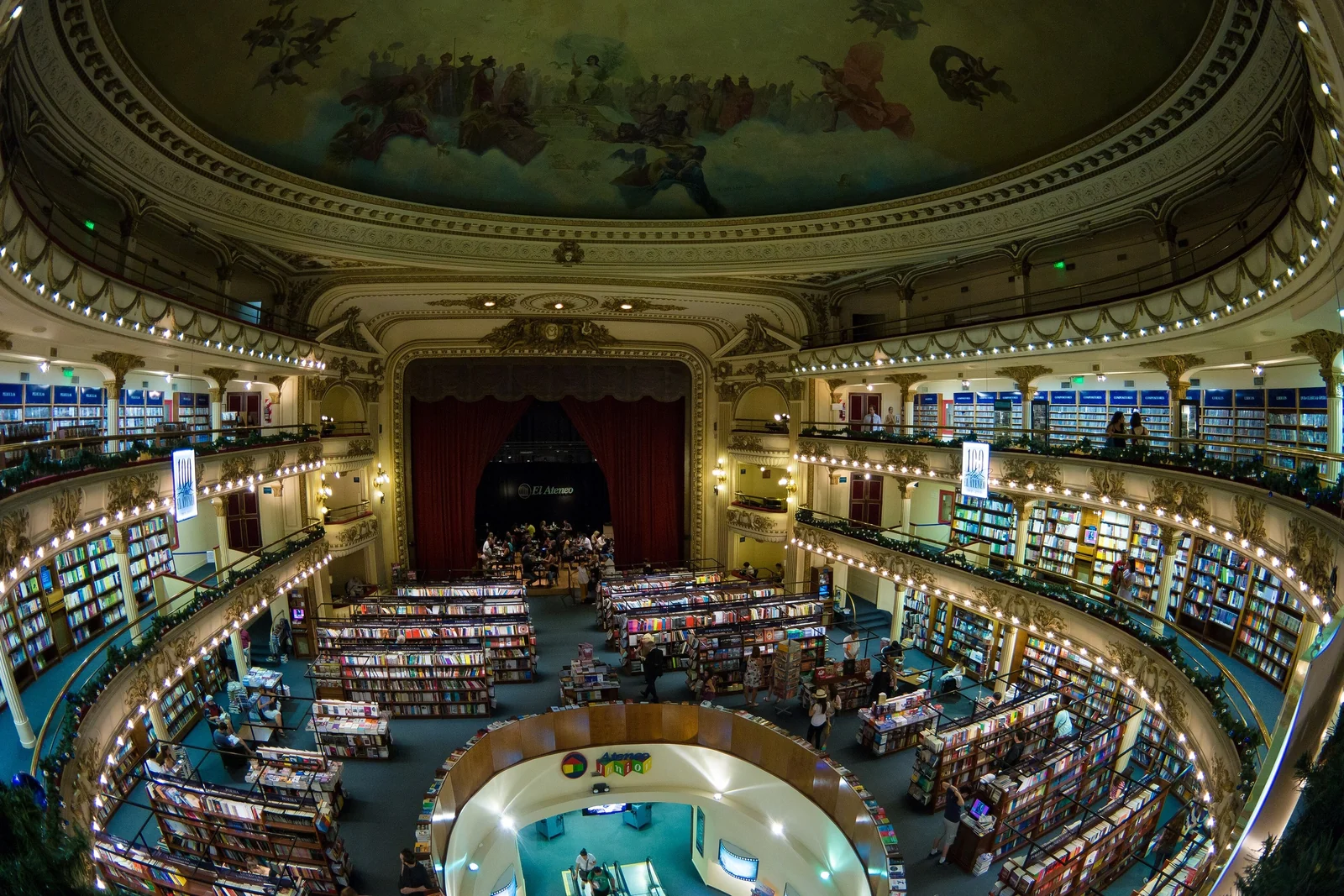
Few bookshops are worth a detour for the building alone, but this one is. It opened as the Teatro Gran Splendid in 1919 and became a bookstore in 2000. Shelves now fill the old boxes and stalls, the painted ceiling is intact, and a café sits on the former stage. It is on Avenida Santa Fe, so go early or on a weekday to beat the photographers.
Palermo
Palermo is the largest and most varied barrio, divided informally into sub-areas such as Palermo Soho and Palermo Hollywood. Expect tree-lined streets, design shops, brunch cafés, restaurants and big parks that fill with runners and mate drinkers on weekends.
Puerto Madero and the Riverfront
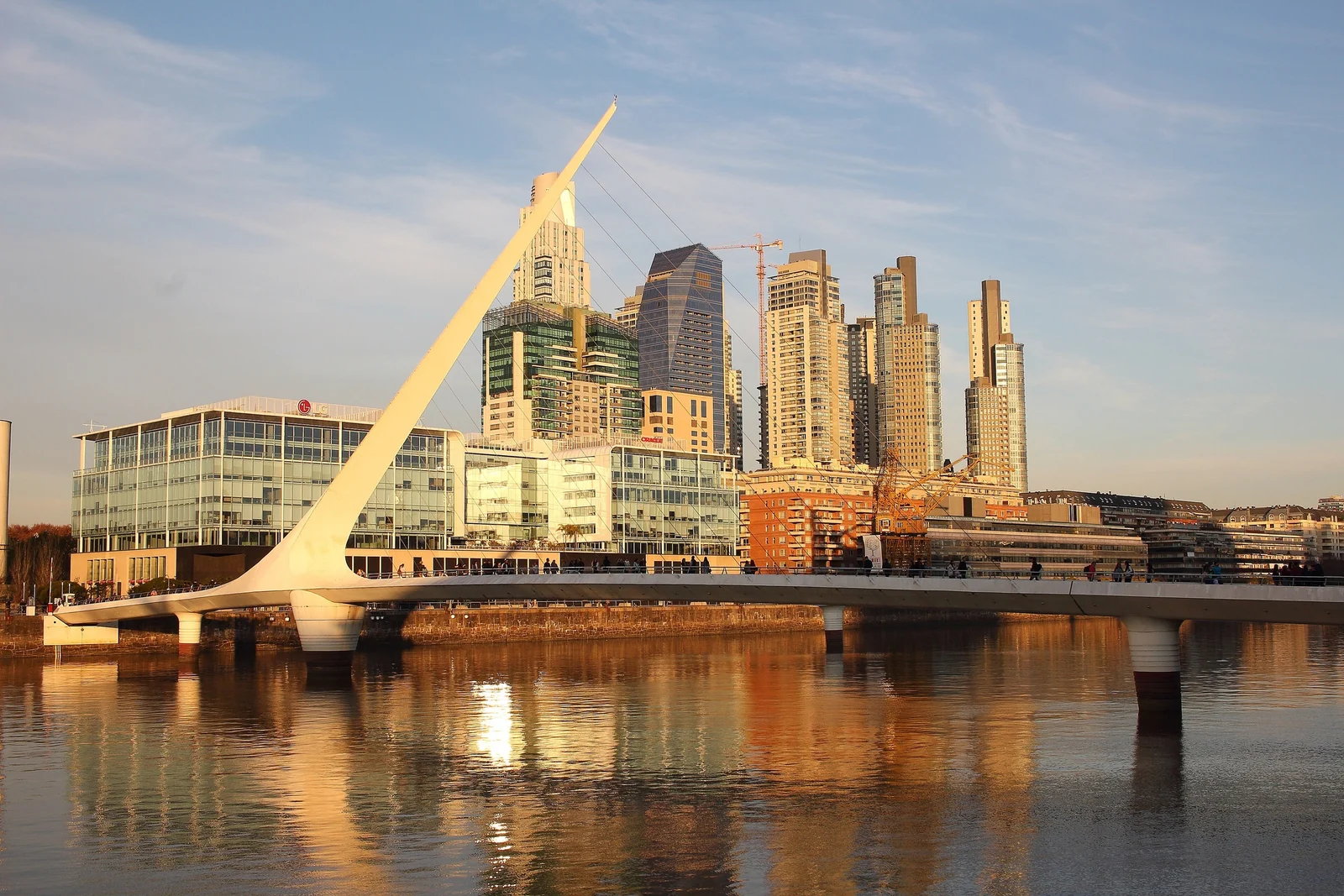
Puerto Madero was built as the city's port between 1887 and 1897, then left behind by larger ships. Starting in the 1990s the red-brick warehouses became offices, restaurants and apartments, making it one of the biggest urban renewals in Buenos Aires. It is modern and a bit sterile, a good contrast to San Telmo.
The white Puente de la Mujer, designed by Santiago Calatrava, is the visual anchor. Beyond the docks, the Costanera Sur ecological reserve offers wetlands, birds and flat paths away from the traffic.
Tango: Milongas vs. Shows
Tango began in the working-class neighborhoods and port areas of Buenos Aires and Montevideo, and in Buenos Aires it remains a living social dance rather than only a performance. You will meet it in two very different forms, and it helps to choose deliberately.
| Milonga | Tango show | |
|---|---|---|
| What it is | A social dance night where locals dance in a shared circle | A staged production with performers, music and sometimes dinner |
| Who it suits | Dancers, curious observers who like to watch quietly | First-timers who want polished choreography |
| Atmosphere | Informal, with unwritten etiquette | Theatrical, built for an audience |
| Booking | Often just show up; many offer a beginner class first | Reserve ahead, usually with a table or ticket |
| Dress | Neat and comfortable shoes | Smart casual |
A show is a perfectly good introduction. A milonga is where you see what tango is for. Dancers invite with eye contact, so do not interrupt the circle or film people without asking.
What to Eat: Parrilla, Empanadas and Café Culture
Parrilla and Argentine Steak
A parrilla is both the grill and the restaurant that cooks on it. Beef is the center of the menu, usually cooked over wood or charcoal and seasoned with little more than salt. Look for cuts such as bife de chorizo (sirloin), ojo de bife (ribeye) and vacío (flank), and order a mixed grill if you are sharing. Chimichurri is the herb sauce on the table. Say so if you want your steak pink.
Empanadas
Empanadas are baked or fried turnovers, filled most often with beef, ham and cheese, or chicken. They are cheap, portable and a perfect lunch between sights.
Café Culture
Cafés are where the city thinks out loud. A cortado or a café con leche comes with a glass of sparkling water and, often, a small sweet, and nobody will hurry you out. Pair it with a medialuna, the local small croissant.
Football Culture: Boca and River
Football is part of daily life here. The two biggest clubs, Boca Juniors and River Plate, have a rivalry known as the Superclásico, and the passion is real, so treat it with respect. Boca belong to La Boca and play at La Bombonera; River play at the Monumental in the north of the city.
Tickets for big matches are often limited to members, and fans can be tense, so do not just turn up and hope. The sensible options for visitors are an organized visit that includes a ticket, or a stadium tour and museum on a non-match day. Avoid wearing either club's colors in the wrong neighborhood, and leave valuables at the hotel.
A 3-Day Buenos Aires Itinerary
Day 1: The Historic Center and San Telmo
Begin at Plaza de Mayo, then walk Avenida de Mayo to the old cafés. Wander south to San Telmo for lunch at the market and an afternoon on the cobblestones. In the evening, book a tango show or visit an easygoing milonga.
Day 2: Recoleta, El Ateneo and Palermo
Spend the morning at Recoleta Cemetery, then go to El Ateneo and have coffee on the old stage. Take the afternoon in the Palermo parks, finishing with dinner at a parrilla in Palermo Soho or Hollywood.
Day 3: Puerto Madero and La Boca
Walk the docks and Costanera Sur in the morning, then take a car to Caminito for lunch and a short visit. If you want football, add the stadium tour. End with empanadas and a last milonga, or a quiet evening if your feet have given up. Planning a longer South America trip? Read our Rio de Janeiro guide or Cartagena guide.
Day Trips from Buenos Aires: Tigre, Colonia and Estancias
| Destination | How to get there | Best for |
|---|---|---|
| Tigre and the Paraná Delta | Train from Retiro station, then a boat | River islands, boat trips, a weekend market |
| Colonia del Sacramento, Uruguay | Ferry across the Río de la Plata (bring your passport) | A calm, old Portuguese town |
| An estancia in the pampas | Organized day tour or private transfer | Horses, asado lunch, gaucho traditions |
Tigre and the Delta
Tigre sits about 28 kilometers north of the city on the Paraná Delta, a maze of rivers and islands. Trains run from Retiro station on the Mitre line, usually every 10 to 30 minutes. Browse the riverside crafts market at the Puerto de Frutos, then take a boat into the channels.
Colonia del Sacramento, Uruguay
Colonia was founded by the Portuguese in 1680 and its historic quarter was added to the UNESCO World Heritage list in 1995. Ferries cross the river in roughly an hour and a half, and the old town is walkable from the terminal. Cobbled lanes and quiet waterfront cafés make it a restful contrast. Check passport and entry rules with your government before you book, and confirm current ferry times with the operators. See the UNESCO listing for background.
Estancias
An estancia is a countryside ranch, and many near the city open for day visits that combine horse riding, an asado lunch and a look at gaucho traditions. Book a reputable operator and confirm what is included. For a different Argentina altogether, read about Patagonia's glaciers and mountains.
When to Go, Money and Safety
Best Time to Visit
Argentina is in the Southern Hemisphere, so the seasons run opposite to Europe and North America.
- Spring (September to November): mild, with flowers and long evenings. Often the best balance.
- Autumn (March to May): comfortable for walking and good for cultural events.
- Summer (December to February): hot and humid, with many locals away on holiday. Plan for air conditioning and slower afternoons.
- Winter (June to August): cool and sometimes damp, but fine for museums, cafés and tango.
Money Matters
Argentina's exchange-rate situation has been complicated and changes, with more than one rate sometimes in play. The practical advice is general: before you travel, read your government's current travel guidance and your bank's advice on foreign cards and cash, and ask your hotel which payment methods are widely accepted.
Staying Safe
Most visits are trouble-free, and the usual big-city rules apply. Pickpocketing and phone snatching are the common problems, especially on crowded buses and near tourist sights. Keep phones out of sight at the curb, use licensed taxis or ride-hail cars at night and avoid unfamiliar areas after dark. Check your government's current travel advice before you go.
Getting Around and Where to Stay
Subte, Colectivos and the SUBE Card
The Subte opened its first line in December 1913 and was the first underground railway in Latin America. Today it has six lines, labeled A, B, C, D, E and H. City buses are called colectivos, run all over the city and are very cheap. Both use the rechargeable SUBE card, which you buy and top up at kiosks and stations. Where and how to buy it for visitors changes, so check the city transport information before you arrive.
Where to Stay
- Palermo: the easiest first-timer base, with restaurants, parks and a relaxed feel.
- Recoleta: elegant, quiet at night, close to the cemetery and El Ateneo.
- San Telmo: atmospheric and best for tango and old-town charm, though some streets are noisy.
- Microcentro and Monserrat: convenient for Plaza de Mayo and the Subte, but quiet in the evenings.
- Puerto Madero: modern and polished, with fewer neighborhood bars.
Buenos Aires Travel FAQ
How many days do you need in Buenos Aires?
Three days cover Plaza de Mayo, San Telmo, Recoleta, Palermo and a tango night. Add one or two more for Tigre, Colonia in Uruguay or an estancia, and more if you want to eat slowly through the city.
What is the difference between a milonga and a tango show?
A milonga is a social dance where locals dance together, and visitors can watch or join. A show is a staged performance for an audience, often with dinner. Shows are easier for first-timers; milongas show tango as a living custom.
When is the best time to visit Buenos Aires?
Spring (September to November) and autumn (March to May) are the most comfortable. Summer is hot and humid, winter is cool. Seasons are reversed compared with the Northern Hemisphere, so pack accordingly.
Is Buenos Aires safe for tourists?
Generally yes, with normal big-city caution. Petty theft is the main risk, especially on crowded transport and around tourist sights. Use licensed taxis at night, keep phones out of sight and check your government's current advice.
How do you get around Buenos Aires?
Use the Subte, colectivos and taxis, with a rechargeable SUBE card for the first two. Neighborhoods like San Telmo and Palermo are good on foot. Check the city's transport pages for current rules on buying a card.
Can you visit Colonia del Sacramento as a day trip?
Yes. Ferries cross the Río de la Plata in roughly an hour and a half, and the historic quarter is walkable from the terminal. Bring your passport, check entry rules, and confirm ferry times with the operators.
Should you worry about the exchange rate in Argentina?
The money situation changes, so read your government's current travel guidance and your bank's advice on foreign cards before you leave. Ask your hotel which payment methods are widely accepted, and carry more than one way to pay.