



Rio de Janeiro is Brazil's most dramatic city: granite peaks that drop straight into the Atlantic, rainforest on the edge of downtown, and a beach culture that treats the sand as a public living room. The big sights are Christ the Redeemer on Corcovado, the cable car up Sugarloaf, and the long curves of Copacabana and Ipanema. Most visitors tick them off in three or four days.
This Rio de Janeiro travel guide goes beyond the postcard list. It covers the neighborhoods worth your evenings, how to approach a favela visit responsibly, what to eat, how Carnival and New Year's work, which day trips are worth the time, and the practical side of staying safe and getting around. For more of the country, see our Brazil travel guides.
Christ the Redeemer and Corcovado
The statue stands 30 meters tall on a pedestal of about 8 meters, on top of the 710-meter Corcovado peak. It was inaugurated in 1931 and sits inside Tijuca National Park. The outstretched arms span roughly 28 meters, which is wider than it looks from the city below.

How to Get Up There
The classic way is the Corcovado rack railway, which climbs through the forest from the Cosme Velho station. Official vans also run from several points in the city, and some are bundled with other sights. Tickets sell out in busy periods, so book ahead on the operator's website and pick a timed slot.
Clouds are the main risk. The summit can vanish into white for an hour and then clear, so check a live webcam or the morning forecast and keep your plans flexible. Early morning usually gives the clearest views and the thinnest crowds; late afternoon is the second best. The panorama over Guanabara Bay, Sugarloaf and the lagoon is what you came for.
Sugarloaf Mountain and the Urca Walk
Pão de Açúcar rises 396 meters from the mouth of Guanabara Bay. A two-stage cable car, running since 1912, goes first to Morro da Urca and then to the summit. Check hours and tickets on the official Sugarloaf cable car site. Go about an hour before sunset, so you see the city in daylight, in gold light and then lit up.
Morro da Urca has a smaller viewpoint with fewer people, and the Urca neighborhood at its foot is one of the calmest corners of Rio. The Pista Cláudio Coutinho path runs along the base of the rock beside the sea, a flat walk that locals use for exercise at dawn.
Copacabana and Ipanema: Understanding the Beaches
Copacabana is about four kilometers of wide sand and a black-and-white wave-pattern sidewalk. It is democratic, loud and always busy, with kiosks selling drinks and grilled cheese on sticks, plus football and volleyball games along the water. Ipanema, just beyond the rocky Arpoador point, is more polished and a little calmer, with trendier restaurants a block back from the sand.
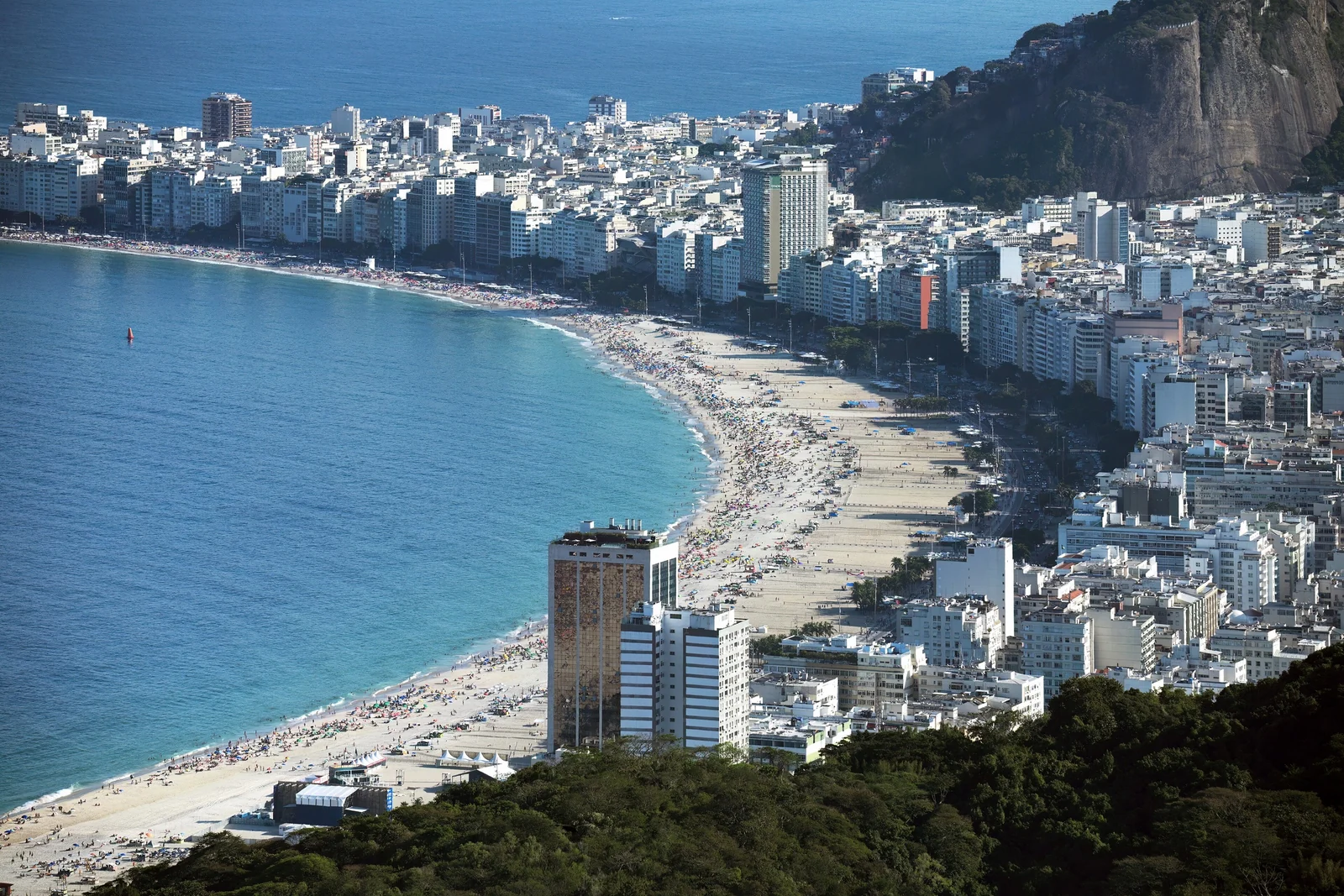
Locals orient themselves by the numbered lifeguard posts, called postos. Different groups gather at different posts, and Ipanema's Posto 9 is famous as a social scene. Rent a chair and umbrella from a kiosk, agree on the price first and keep valuables to a minimum. Check the flags and posted warnings before swimming, because the Atlantic surf can pull hard on some days.
Sunset at Pedra do Arpoador
The rock between the two beaches is the best free show in town. Climb Pedra do Arpoador about 30 to 45 minutes before sunset, find a spot and watch the sun drop behind Morro Dois Irmãos while surfers catch the last waves. By tradition the crowd applauds when it disappears.

Santa Teresa, Lapa and the Selarón Steps
Rio's old center is where the city's layers show. Lapa is the nightlife district under the white Arcos da Lapa, an 18th-century aqueduct that once carried water to the hill above. Its bars and samba clubs are the place to hear live music, usually from late evening. Go with friends, stay on busy streets and use a ride app to get home.
Santa Teresa is the hilltop neighborhood above Lapa, a tangle of cobbled lanes, old mansions, studios and small restaurants with city views. The yellow tram, the bonde, crosses the aqueduct and climbs the hill, but its service has changed over the years, so check whether it is running before planning around it. Walking up is hot work; a car ride up and a stroll down is a better deal.
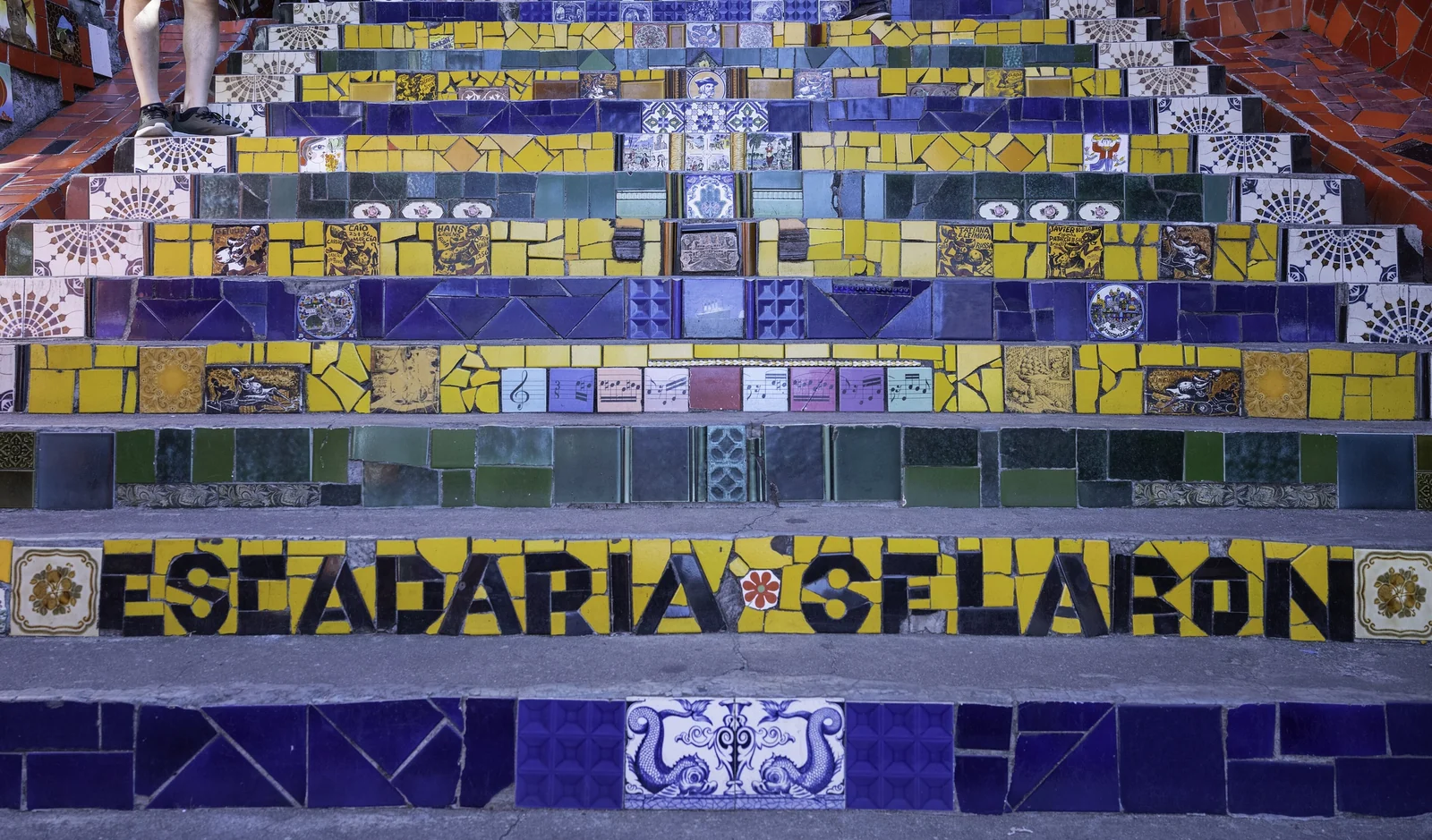
Between the two districts, the Escadaria Selarón is a 215-step stairway covered in tiles. The Chilean-born artist Jorge Selarón began decorating it around 1990 and kept adding tiles sent from many countries until his death in 2013. Come early in the morning for photos without the crowds, and keep your phone close to your body when you stop to shoot.
Tijuca National Park and the Botanical Garden
Tijuca National Park is one of the largest urban forests in the world, and the Atlantic rainforest that covers it is largely regrown. Much of it was cleared for coffee and charcoal in the 1800s and replanted from 1861. Beyond Christ the Redeemer there are waterfalls, short trails and viewpoints. The hike to the Pico da Tijuca (around 1,020 meters) is the classic climb. Start early, carry water and check trail conditions with the park first.
The Jardim Botânico was founded in 1808 by the Portuguese prince regent, and its avenue of royal palms is a calm, shady walk after a day of sun. Allow two hours, and if you can, pair it with the Lagoa, where a flat path of about 7 kilometers circles the lagoon and is popular with runners and cyclists. Parque Lage, between the garden and the base of Corcovado, is a good coffee stop in an old mansion.
Favela Tours: A Responsible Approach
A significant share of Rio's population lives in favelas, informal neighborhoods that range from small hillside communities to large districts such as Rocinha. Many have their own shops, schools, music and cooking, and a visit can show a side of the city that the beaches do not. It can also turn into voyeurism if it is done badly.
- Choose a resident or community-run guide. The money should reach people who live there. Ask how the operator works with the community.
- Go with someone local, not on your own. Conditions change from one community to the next. A trusted guide knows where it is safe to be.
- Ask before photographing people and skip shots of children, homes and anything involving security forces.
- Spend money locally at a resident-run cafe, studio or shop, rather than treating the visit as a spectacle.
- Avoid any tour that sells poverty. If it feels like a safari, it is the wrong one. Look for walking tours that include art, history and food.
What to Eat in Rio
Feijoada, a slow-cooked stew of black beans and pork, is the Brazilian classic and is traditionally eaten on Saturday afternoons, with rice, greens, farofa and orange slices on the side. Pão de queijo is a warm, chewy cheese bread you will find in every bakery, and it is the ideal sidekick to a strong coffee.
Açaí in Rio is a thick frozen purée served in a bowl, often topped with banana and granola. It is a snack and a beach staple, not the smoothie bowl you might know from home. Also try coconut water straight from the shell, grilled queijo coalho on the sand and a caipirinha, made with cachaça, lime and sugar, at a bar in the evening. The botequim, the neighborhood bar, is where the best cheap food and cold beer are found.
Carnival and New Year's in Rio
Carnival takes place in the days leading up to Ash Wednesday, so in February or early March. The famous parades run on a purpose-built avenue, the Sambadrome, where the top samba schools compete over several nights. Tickets are sold well in advance, and prices rise toward the date. Many travelers find the free street parties, the blocos, which fill neighborhoods across the city, more fun. Book accommodation months ahead.
New Year's Eve, called Réveillon, is the other big night. Crowds gather on Copacabana beach to watch fireworks over the water, and most wear white for luck. Offerings to Iemanjá, the sea goddess, are set out in the sand. Arrive early, leave valuables at the hotel and agree a plan to meet if you lose your group. Public transport is the only practical way in and out.
Day Trips from Rio
| Destination | Best for | Getting there | Time |
|---|---|---|---|
| Niterói (MAC) | Oscar Niemeyer's art museum, bay views | Ferry from Praça XV, or bus or car across the bridge | Half a day |
| Petrópolis | Imperial history, mountain air | Bus from the city or car into the hills | Full day |
| Paraty | Colonial center, boats and beaches | Long-distance bus or private transfer | Overnight is better |
| Ilha Grande | Car-free island, hiking, beaches | Bus or transfer to the coast, then boat | Two or more nights |
Niterói and the MAC
The Museu de Arte Contemporânea, opened in 1996, was designed by Oscar Niemeyer and looks like a white saucer on a rock above the water. The ferry across Guanabara Bay is part of the trip, and the view back at Rio, Sugarloaf and Corcovado is a good reason to go, even if the exhibitions are not your thing.
Petrópolis
The cooler mountain town of Petrópolis was the summer retreat of Brazil's emperors. The Imperial Museum occupies the former palace, and the town's cathedral and tree-lined canals reward a slow afternoon.
Paraty and Ilha Grande
Further down the Green Coast, Paraty has a colonial center of cobbled streets that flood at high tide, set between forest and bay. Together with Ilha Grande and the surrounding area it was added to the UNESCO World Heritage List in 2019. Ilha Grande, reached by boat, has no cars, long hiking trails and quiet beaches. Both need at least a night to be worth it.
Best Time to Visit Rio
Rio has a tropical climate. December to March is hot, humid and stormy, with beach weather but also sudden downpours. May to September is cooler and drier, with clear skies that are ideal for views and hikes, though the water can feel cold. Shoulder months such as April and October often balance weather and crowds.
- December to March: peak beach season, plus New Year's and Carnival. Expect high prices and heat.
- April to June: fewer visitors, softer weather and a good time for hiking.
- July to September: the driest stretch, with the best chance of clear mountain views.
- October to November: warming up again, with lower prices than the summer peak.
Safety, Getting Around and Where to Stay
Staying Safe
Rio is a big city with real petty crime, but it is manageable with habits. Carry only what you need, leave jewelry and passports at the hotel, and use your phone discreetly near beaches and busy streets. After dark, take a licensed taxi or ride app instead of walking long distances. Avoid empty streets and unfamiliar areas at night, and check your government's travel advice and local guidance before you go.
Getting Around
The metro is clean, fast and links Copacabana and Ipanema with the center. A light-rail line serves downtown, and buses fill the gaps. Ride apps are widely used and often the easiest option at night. Rio has two airports, Galeão (GIG) for international flights and Santos Dumont (SDU) near downtown for many domestic ones. For official visitor information see Visit.Rio.
Where to Stay
- Ipanema and Leblon: the most polished base, with good restaurants and a beach on your doorstep. Higher prices.
- Copacabana: a wide range of budgets, a long beach and metro access. Quieter side streets beat the main avenue at night.
- Santa Teresa: atmospheric and artsy, with a hillside feel. Steep, and a car ride to dinner is common.
- Botafogo and Flamengo: good value and local life, well placed for Sugarloaf and the metro.
- Lapa and the center: best for nightlife, but quiet and less comfortable after the offices close.
If you are weighing Rio against other beach cities, our guides to Barcelona and Cartagena offer a comparison, and our South America destinations page has the wider region.
Rio de Janeiro Travel FAQ
How many days do you need in Rio de Janeiro?
Four days covers the main sights: Christ the Redeemer, Sugarloaf, the beaches, Santa Teresa and Lapa. Add a day for Tijuca National Park or the Botanical Garden, and two or three more if you want Paraty or Ilha Grande.
Is Rio de Janeiro safe for tourists?
Most visitors have trouble-free trips, but petty theft is common. Keep valuables out of sight, avoid empty streets at night, use ride apps or licensed taxis after dark and follow local advice about areas to avoid.
What is the best time of year to visit Rio?
May to September is drier and cooler, with the best views. December to March is hot and humid with peak beach weather, plus New Year's and Carnival. Shoulder months often give the best balance of weather and prices.
When is Carnival in Rio?
Carnival falls in the days before Ash Wednesday, so it lands in February or early March, and the exact dates shift every year. The main parades run at the Sambadrome over several nights, with street parties across the city.
Is it worth visiting a favela in Rio?
It can be, if you choose a resident-led or community-run walking tour, ask before taking photos and spend money locally. Skip any tour that feels like a spectacle, and never go in alone.
How do you get to Christ the Redeemer?
Most visitors take the Corcovado rack train from Cosme Velho or an official van from points around the city. Book a timed slot ahead in busy periods, and check the weather, since clouds can hide the view.
Can you take a day trip from Rio to Paraty?
It is possible but long, with several hours each way by road. Staying one or two nights in Paraty is far more rewarding. Niterói and Petrópolis are easier day trips.